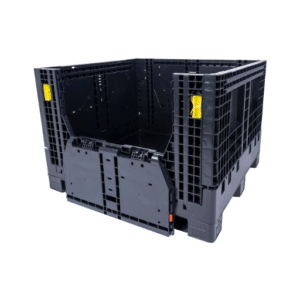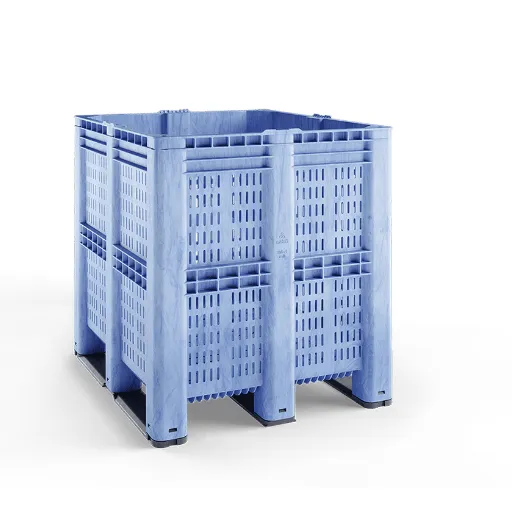

These are big plastic boxes designed with a pallet base that makes them suitable for moving, storage, or transporting of the goods in bulk and for example in the agricultural industry, the automotive industry, and others. plastic pallet boxes in this case act as a combination of the vertical function of a box and pallets, and this is a requirement for the logistics processes because those boxes must be used in an effective manner without being fragile, without being dirty, and the storage has to take up less space.
A smaller company might find that it wastes over $50k a year due to broken merchandise splinters from wood products or rejections at customs trying to export with the wrong type of container right there. But the benefits of using a plastic pallet box goes beyond improving storage manners. As it turns out materials can be the most cost-effective solution in many cases. But as it turns out not everything is as it appears and therefore choosing a distributor with good evaluations on the market remains difficult even today.
We, at Shandong Lile, produce plastic pallet boxes used by our customers in over a hundred and eight countries across the world and by doing so, we have come to know the effect the container specifications can have on the performance of a supply chain. This particular article is about plastic pallet boxes, the kinds available, the boxes’ superiority over the wooden ones, and about TUCO (Total Unit Cost of Ownership). In this section, the reasons as to why the cheapest plywood pallet box is hardly worth the cost shall also be discussed.
Key Takeaways
- Plastic pallet boxes last 10-15 years versus 3-5 years for wooden crates, with maintenance costs roughly one-third of wood.
- The global pallet box market is valued at 9.6billionin2026andisprojectedtoreach9.6billionin2026andisprojectedtoreach21.1 billion by 2036.
- Collapsible plastic pallet boxes reduce empty return volume by 60-75%, dramatically cutting reverse logistics costs.
- Plastic pallet boxes are exempt from ISPM-15 export requirements, eliminating heat treatment delays of 24-48 hours.
- Steel-reinforced options handle loads exceeding 1,500 kg, opening applications that standard plastic cannot serve.
What Are Plastic Pallet Boxes?
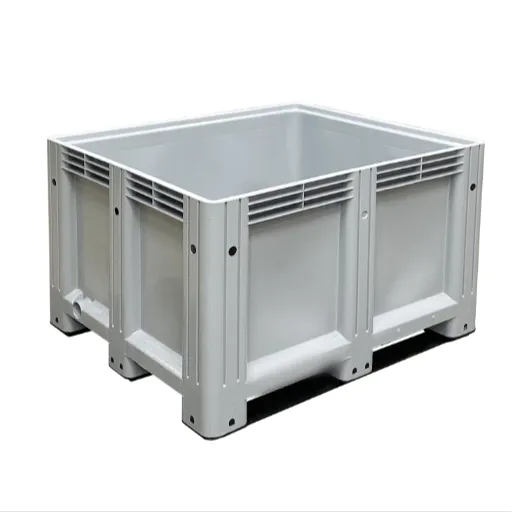
Plastic pallet boxes, also known as large container boxes with a pallet base, are products that are made in; a simple and open-top configuration, a standard pallet box modified into a container box and associated with shrink wraps or a cardboard cover cover on the top. Where standard pallets are formulated to provide horizontal support only for goods from below, pallet boxes have vertical walls with the complete walls of at least three sides and often with a cover, enhancing the ability to keep loose items, parts or delicate goods inside the packing. They are also classified as bulk boxes, containers or alternatively gaylord containers in some parts of the country.
These types of structures are usually injection molded with a high degree of accuracy and reproducibility. The base, which is made to the dimensions and the point of use of the pallet size can either be 1,200 x 800 mm or 1,200 x 1,000 mm, and the walls can extend up to 600 mm, or 1,000 mm, or more. For some components or modules the bin is a solid wall for the purpose of retaining liquid or powder, while for some food items the bin has vents which prevent vegetables from being damaged. Lids, drop-down panels and even drainage systems may also be incorporated depending on the needs of the user.
One of the differences between cheap disposable bins and strong plastic pallet boxes construction wise is the design in terms of load ratings. Static load is the possibility of the box staying on the floor and not being procedural. Dynamic load is the load capacity when of objects is in the movement and uses. Racking Load is the maximum amount of weight when stored on warehouse shelves. Most reputable manufacturers carry out testing the ratings according to this method (ISO 8611) to ensure that the numbers are about the actual limitations and not the marketing figures.
Want to see how these specifications translate to real products? Explore our full range of plastic pallet boxes to view load ratings, dimensions, and customization options.
Types of Plastic Pallet Boxes: Which One Fits Your Operation?
Not all plastic pallet boxes serve the same purpose. Selecting the wrong type can erase the cost advantages you are trying to capture. Here are the four main categories logistics managers need to understand.
Collapsible Plastic Pallet Boxes
Collapsible models possess walls with hinges and are inclined inward when they are empty. This results in size savings of 60-75%. The applicability of this construction is particularly evident in circular economy systems, which involve returning the so-called cargo-carrying vessels when they are no longer carrying a load. Major users of collapsible items are car factories, warehousing businesses, and supply chains that use beams, as their use significantly lowers transportation costs for redistribution of empty containers and warehouse space requirements.
The downside includes a relatively high cost per unit and presence of some movable parts. Over time, the hinges and latch systems can become problematic since these parts have to be checked. When hundreds, or even thousands of pieces are used and rotated in their place of work, operations can move large quantities per vessel of products and leased space charges for those products accumulate, thereby falling behind the extra fee within one to one and a half years.
Rigid Plastic Pallet Boxes
The most robust models consist of single components or fixed sides. These models carry the highest capacity loads, or for greatest impact resistance, or for most efficient interfacing with the warehouse automation. In the case where one deals with the storage of bulk solid materials for a long time or the operation of automated storage and retrieval system, ‘plastic pallet boxes’ of the rigid or solid designs are preferred.
Rigid constructed systems are also ideal for high-bay warehousing where virtually all containers are accumulated on racks at heights. This construction feature prevents strain on the racks due to the weight of loaded boxes, which does not assist in enhancing safety of the racks over this deflection.
Stackable and Nestable Designs
Stacking boxes have edges that are reinforced and top loading enables them to be stable when stacked vertically, usually up to three or five boxes height, depending on the load inside the boxes. Nesting boxes have a convex shape so that when in levels while empty boxes can fit in each other thereby drastically reducing the need for storage by as much as 70%. Nesting plastic containers are popular in applications involving one-way transport and export where collapsible units would have been cost inefficient to ship back.
Steel-Reinforced Pallet Boxes
Contemporary applications often require structural hauling of many goods that can’t be achieved with a standard plastic crate. Steel-enhanced pallet boxes withstand dynamic pressure over 1.5 tons, and their applications are metal working, heavy automobile components, chemical industries, etc. where no such application would be possible.
At Shandong Lile, our plastic pallet boxes are reinforced with an internal steel frame which is incorporated into the design of the entire product during the molding process. This allows the internal walls to remain very smooth and easy for cleaning purposes, while still being tough enough for the severe duty cycle. If the wood package you are using is prone to breaking, this is the improvement you should consider to be implemented.
Industries That Rely on Plastic Pallet Boxes
Agriculture and Food Storage
The cleanliness levels needed in the food sector are unreachable with wood. Wooden boxes can act as sponge, keeping water, germs and even splinters that get into the products. The polar opposite are plastic pallet boxes that have non-absorbent exteriors which can be subjected to steam, and pressure and chemical cleaning respectively. There is no drawback in having ventilation incorporated into the design either, as it helps stave off, in some cases by up to fifteen percent, wastage from fresh food stored with the ventilated design.
Marcus: a produce exporter based in shandong had an easy transition from using the wooden creates to the newly manufactured vented plastic pallet boxes which solved problem that once had been. Gone as well was the hardship of packaged goods being marred with broken bits of the timber. A condition which caused customers to raise agitation. He lost no more time waiting for his goods to be fumigated because of inappropriate manufacture since plastic is exempt under the ISPM 15. He recovered his cost in the first season of exporting the goods as the time saved was worth it.
Pharmaceuticals and Healthcare
Working in the pharmaceutical industry demands complete control over contamination and traceability of the supply chain. clean-room-compatibility plastic pallet boxes help to store some materials, especially those sensitive to dust and moisture, by prohibiting them from both. Aggressive cleaning commonly is being carried out in pharmaceutical-related places, but HDPE smooth surfaces would not be damaged or left residues. It becomes easy to identify which batch belongs to whom, by using specific colours, hence reducing the cross contamination of the batches.
Automotive and Manufacturing
In a Just-in-time system, delivery of materials to the specified lines should be reliable. The logistics problems of an automotive supplier in Jiangsu were handed over to Elena after standing members had rusting metal bins and broken wood crates in their yard. The plant occupied 40% more space for line-side storage than was necessary and due to this damaged components caused a monthly loss of almost ¥8,000. The adoption of steel-reinforced plastic pallet boxes collapsible furnishings enhanced both line-side storage space efficiency where there was a reduction of 60% and that of component damage where very minimal damage was done. Its collapsibility also reduced the number of empty pallets by a third of the space in the truck.
E-Commerce and Retail Logistics
Omnichannel fulfillment demands flexible container systems that adapt to peak seasons. Collapsible plastic pallet boxes allow retailers to scale container inventory up and down without permanently dedicating warehouse space. Nestable designs work well for parcel sorting and last-mile distribution.
Cold Storage and Export
Freezing temperatures degrade wood faster than plastic. HDPE and PP maintain structural integrity well below zero, making plastic pallet boxes the logical choice for cold chain logistics. For exporters, the ISPM-15 exemption is a decisive advantage. Wooden packaging requires heat treatment or fumigation before international shipment, adding 24-48 hours of lead time and documentation complexity. Plastic bypasses these requirements entirely.
Plastic Pallet Boxes vs. Wooden Alternatives: A Data-Driven Comparison
The debate between plastic and wood is not about which material is perfect. It is about which material costs less over the lifecycle that matters to your operation.
Durability and Lifespan
Plastic pallet boxes last 10-15 years under normal industrial use. Wooden crates last 3-5 years before joints weaken, boards crack, and structural failure becomes a safety risk. Over a decade, a wooden crate fleet requires two to three full replacements.
Total Cost of Ownership
Purchase price tells only a fraction of the story. Plastic units cost more upfront, typically 40−60perunitversus40−60perunitversus30 or less for basic wood. However, maintenance runs approximately 5peryearforplasticversus5peryearforplasticversus15 per year for wood. Replacement cycles favor plastic heavily. When James, an e-commerce fulfillment director in Guangdong, modeled his five-year packaging costs, he found that collapsible plastic pallet boxes would deliver 200% ROI against disposable corrugated alternatives by year four. The savings came from eliminated repurchase costs, reduced product damage, and lower reverse logistics spend.
Hygiene and Safety
Wood absorbs moisture, supports mold growth, and can harbor pests. Splinters and protruding nails injure workers and damage products. Plastic surfaces are smooth, moisture-resistant, and easy to sanitize. For food, pharmaceutical, and healthcare applications, this hygiene gap is non-negotiable.
Sustainability
The common assumption is that wood is greener than plastic. The reality depends on usage cycles. A plastic pallet box reused for hundreds or thousands of trips replaces hundreds of disposable wooden crates or cardboard boxes. At end of life, HDPE and PP are 100% recyclable. When measured by carbon footprint per trip, reusable plastic often outperforms single-use alternatives.
Still evaluating whether plastic or wood fits your budget? The answer depends on your trip volume, return logistics, and compliance requirements. Contact our team for a TCO analysis tailored to your operation.
How to Choose the Right Plastic Pallet Box
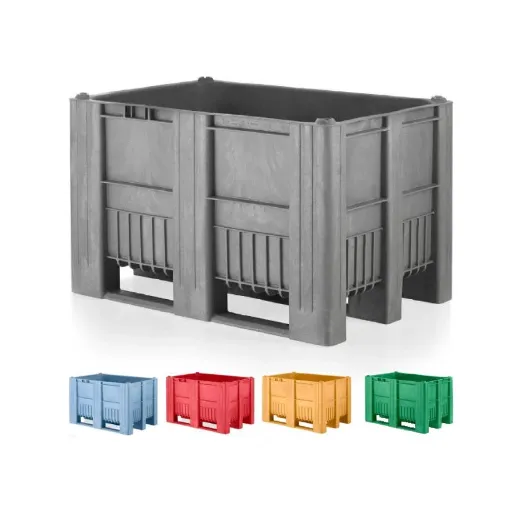
Selecting the right specification requires more than comparing catalog photos. Use this framework to narrow your options.
Assess Your Load Requirements
Start with the maximum weight your container will hold. Static load ratings apply to floor-stacked storage. Dynamic load ratings apply to transport. Racking load ratings apply to shelving. If any of these numbers exceed 1,000 kg, consider steel-reinforced options. Always request test methodology documentation from your supplier. Claims without ISO 8611 backing are just marketing.
Evaluate Your Storage Environment
Temperature extremes, chemical exposure, and humidity all influence material selection. HDPE performs better in cold environments. PP offers higher rigidity for elevated temperatures. If your facility uses aggressive cleaning chemicals, verify material compatibility with your supplier.
Consider Transportation and Return Logistics
If empty containers must return to origin, collapsible designs save 60-75% of transport volume. If containers stay at the destination or travel one-way, rigid or nestable designs may be more economical. Map your container loop before selecting a type.
Customization Checklist
Standard sizes fit many applications, but customization unlocks efficiency gains. Consider:
- Dimensions: Non-standard footprints for odd-sized components
- Colors: Branding or color-coded inventory segregation
- Access features: Drop-down doors, drainage valves, or lid systems
- Tracking: RFID pockets or molded-in barcode areas
- Steel reinforcement: For loads exceeding standard capacity
At Shandong Lile, we run 18 large-scale production machines across a 178,000 square meter facility. This capacity allows us to produce custom molds and batch sizes that smaller manufacturers cannot accommodate. From Pantone color matching to proprietary dimensions, we engineer solutions that fit your exact workflow.
Custom Plastic Pallet Boxes: When Off-the-Shelf Is Not Enough
Traditional plastic pallet boxes cater to about 80% of industry requirements. The other 20% consists of critical exceptions that turn the craft into a highly technical puzzle. This includes odd-sized automobile spare parts, certain pharmaceutical products’ batch sizes as well as retail store fixtures which are not of standard size.
Customization should start with – a pain point identification. There is a specific dimension feature or load that the standards do not offer. Engineering groups then design CAD models, construct prototype forms and produce sample components for actual trials. The most efficient custom designed solutions make the end user participate in the testing process as very often the requirements in real life cannot be obtained from working drawings.
Changes in the engineering design sometimes increase the costs, however, the benefits can also be huge. A customized box designed to fit the component itself– in other words, a perfect fit– lowers the extra packaging, avoids any void or dead space, and enhances how deals are loaded and unloaded. When taken in consideration over bulk manufacturing with thousands of units, the additional unit cost is less than the continuous physical waste of setting standard size.
Sustainability and Recycling: The Environmental Case for Plastic Pallet Boxes
Sustainability within logistics is not just sustainable culturally. It is the waste potential and associated costs of a material when performing its designated functions after a certain period of time. Accordingly, a wooden box that is used and disposed of causes more waste per trip than a plastic box in the form of a thousand trips and reuses.
A focus on reusing materials is picking up a high pace globally. The regulations of the EU Packaging and Packaging Waste Framework Directive will be in full effect as of August 2026. These regulations provide that by 2030, more than 40% in weight of transport packaging should be in reuse and 70% by 2040. Companies intending to cater for European markets should address reusability and material transparency in their products from the very onset.
HDPE and PP are 100% recyclable at the end of their life cycle. Increasing demand for more sustainable products has pushed the major players such as Shandong Lile to introduce recycled versions of those compounds, which offer similar values with reduced consumption of virgin resin. When plastic pallet boxes can no longer be used, they get crushed, turned into pellets and molded into new products instead of being discarded.
Another aspect of economic sustainability is reduction of goods damage. Every shipment that is delivered free from damage does not require remanufacturing, repackaging or reshipping the damaged goods and is therefore environmentally friendly. In the above respect, durable packaging implies environmentally safe packaging.
Conclusion
In any progressive logistics operation aspires to cut its running costs; plastic pallet boxes are a value addition. Breaking down all the smokes and mirrors from the middlemen offers a more comprehensive view, and sometimes the decisions are no brainers. In most cases, the rigid boxes are used in fixed storage and automated operations. The folding-ones are utilized when there is a need to return them and also for cost saving on space. On the other hand, those having metal components should be used to construct pallets that bear heavy loads. Consider costs in terms of five, seven, or ten years-not purchasing costs alone.
The inferences are favorable for the expense. In today’s market, the intangible goods space is valued at $9.6 billion, which is expected to grow at a compounded annual growth rate of 8.1 percent as more and more countries begin to realise what the finest supply chains have already figured out. The type of container or packaging interacts with your products, this helps to ensure that they arrive safely and on time.
At Shandong Lile, we have spent over a decade engineering plastic pallet boxes for clients across 108 countries. Whether you need standard specifications or a fully custom solution, our team can guide you from selection through delivery. Get a custom quote today and discover why global enterprises trust Lile for their most demanding bulk storage challenges.