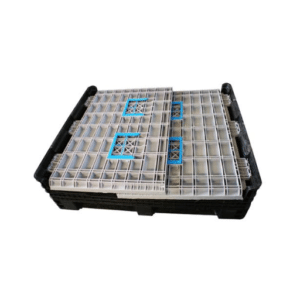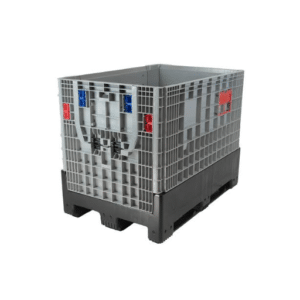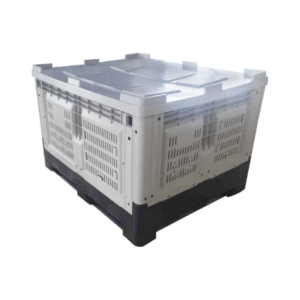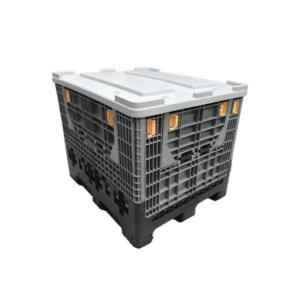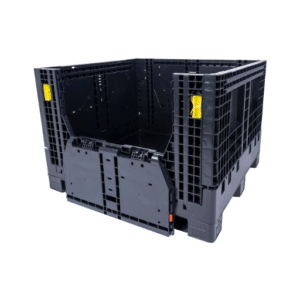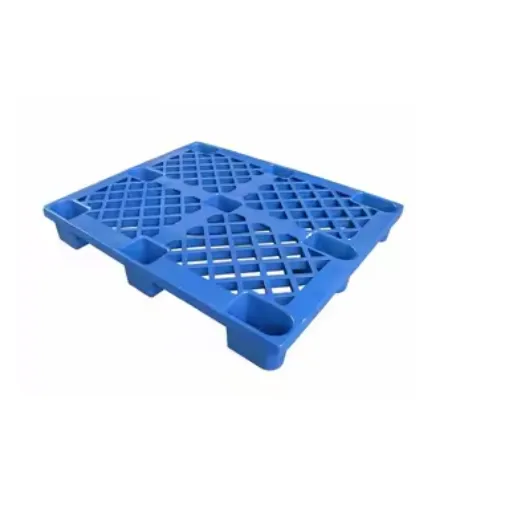

Plastic pallet boxes, cold storage solutions used widely, serve as bulk containers made of non-conductive plastics such as polypropylene or polyethylene without metal handles preserving interior hygiene and heavy lading along with inclination of temperature ranges in medicines (between a refrigeration of 2 to 8 degrees Celsius and a minus 25 degrees in keeping of the products) within deep freezers and other specialties especially where far intense-cryogenic temperatures are attained with an enhanced capacity to hold known insulative panels. Vaccines, vaccines’ contents, and drugs all in the form of drugs in dosage forms that cannot be able to retain moisture, splinters from wooden gaylords or bioburdens, are some instances where they have been widely employed.
When a cold chain is broken, a pharmaceutical product can be contaminated, and a temperature violation averts an entire antibiotic production. After 13 years, regulators have been found to leave a pathway failure extending back to the product container. Plastic pallet box may be the lowest end of the cold chain system but is a deciding factor whether a therapy will be delivered as potent or whether a loss will be recorded.
A large number of procurement officials find it difficult to think beyond the common wooden gaylords and normalize plastic containers just for the sake of familiarity and ease of use and have no mechanism that satisfies sub-zero purposes. It is only later in the lap of time that one realizes the cost of these inadequacies during audits, recalls, and contract losses. The design principles described in this guide notwithstanding the specification of plastic pallet boxes shall suffice across the entire temperature span of the pharmaceutical industry, meet the GDP and USP standards, and allow the compliance of automation and traceability in the cold storage facilities of the present day. In the conclusion section, you will have an approach to procurement invented from principles of structural material other than advertisements.
Key Takeaways
- HDPE remains impact-resistant near -80°C; standard PP turns brittle around -20°C without freezer-grade resin packages, making material specification the single most important cold storage decision.
- GDP, GMP, USP <659>, and WHO PQS each impose distinct requirements on bulk pallet containers; vetted plastic pallet boxes for cold storage map to all four when correctly specified.
- Solid wall designs outperform vented designs for most finished pharmaceutical applications, where contamination control matters more than airflow.
- RFID and IoT integration with pallet boxes is now standard for serialized cold chains, with the global cold chain monitoring market projected to climb from USD 23 billion in 2025 to roughly USD 82 billion by 2031.
- The EU Packaging and Packaging Waste Regulation enters general application on August 12, 2026, setting reuse targets that directly affect pharmaceutical transport packaging specifications.
Why Plastic Pallet Boxes Are Replacing Wood and Cardboard in Pharma Cold Storage
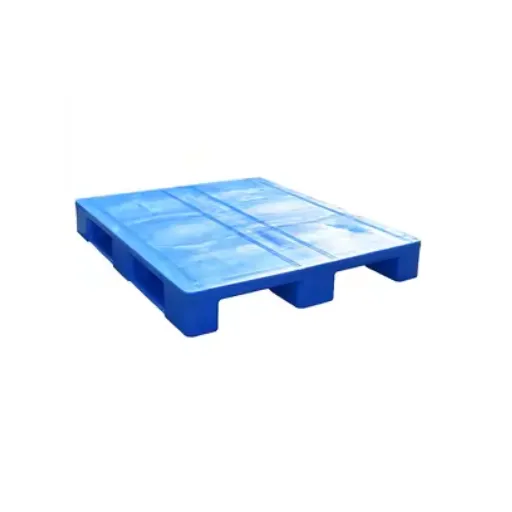
Wood absorbs moisture. In a cold room cycling between -20°C freezer storage and a +8°C dock, wood swells, cracks, and grows mold along grain lines. Under EU Good Distribution Practice (GDP) and US FDA inspection, that wood is a documented contamination risk. Cardboard fails for similar reasons; condensation cycles soften the corrugation and collapse stacks.
Plastic pallet boxes solve the root problem. High-density polyethylene and polypropylene are non-porous, do not absorb water, and tolerate repeated wash-down with hospital-grade sanitizers. The smooth interior surfaces wipe clean, sterilize, and pass cleanroom-adjacent inspections that wooden alternatives cannot survive.
Pharmaceutical demand is driving fast adoption. The US pharmaceutical cold chain packaging market is valued at USD 4.9 billion in 2025 and projected to reach USD 13.8 billion by 2035, a 10.9% compound annual growth rate, according to Future Market Insights. Within that growth, foldable plastic pallet boxes hold roughly 12% of end-use demand, with the cold chain and pharma sub-segment expanding fastest.
The shift is not just about hygiene. Plastic boxes deliver 60 to 75% empty-volume reduction when collapsed, freeing dock space and return freight capacity. They survive 10 to 15 years of rotation versus 3 to 5 for wood. And because plastic is exempt from ISPM-15 heat-treatment requirements, cross-border pharma shipments clear customs 24 to 48 hours faster than wooden equivalents.
For a deeper view of the bulk container category, see our complete guide to plastic pallet boxes.
Temperature Performance: How HDPE and PP Behave from +25°C to Cryogenic
Pharmaceutical procurement teams often see “freezer safe” on a spec sheet and move on. That phrase is marketing, not engineering. The real question is how the polymer behaves at the specific temperature your product requires, and whether the manufacturer can prove it.
USP <659> Storage Categories and Pallet Box Selection
USP <659> defines five storage categories that map directly to pallet box specification:
| USP <659> Category | Temperature Range | Recommended Pallet Box |
|---|---|---|
| Controlled room temperature | 20 to 25°C | Standard HDPE or PP pallet box |
| Cool | 8 to 15°C | Standard HDPE or PP pallet box |
| Refrigerated | 2 to 8°C | Closed-deck HDPE; solid wall preferred |
| Cold / Freezer | -25 to -10°C | Freezer-grade resin package, ribbed design |
| Ultra-low | Approx. -80°C | Freezer-grade plastic plus insulation panels |
For cryogenic ranges below -150°C, the pallet box typically acts as the outer carrier while a dewar or cryo-shipper holds the primary product.
Brittle Point and Drop Performance
Standard HDPE retains useful impact resistance down to roughly -80°C. Standard PP, by contrast, embrittles near -20°C without modification. That single fact disqualifies generic PP pallet boxes from frozen pharmaceutical storage. Freezer-grade resin packages with controlled molecular weight distribution and rib geometry tuned for low-temperature impact are required, and they should be validated against ISO 8611 drop-test methodology.
Consider the case of Anna, a quality manager at a contract vaccine manufacturer in Hubei province. In late 2024, her team standardized on a generic PP pallet box that performed perfectly at 2 to 8°C. When the operation expanded into -20°C frozen storage for a new mRNA candidate, three boxes cracked within four weeks of rotation. The cracks were micro-fractures along stress points, invisible until QA flagged condensation inside the secondary packaging. Anna’s team switched to freezer-grade HDPE pallet boxes with documented brittle-point data, eliminated the failures, and shaved 11 days off the next supplier audit because the manufacturer’s certificates were ready to hand.
Sourcing Tip: Ready to evaluate freezer-grade options for your cold chain? Explore Lile’s pharmaceutical-grade pallet solutions for full temperature performance certificates.
Vented vs. Solid Wall Pallet Boxes for Pharmaceutical Applications
In agriculture, vented pallet boxes win by default because produce needs airflow. In pharma, that assumption inverts.
When Solid Walls Are the Right Choice
Most finished pharmaceutical applications require solid wall pallet boxes. Three reasons drive that preference:
- Contamination control: Sealed interior surfaces prevent airborne particulates and microbial intrusion from adjacent storage zones.
- Cleanroom adjacency: Solid walls support ISO 14644 cleanroom-class transfer protocols where vented designs cannot.
- Cold chain integrity: When paired with insulation panels, solid wall boxes maintain a stable internal microclimate that vented designs disrupt.
When Vented Designs Earn Their Place
Vented plastic pallet boxes for cold storage retain a niche. They excel in three specific scenarios:
- Pre-cooling fresh biological materials where rapid heat removal protects cell viability.
- Condensation management when pulling product from ambient to refrigerated zones, where airflow prevents droplets from forming on primary packaging.
- API powder applications where controlled airflow aids moisture-equilibration before sealing.
Match the wall design to the product sensitivity profile. Moisture-, light-, or particulate-sensitive products belong in solid walls. Heat-management or pre-cooling workflows benefit from vented designs.
GDP, GMP, and Regulatory Compliance for Pharmaceutical Pallet Boxes
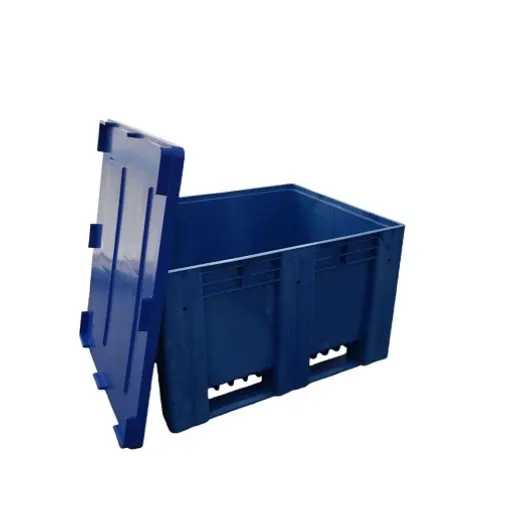
Compliance is no longer a back-office task. Inspectors increasingly trace deviations back through the entire packaging hierarchy, and bulk containers are no exception. A procurement-ready specification must map to four overlapping frameworks.
Global Regulatory Framework
- EU GDP (2013/C 343/01): Transport packaging must protect product from temperature deviation and contamination throughout the supply chain.
- US FDA and DSCSA: Track-and-trace serialization requires aggregation at pallet level, aligning with RFID-enabled pallet boxes.
- WHO Performance, Quality and Safety (PQS): The reference standard for vaccine packaging in WHO-procured programs.
- USP <659>: Defines the storage condition categories that pallet box specifications must meet.
- EU PPWR: General application begins August 12, 2026, with reuse targets of 40% by 2030 and 70% by 2040 for transport packaging.
Material and Manufacturing Certifications
The pallet box itself must carry verifiable certifications:
- FDA 21 CFR 177.1520 for polypropylene and HDPE in pharma-adjacent contact applications.
- ISO 9001 quality management certification from the manufacturer.
- ISO 14644 cleanroom-class compatibility statement when used in classified zones.
- Material traceability documentation linking each production batch to its resin lot.
Mid-sized distributors often find that documentation gaps, not product failures, drive audit findings. A pallet box manufacturer that hands over certificates in 30 minutes saves the QA team 30 hours of supplier qualification work.
Hygiene, Sanitization, and Cleaning Validation
Pharmaceutical Standard Operating Procedures require the use of specific cleaning agents which HDPE and PP can endure. The two types of plastics are resistant to certain chemicals like isopropanol alcohol (IPA) and quats, peracetic acid and hydrogen peroxide vapor. Single-cycle sterilization using gamma radiation and other repeated cycles using ethylene oxide are very effective with these materials. The grade of the resin used determines the degree to which a resin is compatible with the deep cleaning temperatures, although PP can be subjected to a greater number of cycles than HDPE before showing effect.
Manufacturers must specify the number of cycles for each clean-up intervention. A 200 wash down cycles-rated pallet box with peracetic acid will obviously look different at cycle 180 compared to cycle 20, therefore the inspection procedures must take care of that.
RFID, IoT, and Cold Chain Traceability
Cold chain traceability is now a competitive differentiator. The global cold chain monitoring market is expected to grow from USD 23 billion in 2025 to roughly USD 82 billion by 2031, according to industry analysts cited in iGPS cold chain coverage. That growth is driven by serialization requirements and customer demand for proof of cold chain integrity.
Embedded RFID tags outperform surface-applied labels in freezer environments. The cold cycle does not delaminate embedded tags, and read rates remain stable down to -25°C with properly tuned antennas. Integration options include:
- Tag-level temperature loggers that report excursions to a central platform.
- Pallet-level aggregation that matches DSCSA serialization requirements.
- Digital twin integration that mirrors the physical pallet box in a warehouse management system.
For a single biologics manufacturer in Tianjin, RFID integration reduced manual scanning at outbound dock doors from 18 seconds per pallet to 0.4 seconds, freeing two FTEs and eliminating five mis-routing incidents per quarter. The pallet box hardware did not change. The chip did.
Insulated Plastic Pallet Boxes for Premium Cold Chain Applications
Insulated plastic pallet boxes pair the structural shell with passive thermal protection. They suit three high-growth applications:
- mRNA vaccine distribution where -20°C must hold for hours during multi-stop deliveries.
- Biologics and gene therapies that require stable refrigerated envelopes during last-mile transport.
- Cell therapy logistics with strict 2 to 8°C tolerances and limited reefer access at the destination.
When paired with phase-change materials (PCMs) or gel packs, insulated pallet boxes can replace active reefer requirements for routes under 8 to 12 hours. That economic shift matters in regions where reefer fleets are scarce or unreliable.
Automation and Cold Room Compatibility
Automation is the backbone of contemporary cold storage solutions. Retrieval systems, AGVs and Conveyors, along with self-driving vehicles, require that pallets conform to tolerances of around ±2mm along with a flat and firm base. Considering how poor wooden gaylords are in such aspects, it is not possible to achieve that with them. They are, however, achievable with plastic pallet boxes manufactured to include ISO compatible outer dimensions.
To motivate process improvement, Marcus, the logistics director of a CDMO based in Suzhou, China, eliminated wooden boxes after a five-aisle AS/RS was installed in the 2025 and replaced them with steel reinforced plastic pallet boxes. The wooden replacement boxes used to clog the conveyor system and activate emergency stops 9~12 times in one shift. Once the change was made, clogging incidences fell to fewer than two a month, throughput went up by fourteen percent and the error time during a year’s running was reduced by 6,400 man hours.
In freezer applications that incorporate a washdown system, utilize plastic pallet boxes and galvanized/stainelss steel racking to avoid biological degredation. You will also need to structure the workload of the cold storage room in such a way as to reduce the duration of open doors. Rather than celebrating outliers, instituting standard procedures is far more effective.
Operational Tip: Considering automation upgrades? Compare plastic pallets and pallet boxes to specify both the base and the bulk container together.
How to Specify Pharmaceutical-Grade Plastic Pallet Boxes
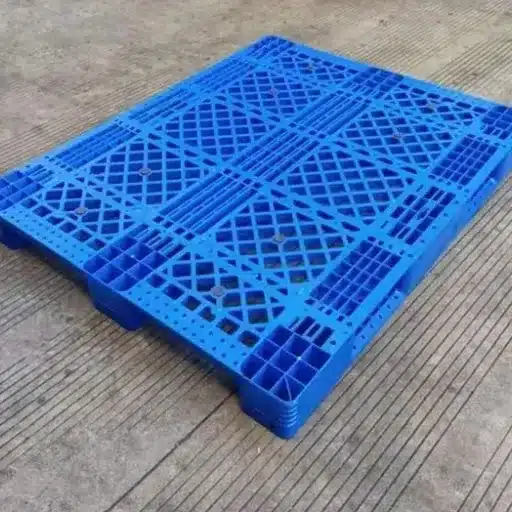
Use this six-point checklist when requesting quotes:
- Material certification: FDA 21 CFR 177 contact-compliance plus regional equivalents.
- Temperature performance: Drop-test data at the lowest temperature in your operation, not just at ambient.
- Dimensional tolerance: Documented to ±2mm or better for automation compatibility.
- Sterilization compatibility: Cycle limits for each cleaning method your SOP requires.
- RFID integration option: Embedded or surface-applied, with read-rate data at operating temperatures.
- Manufacturer qualification: ISO 9001 certified, audit-ready documentation, and traceable production lot codes.
Confirm each item in writing before purchase orders. A manufacturer that hesitates on documentation rarely improves after the contract is signed.
For a representative video overview of pharmaceutical-grade pallet specifications, see industry walkthroughs on YouTube such as the Cold Chain Federation’s GDP packaging series (search “Cold Chain Federation GDP plastic pallet boxes”).
Conclusion: Specify the Container That Protects the Product
Plastic pallet boxes for cold storage are not commodity items. They are engineered components of the pharmaceutical cold chain that determine whether your product reaches the patient potent and compliant. The five key takeaways:
- Specify freezer-grade HDPE or PP, not generic plastic, for any storage below -10°C.
- Default to solid wall designs for finished pharmaceuticals; reserve vented designs for pre-cooling and powder workflows.
- Map every specification to GDP, USP <659>, WHO PQS, and EU PPWR requirements before purchase.
- Plan for RFID integration now; the cold chain monitoring market is doubling within five years.
- Choose a manufacturer that hands over certifications, drop-test data, and dimensional tolerance documentation without friction.
Shandong Lile engineers plastic pallet boxes from a 178,000 square meter facility, supplies 108 countries, and ships through Qingdao Port for fast access to global pharma corridors. Request a specification packet for your cold storage application and our pharmaceutical packaging team will respond within one business day.