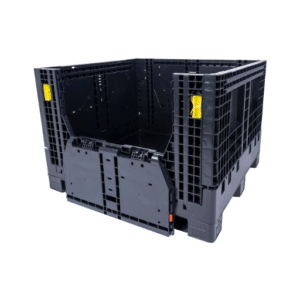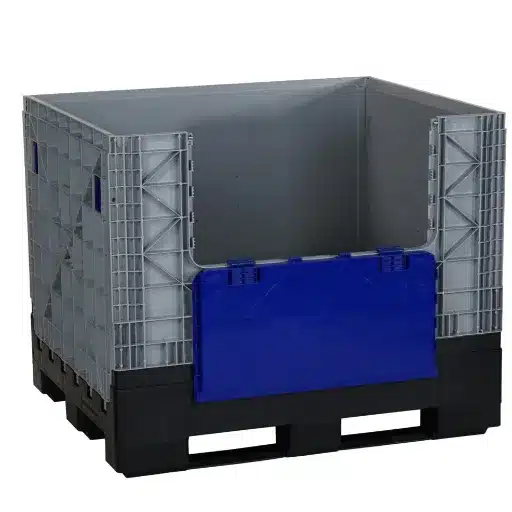

Choose collapsible plastic pallet boxes when your empty-return ratio runs above 35–40% and you cycle the same fleet 10 or more times a year. Choose rigid plastic pallet boxes for one-way heavy freight, automated warehouses, and dense or sharp-edged cargo. Most operations at scale end up running both.
That’s the short answer. Here’s why it matters.
A logistics manager at a mid-sized auto-parts distributor, call him Marcus, spent 48,000onrigidpalletboxeslastspring.Hechosethembecausetheunitpricebeatthecollapsiblequoteby2248,000onrigidpalletboxeslastspring.Hechosethembecausetheunitpricebeatthecollapsiblequoteby22112, 000 in lost trailer space and extra backhaul lanes.
Marcus isn’t unusual. Most online guides on collapsible vs rigid plastic pallet boxes are written by vendors that sell only one of the two. The advice is rarely honest. This guide is different. Shandong Lile manufactures both designs across 16 facilities in 108 countries. We’ll show you when each one wins, with cycle math you can run on a spreadsheet today.
You’ll get a full comparison table, the cost framework most procurement teams skip, the EU PPWR 2026 compliance angle, and a 5-minute decision method.
Key Takeaways
- Collapsible designs cut empty-return volume by 70–80% and trim backhaul freight 40–60% on closed-loop routes.
- Rigid units win on dimensional stability, cycle fatigue, and dense one-way loads, and they cost 25–35% less upfront.
- Acquisition price is only 20–30% of total lifecycle cost. Run cycle math, not unit math.
- The EU PPWR enters general application on August 12, 2026, with reuse mandates that pull both designs deeper into transport packaging.
- Most operations above 500 units in service end up running a hybrid fleet, collapsible on return-heavy lanes, rigid on one-way and automated lanes.
Quick Answer: Which Pallet Box Should You Choose?
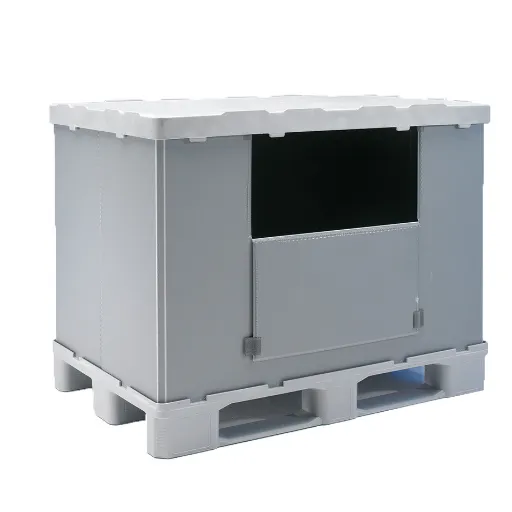
If you ship outbound and receive empty units back, choose collapsible plastic pallet boxes. They fold flat, cube up trucks on the return leg, and reduce empty-return volume by up to 80%.
If you ship one-way to end customers, run automated storage, or handle sharp metal cargo, choose rigid plastic pallet boxes. They cost less upfront, hold dimensions tighter, and survive cycle fatigue better than any hinge mechanism.
Above roughly 500 active units, most large fleets blend the two. Read on for the full comparison and the 5-minute cycle-math test.
What Are Collapsible and Rigid Plastic Pallet Boxes?
Both are heavy-duty containers built from injection-molded plastic. Both ride a built-in pallet base. Both stack, store, and ship industrial bulk loads. The construction logic is what splits them apart.
Collapsible (Folding) Plastic Pallet Boxes
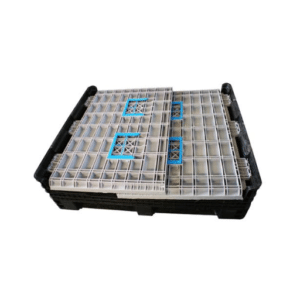
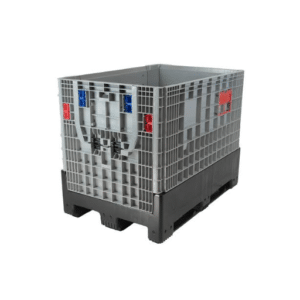
A foldable collapsible pallet box drops its sidewalls inward along reinforced hinges once empty. The folded unit shrinks to roughly one-third of assembled height. The base and corner reinforcements stay intact through every fold cycle. Premium designs hit a 4. 7: 1 knock-down ratio.
This is the design built for return logistics. Closed-loop fleets, automotive parts, fresh produce, retail returns, depend on it.
Rigid (Solid-Wall) Plastic Pallet Boxes
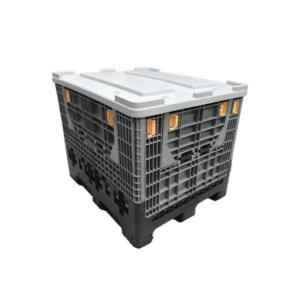
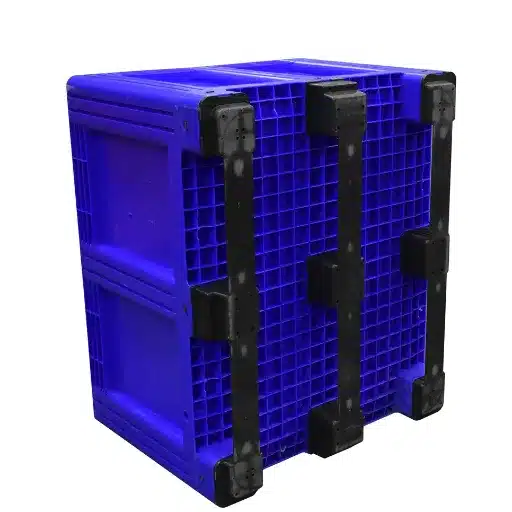
A rigid industrial pallet box always keeps its shape. Solid sidewalls bond to the base in a single molded unit. Forklifts enter from any of four sides. Stack height holds firm under load.
Rigid units carry every name in the industry: bigbox, agribox, industrial bulk container. The job is the same. Move dense or sharp loads where dimensional stability matters more than empty-return cube.
Side-by-Side Comparison Table
| Attribute | Collapsible Plastic Pallet Box | Rigid Plastic Pallet Box |
|---|---|---|
| Construction | Hinged sidewalls, reinforced base | One-piece molded body |
| Folded ratio | Up to 4. 7: 1 knock-down | None, fixed footprint |
| Empty-return savings | 70–80% volume reduction | 0% (full footprint always) |
| Dynamic load (typical) | 800–1, 000 kg | 1, 000 kg |
| Static load (typical) | 3, 000–4, 000 kg | 4, 000 kg |
| Stack height (loaded) | 4 high | 5 high |
| Four-way forklift entry | Yes | Yes |
| Temperature range | −20°C to +60°C standard / −40°C to +70°C extended | Same |
| Cycle life (premium grade) | 50, 000+ cycles | 50, 000+ cycles |
| Upfront price (per unit, 2025) | USD 80–80–200 | 25–35% less than equivalent collapsible |
| Best for | Closed-loop, return-heavy lanes | One-way freight, automation, sharp loads |
| Hidden risk | Hinge wear under sharp/abrasive loads | Wasted return freight on round-trip lanes |
The table answers the surface question. The cost section answers the real one.
Construction and Materials: How They’re Built Differently
Both designs run on two main resins: high-density polyethylene (HDPE) and polypropylene (PP). Each has a job.
HDPE vs Polypropylene, When Each Wins
HDPE delivers impact resistance and UV stability. It bends a little under shock and bounces back. It holds up indoors and outdoors, hot and cold. Most folding pallet boxes use HDPE for that reason.
PP is stiffer. It resists more chemicals and holds shape tighter under heavy static load. The trade-off shows in cold weather. PP loses some impact toughness below freezing.
Lile molds both, sometimes blended for a specific load profile. The 18 large-scale machines on our line let us tune resin grade per order.
Reinforcement and Customization Options
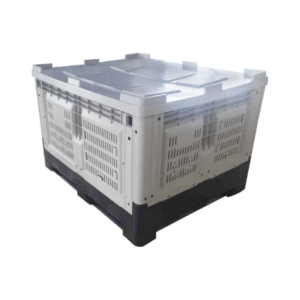
Modern containers aren’t one-size designs. Steel-frame inserts, drop doors, vented sides, lid options, RFID pockets, food-grade resins, every one of these is a real spec our engineering team builds to. Customization is where manufacturer-direct sourcing earns its keep. A distributor can’t change a mold; we can.
Load Capacity, Stacking, and Durability
Specs on a datasheet only get you halfway. The other half is how the design behaves over thousands of cycles.
Dynamic vs Static Load Ratings Explained
Dynamic load is what the box can carry while moving on a forklift. Typical: 1, 000 kg.
Static load is what it carries when stacked still. Typical: 4, 000 kg.
Racking load is what it carries on the second beam of a pallet rack. Lower than static, usually 800–1, 200 kg. Verify this number with the supplier; many published specs blur the line.
A 3: 1 safety factor between dynamic and static is the field standard. If a vendor quotes 1, 000 kg dynamic and 1, 200 kg static, that’s a yellow flag.
Hinge Wear vs Wall Abrasion, Which Fails First?
Both designs fail somewhere. The honest engineering answer is they fail differently.
Collapsible boxes fail at the hinge under sharp metal stampings and high-impact drops. Rigid boxes fail at the corner walls under repeated forklift collisions in narrow aisles. Cycle life on premium grades runs above 50, 000 cycles for both. Cheap collapsibles can fail between 8, 000–15, 000 cycles. Always confirm the cycle rating in writing.
The Cost Math: Upfront Price vs Total Cost of Ownership
Here’s where most procurement decisions go wrong. Buyers compare unit prices. They miss the part that matters.
Why Acquisition Is Only 20–30% of the Real Cost
Industry lifecycle modeling shows acquisition is just 20–30% of a pallet box’s total cost of ownership. The other 70–80% lives in storage, freight, repair, and lost trailer space. That ratio is why the cheaper unit on the quote can still cost more over five years.
Worked Example: A 200-Unit Fleet Over 5 Years
Run this on a fleet of 200 boxes cycling 12 times a year on a 1, 000-mile lane.
| Cost line | Rigid (200 units) | Collapsible (200 units) |
|---|---|---|
| Unit price | 130×200=130×200=26, 000 | 170×200=170×200=34, 000 |
| 5-year backhaul freight | $145, 000 | $58, 000 |
| Warehouse storage (empty units) | $42, 000 | $9, 000 |
| Repair / replacement | $11, 000 | $14, 000 |
| 5-year total | $224, 000 | $115, 000 |
The unit price gap was 8,000.Thelifecyclegapwas8,000.Thelifecyclegapwas109, 000. That’s the cost of choosing on the wrong number.
This math flips the other way on one-way lanes. If empties never come back, the collapsible advantage disappears, and the lower acquisition cost of rigid wins. Run the numbers for your route profile, not the industry average.
Our team builds custom TCO models for clients across 108 countries. Request a custom solutions consultation and we’ll size the fleet against your real lanes.
When to Choose Collapsible Plastic Pallet Boxes
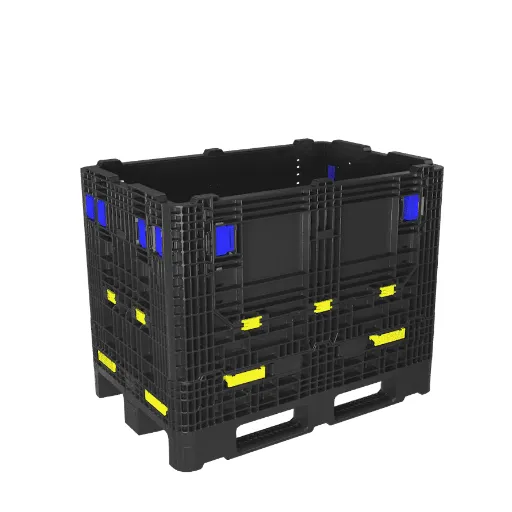
Collapsible designs win in four specific scenarios.
Closed-Loop Supply Chains
When the same containers cycle between two or three known points, every empty trip costs you. Folding cube reclaims that loss. A closed-loop route with weekly returns earns back the price premium in 18–24 months on most fleets.
Limited Warehouse Footprint
A 1, 000-unit collapsible fleet saves a typical operation 8,000–8,000–15, 000 a year in warehouse space alone. That’s before you count freight savings.
Seasonal or Variable Demand
Agricultural shippers, retail returns operations, and event logistics teams need bulk capacity for short windows. Folding the fleet flat in the off-season frees the warehouse for active stock.
Sustainability Targets and PPWR Compliance
The EU Packaging and Packaging Waste Regulation (Regulation 2025/40)enters general application on August 12, 2026. Reuse targets for transport packaging climb to 40% by 2030, and a suggested 70% by 2040.
Same-operator intra-country transport packaging faces a 100% reusability mandate within 18 months of application. Cube-optimized return trips also cut CO₂, premium folding designs deliver up to 78% fewer empty-truck movements.
A short note on timing: Germany’s Federal Environment Minister has publicly pushed for the application date to slip to January 2027. Track the European Commission’s PPWR portalbefore you commit to a compliance schedule.
When to Choose Rigid Plastic Pallet Boxes
Rigid wins in a different set of scenarios.
One-Way / Long-Distance Heavy Freight
If the box ships full and never comes back, you’re not paying for empty cube. The lower upfront price is the right answer.
Automated Warehouses Demanding Dimensional Stability
AGV fleets, AS/RS shuttles, and conveyor lines operate within millimeter tolerances. Rigid units hold those dimensions perfectly across 50, 000 cycles. Collapsible units can hold them too, but only premium grades with reinforced bases.
The automation pressure is rising. Toyota Material Handling Europe launched its Swarm Automation Transport system in March 2026, and Toyota Automated Logistics consolidated Bastian Solutions, Vanderlande’s warehousing arm, and viastore in April 2026. The global warehouse-automation market crossed $30 billion this year and is projected to nearly double by 2030. If your facility is automating, dimensional stability is no longer optional.
Sharp-Edged or High-Density Cargo
Engine blocks, transmissions, dense steel parts. Loads that punish hinges. Rigid wins here. Solid walls absorb impact better than any pivot point.
Liquids, Loose Materials, and Sealed Storage
Vented or solid rigid units handle bulk liquids, fine granulates, and fresh produce well. Sealed surfaces resist contamination.
Industry Use Cases
Real operations run mixed profiles. Here’s how the choice plays out by sector.
Automotive, Why OEMs Lean Collapsible
Automotive supply chains run hot and round-trip. Inbound parts move from supplier to OEM; empty containers move back the same lane the next day.
A Tier-1 European supplier we work with shifted from a pure rigid fleet to a hybrid in 2024. The lighter inbound lanes moved to collapsible. Result: 38% transport savings and zero degradation in load integrity. Heavy-line containers carrying engine castings stayed rigid.
This is the pattern across automotive. Light parts go folding, dense parts stay rigid.
Food and Beverage, Where Rigid Often Wins
Vented rigid bins are the standard for fresh fruit and vegetables in stackable storage. Airflow matters. Dimensional stability under cold-chain temperatures matters. Rigid handles both.
Beverage and packaged food often go the other way. If your distribution returns crates from retail to the bottling plant, collapsible wins.
Pharmaceuticals, Hygiene-First Decision Path
Pharma cares about clean. Both designs sanitize well. Both are non-porous. The decision usually turns on validation. Hygienic-grade rigid boxes have fewer crevices and pass GMP audits with less complexity.
For pharma cold-chain returnable systems, premium collapsible can work, but the validation paperwork takes longer.
Agriculture, Vented Variants and Seasonal Strategy
A California fresh-produce co-op we’ve spec’d containers for runs 300 collapsible bins on harvest cycles. Empty volume drops to one-quarter of the previous rigid baseline. Freight invoices fell 45%, and two storage bays cleared up for active stock. The price premium paid back in 20 months.
That’s the seasonal pattern in a sentence. If the crop runs three months and the rest of the year is storage, collapse the fleet.
EU PPWR 2026 Compliance: What Buyers Must Know
This is the regulation buyers under-prepare for most. The headlines are clear; the details are where you trip.
| PPWR provision | What it means for pallet box buyers |
|---|---|
| General application August 12, 2026 | Conformity declarations and technical files due by that date |
| 40% transport-packaging reuse by 2030 | Both collapsible and rigid count toward reuse, single-use does not |
| 100% reusability for intra-country same-operator transport packaging within 18 months | Closed-loop fleets become mandatory in many sectors |
| Article 24: max 50% empty space in grouped/transport packaging | Push toward right-sized custom dimensions |
| Technical documentation: 10 years for reusable packaging | Suppliers must hold full traceability records |
A reusable plastic pallet box, collapsible or rigid, already qualifies as PPWR-aligned packaging. Single-use cartons and most softwood crates don’t. If you’re still buying disposable, the 2026 clock is running.
For a deeper look at the durability and ROI side of compliance, see our reusable plastic pallets guide.
The Hybrid Fleet Strategy: Why Most Operations Need Both
Most operations above 500 active units don’t pick one design. They split the fleet by lane.
The logic is simple. Some lanes return empties; some don’t. The container should match the lane, not the procurement preference. A 70/30 collapsible-rigid mix often beats a single-type fleet on total cost.
Hybrid fleets also handle exceptions. Seasonal spikes go folding. New automation lines go rigid. The mix evolves with the operation.
This is the manufacturer-honest answer. Lile builds both because customers run both. Our 18-machine production capacity handles split orders without compromise.
How to Run Your Own Cycle Math in 5 Minutes
Open a spreadsheet. Pull these five numbers.
- Active fleet size (units in service).
- Cycles per year (round trips per unit).
- Empty-return ratio (percent of trips where the unit ships empty).
- Average backhaul cost per mile (carrier rate for the empty leg).
- Warehouse storage cost per square foot per year.
Multiply units × cycles × empty-return ratio × backhaul mileage × per-mile rate. That’s your annual empty-freight bill on rigid.
Now multiply that by 0. 30. That’s the comparable bill on collapsible (folded units cube up at roughly 3: 1).
Subtract. Add the warehouse savings (typically 8,000–8,000–15, 000 per 1, 000 units annually). Compare against the price premium per unit × fleet size.
If the savings exceed the premium inside 24 months, collapsible wins your route. If not, rigid wins. If the gap is small, run hybrid.
This is the math no vendor wants to publish. It’s the math every buyer should run.
Frequently Asked Questions
Are collapsible plastic pallet boxes worth the higher upfront cost?
For closed-loop and return-heavy operations, yes. Premium collapsible designs typically pay back the 20–30% upfront premium within 18–24 months on freight savings alone. For pure one-way shipping, no, rigid stays cheaper.
How long do collapsible vs rigid plastic pallet boxes last?
Premium grades of both hit 50, 000+ cycle ratings, which translates to 8–10+ years of service in most operations. Cheap collapsibles can fail between 8, 000–15, 000 cycles. Always confirm the cycle rating in the contract.
Can collapsible pallet boxes work in automated warehouses?
Yes, but only premium grades engineered for dimensional stability. Standard folding designs can flex enough to jam conveyors or AS/RS shuttles. Specify the AGV-rated grade if your facility runs automation.
Which type is better for food-grade applications?
Both can be FDA- or EU-food-contact compliant in the right resin. Hygienic rigid units are easier to validate for HACCP because they have fewer crevices. Vented rigid is the default for fresh produce.
What’s the typical break-even point on a collapsible investment?
For closed-loop fleets cycling 10+ times a year with empty-return ratios above 35%, break-even runs 18–24 months. Below that threshold, the math takes longer or never breaks even.
Can I customize either type for my specific load profile?
Yes. Lile molds both designs to custom dimensions, colors, drop-door configurations, vented sides, RFID pockets, and steel-reinforced corners. Our 18 large-scale production machines support split orders across both designs in a single PO.
The Bottom Line
The choice isn’t collapsible or rigid. It’s match the container to the lane.
Three takeaways to act on this week:
- Run the cycle math before you sign any quote. Acquisition is 20–30% of total cost, the other 70–80% lives in freight, storage, and repair.
- Match the container to the lane. Return-heavy lanes go collapsible. One-way and automated lanes go rigid. Don’t force a fleet-wide choice.
- Plan for PPWR. August 12, 2026, is the date most operations should treat as a hard deadline for transitioning out of single-use transport packaging.
Lile manufactures collapsible and rigid plastic pallet boxes across 18 production lines, serving customers in 108 countries. Whether you need pure folding, pure rigid, or a hybrid fleet, our engineering team will run the cycle math on your operation and quote both options side-by-side.