When looking at how to make logistics work and optimize operations, pallet design just has to get it right. The […]
In global logistics, efficient material handling is crucial. As a premier plastic pallet manufacturer, we offer industrial plastic pallets—a superior, durable alternative to wood. Our range meets modern warehousing, shipping, and handling demands. Exempt from ISPM 15, our plastic pallets simplify export, ensuring hygienic, compliant, and cost-effective solutions for your supply chain.
Engineered for maximum load capacity and resilience. These industrial-strength pallets are built to withstand demanding environments, making them ideal for heavy manufacturing, construction materials, and high-volume warehouse applications where durability is paramount.
Offering an optimal balance between performance and cost, these pallets are perfect for general-purpose applications. They are ideal for retail, general warehousing, and handling products that do not require maximum industrial-strength support, providing a reliable and economical solution.
This category focuses on space efficiency. Stackable pallets provide a stable base for block stacking loaded goods, while nestable pallets save valuable floor and shipping space when empty, optimizing your storage and logistics workflow.
Specifically designed for use in modern pallet racking systems. These pallets are reinforced to handle heavy loads without bending, ensuring safety and stability in high-bay warehouses. They are essential for effectively optimizing your vertical storage space.
Optimized for one-way and international shipments. These lightweight pallets reduce freight costs and are fully ISPM 15 exempt, ensuring a smooth customs clearance process. They provide a reliable, cost-effective solution for getting your products to global markets.
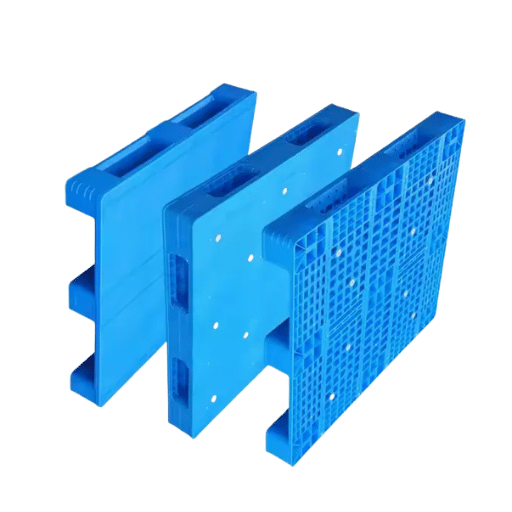
Manufactured from FDA-compliant, virgin materials, these hygienic pallets are essential for food, beverage, and pharmaceutical industries. Their non-porous surfaces are easy to clean and sanitize, preventing contamination and supporting strict regulatory compliance and safety standards.
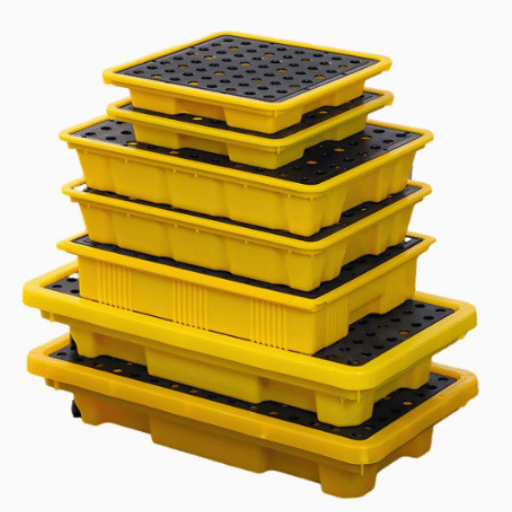
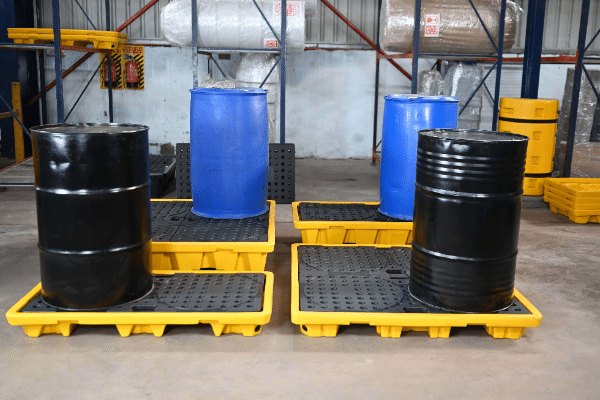
Protect your workplace and the environment with our spill containment pallets. Designed with a built-in sump capacity, they safely capture leaks, drips, and spills from drums or containers, ensuring regulatory compliance and preventing hazardous material spread.
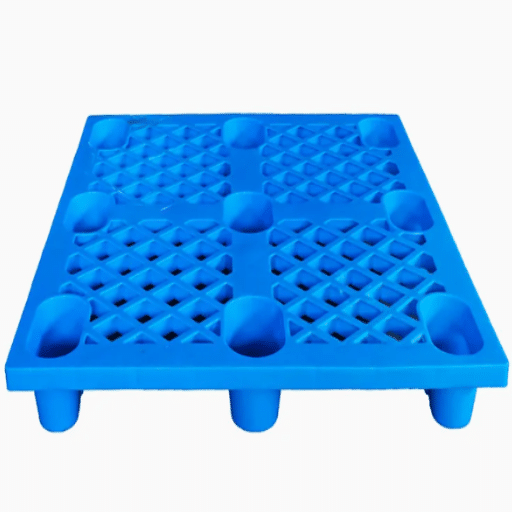
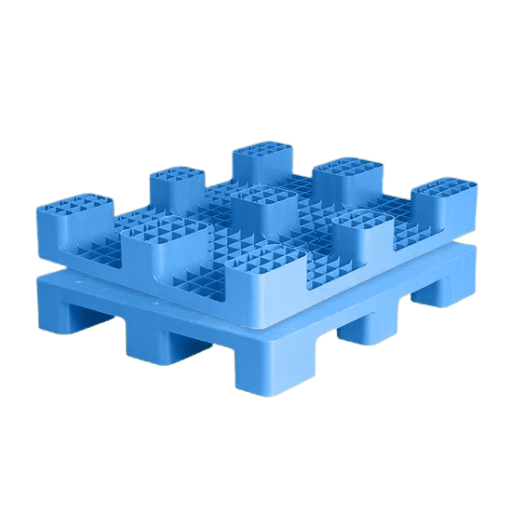
This category includes pallets with unique configurations like double-face (reversible) designs, 9-leg open-bottom styles, or 6-runner bases. These are engineered for specific handling equipment, unique load distribution needs, or specialized automated conveyor systems.
Ideal for point-of-purchase displays, small-batch processing, or maneuvering in tight spaces where a standard-sized pallet is impractical. These compact pallets offer a versatile solution for handling smaller loads in retail, labs, and specialized manufacturing environments.
Engineered for a single, specific purpose. This includes pallets designed to securely cradle water bottles for transport or specialized pallets used in the printing and paper industries. These ensure maximum product protection and handling efficiency for unique items.
Designed to create a safe, clean, and dry storage platform by elevating products off the ground. These flooring pallets often interlock to cover larger areas, protecting valuable inventory from moisture, pests, and dirt in any storage environment.
This defines pallets by their production method. Injection-molded pallets offer high precision and are ideal for complex designs and racking. Blow-molded pallets provide superior impact resistance and durability, making them excellent choices for demanding industrial environments.
| Pallet Category | Primary Application / Use Case | Key Features & Strengths | Typical Functionality (Stackable / Nestable / Rackable) |
|---|---|---|---|
| Heavy Duty Pallets | Demanding industrial use, heavy manufacturing, closed-loop systems | Highest load capacity, extreme durability, impact resistance | Stackable & Rackable |
| Medium & Light Duty Pallets | General warehousing, retail distribution, one-way shipping | Balances cost and performance for a wide range of common uses | Varies: Can be Stackable or Nestable |
| Stackable & Nestable Pallets | Optimizing storage and transport efficiency | Stackable: Stable base for stacking loaded. Nestable: Saves space when empty. | Defined by Category |
| Rackable Pallets | Use in high-bay warehouses and pallet racking systems | Reinforced structure to prevent bending under load; ensures safety | Rackable & Stackable |
| Export & Shipping Pallets | International and one-way shipments | Lightweight to reduce freight costs; ISPM 15 exempt for easy customs clearance | Predominantly Nestable |
| Food Grade & Hygienic Pallets | Food, beverage, and pharmaceutical industries | Made from virgin, FDA-compliant materials; non-porous and easy to sanitize | Varies: Can be Stackable and/or Rackable |
| Spill Containment Pallets | Storing drums, IBCs, and containers of liquids | Integrated sump to safely capture leaks and spills; ensures environmental compliance | Static use; can be designed for stacking |
| Specialty Design Pallets | Unique handling equipment or automated systems | Includes double-face, 9-leg, and 6-runner designs for specific applications | Varies based on the specific design |
| Mini & Small Pallets | Point-of-purchase displays, tight spaces, small-batch handling | Compact footprint for specialized or low-volume applications | Typically for ground use; can be stackable |
| Application-Specific Pallets | Designed for a single product type (e.g., water bottles) | Contoured surfaces or custom supports for maximum product protection | Highly customized functionality |
| Ground Use & Flooring Pallets | Elevating products off the floor for safe, dry storage | Often interlocking to create a raised platform; protects inventory from moisture/dirt | Static ground use only |
Selecting the right plastic pallet involves evaluating various factors to ensure optimal performance and cost-effectiveness. A decision tree approach can simplify this process by guiding procurement managers through a series of considerations, such as load requirements, environmental conditions, and intended applications. Starting with the desired load capacity, users can determine whether a rackable, stackable, or nestable pallet is most suitable. Subsequent decisions involve assessing the size and design features necessary to accommodate specific storage configurations and logistical needs. This structured approach enables businesses to make informed decisions, ensuring that the selected pallet aligns with operational objectives and industry standards.
When choosing commercial pallets, several key factors must be considered to ensure compatibility with existing supply chain operations. Load capacity is paramount, as it dictates the pallet’s ability to safely support products during transportation and storage. The size of the pallet must align with the dimensions of storage facilities and shipping containers to maximize space efficiency. Environmental factors, such as exposure to moisture, temperature variations, and chemical interactions, also play a crucial role in determining the most suitable material and design for the pallet. By carefully evaluating these factors, businesses can select plastic pallets that offer optimal performance and longevity in their specific operational contexts.
For industries with unique logistical requirements, custom pallet solutions offer a tailored approach to material handling challenges. Custom pallets are designed in collaboration with plastic pallet manufacturers, allowing businesses to specify dimensions, load capacities, and additional features that precisely match their operational needs. Whether it’s incorporating specific colors for easy identification, integrating RFID tags for asset tracking, or designing pallets with specialized deck configurations, the possibilities are extensive. By opting for custom pallet solutions, companies can enhance efficiency, streamline supply chain processes, and ensure seamless integration with their existing infrastructure, ultimately achieving a competitive advantage in their respective markets.
The choice of material impacts pallet performance. We primarily use two high-quality thermoplastics: High-Density Polyethylene (HDPE), known for its excellent impact resistance, especially in colder temperatures, making it ideal for freezer applications and general warehouse use. It offers a good balance of strength and flexibility. Polypropylene (PP) is generally stiffer and more rigid than HDPE. PP offers a higher structural strength, making it a preferred choice for heavy-duty stacking and racking applications where minimal deflection under load is required. It also performs better in higher temperature environments.
The surface and base of a pallet affect its function. An open deck is lighter and allows for drainage, while a closed deck provides a more stable surface and is easier to clean. The base is defined by its runners—a 3-runner (skid) design is common for racking, while a 6-runner (picture frame) can offer greater stability for stacking.
It is critical to understand the three types of load capacity. Static load is the maximum weight a pallet can hold when stationary on a flat surface. Dynamic load is the maximum weight it can hold while being moved by a forklift or pallet jack. Racking load is the maximum weight it can support in a racking system, which is typically the most stringent specification.
The production process determines a pallet’s characteristics. Injection molding forces molten plastic into a precision mold, creating highly detailed and dimensionally accurate pallets, making them ideal for automated systems and racking. Blow molding creates a hollow, double-walled structure, resulting in a pallet with superior impact resistance and durability, well-suited for harsh industrial environments.
To achieve high racking load capacities, pallets can be reinforced. This typically involves inserting steel or composite rods into pre-designed channels within the pallet’s deck and runners. This reinforcement significantly increases the pallet’s rigidity and strength, preventing it from sagging under heavy loads and ensuring safe, reliable use in high-bay racking systems.
A leading beverage company switched to stackable plastic pallets to enhance their shipping efficiency. By utilizing durable plastic pallets, they successfully maximized their load capacity while maintaining hygiene standards. The customization options allowed them to create a unique design that fit their specific packaging needs, leading to faster delivery and reduced waste in their supply chain.
A prominent pharmaceutical manufacturer adopted nestable plastic pallets for their warehouse operations. The space-saving design of these rackable pallets enabled them to optimize their storage capacity. The lightweight yet strong structure of the pallets facilitated easy handling of heavy loads while ensuring compliance with hygiene standards and recyclability, significantly lowering their operational costs.
When looking at how to make logistics work and optimize operations, pallet design just has to get it right. The […]
With their strength, versatility, and suitability under tough terrains, heavy-duty plastic pallets have only gained prominence as an invaluable phenotypic […]
In shipping, warehousing, and logistics, pallets are vital for transporting goods with utmost speed and safety. Yet, knowing pallet weight […]
Performing visual examinations of plastic pallets, pressure washing, and other similar methods of proper cleaning of plastic boxes, keeping them […]
An expert manufacturer of industrial plastic pallets and custom solutions for businesses worldwide.