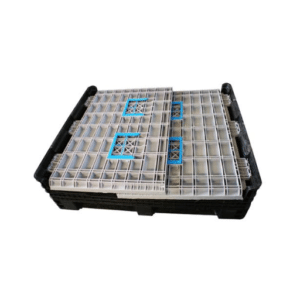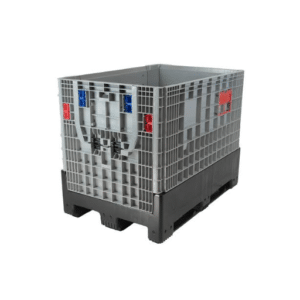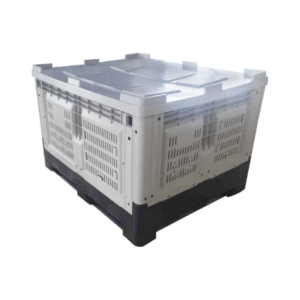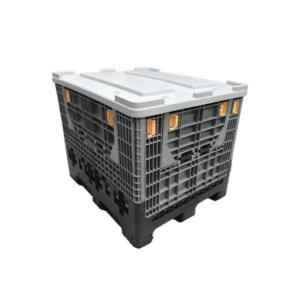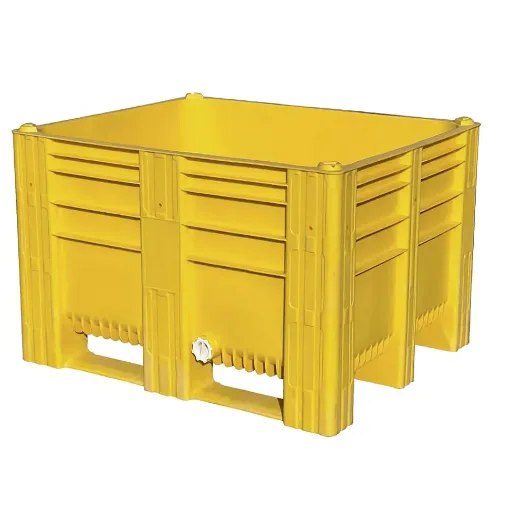

Industrial Packaging Heavy duty plastic pallet boxes, sometimes also known as bulk bins or bulk boxes and engineered to chair a maximum static load of up to 4,000 kilograms, basically reinforce traditional transport, storage and handling with a rigid or collapsible wall around a full base platform – which could be The pallet. Such containers are the working horses of the modern logistics of the automotive, agricultural, food and industrial sectors worldwide.
It is not all that is claimed to be heavy duty that can stand a static load of 4 tons. If you have been confronted with products listed as seemingly identical, but one product goes for $90 while another $180, then you already know the challenge. The design-sustaining industrial packaging markets has takes, that’s the term, as instead of a model term, a marketing term. There is an audit with failed compliance, injury in the workplace, and hurt equipment sitting next to a stack of boxes that does not materialize from a plain look at the box.
This manual provides precise guidelines including specifications, load rating, and assessment criteria for the selection of heavy duty plastic pallet boxes in line with your working requirements. We will cover static, dynamic and stacking capacities entirely. We will also review the rigid and collapsible box types. We will discuss materials, applications of the boxes in different industries, and five stages of their selection. Moreover, we will explain how custom engineering enables solutions for problems where conventional SKUs simply fails.
Key Takeaways
- Rigid heavy duty plastic pallet boxes handle up to 4,000 kg static loads, while collapsible variants typically top out at 1,500 kg — choose rigid for maximum capacity, collapsible for return-logistics savings.
- HDPE construction performs from -40°C to +70°C and resists chemicals, moisture, and impact better than wood or metal alternatives in most industrial applications.
- Automotive, agriculture, food processing, and warehousing account for the majority of heavy-duty demand, each requiring different wall types, base designs, and compliance standards.
- Total cost of ownership calculations show plastic pallet boxes often pay for themselves within 18–24 months compared to single-use wooden crates.
- Custom mold development, steel reinforcement, and color matching let manufacturers engineer boxes for loads and dimensions that off-the-shelf products cannot accommodate.
What Are Heavy Duty Plastic Pallet Boxes?
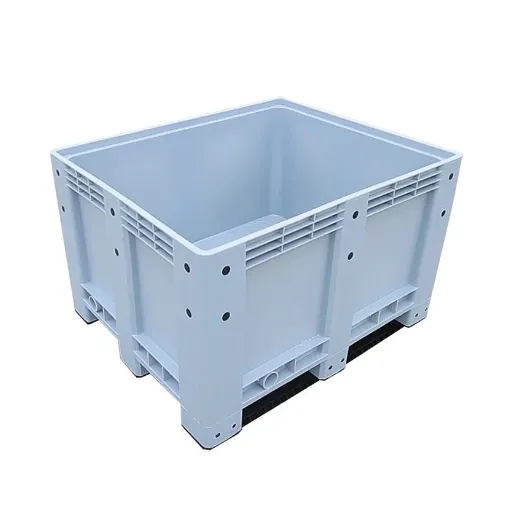
Heavy duty plastic pallet boxes are large-volume, pallet-based containers designed for repeated industrial use under demanding load conditions. Unlike standard tote bins or lightweight containers, these units integrate a reinforced pallet base with high walls to create a single handling unit that forklifts, pallet jacks, and automated guided vehicles can move as one piece.
Common external dimensions follow ISO pallet standards. The 1200×1000 mm footprint dominates European and Asian markets, while 1200×800 mm and 48×40 inch variants serve North American operations. Internal volumes typically range from 500 to 1000 liters, though custom molds can exceed these capacities for specialized bulk applications.
What separates a genuinely heavy-duty unit from a standard plastic pallet box comes down to three factors: base reinforcement, wall thickness, and load-rated engineering. Standard boxes might handle 200 kg dynamic loads comfortably. Heavy duty plastic pallet boxes start at 500 kg dynamic and scale upward to 1,000 kg or more. The bases on industrial-grade models often feature three reinforced skids rather than two, distributing weight across forklift tines more evenly and preventing flex under extreme concentrated loads.
Buyers evaluating industrial plastic pallet boxes or bulk plastic pallet boxes should understand that these terms describe the same core product category. The key difference lies in application-specific configurations. Standard plastic pallets serve as the foundation, while pallet boxes add vertical containment for loose, bulky, or sensitive goods.
Load Capacity Explained: Static, Dynamic, and Stacking Ratings
Understanding plastic pallet boxes load capacity is the single most important step in selecting the right container. Manufacturers publish three numbers. Each one matters for a different phase of your operation.
Static Load
Static load measures the weight a box can hold when stationary on a flat floor. Rigid heavy duty plastic pallet boxes top out around 4,000 kg in this category. Collapsible models generally reach 1,000–1,500 kg because their hinged or sleeve-based construction introduces flex points that single-piece molded designs eliminate.
Dynamic Load
Dynamic load refers to capacity during movement by forklift or pallet jack. This number always runs lower than static load because vibration, momentum, and uneven surfaces introduce stress multipliers that stationary storage does not. Rigid boxes typically handle 1,000 kg dynamic. Collapsible heavy duty plastic pallet boxes usually rate between 400 and 500 kg.
Stacking Load
The term “stacking load” explains the combined weight which a particular box resists as a consequence of overlying loaded packages. Usually when floor space is considered an expensive commodity, as it is for example within warehouses, it is normal to stack four to six containers on top of another. In addition to this when a load is calculated for a box in which its static load bearing strength is equivalent to 4,000 kg, the box elastic load may be 3,500 – 4, 500 kg depending on the corner-post design and base geometry of the box.
As a result of his work as the logistics administrator for the company that manufactures auto spare parts in the region of Shandong, Mr. Chen Wei was able to comprehend the above difference at his own peril. Before making the 200 heavy duty collapsible boxes ordered, he had a look at the supplier’s brochure which clearly read ‘heavy duty’ which was printed in bold. The footnote however, read that the maximum dynamic load was 500 kg. The cylinder heads weighed 780 kg per collapsible box. For a just-in-time delivery, they stacked each box from the three to four pieces, and it was through the extra weight that the base of three boxes were torn. It cost three production days and forced him to urgently order more rigid boxes at thrice the celerity charges. Moral of the story: observe the dynamic rating in relation to the weight that you are likely to carry, not what the marketing page displays as static.
Need help calculating the right load rating for your operation? Our engineering team reviews weight distributions, stacking configurations, and forklift handling patterns to specify the optimal box before you place an order. Contact us for a free technical consultation.
Rigid vs. Collapsible Heavy Duty Pallet Boxes
The choice between rigid and collapsible designs represents the most common fork in the road for buyers evaluating heavy duty plastic pallet boxes. Neither option is universally better. The right answer depends on your logistics model, storage constraints, and return-transport economics.
Rigid Plastic Pallet Boxes
Rigid plastic pallet boxes are injection-molded as single units with no moving parts. This construction gives them the highest possible load ratings and the longest service life. They excel in permanent storage applications, automated conveyor systems, and situations where contents weigh close to rated capacity. Because they have no hinges, sleeves, or fold seams, they clean more thoroughly in industrial washers and present fewer contamination traps for food and pharmaceutical use.
Collapsible models reduce to roughly 25–30 percent of their assembled height when empty. A sleeve-pack design might collapse from 760 mm to under 200 mm. That space reduction translates directly into freight savings on return legs. If your operation ships components to a customer who ships the empty containers back, collapsible heavy duty plastic pallet boxes can cut return-shipping volume by 60–75 percent.
| Feature | Rigid Pallet Box | Collapsible Pallet Box |
|---|---|---|
| Static Load | Up to 4,000 kg | 1,000–1,500 kg |
| Dynamic Load | Up to 1,000 kg | 400–500 kg |
| Stacking Strength | Very high (3,500–4,500 kg total) | Moderate (500–1,500 kg) |
| Empty Storage Volume | 100% | 25–30% of assembled height |
| Best For | Heavy parts, liquids, automation | Return logistics, seasonal goods |
| Typical Lifespan | 10+ years | 8–10 years |
The trade-off is mechanical complexity. Hinges, sleeves, and locking mechanisms wear over time. Collapsible units also carry lower dynamic ratings because the fold points introduce stress concentrations that single-piece designs avoid. For operations handling metal castings, engine blocks, or dense agricultural products, rigid boxes remain the safer bet. For operations with high empty-return volumes — automotive component pools, retail distribution networks, seasonal agriculture — collapsible designs often deliver superior total cost of ownership despite the lower per-box load rating.
For a deeper comparison of these two formats, see our guide on collapsible vs. rigid plastic pallet boxes.
Materials and Construction: What Makes a Box “Heavy Duty”
A product name cannot tell you everything about how the product will work, the material specification sheet does. Therefore, in production of most heavy duty plastic pallet boxes, the two types of plastics are polypropylene and high density polyethylene. Each offers some better properties than the other.
HDPE is not the most common plastic for no reason. It is capable of withstanding temperatures of -40°C to +70° C for extreme conditions without getting fractures or deformed. Its resistance is high to most acids, bases and industrial solvents. It also does not lose its impact-strength even when very cold whereas polypropylene suffers from brittleness. Food grade HDPE is fully compliant with HACCP, FDA and EU food-contact regulations thus is considered a basic policy for production of meat, dairy and beverage containers.
Polypropylene on the other hand offers predominantly superior stiffness and behavioural characteristics when flexed repetitively. This material has been applied to where boxes are collapsed and erected countless times i.e. collapsible sleeve packs with high number of cycles. However, PP has a limitation in terms of temperature With regard to its tolerance and this means it cannot be used in very cold temperatures.
Deciding about the specific source of materials used, that is virgin or recycled raw material, is another area to be considered. Virgin material is known for its best and generally consistent performance when it comes to mechanical behavior. On the other hand, green HDPE, which is well known for its reduced ecological footprint and pricing, comes with the compromise of slight inconsistency in impact behavior, especially in sand and mud. Companies such as Shandong Lile intervene by manufacturing resin blends which always meet “nice” conception and performance criteria.
Conventional steel interior turns boxes into high performance boxes. In fact, when the payload is more than 3,000 Kg, continuous payload resting on an HDPE container may not work due to the fact that the material undergoes deformation. The excess mass effect is avoided by using steel tubes in the pallet base to improve the reinforcement. Such use of containers is as a result of the growing metal-working and machinery production in certain western countries which has led to the increase in the demand for heavy duty plastic pallet boxes with a BCE exceeding 3 tonnes.
The performance of a structure can also be affected by its wall thickness, ribbing configuration, and corner radii. Thicker walls are more resistant to puncture and abrasion. The internal stiffening ribs add strength but without the penalty of the extra weight, which is present in case of solid walls. Curved corners help in minimising the stress regions which can be the source of cracks while shock loading or due to temperature fluctuations.
One can find heavy duty plastic pallet boxes or tubs for industrial use that are heavy duty such that they do not need external bracing because of greater wall thickness and inbuilt vertical and horizontal stiffening MADDS system.
Industry Applications for Heavy Duty Plastic Pallet Boxes
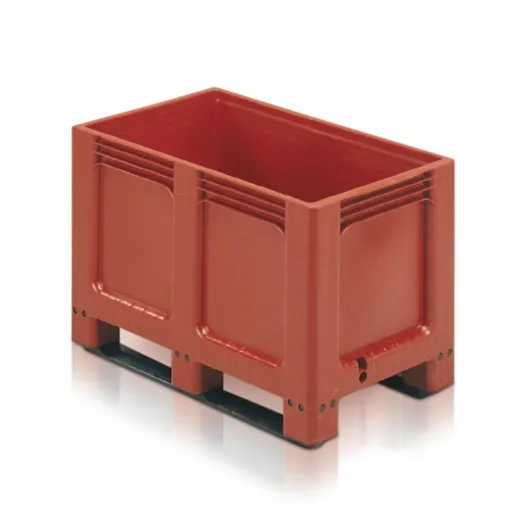
Each industry usually has its understanding of what is required from infrastructure. An example is a box that needs to be strong enough to hold freshly picked berries in the farms, but the same [box] might not be strong enough to hold automotive batteries (supply chain management). These differences translate into specifying the specifications correctly the first time around.
The automotive uses heavy duty plastic pallet boxes for component staging, transporting gluing car parts, and collection services. Such elements as engine blocks, transmission parts, and batteries for electric vehicles use boxes with reinforced metal foundations stainless steel bases. In logistics of component pools, the most portion is reserved for light collapsible sleeve packs while returning empties, up to 70b percent of the load, is reduced because of collapsible sleeve packs with 3:1 ratios. In the automotive industry, a lot of buyers often take into account specific Galia, VDA or Odette markings on the boxes used for transportation.
Agriculture employs both vented and solid-wall systems. A Portuguese berry exporter’s head of procurement is Maria Santos. About three years back, she started using vented rigid plastic pallet boxes instead of one-time use wooden crates for the purpose of transporting harvested produce from the field to the port. The vent walls allowed some airflow that helped in minimizing the occurrence of molds or accumulation of moisture. The boxes were able to withstand cleaning in industrial washers in between harvest seasons. When the boxes were used, they could be stacked up to four high in the cold room without any deformation. In three seasons’ time, her costs incurred in packaging per each shipment reduced by 62 percent as compared to the other option of using wooden crate ones.
Food and Beverage requires the use of food-safe HDPE material, with smooth finishes inside and in such a way that spills cannot occur. Liquids, powders, and even pasty materials can be kept in solid-walled enclosures without any internal leaks. Complying with HACCP standards makes them safe to use because they have no spaces inside where organisms can attach themselves. Heavy-duty plastic pallet boxes can also withstand high temperatures especially in the case of large volumes as -40°C to +70°C enable blast freezing on one end to hot-fill on the other.
Manufacturing and Warehousing utilizes heavy duty plastic pallet boxes as they are relevant for the organization of raw materials, in-process storage, or even the distribution of complete products. Base with clearances on four sides allows pallet jacks and trucks to be operated from any side. It may be stacked up to six layers for optimal use of the height of the warehouse. Barcodes or RFID may be employed by several or more organizations in their warehouses for automation of the tracking and counting of goods. With regards to these heavy duty roto-molded boxes, one is able to appreciate its value as it allows for wetter materials or products such as wood chips or products in powders form or finished products to be handled more efficiently by putting them together into a unit load.
In the case of Pharmaceuticals industry, emphasis is on surfaces as well as control measures against contamination. Walls made of HDPE are usually non pitted and are stained free after using chemicals and very easy to clean after every port. Different packaging colours assist the production in sorting out product lines discouraging cross mixing of items.
Waste and Recycling boxed chemically s Borne out the “soil” aspects of the hierarchy of fossils (most specifically housing scrap metal, electronics and hazardous materials) but there was avoidance of waste. However, there is a heavy duty plastic pallet boxes which are UN certified for transportation of regulated wastes such as is the case for devices with batteries or low-level radioactive materials.
Across all these sectors, plastic pallet boxes are displacing wood and metal alternatives. The global plastic pallets market reached USD 8.67 billion in 2025 and is projected to hit USD 15.68 billion by 2031, growing at a 10.38 percent CAGR according to Mordor Intelligence. Rigid plastic containers now command 35 percent of the broader pallet container market according to Fact.MR, a share driven largely by industrial users who need verified load ratings that wooden crates cannot provide.
Whether you need vented boxes for agriculture or solid-wall containers for food processing, we manufacture both standard and custom configurations. Explore our complete range of plastic pallet boxes to find specifications that match your industry requirements.
How to Choose the Right Heavy Duty Plastic Pallet Box
Selection becomes straightforward when you break it into a sequence of decisions. Follow this framework to avoid the specification mismatches that cost operations time and money.
Step 1: Define your load requirements. Calculate the maximum weight your box will hold during each phase of handling. Static weight on the warehouse floor almost always exceeds dynamic weight during forklift transport. If you stack boxes, calculate total stack weight, not just individual unit weight. Add a 15–20 percent safety margin to account for uneven loading and impact events.
Step 2: Choose rigid or collapsible based on return logistics. If empty containers travel back to your facility after delivery, measure the return freight cost savings of collapsible designs against their lower load ratings. If boxes stay at a single site or move in one direction only, rigid construction almost always wins on durability and capacity.
Step 3: Select vented or solid walls based on contents. Perishable produce, seafood, and wet materials need airflow. Liquids, powders, granules, and sensitive electronics need protection from dust, moisture, and contamination. Some manufacturers offer hybrid designs with partially vented walls.
Step 4: Verify industry compliance. Food operations need HACCP-compliant, food-grade materials. Automotive suppliers may need Galia or VDA standard footprints. Pharmaceutical users might require specific color coding or washdown compatibility. Export operations benefit from plastic’s exemption from ISPM-15 heat treatment requirements that wooden packaging faces.
Step 5: Consider customization. Standard dimensions cover 80 percent of applications. The remaining 20 percent require custom engineering. Buyers who need custom plastic pallet boxes with non-standard part geometries, unusual weight distributions, branded colors, and integrated labeling areas should plan for mold development timelines.
Custom Solutions: Beyond Standard Sizes
Standard heavy duty plastic pallet boxes have footprints and design load capacities as it is broad based. However, the same cannot be said for different situations in industrial operations which in turn makes catalogue specifications insufficient. It is at this point that there is need for customized plastic pallet boxes. An established dairy processor from Germany came to the team of engineers with a problem that needed solving. During transport the whey was escaping from the solid-wall containers which presented hygienic issues and losses. In addition to this 1,200 kg dynamic loading cases of cheese blocks would require extra steel reinforcements in their base.
Therefore a custom HDPE mold was designed which had drainage channels built in at the base that can collect liquids and floor of the container designed to slope towards and out let at the one corner of the box. Structural reinforcement tubes were installed in the pallet base while a special shade of blue color was designed for the boxes for the processors. The price of making this custom mold was recovered in 14 months when there was no spillage or lost savings in reducing the number of times wooden crates were replaced.
That project clearly shows why the direct manufacturing approach is needed. We have 18 machines for mass production. Our production facility covers an area of 178000 square meters where we make custom shapes of the regular molds for our clients requiring specific dimensions, colors or engraving of logos, and reinforcements not available in regular products. We do not trade in catalog products as the distributors do, we produce and assemble the components with the customer’s order made from the raw material to finished product.
Pantone color matching, plus special printed logo, or their own base under rigid structure base, non had size face plates, presentation lids, specialized drainage and aeration arrangements. Delivery of stock orders – 15-20 working days. For custom projects, time is required to allow for the production of additional molds. It is recommended, since the advantages later obtained during operation will more than compensate for the costs incurred at the beginning.
heavy duty plastic pallet boxes
Sustainability and Total Cost of Ownership
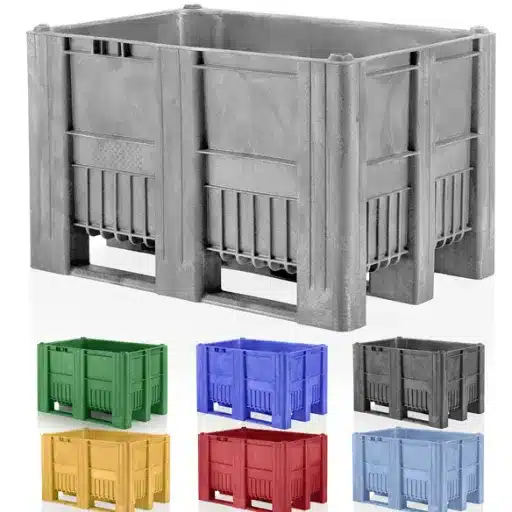
The initial expense of heavy duty plastic pallet boxes is just one aspect of their costs. Competent customers, though, tend to look at the total lifecycle cost which is typically calculated for 5–10 years.
One such example is a wooden crate which costs around 25–35 yetsingle tripcratelifetimeinmarketis3–5tripsbeforenailspopout,bowsinorshouldbepropersplinting. 50 trips a year for five years equals 250 wooden boxes purchased per year. Costing wooden crates on the lower end is 25-35 per piece. However, the wood crating system typically allows only 3-5 cycles before fragmenting, soaking, or loosing nails. Within the same five year period this makes it 50 cycles per year, each time buying 250 wooden crates from the supplier. If one adopts 30 as the mean factor for calculations, this means spending USD 7, 500 on packaging material alone– without factoring in the cost for construction, disposal and reordering.
Agricultural or industrial usage of heavy duty plastic pallet boxes has advantages since they last at least between 150 and 200, lessens to ten years or more, depending on the form of use. Within the same 250-trips average, if the focus applies on cost per run of the system, the cost runs about 0.60 – 0.80. The economics further improves when minimized product accident, avoidance of wood chips, or even chipped hand tired from wooden slats and easier fast x-dimensions and standards such as weight for objects is taken into account.
There are additional savings with the use of these designs. Shipping if shipped empty increases costs by 60–75 percent more than if the boxes are folded to fit one-third of the assembled shape. For companies that operate nationally or internationally in closed loop systems, the saved space directly relates to saving fuel and shipping expenses.
At end of life, HDPE and PP boxes are 100 percent recyclable. Many manufacturers now offer take-back programs that grind retired containers into raw material for new production. The plastic segment already accounts for 60.2 percent of pallet container demand, a share driven by durability and recyclability advantages over wood and metal alternatives according to Business Research Insights.
Frequently Asked Questions
How much weight can a heavy duty plastic pallet box hold?
Rigid heavy duty plastic pallet boxes handle up to 4,000 kg in static storage and 1,000 kg during forklift transport. Collapsible models typically manage 1,000–1,500 kg static and 400–500 kg dynamic. Always check the stacking load rating if you plan to stack boxes more than two high.
What industries use heavy duty plastic pallet boxes?
Automotive, agriculture, food and beverage, manufacturing, pharmaceuticals, and waste recycling are the primary users. Each industry selects different wall types, materials, and compliance standards based on its specific handling requirements.
Are plastic pallet boxes better than wooden crates?
For repeated industrial use, yes. Heavy duty plastic pallet boxes last 10 years or more, resist moisture and chemicals, clean easily, and maintain consistent dimensions. Wooden crates typically survive 3–5 trips before splintering or absorbing moisture. Over a five-year period, plastic usually delivers lower total cost of ownership.
Can plastic pallet boxes be used for food storage?
Yes, provided they use food-grade HDPE and meet HACCP or FDA requirements. Solid-wall designs prevent leakage, while smooth interior surfaces allow thorough industrial washing between uses. Temperature resistance from -40°C to +70°C covers blast freezing through hot-fill operations.
What temperatures can heavy duty plastic pallet boxes withstand?
Most HDPE boxes perform reliably from -40°C to +70°C. Polypropylene variants offer slightly less cold tolerance but better fatigue resistance for high-cycle folding applications. Steel reinforcement does not affect temperature performance.
Conclusion
The heavy duty plastic pallet boxes prove to be efficient as these products are capable of holding loads, sustaining any wear and tear and most importantly, being versatile, something which wooden boxes and all lightweight containers cannot do. The secret is in targeting the right properties for the given application and not simply believing the advertisements and stickers.
Permanent structures offer great constraints of up to 4,000 kg in static loads and are good permanent storage, automation and heavy component handling sometimes as well. Foldable-type systems, on the other hand, can bear lower capacity yet allow significant cost reductions as they reduce the total bulk of logistics returns. Made from HDPE, they withstand automotive, agriculture, food, pharmaceutical, manufacturing and very many other environments involved using different temperature extremes and chemicals or sustained multiple damage.
Before you go ahead with the investment, first do all the patience work by calculating the actual load you need under three circumstances; the static load, the dynamic load and the stack load. Do also ensure that there is proper compliance with all the set norms in the given industry. Lastly, assess the situation to determine if these problems can be handled by modifying the existing product contrary to what they sell as is the case with a number of products in the market. Spare them now and you will do the same specifications in the future. You don’t want years of tearing your hair out because this is an interference to your operation.
Ready to specify heavy duty plastic pallet boxes for your operation? Our engineering team works directly with logistics managers, procurement officers, and operations directors to match container specifications to real-world load requirements. Request a custom quote and we will respond with detailed recommendations within 24 hours.