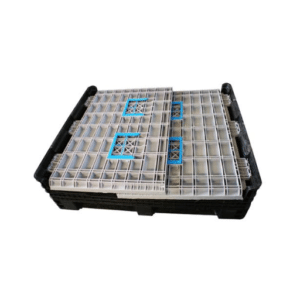
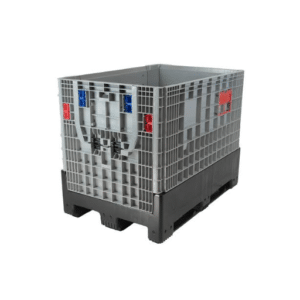
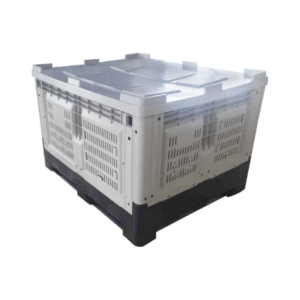
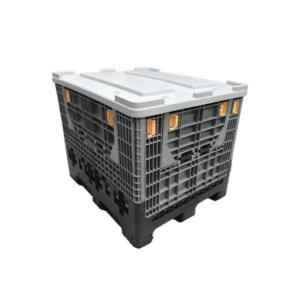
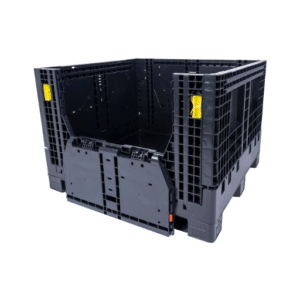
Plastic pallet boxes for food industry use are bulk containers engineered from virgin HDPE or PP resin, certified for food contact under FDA 21 CFR 177.1520 or EU 10/2011, with smooth non-porous surfaces that eliminate bacterial harborage and satisfy HACCP audit requirements. They combine the load-bearing efficiency of a plastic pallet base with enclosed sidewalls that protect food products during storage, processing, and transport.
Maria Chen, quality assurance manager at a dairy processor in Wisconsin, had every document ready for her BRC audit. Her HACCP plan was tight. Supplier approvals were current. Sanitation logs showed perfect compliance. But the auditor flagged her wooden bulk crates as a physical contamination risk. Splinters. Moisture absorption. No material traceability. The non-conformance cost her facility three months and $40,000 in corrective actions. The solution was not more paperwork. It was switching to documented, food grade plastic pallet boxes with full material certification.
If you work in procurement, quality assurance, or food safety in the context of a manufacturing unit, you understand the burden. There has been increased surveillance over packing and transport bulk containers by auditors. Mismatch in pallet boxes can at times lead to non-conformance, delay in shipment or in extreme cases, recall. The challenge for the containers is not just to hold the contents, but also to prove themselves worthy of use.
In the scope of this advice paper, it will be made clear what certificates to look out for, what is needed in terms of material and design for a given food application, what should be cleaned and how, and which supplier documentation should be on hand when the auditor arrives. As a result, you will be able to formulate a procurement checkbox that will safeguard your product and the audit grade.
Key Takeaways
- Food grade plastic pallet boxes must carry FDA 21 CFR 177.1520 or EU 10/2011 material certification, plus migration test reports, to pass third-party food safety audits.
- Virgin HDPE handles cold storage and aggressive wash-downs; PP offers higher heat tolerance for hot-fill or steam-sterilization environments.
- Solid-wall designs suit processed foods, meat, and dairy; ventilated designs improve airflow for fresh produce and agriculture.
- A complete supplier documentation package includes material certificates, migration reports, ISO 8611 load tests, and manufacturing quality certificates.
- Switching from wooden crates to plastic pallet boxes eliminates ISPM-15 fumigation, removes splinter and mold risks, and typically breaks even within 12 to 24 months.
Ready to specify food-safe containers for your facility? Explore our certified pallet box range to see materials, dimensions, and load ratings tailored to food industry requirements.
Overview of hygienic plastic pallet box applications in food processing and cold chain logistics
What Are Food Grade Plastic Pallet Boxes?
Definition and Key Characteristics
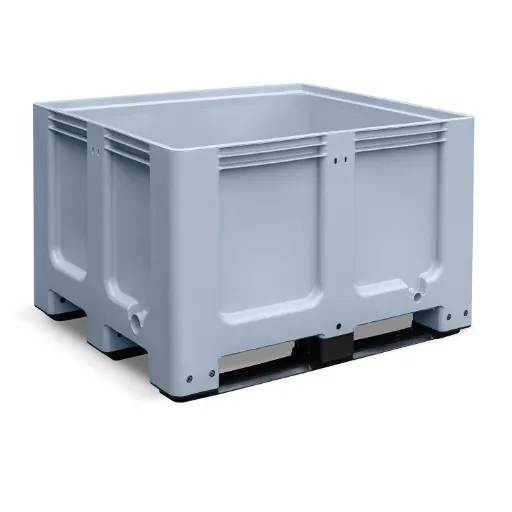
Plastic pallet boxes for food industry are designed with standard pallets as base and their walls are quite high, from 500 mm up to more than 1,000 mm high, being made of 100% virgin servo chemical grade HDPE and other suitable food-grade polypropylenes. Contrary to the flat pallets whereby only packed items are supported, the above mentioned boxes are intended to hold food in bulk, loose or semi-processed form devoid of any packaging material. All raw materials, partial product processes, final products and even waste directed for disposal, will do perfectly well in there.
The specifications are not only geometric. It is necessary that the resin can be certified as safe for contact with food, but does not exceed thresholds of chemicals migrating into the food. The body should be non-porous and smooth to minimize any chances of microbial growth. It is crucial that the design can take many cycles of washing, steaming or use of sanitisers without any alteration of structure. Very importantly the producer may even be required to show the entire chain, from material sample to container.
How They Differ from Standard Industrial Pallet Boxes
Standard industrial pallet boxes may look identical at a glance. Same footprint. Same forklift entry. Similar load ratings. But the differences hidden inside the material and documentation can determine whether your facility passes or fails an audit.
Industrial-grade containers may use recycled or regrind resin with unknown additive packages. They may lack migration testing. Their surfaces might carry mold-release agents or lubricants incompatible with food contact. And the manufacturer may not hold ISO 22000 or even ISO 9001 certification, leaving you without the quality management documentation auditors require.
Food grade plastic pallet boxes eliminate these risks. Every batch uses traceable, certified virgin resin. Every production run generates testable samples. And the supplier delivers a documentation package that satisfies FDA inspectors, EU authorities, and third-party audit schemes like BRC, SQF, and FSSC 22000.
The Regulatory Landscape
Food contact materials operate under strict regulatory frameworks that vary by market. In the United States, FDA 21 CFR 177.1520 regulates olefin polymers, including HDPE and PP, for indirect food contact. In the European Union, Regulation 10/2011 sets specific migration limits and approved substance lists for plastic materials intended to contact foodstuffs, while Regulation 1935/2004 establishes the general framework for all food-contact materials.
Globally, HACCP principles require that equipment and containers do not become vectors for biological, chemical, or physical hazards. The FDA Food Safety Modernization Act (FSMA) further mandates preventive controls, which means your choice of bulk containers is no longer an afterthought. It is a documented food safety decision.
At Shandong Lile, we manufacture plastic pallet boxes from virgin HDPE and PP with full material traceability and compliance documentation for FDA, EU, and HACCP requirements. Whether you need solid-wall containers for dairy processing or ventilated units for fresh produce, our engineering team matches the specification to your audit framework.
Essential Certifications and Compliance Requirements
FDA 21 CFR 177.1520: U.S. Food Contact Compliance
The Food and Drug Administration does not “approve” a certain type of plastic pallet boxes for food industry purposes. They perform standards on the materials that the manufacturers utilize to make items such as the pallets. Under the condition of the 21 CFR 177.1520 provisions, the use of HDPE and PP is allowed as indirect food-contact established olefin polymers bearing the standards of purity and compliant with the list of the safe permissible additives.
For the purchasers, the meaning of this is: you have to obtain Supplier’s Declaration of Conformity that the resin batch which was used to produce your containers meets the requirements of 177.1520. You have to ensure that you have clearance that there were no unapproved additives, coloring or processing aids added at any stage of the manufacturing process. Do not forget to obtain such a document before placing an order so that the incoming auditor will not find you unprepared.
EU Regulation 10/2011 and 1935/2004: European Framework
For companies that are responsible for exporting to Europe or providing services to clients that live in the European Union, regulation # 10/2011 is the most important one. Introducing specific limits on the migration of any substance from a plastic packaging into food, the regulation includes a positive list of monomers and additives which are allowed and can be used, and – most importantly – manufacturers are expected to perform tests to prove the adherence to this regulation.
Regulation 1935/2004 presents the primary rule: it is necessary that specified materials are so sufficiently inert, that the substances within them do not pose health risks to the public, nor do they bring about an undesirable change in food content. These two regulations taken together, these are the core of the legislation compliance for any plastic pallet boxes for food industry up till the borders of the European countries.
HACCP Alignment and ISO 22000 Compatibility
HACCP is not a product certification. It is a management system. But your equipment choices must support it. Plastic pallet boxes for food industry applications fit naturally into HACCP prerequisite programs because they eliminate the hazards that wooden crates introduce. Splinters are a physical hazard. Mold and pests are biological hazards. Absorbed chemicals or fumigants are chemical hazards.
ISO 22000 takes this further by requiring a formal food safety management system across the supply chain. When your pallet box supplier holds ISO 22000 certification, you gain documented evidence that their manufacturing process itself is managed under food safety principles, not just that their resin is food-grade.
NSF Certification and BRC/SQF Audit Requirements
Certification of food equipment by NSF International is an assessment against standards that include assessing materials, design as well as cleanability. Processing equipment is usually NSF certified as opposed to containers, however, there are some few containers made of food safe plastic that are NSF approved, such as, food grade plastic pallet boxes with direct product contacts or used in cleanrooms.
When it comes to audits, such as BRC or SQF, it is all about the documentation and risk assessment. Meaning proving and ensuring that the containers do not oppose their intended uses, are well kept and suppliers meet the required standards as regards quality. This includes a manufacturers certificate for each pallet box used and relates to the requirement in every audit.
ISPM-15 Exemption: Why Plastic Eliminates Fumigation Costs
Wooden crates and pallets require heat treatment or methyl bromide fumigation under ISPM-15 for international shipping. This adds 2to2to4 per unit and introduces chemical residues that conflict with organic and clean-label food standards. Plastic pallet boxes are exempt. They contain no wood, host no pests, and require no phytosanitary treatment. For exporters, this is not a minor convenience. It is a competitive advantage.
The following table summarizes the certification landscape:
| Certification | Region | What It Verifies | Documentation to Request |
|---|---|---|---|
| FDA 21 CFR 177.1520 | United States | Resin purity and additive safety | Declaration of Conformity, material certificate |
| EU 10/2011 | European Union | Migration limits and authorized substances | Migration test report, DoC |
| HACCP Compatible | Global | Design supports hazard control | Supplier statement, wash-down validation |
| ISO 22000 | Global | Food safety management system | Manufacturer certificate |
| NSF | Global | Equipment cleanability and safety | NSF certificate (if applicable) |
| ISPM-15 | International shipping | Exemption from wood treatment | N/A — plastic is automatically exempt |
Material Selection for Food Grade Plastic Pallet Boxes
Virgin HDPE vs. PP: Which Resin Fits Your Application?
All of the above are made of synthetic resins that have been accepted by the Food and Drug Administration, as well as the European Union for contact with food. Nevertheless, each offers different characteristics for food service.
In contrast, high density polyethylene plastic offers better strength and chemical resistance. It is easy to see why this plastic tolerates all the aggressive cleaning agents, acids and alkalis and yet its surface is not easily degraded. It has a temperature span that ranges from -40 °C to +80°C and is easily applied in cold chain logistics, freezers and even in places requiring the use of aggressive cleaning agents. HDPE also withstands thermal swings caused by alternating cold storage and hot wash downs more effectively.
PP is more rigid and has a modestly higher heat deflection temperature, usually up to 100 to 110 Centigrade. For these reasons, hot-fill, can sterilization by conducting steam through, or other vessels that will be exposed to extreme temperature over time cannot be made from HDPE. PP container also has a small weight advantage over HDPE container while maintaining a similar wall thickness, which in volume production can lead to reduced transportation costs.
At Shandong Lile, we produce food-safe plastic pallet solutions in both virgin HDPE and PP, with color-coding and custom dimensions available for allergen segregation and zone management.
Why Recycled Content Is Risky for Direct Food Contact
If you think that using recycled HDPE or polypropylene is environmentally friendly, as in many cases of industry it is relevant, plastic pallet boxes for food industry is unlofty. This is because there is an element of remaining recycled resin which is regarded to be risky in regards to food. Moreover, the rumors and concerns originate from the fact that virgin plastic in such applications does not carry along such varieties of chemical, lubricants and contamination levels. Migration testing is also obscured because it is not consistent and the composition of the resin is different in almost every batch.
For food industry it is recommended to use virgin resin except in situations where supplier can submit valid recycling data that is performing very well with migration tests for a particular content as well as ISCC PLUS or its equivalent certificate. Batching of unknown flows of recycled material in any food contact area is unlikely to be approved by the majority of food safety inspectors.
Migration Testing and Material Purity Documentation
Migration involves the movement of substances from the packaging material within which the food is contained to the food itself. There are regulatory controls in place for the overall migration of substances, including certain specific ones. Your supplier should supply test data showing that the containers produced from their resin adhere to these limits under routine operational conditions. It should match the working conditions such as the temperature, contact time, and the food simulants used.
Request such reports by the lot numbers. Sweeping statements such as “our material is food-safe” make little sense to auditors. You need certified test reports that have a date and a sign from accredited persons.
Temperature Resistance: From Hot Washdowns to Deep Freezers
Excessive temperature variations are common in food facilities. The same container can be placed in a -25 degrees C refrigerator, moved to a +5 degrees C processing compartment, and finally exposed to a +85 degrees C hot water rinse. Different plastics will perform differently with those various changes.
Hinges, seams, welding joints are all vulnerable to thermal shock. Demand to be provided with containers capable of working within all the temperature limits, not only the most probable ones. And don’t wait for an audit to test this – better have a few words with the use case for plastic pallet boxes for food industry in the company care in advance.
Hygienic Design Features for Food Industry Pallet Boxes

Solid Wall vs. Ventilated: Matching Design to Food Type
The decision of choosing solid-wall or ventilated plastic pallet boxes for food industry applications is based on the type of items stored and the duration they stay in the box.
Solid comes with completely enclosed designs. They reduce the problem of leakages and contamination and they are easy to clean especially when the designs of the containers have no internal crevices or plugs It is common in processed foods, dairy, meat, sea food and other products, losses of moisture or contamination from external sources should not be allowed.
Ventilated designs have holes such that the side walls appear to be patterned to allow for air flow. These designs are most appropriate for fresh produce, agricultural products and situations where respiration of the produce, moisture release and rate of temperature change improve the quality of the produce. The downside is that the grooves provide more area for cleansing and can also allow the penetration of fines or bugs if it so happens that the container is placed outside.
Carlos Martinez the operations manager of a company in Mexico that deals in exporting of avocados had to make such a decision. They were using wooden crates to ship orders by sea take up to 14 days to reach Europe but this led to 12% spoilage due to accumulation of moisture and decided to change the vessel to ventilated plastic pallet boxes for food industry namely EU 10/2011. With such free flowing air condensation was minimal and spoilage decreased by 3% and forced o pay about $2.80 per crate without fumigation of his wooden crates. The savings with these containers were enough to pay off the cost of the containers within 8 months.
Seamless Construction and Rounded Corners
In accordance with hygienic design principles, there is a need for surfaces which are simple to clean and inspect. Seams, joints, cavities and hollow sections all provide areas in which bacteria, allergens or cleaning residues can build up. One-piece molded construction eliminates every one of these concerns.
Rounded corners are practical in two respects. They lessen stress cracking through redistribution of impact forces, and these eliminate any sharp edges that contribute to entrapment of soil. When assessing plastic pallet boxes for food grade purposes run your finger along the inner corners. If there are any sharp brackets, angles or fitted removable panels then you should look elsewhere.
Drainage, Ventilation, and Moisture Control
Enclosed containers in water-prone environments incorporate drainage holes on the lower surface of the container so that water can be drained off after cleaning. However, these holes must not result in the formation of internal cavities. In particular, the best designs will contain smooth and slanted channels that guide water out of the system without making any dead spaces.
When considering the venting system of the carriers, it should be noted that the pattern is big for improved aeration, but controlled to ensure no pests enter the box and reduce the risks of the contents being lost. Among other things, there are designs where the vents are removable, so you can use the same container in different seasons and with different products.
Color Coding for Allergen Segregation and Zone Management
Color coding is a very efficient and cheap way of regulation. Blue containers are used for raw materials, White is for finished products, Yellow is for ingredients that have allergens and Red is for waste or quarantine. Some figures about the pallet boxes which are of certain color are real control systems that provide for HACCP zone split and diminish the levels of cross contamination.
Shandong Lile provides Pantone color-matching services, as well as other similar services to clients who adhere to an established color coding system within their premises. Nevertheless, this is useful for facilities that use color coding to handle multiple allergens or operate BRC/SQF certified facilities.
Need containers engineered for your specific food safety protocol? Contact our team to discuss custom dimensions, colors, and certification packages tailored to your audit requirements.
Cleaning, Sanitization, and Maintenance Protocols
Standard Wash-Down Procedures for Food Contact Surfaces
Each industry has a cleaning routine called sanitation standard operating procedures. Commonly, it starts by removing all visible soils or dirt. Then rinsing the surface using clean water. Thereafter a cleaning chemical is applied in the indicated proportion and left to work for the recommended period. It is then rinsed. This is followed by the application of a sanitizing agent. Suitable contact time is in-built. Rinsing may be done according to the chef cleaner’s directions. The current among the faux kitchen procedures requires that everything be washed or air-dried before use.
In food manufacturing, plastic pallet boxes for food industry uses go through this entire procedure and should not have any surface wear, duress, or even smell absorbed in them. Neither polyethylene nor polypropylene are affected by detergents, quaternary ammonium compounds, or chlorine-based sanitizers which are used in such plants. However, always check compatibility with the cleaning agent, especially if it contains peracetic acid or foams with high alkalic content.
Chemical Compatibility: Which Sanitizers Work with HDPE/PP
HDPE does not swell up while in contact with cleaning chemicals even in concentrations one would normally use for sanitization. It can be used with sodium hypochlorite and quaternary ammonium and iodophors without issue. PP, on the other hand, possesses similar characteristics although to a higher degree with respect to oxidating solutions even at up temperatures.
The use of both substrates with highly concentrated and prolonged contact with oxidizing agents, aromatic extracts or halogenated organic solvents is conveniently excluded. It is best to include comprehensive validation during the development of sanitization strategies and more fascinating if there are caustic reagents in the mix, seek consultation from the respective container provider specifically how the containers are affected otherwise and put them through some ‘assignments’ made up of real chemical tests specific to the container’s disinfectant.
Steam Cleaning and High-Pressure Washing Guidelines
The inclusion of high pressure cleaning, which can reach 200 bar, is within norm of meat and poultry plants. Bakery and dairy, the facilities have steam cleaners which operate up to 100 °C. Both chemicals are safe to use with pure HDPE and hard and soft PP, though the technique used should be employed properly.
Do not spray from less than 30 cm in order not to damage the surface. Do not keep the nozzle stationary in one point any longer than necessary. Finally, after treatment with steam, let the containers cool naturally. The sudden cooling with use of cold water can cause crazing in areas already under some stress.
Inspection Schedules and When to Retire a Pallet Box
Even the toughest of plastic pallet boxes for food industry will not last forever. Create an appropriate visual inspection plan: high-usage containers – weekly; containers that are rotationally used – monthly. Pay special attention to the corners and forks receipts since these may contain stress fractures. Take note of structural flaws, like ‘crazing’, which may promote the building up of dirt. Ensure that the seals on the covers, and the hinges and the fasteners are in good condition.
Discontinue using damaged or old containers with structural issues or cracks that are beyond cleaning ability. Usually, a virgin HDPE container is used between 5 to 10 years within the boundaries of the food industry but this is not compact and the cycle comprises aspects such as frequency of use, manhandling of components and the intensity of cleaning among other things. In particular container parts as in the case of plastic pallet boxes for food industry broken to pieces may not last more than one or two cycles.
Industry-by-Industry Application Guide
Meat, Poultry, and Seafood Processing
Containers experience tough conditions in these environments. Blood, fat, protein residues on the surfaces, makes it favorable for pathogens to thrive if not properly cleaned. Plastic containers with solid wall with no seams are mostly raw. These have to endure everyday heavy jet washing, harsh chemicals even the steam-washes sometimes.
Ensure the containers have drain holes for stagnant water and stick to your ‘Red – Raw Meat’ for ‘zone A’ red, ‘respective for zone B’ – white etc. This avoids instances of cross contamination that is high during any break sittings.
Dairy and Cheese Production
Plastic pallet boxes for food industry are subjected to the effects of lactic acid found in dairy places, they also need to be able to survive freezing temperatures and they do not absorb any odor which could in turn taint the ingredients contained in the container. HDPE suits this purpose because it doesn’t allow any form of odor or flavors in it. Solid walls are effective at cheese rooms because there is no moisture which is absorbed, and they are also effective in enclosing the liquids inside a vehicle.
For example on collection of whey and by-product handling, it is better to use ventilated design allowing drainage airflow, but make sure the vant patterns are not big enough to let the flies fly in open farm situations.
Fresh Produce and Agriculture
Plastic boxes with perforated walls became a prevailing player in this market segment. Decomposing naturally after being picked out, eatable fruits and vegetables produce a significant proportion of heat and water. The lack of air circulation results in the growth of moisture which condenses, hence causing mold and spoilage. The horizontal assembly of the side panels allows releasing the extra moisture, which otherwise would be retained with a solid wall box, while ensuring that the delicate fruits are not damaged when piled up or transported.
For vegetables and stronger crops reinforcement boxes with aeration work best due to long shelf life. Fruits such as berries and peaches need berry or stone fruit packs of certain heights to eliminate the risk of stacks above the payload.
Bakery and Dry Goods
Bakeries have to utilize some resistant custom containers with the ability to avoid flour deposits, hot ovens, and foreign objects. High-density polyethylene containers with a smooth surface and solid wall are the best option. They are free from splinters and do not flake as wooden boxes or fiberboard boxes would, and can be kept hygienically clean when changing products or jobs.
It is critical that devices used in the manufacturing of gluten-free or controlled allergen foods have distinct color codings, as well as separate storage facilities. For example, plastic pallet boxes for food industry applications in a bakery should take such segregation requirements into account.
Beverage and Bottling Operations
Bottling plants handle heavy liquid loads, often in glass, which demands high dynamic load capacity and stable stacking. Rigid solid-wall containers with reinforced bases prevent bottle breakage during forklift transport. For ingredient powders and syrups, sealed containers with lid options prevent moisture uptake and pest contamination.
Frozen and Cold Chain Logistics
Deep-freeze environments stress plastic more than ambient conditions. At -25 degrees C, some polymers become brittle. HDPE maintains ductility better than most alternatives, but specify cold-grade resin if your containers will spend significant time below -20 degrees C. Check impact resistance ratings at freezer temperatures, not just at room temperature.
The Documentation Checklist: What to Request from Your Supplier
Material Certificates and Declarations of Conformity
Every lot of food grade plastic pallet boxes should arrive with a material certificate identifying the resin grade, manufacturer, and applicable FDA or EU compliance status. The Declaration of Conformity should be signed, dated, and reference the specific regulation: 21 CFR 177.1520 for U.S. markets, or EU 10/2011 for European markets.
Migration Test Reports and Traceability Records
Migration testing demonstrates that substances do not transfer from the container to food in unsafe quantities. Request overall migration and specific migration reports from accredited laboratories, tested with food simulants appropriate to your product type: aqueous, acidic, alcoholic, or fatty.
Traceability records connect your specific container batch to the raw material lot, production date, and quality control checks. This is not bureaucratic paperwork. It is the evidence that allows you to recall or quarantine a specific batch if an issue ever arises.
Load Capacity Certifications (ISO 8611)
Food containers must be strong enough for their loads, just like industrial containers. ISO 8611 provides standardized test methods for static load, dynamic load, and racking load. Request test reports showing your container model was tested to this standard, with safety margins clearly stated.
Manufacturing Quality Certificates (ISO 9001, ISO 22000)
Your supplier’s quality management system matters as much as the product itself. ISO 9001 demonstrates consistent manufacturing processes. ISO 22000 demonstrates that those processes operate under food safety management principles. Both certificates should be current and issued by accredited certification bodies.
At Shandong Lile, we maintain ISO 9001 certification across our 178,000 square meter facility and provide full documentation packages including material certificates, migration reports, and ISO 8611 load test data with every food-grade order. Request a compliance documentation sample to verify against your audit checklist.
From Wooden Crates to Plastic: The Migration Path

Eliminating Splinters, Moisture Absorption, and Mold Risk
The role of wooden crates in agriculture and food processing can be traced back for hundreds of years. However, the risk that it poses for the production of food causes a more modern day approach to food handling. Wood acts like a sponge and this indeed encourages growth of molds and bacteria. It breaks into splinters which may become a problem due to physical contamination. Thus, sanitizing wooden containers is impractical in terms of contemporary post FSMA food facilities.
One of such incidents was reported at a poultry processing facility in Georgia where a number of complaints were made by the customers complaining foreign bodies were embedded in the packaging. Upon investigation, the issue was localized to peeling wooden bulk crates located in the receiving department. Since most of them are made fromn wood, the materials were exchanged for solid and Food Safe seamless plastic pallet boxes for food industry grade units. Zero splinter complaints were received in the first quarter only. There were no container related observations in the SQF re-assessment. The entire container allocation cleaning process required 40% less time because even gentle scrubbing was sufficient for the smooth surfaces unlike the rough porous wood.
Removing ISPM-15 Fumigation from Your Export Process
When exporting foodstuffs on wooden containers additionally ISPM-15 exists. Heat treatment, or fumigation. Stamp if on consignment. The port customs. Paperwork delays. Using plastic pallet boxes for food industry cancels all those steps. Without treatment. Without stamps. Without phytosanitary cessions.
Ensuring that they can avail themselves of the ISSPS Is a much larger issue for the base licensor exporting businesses exporting organic food. Otherwise methyl brovide fumigation is the main issue. If it is ISO application satisfactory, it should also be economic and efficient. Clients often do not care about the image of the Company, unless it directly impacts the sale.
Calculating ROI When Switching to Food-Grade Plastic
Plastic pallet boxes for food industry are more expensive than wooden crates. The real cost driver is not per unit cost. The total cost of ownership includes the purchase cost, washing, fumigation, replacement, destruction and number of recalls or failed audits that were prevented.
In most food facilities, these numbers put them in the profit zone within a timeframe of 12 to 24 months. After realizing the break-even point, savings tend to grow with every venture made. For wooden crates, it may survive for five to ten cycles to splinter and rot. A plastic pallet box system can go through from 100 to 200 cycles before being replaced.
For a detailed ROI framework, see our plastic pallet total cost of ownership analysis, which includes break-even calculators and industry-specific cost comparisons.
Conclusion
The difficulty of undertaking food safety audits has never lessened. Customers can now buy end products that meet high food safety devices and/or processes and the regulations, including the revision of FSMA, 21 CFR 106-118 sub-part B and EU 10/2011. Neither does the selection of bulk containers rest solely on pertinent purchasing decisions any longer. It assumes escalation of the ‘do not buy, subscribe to a service’ trend, which has implications for food safety, compliance, operations and economics.
Most effective for use in the food industry are ymines that help protect the product and satisfy all the auditors while minimizing the total cost of ownership of plastic pallet boxes for food industry. They do away with wooden dangers, allow tracing the materials and endure cleaning operations adherent to regulations set. Be it a dairy farm on the plains of the West or producers of fresh fruits from Latin America or a distributor of seafood ice-packed around Europe, the core of the specification is the same across the board. Raw and certified materials, sanitary design, proof of cleansing and full documentation.
At Shandong Lile, we have manufactured plastic pallet and container solutions for food industry clients in over 108 countries. Our ISO 9001-certified facility produces custom-engineered pallet boxes in virgin HDPE and PP, with full FDA and EU compliance documentation, color-coding for allergen control, and load ratings tested to ISO 8611. Contact our team today to request material certificates, migration test reports, or a custom specification tailored to your audit framework.