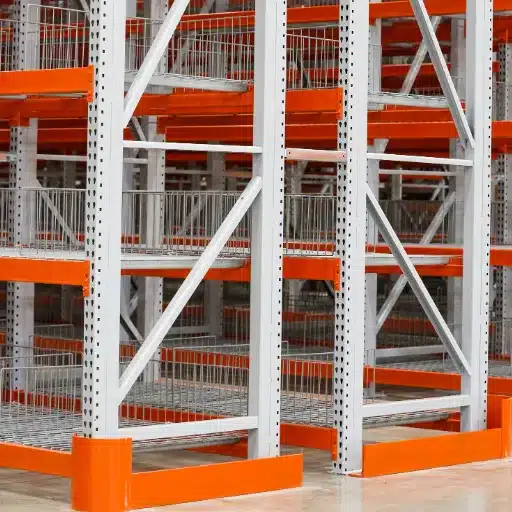

Selective racking maintenance involves regular inspections, timely repairs, and preventive measures to ensure warehouse storage systems remain safe, compliant, and operational. A proper maintenance program includes daily visual checks, weekly detailed inspections, monthly component assessments, and annual professional audits.
A single racking collapse can cost your warehouse over $100, 000 in inventory loss, operational downtime, and liability claims. Yet most facilities operate with damaged racking they do not even notice. The difference between a safe, efficient warehouse and a catastrophic failure often comes down to one thing: a proactive selective racking maintenance routine.
You already know that warehouse safety matters. You already invest in training, equipment, and processes. But if your racking maintenance program is reactive instead of systematic, you are leaving a critical gap in your safety chain. This guide gives you exactly what you need: a complete pallet racking inspection checklist, a detailed component guide, and practical strategies to reduce maintenance costs while extending the life of your selective racking system.
At Shandong Lile, we have spent over 14 years engineering plastic pallet solutions for warehouses worldwide. We understand how pallets interact with racking systems, and we know that the right pallet choice can cut warehouse racking maintenance costs significantly. Let us show you how.
Key Takeaways
- Selective racking maintenance requires a tiered inspection schedule: daily visual checks, weekly detailed inspections, monthly component assessments, and annual professional audits. A solid pallet racking inspection checklist keeps your warehouse safe and compliant.
- Over 80% of racking damage is caused by forklift collisions, making operator training and protective accessories essential investments.
- Plastic pallets reduce racking maintenance frequency compared to wood pallets because they maintain consistent dimensions, distribute loads evenly, and resist splintering that damages beams and uprights.
- Proactive maintenance costs approximately 10-15% of reactive repair and replacement expenses over a 10-year period.
- Always use manufacturer-approved replacement parts and never attempt unauthorized modifications like welding or drilling into racking components.
What Is Selective Racking and Why Maintenance Matters
How Selective Racking Works
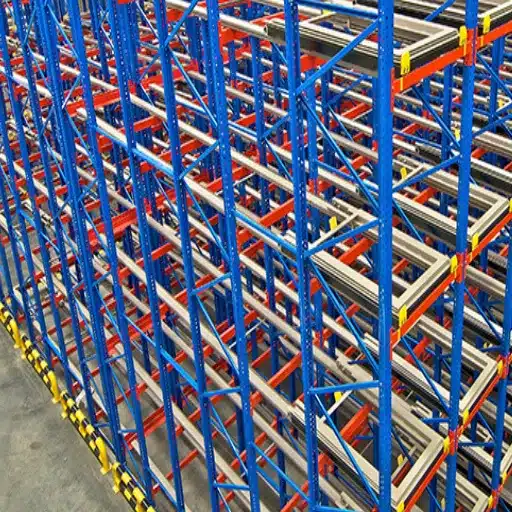
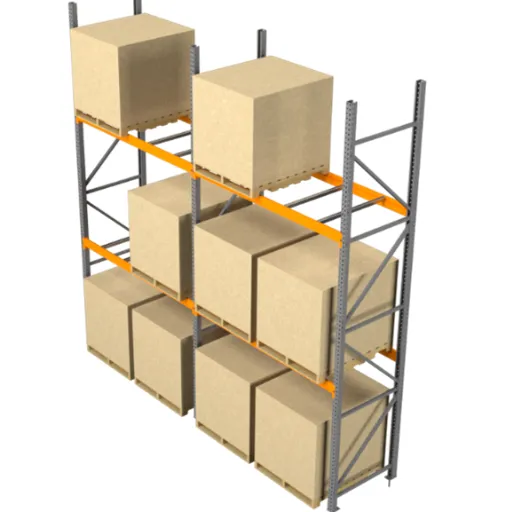
Selective pallet racking is the most common warehouse storage system in the world. It uses vertical upright frames and horizontal load beams arranged in bays. Every pallet position is directly accessible from the aisle. This design works well for facilities with high SKU variety and frequent stock rotation.
Because each pallet sits independently on beam levels, selective racking provides 100% selectivity. Forklifts can access any pallet without moving others. This convenience comes with a trade-off: the open front design makes upright frames and beam ends highly vulnerable to forklift impact. That is why selective pallet racking maintenance deserves your full attention.
The Real Cost of Neglected Racking Maintenance
Marcus took over as warehouse manager at a Midwest distribution center in early 2025. He inherited a selective racking system that had not seen a formal inspection in three years. The previous manager had followed a “fix it when it breaks” approach.
Within six months, Marcus discovered serious problems. Three upright frames showed significant deflection. Two safety clips were missing. A beam connector had partially popped out of its slot. The repair bill came to 47,000.Thatfiguredidnotincludethreedaysoflostproductivity.Aproactivemaintenanceprogramwouldhavecaughteveryissueearlyforlessthan47,000.Thatfiguredidnotincludethreedaysoflostproductivity.Aproactivemaintenanceprogramwouldhavecaughteveryissueearlyforlessthan5,000 annually.
The financial impact extends beyond repairs. Damaged racking creates liability exposure. It risks inventory loss. It slows forklift operators who must navigate around compromised sections. And when racking fails catastrophically, the costs multiply fast.
Regulatory Requirements and Compliance Standards
Warehouse racking does not exist in a regulatory vacuum. In the United States, OSHA General Industry Standards require employers to maintain a workplace free from recognized hazards, which includes storage rack integrity. The ANSI MH16.1 standard provides specific guidance for the design, testing, and utilization of industrial steel storage racks.
Internationally, standards like AS 4084-2012 in Australia and SEMA guidelines in the UK mandate formal racking inspections at least annually. Many insurance providers now require documented inspection records as a condition of coverage. Compliance is not just about avoiding fines. It is about protecting your people, your inventory, and your business continuity.
Selective Racking Maintenance Inspection Schedule
A systematic inspection schedule forms the backbone of effective selective pallet racking maintenance. Different frequencies catch different types of problems before they escalate.
Daily Visual Walkthrough Checklist
Your warehouse staff should perform a quick visual scan during normal operations. This is not a detailed engineering inspection. It is a safety sweep designed to spot obvious hazards that require immediate attention.
- Check for visibly bent, twisted, or dented upright frames
- Look for sagging beams or pallets that appear overloaded
- Verify safety clips and locking pins are present and engaged
- Confirm aisles are clear of debris and obstructions
- Watch for any beam that looks dislodged from its connector
Train your team to report anything unusual immediately. A five-minute walkthrough prevents incidents that cost hours or days to resolve.
Weekly Detailed Inspection Protocol
Once per week, assign a designated rack safety officer to conduct a more thorough examination using a formal checklist. This inspection should cover all bays in a rotating schedule so every section receives attention at least monthly.
Focus on beam deflection under load, connector alignment, and anchor bolt integrity. Look for rust or corrosion at base plates, especially in humid or coastal environments. Document everything in a maintenance log. Patterns emerge over time, and those patterns tell you where your highest-risk zones are.
Monthly Component Assessment
The monthly inspection dives deeper into structural components. Measure beam deflection against manufacturer specifications. The maximum allowable loaded beam deflection is approximately span divided by 180 under standards like AS 4084-2012. Check for permanent set in unloaded beams, which indicates past overloading.
Inspect horizontal and diagonal braces for bends or detachment. Verify load capacity labels are present, legible, and accurate. If beam levels have been adjusted, confirm the changes were reviewed by a qualified engineer and documented.
Annual Professional Engineering Audit
Bring in a qualified third-party racking inspector at least once per year. This audit goes beyond what internal staff can assess. Professionals measure rack plumbness and levelness. They evaluate splice integrity. They verify compliance with current standards.
The annual audit provides documentation for insurance claims and regulatory compliance. It also protects your warranty. Plus, you get an expert opinion on whether your racking still meets your operational needs.
Key Components to Inspect in Selective Racking Maintenance (The Complete Checklist)
Effective selective racking maintenance means knowing exactly what to look for on every component. Here is your comprehensive pallet racking inspection checklist.
Upright Frames
Upright frames carry the vertical load of your entire system. Damage here is non-negotiable.
- Check for bends, dents, twists, or cracks in front and rear posts
- Verify frames are plumb (perfectly vertical) and not leaning
- Inspect horizontal and diagonal struts for damage or detachment
- Look for rust, corrosion, or paint damage that exposes bare metal
- Examine base plates for cracks, deformation, or heavy corrosion
- Confirm shims are in place and stable where used
Replace any upright that shows significant deformation. Never attempt to straighten a bent upright on-site. The structural integrity is compromised, and field repairs create liability exposure.
Load Beams
Beams carry the direct weight of your pallets and inventory. They are also the most commonly damaged component.
- Look for sagging, buckling, or visible deflection under load
- Check for impact damage, dents, or cracks in the beam face
- Inspect beam connectors for parallel alignment (a “V” shape indicates past overloading)
- Verify beams are properly seated in upright connectors on both ends
- Measure permanent deflection in unloaded beams against span/500 tolerance
If a beam shows permanent deflection beyond tolerance, replace it immediately. Do not wait. A failed beam drops everything stored on it.
Connectors and Safety Clips
Connectors and safety clips are small components with enormous responsibility. They keep beams locked into upright frames.
- Verify all safety clips, locking pins, and beam locks are present
- Confirm clips are fully engaged and undamaged
- Never use fixed bolts as a substitute for manufacturer-approved safety clips
- Check that beam end plates are not cracked or deformed
If a single safety clip is missing, that beam is one forklift bump away from dislodging. Replace clips immediately with manufacturer-approved parts only.
Anchors and Base Plates
Anchors secure your racking system to the floor. Without them, the entire structure becomes a tipping hazard.
- Confirm all floor anchors are present, tight, and undamaged
- Inspect concrete floors beneath racks for cracks that could weaken stability
- Verify base plates are secure and not corroded
- Check that anchor bolts have not loosened from vibration or impact
Loose or missing anchors are a critical safety issue. Address them before returning the bay to service.
Common Causes of Racking Damage (And How to Prevent Them)
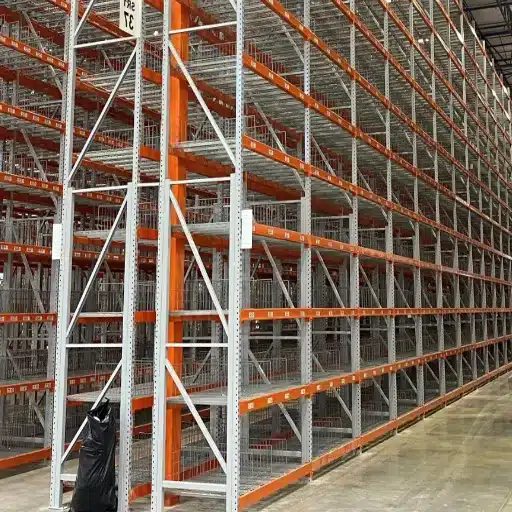
Understanding what damages your racking helps you build prevention into your warehouse racking maintenance program.
Forklift Impact
Forklift collisions cause over 80% of all racking damage. The front upright frames and beam ends take the brunt of these impacts because they sit at the aisle edge where forklifts operate.
Prevention starts with operator training. Teach drivers proper aisle navigation, speed limits, and load handling near racks. Install mirrors at blind corners and mark aisle edges with high-visibility floor tape.
Invest in column guards and post protectors for every front upright. These simple measures prevent the vast majority of impact damage.
Overloading and Uneven Load Distribution
Every beam level has a rated capacity. Exceeding that capacity causes permanent deformation. Even worse, uneven loading concentrates stress on one side of a beam, creating torsional forces the system was never designed to handle.
Post clear load capacity labels at every bay. Train staff to center pallets on beams and distribute weight evenly. When in doubt, consult the manufacturer’s load capacity drawings. Never guess.
Poor Pallet Quality and Compatibility
This is where most selective racking maintenance guides stop short. They focus on the racking structure and ignore the pallets sitting on it. That is a costly oversight.
Damaged wood pallets create uneven contact points with beams. Warped pallets concentrate load on small areas. The load does not spread across the full beam face. Splintered wood catches on beam connectors during loading. Over time, this loosens connections. When a pallet fails mid-storage, the sudden load shift stresses adjacent beams and uprights.
Quality plastic pallets eliminate these problems. They maintain consistent dimensions. They distribute loads evenly. They do not splinter, warp, or degrade. The right pallet is a maintenance investment, not just a shipping expense.
Environmental Factors
Moisture, humidity, and temperature extremes accelerate racking deterioration. Coastal warehouses battle salt air corrosion. Cold storage facilities deal with condensation and thermal cycling. Food processing plants face chemical exposure from cleaning agents.
Keep rack bases dry and clear of debris that traps moisture. Use dry cleaning methods rather than hosing down steel racking. In corrosive environments, consider protective coatings or more frequent inspection schedules.
How Pallet Quality Impacts Racking Maintenance
Here is the connection your competitors are missing. The pallets you choose directly affect how much selective racking maintenance your system needs. Get pallet racking maintenance right, and you extend the life of both your racks and your pallets.
Wood Pallets vs. Plastic Pallets
Wood pallets dominate the market because they are cheap upfront. But their hidden costs show up in racking maintenance budgets.
Wood pallets absorb moisture. This causes dimensional changes that create uneven beam loading. A swollen wood pallet might sit high on one side and low on the other. This stresses the beam connector. As wood dries, it shrinks and splinters. Those splinters catch on beam surfaces and connectors. The micro-damage accumulates month after month.
Plastic pallets, by contrast, maintain their dimensions regardless of humidity. They do not splinter, rot, or delaminate. Their smooth edges slide cleanly into racking bays without snagging connectors. And their consistent weight distribution means beams carry predictable loads across their entire span.
For warehouses running selective racking systems, switching from damaged wood pallets to quality plastic pallets can reduce impact-related racking incidents by up to 40%. That is not a marketing claim. That is what facility managers report after making the switch.
Want to see how the right pallets protect your racking investment? Explore our durable plastic pallets designed for warehouse racking systems.
Proper Pallet Sizing for Racking Compatibility
Pallet overhang is a silent destroyer of racking systems. When pallets extend beyond beam edges, they create cantilever forces the beams were never designed to resist. Over time, this causes beam sag, connector wear, and premature failure.
Measure your beam lengths and ensure your pallets fit within them with appropriate safety clearance. Standard selective racking beams commonly accommodate two pallets per level, but only if those pallets are sized correctly. Custom plastic pallets can be engineered to precise dimensions that eliminate overhang while maximizing your storage density.
Load Distribution and Center of Gravity
A pallet is not just a flat surface. It is a load distribution mechanism. Quality pallets distribute the weight of your inventory evenly across the beam face. Poor-quality pallets create point loads that concentrate stress.
Steel-reinforced plastic pallets and heavy-duty options support the high load capacities of selective racking without flexing or bowing. When a pallet maintains its shape under load, the racking system performs exactly as the engineer designed it. That is the foundation of low-maintenance warehouse operations.
Repair vs. Replace: Making the Right Decision
Not all racking damage requires replacement. Knowing the difference saves money without compromising safety.
When to Repair Racking Components
Minor surface scratches, coating damage, and slight deformations within manufacturer tolerance can often be repaired or monitored. A beam with superficial rust might need cleaning and recoating, not replacement. A base plate with minor corrosion can be treated if the structural integrity remains sound.
The key is documentation. Repair decisions must be based on engineering judgment, not convenience. When in doubt, consult the racking manufacturer or a qualified structural engineer.
When Replacement Is Mandatory
Some damage is non-negotiable. Replace components immediately when you find:
- Bent or twisted upright frames
- Beams with permanent deflection beyond span/500
- Cracked welds in beams or frames
- Missing or damaged safety clips that cannot be sourced from the manufacturer
- Any component that has been modified with unauthorized welding or drilling
Always use genuine, manufacturer-approved replacement parts. Substandard or incompatible components create weak points that compromise the entire bay. And never attempt field repairs like welding cracked beams. The heat changes the metallurgical properties of the steel, creating hidden weaknesses that can fail without warning.
Preventive Measures That Reduce Selective Racking Maintenance Costs
The best selective racking maintenance program is the one that prevents damage before it happens.
Column Guards and Post Protectors
Column guards absorb forklift impact before it reaches the upright frame. Install them at every front post in every aisle. End-of-aisle protection is equally important because tunnel corners see the highest collision rates.
These accessories cost a fraction of what a single upright replacement costs. They pay for themselves on the first impact they absorb.
Load Capacity Labels
Every bay should display a clear, legible load capacity label. These labels are not suggestions. They are engineering limits derived from the system’s design specifications.
When beam levels are reconfigured, update the labels to reflect the new capacity. Never assume the original rating still applies. A bay configured for lighter loads might need a lower rating if beam spacing changes.
Forklift Operator Training
Your operators are the front line of racking protection. Comprehensive training should cover:
- Proper load centering and height management
- Speed limits in rack aisles
- Safe approach angles to minimize swing impacts
- Immediate damage reporting protocols
- Load capacity awareness for different bay configurations
Encourage a “see something, say something” culture. Minor impacts that go unreported become major failures six months later.
Looking for ways to optimize your entire warehouse operation? Learn about rackable plastic pallets that maximize storage efficiency while protecting your racking investment.
Documentation and Compliance Record-Keeping
Paperwork might not feel like maintenance, but it is the backbone of every effective pallet racking maintenance program.
Maintain written records of every inspection, damage report, and corrective action. Include photographs where possible. Digital maintenance management systems can automate reminders, generate checklists, and create audit trails that satisfy regulatory requirements.
Your documentation should include:
- Dates and types of all inspections
- Inspector names and qualifications
- Descriptions and photographs of damage found
- Repair or replacement actions taken
- Parts used and their manufacturer certifications
- Load capacity drawings and any reconfiguration approvals
- Training records for all warehouse staff and forklift operators
When an inspector, auditor, or insurance adjuster asks questions, thorough documentation gives you credible answers. It also helps you spot recurring problems. If the same bay gets damaged three times in a year, that tells you something about your layout, your operators, or your pallet quality needs attention.
Industry-Specific Maintenance Considerations
Not all warehouses face the same racking challenges. Your selective pallet racking maintenance program should reflect your operating environment.
Cold Storage and Refrigerated Warehouses
Cold storage facilities operate at low temperatures. These conditions accelerate steel fatigue and condensation-related corrosion. Thermal cycling between cold storage zones and ambient loading docks creates stress. The steel expands and contracts repeatedly. This wears down connections over time.
Increase inspection frequency in these environments. Check for frost buildup that can hide damage. Use corrosion-resistant coatings where possible. And consider plastic pallets that resist moisture absorption and temperature-related degradation. Unlike wood, HDPE and polypropylene pallets maintain their structural integrity across temperature extremes.
Food and Pharmaceutical Facilities
Regulatory requirements in food and pharmaceutical warehouses extend beyond structural safety. Cleaning protocols, hygiene standards, and contamination prevention all intersect with racking maintenance.
Use pallets that meet hygienic standards and resist chemical cleaning agents. Document cleaning schedules for racking surfaces. Inspect for corrosion caused by cleaning chemicals or food acids. And ensure your maintenance program aligns with FDA, HACCP, or GMP requirements where applicable.
Elena runs a pharmaceutical distribution center in New Jersey. When she switched to food-grade plastic pallets and implemented a quarterly racking inspection schedule, her maintenance costs dropped 32% in the first year. More importantly, she passed her FDA audit with zero racking-related observations for the first time in five years.
Frequently Asked Questions About Selective Racking Maintenance
How Often Should Selective Racking Be Inspected?
Selective racking should be inspected on a tiered schedule. Perform daily visual walkthroughs, weekly detailed inspections, monthly component assessments, and annual professional engineering audits. Many standards, including AS 4084-2012, mandate formal inspections at least once per year.
What Is the Most Common Cause of Racking Damage?
Forklift impact causes over 80% of all racking damage. The front upright frames and beam ends are most vulnerable because they sit at the aisle edge. Operator training, column guards, and speed limits are the most effective preventive measures.
Can Damaged Racking Be Repaired, or Must It Be Replaced?
Minor surface damage within manufacturer tolerance can sometimes be repaired. However, bent uprights, cracked beams, dislodged connectors, and any component with permanent deflection beyond span/500 must be replaced immediately. Always use manufacturer-approved replacement parts.
How Does Pallet Choice Affect Racking Maintenance?
Pallet quality directly impacts racking maintenance frequency. Damaged wood pallets create uneven loads, splinter on beam surfaces, and cause load shifts that stress the rack structure. Quality plastic pallets maintain consistent dimensions, distribute loads evenly, and reduce impact-related incidents by up to 40%.
What Standards Govern Pallet Racking Maintenance?
In the United States, OSHA requires a workplace free from recognized hazards, including damaged racking. ANSI MH16.1 provides design and testing standards. Internationally, AS 4084-2012 (Australia) and SEMA guidelines (UK) set inspection and maintenance requirements.
Conclusion
Selective racking maintenance is not a chore to postpone. It is an investment that protects your people, your inventory, and your bottom line. A systematic program built on daily visual checks, weekly detailed inspections, monthly component assessments, and annual professional audits catches problems early when they are still inexpensive to fix.
The components matter. The inspection schedule matters. But so does something most warehouses overlook: the pallets sitting on those beams every single day. Quality plastic pallets reduce impact damage, distribute loads evenly, and eliminate the warping and splintering that quietly degrades racking systems over time. This is the hidden advantage of pairing smart pallet choices with a consistent selective racking maintenance routine.
David, the maintenance director at a European logistics hub, put it best after his facility completed a full racking overhaul: “We spent years fixing the structure and ignoring the pallets. Once we upgraded to proper plastic pallets, our racking maintenance calls dropped by half. The structure and the load need to work together. ”
Start with the checklist in this guide. Build your inspection schedule. Train your team. And evaluate whether your current pallets are helping or hurting your racking longevity.
At Shandong Lile, we engineer plastic pallet solutions that protect your racking investment while optimizing your warehouse operations. Contact us today to discuss custom pallet options designed for your selective racking configuration, or request a free quote to see how quality pallets can transform your maintenance program.
Your warehouse is too important to leave to chance. Maintain your racking proactively, choose pallets that support the system, and build a safety culture that catches problems before they become crises.