Until recently, recent developments in the field have shifted the focus to the circular economy, as currently industries across the spectrum are racing towards green goals to cut down on wastage, lower utilization of material, and environmentally friendly practices. In the field of pallet production, particularly, an important aspect of achieving this target is closed-loop systems that encourage effective use of resources and negative impact on the environment. This paper aims to study how pallet producers incorporate the circular economy into their operations and enable the shift from the usual production cycle to regenerate them. It is through this paper that people can understand how closed-loop systems help in optimizing processes and enabling a more sustainable way for companies and the world at large.
Introduction to Circular Economy in Pallet Manufacturing
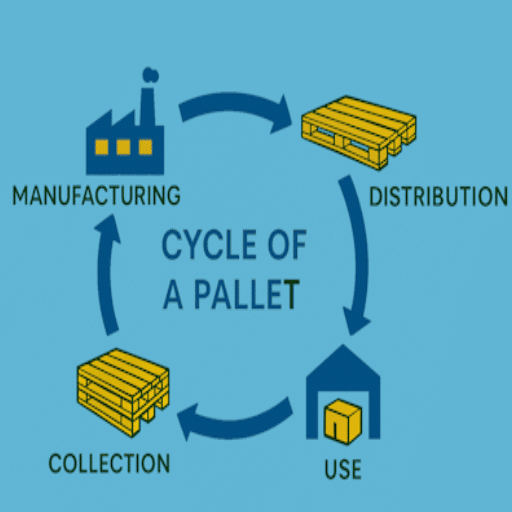
Within the production of pallets, the circular economy is aimed at creating conditions where resources are conserved and waste is minimized. This is, in turn, possible thanks to repurposing their pallets, using recyclable materials, and favoring renewable resources in making them. Once they perform such operations as pallet repair, restoration, and recycling, the respective companies become less resource and eco-incentive-dependent. Not only do these measures reduce the use of natural resources, but they also cut down on expenses while helping build a stronger supply chain. More specifically, the concepts behind the management of the cycles of pallets from production to their eventual disposal and re-use fit sustainability perspectives, resulting in enhanced innovation within the industry in the long run.
Defining the Circular Economy in Logistics
In logistics, the principle of the circular economy entices a reexamination of the supply chain paradigm, which has been predominantly linear – take–make–waste – for quite some time in the history of handicraft, manufacturing, and trading. This alternative approach, however, addresses these issues through practices of repair, refurbishment, reusing, recycling, and recycling thus sustaining the circular economic process. Resources are noted to continuously be supplied within an economic system, drawing particular importance on capturing the value contained in each flow. In particular, the focus is on reconfiguring reverse logistics practices to successfully recover products and materials while enhancing efficient use of resources through advanced technological tracking and establishing inter-firm collaboration along the value and supply chains. In this way, it is possible to use pillars of the circular economy, reducing the cost of built units, damaging the world less, or even starting constructive activities that require minimal employment of resources and do not damage the environment.
The Importance of Sustainable Pallets
⚠ Traditional Pallets
Conventional wood or non-reusable components contribute to forest destruction, material waste, and pollution.
✅ Sustainable Pallets
Achieved through green design principles and alternatives such as recycled wood, plastics, or composites — reducing material use and increasing product strength.
Opting for a green packaging solution helps not only to minimize carbon footprint but also to reduce shipping costs as well as handling costs, as such pallets tend to weigh less, and finally increase the recovery of materials used in a product once the lifecycle of the product is complete. In addition to this, such pallets enable adherence to various environmental guidelines imposed across different countries, for example ISPM-15 where it prescribes the procedure concerning wood packagings meant for export. Sustainable packages have entered the supply chain of many companies, and these cost-effective eco-solutions enable organizations to almost slash their environmental costs, making them more efficient in doing business as well as increase customer base. Thus, a win-win situation is achieved because economic interests and environmental concerns are addressed.
Current Trends in Pallet Manufacturing
The pallet industry is changing, and these changes lean toward the growing emphasis on sustainability and efficiency, as well as the advancement of technology in the sector. Key trends include:
- ♻
Eco-Friendly Materials: Use of composite wood, plastic, or cardboard, which supports the global agenda of circular economy pallets.
- 🤖
Automation & Robotics: Improvements that have increased accuracy, reduced wastage, and boosted production of pallets.
- 📡
Smart Pallets (IoT): Adding efficiency and security in the supply chain by providing visibility and real-time tracking of assets.
Understanding Circular Economy Principles
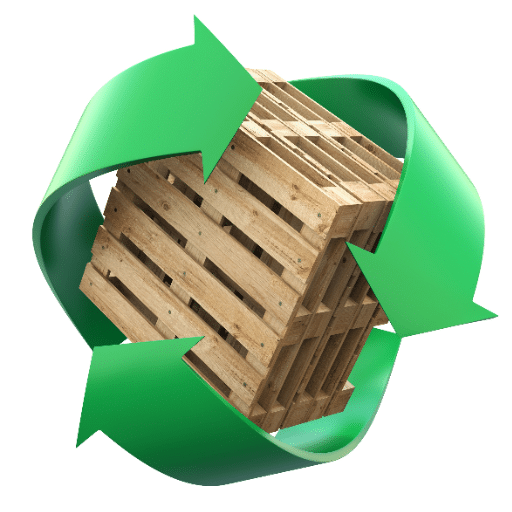
Minimization of waste and resource optimization are strategies inherent in the principles of the circular economy. These undertake developing materials and products that are systematically manufactured for reusing, recycling, or aggregates, in efforts to shift away from the use of fossil-based materials. The circular economy pallet concept is a form of closed-loop systems that extends the useful life of products and consumables to lessen the environmental consumption and build durable, sustainable supply lines. Product durability, waste minimization, and working across sectors to prevent waste and support resource reuse are crucial principles of the circular economy. These objectives are economic and promote the development of innovations to improve the quality of life amid a steady sociocultural, political, and ecological evolution.
Key Principles of a Circular Economy
The principles that support the foundation of the circular economy reflect the aspiration to use existing resources at their utmost effectiveness, attain a reduction in wastage, and support ‘green’ living.
Elimination of Waste and Pollution by Design
The design of products and processes seeks to bring down waste creation levels and control pollutants at the source. Accomplishing this requires a preference for renewable and non-harmful materials and refers to life-cycle assessment when planning to build something.
Keeping Products and Materials at Their Optimal Level
With this principle, it is about enhancing the usefulness of products, usually in the face of obsolescence, through reuse, repair, remanufacture, and refurbishment, among other approaches. The idea is to allow the materials in circulation to be useful for a longer period rather than using up fresh resources.
Develop Systems that Rebuild Natural Resources
Circular economy pallets endorse methods of resource utilization that ensure the withering and degeneration of the environment is reversed, and rehabilitation occurs. That is, replacing fossil fuels with renewables; adoption of agricultural technologies that deplete organic matter in the ground to a bare minimum; proper usage of water resources, etc.
Following these guidelines, companies can develop self-sufficient systems that encourage economic development and conserve ecosystems in the process.
How Pallets Fit into Circular Models
Pallets enjoy a significant position in the circular economy as they are repairable, reusable, and recyclable. Moreover, wooden pallets are built to withstand several storage cycles, allowing them to be used several times without repairs. In most cases, when a pallet is functionally useless, it can be converted into something else, such as wooden products, for example, mulch or wood composite products, to reduce waste generation.
Manufacturing of the pallets as well may support sustainable means by making use of wood that is procured or second-hand, which do not require exploitation of existing resources. On the other hand, plastic and metallic pallets also participate in the circular concept because they are rigid and durable, so that the user can keep them for a long time, and they can be reprocessed completely when worn out. Also, modern techniques of tracing, such as RFID technologies, make pallet pooling and asset recovery more efficient, and in turn, decrease the need for additional material resources.
The inclusion of pallets in the circular economy helps to reduce the ecological impact of the logistics industry. Supply chains can effectively follow the dictates of reduction in waste and use of resources as a means to promote systems. In this pursuit, pallets as a product illustrate comfort in regard to more effective and eco-friendly ways of doing business.
The Role of Reusable Pallets in Reducing Waste
In logistics and supply chains, particularly in transportation, one way of reducing waste concerns transportation is using reusable pallets as opposed to single-use ones. Those, when used only once, usually end up being thrown away, while those that are made for use many times are built sturdy, so they can be reused many times, stretching even for a number of processes. In this case, the amount of materials used and the number of pallets produced to be used once and then disposed of is greatly minimized.
Enhancements in technology, such as tracking systems in pallet management, have made recycling even easier. Such systems are able to track the life cycle and whereabouts of the pallet such that it can be recovered in time to be included in cyclic operations. Also, the circular economy pallets can even be made in Lego form, and repairable desk encased frames are available for the facilitators of the shipping, which allows more damaged pallets to be repaired than discarded.
Rather than taking their toll on the environment, reusable pallet systems guard against the overuse of resources such as wood and plastic or energy-consuming operations. Such going green policies as these promote sustainable goals of resource use and also the removal of solid waste. Cost-wise, relocation works to the advantage of companies in the course of time as the expenditure on pallet supplies reduces, and so do the costs of operations. In this way, the circular economy pallets are a tangible and scalable example of tackling industrial waste and environmental degradation.
Traditional Linear Pallet Models vs. Circular Pooling Systems

| Criteria | Traditional Linear | Circular Pooling |
|---|---|---|
| Lifecycle Model | Production → Use → Disposal | Connected cycle with return & reuse |
| Material Waste | High — constant reproduction & disposal | Minimal — resources remain in the cycle |
| Cost Efficiency | Higher operational cost over time | Reduced cost; shared pallet assets |
| Environmental Impact | High emissions & resource depletion | Low footprint, aligned to sustainability |
| Quality Control | Restricted, no standard recovery | Pallets examined, repaired, and maintained |
| Flexibility | Limited industry applicability | Standardized; suitable for food, pharma & more |
Overview of Traditional Pallet Systems
Pallet systems of the past have been based on one direction—pallets are the basis of their inventions and transportations, storage, and sometimes palletizing, and are more often utilized just once. Unlike the wooden one, though, cheap and affordable too, the wooden pallets have the challenge of limited environmental sustainability and fragility. Due to the risk involved in breaking stuff during movements, there is the possibility of product loss and subsequently managing huge amounts of waste. To add to the problem, classic systems have fail-safes; there’s no standard procedure on how to recover or even recycle accidental uses of pallets, meaning inefficient materials consumption and thus higher operating costs. If compared to circular economy pallets, this system is quite primitive in the sense that it has a restricted degree of control over the quality of pallets used, a limited range of industries that are flexible to apply the said pallets, and dependence on throw-away practices, which is quite unlike new technologies where there is more stress on the environmental side.
Benefits of Circular Pallet Pooling
There are many advantages to circular pallet pooling in the sense that operational inefficiencies and environmental issues are addressed. The use of shared assets reduces the number of pallets required to be purchased at the beginning, hence increasing savings. Simple standardized parameters are employed within pooling systems, allowing swift logistics and efficient control of inventories by doing away with gaps that are a result of excessive or low pallets.
Finished products and processes, such as the circular economy pallets, reduce waste significantly since they are based on the principle of the consumption of products during the second, third, or fourth cycle of operation. As such, the need for the single-use structure of pallets is catered to, thus ensuring the limitation of raw material use and the alleviation of the resultant carbon emissions due to manufacturing as well as disposal. Also, pooling systems use centralized strategies to locate and collect each resource, which helps to use more of the available resources and improve reverse logistics.
In terms of quality, the maintenance practices of pooling systems are very high, meaning that all pallets are frequently checked, repaired, and made suitable in industries like food, pharmacy, or any other manufacturing industry. Circular economy pallets also help create a resilient supply chain, thus making circular pallet pooling a viable option for today’s business needs without breaking too many banks.
Case Studies: Success Stories in Pallet Reuse
These cases emphasize that pallet pooling, when used in a system, and how companies can also be operationally productive and sustain the economy-aligned objectives.
Environmental and Economic Benefits of Circular Economy Pallets
Promoting environment-friendly and affordable service delivery is the essence of circular economy platforms. In terms of the environment, they help curb the generation of trash and promote recycling, reduce the consumption of new materials and carbon infestation caused by the conventional manufacturing and dumping of pallets. Economically, they cut down system operations by optimizing the use of resources, increasing the lifespan of resources, and also managing costs related to the disposal of waste. Hence, seeking to help companies avoid environmental degradation while remaining economically efficient by way of implementing full closed-loop logistic systems for pallets. This feature makes the supply chain more and more productive as well as conducive to the attested sustainability strategies.
Cost Savings Through Sustainable Practices
Adopting the best practices in the real operations is beneficial cost-wise, and their inefficiencies can be greatly minimized. Efficiency of resources within the supply chain design also saves raw material cost; it is achieved by compliantly reusing recyclable components, especially pallets. Take, for example, a remedial or closed cycle, where it reduces the cost of acquiring new materials by reclaiming or remaking materials that were supplied before. Moreover, cost saving is also achieved by introducing processes and equipment that save energy, thus reducing the amount of electricity and fuel consumed. Furthermore, the adoption of green or eco-friendly energy technologies or the green economy circular economy might be expensive at first, but such changes result in huge savings on the bills as time goes by. Also, it should not be the case that encouraging landfilling waste taxes is a good position. “Green Business” to avoid fines that have a high cost attached. These interventions allow reducing the cost of production along with the general boost of the firm’s performance, which is beneficial both in economic and environmental aspects.
Reducing Carbon Footprint with Reusable Pallets
Embracing circular economy pallets can substantially cut down on the carbon emissions generated by any given corporation and facilitate better environmental protection. This is in stark contrast to “disposable” pallets, which, being made out of wooden materials, need replacement after a few business trips since their end is broken and useless, whereas non-disposable pallets made out of plastics and metals can keep going for many more rounds of shipping as opposed to the disposable ones. This saves a lot of resources internally because there is less need to produce more raw materials every time, thereby cutting the number of trees that will be cut and the number of machines that would need to be engaged to accomplish that task. Further, such types of pallets are environmentally friendly as they generate less waste due to the fact that fewer such pallets are dumped in landfills.
Another important benefit is that the design of the pallets is light, and this means less fuel is needed during transportation, and there is less pollution. Several companies are also employing systems of closed loops, in which pallets are efficiently brought back, washed, and reused, even more so reducing the environmental burden. Finally, when no longer in use, reusable pallets are recycled, reducing the wastage of materials as a whole, as well as fitting into the principles of the circular economy. Incorporating these systems into operation presents a green alternative that fulfills current expectations of environmental approaches and logistics in terms of processes and cost effectiveness.
Impact on Supply Chain Efficiency
Reusable pallets significantly enhance supply chain efficiency through simplification of logistics operations, optimization of costs, and rational use of resources. First of all, their durability and standardization lessen the chances of transport-associated damage of products that will likely come loose, and delays due to poor planning and breakage of pallets. Secondly, the reason is that their extended working time decreases the frequency of changing them, which results in decreased costs of purchasing as well as managing interruptions. Also, closed-loop preventive circular economy pallets encourage easier reverse logistics management as the pallets are labelled such that retrieval of pallets is easy while serving another company due for return. However, this system helps cut out unnecessary expenses and still enhances the storage and handling operations by the reasonable use of uniform and easily stacked pallets. In conclusion, in supply chains with a circular economy, pallets integrate, certain benefits emerge to stakeholders and processes that enable logistics to grow robustly and rapidly.
Challenges in Implementing Circular Economy Solutions
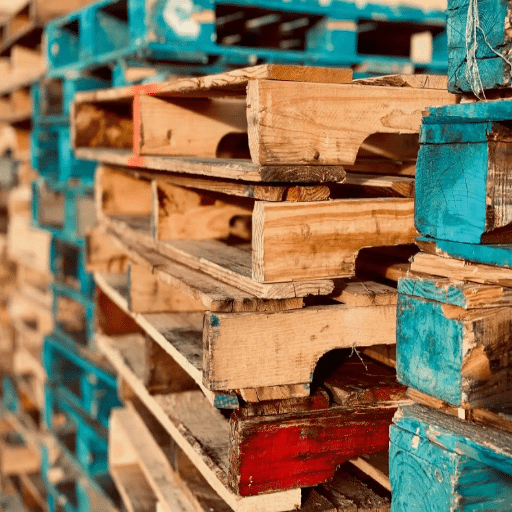
One of the major obstacles towards implementing circular economy pallets is the difficulty associated with the lateral configuration of single-cycle distribution channels into multiple-cycle configurations. It involves, most of the time, switching to higher initial costs, including but not limited to infrastructures, high-end recycling systems, and material history systems. Also, many times, change is resisted because of too many established practices and a low level of skill or knowledge of the interveners in circular concepts. Such unregulated policies make things even harder for many regions as standard measures are needed to promote the functioning of circular economy pallets. Finally, cost efficiency is also a factor as the expenditure at the beginning for both overcoming high demand and less demand is beneficial.
Common Obstacles Businesses Face
-
Resistance to Change
To cope with inherent opposition to adopting change, businesses can also educate and engage stakeholders by organizing training that outlines the advantages of the circular business dynamics for a longer term. Additionally, displaying case studies showcasing better productivity and reduced costs can satisfy any feelings of doubt.
-
Conflicting Regulatory Issues
When dealing with conflicting regulatory issues, companies can campaign for uniform policy frameworks along with associations and decision makers. It is also possible to standardize processes for resource efficiency and the utilization of ISO standards and any other dominant global standards to ensure they are adhered to in a better manner, understood, or appreciated in different contexts with minimum disruptions, and that every effort is geared towards trying to implement circular economy initiatives.
-
Economic Feasibility
Finally, it is important to remember that major economic feasibility issues can be tackled with a significant amount of creativity and, most importantly, attention to scale. Business models have the possibility of thinking about public and private sectors, as well as subsidies and grants, for example, that alleviate the financial cost at the beginning. More so, by employing more sophisticated technology like AI sorting systems and product modularity, resource use is maximized, and the price of circular economy pallets goes up, thereby overcoming demand risks.
Strategies for Overcoming Implementation Challenges
- 1
Stakeholder Collaboration: Emphasize the importance of stakeholder collaboration to facilitate coordination and resource allocation.
- 2
Progressive Technology: Concentration should be directed towards the inclusion of progressive technological approaches, including AI, robotics, and other advancements that assist in the tasks and procedures, thus improving output and minimizing inefficiency.
- 3
Comprehensive Training: Design comprehensive training initiatives to elevate the skill levels of the team, thus paving the way for a smooth transition to new systems.
- 4
Performance Standards & Monitoring: Clear productivity standards and surveillance mechanisms should be put in place to monitor progress and take preventive measures against arising challenges for funding.
- 5
External Funding Sources: Looking for external sources for the purpose of getting the starting costs covered through grants, subsidies, and public-private partnerships.
Conclusion
Circular economy pallets represent a tangible, scalable, and economically sound pathway for industries to reduce their environmental footprint, cut operational costs, and build resilient supply chains — aligning business performance with the planet’s long-term wellbeing.
Reference Sources
A Measurement Tool for Circular Economy Practices: A Case Study in Pallet Supply Chains
This study explores the environmental and economic impacts of pallet supply chains and their alignment with circular economy principles.
This paper discusses the importance of transitioning to a circular economy within the pallet industry and its broader implications.
UVM ScholarWorks: Circular Economic Systems in Waste Management
This resource examines the concept of Zero Waste and its application to creating circular economic systems, including pallet supply chains.
Frequently Asked Questions (FAQs)
How do pallets aid the supply chain for sustainability?
Using pallets allows companies to achieve their ecological objectives owing to the circular economy: Reuse and sharing of pallets help in conserving raw materials, reducing waste, and prolonging the lifespan of the pallet, as well as the service life of the pallet. Sustainable logistics, which involves the use of recyclable or pooled pallets, accelerates the progression towards circular green economy targets and reduces waste in business operations.
Can plastic waste and plastic pallets that have been disposed of be controlled by using recycled pallets and plastic pallets?
Yes, circular economy pallets produced from post-consumer waste or high-density plastic, among others, help to alleviate the problem of dumping of plastic in landfills and reduce the need for new wood. The use of recycled plastic pallets saves energy and water considerations in the life cycle analysis, as opposed to making new wood. Unfortunately, however, many pallet recyclers take used plastics and recreate them into solid high-performance pallets that are inappropriate for simple core system pallets.
Is it more environmentally friendly to use plastic for pallets or wood?
There are advantages and disadvantages to each configuration. Wooden pallets are mainly considered as having minimal upfront environmental costs and are easily recycled, whereas plastics, including HDPE stowage, may have a relatively longer useful life and are easy to wash, particularly in food/pharmaceutical management and distribution structures. Decisions may be based on conducting an LCA and undertaking an EDP in view of the ability to meet different transport and storage requirements, pallet durability, which is the extent and duration of use, and the desired disposal means.
In which ways does changing to pooled pallets impact cost and promotes ease access to pallets?
Pooled pallets plus pooling programs cut down the number of new pallets that companies require to purchase by allowing assets to be shared among different users. Pooling also reduces expenses that are linked to buying, fixing, and disposing of pallets, addresses the problem of the availability of pallets in supply chains, and limits other claims present in the utilization of pallets. This practice becomes exceptionally useful in cases of international freight where the ability to use GMA pallets or Euro Pallet Standards is of importance.
How are pallet producers and providers perceived as key enablers in the circular economy pallets sector?
Circular economy pallets are made possible by the concepts and principles developed by manufacturing and supplying industries that involve repair, re-adaptation, or development of take-back or pooling schemes. They are created using reusable materials, have certifications, and work with pallet scrap dealers in order to collect and reuse the materials for other items, contributing to a greener solution.
What is the impact of certain pallet specifications, such as GMA and Euro pallets, on the environment?
GMA and Euro pallet standards improve cross-region compatibility of pallets and their frequent reuse, thus reducing single-use pallets and associated waste. Standardisation supports the implementation of pooling schemes and logistics of crated goods, including international transportation without violations of phytosanitary requirements, and the emerging logistics do not impair the environment and natural resources.
What can be done by companies in terms of environmental considerations whenever changing pallet systems?
Companies can conduct a life cycle assessment (LCA) and review environmental product declarations (EPDs) for these products. Considerations include raw material consumption, energy, and water usage, GHG emissions, waste treatment, and end-of-life options, etc. Such metrics are essential in ensuring that pallet choices are within a larger context of sustainability and support the contributions of pallets towards an ambition of circular economy pallets.
How can businesses engage with the concept of circular economy and pallets?
A good place to start is by assessing pallet usage and lifespan, contacting pallet manufacturers and recyclers about repairs and pooling, using hardwearing or recycled materials, and standardising pallets to promote their reuse. In addition, application of systems for efficient logistics and automation in storage of products on pallets will help minimize damage and increase the service life, thereby saving money, eliminating waste, and promoting breathability and sustainability.