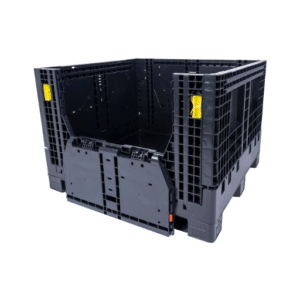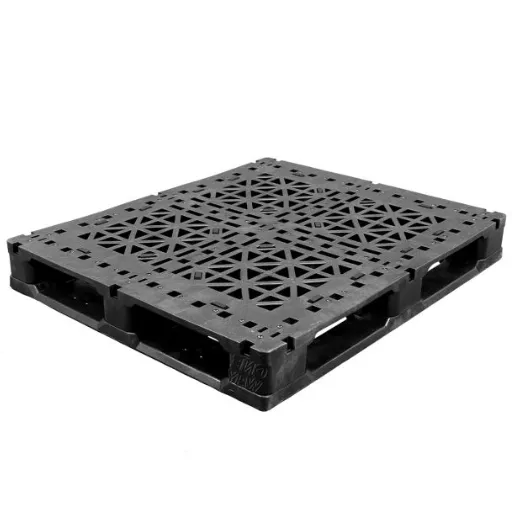

Yes, plastic pallets can be used in racking systems. The key is matching the right pallet design to your specific racking type and load requirements. Rackable plastic pallets with continuous runners or full-perimeter bases are engineered to bridge unsupported rack beams safely, while standard nine-leg or nestable pallets should never be placed in racking.
Most warehouse managers already know that plastic pallets outperform wood in durability and hygiene. Yet when it comes to racking, many hesitate. The fear is understandable: a pallet failure at height can destroy inventory, damage expensive racking, and put workers at risk. What holds teams back is not reluctance to change, it is uncertainty about whether their existing racking systems can safely accommodate plastic pallets, and how to make the switch without disrupting operations.
This guide answers those questions directly. You will learn how plastic pallets vs wood pallets in racking compare, which plastic pallet racking systems fit your operation, what plastic pallet racking load capacity means for safety, and how to plan a smooth transition. By the end, you will have a clear compatibility framework and a practical checklist your operations team can use immediately.
Key Takeaways
- Plastic pallets are fully compatible with racking systems when you choose rackable designs with continuous runners and verified rack load ratings.
- Plastic pallets distribute weight more uniformly across rack beams than wood, reducing point-load stress and extending racking component life.
- Every major racking type (selective, drive-in, push-back, AS/RS) has specific plastic pallet requirements; a one-size-fits-all approach creates safety risks.
- Switching from wood to plastic in racking requires recalculating load placards, running a pilot program, and updating inspection protocols.
- Over a 3-year period, plastic pallets in racking typically deliver lower total cost of ownership despite higher upfront unit cost.
Can Plastic Pallets Be Used for Racking?
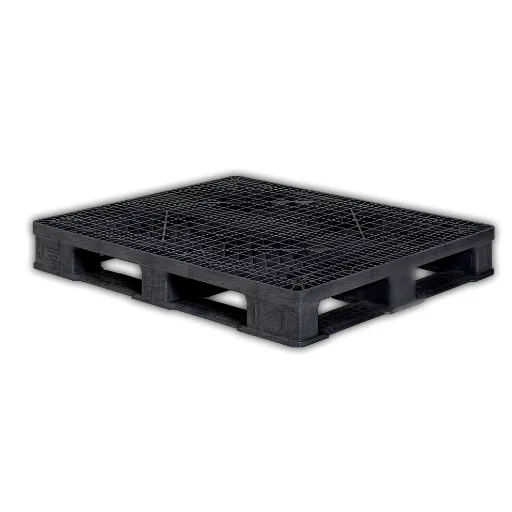
The short answer is yes, but with an important caveat. Only rackable plastic pallets are safe for use in racking systems.
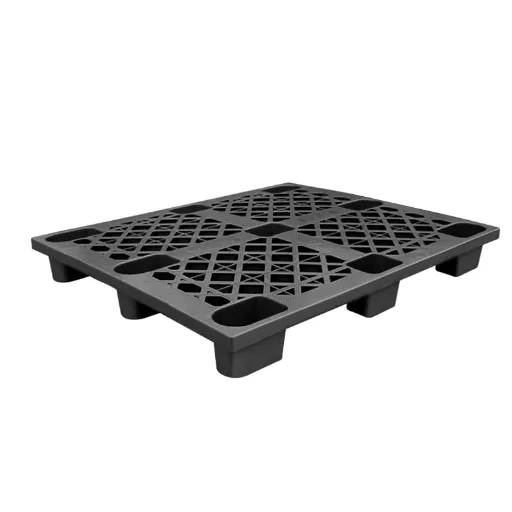
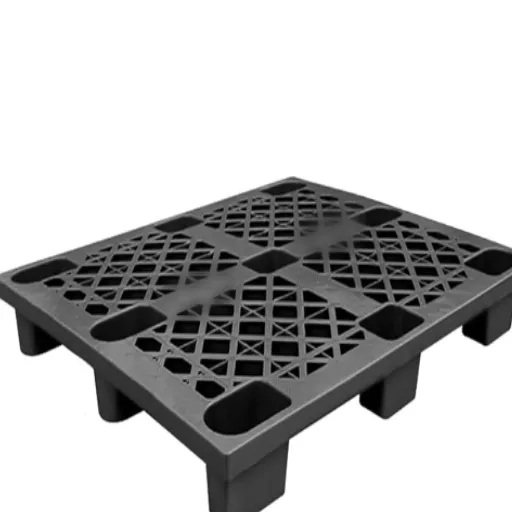
A rackable plastic pallet is engineered with continuous runners, typically in a three-runner (chuanzi) or full-perimeter (picture-frame) base configuration. These runners bridge the gap between rack beams, distributing the load across the supported edges. Standard nine-leg or lightweight nestable pallets lack this continuous support structure. When placed on rack beams, their weight rests on individual leg points, creating concentrated stress that can cause the deck to deflect, crack, or collapse.
The distinction matters because the term “heavy duty” does not automatically mean “rackable.” A pallet rated for 5,000 kg static load on a flat floor may only support 800-1,500 kg in a racking system. The difference is not the pallet’s overall strength. It is how that strength behaves when the center of the pallet is unsupported.
When evaluating plastic pallets for racking, you need to understand three load ratings:
- Static load: The weight a pallet supports when stationary on a flat floor. This number is irrelevant for racking decisions.
- Dynamic load: The weight a pallet supports while being moved by a forklift. Also irrelevant for racking.
- Rack load: The weight a pallet supports when resting on two rack beams with an unsupported span in the center. This is the only number that matters.
Industry best practice applies a 1.5x safety factor to the rated rack load. If a plastic pallet carries a 1,500 kg rack load rating, the safe working load is 1,000 kg. Always verify that the manufacturer specifies the beam span used for testing, commonly 800-1,100 mm. A pallet rated at 1,500 kg for a 900 mm span may fail at a 1,200 mm span.
When Chen Wei, a warehouse operations manager at a food distribution center in Qingdao, first considered switching to plastic pallets for racking, he nearly ordered standard nine-leg models because they were labeled “heavy duty.” A conversation with his racking supplier revealed the critical difference. Chen’s selective racking system used 1,050 mm beam spans. The nine-leg pallets he had in mind were never tested for unsupported spans. Switching to three-runner rackable pallets with a verified 1,200 kg rack load rating at 1,100 mm gave him the safety margin his operation needed. Six months later, his team had zero pallet-related incidents in racking, compared to three wood pallet failures in the prior year.
If you are evaluating plastic pallets for your racking system, start with our complete guide to plastic pallet solutions to understand the full range of designs and specifications available.
Plastic Pallets vs Wood Pallets in Racking: Performance Comparison
The decision to use plastic pallets for racking is not simply a materials choice. It changes how loads interact with your racking structure. Understanding these differences helps you assess compatibility, plan capacity, and avoid costly assumptions. For a deeper look at the full range of options, see our guide to the full range of plastic pallet specifications available for racking applications.
Weight Distribution on Rack Beams
Wood pallets distribute weight unevenly. The load concentrates at board contact points, nail locations, and stringer intersections. Knots, grain variation, and inconsistent construction create unpredictable stress patterns. Over time, moisture absorption causes boards to warp, shifting load points and creating eccentric stresses on rack beams.
Plastic pallets distribute weight uniformly across continuous runners. The injection-molded design ensures consistent material thickness and structural geometry. Every production batch maintains the same load path, so rack beams experience predictable, evenly distributed stress. This uniformity matters because rack beam capacity calculations assume centered, evenly distributed loads. Wood pallets often violate that assumption in practice.
Dimensional Stability
Wood absorbs moisture from the air, from product spills, and from temperature cycling. A wood pallet that measures 1,200 x 1,000 mm in dry conditions may swell to 1,205 x 1,005 mm in humid storage. That 5 mm variation per side can cause pallets to jam in rack positions, hang over beam edges, or create gaps that allow load shifting. Wood also splinters, producing debris that falls into rack structures and creates maintenance hazards.
Plastic pallets made from HDPE or polypropylene maintain dimensional tolerances within +/-2 mm across their entire lifecycle. They do not absorb moisture, swell, or splinter. In racking systems where consistent positioning matters for forklift engagement and load stability, this precision directly improves safety and throughput.
Rack Damage Impact
When a wood pallet fails in racking, the failure mode is unpredictable. Boards break, nails pull out, and splintered debris scatters across rack beams and product. The sharp edges of broken wood and exposed nails can scratch protective coatings on rack components, accelerating corrosion.
When a rackable plastic pallet reaches its limit, deformation is gradual and visible. Runners show stress whitening before cracking. Deck deflection becomes apparent during routine inspections. There are no nails, no splinters, and no sharp debris. Failed plastic pallets are easier to identify and remove from racks before catastrophic collapse occurs.
| Attribute | Plastic Pallets in Racking | Wood Pallets in Racking |
|---|---|---|
| Rack load capacity | 500-2,000+ kg (rackable designs) | 1,000-2,500 kg (new, undamaged) |
| Dimensional stability | +/-2 mm across lifecycle | +/-10-20 mm with moisture cycling |
| Rack damage risk | Low (no splinters or nails) | Moderate to high (nails, splinters, broken boards) |
| Consistency batch-to-batch | High (injection molded) | Variable (natural material) |
| Typical lifespan in racking | 5-7 years (200+ trips) | 8-15 trips before repair or replacement |
| Moisture resistance | Impervious (HDPE/PP) | Absorbs and swells |
The consistency advantage becomes even more significant in automated racking systems. A 5 mm dimensional drift in a wood pallet can cause retrieval failures in AS/RS shuttles. Plastic pallets eliminate that variable.
Plastic Pallet Racking Systems: Compatibility by Type
Not all racking systems place the same demands on pallets. The plastic pallet specification that works perfectly in selective racking may be suboptimal for drive-in racking. Matching pallet design to racking type is essential for both safety and efficiency.
Selective Racking
Selective racking is the most common warehouse storage system, used in approximately 70% of industrial facilities worldwide. It provides 100% selectivity: every pallet is accessible directly from the aisle without moving other pallets. Beam levels are adjustable, and standard forklifts require no specialized equipment.
For selective racking, plastic pallets need a rackable design with a rack load rating that matches or exceeds your beam capacity. Three-runner rackable pallets are the most common and cost-effective choice. They distribute loads evenly across two rack beams and allow four-way forklift entry for flexible retrieval.
If your selective racking stores loads exceeding 1,000 kg per position, or if beam spans exceed 1,100 mm, steel-reinforced rackable pallets are strongly recommended. The steel tubes integrated into the runners during injection molding reduce long-term creep deflection by 40-60% under sustained loads.
Standard dimensions for selective racking include 1,200 x 1,000 mm, 1,200 x 800 mm, and 48 x 40 inches. Verify that your plastic pallet dimensions match your rack configuration before ordering. If your racking was originally designed for wood pallets with non-standard dimensions, custom plastic pallets can be engineered to fit without modifying your racking structure.
Drive-In and Drive-Through Racking
Drive-in and drive-through racking systems maximize storage density by eliminating aisles between pallet positions. Forklifts drive directly into the rack structure to place and retrieve pallets, which rest on horizontal rails rather than beam pairs. These systems operate on a last-in-first-out (LIFO) basis.
The rail-contact nature of drive-in racking places different demands on pallet undersides. Full-perimeter rackable pallets are preferred because their continuous frame provides uniform rail engagement across all contact points. Three-runner pallets can create point loads on rails if the runner spacing does not align precisely with rail placement.
Closed-deck plastic pallets are advantageous in drive-in racking because their smooth underside prevents catching on rail entry guides. HDPE is the preferred material because its superior impact resistance absorbs the occasional contact that occurs when forklifts maneuver inside the rack structure.
Push-Back Racking
Push-back racking uses nested carts on slightly inclined rails. When a new pallet is placed on the rack, it pushes the previous pallet and cart backward along the rail. This system provides higher density than selective racking while maintaining better selectivity than drive-in.
Plastic pallets for push-back racking need a smooth, uniform underside that engages reliably with the cart surface. Inconsistent bottom surfaces, such as those found on worn wood pallets or nine-leg designs, can cause carts to tilt or jam. Full-perimeter or double-faced rackable plastic pallets with consistent tare weights perform best. The uniform weight ensures that the cart incline mechanism operates predictably across all load levels.
Cantilever Racking
Cantilever racking stores long, bulky items such as pipes, lumber, and extrusions on horizontal arms. Standard pallets are less commonly used here, but when products are bundled on palletized platforms, heavy-duty rackable plastic pallets with high point-load capacity are required.
Steel-reinforced rackable pallets are essential for cantilever applications. The concentrated load at the arm contact points creates high local stress. All-plastic designs may deform over time. Steel reinforcement in the runners and deck maintains structural integrity under these demanding conditions.
AS/RS and High-Bay Automated Racking
Automated storage and retrieval systems (AS/RS) and high-bay racking represent the most demanding environment for plastic pallets. These systems operate without human intervention, using shuttles, cranes, and conveyors to store and retrieve pallets at heights exceeding 12 meters.
Automation demands extreme dimensional stability. A pallet that sags by even a few millimeters can fail to engage shuttle grippers or create interference with rack rails. Automated systems cannot compensate for dimensional drift. A single failed pallet in an AS/RS can cause cascading retrieval failures and significant downtime.
Plastic pallets for AS/RS must meet tight tolerances, typically +/-1 mm on critical dimensions. Steel reinforcement is standard, not optional, because sustained rack loads at height magnify creep deformation. Consistent tare weights are critical for accurate load-cell readings that trigger safety shutdowns if weight limits are exceeded.
RFID and IoT tracking integration is increasingly common in automated warehouses. Plastic pallets can be manufactured with embedded RFID tags or molded-in sensor housings, creating a seamless link between physical inventory and warehouse management systems.
| Racking Type | Recommended Plastic Pallet | Key Requirement |
|---|---|---|
| Selective | Three-runner or full-perimeter rackable | Rack load matches beam capacity |
| Drive-in / Drive-through | Full-perimeter, closed deck | Uniform rail contact surface |
| Push-back | Full-perimeter, smooth underside | Consistent tare weight |
| Cantilever | Heavy-duty steel-reinforced rackable | High point-load capacity |
| AS/RS high-bay | Steel-reinforced, tight tolerance | Minimal deflection, RFID-ready |
When Sarah Mitchell, logistics director at a pharmaceutical distribution center in the Netherlands, upgraded her warehouse to include a new AS/RS module, her engineering team insisted on steel-reinforced plastic pallets with dimensional tolerances of +/-1 mm. The upfront cost was 30% higher than standard rackable pallets. After 18 months of operation, the system had experienced zero pallet-related retrieval failures. Her previous warehouse, which used wood pallets in conventional selective racking, averaged two pallet-related incidents per month. The consistency of the plastic pallets eliminated the dimensional variation that had plagued her automation workflows.
Plastic Pallet Racking Load Capacity and Safety Standards
Safety in racking operations depends on the interaction between three elements: the rack structure, the pallet, and the load. When you switch from wood to plastic pallets, each element requires re-evaluation.
OSHA General Duty Clause
The Occupational Safety and Health Administration does not maintain a dedicated standard exclusively for pallet racking systems. Instead, enforcement falls under the General Duty Clause, Section 5(a)(1) of the OSH Act, which requires employers to provide a workplace free from recognized hazards that are causing or likely to cause death or serious physical harm.
This means that racking safety is the employer’s responsibility. Choosing plastic pallets with verified rack load ratings, proper runner configurations, and documented test results directly supports compliance. Consistent load distribution reduces rack stress. Predictable failure modes enable proactive maintenance. Documentation of pallet specifications and inspection records demonstrates due diligence if questions arise.
For a detailed overview of OSHA requirements as they relate to warehouse racking, refer to our guide on OSHA pallet racking requirements.
ANSI/RMI MH16.1 Reference
The Rack Manufacturers Institute publishes ANSI/RMI MH16.1, the national consensus standard for the design, testing, and utilization of industrial steel storage racks. While this standard primarily addresses rack structure, it directly impacts pallet selection because rack load capacity placards must account for the combined weight of the pallet and the product it carries.
When transitioning from wood to plastic pallets, recalculate your load placards. Wood pallets typically weigh 20-30 kg each with +/-3 kg variation. Plastic rackable pallets typically weigh 18-25 kg with +/-0.5 kg variation. The lighter, more consistent tare weight of plastic pallets can marginally increase your effective product capacity per beam level. More importantly, the consistency improves the accuracy of load-cell based safety systems.
Load Placard Compliance
Every rack installation must display visible load capacity placards showing the maximum permissible unit load per beam level, the average unit load for the rack section, and the maximum total load per bay. When you switch pallet types, update these placards to reflect the new combined pallet-plus-product weights.
Best practice includes documenting the pallet specification on the placard or in associated standard operating procedures. This ensures that operators loading the rack understand both the product weight limit and the pallet requirements.
Inspection Protocols for Plastic Pallets in Racking
Monthly visual inspections should check for visible runner cracks, deck deformation, discoloration indicating UV degradation, and exposed steel reinforcement that could corrode. Remove any pallet showing cracks in load-bearing runners, permanent deck deflection exceeding 5 mm, or exposed steel with visible rust.
Quarterly comprehensive audits should include dimensional measurement of a representative sample, checking for creep-induced deflection under sustained loads, and evaluating wear patterns on runner contact surfaces. Maintain inspection records for at least 12 months.
Fire Safety Considerations
The National Fire Protection Association standard NFPA 13 requires at least 18 inches of vertical clearance between the top of stored materials and sprinkler deflectors. This clearance requirement applies regardless of pallet material.
Modern HDPE and polypropylene pallets meet standard fire-resistance requirements for warehouse storage. However, local building codes and insurance underwriters may have specific requirements for high-bay plastic pallet storage. Verify compliance with your local authority having jurisdiction before implementing large-scale plastic pallet deployments in high-bay racking.
Transitioning from Wood to Plastic Pallets in Racking: A Step-by-Step Guide
Switching from wood to plastic pallets in a racked warehouse requires more than placing a purchase order. A structured transition protects safety, maintains operational continuity, and ensures your team is prepared for the differences in handling and inspection.
Step 1: Assess Your Current Racking System
Document your racking type, beam span, beam capacity per level, and upright load limits. Measure the clear height between beam levels and verify that plastic pallet heights will fit without interference. Standard rackable plastic pallets are typically 150-160 mm high, similar to wood pallets, but custom heights are available.
Verify that your forklift fleet can handle plastic pallets effectively. Plastic surfaces may be smoother than wood, affecting fork entry and load stability. Some operations benefit from anti-slip surfaces or rubber grommets on pallet top decks.
Step 2: Select the Right Plastic Pallet for Your Racking
Match your rack load requirement to a pallet’s verified racking capacity, then apply the 1.5x safety factor. If your heaviest product weighs 800 kg, you need a pallet with a rated rack load of at least 1,200 kg.
Verify that the runner configuration matches your racking type. Selective racking typically works well with three-runner designs. Drive-in and push-back racking benefit from full-perimeter bases.
Request third-party test reports referencing ISO 8611 or ASTM D1185 testing methodologies. The report should specify the beam span used for rack load testing. Generic “heavy duty” claims without test data are insufficient for racking applications.
If your operation involves sustained storage exceeding six months, high-bay storage above 8 meters, or loads above 1,000 kg, specify steel-reinforced pallets. The steel tubes integrated during molding prevent creep deflection that can develop under constant load over time.
Step 3: Run a Pilot Program
Select one rack bay or one aisle for pilot testing. Deploy 50-100 plastic pallets in this controlled area. Monitor for proper forklift engagement, rack beam deflection under load, and any pallet deformation over 30 days of normal operation.
Gather operator feedback on handling differences. Plastic pallets may nest or slide differently than wood. Forklift operators may need brief guidance on entry angles and load stability.
Step 4: Update Load Placards and Standard Operating Procedures
Recalculate and post updated load capacity placards reflecting the combined weight of plastic pallets and products. Update your standard operating procedures to include plastic pallet inspection criteria, damage reporting protocols, and removal thresholds.
Train all relevant personnel, including forklift operators, warehouse associates, and maintenance staff, on the differences between wood and plastic pallet handling and inspection.
Step 5: Phased Rollout
Replace wood pallets aisle by aisle to maintain operational continuity. A phased approach also allows you to identify and resolve any unforeseen compatibility issues before full deployment.
Establish a pallet inspection schedule: monthly visual checks and quarterly comprehensive audits. Monitor rack structural integrity during the transition, as the different load distribution characteristics of plastic pallets may reveal pre-existing rack issues that wood pallets had masked.
Step 6: Evaluate and Optimize
Track key metrics throughout the rollout: rack damage incidents, product damage at height, pallet replacement rate, operator satisfaction, and forklift handling efficiency. After six months, compare these metrics against your wood pallet baseline.
If standard pallet dimensions create fit issues with your existing racking, consider pallets engineered to your exact specifications. Custom tooling can produce pallets that optimize your rack cube utilization without modifying your racking structure.
Plastic Pallets for Warehouse Racking by Industry
Different industries place different demands on racking systems and pallets. The right combination of racking type and plastic pallet specification varies significantly across applications.
Food and Beverage Cold Storage
Cold storage warehouses operate at temperatures ranging from 0 degrees Celsius down to -40 degrees Celsius. At these temperatures, wood pallets absorb moisture from the air and freeze, becoming heavier, more brittle, and prone to splintering. The moisture cycling causes dimensional instability that creates fit issues in rack positions.
Plastic pallets made from cold-temperature HDPE maintain their properties across the full cold chain range. Closed-deck designs prevent moisture and contaminants from collecting on the pallet surface. For frozen product densities exceeding 1,000 kg per rack position, steel-reinforced rackable pallets provide the necessary load capacity with minimal deflection. For bulk ingredient storage that does not require full racking, our plastic pallet boxes offer the same cold-temperature durability with collapsible or rigid walls for loose product containment.
Pharmaceutical and Healthcare
Pharmaceutical warehouses require batch traceability, first-in-first-out inventory rotation, and contamination-free storage. Wood pallets introduce organic material, moisture, and splinter risks that conflict with good manufacturing practice requirements.
Virgin-grade polypropylene or HDPE pallets with smooth closed decks are ideal for pharmaceutical racking. They are easy to sanitize, compatible with automated retrieval systems, and can be manufactured with embedded RFID tags for full batch traceability. Steel reinforcement supports the dense loads of active pharmaceutical ingredient drums and finished goods.
Automotive Manufacturing
Automotive supply chains use a mix of selective racking for sequenced parts and high-bay AS/RS for bulk component storage. Parts such as engine blocks, transmissions, and body panels create concentrated point loads that stress pallet structures.
Steel-reinforced rackable plastic pallets with 1,200+ kg rack load ratings handle these demands. Tight dimensional tolerances ensure reliable engagement with automated retrieval systems. The impact resistance of HDPE absorbs the occasional contact that occurs in high-velocity operations.
Chemical and Industrial
Chemical warehouses store drums, intermediate bulk containers, and bagged materials on selective racking. Spills are an operational reality. Wood pallets absorb chemicals, creating disposal hazards and structural weakening.
Chemical-resistant HDPE pallets do not absorb spills. They are easy to clean and decontaminate. Anti-slip top surfaces prevent drum movement in rack positions. Steel reinforcement supports 4-drum loads that can exceed 1,000 kg per pallet position.
E-Commerce and Retail Distribution
E-commerce fulfillment centers prioritize speed, accuracy, and traceability. Selective racking and carton-flow systems dominate these operations. Lightweight plastic pallets reduce manual handling strain and improve forklift cycle times.
Vented deck designs allow barcode scanning through the pallet, improving receiving and put-away accuracy. RFID-compatible pallets integrate directly with warehouse management systems, enabling real-time inventory visibility. At 20-26 kg tare weight, lightweight rackable plastic pallets are easier to handle during peak-season volume surges.
Cost Analysis: Plastic vs Wood Pallets in Racked Warehouses
Unit purchase price tells only part of the story. When evaluating plastic pallets for racking, the total cost of ownership over a 3-year horizon reveals the true economics.
Unit acquisition cost: Rackable plastic pallets typically range from 55to55to85 per unit, depending on size, material, and reinforcement. Wood pallets range from 25to25to45 for standard GMA-grade units. The plastic premium at purchase is roughly 60-100%.
Rack damage costs: Wood pallets produce splinters, nail protrusions, and broken boards that scratch rack beam coatings, damage uprights, and create debris that interferes with rack components. Over a 3-year period, rack maintenance attributable to wood pallet damage typically costs $8-15 per pallet position annually. Plastic pallets eliminate this damage source.
Product loss at height: A wood pallet failure in elevated racking creates catastrophic product loss, potential rack damage, and safety incidents. Even conservative estimates place the average cost of a single pallet failure at height at $2,000-5,000 including product, cleanup, and inspection. Plastic pallets offer predictable performance and visible deformation warning signs before failure.
Replacement frequency: In racking applications, wood pallets last 8-15 trips before requiring repair or replacement. At 50 trips per year, that is 3-6 replacement cycles annually. Rackable plastic pallets in closed-loop operations commonly achieve 5-7 years of service, or 200+ trips.
Maintenance and labor: Wood pallets require ongoing inspection, nail replacement, and board repair. Plastic pallets are maintenance-free. The labor savings in inspection and repair typically offset $5-10 per pallet annually.
For a 1,000-pallet racked warehouse operating at 50 trips per year, the 3-year comparison looks like this:
| Cost Category | Wood Pallets (3 Years) | Plastic Pallets (3 Years) |
|---|---|---|
| Initial purchase | 35,000(1,000unitsat35,000(1,000unitsat35) | 70,000(1,000unitsat70,000(1,000unitsat70) |
| Replacements | $87,500 (2,500 units over 3 years) | $0 |
| Rack damage repairs | $30,000 | $5,000 |
| Product loss incidents | $15,000 (3 incidents) | $2,000 (minor) |
| Maintenance labor | $22,500 | $7,500 |
| 3-Year Total | $190,000 | $84,500 |
| Cost per trip | $1.27 | $0.56 |
David Park, operations director at an automotive parts distributor in Germany, ran a similar analysis before switching his 2,000-pallet selective racking warehouse from wood to steel-reinforced plastic pallets. His finance team was skeptical of the 120,000upfrontinvestment.After36months,hisactualcostscameinat120,000upfrontinvestment.After36months,hisactualcostscameinat168,000 for plastic versus a projected $380,000 had he stayed with wood. The 56% cost reduction convinced his board to standardize plastic pallets across all five of their European distribution centers.
For a deeper comparison of plastic and wood pallet performance across all applications, see our analysis of plastic pallets versus wood pallets.
Frequently Asked Questions
Can plastic pallets be used in all types of racking systems?
Plastic pallets can be used in selective, drive-in, push-back, cantilever, and AS/RS racking systems. The key is selecting the right pallet design for each racking type. Three-runner rackable pallets work well in selective racking. Full-perimeter designs are preferred for drive-in and push-back systems. AS/RS requires steel-reinforced pallets with tight dimensional tolerances.
Are plastic pallets safer than wood pallets in racking?
Plastic pallets offer several safety advantages in racking: consistent dimensions prevent jamming and overhang, no nails or splinters eliminate debris hazards, and gradual visible deformation provides early warning before failure. However, safety depends on choosing rackable designs with verified load ratings matched to your beam spans.
What is the rack load capacity of a plastic pallet?
Standard rackable plastic pallets support 500-1,500 kg in racking configurations. Heavy-duty steel-reinforced models can achieve 2,000+ kg rack loads. Always verify that the manufacturer provides a rack load rating with the specific beam span used for testing, and apply a 1.5x safety factor to determine safe working loads.
Do I need steel-reinforced plastic pallets for racking?
Steel reinforcement is strongly recommended for loads exceeding 1,000 kg per rack position, beam spans exceeding 1,100 mm, high-bay storage above 8 meters, AS/RS applications, and sustained storage exceeding six months. The steel tubes integrated during molding reduce creep deflection by 40-60% compared to all-plastic designs.
Can I use plastic pallets in my existing wood-pallet racking?
In most cases, yes. Standard rackable plastic pallets share the same nominal dimensions as wood pallets (1,200 x 1,000 mm, 1,200 x 800 mm, 48 x 40 inches). Verify clearances, recalculate load placards to account for tare weight differences, and run a pilot program before full rollout. If your wood pallets use non-standard dimensions, custom plastic pallets can be engineered to fit.
How long do plastic pallets last in warehouse racking?
In closed-loop racking operations, rackable plastic pallets typically last 5-7 years or 200+ trips. Lifespan depends on load severity, handling care, temperature exposure, and inspection discipline. This compares to 8-15 trips for wood pallets in similar racking applications.
Do plastic pallets need different forklift handling in racks?
Plastic pallets may have slightly different fork entry characteristics than wood due to smoother surfaces. Most forklift operators adapt within a few shifts. Anti-slip surfaces or rubber grommets can be specified if your operation requires additional load stability during transport.
Are plastic pallets compliant with OSHA racking requirements?
OSHA does not regulate pallet materials directly. Compliance falls under the General Duty Clause, which requires a workplace free from recognized hazards. Using rackable plastic pallets with verified load ratings, proper inspection protocols, and updated load placards supports compliance. Maintain documentation of pallet specifications and inspection records. For a complete breakdown of compliance obligations, see our guide to OSHA racking safety standards.
Conclusion
Plastic pallets are fully compatible with warehouse racking systems when you match the right specifications to your racking type and operational demands. The key is understanding that not all plastic pallets are rackable, and not all rackable designs suit every racking configuration.
Three principles should guide your decision. First, always request the rack load rating with the specific beam span used for testing. Second, apply a 1.5x safety factor to convert rated capacity into safe working load. Third, match the pallet runner configuration, material, and reinforcement level to your specific racking environment.
Yes, plastic pallets can be used for racking across all major plastic pallet racking systems. When evaluating plastic pallets for warehouse racking, understanding plastic pallet racking load capacity is critical. And in the comparison of plastic pallets vs wood pallets in racking, plastic consistently delivers superior dimensional stability, predictable failure modes, and lower total cost of ownership.
At Shandong Lile, we engineer plastic pallets for racking systems across 108 countries, from selective racking in food distribution centers to AS/RS installations in pharmaceutical warehouses. Our 18 large-scale production machines produce rackable designs with integrated steel reinforcement, tight dimensional tolerances, and custom specifications for existing racking footprints.
Ready to evaluate plastic pallets for your racking system? Request a compatibility assessment from our engineering team, or explore our full range of plastic pallet solutions to find the right specification for your operation.