Introduction to 100% Recyclable Pallets in Modern Logistics
An interesting new development to support sustainability in today’s supply chains is the development of pallets, which are 100% recyclable. During the life cycle of the products, the design causes as little destruction to the environment as possible. They are built from reliable materials like recycled plastics or particle boards and can be used over and over again till they are turned into fresh pallets or different products. There is no open-ended waste generation in this system; hence, there is a reduced usage of resources and a decrease in carbon footprints compared to the conventional single-use pallets. Also, the use of these sustainable rolls helps companies improve operations and fight sustainability issues with zero trade-offs in terms of effectiveness and reliability.
What Are Recyclable Pallets and Their Role in Logistics?
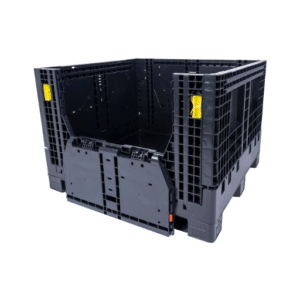
Recyclable pallets were conceptualized as durable platforms that are made from plastic, wood, or metallic materials that have a lifespan that allows their reuse or a change of use for other purposes at the end. These pallets were specifically designed with a focus on environmental concerns, and they help in waste reduction since they allow recycling practices but still perform satisfactorily in supply chains. In addition, these pallets also simplify logistics by offering a universally acceptable and readily available method of transporting goods. It also ensures long use before replacements, therefore saving costs associated with replacements and the use of resources. By permitting closed-loop systems, recyclable pallets enable businesses to optimize operations, comply with environmental laws, and achieve sustainability goals without impairing operational dependability and even load-carrying capacities.
Importance of Sustainability Initiatives in Supply Chain Management
The environmental, social, and economic issues that an organization faces today can only be overcome by promoting sustainability initiatives in supply chain management. In addition to depriving the world of excess waste and pollution, a sustainable agenda also assists in the effective use of available resources, reducing the environmental footprint. Regulatory dynamics are swift, and a business with a proactive sustainability agenda is most likely to avoid penalties while enhancing its image to stakeholders and customer base that are environmentally minded. Apart from these advantages, sustainable supply chains also enable the adoption of fair employment strategies and help promote local suppliers. Ultimately, such actions nurture energy-efficient technologies and closed-loop economy practices, and thus enhance resilience and improve competitiveness, especially in the global market that is highly dynamic. It has been realized that sustainability in supply chain management is no longer a subject for discussion but a requirement for organizations that are to stretch to long-lasting growth and maintain retention of regulators and customers.
Overview of the Lifecycle Approach to Pallet Usage
A lifecycle approach to pallet usage encompasses evaluation and improvement of pallets that extends through the stages of their existence from production to disposal in order to optimize levels of efficiency and sustainability. The first step is precisely materials that are durable, and thus such materials or structures as treated wood or recyclable plastics may be used, for example, for waste control purposes.
When in use, pallets will be of great purpose in facilitating conveyance and storage. However, measures are anticipated to be put in place to ensure safe use and durability of the pallets. Repair and routine inspections help in restoring the usability of pallets and in the avoidance of premature disposal. At the end of the useful life of the pallets, they may be disposed of through other means other than the basic use, which are more environmentally friendly. As an illustration, it is usually easy to restore stainless steel pallets or reuse them as different kinds of furniture, and mostly remold plastic ones.
This holistic strategy not only enhances pallets’ efficacy and durability but also minimizes operation costs, supports sustainability, and minimizes waste in simple linear practices.
The Environmental Impact of Traditional Pallets vs. Recyclable Pallets

Conventional Pallets, which are usually built with untreated wood or cheap plastics, entail high environmental costs. To make these materials, massive amounts of resources have to be extracted; the items are used a few times and tossed into landfills, causing pollution. Reusable pallets, on the other hand, can serve their purpose for longer and can even be used again. Wood-based pallets with recycling capabilities can have their components fixed, while plastic ones can be ground into their initial form and resynthesized into a product. Such actions decrease the consumption of natural materials and ease the amount of generated waste, which makes reusable pallets the most feasible option that can be adopted in today’s supply chains in terms of sustainability.
Comparison: Traditional vs. Recyclable Pallets
| Factor | Traditional Pallets | Recyclable Pallets |
|---|---|---|
| Material Source | Untreated wood / cheap plastics | HDPE, PP, recycled wood, fiber composites |
| Lifespan | Single or limited use | Multiple cycles; repaired and reused |
| End-of-Life | Landfill disposal | Recycled into new pallets or products |
| Carbon Footprint | Higher due to resource extraction | Reduced via closed-loop systems |
| Cost Over Time | Higher replacement costs | Lower long-term total ownership cost |
Carbon Footprint of Wood and Plastic Pallets
Both wood and plastic pallets have a carbon footprint that varies from one to another due to several factors, which include but are not limited to the sources of the materials used in making them, the processes through which they are manufactured, and the ways through which they are disposed of. Wooden pallets are, by comparison, low-carbon-emitting at first because wood is a renewable source and trees also act as carbon sinks. Still, emissions from their entire life cycle could be more significant where the resource was neither properly re-used, re-conditioned nor recycled. Meanwhile, plastic pallets possess the drawback of an energy-intensive production process, due to fossil fuel consumption and high production temperatures. Still, due to their durability and ability for enhancement over multiple life cycles, the inefficiencies in the high initial emissions could be corrected over time. The recyclability of plastic pallets at the end diminishes their effects. Both methods are useful for sustainability as long as the processes are used efficiently; however, the total carbon impact is a function of the consumption model in any given situation and the recycling potential that exists in that situation.
Benefits of Using Recyclable Materials Over Traditional Manufacturing
Recyclable materials bring numerous benefits over traditional manufacturing materials in terms of health, sustainability, and efficiency. Healthwise, they reduce the amount of waste that is deposited in landfills and prevent unnecessary use of natural resources. Recycling metals, plastic, glass, and other materials helps factories avoid raw material extraction, which is energy-consuming and environmentally harmful.
- ✦
Recyclable materials replace expensive virgin materials, thus reducing production costs. Industries that use recycled materials often enjoy tax breaks, savings on materials, and also fulfil the requirements of certain regulations, such as environmental policies. - ✦
The use of recyclable materials that are lightweight, such as some plastics and composites, also helps to save on fuel costs as well as energy in the transportation of products. - ✦
The day-to-day recycling of materials boosts innovations and leadership in green practices and also positions a company in a positive light with consumers who promote sustainability. - ✦
Still, improved recycling technologies have increased the similarity between recycled materials and those that have not been recycled in terms of efficiency. Taken together, the employment of materials that are recyclable is creating the need for a business model that sustains itself, decreases the ecological impacts of such manufacturing techniques, and promotes internal stability as well.
Statistical Comparison of Waste Reduction and Resource Efficiency
Recycling strategies, along with recyclable materials usage, have yielded quantifiable positive impacts on waste management and resource maximization.
95%
Energy saved producing recycled vs. virgin aluminium
67%
Lower emissions from recycled vs. new plastic manufacturing
30%
Cut in raw material use via closed-loop systems
48%
EU municipal recycling rate achieved in 2020
📄 Paper Recycling Impact
One ton of paper waste, after recycling, would save around 17 adult trees, 7,000 gallons of water, and 4,000 kWh of energy. All these figures support the narrative that recycling, as well as resource-efficient systems, are central to reducing the environmental footprint.
Key Materials and Manufacturing Processes for Recyclable Pallets

Any materials that are used for making recyclable pallets include high-density polyethylene (HDPE), polypropylene (PP), recycled wood, and fiber composites. The selection of these materials is based on the reason that they are strong, can be easily reprocessed, and have minimal impact on the environment. The manufacturing technique is often injection compression molding for plastic pallets, while composite pallets employ compression molding to achieve precision in the structure and to economize on the materials. In addition, closed-loop push systems allow firms to recover and reuse old pallets, so that the demand for virgin materials as well as production wastes is kept at a minimum.
Overview of Materials Used (e.g., Recycled Plastics, Composite Materials)
Plastic materials are mostly recycled or imported from different parts of the world, meaning that there is an increased market for such materials. Composites or even recycled forms of plastic are what are referred to as plastics, and they can be made of HDPE or PP, and preferably, the source is industrial waste or the waste after consumption. These materials are subjected to extensive washing and reformation in order to ensure the quality and stability of the materials. Composites, which are mainly plastic composites containing at least wood or any other cellulose materials, i.e., fighting against high loading capacity by eliminating weight, are also excluded. The moisture protection and pest deterrence that many of these materials possess make the raw materials last longer than most other packaging materials, and therefore, these containers are prevalent in many industrial processes. They promote minimum usage of virgin materials, and among the best sustainability methods, they do not end up in landfills; rather, they are reused or repurposed naturally.
Details on Sustainable Production Techniques and Energy Usage
When it comes to sustainable practices, the production of packages and other similar items, producers mainly aim to reduce the amount of natural and artificial resources used, as well as environmental damage. Technological advancements such as robotics, when applied to processes like molding of plastic and extrusion, help in curtailing raw material usage. Recycled materials such as post-consumer plastic and sawdust, among others, are incorporated into the products in order to reduce virgin material dependency. And also, some of the producers apply purple recycling systems – collecting and recycling waste off-cuts that are produced during manufacture.
Another energy-conserving measure is the utilization of solar and wind energy in manufacturing plants. These may include the operation of high-performance machines as well as optimization of the production process in order to minimize energy usage. A good example of energy conservation practices is thermal recycling, in which heat produced from manufacturing is utilized again as a heat source. In this way, the negative environmental impact of production is reduced even though the quality of production remains high.
Certifications and Standards Ensuring the Recyclability of Pallets
There’s a group of certifications and standards that are used to promote sustainability in the pallet industry, including recyclability.
| Certification | Applies To | Key Requirement |
|---|---|---|
| FSC | Wood-based pallets | Certified timber from naturally managed forests where sustainability is key |
| ISPM-15 | International shipping pallets | Treatment by heating or fumigation to stop the transport of pests |
| EPAL | Reusable pallets | Verifies pallets can be reused and, when needed, repaired to prolong their service life |
| ISO Standards | Plastic pallets | Conforms to standards on materials recycling and safety issues |
In general, such certifications and standards help to save resources and prevent wastage appropriately in this modern super-consuming environment, all towards the attainment of sustainability.
Lifecycle Stages of 100% Recyclable Pallets

- 1
Material Sourcing
The recyclable pallets consist of the materials stated, which are either recycled plastics or wood, made for sustainability purposes.
- 2
Production
Pallets are produced and manufactured, using given materials and adhering to specifications, such that uniformity and interoperability of pallets in different supply chains is maintained.
- 3
Application
These pallets are employed to ship and store goods over a number of cycles. These are built to last and are easily reused, so that their useful life is increased.
- 4
E-Check and Maintenance
Pallets are examined from time to time, and damaged or worn pallets are noted. Their repairable state gives developed pallets another chance, providing longevity and making good stewardship of resources.
- 5
Analysis and Processing
When the pallet reaches its end of life, it is disposed of by way of recycling. Such materials are recovered and used as raw materials in the product cycle for the manufacture of new pallets or other products, thus closing the loop.
Production and Distribution, Including Sustainable Sourcing
Part of the sustainability agenda of pallet manufacturing includes the recovery and reuse of cut waste. Certified tend to come from specified managed forests that are fully certified to meet FSC (Forestry Stewardship Council) or PEFC (Programme for the Endorsement of Forest Certification) requirements. This reduces the impact on the environment and encourages forest reforestation. Manufacturing methods are also designed to reduce material usage, with all waste and off-cuts being either dealt with or used as biomass energy.
Be factual, some goods may be produced for sale outside the country. Sustainability can help, for example, in this deliver services of environmentally friendly products to areas other than produced. This is possible by the distribution systems of the firms that include the transportation and related costs optimization through route mapping and the minimization of shipments of goods when domestic producers are used. As well as encourage the use of recycling distribution materials, such as the use of pallets more than once or rotational use of pallets, thus discouraging the single-use of materials. Incorporation of such policies in operation will enable achievement of the set goals on environmental protection, but most importantly, on the other hand, will very effectively address the growing consumer and government preference for green processes.
Usage Phase: Durability and Cost-Effectiveness
When users utilize the products, they are encouraged to use them, especially to promote the lifespan of the product, which discourages the need for replacements more often than not. The durability is promised by providing the most efficient building materials and the best building aids. The smaller cost of such a design is also perceived, thanks to the construction of products with high maintenance levels, whereby users are able to simply solve minor problems without having to replace a product. In addition, parts of most products, which are now called ‘modular’, allow customers to change a certain part without replacing the whole lot, hence reducing expenses in the long term. These approaches also help to increase the useful life of products and help in sustainability, as less waste is generated and fewer raw materials are used.
End-of-Life Recycling and Reintegration Into New Pallet Creation
Pallets are a product that is useful for so many activities, and at the end of their life, are recycled through processes aimed at maximum recovery of materials. They are first collected and then transported to the relevant recycling pallet. While being at the recycling center, they are examined and sorted to retrieve the reusable materials and the in disposal to be recycled into other products.
🌲 Wooden Pallet Recycling
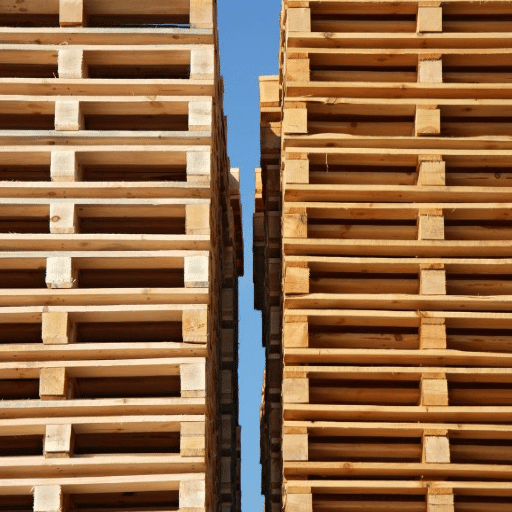
For wooden pallets, a lot of them are typically taken apart, and the useful wood is placed in new pallets. Broken wood is turned into chips, which are pressed into mulch, bedding for animals, or sometimes fiber board.
♻️ Plastic Pallet Recycling
The recycling of plastic pallets entails the processes of crushing the plastic into pellets, then re-heating and molding them to form pallets, among other plastic materials. The devices help to minimize wastage, giving useful outputs. As part of recycling, the recyclable metals are removed and separated from the non-metals and their respective waste streams.
The incorporation stage aims at enhancing sustainability through the use of recycled content in the innovation of new pallets. These remove the need for raw materials as well as the cost of the finished product.
Economic Benefits of Recyclable Pallets in Supply Chain Operations

Recycling consciousness of pallets has more economic merits in the supply chain. Mainly due to the reduction of materials costs, as recycling substitutes are cheaper than new materials. In this way, it enables cheaper production of pallets, thus making the product more affordable for the companies. Secondly, it is the durability that recyclable pallets offer that also extends the life of the pallet and, on the other hand, reduces the replacement cost over a period. As a result, companies are able to take advantage of recycling programs, which provide incentives or rebates for recyclables, allowing these warehouses to redeem money even at the end of the service life of the pallets. Businesses that adopt recyclable pallets, therefore, help in the creation of a sustainability marginally and cut costs substantially thanks to the use of recyclable pallets.
- 💰
Reduced Materials Cost
Recycling substitutes are cheaper than new materials, enabling cheaper production of pallets and making them more affordable for companies.
- 🔄
Extended Pallet Lifespan
Durability extends the life of the pallet, reducing the replacement cost over a period.
- 🎁
Incentives and Rebates
Companies can take advantage of recycling programs which provide incentives or rebates for recyclables, allowing warehouses to redeem money even at end of service life.
Cost Savings from Long-Term Use and Reduced Disposal Fees
Managing the waste disposal expenses is relatively easy if recyclable pallets are used, because if the waste management program is effective, people won’t throw pallets. Unlike their disposable counterparts, recyclable pallets reduce waste production because they do not get used in one go and then chucked away. This inevitably decreases the expenditure. Also, important to note that such pallets are constructed with resilient materials, which are cost-effective in terms of upkeep and replacement costs; firms can cut down on buying expenses in the long run. This is because each of the manufacturers provides a recyclable return of products to the company in order to reduce costs. This strategic investment aims to decrease environmental degradation on one hand, while also aiming at decreasing the total cost of ownership to increase the cost benefit. Sustainable aspects of their presentation all the benefits of the costs to avoid any environmental consequences would also tend to reinforce their value.
Enhanced Operational Efficiency with Lighter and More Durable Pallets
The use of lighter, longer-lasting pallets on my side is an efficient operational practice that offers a lot of benefits. These pallets make it easier to handle, thus reducing wear and tear on machinery and cutting costs as they are lighter. In addition, because they are strong, they last longer, giving way to performance of lower errors in terms of replacements required and resource use patterns.
Key Takeaway
Sustainability in supply chain management is no longer a subject for discussion — it is a requirement for organizations that are to stretch to long-lasting growth and maintain retention of regulators and customers.
Reference Sources
A Review Analysis of the Pallet Supply Chain
This paper discusses the critical role of pallets in the supply chain and their sustainability aspects.
Improving the Environmental Sustainability of Pallet Logistics
This study highlights the environmental impact of pallets and their recycling potential.
Wooden and Plastic Pallets Life Cycle Assessment
A comparative analysis of wooden and plastic pallets, focusing on their environmental friendliness.
Frequently Asked Questions (FAQs)
In what ways can firms incorporate sustainability measures into their functioning?
Sustainability can be promoted in business by integrating green practices into the business. These practices include the Sustainable Supply Chain Framework, utilization of Circular Economy Architecture, deployment of renewable energy to offset carbon footprints or simply reducing them, capturing environmental and social sustainability and governance issues in operational policy and product development – in line with the so – called the sustainable development goals and norms promoted by Agencies including the United Nations and more regionally the European Environment Agency.
How should a business strategy incorporate elements of sustainability?
Making sustainability a core part of the business strategy considers a variety of aspects, including establishing her strict sustainability objectives, making the goals of a company extend beyond achieving the sustainable development goals, examining each level of or every section within any organization or business in relation to its waste generation, investing more to shift energy technologies especially to reduce carbon emissions, also through strategies involving stakeholders, sustainability, more so social sustainability and economic sustainability, and resilient growth regarding the implications of social, economic and environmental transformations.
How can sustainability help in achieving the longer-term goals?
To put it differently, sustainability, this helps in minimizing threats due to climate, lack of resources, or changes in laws, builds brand image, saves money in the long run due to energy-saving techniques and the circular economy model, and also makes sure that the organization is working on issues of environmental and social justice too, making it possible to keep future generations economically sustainable as well.
What is the connection between economic sustainability and the environmental objectives?
Economic sustainability is focused on growing steadily whilst appreciating environmental constraints: up-scaling the uptake of renewables and emission control may result in decreasing the costs of operations in the long run, have the ability to spare the environment from pollution and depletion of its resources, and help proliferate or maintain the diversity of species. Such an approach aims at meshing economics within the concept of sustainability, as well as the development of environmental and developmental goals aimed at both profit and conservation of the environment.
What are the best ways for businesses to cope with the sustainability demands the WHO has set for 2030?
On the way to conquering the 2030 targets, companies need to monitor their carbon footprints, emissions and carbon reduction actions in the intermediate sustainability goals aligned with the SDGs, resort to the green energy transition advantages, work on environmental and social sustainability enhancement throughout the value chains, implement waste and resources restoration and management strategies, and assure close participation of all interested parties in the prospects of advancement utilizing the associated standards and regulations of external bodies including the UN and those concerned with environmental protection.
In which ways can stakeholders be incorporated into the corporate sustainability practices?
This involves consulting with the employees, customers, suppliers as well as community members for the purposes of engaging the said stakeholders in the co-creation of these initiatives, giving precedence to social sustainability as well as social equity, incorporating such views into the sustainability reports and goals, and lastly, making use of statistical measures in support of how the initiatives of the organization help in the reduction of pollution, preserving of the environment natural resources, and also emboundment of the biologically the diverse forms.
Describe the process of corporate reporting on sustainability aspects, and what are the key indicators?
Corporate sustainability reporting refers to the communication of a company’s social and environmental performance, by using metrics that monitor changes in greenhouse gases, energy, and water consumption, material waste and recycling, pollution levels, and social influences. Some practical frameworks make use of sustainable development goals, UN guidance, and regional guidelines, such as those represented by the European Environment Agency and national authorities such as the US EPA.
When and where could I obtain information on sustainability practices and implement them within my entity?
Explore sustainability in more detail using the united nations webpage in one of the areas – sustainable development, and several courses such as concepts of sustainability and transitions on sustainability, the work of the world commission on environment and development, the commission on environment and development, toolkits on business sustainability strategies, supply chain sustainability, and sustainability upon specific activities to facilitate corporate sustainability and facilitate sustainability within the organization.