Selective pallet racking is the most widely used warehouse storage system, offering 100% direct access to every pallet with standard forklifts and no specialized equipment. It is the best choice for operations with high SKU counts, FIFO inventory requirements, and the need for immediate access to any load at any time.
Three years ago, Maria Chen took over as operations director at a mid-sized electronics distributor in Shenzhen. The previous manager had installed drive-in racking to maximize density. It seemed smart on paper. But with 4,200 SKUs and daily picks across hundreds of product lines, Maria’s team was spending 35% of their shift moving pallets just to reach the one they needed. Order accuracy dropped. Forklift damage soared. After a full cost analysis, Maria replaced the drive-in system with selective pallet racking. Picking time fell by 30%. Damage incidents dropped by half. And the warehouse gained enough flexibility to add 800 new SKUs without reconfiguring a single aisle.
If you are evaluating warehouse racking systems for your facility, you have probably realized the choice is not obvious. High-density pallet racking systems promise more pallets per square meter. Automated systems look impressive in vendor brochures. But selective pallet racking remains the default choice for roughly 70% of industrial facilities worldwide, and that dominance is not accidental.
In this guide, you will learn exactly how selective pallet racking works, what it costs, how it compares to other industrial pallet racking alternatives, and how to optimize it for your specific industry. We will also cover the one factor most racking guides ignore entirely: how your choice of pallet material directly impacts racking performance, safety, and total cost of ownership.
Key Takeaways
- Selective pallet racking provides 100% access to every pallet and works with standard forklifts, making it ideal for high-SKU operations.
- Equipment costs run 50to50to120 per position, with total installed costs ranging from 60to60to250 depending on specifications and region.
- The global pallet racking market reached approximately 12.2to12.2to13.1 billion in 2025, with selective configurations holding 34 to 39% market share.
- Plastic pallets distribute loads more evenly than wood, resist moisture and pests, and eliminate splinter-related damage to racking components.
- Proper installation, regular inspections, and compliance with regional standards (RMI/ANSI, AS 4084, EN) are essential for long-term safety and performance.
What Is Selective Pallet Racking?
Definition and Core Components
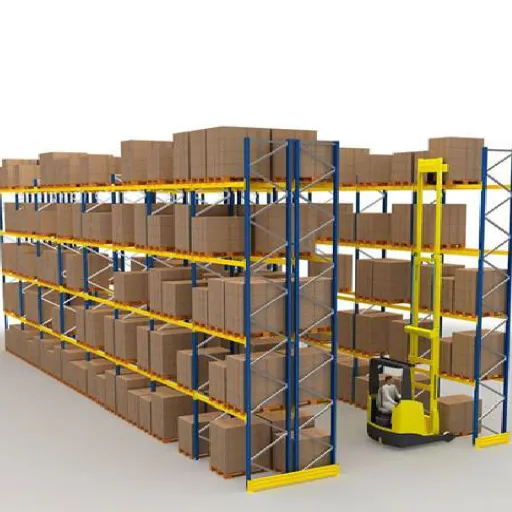
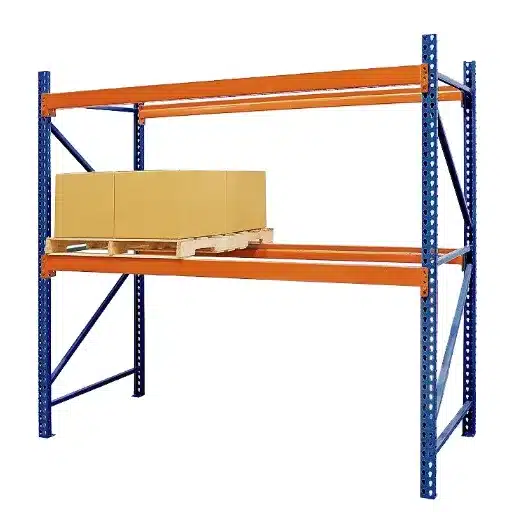
Selective pallet racking is a storage system where pallets rest on horizontal beams attached to vertical upright frames. Because each pallet occupies its own dedicated position and storage is only one pallet deep, forklifts can access every load directly. This design delivers 100% selectivity. No other pallet needs to be moved to reach the one you want.
The system consists of four primary components. Upright frames are the vertical columns that carry the load. They are manufactured from roll-formed or structural steel and include diagonal and horizontal braces for stability. Load beams are the horizontal members that support the pallet weight. They lock into the uprights at adjustable heights. Footplates anchor the uprights to the concrete floor. Safety clips or locking pins secure the beam connections to prevent accidental disengagement.
Beam heights are adjustable, typically in increments of 50 to 75 millimeters. This flexibility lets warehouses accommodate different pallet heights, product dimensions, and seasonal inventory changes without replacing the entire structure.
How It Works in Practice
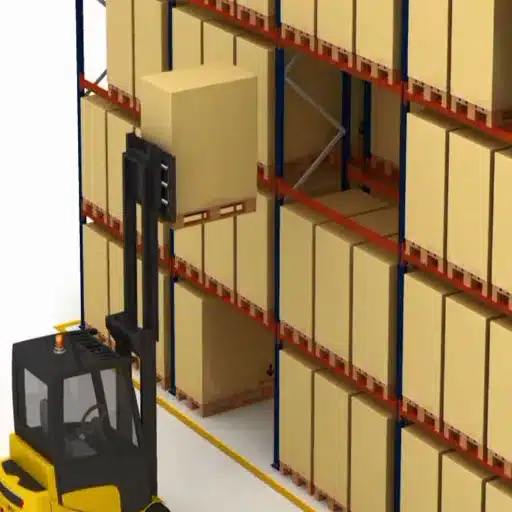
A forklift operator drives down an aisle and places a pallet directly onto the beams at the desired level. Retrieval works the same way in reverse. Because every position is independently accessible, selective racking naturally supports First-In, First-Out (FIFO) inventory rotation. The first pallet placed in a position is also the first one removed. This makes the system ideal for perishable goods, pharmaceuticals, and any inventory with expiration dates.
Standard counterbalance forklifts, reach trucks, and pallet jacks all work with selective racking. You do not need specialized equipment like double-reach forklifts or wire-guided trucks. This compatibility keeps both upfront costs and operator training requirements low.
When to Choose Selective Racking
Selective pallet racking is the right choice when your operation meets one or more of these conditions:
- You manage a high number of SKUs with relatively low volume per SKU.
- You need immediate access to any pallet without moving others.
- FIFO inventory rotation is required for compliance or product integrity.
- You use standard forklifts and want to avoid specialized equipment costs.
- Your inventory profile changes frequently, requiring adjustable beam heights.
- You need a scalable system that can expand horizontally or vertically over time.
If your warehouse stores large quantities of only a few product types, and access speed matters less than pure storage density, a high-density alternative like drive-in racking may be more efficient. We will explore those comparisons in detail later.
Want to see how the right pallets enhance selective racking performance? Explore our complete plastic pallet range engineered for industrial storage systems.
Types and Configurations of Selective Racking
Not all selective racking is built the same way. The construction method, layout, and accessories you choose directly impact load capacity, durability, and cost.
Roll-Formed Racking
Roll-formed racking is manufactured from cold-rolled steel shaped into teardrop or slot profiles. Beams snap or pin into the upright slots without bolts. This makes installation fast and reconfiguration simple. Roll-formed systems are the most common and economical option, suitable for light to medium loads in standard warehouse environments.
The downside is lower impact resistance. A direct forklift collision with a roll-formed upright can cause deformation more readily than with structural steel. For most operations, this is manageable with proper column guards and operator training.
Structural Steel Racking
Structural steel racking uses hot-rolled steel with bolted connections. It is heavier, more rigid, and significantly more resistant to impact damage. Structural systems are the preferred choice for heavy-duty loads, high-seismic regions, freezer environments where brittle materials perform poorly, and operations with high forklift traffic.
The trade-off is cost. Structural steel racking typically costs 30 to 40% more than roll-formed equivalents. For facilities storing loads above 2,000 kg per level or operating in seismic zones, the additional investment is justified by longevity and safety margins.
Back-to-Back Row Configurations
Two selective rows can be installed back-to-back, sharing a common upright in the center. This arrangement saves floor space compared to separate aisles on both sides while maintaining full selectivity from the front and back. Row spacers maintain the required flue space between the rows for fire safety and sprinkler compliance.
Narrow Aisle and Very Narrow Aisle
Standard selective racking aisles range from 3.0 to 3.6 meters to accommodate counterbalance forklifts. Narrow aisle configurations reduce this to 2.5 to 3.0 meters, requiring reach trucks but increasing storage density by up to 22%. Very narrow aisle (VNA) systems use guided turret trucks in aisles as narrow as 1.5 to 2.0 meters, delivering density approaching that of double-deep or push-back systems while retaining individual pallet access.
Key Advantages of Selective Pallet Racking
Selective racking dominates the warehouse landscape for good reason. Here are the core advantages that make it the default choice for most operations.
100% Direct Access
Every pallet is immediately reachable. Forklift operators never need to move other pallets to retrieve a specific load. This reduces handling time, minimizes product damage, and simplifies inventory management. For operations with high pick frequency, this accessibility translates directly into labor efficiency.
Lowest Cost Per Position
Selective racking is the most economical system to install. Equipment costs typically run 50to50to80 per pallet position for standard roll-formed configurations. No specialized forklifts, conveyors, or automation infrastructure are required. This low barrier to entry makes it accessible to small businesses and large distribution centers alike.
FIFO Compliance
First-In, First-Out inventory rotation is built into the design. Each position holds one pallet. The first pallet placed is the first removed. This is essential for food and beverage operations, pharmaceutical storage, and any product with a shelf life or lot-tracking requirement.
Flexibility and Scalability
Beam levels adjust in small increments. Uprights can be extended vertically up to 12 to 15 meters in many facilities. New bays can be added to existing rows. If your operation relocates, selective racking can often be disassembled and reinstalled. This modularity protects your investment as your business evolves.
Standard Forklift Compatibility
Counterbalance forklifts, reach trucks, and pallet jacks all work with selective racking. You do not need to purchase or lease specialized equipment. Operator training requirements are minimal. This compatibility keeps both capital expenditure and ongoing operating costs predictable.
Low Maintenance Requirements
The simple steel construction is durable and requires only routine inspections. Unlike automated systems with motors, sensors, and software that need regular servicing, selective racking is passive infrastructure. Maintenance consists primarily of visual inspections, anchor checks, and occasional component replacement after impact damage.
Understanding the Limitations
No storage system is universal. Selective racking has clear constraints that you need to evaluate against your operational requirements.
Lower Storage Density
The defining feature of selective racking, 100% accessibility, is also its primary limitation. Every row requires a dedicated aisle. This means selective racking achieves roughly 45% floor utilization. By comparison, drive-in racking reaches 65%, and mobile racking systems can exceed 80%. If your warehouse floor space is severely constrained and your inventory is homogeneous, selective racking may not be the most efficient choice.
Higher Cost Per Square Meter
While the cost per pallet position is low, the cost per square meter of warehouse space is higher than dense alternatives. Storing the same number of pallets requires more total floor area. In markets where warehouse rent is high, this footprint penalty can offset the lower equipment cost.
Wide Aisle Requirements
Standard configurations need aisles of 3.5 to 4 meters for counterbalance forklift maneuvering. Narrow aisle systems reduce this but require different equipment and operator training. If your facility has tight column spacing or irregular dimensions, aisle width can become a limiting factor.
Not Ideal for High-Volume, Low-SKU Inventory
If you store large quantities of only a few product types, selective racking leaves capacity on the table. A warehouse holding 10,000 identical units of a single SKU does not need 100% selectivity. In this scenario, drive-in, push-back, or pallet flow systems store more inventory in the same footprint.
How Selective Racking Compares to Other Systems
Choosing the right racking system means understanding the trade-offs. Here is how selective pallet racking stacks up against the most common alternatives.
Selective vs Drive-In Racking
Drive-in racking eliminates aisles between rows. Forklifts drive directly into the rack structure to place and retrieve pallets. This increases storage density significantly but sacrifices selectivity. Only the front pallet in each lane is directly accessible. Inventory rotation becomes Last-In, First-Out (LIFO), which is unsuitable for perishables.
Selective racking costs less per position and allows FIFO rotation. Drive-in racking stores more pallets per square meter but requires more careful loading discipline and specialized forklift operation. For operations with fewer than 5 SKUs and high volumes per SKU, drive-in can be more efficient. For diverse inventory, selective racking wins.
Selective vs Push-Back Racking
Push-back racking stores pallets on nested carts that roll on inclined rails. When a new pallet is loaded, it pushes the existing pallets back. When a pallet is removed, gravity rolls the next one forward. This delivers Last-In, First-Out rotation with higher density than selective racking.
Push-back systems cost 40 to 60% more per position than selective racking. They also require more precise loading and are less forgiving of pallet quality variations. A warped or damaged wooden pallet can jam the cart mechanism. For operations with limited SKUs and high turnover, push-back is worth considering. For general warehousing, selective racking offers better flexibility.
Selective vs Double-Deep Racking
Double-deep racking places pallets two-deep in each bay. This roughly doubles storage density while maintaining many of the benefits of selective racking. The trade-off is selectivity: only 50% of pallets are immediately accessible. The rear pallet is blocked by the front one.
Double-deep systems require double-reach forklifts with extended mast capabilities. Operator training requirements increase. For operations with moderate SKU counts where some pallets sit longer than others, double-deep offers a useful middle ground between selective and drive-in density.
Selective vs Pallet Flow Racking
Pallet flow racking uses inclined roller tracks to move pallets from the loading side to the picking side via gravity. This delivers true FIFO rotation with higher density than selective racking. It is ideal for high-turnover operations with consistent pallet sizes.
The complexity and cost are significant. Pallet flow systems require precise level installation, regular maintenance of roller mechanisms, and strict pallet quality standards. A single damaged pallet can jam an entire lane. For most general warehouses, selective racking remains the more practical and cost-effective choice.
System Comparison at a Glance
| System | Selectivity | Density | FIFO/LIFO | Forklift Type | Cost Per Position |
|---|---|---|---|---|---|
| Selective | 100% | Low | FIFO | Standard | 50–50–120 |
| Drive-In | 20–30% | High | LIFO | Standard | 70–70–150 |
| Push-Back | 50% | Medium-High | LIFO | Standard | 90–90–180 |
| Double-Deep | 50% | Medium | Hybrid | Double-reach | 80–80–160 |
| Pallet Flow | 100% | Medium-High | FIFO | Standard | 120–120–250 |
Load Capacity and Engineering Specifications
Understanding load capacity is essential for safe and efficient racking design. Overloading beams or uprights creates structural failure risk. Underloading wastes capital and floor space.
Beam Capacities
Standard selective racking beams are rated for loads between 1,000 and 5,000+ kg per level, depending on beam length, profile, and steel gauge. A typical 2,700 mm beam pair rated for 2,000 kg per level can support two standard pallets at 1,000 kg each. Longer beams deflect more under load, so capacity decreases as span increases.
Beam deflection is a critical specification. Industry standards typically allow up to 1/180th of the beam span under full load. For a 2,700 mm beam, this means maximum deflection of approximately 15 mm. Excessive deflection indicates overloading or beam damage and requires immediate attention.
Upright Load Limits
Upright frames carry the cumulative weight of all beam levels above them. A 5-level rack with 2,000 kg per level places 10,000 kg of total load on each upright frame. The frame must be rated for this total load, considering the number of beam levels, the spacing between them, and any seismic or dynamic load factors.
Seismic Considerations
Facilities in earthquake-prone regions require engineered racking designed for seismic loads. This typically means heavier bracing, additional anchors per footplate, and potentially structural steel construction rather than roll-formed. Seismic design must comply with local building codes and is not a do-it-yourself consideration. Always engage a qualified structural engineer for seismic-zone installations.
How Plastic Pallets Distribute Loads Differently Than Wood
This is where your choice of pallet material directly impacts racking performance. Wooden pallets have inconsistent dimensions, varying moisture content, and splintered deck boards that create point loads on beams. A warped wooden pallet may contact the beam at only two or three points, concentrating stress and increasing deflection.
Plastic pallets, by contrast, have uniform dimensions and consistent contact surfaces. The molded deck distributes weight evenly across the full beam width. This even load distribution reduces peak stress on beams and can effectively increase the safe working capacity of the racking system.
At a food distribution center in the Netherlands, switching from wood to plastic pallets allowed the operations team to increase rack loads by 12% without upgrading the racking structure. The plastic pallets’ uniform contact pattern meant the existing beams handled the weight more efficiently. The upgrade paid for itself in 14 months through deferred racking replacement costs.
Plastic pallets also eliminate moisture absorption. Wooden pallets gain weight and swell in humid conditions, altering load calculations over time. Plastic pallets maintain consistent weight and dimensions regardless of environment. For operations running precise load calculations, this consistency is a significant safety and planning advantage.
Need pallets engineered for your specific racking configuration? Contact our team for a custom load-assessment and pallet recommendation.
Pallet Racking Installation Best Practices
Proper installation is the foundation of racking safety and longevity. Poor installation is a leading cause of rack failure, and most failures are preventable.
Pre-Installation Planning
Start with a detailed site survey. Record exact ceiling height, floor dimensions, column locations, door positions, and any utility obstructions. Confirm the concrete slab is level and rated for the fully loaded racking weight. A typical selective rack with five levels may place 5,000 to 10,000 kg per upright frame on the floor. The slab must handle this concentrated load.
Plan aisle widths based on your forklift fleet. Standard counterbalance trucks need 3.5 to 4 meters. Reach trucks work in 2.5 to 3.0 meters. Measure your actual equipment turning radius, not the manufacturer’s specification. Real-world operation includes load overhang and operator margin for error.
Floor Requirements and Anchoring
The concrete floor must be level within acceptable tolerances, typically 3 mm per 3 meters. Uneven floors create stress concentrations at footplates and can cause uprights to lean. Use metal shims between footplates and the floor to correct minor level issues.
Anchoring is critical. Use only wedge anchors or strike anchors as specified by the manufacturer or local building codes. Drill to the proper embedment depth with a hammer drill. One anchor per footplate is standard for most applications, but seismic zones may require up to four anchors per footplate. Never reuse old anchors. If you relocate racking, always install new anchors.
Alignment and Plumb
Before anchoring, verify uprights are perfectly vertical. Use a laser level or plumb bob. An acceptable tolerance is generally up to 3 mm of deflection per 1.2 meters of height. Check that each bay is square by measuring diagonal distances between opposite corners. A bay that is out of square will not seat beams correctly and creates stress concentrations.
Use a chalk line snapped along the floor to ensure straight aisle alignment. Even a small deviation compounds over a long rack run and creates navigation problems for forklift operators.
Row Spacing and Flue Space
Back-to-back rows require row spacers starting at approximately 1.2 to 1.5 meters high and at every horizontal brace level to the top. These spacers maintain the required flue space between rows, typically a minimum of 300 mm, for fire suppression and air circulation. Single rows against walls should use overhead row ties to adjacent racking for stability rather than anchoring directly to the wall.
Pallet Racking Safety Standards and Compliance
Racking safety is not optional. Structural failures can cause fatalities, facility damage, and regulatory penalties. Compliance with recognized standards is essential.
RMI/ANSI Standards (North America)
The Rack Manufacturers Institute (RMI) publishes ANSI MH16.1, the specification for the design, testing, and utilization of industrial steel storage racks. This standard covers load capacities, seismic design, installation requirements, and damage assessment criteria. Any racking installed in North America should comply with ANSI MH16.1.
AS 4084 (Australia)
Australian Standard AS 4084 specifies requirements for steel storage racking, including design loads, testing procedures, and installation tolerances. It is widely referenced across the Asia-Pacific region and is more prescriptive than ANSI in certain areas, particularly regarding upright capacity labeling and damage thresholds.
EN Standards (Europe)
European Norm EN 15512 defines the structural design and testing of steel static storage systems. It is harmonized across EU member states and provides a consistent framework for racking design, installation, and inspection. Many facilities outside Europe also reference EN standards as a benchmark for quality.
OSHA and Workplace Safety
In the United States, OSHA General Duty Clause requires employers to provide a workplace free from recognized hazards. Damaged or overloaded racking constitutes a recognized hazard. OSHA does not have a specific racking standard, but inspectors reference ANSI MH16.1 and can cite facilities for unsafe racking conditions.
Regardless of jurisdiction, these safety practices apply universally:
- Post load capacity plaques on every aisle showing maximum beam and upright capacities.
- Install column guards at the base of every upright exposed to forklift traffic.
- Add end-of-aisle protectors at tunnel openings and row ends.
- Train forklift operators on stop distances: halt at least 1 meter from racking before turning.
- Never climb on racking. Use proper ladders and platforms for overhead access.
- Report damage immediately. Do not wait for scheduled inspections.
Inspection Protocols
Routine inspections should occur monthly at minimum. A qualified inspector should walk every aisle, checking for bent beams, cracked welds, missing safety clips, loose anchors, and upright damage. Any component showing deformation, cracking, or disengagement should be immediately offloaded and repaired or replaced.
Professional engineering audits should occur annually or after any significant impact event, seismic occurrence, or reconfiguration. These audits verify compliance with current standards and identify structural issues before they become critical.
Maintenance and Longevity
Selective racking is durable infrastructure, but it is not maintenance-free. A disciplined maintenance program extends service life and prevents catastrophic failures.
Inspection Schedules
Daily (Operator Checks): Forklift operators should visually scan racking during normal operations. Report any visible damage, dislodged beams, or leaning uprights immediately.
Monthly (Walk-Through Inspection): A designated inspector walks every aisle with a checklist. Document all findings with photos and locations. Address critical issues within 24 hours.
Quarterly (Detailed Inspection): Check anchor tightness, measure beam deflection under load, verify load plaques are legible and current, and inspect column guards and end protectors for damage.
Annually (Professional Audit): Engage a qualified racking engineer to assess structural integrity, seismic compliance, and alignment with current safety standards. Update engineering drawings if the configuration has changed.
Damage Thresholds
Not all damage requires immediate replacement. Use these general guidelines:
- Upright deflection: Up to 3 mm per 1.2 meters of height is acceptable. Beyond this, investigate cause and correct.
- Beam deflection: Up to 1/180th of span under load is normal. Permanent deflection after unloading indicates overload or damage.
- Upright damage: Any dent, crease, or tear in the upright reduces capacity. If the damage exceeds 3 mm depth or 50 mm length, replace the upright.
- Missing safety clips: Any missing clip is a critical issue. Beam connections must be secured before loading resumes.
- Anchor loosening: Loose or missing anchors require immediate re-anchoring before the rack is loaded.
Repair vs Replace Criteria
Minor beam damage can sometimes be repaired by a qualified technician. However, any repair must restore the component to its original load capacity. When in doubt, replace. The cost of a new beam is negligible compared to the cost of a collapse.
Uprights with significant damage should always be replaced, never repaired. The upright carries the entire structural load of the rack. A compromised upright is a single point of failure.
Industry Applications
Selective pallet racking adapts to virtually any industry. Here is how different sectors configure and optimize the system for their specific needs.
Food and Beverage
Food operations require hygiene, FIFO compliance, and temperature resilience. Selective racking supports all three. Beam levels adjust to accommodate varying case heights and seasonal product changes. Plastic pallets are the standard choice in food facilities because they resist moisture, do not harbor bacteria in porous surfaces like wood, and can be washed and sanitized between uses.
For refrigerated and frozen food storage, structural steel racking with corrosion-resistant coatings is recommended. The cold, humid environment accelerates rust on unprotected steel. Regular inspections are especially important in freezer facilities because condensation cycles stress both racking and floor anchors. For bulk food storage, plastic pallet boxes complement selective racking by providing enclosed, hygienic containment for ingredients and finished goods.
Pharmaceuticals
Pharmaceutical warehouses operate under strict regulatory frameworks. Lot tracking, expiration date management, and contamination prevention are non-negotiable. Selective racking provides the individual pallet access needed for precise inventory control.
FDA and EU regulatory bodies generally expect pallets in pharmaceutical facilities to be non-porous, cleanable, and dimensionally consistent. Plastic pallets meet these requirements. Many pharmaceutical facilities specify virgin-material plastic pallets with full traceability documentation.
Cold Storage
Cold storage facilities face unique challenges: thermal cycling, condensation, corrosion, and brittle materials. Selective racking in cold storage should use structural steel construction with epoxy or powder-coated finishes for corrosion resistance. Beam capacities may need derating in freezing conditions because steel becomes slightly more brittle at low temperatures, though this effect is minimal for standard warehouse racks.
Plastic pallets perform exceptionally well in cold storage. HDPE pallets retain impact resistance down to minus 40 degrees C. This is a critical advantage over wood, which absorbs moisture, warps, and splinters in freezer environments.
E-Commerce and Retail
E-commerce fulfillment centers handle massive SKU diversity with rapid order turnaround. A typical e-commerce warehouse might store 10,000 to 50,000 SKUs. Selective racking is the only practical system for this profile because every SKU must be independently accessible for single-item picking.
Zone strategies maximize efficiency. Fast-moving SKUs sit in the golden zone, waist to shoulder height, nearest shipping. Slow movers occupy higher or more distant positions. Plastic pallets support this strategy because their consistent dimensions allow precise positioning and reliable conveyor transfer.
Automotive and Manufacturing
Automotive operations handle heavy components, just-in-time delivery schedules, and strict quality standards. Selective racking for automotive parts typically uses heavy-duty beams rated for 2,000+ kg per level. Structural steel construction is common due to the weight and value of stored inventory.
Steel-reinforced plastic pallets are often the preferred choice for automotive components. They combine the load capacity needed for metal parts with the durability and cleanliness required in modern manufacturing environments.
Cost Analysis and ROI
Understanding the full cost picture helps you budget accurately and justify the investment to stakeholders.
Equipment Costs
Selective racking equipment typically costs 50to50to120 per pallet position for standard new roll-formed systems. Budget options or used inventory may run 40to40to60 per position. Heavy-duty structural steel systems range from 75to75to200 per position. Seismic-rated configurations push toward the upper end of this range.
Common accessories add to the base cost:
- Wire decking: 15to15to21 per position
- Cross bars: 12to12to16 per position
- Upright protectors: 8to8to30 each
- End-of-aisle protectors: 105to105to160 each
Installation Costs
Installation adds 15 to 35% to equipment costs for selective racking. Small warehouse projects might run 30to30to50 per position in labor. Large distribution centers with economies of scale may see 70to70to120 per position. Hourly labor rates range from 50to50to150 depending on region and crew certification.
Some contractors quote by the bay. Turnkey installation for selective racking typically runs 1,500to1,500to4,000 per bay, though the per-position cost depends on pallet count per bay.
Total Installed Cost
For a standard selective pallet racking project in 2025, plan for a total installed cost between 75and75and150 per pallet position for most applications. Structural steel, seismic ratings, or heavy-duty configurations push this to 150to150to250 per position.
Worked ROI Example
Consider a 5,000-pallet-position selective racking installation for a regional distribution center:
- Equipment cost: 5,000 positions times 80=80=400,000
- Installation cost (25% of equipment): $100,000
- Accessories (wire decking, protectors): $75,000
- Total project cost: $575,000
With proper configuration and plastic pallets, this facility increases storage capacity by 45% and reduces picking time by 30%. If the operation handles 50,000 picks per month and labor costs 25perhour,a3025perhour,a30312,500 in annual labor cost reduction. The payback period is under 2 years, and the racking system will serve the facility for 15 to 20 years with proper maintenance.
Choosing the Right Pallets for Selective Racking
Your racking system is only as good as the pallets you place on it. This is the connection most racking guides ignore, yet it directly impacts safety, efficiency, and total cost.
Plastic vs Wood Pallets on Racking
Wooden pallets are inexpensive upfront, typically 10to10to16 per unit. But they create hidden costs on selective racking systems. Wood absorbs moisture, swells, and warps. A warped wooden pallet may not sit flat on beams, creating uneven load distribution and increasing beam deflection. Splintered deck boards can snag on wire decking or fall into aisleways, creating trip hazards and product damage.
Plastic pallets eliminate these issues. They are dimensionally stable, non-porous, and uniform. A plastic pallet placed on selective racking beams makes full contact across the beam width, distributing load evenly and reducing peak stress. If you are deciding between HDPE and polypropylene materials, our HDPE vs polypropylene pallet comparison breaks down the exact temperature thresholds and load ratings for each resin.
Load Distribution Benefits
Plastic pallets manufactured through injection molding have consistent wall thickness and engineered rib patterns. These ribs transfer pallet loads to the racking beams in a predictable pattern. Wooden pallets, by contrast, have natural variations in density and grain that create unpredictable stress concentrations.
For operations running at or near beam capacity, this load distribution difference can be the margin between safe operation and overload. One automotive parts distributor in Mexico reduced beam replacement frequency by 60% after switching to plastic pallets, simply because the even load distribution eliminated the point-stress failures that had been common with wood.
Hygiene and Durability
Plastic pallets resist moisture, chemicals, and pests. They do not rot, splinter, or harbor mold. For food, pharmaceutical, and export operations, this cleanliness is essential. Plastic pallets also withstand the repeated impacts of forklift handling better than wood over the long term.
A standard plastic pallet delivers 100 to 150 trips over 10 to 15 years. A wooden pallet typically lasts 1 to 2 trips before repair or replacement. When you calculate cost per trip, plastic pallets typically run approximately 0.50to0.50to1.00 per trip, while wooden pallets cost 5to5to8 per trip when you factor in replacements, repairs, and disposal.
Total Cost of Ownership
The total cost of ownership for pallets on selective racking includes purchase price, replacement frequency, product damage from pallet failure, racking damage from inconsistent loads, sanitation costs, and disposal fees. Plastic pallets win on virtually every metric except upfront purchase price.
For a facility operating 5,000 pallet positions, switching from wood to plastic typically pays back within 12 to 24 months through reduced replacement costs, lower product damage, and decreased racking maintenance. Over a 10-year horizon, the savings often exceed $500,000.
At Shandong Lile, we manufacture plastic pallets specifically engineered for selective racking applications. Our HDPE and polypropylene pallets feature reinforced corners, consistent dimensions, and load ratings that match standard beam capacities. With 18 large-scale production machines and ISO 9001 quality control, we deliver pallets that optimize your racking investment from day one.
Ready to match the right pallet to your racking system? Request a free quote and our team will recommend specifications based on your load requirements, industry, and operating environment.
Frequently Asked Questions
What is selective pallet racking?
Selective pallet racking is a warehouse storage system where pallets rest on adjustable horizontal beams attached to vertical upright frames. Each pallet has its own dedicated position, and because storage is only one pallet deep, forklifts can access every load directly without moving other pallets. This provides 100% selectivity and supports FIFO inventory rotation.
How much does selective pallet racking cost?
Equipment costs range from 50to50to120 per pallet position for standard roll-formed systems. Total installed costs, including labor and accessories, typically fall between 75and75and150 per position. Heavy-duty structural steel or seismic-rated installations can reach 150to150to250 per position.
What is the load capacity of selective racking?
Standard selective racking beams support 1,000 to 5,000+ kg per level, depending on beam length, profile, and steel gauge. Upright frames must be rated for the cumulative load of all levels above them. Always consult manufacturer specifications and engage a structural engineer for heavy-duty or seismic applications.
What industries use selective pallet racking?
Selective racking is used across virtually every industry that stores palletized goods. Key sectors include food and beverage, pharmaceuticals, cold storage, e-commerce, retail distribution, automotive manufacturing, and general warehousing. Any operation requiring individual pallet access, FIFO rotation, or high SKU diversity benefits from selective racking.
How does selective racking compare to drive-in racking?
Selective racking offers 100% access, FIFO rotation, and lower cost per position but uses more floor space. Drive-in racking stores more pallets per square meter but offers limited selectivity, LIFO rotation, and requires more disciplined loading. Selective is better for diverse inventory. Drive-in is better for homogeneous, high-volume storage.
Can selective pallet racking be used in cold storage?
Yes. Selective racking works well in cold storage when specified with structural steel construction and corrosion-resistant coatings. Plastic pallets are the recommended choice for freezer applications because they resist moisture and maintain impact resistance at low temperatures. Regular inspections are especially important in cold environments due to thermal cycling and condensation.
How often should pallet racking be inspected?
Operators should visually scan racking daily during normal operations. A designated inspector should conduct a walk-through inspection monthly. Detailed inspections checking anchors, beam deflection, and load plaques should occur quarterly. Professional engineering audits should happen annually or after any significant impact, seismic event, or reconfiguration.
What safety standards apply to pallet racking?
In North America, ANSI MH16.1 published by the Rack Manufacturers Institute is the primary standard. Australia uses AS 4084. Europe follows EN 15512. OSHA in the United States enforces workplace safety under the General Duty Clause, referencing ANSI standards for racking-specific guidance. Always comply with the standards applicable to your jurisdiction.
Are plastic pallets better than wood for selective racking?
For most industrial applications, yes. Plastic pallets distribute loads more evenly, resist moisture and pests, eliminate splinter damage to racking, and deliver lower total cost of ownership over time. Wooden pallets are cheaper upfront but create hidden costs through replacement, product damage, and inconsistent load distribution. The payback period for switching to plastic is typically 12 to 24 months.
Conclusion
Selective pallet racking remains the foundation of modern warehouse storage for good reason. It balances accessibility, flexibility, and cost in a way no other system matches. For operations with diverse inventory, FIFO requirements, and standard forklift fleets, it is often the only rational choice.
The key to maximizing your investment lies in the details. Proper installation ensures structural integrity. Regular inspections prevent failures before they happen. Compliance with regional standards protects your people and your liability exposure. And choosing the right pallets, plastic over wood for most industrial applications, optimizes load distribution, reduces maintenance, and lowers total cost of ownership.
The global warehouse racking market is growing at 7.6 to 11.1% annually, driven by e-commerce expansion, automation adoption, and supply chain modernization. Selective racking, with its 34 to 39% market share, is not being displaced by newer technologies. It is being enhanced by them. When combined with warehouse management systems, barcode scanning, and automated picking support, selective racking delivers efficiency that rivals far more expensive automated alternatives.
At Shandong Lile, we have served logistics professionals across 108 countries for over 14 years. We understand that your racking system and your pallets are not separate decisions. They are parts of a single storage ecosystem. Our plastic pallets are engineered to perform on selective racking systems, with consistent dimensions, even load distribution, and durability that protects your infrastructure investment.
Use the specifications, comparisons, and cost frameworks in this guide to evaluate selective pallet racking for your facility. And when you are ready to optimize the pallet side of the equation, our engineering team is here to help.
Ready to upgrade your warehouse storage? Get a free quote today and let Shandong Lile recommend the exact pallet specification for your selective racking system.