In material handling and logistics, the right choice of a pallet affects efficiency, cost implications, and sustainability. Based on their different qualities and sustainable uses, wood and plastic pallets have come to be the most widely accepted. This article provides a thorough comparative analysis of plastic pallets and their alternatives, with a special focus on wood. It is aimed at guiding your decision-making process for the supply chain. When durability, sanitation, ecological concerns, or costs come into contention, this guide will shed light on the merits and demerits of each kind. So, putting your operational goals first, by the end of this article, you should be able to choose the pallet alternative best suited for you.
Introduction to Pallet Types
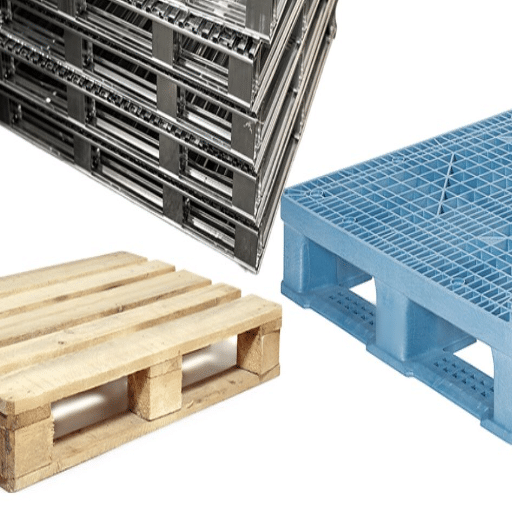
Pallets play a pivotal role in the transport and storage of goods by providing a stable framework for ease of handling and protection from damage while in transit. The two commonly encountered types of pallets are plastic and wooden. Plastic pallets offer the benefits of being highly durable, having moisture resistance, and a long lifespan, thus serving the needs of industries that require high levels of hygiene-occasionally medicines and foods. In contrast, during industries that call for mostly one-time or short-term use, wooden pallets, because of their cheapness, strength, and availability, are usually preferred. Each category has different merits and demerits that must be weighed in according with the priorities and needs of operations.
What is a Plastic Pallet?
In the storage and transport of goods, the pallet acts as a platform of fixed dimensions and high load-bearing capacity. Plastic pallets are usually manufactured from materials such as high-density polyethylene (HDPE) or polypropylene (PP). Such pallets structure the defense against moisture, chemical substances, and pests, and thus fit well in industries with very stringent hygiene codes: the pharmaceutical, food production, and health sectors. Unlike wood pallets, they do not splinter, are very easy to clean, and have a longer life. This avoids frequent purchasing due to wear and tear. With several designs available-Nestable, Rackable, Stackable-plastic pallets always help businesses in operations where maximum reusability and reliability are a must, even if their upfront cost is generally higher than the wood counterpart.
What is a Wooden Pallet?
A wooden pallet is a flat structure composed mainly of hardwood, softwood, or engineered wood composites to support goods during storage and transportation. It acts as a platform on which goods are stacked, handled, or moved using forklifts, pallet jacks, or conveyors. Wooden pallets are cost-effective, cheap, and have high load-bearing capacity, which makes them most suitable for being used with heavy or bulky materials. Wood pallet types are highly versatile and repairable; however, their use is confined to a few industries due to splitting, moisture, and biological contamination problems. Such limitations have kept the very inexpensive wooden pallet among the most widely used types of pallets worldwide for carrying out a myriad of activities in the supply chain.
Overview of Different Pallet Materials
Plastic Pallets
The trends in pallets are trending more toward plastic pallets because of characteristics of durability, light weight, moisture, pest, and chemical contamination prevention. They are best for highly sterile-type environments such as the pharmaceutical and food industries. The initial price factor for plastic pallets is usually higher than wooden ones, but they give themselves back through more extended use, reusability, and recycling options. Another plus with plastic pallets is that they set standards for nesting and stacking at different specifications for space optimization. They, however, might not be well-suited for carrying super-heavy loads or for applications under exposure to high temperatures.
Metal Pallets
Metal pallets are usually made from steel or aluminum for heavy-duty applications. With strength and resistance to damage, these pallets are used to carry very heavy loads and hazardous materials in construction, automotive, and military logistics. Also, they are non-porous and highly durable, which makes them suitable for sterile environments. On the other hand, the heavyweight and somewhat high price limit their use in specialized areas, where the value of their rugged capabilities justifies their cost.
Composite Pallets
Composite pallets, made from materials such as pressed wood or molded fiber, or maybe a resin-wood combination, are a trade-off among cost, strength, and environmental friendliness. The composite ones are lighter than wooden pallets, yet able to withstand the tasks bestowed upon them. Some composite materials are treated to be fire-resistant and durable. What they lose against wooden pallets in strength is resistance to extreme temperature variations and long-term moisture contact, thus limiting the places they can be put to use. Composite-type pallets are one of the best choices in exportation because international shipping regulations would indeed expect one to have it.
Advantages and Disadvantages of Plastic and Wooden Pallets
Advantages of Plastic Pallets
- Strength: Plastic pallets resist moisture, chemicals, and insects; hence, they last longer than wooden ones. They do not splinter, crack, or warp, even when situations turn paramount.
- Lightweight: Generally accepting the lighter side, transportation costs are lowered, in the meantime, easing the handling process.
- Hygiene: From a sanitation perspective, plastic pallets can be cleaned and disinfected with ease and meet the strict hygiene requirements of the food, pharmaceutical, and health industries.
- Consistency: Being made with precision, plastic pallets are consistent in size and weight, working better with automated systems.
- Recyclability: Most plastic pallets are recyclable into new products at the end of their useful life, helping in sustainability efforts.
Disadvantages of Plastic Pallets
- The Price Issue: Plastic pallets carry a much higher price at the inception stage because of the different materials and manufacturing processes included in the systems. This poses certain barriers for those businesses with tight budget considerations.
- Repairing is more difficult: Plastic pallets, while being more durable, lose that status when they get damaged; unlike wooden pallets, which can be repaired with simple tools, plastic pallets generally must be destroyed when they break.
- Lesser Load Capacity for Some: Some plastic pallets, especially of the lighter variety, are not as good in load-bearing as wooden pallets.
- Environmental Impacts: In an environmentally conscious world, one always thinks about the environmental impact of a product. While theoretically, these products are recyclable, practically, their creation is so energy-intensive that it is another environmental cost, except for the energy cost that would be borne in their disposal.
- Heat Sensitivity: At excessive temperatures, plastic pallets normally disfigure, making them unsuitable for use as carrying in hot environments or sterilization by heat.
Advantages of Wooden Pallets
- Cost-Effectiveness: Wooden pallets, generally, tend to be less costly to manufacture and buy than plastic pallets, thus becoming a cost-effective option for numerous industries. Their price is less since their availability is much fairer, and timber procurement is simple.
- Strength and Load Capacity: Wooden pallets carry heavier loads than most plastic ones. This is the very reason why they are given preference in bulk shipments and storage of several goods, mainly in industries with considerably high-weight requirements.
- Repairability: One of the greatest benefits of wooden crates would be ease of repair. Damaged points can mostly be replaced or at least reinforced, thus maintaining the working life of the pallet and reducing the long-term cost.
- Environmental Friendliness: As these are made of natural and biodegradable materials, wooden pallets may ultimately decompose or be recycled after finishing their lifecycle. Timber recycled or wood industry by-products are also used in their making, thus cutting wastage.
- Heat Resistance: Unlike plastic pallets, wooden pallets are not subject to deformation caused by high temperatures. Hence, they are very much applicable in sterilization or high-heat instances.
- Recyclable and Reusable: Wooden pallets are recyclable into mulch or wood chips or for making new pallets. This gives them a greener option for disposal at the end of their life. The general reuse of these pallets across different supply chain activities also reduces requirements for newer materials.
Disadvantages of Wooden Pallets
- Susceptibility to Damage: Wooden pallets are likely to break or splinter under heavy loads, hence much inferior to their counterparts, such as plastic or metal pallets, in terms of durability. Owing to such damages, replacement might get further expensive.
- Absorbing Moisture: Being porous, wood naturally absorbs water; hence, with exposure, it can be subject to developing mold or mildew, and in some cases, it weakens with its own weight. In moisture-laden conditions, these factors put the wooden pallet at risk.
- Pest Infestation: The wood of wooden pallets serves as food for pests such as termites and wood-boring beetles, which, after establishment, eat it away, seriously compromising its structural integrity. Most incur the treatment itself to stave off, adding to the cost and complexity.
- Weight: Being a hefty option, wooden pallets carry more than do the rest–plastic or metal varieties, increasing freight expenses and quite awkward to handle manually.
- Lack of Standardization: Due to variations in wood quality and construction, wooden pallets have a tendency not to be the same, which may create problems for automated handling systems or inconsistency in load stability.
Plastic vs Wood Pallets: A Detailed Comparison

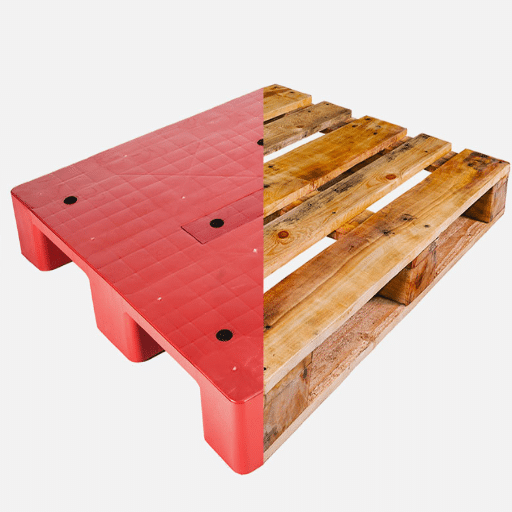
| Factor | Plastic Pallets | Wooden Pallets |
|---|---|---|
| Durability | More durable and resistant to environmental hazards such as moist surroundings and deterioration | Tend to warp, crack, and develop pest problems over time |
| Weight | Generally lighter, making for cheaper transportation | Heavy and would increase logistical costs |
| Hygiene | Easier to clean and sanitize; suitable for industries requiring stringent hygienic standards | May absorb moisture and contaminants, constituting a potential hygienic hazard |
| Lifespan | High initial cost but last much longer (10-15 years), needing much less upkeep | Cheaper initially but frequently require replacement from wear and damage (3-5 years) |
| Environmental Concerns | Stay longer in environment; higher startup footprint but recyclable and reusable over life span | Can biodegrade and be recycled or repurposed; made from renewable resources |
The most appropriate option in pallets may be selected by businesses upon acknowledging these considerations as they relate to their operational requirements, cost efficiency, and environmental concerns.
Durability and Longevity
When it comes to strength and endurance, plastic pallets are generally thought to be better than their wood counterparts. Plastic pallets would, therefore, resist moisture, chemicals, and temperature fluctuations better without suffering degradation, depending on whether they are made of high-density polyethylene (HDPE) or polypropylene. They do not splinter, crack, or warp, therefore making them particularly good choices for long-term use in harsh environments. Conversely, wooden pallets degrade with time due to moisture absorption, pest infestation, and occasional damage caused by splintering or broken boards. However, repairs can be undertaken easily by replacing the damaged parts, whereas in the case of plastics, the majority has to be discarded and replaced.
In addition, during normal circumstances, plastic pallet life expectancy falls between 10 and 15 years, thus considerably outliving wood pallets, which normally last 3 to 5 years under moderate usage. The initial price of plastic pallets runs higher, but their longer lifespan and lesser maintenance needs imply better cost efficiency as time goes by. On the other hand, while wood pallets come cheaper, their higher long-run costs arising from constant replacements and repairs detract from their value. It is, therefore, for industries demanding great durability and longevity with the least maintenance that the plastic pallet comes first in preference.
Cost Effectiveness
For the cost considerations of any style of pallet, a crucial analysis of initial investment, life span, and maintenance should be undertaken. Plastic pallets, while more expensive to purchase, carry a reputation for being fully resistant to weather and chemical damage and can thus be used for 10 years or even more if in consistent use. The longer the pallets remain in use, the fewer the replacements needed, thereby lowering the total cost of ownership. Also, being light in weight, it lowers the shipping cost and increases logistics efficiency.
On the other hand, wooden pallets are tremendously cheap on the one hand and are widely used whenever one wants to sell or transport something on a single-use or short-term basis. Unfortunately, with moisture, pests, and heavy-handed treatment, damage may creep in within 3 to 5 years, which means a pallet might have to be repaired or replaced. Hence, these recurrent costs start to pile up on operational costs, especially if the industries demand higher turnaround times.
At last, while wooden pallets are fine for short-term use by the less-provident, plastic pallets truly represent a long-term solution; hence, a business that seeks better durability, easier maintenance, and savings opportunities in its entire logistics cycle should opt for plastic ones.
Environmental Impact and Sustainability
In regard to environmental impact, plastic pallets have their own advantages and disadvantages compared with wooden pallets. In the great scheme of things, wooden pallets are often manufactured from renewable resources and are biodegradable, hence making them more environmentally friendly in their end-of-life stage. In contrast, their manufacturing leads to deforestation and carbon emissions because they are often replaced.
Plastic pallets tend to be produced from recycled materials like HDPE or PP, thereby reducing dependence on virgin plastics. Their lifespan is quite long, lasting anywhere from five to ten times longer than that of wood, thus considerably reducing waste generation over time. Most plastic pallets are also recyclable at the end of their life, hence promoting a circular economy. However, in contrast, the actual production of plastic pallets makes use of fossil fuels, thereby increasing the overall carbon footprint.
In concern for sustainability, businesses that wish to reduce their environmental footprint must consider the reuse potential, recycling type, and supply-chain life cycle. The advanced recycling techniques and sustainable material usage may bridge the gap between performance and ecological considerations.
Choosing the Right Pallet for Your Supply Chain

Key Selection Criteria
The right pallet selection for the supply chain, therefore, needs to consider a few key factors:
- Material and Durability – Are wood, plastic, or metal pallets appropriate for the frequency of handling and load capacity for your operations?
- Weight and Load Capacity – Will the pallet maintain the load required by the sent load and operations to ensure safety and efficiency?
- Cost-Effectiveness – A comparison between costs and durability and reusability over the long term is needed to justify an overall expense.
- Compatibility with Equipment – Compatibility shall be verified further with forklifts, conveyors, and storage racks used in your supply chain.
- Sustainability – Using a material that is either recyclable or sustainably sourced is preferred to ensure less environmental degradation.
- Standards Compliance – Are standards for hygiene and safety complied with? Particularly so for the food and pharmaceutical industries.
After taking into consideration these items, in so doing, businesses, on their part, may increase efficiency while fulfilling both operational and environmental objectives.
Factors to Consider When Choosing a Pallet Type
In the selection of pallet types, many considerations must be weighed in order to guarantee their suitability vis-à-vis operational requirements. Here is a brief outline of the considerations inextricably linked to load application under industry standards and expert opinion:
- Load Capacity and Balance Distribution: The load capacity must be ascertained for a pallet: a heavy uniform load, a heavy non-uniform load, or conversely, the weight must be distributed properly across the surface. Heavier loading creates an increased chance of structural failure of the pallet base with damaged goods and hazardous working conditions.
- Material Properties and Durability: Pallets can generally be made out of wood, plastic, metal, etc. Wood is cheaper but atmospheric deterioration can take place with time, plastic is good on durability and water resistance, and metal, heavy-duty application-wise, stands the opposite in price and handling.
- Environmental Conditions: The running environment is of paramount importance. For instance, mould cannot be cultivated on plastic pallets, nor can it cling to or rot away, making them perfect in humid or wet conditions. If the wood is treated, then its life could be good enough to last in less challenging conditions.
- Industry and Regulatory Standards: Pallets for food, beverage, and pharmaceutical industries have to observe sanitation standards, like ISPM-15 for export or the FDA compliance standard. Non-porous materials such as plastics or treated wood shall be preferred to keep dirt off.
- Ease of Handling and Design Compatibility: Check if the pallet design accommodates forklifts, automated conveyors, or storage system configurations. Features such as fork entry points, stackability, and reinforcement structures will help in integrating the pallets into the supply chain processes.
- Cost versus Life Span: While initial costs may vary according to material, consider the longevity and maintenance requirements for the pallet. Plastic ones, on the other hand, tend to have much longer lifespans and lower rates of replacement as compared to wood.
Balancing these concerns will allow for better-informed decisions that maximize the efficiency and safety of pallet supply chains at minimum costs.
When to Use Plastic Pallets
Plastic pallets are given preference in durability, hygiene, and reusability-based settings. They stand supreme in industries that demand sanitation norms, such as food processing, pharmaceutical, and cleanroom environments, since plastic pallets will not attract contaminants, mold, or moisture. Plastic pallets in a closed-loop supply chain benefit from their long life, which balances out their high initial cost as they need to be replaced less often. Consequently, their lightness helps reduce shipping weight in air freight, given that the firmness is retained. Plus, they are one of the most favorite options for companies seeking to concern themselves with sustainability, as many are recyclable and made from recycled substances. Having considered a company’s precise operational, regulatory, and logistical needs, plastic pallets can provide the drive toward increased supply chain efficiency and compliance.
When to Use Wooden Pallets
For a good load capacity and with durability being one of the defining factors for most industries, wooden pallets provide versatility and cost-effectiveness. Owing to their high weight tolerance, these wooden pallets suit the transportation of heavy or bulky goods. In sectors like agriculture, construction, and manufacturing, wooden pallets are used under rough handling conditions and outdoor storage. Wooden pallets are also easy to repair and recycle, with companies interested in extending the life of a pallet while minimizing waste. The users, however, will have to take into account certain factors like exposure to pests and moisture, and international shipping laws about their export, such as ISPM-15, in which cases pallets must be heat-treated or fumigated. Proper maintenance, along with proper applications, will take them through the most demanding supply chain operations.
Trends in Pallet Usage

Their usage trends have indicated that the market is shifting toward environmentally friendly materials, such as recycled pallets and reusable pallets, in keeping with environmental objectives. Moreover, utilization of these lightweight plastic pallets has increased in earnest due to their strength and ease of maintenance and application in settings such as food and pharmaceuticals. Likewise, “smart pallets” are now being offered with RFID technology, so greater tracking and data collection can be carried out to increase the supply chain proficiency. Finally, there is growth for the pallet-pooling systems, giving companies an option to enhance the availability of pallets while concurrently keeping costs down and remaining operationally sustainable.
The Rise of Recycled Plastic Pallets
Sustainable Innovation in Logistics
In the context of sustainable logistics, recycled plastic pallets are currently experiencing expanding attention. Generally, these pallets are manufactured from post-consumer and post-industrial plastic wastes, giving a greener option to traditional wooden and virgin plastic pallets. These pallets have great strength and resistance to moisture, chemicals, and pests, making them ideal for industries with high hygienic standards, including the food, pharmaceutical, and electronic industries.
Increasingly innovative manufacturing techniques have ensured cost-efficient means of manufacture-interjection and compression moldings-both ensuring high performance and reduced environmental footprint. Moreover, recycled plastic pallets are lighter than timber, thus reducing transportation costs and energy consumption, and can be entirely recycled after usage, creating a closed-loop system.
This sort of adoption of recycled plastic pallets is further induced by tighter waste management laws and increasing global trends in sustainability. These businesses are increasingly integrating such pallets into pallet pooling systems to enhance the efficient utilization of resources. Their long life, ease of maintenance, and compatibility with automation systems make them a central piece for sustainable supply chains.
Innovation in Wooden Pallet Designs
Upon completing my research into improvements in wooden pallet designs, I found some of these advancements aimed at improving functionality, eco-friendliness, and cost efficiency. These advances include engineered wood composites for enhanced strength and load-bearing capacities, ergonomic designs for better handling, and RFID tags for better tracking in inventories. Heat treatment and chemical-free alternatives keep the pallet environment-friendly while still complying with international shipping regulations. Such advanced developments allow the wooden pallet to remain relevant with modern supply chain needs.
Future of Pallet Materials in Supply Chain
Looking Ahead: The Evolution of Pallet Technology
Increasingly, sustainability, advanced materials, and circular economy applications shape the future of pallet materials in the supply chain. Keeping in mind the environmental concerns, manufacturers have begun to look for alternatives to traditional wood pallets, such as recycled plastic pallets, composite materials, or occasionally even metals in some heavy industries. These materials stand for durability and are reusable against moisture and pests, thereby causing less environmental distress. In addition to this, more and more smart pallets, embedded with IoT sensors, are being applied to track and collect real-time data for optimizing logistics.
So much so that companies now invest heavily in closed-loop recycling systems, wherein the objective is to have the pallets serve an extended lifecycle. Also, with governments banning waste and emissions, there are biodegradable or recyclable materials. Collaborative innovations along industries may give rise to hybrid materials and modular designs that meet dimensions of performance and those of environmental constraints. A prominent transition toward the efficient, sustainable, and technology-driven supply chain marks a watershed moment.
Final Recommendations
The choice between plastic and wooden pallets ultimately depends on your specific operational requirements, budget considerations, and sustainability goals. Plastic pallets excel in hygiene-sensitive environments, offer longer lifespans, and provide better long-term value despite higher initial costs. Wooden pallets remain the economical choice for heavy-duty applications, short-term use, and situations where repairability is valued. Consider the total cost of ownership, environmental impact, and compatibility with your existing infrastructure when making your decision. By carefully evaluating these factors, you can optimize your supply chain efficiency while meeting both operational and environmental objectives.
Reference Sources
The Use of Substitute Material Pallets for Grocery Distribution
Wooden and Plastic Pallets: A Review of Life Cycle Assessment (LCA) Studies
Life Cycle Assessment Comparison of Wooden and Plastic Pallets in the Grocery Industry
Frequently Asked Questions (FAQs)
What are the benefits of plastic pallets over wood pallets?
Plastic pallets have various benefits over wooden pallets. Being more durable, they resist moisture and never splinter or become a haven for pests. Cleaning and maintenance are areas where plastic pallets win big, hence making these pallets perfect for industries with highly hygienic customs. Their higher cost at present is actually justified by the benefits they provide throughout, such as less maintenance and long-lived usage.
How do plastic pallets serve excellently in supply chain operations?
Plastic pallets are excellent in supply chain operations as they are lightweight, reducing shipping costs while speeding up handling. They are stackable and blend well with automated systems to improve logistics processes. Being of uniform quality, plastic pallets help to keep interruptions at an absolute minimum, guaranteeing a smooth pass through along productivity.
Are there any specific industries that make use of plastic pallets?
Food and beverage, pharmaceutical, and electronics sectors benefit immensely from the use of plastic pallets. These sectors demand high standards of hygiene and durability, which makes plastic pallets the most suitable option. Since they withstand chemical attacks and moisture, these pallets find varied applications while ensuring that the products remain safe and secure during transportation and storage.
Which pallet cost compares with a wooden one?
A plastic pallet indeed tends to cost more at the onset as opposed to wooden pallets; however, long-term cost savings may be realized. Due to their inherent durability, lesser maintenance, and long life, plastic pallets need infrequent replacement, hence offering cost savings. Shipping costs can also be minimized with their lightweight, thus further establishing the cost-effectiveness over time.
What are the benefits of plastic recycling?
From an environmental angle, recycled plastic for pallets creates benefits through waste reduction and sustainability. The recycled plastic pallets are often equally durable and functional, just like new plastic pallets, presenting an eco-friendly choice for companies that wish to lessen their carbon footprint. Through the use of recycled materials, companies join the circle of sustainability and display their commitment to its promotion.
What should a business consider while choosing a pallet from among plastic and wooden types?
In choosing between plastic and wooden pallets, consider their durability, hygiene, weight, and cost. In general, plastic pallets resist moisture and chemicals better, while wood pallets can prove to be cheaper initially. The industry type itself and its cleanability standards and load requirements can really drive the decision. A proper cost-benefit analysis of long-term value and overall cost of ownership is what matters by the end of the day.
Can converting to plastic pallets increase operational efficiency?
In fact, the changeover to plastic pallets does significantly improve operational efficiency. Once a plastic pallet comes into existence, it weighs little, and hence, handling becomes a little easier and faster-for-load-and-unloading operation. Plastic pallets will be incorporated with automated systems-increase manual work and throughput. Further, plastic pallets do not wear out faster than wood; hence, there is less downtime between operations and more time to carry on smoothly.
What are the special benefits of plastic pallets over wood pallets?
Plastic pallets provide unique benefits such as moisture, chemical, and pest resistance that wood pallets do not provide. Plastic pallets stand much easier to clean and sanitize and are, therefore, suited for those industries where hygiene is paramount. Plastic pallets will not splinter, thus making it safer to handle and transport the goods; in view of these reasons, plastic pallets will definitely be preferable over wood in many applications.
What separates plastic and wood pallets?
Material properties, durability, and maintenance are among the primary differences between plastic and wood pallets. The stronger plastic pallets are more resistant to adverse environmental conditions, while wooden pallets are cheaper at purchase. Another key difference is in cleaning: plastic pallets clean up much more easily and require no pest treatment, so industries do lean towards this class of pallet in some applications. Knowing them puts you ahead in the selection of pallets to meet a particular need.