While the pharmaceutical industry is one of the utmost stringent safety, quality, and efficacy, the pharma pallets are often ignored amidst these extremely rigorous demands: they, in fact, are the most critical link in any supply chain. In other words, pharma pallets not only transport the goods down the supply chain but also help in compliance with regulations in the industry, all while providing utmost protection to sensitive products and even improving operational efficiencies. This article plunges into the world of pharma pallets-it explores how they support stringent regulatory requirements while enhancing productivity and the ability of the supply chain to meet the demands of the pharmaceutical industry. The article serves to enlighten you on how the right choice of pallets can make a great differentiator in both compliance and operational excellence.
Understanding Pharma Pallets

In the pharmaceutical business scenario, pallets are supporting major equipment for the safe and efficient transfer and storage of drugs. Typically, these are made using materials that are highly resistant to contamination, such as plastics. Such materials ensure that hygiene standards are strictly adhered to. Secondly, gaining the very objective of protecting and maintaining the integrity of sensitive products against vibration and shocks on transit, these pallets provide adequate stabilization in storage or transit. These pharmaceutical pallets are usually under strict provisions for regulatory bodies to enhance the quality of goods in terms of logistics throughout the pharmaceutical supply chain.
What Are Pharmaceutical Pallets?
Generally, pharmaceutical pallets are used to facilitate the transportation and storage of pharmaceutical products. The major concern that needs attention in the procurement of these pallets is that they conform to the stringent standards of the pharmaceutical industry, as the pallets not only affect the product integrity but are also considered for regulatory compliance. The function has been incorporated in medicine to vaccines that need protection from any sort of contamination through transport, temperature variations, or physical damage, including other highly sensitive pharmaceutical products.
Pharma pallets, being made mainly from high-quality plastic, are non-porous, easy to sterilize, and resistant to moisture, and hence, they are apt for storing materials in a cleanroom setting or a refrigerated storage system. Wooden pallets promote bacterial growth or splintering; hence, plastic pallets are better for hygiene and durability. From the anti-slip surface to RFID tracking and compatibility with automated handling systems, it is all geared toward maximizing efficiency in pharmaceutical supply-chain operations.
Pharmaceutical pallets do not simply act as elements for conveyance but are rather imperative for efficacy, quality, and safety of the products when moving across complicated temperature-controlled logistics facilities. Based on their precise design and thorough testing, pharmaceutical pallets conform to both industry standards and government regulations and are thus indispensable elements for pharmaceutical activities to function efficiently.
The Importance of Compliance in Pharma
Compliance exists within the pharmaceutical industry to ensure the safety, efficacy, and quality of drugs and medical products. Various bodies, including the Food and Drug Administration (FDA), the European Medicines Agency (EMA), and the World Health Organization (WHO), impose price controls, forcibly directing manufacturers to observe certain procedures to avoid contamination, improper storage, or incorrect dispensation. On the other hand, compliance promotes public health and shields companies from legal incrimination, product recalls, or reputational damage.
Among others, compliance embraces GMP, proper documentation processes, and strong quality control systems. The entities must also pursue transparency of clinical trials and supply chain management, so they may be held accountable at every stage. Adhering to these standards improves the trustworthiness of the pharmaceutical industry, so that life-saving drugs arrive most safely to patients.
Types of Pallets Used in the Pharmaceutical Industry
The pharmaceutical industry mainly uses, depending on very high regulations and operational requirements, three main types of pallets:
| Pallet Type | Material | Key Benefits | Primary Use Cases |
|---|---|---|---|
| Plastic Pallets | High-quality plastic | Hygienic, durable, easy to clean, GMP compliant | Cleanroom environments, temperature-sensitive products |
| Metal Pallets | Stainless steel, aluminum | High strength, temperature resistance, corrosion-resistant | Heavy loads, special pharmaceutical products |
| Wooden Pallets | Treated wood | Cost-effective for non-critical applications | External transport, low-critical considerations |
Plastic Pallets
Plastic pallets find major uses for the hygienic qualities, durability, and ease of cleaning it offer. They resist moisture, chemicals, and all sorts of contaminants, thus making them a quality means of transportation for sensitive pharmaceutical products. They adhere to GMP standards and are usually used in cleanroom environments.
Metal Pallets
Metal pallets, usually stainless steel and aluminum, are preferred for applications that demand very high strength and resistance to very high temperatures. They are very long-lasting and, therefore, corrosion-resistant, apart from being good for carrying very heavy loads or rather special pharmaceutical products.
Wooden Pallets
Wooden pallets can still be encountered for low-critical considerations or external transport, although they are seldom used in pharmaceutical operations. However, they require treatment to prevent contamination and meet stringent regulations such as ISPM-15 standards for international shipments.
The selection of the type of pallet depends on the sensitivity of the product involved, the conditions under which it is stored, and regulatory compliance, so that safe handling of the product may be guaranteed all along the supply chain.
Plastic Pallets for Pharma

Due to their durability, hygienic properties, and compliance with regulatory standards, plastic pallets find use in the pharmaceutical industry. Being slightly resistant to moisture, chemicals, and bacteria, plastic pallets remain unmatched in keeping pharmaceutical products intact. Unlike the wooden variety, these pallets are easiest to clean, as only the reluctance of plastics to splinter or absorb contaminants averts possible risks to product contamination. Also, their light-weight design aids in the easy handling of the pallets while also reducing transportation charges. Therefore, plastic pallets qualify indeed to the stringent requirements of the pharmaceutical sector, guaranteeing without compromising the safe and orderly transportation and storage of medicines and raw materials.
Advantages of Using Plastic Pallets
Durability and Longevity
Plastic pallets are designed to endure heavy loads, resist damage from impacts, moisture, or chemicals. Although an array of studies have shown that plastic pallets may persist even up to 10 times the life of a wooden pallet under proper conditions, they form a better choice for the really long-term use from the perspective of cost.
Hygiene and Cleanliness
Plastic pallets are non-porous and thus do not absorb moisture, bacteria, or contamination, unlike wooden pallets. They are washed with pressure or disinfectants, for a better guarantee of hygienic specifications in industries such as pharmaceutical and food.
Lightweight and Consistent Design
Plastic pallets are generally lighter than wooden ones, thus reducing shipping costs. In addition to that, their designs are consistent and uniform, assuring smooth coordination with automated systems, such as conveyor belts and forklifts, thereby enhancing overall efficiency in warehousing and transportation operations.
Environmentally Friendly Options
In most cases, such plastic pallets are procured from recycled materials and can be fully recycled at the very end of their lifespan. This reduction of industrial waste conversion needs promotes sustainability. Some manufacturers run buy-back or recycling programs in support of the environment for the used pallets.
Safe and Dependable
Plastic pallets without nails protruding or splinters make it unsafe for workers. They are reliable when under extreme conditions, and when there is high humidity or temperature variation, wooden pallets might warp, crack, or degrade.
Industry Standard Compliance
Plastic pallets conform to transport standards worldwide, especially for export. In comparison, they do not require fumigation for international shipping, while wooden pallets have to go through ISPM-15 regulations. So for that reason, plastic pallets are chosen over wooden ones by companies involved in international trade.
These benefits ensure that plastic pallets improve operational efficiency and ensure the sustainability, hygiene, and cost efficiency of industries all over the globe.
Hygienic Properties of Plastic Pallets
In industries that require utmost cleanliness, like food and pharmaceuticals, plastic pallets enjoy the reputation of being extremely hygienic. Unlike wooden ones, plastic pallets don’t absorb moisture or allow bacteria, fungi, or contaminants to grow. Plus, they have smooth, non-porous surfaces that are easy to clean and sanitize to meet strict hygiene standards, reducing the risk of contamination of products. Plastic pallets thus do not absorb odors or chemicals, nor are they susceptible to pests, further maintaining the integrity of the goods when stored and in transit. These qualities make plastic pallets an extremely dependable choice for maintaining sanitation levels throughout the supply chain.
Cold Chain Logistics and Pharma Pallets

How Plastic Pallets Help Maintain Cold Chain
While maintaining the cold chain, plastic pallets contribute to the durability and temperature resistance needed. Unlike wooden pallets, these never warp, crack, or absorb moisture; thus, they perform consistently in cold storage or refrigerated transport. Their uniform shape allows great airflow around perishable goods, helping to maintain a stable temperature and keep shelf life for longer. The pallets are light but sturdy, thereby reducing the load on refrigeration equipment and cutting down power consumption. Easy-to-clean surfaces prevent bacterial growth, alongside being mold-resistant, which makes them highly suited for transporting temperature-sensitive products like fresh food, pharmaceuticals, and other perishables, thus meeting strict cold chain standards.
Importance of Cold Chain in Pharmaceutical Distribution
When it comes to the cold chain, consider pharmaceuticals, vaccines, and biologics, as they have very stringent temperature ranges in which they must remain for safe, effective use. An efficiently operated cold chain guarantees stability and a lack of change in products, from being dispatched by the manufacturer to reaching their final consumers. Temperature fluctuations cause product degradation and counter the therapeutic effect of the medicine while causing a serious health hazard to the patients. Moreover, agencies such as the FDA and WHO have strict guidelines to be followed concerning cold chain practices to be maintained at the highest quality. Technological advances in monitoring, such as data loggers and sensors enabled by the IoT, allow the monitoring to be undertaken in real time, ensuring product integrity throughout the supply chain. In summary, cold chains are a must to keep the worth and potency of temperature-sensitive pharmaceutical products.
How Pallets Help Maintain Cold Chain Integrity
They are an integral part of cold chain maintenance as they provide stable and efficient platforms for transporting temperature-sensitive materials. The pallet allows proper dispersion of air within the storehouse or transport area, which is of concern in maintaining a constant temperature. In order to reduce possible contamination and temperature fluctuations, pallets prevent products from coming into direct contact with any surface. Modern pallets, usually made from either plastic or composite materials, are constructed to withstand very low or very high temperatures and are also easy to clean, thereby facilitating proper hygienic practices. Pallets are also compatible with automated warehouse systems, upon which cold chain warehouse operations depend for efficiency and reliability, thus supporting the uninterrupted transition of pharmaceuticals and other sensitive products.
Compliance and Regulations
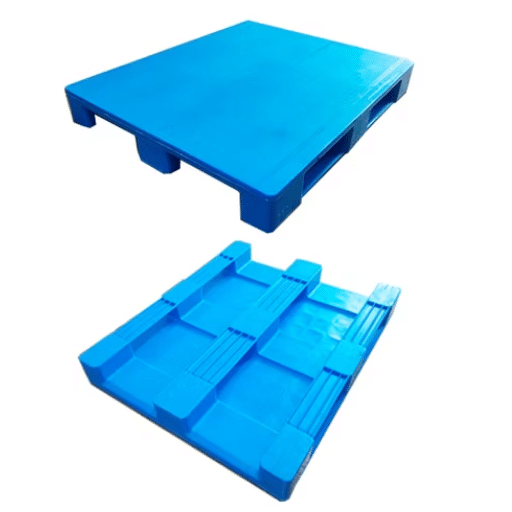
Plastic pallets used for the cold chain must be manufactured in accordance with industry standards and government regulations to ensure safety and efficiency. If food safety is in question, FDA regulations apply in that materials must be non-toxic and safe for contact with consumables. In addition, ISO standards guarantee that the pallets are durable, hygienic, and uniform in design. All of these regulations ensure that the product maintains its integrity in this temperature-sensitive supply chain with very stringent conditions.
GMP Compliance in Pharma Logistics
Pharmaceutical logistics operations rest heavily on GMP to assure drug product safety, quality, and efficacy across the supply chain. It involves the utmost control over the storing, transportation, and handling of pharmaceutical products. Temperature-controlled environments must be maintained, traceability of products ensured, and mechanisms of contamination or degradation precluded. The maintenance of the GMP quality standard, right from facilities to equipment, requires inspections and validations; personnel must also be trained to uphold standard operating procedures. GMP compliance means that records have been maintained to track and assure all activities undergone during the supply chain, thus providing evidence of compliance with regulatory standards, such as the FDA, the WHO, and others. By protecting the health of patients, these standards warrant the quality of medicines as intended from production to delivery to the end-user.
Ensuring Safety and Quality with Compliant Pallets
Pallet compliance helps ensure the safety and quality of pharmaceutical products throughout the supply chain. Pallets, which are made from approved materials that conform to industry regulations such as those from the FDA, WHO, and GMP, must be resistant to contamination and easy to sanitize. The consigning of drug products stabilizes during transit with these pallets, bestowing the potential risk of damage to sensitive drugs or medical supplies.
Pharmaceutical-grade pallets would also deter any danger of chemical leaching and microbial contamination that could compromise product integrity. Traceability and real-time monitoring during logistics further support compliance when these pallets are embedded with RFID tags or with tracking systems. By investing in good-quality compliant pallets, organizations maintain regulatory requirements, assure product safety, and promote operational efficiency in this strenuous industry.
Regulatory Standards for Pharmaceutical Pallets
Pharmaceutical pallets are among the packaging materials that have to meet rigid regulatory standards to guarantee their safety and integrity through storage and transportation. It must comprise materials that are non-toxic, contaminant-free, and must never chemical-leach into the products during transportation. The standards promulgated by the FDA and European regulators explicitly state that the pallets within the pharmaceutical industry may not compromise on product quality or interact with sensitive materials. It is a given regarding the temperature stability of the storage medium, as several pharmaceuticals are stored at a defined temperature. Also, on the logistics side, traceability and chain-of-custody should be awarded as compliance requisites, thus warranting sophisticated tracking technology, whereby RFID remains a good example. By such priority, the product shall meet its required efficacy, reduce product recall, and maintain consumer safety.
Best Practices for Cold Chain Compliance with Pharma Pallets
- Ensure Temperature Control: Storage and transport facilities control temperature to keep the pharmaceuticals under the required conditions. Constant monitoring with the help of modern sensors and good data logger systems is necessary to detect temperature changes and rectify problems, if any.
- Choose the Pallets Right: Go with pallets that are baffling on their durability, non-porous, materials like plastics and composites that withstand extreme temperature conditions and contamination. Such pallets need to go ashore with the automated systems and with the international standards of hygiene and safety, ISO or FDA regulations.
- Use More Fighting Packaging Measures: Use insulated and tamper-proof packaging that provides a minimal chance of hazards during transit. In addition, provide thermal covers or phase change materials to help stabilize temperature if there is a delay or if transport time is extended.
- Train Staff and Stakeholders on Guidelines: Before any cold-chain operation, comprehensive training must be given to personnel so they are familiar with and able to comply with handling guidelines. Awareness of temperature control procedures, pallet use, and emergency protocols is paramount.
- Implement Technology for Real-Time Monitoring: Purchase IoT-enabled tracking systems for visibility across the supply chain. If product compromise is to be prevented, real-time data must be available for immediate decision-making while simultaneously taking care of regulatory issues.
- Regular Audits and Maintenance: Conduct regular audits on cold chain equipment, vehicles, and storage facilities to identify any potential inefficiencies or hazards. Maintenance on equipment allows for the extension of its life and ensures that compliance is enforced.
Following best practices for the cold chain helps minimize risks and preserve the quality of pharmaceutical products, which meet requirements stipulated by regulators.
Future Trends in Pharmaceutical Pallets

The future of pharmaceutical pallets is geared toward higher technology and greater sustainability. Smart pallets are becoming increasingly common. These IoT-enabled sensors monitor temperature, humidity, and location in real-time to preserve product integrity along the cold chain. Another sector moving fast toward being eco-friendly, implementing recyclable or biodegradable pallets to lessen the carbon footprint. Lightweight yet sturdy designs are also in development to maximize transportability while satisfying regulatory requirements. These are some promises in making pharmaceutical logistics efficient and sustainable simultaneously.
Advancements in Pallet Technology
With a thrust on efficient and sustainable operations plus compliance, pallet technology is thus revolutionizing pharmaceutical logistics. Modern pallets are made from environmentally friendly materials such as recycled plastic, engineered wood, or biodegradable composite. Solutions for reducing the environmental footprint of the pallet while not compromising on strength and reliability. With the introduction of smart pallets with the integration of IoT-enabled sensors, they are used for real-time shipment tracking, thus providing essential data on location, temperature, and humidity to ensure the safety of the product throughout the supply chain. At the same time, further improvements are directed to keep their weight to a minimum while being eminently durable with a comparative reduction in transport cost and carbon emissions. These innovations serve to meet stringent regulatory standards and promote green initiatives within the pharmaceutical industry.
Sustainability and Eco-Friendly Pallet Options
When talking about guaranteeing sustainability and eco-friendly pallet options, I can mention that material and design improvements qualify. Most pallets are made from recycled plastics or other biodegradable materials, which lessens the negative impacts on the environment. Nevertheless, a compromise on service life and strength cannot be considered. Moreover, such sustainable choices reduce carbon emissions during transport and conform to green supply chain practices.
The Impact of Automation on Pharma Pallet Management
Automation has been a turning point for pharma pallet management, offering a much-needed streamlining of operations and efficiency. Technologies such as automated guided vehicles (AGVs) and robotic palletizers provide consistency in their processes and eliminate human errors, thereby maintaining product quality. Additionally, automation ensures traceability because of its embedded tracking system, thus complying with extremely stringent regulatory standards in the pharmaceutical industry. The automation also optimizes workflows and reduces the need for manual labor, thereby cutting overheads and further reducing contamination risks in sensitive pharma environments. Thus, in-built automation helps companies establish operational reliability while safeguarding the efficiency and safety that are increasingly being demanded in supply chain transformation.
Temperature-sensitive drugs need stable conditions to survive; therefore, pharma pallets play a primary role in cold chain logistics to assure their safe, secure, and efficient transport. These pallets lead to the preservation of product integrity, hence preventing contamination of any form, including physical or mere temperature alteration during transportation. Also, handling, storage, maximization of space, and regulatory compliance are all made easier by using these standard pallets. Thus, such pallets are a must-have in maintaining and preserving the quality of pharmaceuticals throughout the chain.
Reference Sources
1. A Review on Modern Drug Packaging in Pharmaceutical Industries (2020)
2. Pharmaceutical Medicine Traceability: An Overview of Global Compliance (2023)
3. An Overview of Microcapsule Dosage Form (2021)
Frequently Asked Questions (FAQs)
What are pharmaceutical pallets, and why are they important in the pharma industry?
Pharmaceutical pallets are special pallets made specifically with the pharma industry in mind. They ensure the safe and efficient transport of pharma products while respecting the highest safety measures and good manufacturing practices. These pallets are constructed to withstand pharmaceutical production and to uphold product integrity in all supply chain operations.
How do hygienic plastic pallets help to maintain compliance in pharmaceutical companies?
Hygienic plastic pallets are tools that ensure compliance with the regulations of the industry for pharmaceutical companies. When made of sanitary materials like HDPE and virgin material, the pallets shall be designed so as to avoid contamination and damage. Being so hygienic makes the pallets suitable for use in cleanrooms and other environments where control is exercised so that safe transportation of pharma products may be ensured.
What are the advantages of closed-deck plastic pallets in the pharmaceutical industry?
The advantages that closed-deck plastic pallets provide in the pharmaceutical industry are too many to enumerate. They offer a flat surface that reduces the chances of product damage during transit and storage. In addition, they possess a sturdy construction while being impact resistant, thus guaranteeing a life that goes a long way toward retaining pharmaceutical product properties through the entire supply chain.
How do pharmaceutical pallets aid material handling operations in the warehouse?
In warehouses, pharmaceutical pallets optimize material handling operations by providing standardized platforms for stacking and storing goods. Their specific dimensions enable good utilization of space, while the nestable design facilitates storage during downtime. This enhances operational efficiency in pharmaceutical production and distribution.
What are all the requirements of pallets for transporting pharma products?
Pallet specifications for drug products are extremely precise, with safety being at the core of considerations. In addition to withstanding impacts, they must also be compatible with sterilization processes. Consideration regarding another aspect is that these pallets need to be constructed out of hygienic plastic materials that pose no danger of contamination to whichever product maintains its integrity throughout the supply chain.
Why are stackable pallets important for pharmaceutical companies?
Stackable pallets, though, are really important for pharmaceutical companies as they maximize vertical space in the storage area so that warehouse space can be used efficiently. When the space is limited in such a facility, this great organization of pharma goods would also contribute to clearer material handling.
What makes the plastic pallets for pharma distributors an ideal choice?
Because they are light and thus cost less to ship, plastic pallets for pharma are extremely favorable to distributors, and at the same time, being sturdy, they lessen the chances of damage while in transit. They are also hygienic and comply with industry standards to handle sensitive pharmaceutical products.
How would pallet solutions designed for the pharmaceutical industry increase operational efficiency?
Pharmaceutical warehouse solutions boost operational efficiency by giving specific attention to compliance-related issues, material handling, and product safety concerns. Such solutions, encompassing robust construction, nestable designs, and ergonomic handling options, allow pharmaceutical companies to fine-tune their production operations and make them more productive.