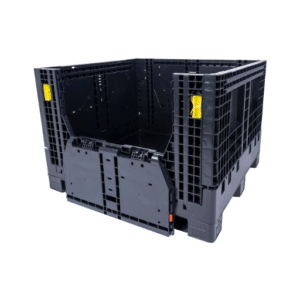
Supply chain management, in today’s hypercompetitive world of businesses, has become increasingly important to ensure the required efficiency. Radio Frequency Identification has served this very purpose and has changed the way companies used to track and manage inventory. On adopting the RFID technology in pallets, a business would attain higher visibility, accuracy, and speed enjoyed by the supply chain operations. This blog would stress how RFID pallets have changed logistics, cut down costs, and bettered productivity. If you are a supply chain manager or just an industry enthusiast, you are in for a treat because you will be learning how RFID technology can change the game and will also see its operational dimensions unfold for your company. So keep locked as we explore the benefits, application, and future potential of this innovative concept.
Putting RFID into Perspective
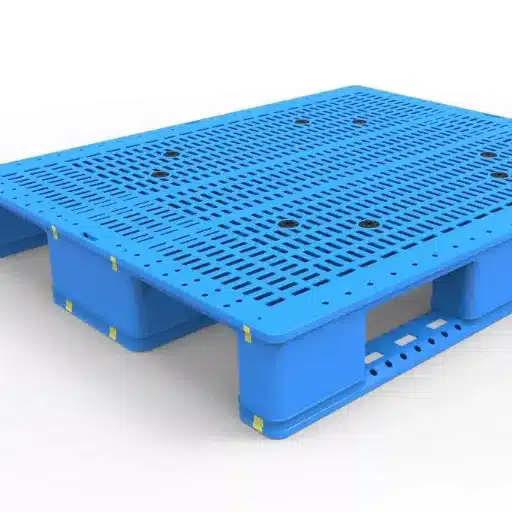
Using the electromagnetic fields to identify and track objects automatically, Radio-frequency Identification (RFID) is a generic term applied to this technology. This information is pertinent to the item itself or the container, accessible by the reader at some distance and without a direct line of sight. The components of an RFID are the tag; the reader; and a software platform that processes the data received. These technologies have wide applications in supply chain management where, among other things, they increase inventory accuracy; reduce labor costs; and improve tracking efficiency.
What does RFID mean?
Radio Frequency Identification, or RFID, is a technology that emits electromagnetic fields to locate and track tags attached to objects. The tags store data that may be transmitted wirelessly to the RFID reader without any direct line of sight. Rugged and speedy, RFID systems are put to work in inventory management, asset tracking, and occasions needing accuracy and automation.
How RFID Works in Supply Chains
The RFID works by streamlining supply chains and the tracking and management of goods through their lifecycle. RFID tags are attached to items, pallets, or containers; each tag contains unique data about the product, origin, or destination. RFID readers are installed at several points along the way; for instance, in warehouses or distribution centers, and will automatically read the tags without their being in direct contact with the reader or in the line of sight. Thus, this feature ensures real-time visibility to inventory, minimizing human errors, and maximizing efficiency. Through automatic data acquisition and smooth tracking, the RFID speeds up operations and decisions within supply chain processes.
Types of RFID Tags
Various types of RFID tags are described according to the power source: passive, active, and semi-active.
There are advantages and limitations to each type of tag, which offers flexibility in the implementation of RFID technology in different industries.
RFID Pallet Specifications
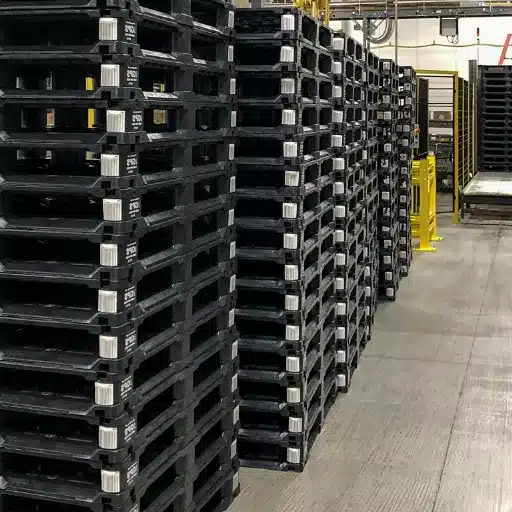
RFID pallets are mainly designed for streamlining supply chain and inventory management processes. The key features of these crates are:
- Durability: The crates are made of materials that will support a heavy load and provide all-weather handling.
- Tag Compatibility: These crates take RFID tags (active, passive, or semi-passive) conforming to industry standards for smooth one-to-one interaction with RFID systems.
- Read Range: Depending on the type of RFID tag attached, generally measuring from a few inches to a few feet.
- Environmental Resistance: To withstand temperature, dust, and moisture.
- Standardization: These pallets are standardized based on standard and transport regulation requirements to be used across all operations worldwide.
RFID pallets allow a step toward tracking goods for better efficiency and accuracy throughout the supply chain.
Technical Specifications of RFID Pallets
RFID pallets embody the highest technical specifications for their optimal application in diverse supply chains. They make use of passive or active RFID tags, with the former requiring an external signal to activate and the latter having an internal battery for added range and extended functionality. Frequency bands may include low-frequency (LF), high-frequency (HF), and ultra-high frequency (UHF) ranges, depending upon the application. Based on plastic or composite materials, these RFID pallets are meant for very long use and strong resistance to environmental stressors like temperature extremes, humidity, or physical wear. Being said, standard compliant, including ISO 18000-series standards, allow these pallets to be integrated worldwide into various RFID systems. These powers give inventory efficiency, tracking in real time, and accuracy in logistics.
Some built-in features of the RFID system:
There are so many built-in RFID features that positively influence and streamline logistics and inventories. Embedded RFID tags hold critical details of the pallet and contents, allowing for tracking through the supply chain process. The tags communicate wirelessly to provide real-time updates and the chances of errors are less. Such RFID-enabled pallets also facilitate automated scanning, thus dispensing with the need for manual operations, ultimately enabling higher efficiency with accuracy. These being compliant with universal RFID standards make their integration into existing systems easy, thus making them a reliable solution of modern logistics.
UHF and MHz Frequencies in RFID
UHF (Ultra-High Frequency) and MHz frequencies are the two central frequencies in RFID technology building up to serve different uses as required by their uniqueness. UHF thus operates between 300 MHz and 3 GHz and finds its prime applications in logistics and supply chains for its ability to send data over long distances at higher speeds-especially in inventory tracking and pallet monitoring. Lower MHz frequencies like LF and HF, generally between 30 kHz and 13.56 MHz, alternatively provide short read ranges with higher penetration power through liquids and metals. They are best suitable for access control or animal tracking. Consideration of environment, range, and materials involved in a particular system will help decide the frequency to be chosen, which makes UHF and MHz complementary to one another in RFID solutions.
Pallet Tracking with RFID

Pallet tracking by way of RFID technology is indicative of an imposition of greater accuracy, efficiency, and visibility into a supply chain. RFID tags attached to the pallets adorn them with a real-time tracking capability that prevents the very chances of misplaced or lost goods. This is contrasted with systems that need manual scanning, thus enhancing speed and efficiency in tasks, such as taking inventory or dispatching orders. Also, RFID-based pallet tracking systems provide invaluable data insights useful toward improving logistics and curbing costs. By streamlining operations, RFID pallet tracking helps in creating a much reliable and transparent supply chain.
Overview of RFID Pallet Tracking
There are many advantages that RFID pallet tracking can offer to supply chain management. The biggest plus is that RFID allows goods to be tracked in real-time, thus eliminating delays and errors. This also reduces the necessity for various procedures to be carried out manually, thus saving time as well as labor costs. Another advantage is that RFID systems help in increasing inventory accuracy, while data from these systems can be utilized for fine-tuning logistics. Enhanced transparency and reliability due to RFID pallet tracking will hence allow for better decision-making and further simplify the operations.
Benefits of RFID Pallet Tracking
Real-Time Tracking
Eliminates delays and errors with instant goods tracking
Cost Reduction
Saves time and labor costs by reducing manual procedures
Enhanced Accuracy
Increases inventory accuracy and optimizes logistics
Setting Up RFID Tracking Systems
The implementation of RFID systems must be carefully designed and successfully executed for optimal results. Businesses must, first of all, analyze their individual needs and ascertain whether the RFID system can solve some of their pressing challenges in supply chain operations.
- Assessment: Analyze individual needs and identify pressing supply chain challenges
- Selection: Choose appropriate RFID hardware and software (tags, readers, system integration tools)
- Installation: Properly install and configure the technology
- Training: Provide staff training for smooth transition
- Integration: Integrate RFID systems with existing logistics and management systems
- Optimization: Ongoing assessment and troubleshooting for system fine-tuning
Benefits of RFID in Supply Chains

Here are the key benefits offered by RFID technology in supply chains:
📊 Inventory Keeping Up
Real-time inventory monitoring with fewer errors and greater precision
⚡ Efficiency
Automated scanning speeds processes and streamlines operations
👁️ Visibility
End-to-end supply chain visibility for better decision-making
🔒 Loss Prevention
Track disappearances and reduce theft of goods
💰 Cost Reduction
Operational efficiency leads to reduced supply chain costs
All these advantages come together to enhance the supply chain’s overall performance and competitiveness.
Enhancing Efficiency with RFID
It obviously increases the efficiency levels at various stages of the supply chain. It tracks inventory in real time, maintaining stock levels with accuracy, thus preventing overstocking or stockouts. The operations are streamlined through RFID because it automates certain processes-in-grade unreasonable for manual errors-they mandatory time for scanning and capturing research. Through detailed information on goods movement, installation management decision, and forecasting are enhanced. Losses from theft or the misplacement of goods are decreased, therefore giving cost effectiveness and further making the supply chain competitive with RFID.
Cost Saving Potentials with RFID Technology
RFID tech generates cost savings as manual labor is minimized with errors, inventory management is improved, and theft or misplacement of goods is reduced. These automated processes keep operational costs down while enhancing efficiency with time and resources as savings. Also, better inventory visibility works against overstocking or stockouts, thus minimizing carrying costs and improving supply chain performance. In essence, RFID allows for better decision-making, workflow optimization, and profit generation.
RFID for Inventory Management Improvement
RFID technology is a major boost to inventory management in that it provides for the real-time tracking of items and, therefore, less manual work and more accuracy. With the help of RFID, businesses can take inventory quickly and ensure that nothing gets away from them. Theft losses are minimized due to timely inventory updates. Since workflows are automated with data captured, it reduces operational costs and decision-making time. RFID also prevents overstocking or stockouts by rendering accurate inventory figures, thus improving supply chain efficiency and reducing carrying costs. By utilizing RFID, organizations can increase the efficacy of their inventory operations and improve their bottom line.
Reference Sources
- The Impact of RFID Pallet Tracking: Optimizing Supply Chain Efficiency
This article explores the impact of RFID pallet tracking on supply chain efficiency, highlighting its benefits, applications, and future potential. - From Pallet to POS: How Item-Level RFID Builds a Smarter, Safer Supply Chain
It discusses how item-level RFID transforms static inventory into dynamic data, enhancing supply chain operations and loss prevention. - Enhancing Retail Store Inventory Management through RFID Technology
This source explains how RFID technology enables real-time inventory tracking, improving inventory management and reducing shrinkage.
Frequently Asked Questions (FAQs)
Ready to Transform Your Supply Chain?
RFID pallet technology offers unprecedented visibility, accuracy, and efficiency in supply chain management. By implementing RFID solutions, businesses can reduce costs, eliminate errors, and gain real-time insights that drive competitive advantage in today’s demanding marketplace.