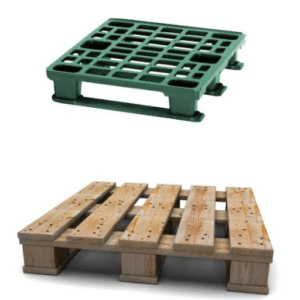
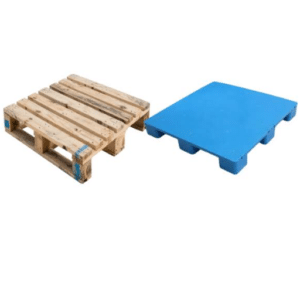
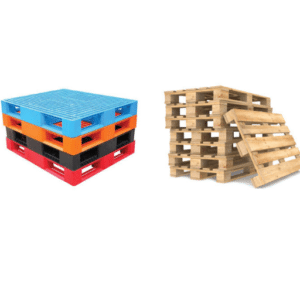
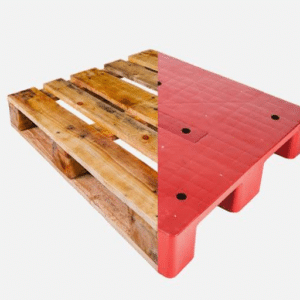
Yes, plastic pallets are excellent for export. They are exempt from ISPM-15 phytosanitary rules, resist moisture and pests, and come in standard ISO sizes that fit major destination markets. For shippers moving goods across borders, plastic pallets can reduce customs delays, avoid fumigation costs, and lower total landed cost over repeated trips.
Last autumn, a logistics manager in Ningbo watched a $40,000 electronics shipment sit at the Port of Rotterdam for four days. The problem was not the cargo. It was the wood pallets. The IPPC stamp on one pallet was faded, so customs flagged the load for re-inspection. The demurrage bill alone wiped out the profit margin on that shipment.
Stories like this are why more exporters are asking whether plastic pallets for export make sense. The short answer is yes. The longer answer depends on your destination, cargo, frequency, and compliance needs.
In this guide, you’ll learn how ISPM-15 rules affect wood and plastic differently. You’ll also see which pallet sizes match each region, what features matter most, and how to calculate the true cost of your export pallet choice.
At Shandong Lile, we’ve manufactured plastic pallets for more than 14 years and shipped them to over 108 countries. We’ve seen which designs hold up in tropical ports, which sizes cause problems in European warehouses, and where exporters save the most money. This article shares that practical knowledge.
Key Takeaways
- Plastic pallets are exempt from ISPM-15, so they need no heat treatment, fumigation, or IPPC stamp for international shipping.
- The most common export sizes are 1200 × 1000 mm, 1200 × 800 mm for Europe, 1219 × 1016 mm for North America, and 1100 × 1100 mm for Asia.
- HDPE and PP pallets with ISO 8611 load ratings are best for food, pharma, automotive, and electronics exports.
- Plastic pallets usually cost more upfront than wood, but frequent exporters often break even within 18 to 30 months.
- A simple exporter checklist covering material declaration, size confirmation, and load testing prevents customs delays.
Are Plastic Pallets Good for Export?

Plastic pallets are a strong choice for export shipping. They are durable, moisture resistant, dimensionally stable, and accepted by customs authorities worldwide. Because they aren’t made from solid wood, they fall outside ISPM-15 regulations. That single fact removes a major source of customs delays and hidden costs.
For companies shipping food, pharmaceuticals, electronics, or automotive parts, plastic pallets offer another advantage. They are non-porous and easy to clean. Mold, bacteria, and pests can’t penetrate the surface the way they can with wood. That matters when a buyer’s receiving standard or a country’s biosecurity rule requires clean, consistent packaging.
There are still cases where wood makes sense. If you ship low-value goods one way and never see the pallet again, a cheap wood pallet may be the economical choice. But for repeated export routes, temperature-sensitive cargo, or destinations with strict entry rules, plastic pallets for export usually win on total cost of ownership.
ISPM-15 Explained: Why Plastic Pallets Bypass Wood-Pallet Hurdles
ISPM-15 stands for International Standards for Phytosanitary Measures No. 15. It is a rule created by the International Plant Protection Convention to stop timber-borne pests from crossing borders in solid wood packaging. The rule applies to pallets, crates, dunnage, and any solid wood component thicker than 6 mm.
What ISPM-15 Requires for Wood Pallets
Wood pallets used in international trade must be heat treated or fumigated. Heat treatment means raising the wood core to 56°C for at least 30 minutes. After treatment, the pallet must carry the official IPPC mark, often called the wheat stamp, on at least two opposite sides. The mark includes the country code, producer code, and treatment code.
If a wood pallet arrives without a valid mark, is damaged, or shows signs of pests, customs can quarantine, re-treat, return, or destroy it. The exporter usually pays those costs. Treatment certificates, re-inspection fees, and demurrage can quickly exceed the original pallet price.
Why Plastic Pallets Are Exempt
Plastic pallets are not made from wood. They don’t host wood-boring insects or plant pathogens. Because of that, ISPM-15 doesn’t apply to them. A plastic pallet can cross borders without heat treatment, fumigation, IPPC stamps, or phytosanitary certificates.
This exemption doesn’t mean plastic pallets are unregulated. They still need to meet destination-market standards for load capacity, dimensions, food contact, and safety. But the compliance burden is much smaller than it is for solid wood.
Common Customs Risks with Non-Compliant Wood Pallets
Even compliant wood pallets create risk. Marks fade. Nails loosen. Repairs with untreated wood void compliance. A single cracked board can cause an entire shipment to fail inspection. Plastic pallets avoid these problems because they’re molded as one piece, have no nails, and don’t warp or split.
Plastic Pallets vs. Wood Pallets for Export
Choosing between plastic and wood for export isn’t just about the purchase price. It’s about compliance, durability, freight cost, and risk. Below is a side-by-side comparison.
| Factor | Wood Pallets | Plastic Pallets |
|---|---|---|
| ISPM-15 status | Required for solid wood | Exempt |
| Treatment needed | Heat treatment or fumigation + IPPC mark | None |
| Upfront cost | Lower | Higher |
| Typical lifespan | 10–20 trips | 50–100+ trips |
| Moisture resistance | Absorbs water, warps | Waterproof, stable |
| Pest and mold risk | Can harbor pests and mold | Non-porous, resistant |
| Weight | Heavier and variable | Lighter and consistent |
| Customs delay risk | Higher | Very low |
| Best for | One-way, low-value shipments | Repeated export, food, pharma, electronics |
The global plastic pallets market was valued at roughly USD 8.5 billion in 2025 and is projected to grow at a 5.3% CAGR through 2033, according to Grand View Research. Much of that growth comes from exporters switching away from wood for the reasons above.
Standard Export Pallet Sizes by Region

Using the wrong pallet size can waste container space and cause rejection at the destination warehouse. The International Organization for Standardization lists six common pallet footprints in ISO 6780. Here is how they map to export destinations.
Europe: 1200 × 800 mm and 1200 × 1000 mm
The 1200 × 800 mm Euro pallet is the most common size in the European Union. Many automated warehouses and retail distribution centers in Europe are designed around this footprint. The 1200 × 1000 mm size is also widely accepted, especially in industrial and sea-freight applications.
North America: 1219 × 1016 mm (48″ × 40″)
The GMA pallet, 48 inches by 40 inches, dominates the United States and Canada. If your buyer is a major retailer or distributor in North America, this is usually the required size. Deviating from it can create unloading problems and extra handling fees.
Asia: 1100 × 1100 mm and 1200 × 1000 mm
Japan, Korea, and parts of China commonly use the 1100 × 1100 mm pallet. The 1200 × 1000 mm size is also popular across Asia for sea freight and general industry. Always confirm the exact size with your buyer or logistics partner before production.
Australia: 1165 × 1165 mm
Australian warehouses and transport systems often use the 1165 × 1165 mm square pallet. This size is unique to the region and is worth specifying for regular export lanes to Australia.
How to Choose the Right Size for Your Container and Customer
The right size is the one your customer can receive and your container can hold efficiently. A mismatch of just a few centimeters can reduce container utilization by 3% to 15%. Before ordering, ask your buyer for their receiving standard and confirm the pallet height and load rating.
Key Features to Look for in Export Plastic Pallets
Not all plastic pallets are built for export. The right model depends on your cargo, shipping mode, and destination requirements.
Material: HDPE vs. PP and Virgin vs. Recycled Resin
High-density polyethylene (HDPE) and polypropylene (PP) are the two main materials. HDPE handles impacts and cold temperatures well. PP offers higher stiffness and heat resistance.
For food and pharmaceutical exports, virgin resin is usually required. Recycled content can be used for general industrial exports and supports sustainability goals.
Design: Nestable, Stackable, Rackable, One-Way
Nestable pallets save space on return trips or in empty transport. Stackable pallets allow stable unit loads. Rackable pallets support storage in pallet racking. One-way export pallets are lightweight and low cost, ideal for shipments where the pallet won’t return.
Load Capacity: Static, Dynamic, and Racking Loads
Static load is the weight a pallet holds on a flat floor. Dynamic load is the weight it carries while moving on a forklift or conveyor. Racking load is the weight it supports in a rack system. Look for ISO 8611 test ratings to verify these numbers.
Hygiene and Certifications: FDA, EU 1935/2004, cGMP
For food exports, FDA 21 CFR 177.1520 and EU Regulation 1935/2004 matter. For pharmaceuticals, cGMP and cleanroom-compatible designs are important. Always request a Declaration of Conformity from your supplier.
Steel Reinforcement for Heavy-Duty Export Loads
For loads above 1,000 kg or rack storage, steel-reinforced plastic pallets add strength without adding much weight. They are common in automotive, machinery, and bulk chemical exports.
Ready to spec the right export pallet for your lane? Contact our team for a free quote and sizing recommendation.
Industries That Rely on Plastic Pallets for Export
Different industries choose plastic pallets for export for different reasons. Here is how the decision plays out across major sectors.
Food and Beverage
Food exporters need pallets that are easy to clean and meet food-contact regulations. Plastic pallets don’t absorb juices, oils, or cleaning chemicals. They also resist mold in humid shipping conditions. A seafood exporter in Qingdao switched to HDPE pallets and reduced contamination-related rejections by 60% in the first year.
Pharmaceuticals and Medical Devices
Pharma exports demand hygiene, dimensional consistency, and temperature resistance. Plastic pallets used in pharmaceutical logistics often operate from -25°C to +70°C. Closed-deck designs with smooth surfaces prevent particle accumulation and support cGMP compliance.
Agriculture and Cold-Chain Produce
Fresh produce exports need ventilation and drainage. Ventilated plastic pallets allow airflow around stacked produce and prevent water pooling. They also hold up well in refrigerated containers where wood can absorb moisture and swell.
Electronics and Automotive Parts
Electronics and automotive exporters value weight consistency and cleanliness. Plastic pallets reduce the risk of metal shavings, splinters, or dust damaging sensitive components. Their stable dimensions also work better with automated guided vehicles and robotic handling systems.
E-Commerce and Retail Fulfillment
Cross-border e-commerce often involves repeated handling, sorting, and last-mile delivery. Lightweight plastic pallets reduce freight cost and improve handling efficiency. Nestable designs help recover space on return legs.
Cost Analysis: Are Plastic Export Pallets Worth the Investment?

The upfront cost of a plastic pallet is higher than a wood pallet. A basic wood export pallet might cost 8to8to20. A comparable plastic model might cost 25to25to80 or more depending on size, material, and reinforcement. The real question is total cost of ownership.
Upfront Purchase Price vs. Wood
Wood wins on purchase price alone. That is why about 90% to 95% of shippers still use wood for at least some lanes. But purchase price is only one line item in the full export cost equation.
Hidden Export Costs: Fumigation, Heat Treatment, Certificates, Delays
Wood pallets add recurring costs that plastic pallets avoid. Heat treatment or fumigation fees range from 1to1to5 per pallet. Certificates and stamps add administrative work. A single customs delay can cost hundreds or thousands of dollars in demurrage and missed delivery windows.
Total Cost of Ownership for Frequent Exporters
For exporters running closed loops or regular lanes, plastic pallets often break even within 18 to 30 months. The savings come from longer lifespan, reduced treatment costs, fewer replacements, and faster customs clearance. Some studies estimate plastic pooling systems save up to $4 per pallet load over wood alternatives.
Break-Even Timeline
A company shipping 500 pallets per month on a repeated route can often justify the switch to plastic within two years. For one-way shipments where the pallet is never recovered, a low-cost wood or disposable plastic pallet may still be the better choice.
Exporter’s Checklist: Documentation, Labeling & Best Practices
Use this checklist before your next international shipment to avoid pallet-related delays.
- Confirm the required pallet size with your buyer or letter of credit.
- Verify load capacity needs: static, dynamic, and racking.
- Choose the right material: HDPE for impact and cold, PP for heat and stiffness.
- Request a Declaration of Conformity for food or pharma exports.
- Label pallet material on the packing list or commercial invoice.
- Inspect pallets for cracks, deformation, or contamination before loading.
- Test a sample pallet under real shipping conditions before placing a large order.
- Ask your supplier about ISO 8611 test reports and warranty terms.
Need help with export pallet sizing or compliance? Explore our plastic pallet solutions or request a custom quote from Shandong Lile.
Frequently Asked Questions
Do plastic pallets need ISPM-15 treatment?
No. Plastic pallets are exempt from ISPM-15 because they don’t contain solid wood. No heat treatment, fumigation, or IPPC stamp is required.
What is the best pallet size for international shipping?
The best size depends on the destination. Europe commonly uses 1200 × 800 mm, North America uses 1219 × 1016 mm, Asia uses 1100 × 1100 mm or 1200 × 1000 mm, and Australia uses 1165 × 1165 mm.
Are plastic pallets allowed in the EU, USA, and Australia?
Yes. Plastic pallets are allowed in all major markets. They aren’t subject to ISPM-15, though food and pharma exports must meet local material-contact regulations.
Can plastic pallets be used for food and pharmaceutical exports?
Yes, when made from food-grade or pharma-grade materials such as virgin HDPE or PP and supported by proper documentation like FDA or EU Declaration of Conformity.
How long do plastic export pallets last?
Quality plastic pallets typically last 50 to 100 trips or 7 to 10 years, depending on handling conditions and load severity.
Are plastic pallets more expensive than wood for export?
They usually cost more upfront. However, frequent exporters often recover the difference through longer lifespan, avoided treatment fees, and reduced customs delays.
Conclusion
Plastic pallets for export solve problems that wood pallets create. They bypass ISPM-15 requirements, resist moisture and pests, maintain consistent dimensions, and reduce customs risk. For exporters in food, pharmaceuticals, electronics, automotive, and retail, the total cost of ownership often favors plastic over the long run.
The decision still depends on your specific lane, cargo, and frequency. A one-way shipment of low-value goods may not justify the upfront investment. But for regular export routes and quality-sensitive cargo, plastic pallets are a reliable choice.
At Shandong Lile, we manufacture export-ready plastic pallets in standard ISO sizes and custom dimensions. With 16 subsidiaries, 18 large-scale production machines, and delivery to 108 countries, we help exporters choose pallets that clear customs, protect cargo, and control cost.
Ready to upgrade your export pallet program? Contact us today for a free quote and expert sizing guidance.