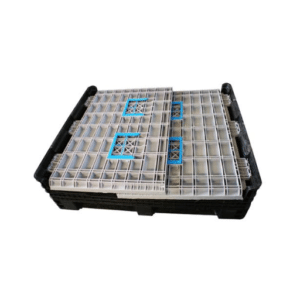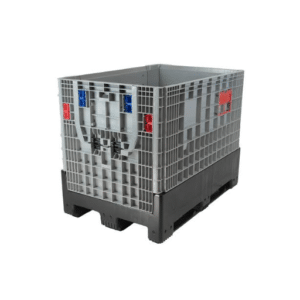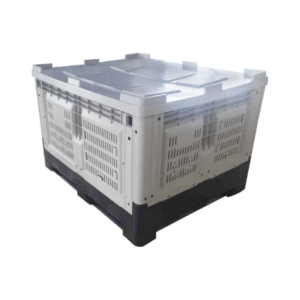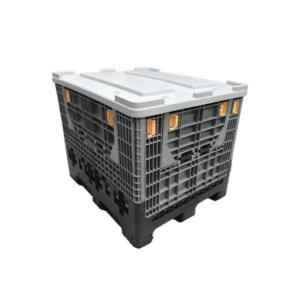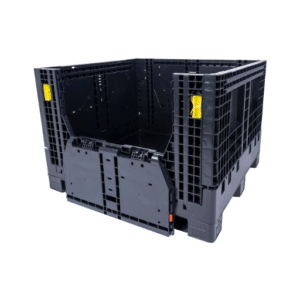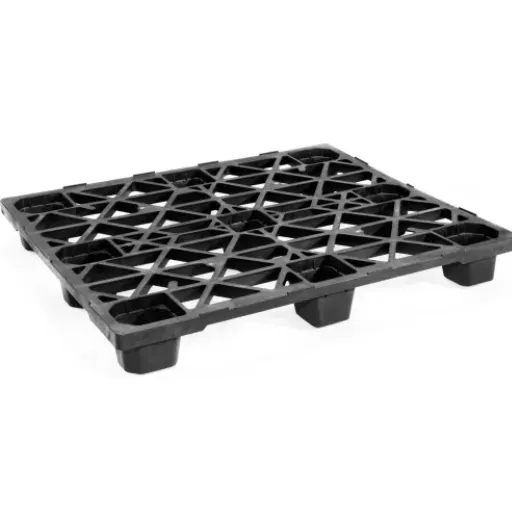

Reusable plastic pallets are durable, returnable platforms designed for multiple trips through a closed-loop supply chain, typically lasting 10–15 years and 250–500+ trips before recycling. They are the foundation of modern returnable packaging systems. Unlike single-use wood pallets, they are engineered from HDPE or PP resin, resist moisture and pests, require no ISPM-15 fumigation for export, and integrate cleanly with automated warehouse systems.
Most companies still buy pallets as a disposable commodity. The result? Hidden costs stack up fast: replacement orders, fumigation delays, splinter-related product damage, and pallets that warp or fail in automated racking. The companies that treat pallets as a returnable asset cut those costs and future-proof their operations at the same time.
In this guide, you’ll learn how reusable plastic pallets work, how they compare to wood and single-use alternatives, what load ratings and standards matter, how to calculate total cost of ownership, and which industries gain the most from switching. We will also cover the EU Packaging and Packaging Waste Regulation (PPWR) timeline, because compliance is no longer a distant concern, it is a 2026 procurement reality.
Key Takeaways
- Reusable plastic pallets typically last 10–15 years and 250–500+ trips, far outpacing wood alternatives.
- They eliminate ISPM-15 fumigation for export, reduce transport emissions through lighter weight, and integrate with AS/RS and conveyor systems.
- The EU PPWR enters full force in August 2026, making reusable transport packaging a compliance priority, not just a cost decision.
- Industries with the strongest ROI include food and beverage, pharmaceuticals, automotive, e-commerce, and export-heavy operations.
- Shandong Lile engineers reusable pallets for load precision, automation compatibility, and closed-loop customization, from HDPE and PP material selection to RFID-ready designs.
What Are Reusable and Returnable Plastic Pallets?
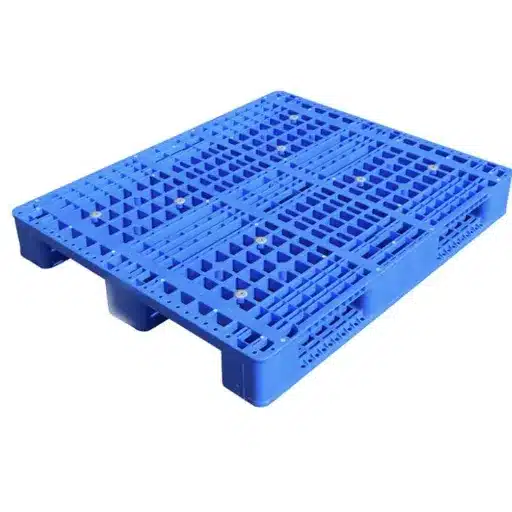
A reusable plastic pallet is a load-bearing platform made from high-density polyethylene (HDPE), polypropylene (PP), or recycled blends of these resins. It is designed to be used, returned, cleaned if necessary, and reused repeatedly rather than discarded after one or a few trips. These pallets are produced through injection molding, thermoforming, or structural foam processes, giving them consistent dimensions and predictable mechanical properties.
How Returnable Pallet Systems Work
In a closed-loop system, a pallet travels from a supplier or distribution center to a receiver and then returns empty for the next cycle. The loop can be internal, moving goods between buildings on the same campus, or external, spanning suppliers, manufacturers, retailers, and third-party logistics providers. Because the pallet remains in the system, the owner recovers its value over hundreds of trips rather than absorbing the full cost per trip of a disposable platform.
The economics depend on trip rate and loop control. A pallet that makes 50 trips per year in a tightly managed internal loop can pay back its higher upfront cost within 12–24 months. After that, each additional trip drives the cost-per-trip lower while the durability and dimensional stability protect product quality.
Key Design Features
Reusable plastic pallets share several design elements that distinguish them from disposable options:
- Closed or open deck: Closed decks protect small or bagged products and simplify cleaning. Open decks reduce weight and cost while allowing drainage.
- Two-way or four-way entry: Four-way entry lets forklifts and pallet jacks enter from any side, improving handling speed in tight warehouses.
- Nestable or stackable geometry: Nestable designs save space on return trips. Stackable designs support stable unit loads when loaded.
- Reinforcement options: Steel reinforcements, perimeter lips, anti-slip surfaces, and RFID or barcode pockets can be molded in for automation and traceability.
Mini-story: When Elena took over logistics at a mid-sized dairy processor in 2024, her team was losing roughly 8% of wood pallets per month to moisture damage and splinter failures. She piloted a closed-deck HDPE pallet in a 12-mile internal loop between the plant and a cold-storage warehouse. Within 14 months, pallet replacement spend dropped by 64%, and the sanitation team reported zero splinter-related contamination incidents.
Reusable vs. Returnable vs. Rental: Terminology Clarified
The terms overlap but are not identical. Reusable simply means the pallet is designed for multiple uses. Returnable implies the pallet is part of a loop where it comes back to the originator. Rental or pooling describes a third-party model, companies like CHEP, iGPS, or Tosca own the assets and charge per trip or per month. This guide focuses on manufacturer-direct reusable and returnable pallets, where the buyer owns the asset and controls the loop.
Reusable Plastic Pallets vs. Wood: A Data-Driven Comparison
The comparison is not simply plastic against wood. It is a comparison between asset ownership with a long lifecycle and a disposable model with recurring purchase, handling, and disposal costs.
Durability and Lifespan
A quality reusable plastic pallet typically lasts 10–15 years and can complete 250–500+ trips. A wood pallet in comparable service might last 3–5 years and 30–50 trips before repair or replacement becomes uneconomical. In high-turnover environments, plastic’s lifespan advantage compounds quickly.
Plastic also resists the failure modes that shorten wood pallet life: moisture absorption, fungal growth, nail loosening, splintering, and pest infestation. That stability matters in humid climates, cold storage, and outdoor staging areas.
Hygiene and Compliance
Plastic pallets are non-porous and easy to wash down, making them the default choice for food, beverage, and pharmaceutical operations. They do not harbor bacteria in the same way wood can, and they withstand high-pressure cleaning and common sanitizers without degrading.
For export, plastic pallets carry a significant advantage: they are exempt from ISPM-15, the international standard that requires heat treatment or methyl bromide fumigation of wood packaging to prevent pest spread. That exemption eliminates treatment costs, certificate administration, and customs delays.
Total Cost of Ownership
The upfront cost of a reusable plastic pallet is higher, often 3–5x the price of a new wood pallet. But the total cost of ownership flips over time. Factors that shift the equation include:
- Lower replacement and repair frequency
- Elimination of ISPM-15 treatment for exports
- Reduced product damage and contamination risk
- Lower transport emissions from lighter weight
- Reduced waste disposal fees
- Improved automation uptime from dimensional consistency
Sustainability Trade-Offs
The environmental comparison is nuanced. Manufacturing virgin plastic resin is energy-intensive, so a plastic pallet must complete enough trips to offset its higher production footprint. According to a life cycle assessment comparison by the Sustainable Pallet Association, plastic pallets generally outperform wood in high-turnover, closed-loop systems. An iGPS/ERM study found that plastic pallets showed 28% less global warming impact, 40% less ecotoxicity, and 38% less ozone depletion than pooled multi-use wood pallets.
An Iowa State University LCA emphasizes that transportation distance and trip rate strongly influence outcomes. In other words, sustainability is a system design question, not just a material choice.
| Factor | Reusable Plastic Pallets | Wood Pallets | Single-Use Alternatives |
|---|---|---|---|
| Typical lifespan | 10–15 years / 250–500+ trips | 3–5 years / 30–50 trips | 1 trip |
| Upfront cost | Higher | Lower | Lowest |
| Total cost of ownership | Lower in closed loops | Higher due to replacement | Highest per trip |
| ISPM-15 for export | Exempt | Required | Varies |
| Hygiene | Excellent, washable | Porous, can harbor pests | Varies |
| Automation compatibility | High, consistent dimensions | Moderate, warping common | Low |
| Recyclability | 100% recyclable HDPE/PP | Often downcycled or landfilled | Usually landfill |
Types of Reusable Plastic Pallets
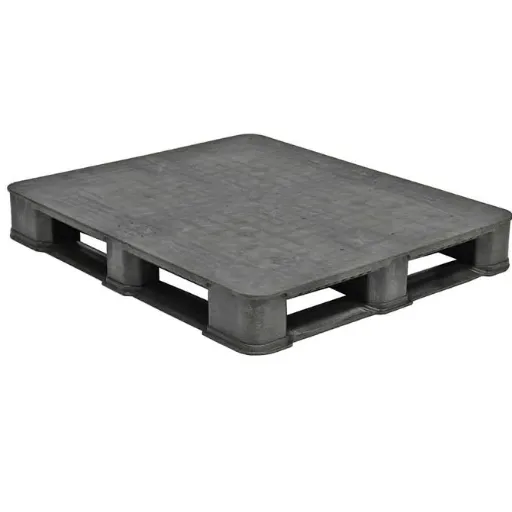
Choosing the right type depends on load, handling method, storage environment, and whether the pallet will leave the controlled loop.
Nestable Pallets
Nestable pallets have legs or a conical base that lets empty pallets stack inside one another. They reduce return freight volume by 60% or more compared to stackable designs, which lowers empty-mile cost in external loops. They are popular in retail, e-commerce, and any operation where pallets travel long distances empty.
The trade-off is usually lower racking load capacity. Nestable designs suit floor-stacking, light racking, and applications where the return trip dominates cost.
Rackable Pallets
Rackable pallets are built to sit safely in warehouse racking systems without deformation or collapse. They include bottom runners or a full perimeter base that transfers load to rack beams. Dynamic load ratings for rackable pallets often range from 1,000 kg to 2,000 kg, with rack loads commonly between 1,000 kg and 1,500 kg.
For automotive, pharmaceutical, and heavy industrial applications, rackable pallets are usually the right starting point.
Stackable Pallets
Stackable pallets feature a flat top deck and a base geometry that nests securely with the pallet below when loaded. They maximize cube utilization in warehouses and trucks but do not nest as compactly as nestable designs when empty. They work well in internal loops where empty return distance is short.
Export Pallets
Export plastic pallets are lightweight designs optimized for one-way or limited-return international shipments. They still qualify for ISPM-15 exemption, which removes fumigation requirements, and their lighter weight reduces air and ocean freight cost. While not as heavy-duty as industrial reusables, they are a practical bridge for companies transitioning away from treated wood.
Steel-Reinforced and Heavy-Duty Designs
For extreme loads or automated systems requiring minimal deflection, steel-reinforced plastic pallets add metal bars or tubes to the deck or runners. These designs can achieve dynamic loads exceeding 2,000 kg and rack loads above 1,500 kg while maintaining the hygiene and dimensional benefits of plastic.
Load Ratings, Durability, and Lifespan
Load ratings are not interchangeable. A pallet rated for a high static load may fail in racking if the rating context is ignored.
Static, Dynamic, and Rack Load Explained
- Static load is the weight a pallet can support when stationary on a flat floor, typically 4,000–6,000 kg for industrial plastic pallets.
- Dynamic load is the weight it can carry while being moved by forklift, usually 1,000–2,000 kg.
- Rack load is the maximum load in unsupported racking, often 1,000–1,500 kg.
Always match the rating to the actual handling condition. A pallet chosen only for static load will underperform in racking or conveyor systems.
HDPE vs. PP Material Science
High-density polyethylene (HDPE) is the most common material for reusable pallets. It offers excellent impact resistance, low-temperature performance, and chemical resistance. It is also widely recyclable and works well with recycled-content blends.
Polypropylene (PP) is lighter and stiffer than HDPE, with better performance in elevated temperatures. It is often used in applications where weight reduction matters or where the pallet will see repeated steam cleaning.
Some manufacturers blend virgin and recycled resins to balance cost, performance, and sustainability. The key is batch consistency: inconsistent recycled content can cause warping, brittle failure, or unpredictable load ratings.
Expected Lifespan and Trip Counts
In normal service, a quality HDPE reusable pallet will complete 250–500 trips. Heavy-duty designs with steel reinforcement can exceed that range. Lifespan is shortened by impact damage, overloading, UV exposure, and improper handling, but extended by routine inspection, cleaning, and repair programs.
Testing Standards
Credible manufacturers test to recognized standards such as ISO 8611 for general pallet testing, ASTM D1185 in the United States, and EN 13698-1 for pallet boxes in Europe. Ask for test reports that specify the exact model, load type, and safety factor. A generic material certificate is not a substitute for pallet-level performance data.
CTA: Need load-rated pallets for your warehouse or automation line? Explore our plastic pallet range and request engineering specs tailored to your application.
ROI and Total Cost of Ownership
The business case for reusable plastic pallets rests on total cost of ownership, not purchase price. A TCO model should include every cost over the expected lifecycle.
Break-Even Analysis
Break-even occurs when cumulative savings equal the higher initial investment. Variables that accelerate break-even include:
- High trip frequency
- Long internal loops where loss is low
- Export routes that eliminate ISPM-15 treatment
- Automation where dimensional stability reduces downtime
- Operations with high product damage or contamination risk from wood pallets
A typical closed-loop operation with 50+ trips per year reaches break-even in 12–24 months. After break-even, each additional trip widens the cost advantage.
Cost-Per-Trip Calculation
Cost-per-trip is the simplest way to compare reusable and disposable options:Cost per trip = (Purchase price + maintenance + cleaning + storage + loss) / number of trips
Hidden Savings
Beyond the obvious replacement savings, reusable plastic pallets reduce:
- Fumigation and heat-treatment fees for exports
- Disposal and landfill costs
- Product damage from splinters, nails, or collapsed loads
- Downtime in automated systems caused by warped or inconsistent pallets
- Sanitation labor and chemical use in food and pharma operations
When Reusable Pallets Do Not Make Sense
Reusable pallets are not the right choice for every application. They make less sense when:
- Trip volume is very low
- Pallets leave the controlled loop and are unlikely to return
- Loads exceed the practical range of plastic designs
- Customers refuse to participate in returns
- Capital constraints prevent the upfront investment
In those cases, a hybrid approach, using reusable pallets internally and lightweight export designs for one-way outbound shipments, can capture most of the benefit without overextending the loop.
Mini-story: A Tier 2 automotive supplier in Michigan ran the numbers in early 2025. Their wood pallets averaged 14 trips before replacement, and they were paying for heat treatment on every export shipment. Switching to a steel-reinforced HDPE pallet for their internal loop and lightweight export pallets for overseas shipments cut their annual pallet spend by 41% in the first full year.
Industries That Benefit Most from Reusable Plastic Pallets
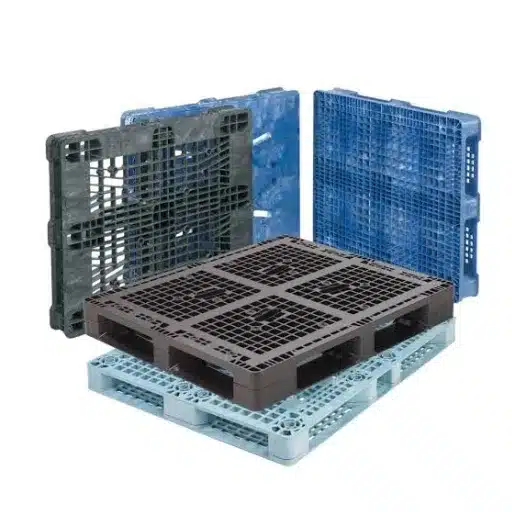
Certain industries have structural reasons to favor reusable plastic pallets over wood or single-use alternatives.
Food and Beverage
Food processors need washable, pest-resistant platforms that comply with FDA, USDA, and HACCP requirements. Closed-deck plastic pallets prevent debris accumulation, withstand high-pressure washdowns, and reduce the risk of contamination. Color-coded pallets can also separate raw and finished goods zones.
Pharmaceuticals
Pharmaceutical operations require GMP-compatible equipment, material traceability, and consistent cleanliness. Plastic pallets support these needs with smooth surfaces, validated cleaning protocols, and options for RFID tracking. They also perform well in cold chain environments down to -30°C or lower.
Automotive
Automotive manufacturers move heavy components through just-in-time lines and automated storage systems. Rackable, steel-reinforced plastic pallets provide the load capacity and dimensional precision these systems demand while reducing line-side contamination from wood dust and splinters.
E-Commerce and Retail
High turnover, reverse logistics, and limited warehouse space make nestable plastic pallets attractive for e-commerce and retail distribution. Their lighter weight reduces parcel and less-than-truckload shipping costs, and their nestability lowers the cost of returning empties.
Export and Global Shipping
Any company shipping internationally benefits from ISPM-15 exemption. Plastic pallets move through customs without heat-treatment certificates or fumigation delays. Their lighter weight also reduces freight cost, especially in air cargo where every kilogram matters.
CTA: Serving food, pharma, automotive, or export markets? See how our returnable packaging systems support compliance and automation.
Sustainability, Returnable Packaging, and Circular Economy Pallets
Sustainability is no longer a side benefit. It is becoming a regulatory requirement and a procurement criterion.
Recycled Content and Recyclability
Most reusable plastic pallets are made from HDPE or PP, both of which are 100% recyclable. Many manufacturers now offer recycled-content blends, with post-industrial recycled material commonly ranging from 30% to 100%. Post-consumer recycled content is growing as supply chains scale up collection and reprocessing.
The key sustainability consideration is resin purity. Mixed-resin pallets are harder to recycle and may not meet the EU PPWR recyclability grades. Single-resin HDPE or PP construction is preferable for closed-loop programs where end-of-life recycling is part of the plan.
Life Cycle Assessment Context
LCA studies consistently show that the environmental performance of plastic pallets depends on trip rate and loop design. In high-turnover, closed-loop systems, plastic pallets outperform wood on most metrics. In low-turnover or single-trip applications, wood from certified sustainable sources may have the lower impact.
The takeaway is practical: maximize reuse cycles, minimize empty transport, and ensure end-of-life recycling. A well-designed reusable pallet program is a circular-economy program.
EU PPWR and the 2026–2040 Compliance Roadmap
The EU Packaging and Packaging Waste Regulation (PPWR, EU 2025/40) enters full force on August 12, 2026. It sets binding targets that directly affect transport packaging decisions:
| Requirement | Deadline | What It Means for Pallets |
|---|---|---|
| 40% of transport packaging must be reusable | January 1, 2030 | Invest in durable, multi-trip designs now |
| 100% of internal B2B transport packaging must be reusable | January 1, 2030 | Design closed-loop internal logistics |
| 35% post-consumer recycled content in plastic packaging | January 1, 2030 | Demand documented recycled-content options |
| Grade C recyclability minimum (70%) | January 1, 2030 | Choose single-resin HDPE or PP construction |
| 70% reusable target | January 1, 2040 | Build long-term partnerships with take-back programs |
Companies that select reusable plastic pallets today are not just saving money. They are building compliance into their supply chains before the deadlines arrive.
Take-Back and Closed-Loop Programs
A true circular program includes collection, inspection, repair, and recycling. Some manufacturers offer take-back programs that grind retired pallets into resin for new production. This closed-loop recycling keeps material in use and reduces virgin resin demand. For operations that also need returnable bulk containers, sustainable plastic pallet boxes can extend the same circular model to larger loads.
Automation and Warehouse Compatibility
Modern warehouses run on precision. A pallet that is 2 mm out of tolerance can stop a conveyor, jam an automated storage and retrieval system, or cause a robotic arm to miss its pick.
AS/RS and Conveyor Requirements
Automated storage and retrieval systems (AS/RS), conveyors, and automated guided vehicles (AGVs) require pallets with consistent dimensions, flatness, and weight distribution. Plastic pallets maintain these properties far better than wood, which warps, splinters, and varies in weight.
Key automation specifications include:
- Dimensional tolerance, often ±0. 5 mm to ±2. 0 mm depending on the system
- Flatness across the deck surface
- Consistent weight for dynamic balancing
- Four-way entry for omnidirectional handling
- Racking compatibility for high-bay systems
RFID, Barcodes, and Tracking
Reusable pallets are ideal tracking platforms. Molded pockets can hold RFID tags or barcode labels without damage, and the long lifecycle gives the tracking investment time to pay off. Tracking also reduces loss and theft, which are major cost drivers in external loops.
Fire Safety and Racking Compliance
Plastic pallets must meet local fire safety standards, particularly in high-bay racking. Requirements vary by country and insurer. Some facilities require FM Global or equivalent fire-performance certification. Always confirm that the pallet model has the right fire rating for your storage configuration before specifying it for automated racking.
Mini-story: In 2024, a German pharmaceutical distributor upgraded its AS/RS to handle faster throughput. Within the first quarter, wood pallet warpage caused 23 unplanned stops. After switching to dimensionally stable HDPE pallets with embedded RFID tags, unplanned stops dropped to two per quarter, and inventory accuracy improved because every pallet was trackable.
How to Choose the Right Reusable Plastic Pallet
Selection should be systematic. A buyer who chooses on price alone usually pays more over the lifecycle.
Load Requirements
Start with the actual load, not a theoretical maximum. Document the typical unit load weight, the maximum occasional load, and the handling conditions. Then select a pallet with ratings that exceed those requirements by a safety margin. A common rule of thumb is to select a dynamic load rating at least 25% above the heaviest expected load.
Operating Environment
Consider temperature extremes, moisture, chemical exposure, and UV exposure. HDPE performs well in cold storage. PP handles higher temperatures and steam cleaning better. If the pallet will sit outdoors, ask about UV stabilizers.
Return Loop Design
Define who owns the pallet, who returns it, how it travels back, and what happens if it is lost or damaged. Internal loops are easier to control. External loops need tracking, contractual return obligations, and sometimes pooling partners.
Compliance Needs
Map out the relevant standards: FDA or EU 10/2011 for food contact, GMP for pharma, ISO 8611 or ASTM D1185 for load testing, ISPM-15 exemption for export, and PPWR targets for EU operations. Ask suppliers for documentation, not just assurances.
Supplier Vetting Checklist
A reliable reusable pallet supplier should be able to provide:
- Factory verification and production capacity data
- Material certificates and batch traceability
- Load test reports for the specific model
- Quality system certifications such as ISO 9001
- Customization capability for size, color, logos, RFID, or steel reinforcement
- After-sales support, warranty terms, and end-of-life recycling options
For a deeper operational checklist, see our companion guide: How to Choose a Plastic Pallet Manufacturer: Buyer’s Checklist.
CTA: Not sure which pallet fits your loop? Contact our team for a free engineering review and TCO estimate.
Repair, Maintenance, and End-of-Life
A reusable pallet program only works if the assets are maintained. The good news is that plastic pallets are easier to inspect, clean, and repair than wood.
Cleaning and Sanitization Protocols
Plastic pallets can be washed with high-pressure water, steam, or approved sanitizers. Smooth, non-porous surfaces do not trap residue. Develop a cleaning schedule based on the industry standard, food and pharma operations typically clean after every trip, while general industrial loops may clean monthly or quarterly.
Inspection Checklist
Regular inspection should cover:
- Cracks, splits, or deformation in the deck or runners
- Wear on fork entry points
- Damage to anti-slip surfaces or reinforcement inserts
- RFID or barcode tag condition
- Racking compatibility after impact events
Repair vs. Replace Decisions
Small cracks in plastic pallets can often be repaired by welding or hot-nail methods. However, repairs must not compromise load rating or hygiene. A pallet that has lost structural integrity, been overloaded, or suffered impact damage should be retired from critical loads.
Recycling and Take-Back
At end of life, HDPE and PP pallets can be ground and reprocessed into new resin. Some manufacturers offer take-back programs that close the material loop. This is the final step in a circular pallet strategy and supports Scope 3 emissions reporting.
Frequently Asked Questions
Are plastic pallets reusable?
Yes. High-quality plastic pallets are specifically engineered for repeated use. HDPE and PP pallets commonly last 10–15 years and complete 250–500+ trips in closed-loop systems.
How long do reusable plastic pallets last?
Lifespan depends on material, design, load, and handling. Industrial HDPE pallets typically last 10–15 years, while steel-reinforced designs can last even longer in demanding applications.
Are plastic pallets exempt from ISPM-15?
Yes. Because plastic pallets are not made of wood, they are exempt from ISPM-15 heat treatment and fumigation requirements. That makes them ideal for international shipping.
Can plastic pallets be repaired?
Yes, minor damage such as small cracks can often be repaired by welding or specialized plastic repair methods. Pallets with major structural damage should be retired and recycled.
What are returnable pallets?
Returnable pallets are reusable pallets that are designed to cycle back to their origin after each use, typically within a closed-loop supply chain. They can be owned by the shipper, the receiver, or a third-party pooling provider.
Are reusable plastic pallets food-grade?
Many are. Food-grade plastic pallets are made from virgin or approved recycled HDPE or PP and comply with regulations such as FDA 21 CFR in the United States and EU 10/2011 in Europe. Always request compliance documentation.
Can reusable plastic pallets be used in cold storage?
Yes. HDPE performs well at low temperatures, including cold storage and freezer environments. For very low temperatures, confirm impact resistance with the manufacturer.
What is the weight capacity of reusable plastic pallets?
Common dynamic load ratings range from 1,000 kg to 2,000 kg. Static loads often reach 4,000–6,000 kg, and rack loads typically range from 1,000 kg to 1,500 kg. Always verify ratings with the manufacturer.
Conclusion
Reusable plastic pallets and returnable plastic pallets are no longer niche choices. They are a strategic asset for companies that want lower total cost of ownership, cleaner compliance, and supply chains ready for automation and regulation.
The shift is not just about replacing wood with plastic. It is about designing loops that maximize trip counts, maintain dimensional precision, and recover material at end of life. The companies that do this well will cut cost, reduce risk, and stay ahead of regulations like the EU PPWR.
At Shandong Lile, we engineer reusable plastic pallets for exactly that purpose. From HDPE and PP material selection to steel reinforcement, RFID integration, and custom sizing, we build pallets that perform across hundreds of trips and dozens of industries. With 14+ years of manufacturing experience, 18 large-scale injection molding machines, and a presence in 108+ countries, we do not just meet industry standards, we set them.