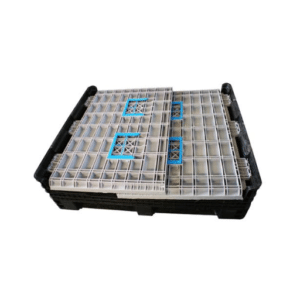
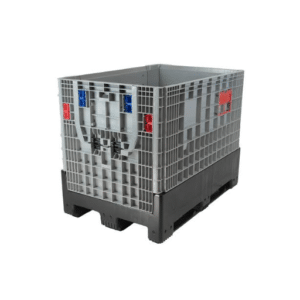
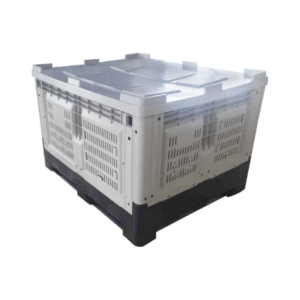
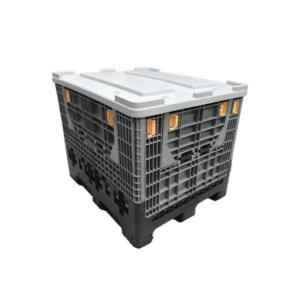
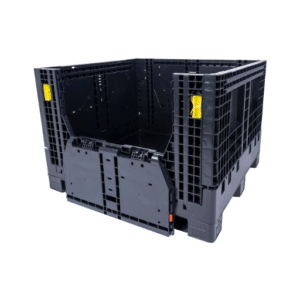
In the logistics and supply chain sector, efficiency and flexibility are the main aspects. The 4-way pallet, being the unsung hero of material handling, is deeply rooted in the core of streamlined operations. These multifunctional tools are meant to enhance warehouse storage, hasten transportation, and better operational workflows by enabling forklifts and pallet jacks to access them from all four sides. However, not every 4-way pallet is the same. The selection of the right type can greatly influence the performance and cost-effectiveness due to the variations in material composition, structural design, and specific applications. The different kinds of 4-way pallets are examined in this article, their individual traits and main differences pointed out, as well as their perfect use cases, thus allowing you to make knowledgeable choices for your company’s requirements.
What is a 4 Way Pallet?
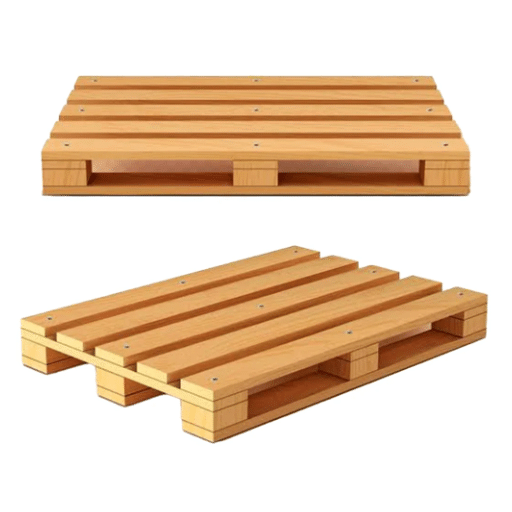
A 4-way pallet is a kind of pallet that is made to allow forklifts and pallet jacks to lift and access the pallet from all four sides. This construction gives a lot more flexibility and better productivity in material handling, especially in places where space saving and easy movement are very important. The fact that there are openings on all sides makes these pallets very versatile, and thus, they are widely used in different sectors such as manufacturing, storage, and distribution.
Definition of a 4 Way Pallet
A 4-way pallet is a highly versatile and efficient type of pallet that has entry points on all four sides, thus allowing forklifts and pallet jacks to access and pick up the pallet from any direction. This aids in the enhancement of flexibility to a great extent in the handling of materials and makes it the best option for places where the space is limited or where high maneuverability is required. Generally made from wood, plastic, or metal, 4-way pallets are commonly used in the logistics, manufacturing, and retail distribution industries due to their durability and user-friendliness. It is the main reason for the design of the pallet that it makes the whole process of warehouse operations easier; it cuts down the time taken for the movement of materials and improves the productivity of the whole facility.
Construction and Design of 4 Way Pallets
4-way pallets are engineered with precision to be perfectly compatible with forklifts and other material handling equipment. The entry points at all four sides of the pallet allow for easy and quick handling in all directions. Hardwoods, softwoods, plastic polymers (like HDPE), and metals such as aluminum or steel are the usual materials for the construction of these pallets. Their choice is based on strength and environmental factor resistance.
The track record of 4-way pallets is that they are manufactured with reinforced deck boards and either notched stringers or block-based construction to make it easy for forklift tines to be inserted. Depending on the material, further treatment or additive manufacturing will be done to enhance load-bearing capacity, moisture resistance, or chemical durability. Structural integrity and adherence to industry standards—such as ISPM 15 for wood pallets—are vital for the safe and effective use of both light and heavy-duty applications.
The modern design of 4-way pallets has also taken into consideration factors like sustainability through the use of recyclable plastics or reusable parts, and also tailored to the specific requirements of the supply chain, such as size adjustment or compatibility with automated storage and retrieval systems (AS/RS). Such progressions not only emphasize their role in logistics optimization but also in the reduction of downtime and extension of service life.
Advantages of Using 4 Way Pallets
Enhanced Handling Efficiency
One of the biggest benefits of 4-way pallets is their huge accessibility. Their accessibility is perfect because forklifts can enter and exit from all sides, which in turn multiplies the number of vehicles handling the goods in a busy warehouse or a distribution center manifold. It takes less manpower to carry out such operations, and they are faster since the goods have more smoothly moved to areas where the delays have been reduced.
Versatility Across Operations
4-way pallets are crafted to support a multitude of operational requirements, ranging from normal manual and automation-driven. The pallets become the main part of the supply chains through their compatibility with contemporary tools like pallet jacks and robotic systems, thus taking over the retail, manufacturing, and pharmaceutical sectors.
Improved Space Utilization
These pallets not only make stacking easier and help to create the best storage arrangements, but also ensure that the space in the warehouse and transportation is fully utilized. Their size and shape being similar to that of other pallets ensures that there is more load stability, which in turn leads to a decrease in the chance of goods being damaged.
Durability and Longevity
Hefty materials, high-density plastic or tough wood, etc., are used to make 4-way pallet systems, which are hence very tolerant towards enormous weight and adverse environmental applications. Their toughness is a guarantee for a long service life, hence lower annual replacement rates and cost savings in the long term.
Sustainability and Recyclability
The demand for biodegradable, environmentally friendly pallet systems is increasing; the use of recyclable plastic and reusable components indeed reduces waste and is one of the eco-conscious choices for companies that want to minimize their negative impact on the environment by participating in recycling programs.
Types of Pallets: 2-way vs 4-way
2-way Pallets

2-way pallets, which are also called stringer pallets, permit the entry of forklifts only from two opposite sides. Usually, these pallets are less expensive and can be used in areas where not much movement is required. Nevertheless, the limited points of access may lead to reduced efficiency in handling the loads.
4-way Pallets
In contrast, 4-way pallets provide fork entry on all four sides. This design not only improves but also offers the most equipment compatibility, thus making it easier to handle. They fit perfectly into areas with high-density storage systems where frequent shifting or stacking is done, such as warehouses. Although they are often more costly, the savings in labor and time, along with their multifunctional usage, make it worthwhile to invest in them for most operations.
Understanding 2-way and 4-way Pallets
The fork entry points and the operational flexibility are the main points of difference between 2-way and 4-way pallets. A 2-way pallet has the advantage of being accessible only from two opposite sides by the forklifts, hence its movement is limited. However, it can be very strong and stable in certain applications, allowing the heavy loads to be placed in specific positions. They are mainly used in those industries where the pallet is going to be immobile for most part of its lifecycle or where vertical stacking is not a primary requirement.
On the other hand, 4-way pallets provide access for forklifts and pallet jacks on all four sides. The design alone considerably increases the operation efficiency as it makes the handling quicker and more versatile. This is particularly true for high-density storage facilities or fast-moving distribution centers where the speed and versatility of handling are highly valued. Besides being generally more expensive because of the increased material use and design complexity, in the long run, cost savings in labor and time are the result of the enhanced functionality.
The choice between 2-way and 4-way pallets is mainly determined by operational requirements such as the level of repositioning necessary, budget limitations, and compatibility with the existing equipment.
Differences Between 2-way and 4-way Pallets
The key difference between 2-way and 4-way pallets is their access for the forklift. 2-way pallets, sometimes called stringer pallets, permit the forklift tines to enter from only two opposite sides, which are usually the front and rear. This structure reduces the ease of movement and also at the same time, provides a simple structure that is often less costly to manufacture. These pallets are generally enough for the operations that do not need frequent repositioning or access from all directions.
On the other hand, 4-way pallets, usually made as block pallets, allow for the forklift tines to enter from any of the four sides. The advantage of this access localization is improved operational efficiency, especially in places where handling and loading from multiple directions at once are important. Such pallets are very adaptable and can work with even the most sophisticated ongoing systems, which in turn makes them the perfect choice for high consumption industries such as logistics and storage. However, their complicated design and building do result in them being more expensive in general.
The decision of the two types is mainly based on the top operational priorities. If the task is cost-sensitive and involves minimal movement of pallets, then 2-way pallets might be sufficient. Although for dynamic and high-efficiency situations where handling flexibility is necessary, 4-way pallets are worth the investment.
When to Use 2-way vs 4-way Pallets
The choice between 2-way and 4-way pallets depends on the particular operational needs, budget limitations, and the nature of the equipment in use, respectively. 2-way pallets can be regarded as the best choice in cases where mainly manual handling or very little access for lifting is to be done, for example, only two sides are accessible for forklift work. Due to their lower cost, they are perfectly suited for operations where businesses are concerned about keeping their expenses to a minimum without a need for frequent changes or dealings in a high-speed manner.
In contrast, 4-way pallets are the ultimate solution for those configurations that require the highest degree of handling flexibility, as a forklift or a pallet jack can access the pallet from any side. This ability makes 4-way pallets so necessary in automated systems, high-density storage facilities, and other industries that need fast turnaround times, like manufacturing and distribution hubs. They may have a higher price tag, but their enhanced functionality often justifies the higher initial cost in operations where productivity and efficiency are of utmost importance.
An in-depth and comprehensive analysis of your handling methods, material flow, and financial factors will pave the way for a better understanding of which pallet type is the right one for your company.
Types of 4 Way Pallets

There are three main varieties of 4-way pallets:
Stringer Pallets
The stringers in these pallets serve as the support for the top deckboards and also allow forklifts or pallet jacks to enter from all four sides. They are extremely adaptable and find applications in different industries.
Block Pallets
These pallets have top and bottom deckboards and use cylindrical or rectangular blocks for support, which makes them more robust and longer lasting than other types. Their use is mainly in heavy-duty applications.
Composite Pallets
Composite pallets made from plastic, metal, or mixed materials are highly durable and immune to water and chemical attacks. Their application is limited to particular environments like the food or pharmaceutical industries, for example.
The choice of each type depends on the material, weight capacity, and specific operational requirements.
Block Pallets vs Stringer Pallets
The design and performance of block pallets and stringer pallets are so different that they can only be applied to specific situations according to the requirements of the operation.
Block Pallets make provision for the stringers being both parallel and perpendicular, creating a strong construction together with excellent four-way access for forklifts and pallet jacks. The blocks are commonly incorporated for extra stability, making them the best choice for heavy-duty movement and automation applications. Besides, they can handle, if not all, most of the loading and unloading operations in the high-volume business surrounding.
On the contrary, the stringer type of pallets is the one made of the continuous support of the stringers for the top deck boards running along the length. They are lighter and usually have only a two-way entry, but notched models may allow limited four-way access. Stringers are less costly and, thus, the most economical for lighter loads and manual handling through them.
The most important factors in choosing between the two are the type of handling equipment, the weight of the load, and the environment of use. In general, a block is the preferred type of pallet in the sector that requires high durability and compatibility with the latest machinery, while the stringer type is found mainly in low-cost and less strenuous applications.
4-way Block Pallet Features
4-way block pallets are the strongest and most efficient ones to handle the material. The construction of these pallets differs from that of the stringer ones, as they have solid blocks, usually made of wood, metal, or plastic. These blocks are placed at each corner and in the center of each side. The blocks allow for true four-way entry, which is a huge plus for the operation since the forklifts and pallet jacks can now move in and out from all directions, making the operations more flexible. They also have a much higher load-bearing capacity due to their strong construction, which makes them very suitable for heavy loads along with high-frequency usage in the areas of logistics, manufacturing, and warehousing.
The construction of 4-way block pallets guarantees that they are compatible with automated handling systems like conveyor belts and robotics, which are increasingly making their way into modern supply chains. Furthermore, they are durable and reusable, which is good for reducing long-term costs and the environmental impact. But, in most cases, block pallets are more expensive than stringer ones, though they are the best for durability, reusability, and compatibility, and thus all the above-mentioned factors should be taken into account while considering the cost factor.
Custom 4 Way Pallets
A custom 4-way pallet is created to allow access from all four sides and thus to give superior handling flexibility for forklifts and pallet jacks. These pallets are capable of being customized in all aspects, including size, weight capacity, and material composition, like wood, plastic, or metal. The customization makes sure that they are compatible with different storage and transportation systems, even with the automation technologies in the advanced supply chains. When compared to standard 2-way pallets, the 4-way designs have a major impact on operational efficiency by making the loading and unloading processes easier, thus resulting in less time for handling and better workflow. Moreover, the custom 4-way pallets can be specially made to perfect the quality and resistance against different kinds of environmental factors, which in turn will support the long-term reusability and sustainability goals. They are considered to be on the expensive side, but their durability, versatility, and performance gains often justify the investment in very harsh industrial applications as to the manufacturing cost.
Pallet Sizes and Specifications
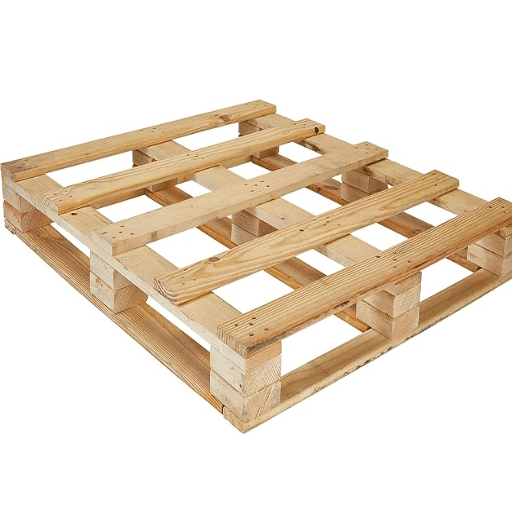
Depending on the region and the industry, standard pallet sizes differ. The United States has a standard pallet size of 48 inches by 40 inches, which is mainly used in the grocery and distribution industries. The 1200mm by 1000mm pallet is known all over the world, especially in Europe and Asia. These standard sizes enable the use of industry-standard machinery and shipping containers. Pallets can also be made to order according to the specific load or storage limitations. Choosing the right size guarantees the best handling, storage, and compliance with supply chain standards.
Common Sizes for 4 Way Pallets
The 4-way pallets have been made in such a way that their operational efficiency is the highest, and they can be accessed by forklifts and pallet jacks from all four sides. The following sizes are the most commonly used globally:
| Pallet Size | Dimensions (mm) | Region | Primary Applications |
|---|---|---|---|
| 48×40 Inches | 1219×1016 mm | United States | Food, beverages, and consumer goods (GMA standard) |
| 1200×800 mm | 47.24×31.50 Inches | Europe | Retail and logistics (EUR-pallet/Euro-pallet, EPAL standards) |
| 1200×1000 mm | 47.24×39.37 Inches | Asia and Europe | International shipping, various goods transportation |
These sizes ensure that the storage, transport, and intermodal compatibility with the racking systems, containers, and pallet handling equipment are all carried out with great efficiency.
Choosing the Right Size for Your Needs
The selection of the right pallet size is dependent on several crucial factors, like the nature of goods being shipped, the geographical location of the supply chain, and their compatibility with the different modes of transport. To take the right position, you can do the following:
- Think of Regional Standards: There are certain pallet sizes preferred by different regions, for instance, the 1200×800 mm Euro pallet in Europe or the 48×40 inch GMA pallet in North America. Compliance with the local standards can make the logistics process convenient and less costly.
- Look at Load and Weight Requirements: Select a pallet size that can take the weight and the dimensions of your cargo easily. Loading the pallet beyond its capacity can be a risk factor for safety and may result in the destruction of goods in transit.
- Shipping and Storage Efficiency Should Be Your Priority: Measure if the pallet size fits properly within the racking systems, shipping containers, and warehouse layouts to take full advantage of the storage space and get rid of the inefficiencies.
- Check Supply Chain Compatibility: If your products are going to pass through various countries, pick one that meets international shipping standards to avoid delays or the necessity of replacing pallets during transit.
When pallet sizes are in sync with transport and storage needs, you will be able to achieve operational efficiency, better product safety, and a cut in logistics costs.
Impact of Size on Supply Chain Efficiency
Pallet size has a direct impact on supply chain efficiency through its influence on various logistics operations, all the way from transport loading to warehouse storage. Usage of specific standard pallet sizes like the 48×40 inches pallet that is mostly used in North America, not only gives maximum container and truck space but also ensures the proper distribution of loads and minimizes the consumption of capacity. Likewise, pallets of the right size facilitate the operation of automated systems like forklifts and conveyor belts, hence the delays are reduced during the overall process.
It is a very important decision to choose the right size pallet, as this will keep the company free of problems at the main points of the supply chain. Over-sized or non-standard pallets can raise the cost of transportation as they will not be easily arranged and will require some changes at the border of countries where the pallets’ size standards differ. On the other side, pallets that are not of the correct size can make the products less stable, thus increasing the possibility of the product getting damaged, which in turn adds costs to the company in terms of both money and operations.
If the firms stick to standardized sizes and, at the same time, adapt pallet choice to the particular shipping and storage conditions, they can enjoy better cost control, smooth transitions across borders, and more reliable goods. All in all, the appropriate pallet size is one of the key factors that determine the future of supply chain continuity and the level of disruption that is to be experienced.
Comparative Analysis: Pallet vs Pallet
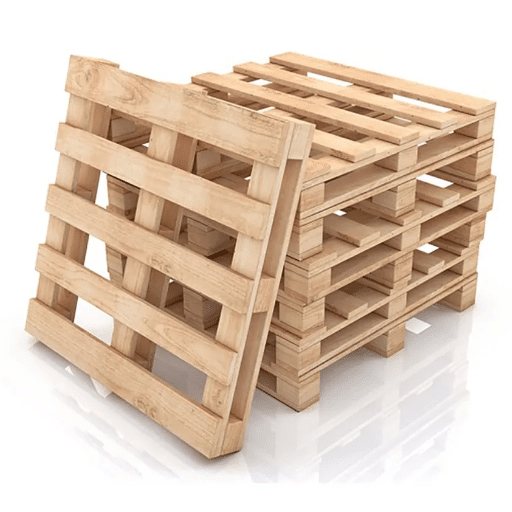
When it comes to pallet comparison, it is important to consider a few core aspects: material, durability, price, and appropriateness for certain cases. The wooden pallets are generally favored for their low prices, ability to be repaired, and carrying ability, so they can be used for transporting heavy products. Nonetheless, they are vulnerable to contamination and might get treated to meet the rules of international shipping for chemical residues and bacteria.
Plastic pallets have the opposite characteristics as they can be very easily cleaned and thus find use in the industries with the strictest hygiene standards, namely, pharmaceuticals or food and beverage. However, the initial cost is a barrier, along with the weight they can support for hard goods, which makes them not that appealing to all users.
Deciding on which pallets to use always comes down to prioritizing the operations, like hygiene, handling, and total cost of the product life cycle, thus ensuring a perfect match with the supply chain needs.
4 Way Pallet vs 2 Way Pallet
The main distinction between 2-way and 4-way pallets is the access that the forklifts and pallet jacks can provide. The 4-way pallets are made such that all four sides have openings, thus facilitating handling equipment to come in from any direction. The improved flexibility increases warehouse productivity, especially in tight storage places or environments with a lot of traffic.
On the other hand, access to and from a 2-way pallet is allowed only through two opposite sides, which would probably slow down the operation and require the handling to be more accurate. However, they are cheaper to make and so can be more widely used in less complex handling situations.
When the two are placed side by side, look at things like operational flow, storage layout, and the type of handling equipment being used. Even though 4-way pallets are very versatile and thus are the choice for automated systems or high-turnover operations, 2-way pallets can still be good enough for simple, budget-sensitive supply chains.
Wood Pallet vs Plastic Pallet
In the process of comparing wood pallets and plastic pallets, it is very important to take into account the main factors like price, longevity, ecological effect, and specific use. The main reason for the widespread use of wood pallets is their lower initial cost and also the ease with which they can be repaired when damaged. Besides, they can be turned into compost, and they are made out of renewable materials; thus, they are considered an environmentally friendly option for companies that care about waste reduction. However, wood pallets do absorb moisture easily and may split or deteriorate when subjected to harsh conditions.
On the flip side, plastic pallets have great durability, water resistance, and are also good for industries that require very high cleanliness levels, such as the pharmaceutical and food processing industries. Their price is higher, but their durability usually results in lower total costs for long-term repetitive use in closed-loop systems. Moreover, plastic pallets are safe from being infested by insects, thus they can more easily meet the shipping requirements of other countries without incurring the cost of extra treatments.
In the end, the decision between wood vs plastic pallets is contingent on the particular operational requirements, financial constraints, and eco-friendly aims. Wood pallets are masters when it comes to price and recyclability, while plastic pallets are the best choice for tough durability and good handling conditions. A detailed examination of the cost to use-case requirements should be noted as the most efficient and technically sound decision-making.
<tdata-label=”Plastic Pallets”>Difficult to repair
| Feature | Wood Pallets | Plastic Pallets |
|---|---|---|
| Initial Cost | Lower | Higher |
| Durability | Moderate (susceptible to moisture) | High (water and chemical resistant) |
| Repairability | Easy to repair | |
| Sustainability | Biodegradable, renewable | Recyclable, reusable |
| Hygiene Standards | Lower (requires treatment) | Higher (easy to clean) |
| Weight | Heavier | Lighter |
| Pest Resistance | Susceptible to insects | Pest-proof |
| Best Use Cases | Heavy loads, budget-conscious operations | Pharmaceutical, food processing, closed-loop systems |
Cost Considerations in Pallet Choices
I have a multi-faceted approach to evaluating the cost of pallets so that I come up with a decision that is well-informed. I look at the initial price of buying and the whole time of use, including maintenance and replacement costs. Normally, wood pallets are cheaper at first, but in some situations, they might have a higher cost incurred due to repair or shorter lifespans. Plastic pallets, on the contrary, start with a high price but can offer the same cost advantages in the long run through their lifetime, reusability, and lower risk of damage. Balancing these costs with operational needs and anticipating usage scenarios is where my final decision lies.
Reference Sources
Journal of Industrial Engineering Management
Performance of medium-density hardboard in pallets
Implementasi kontrol torsi motor servo menggunakan metode PI pada sistem Automatic Pallet Dispenser
Frequently Asked Questions (FAQs)
2-way pallet vs 4-way pallets: What is the difference in entry and maneuvering?
The 2-way pallet allows the forklift or hand truck to enter from only two opposite sides because the stringers in a 2-way design are continuous from end to end. The 4-way pallet, on the other hand, allows forklift access from all four sides due to notched or cross stringers that the tines can enter from any side, thus improving maneuverability in cramped spaces and facilitating loading and unloading from all sides.
Pallet type: When should I choose a 4-way entry pallet over a 2-way?
If you need pallet jack entry on multiple sides, choose 4-way entry pallets. A 4-way pallets enable a forklift or a pallet jack to access it from any side, which enhances throughput and saves space during storage and transportation. Though the 4-way pallet suits versatile warehouse operations, a 2-way pallet might be sufficient in cases where the aisles are wide, and the access for the forklift is acceptable from the ends.
Wooden pallet construction: What are stringer sides, and how do they affect access?
The stringer sides are the long boards that run along the edges of most wooden pallets. Solid stringer pallets have uninterrupted stringers, which imply that the pallet can be accessed only by two sides, while 4-way designs have notches or middle stringer cuts so the tines can enter from four directions. Whether it is stringers or blocks that determine the angle from which a pallet can be picked up by a forklift or a hand truck.
custom pallets: Can a pallet manufacturer make 4-way entry pallets for specific shipping needs?
Yes, a pallet manufacturer can make custom pallets to fit specific shipping needs regarding dimensions, wood grade, and 4-way entry features. Custom pallets might be made of premium wood with extra reinforcement for durability, or specific block pallet layouts so that pallets per truckload and transportation costs are optimized for your supply chain.
Pallet manufacturer guidelines: Are block pallets also 4-way, and how do they compare?
Block pallets are also typically 4-way, as blocks replace stringers and create openings at all four sides, thus allowing forklift access from all four directions. When compared to solid stringer pallets, block pallets usually offer improved durability and superior load stability, which could lead to less damage and lower bearing costs that resulting in lower handling and transportation.
2-way pallet handling: How does using either 2-way or 4-way pallets affect warehouse space and labor?
4-way pallet usage frequently means less warehouse space since forklifts and pallet jacks can access the pallet from any side, thus making the sorting and stacking process faster. This better access might result in lower labor costs as a consequence of reduced time taken in repositioning the loads. On the contrary, a 2-way pallet layout may need wider aisles or more handling steps if the pallet can only be approached from two sides.
Pallet type selection: Can a hand truck enter the pallet, or is a forklift required?
Whether a hand truck is allowed to enter the pallet depends on the design: several 4-way entry pallets and pallet jack entry-friendly designs permit a hand truck or pallet jack to enter from different sides, but some stringer-based pallets require forklift access from the ends only. Should your operations rely on manual handling, specify pallets that allow pallet jack entry, and tines that can enter from the sides used in your workflow.
Wooden pallet maintenance: How does pallet manufacturing quality impact shipping costs and durability?
The use of high-quality wood in pallet manufacturing, along with proper procedures, enhances the life span of the pallet, thus lowering the transportation costs incurred over time as a result of decreasing breakage and replacement frequency. If a pallet is well-built, a forklift will be able to lift loads uniformly, which will enhance safety and increase the number of pallets per truckload. When you invest in good construction — whether with solid stringer, middle stringer reinforcement, or block designs — you set up your shipping needs and live and breathe pallets into your logistics strategy.