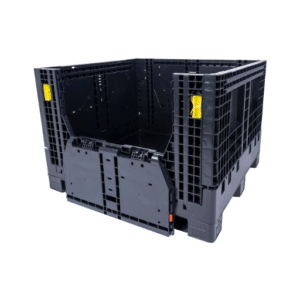
Durable plastic pallets are engineered to withstand repeated use, heavy loads, and harsh conditions while outlasting wood alternatives by 5-10 times. For logistics managers and procurement teams, choosing the right pallet directly affects replacement costs, warehouse safety, and total supply chain efficiency.
This guide explains what makes a plastic pallet truly durable, how to compare materials and designs, and how to calculate the real return on a long-lasting pallet investment.
Key Takeaways
- Durable plastic pallets typically last 7-10+ years and handle 100-500+ trips, compared with wood pallets that often fail after 10-20 trips.
- HDPE delivers superior cold-temperature and impact resistance; polypropylene (PP) offers higher stiffness and heat tolerance.
- Three load ratings matter: static load (stationary capacity), dynamic load (moving capacity), and racking load (unsupported shelf capacity).
- Steel reinforcement, ribbed designs, and UV stabilizers extend service life in heavy manufacturing, outdoor storage, and automated warehouses.
- Most durable plastic pallets are 100% recyclable, and recycled-content options can reduce environmental impact when used in closed-loop systems.
- Lile manufactures durable plastic pallets with ISO 9001 quality control, custom engineering, and export-ready compliance for 108+ countries.
What Makes a Plastic Pallet “Durable”?
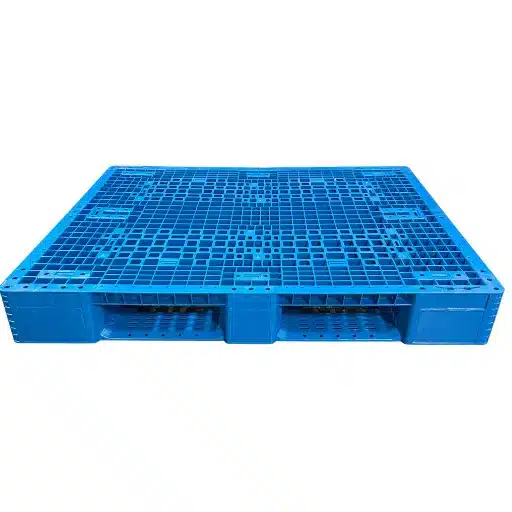
Durability in a pallet is not a single feature. It is the combination of four performance dimensions that determine how well a pallet survives real-world use.
Load Capacity
Load capacity is the most visible measure of durability. Manufacturers publish three ratings:
- Static load: The weight a pallet can hold when stationary on a flat floor. Industrial plastic pallets have a starting point weight of 4,000 kilograms and can even reach 6,000 kilograms when reinforced with steel.
- Dynamic load:This is the amount of weight that a pallet can handle during movement through forklift or pallet jack. This is typically 1,000-2,000 kg for standard models and up to 2,500 kg for heavy-duty designs.
- Racking load: The weight a pallet can support in warehouse racking without failing across the unsupported span. Standard ratings range from 500-1,200 kg, with steel-reinforced models reaching 1,500 kg.
These ratings are tested against standards such as ISO 8611 and ASTM D1185, which simulate repeated handling, stacking, and racking stresses.
Impact and Abrasion Resistance
Forklift strikes, conveyor transitions, and floor dragging all create impact stress. High-quality durable plastic pallets absorb these shocks through material flexibility and structural design. HDPE is especially valued here because it deforms under stress rather than cracking, then returns to shape. Reinforced corners and thick wall sections further reduce damage.
Environmental Tolerance
A durable pallet must perform across the environments it will see:
- Cold storage: HDPE remains tough at -40°C, making it the preferred material for blast freezers and cold-chain logistics.
- Heat: Polypropylene handles higher temperatures, often up to +100°C in short exposures, which matters in sanitation cycles or warm-climate storage.
- UV exposure: Outdoor storage degrades untreated plastic. UV stabilizers extend outdoor life by slowing photodegradation.
- Chemicals: Both HDPE and PP resist acids, bases, oils, and most cleaning agents far better than wood.
Service Life and Total Cost of Ownership
Durability only matters in financial terms if the pallet survives long enough to offset its purchase price. Durable plastic pallets typically deliver a lower total cost of ownership (TCO) than wood because they require fewer replacements, less maintenance, and create less product damage.
Durable Plastic Pallets vs. Wood and Metal
Most procurement decisions come down to three materials: wood, plastic, or metal. Each has a place, but the durability economics favor plastic in high-cycle operations.
| Factor | Durable Plastic Pallets | Wood Pallets | Metal Pallets |
|---|---|---|---|
| Typical lifespan | 7-10+ years | 6 months – 2 years | 10-15+ years |
| Trips before replacement | 100-500+ | 10-20 | 500+ |
| Weight | 6-15 kg | 15-30 kg (heavier when wet) | 20-40 kg |
| Moisture resistance | Impervious | Absorbs water, warps, rots | Rusts without coating |
| Hygiene | Easy to sanitize | Harbors mold, bacteria, pests | Easy to sanitize |
| Initial cost | Medium | Low | High |
| Maintenance | Minimal | Frequent repairs | Welding/repair possible |
| Best fit | Closed-loop, food, pharma, export, automation | One-way, light domestic use | Extreme heavy loads, fire concerns |
Wood pallets dominate single-use shipping because they are cheap and easy to repair. Metal pallets handle extreme weights and fire-sensitive environments. But for operations that move goods repeatedly, especially in food, pharmaceuticals, cold chain, and automated warehouses, durable plastic pallets offer the strongest balance of longevity, hygiene, and handling efficiency.
Elena runs a pharmaceutical distribution center in New Jersey where FDA compliance is non-negotiable. Her wooden pallets required heat treatment documentation for every international shipment, and the porous surface made sanitization a constant concern. After switching to solid-deck plastic pallets, she eliminated ISPM-15 paperwork for exports and reduced sanitation time by roughly 30%.
Want to see how plastic compares with wood across cost, hygiene, and sustainability? Read our full plastic pallets vs wood pallets comparison.
Materials That Drive Durability: HDPE vs. Polypropylene
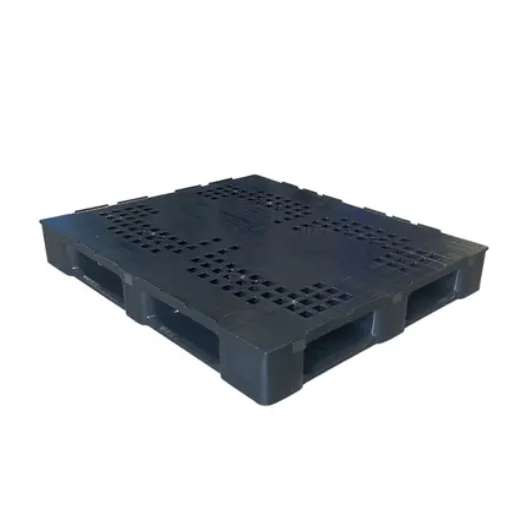
The resin choice is the single biggest factor in how a plastic pallet performs over time.
HDPE: Impact Resistance and Cold-Weather Performance
High-density polyethylene (HDPE) is the most common material for durable plastic pallets, representing roughly 47% of the global market. Its advantages include:
- Excellent impact resistance at low and moderate temperatures
- Operating range typically -40°C to +60°C
- Strong chemical resistance to acids, bases, and solvents
- Good UV stability when stabilizers are added
- Recyclable and commonly available with recycled content
HDPE is the default choice for cold storage, food processing, chemical handling, and general warehousing.
Polypropylene (PP): Stiffness and Heat Resistance
Polypropylene is stiffer and more rigid than HDPE. Its advantages include:
- Higher heat tolerance, often handling temperatures above +100°C
- Better performance in hot-fill or steam-cleaning applications
- Lower density, so PP pallets can be slightly lighter
- Good fatigue resistance under repeated flexing
PP becomes brittle below 0°C, so it is less suitable for freezer environments unless specially formulated.
Virgin vs. Recycled Resins: Durability Trade-Offs
Virgin resins offer the most predictable mechanical properties and are required for food-contact and pharmaceutical applications. Recycled HDPE or PP can reduce material cost and environmental impact, but performance varies with the quality of the recycled feedstock. Premium recycled blends from controlled sources can match virgin resin for many industrial uses, while low-cost recycled material may contain contaminants that weaken the pallet.
For regulated industries, Lile supplies FDA-compliant virgin HDPE and PP options with full material traceability.
Load Ratings Explained: Static, Dynamic, and Racking
Understanding load ratings prevents two expensive mistakes: overloading a pallet and paying for capacity you do not need.
How Manufacturers Test Load Capacity
Standardized tests place weights on a pallet in controlled conditions. ISO 8611 is the international standard used by most manufacturers. ASTM D1185 is common in North America. Tests include:
- Bending test: Measures deflection under a distributed load.
- Stacking test: Evaluates how the pallet behaves when loaded pallets are stacked on top.
- Impact test: Simulates forklift handling and drops.
- Racking test: Assesses performance across an unsupported rack span.
Safety Factors for Real-World Use
Published ratings are laboratory maximums. In practice, apply a safety factor. A common rule is to select a pallet whose rated dynamic load is at least 1.5-2 times your typical moving load. This accounts for uneven loading, fork impacts, temperature effects, and wear over time.
Matching Load Rating to Your Application
A pallet for floor storage only needs a high static load. A moving pallet must be very strong in dynamic load. A pallet stored in rack bays needs a verified racking load. For heavy racking, steel-reinforced durable plastic pallets are often the only safe choice.
For a deeper look at how load ratings work, see our guide to plastic pallet load capacity.
Pallet Designs for Maximum Durability
Material matters, but design determines how that material is used.
Rackable Pallets
Rackable pallets are built to span unsupported rack beams. They typically include full-perimeter bases, reinforced bottoms, and sometimes steel tubes. These are essential in high-bay warehouses where pallets sit on rack shelves without support underneath.
Stackable Pallets
Stackable pallets include feet or lips that let loaded units sit securely on top of each other. They maximize vertical storage and are common in manufacturing, retail distribution, and agriculture.
Nestable Pallets
Nestable designs fit inside each other when empty, reducing storage space and return-shipping volume by up to 50-70%. They are popular for export and closed-loop logistics, though their load ratings are usually lower than rackable designs.
Steel-Reinforced Heavy-Duty Pallets
Galvanized steel bars embedded in the deck or runners dramatically increase racking and dynamic load capacity. These durable plastic pallets are used in automotive, heavy manufacturing, and bulk-product handling where loads exceed standard plastic limits.
Solid-Deck vs. Vented-Deck Durability
- Solid-deck pallets are easier to clean and provide a stable platform for small or bagged goods. They dominate food, pharmaceutical, and retail applications.
- Vented-deck pallets are lighter, drain liquids, and cost less. They work well for produce, wet environments, and general warehousing.
For heavy-duty industrial needs, explore Lile’s heavy-duty plastic pallets and steel-reinforced pallet options.
Durability in Harsh Environments
Not every pallet operates in a climate-controlled warehouse. Durable plastic pallets are often chosen specifically because they survive conditions that destroy wood.
Cold Storage and Freezer Performance
HDPE retains impact strength at freezer temperatures. Standard HDPE pallets perform from -40°C to +60°C, while cold-grade formulations can go even lower. This makes them ideal for frozen food, seafood, meat, dairy, and vaccine distribution. Unlike wood, they do not absorb moisture, swell, or lose strength in freeze-thaw cycles.
Outdoor Storage and UV Exposure
Untreated plastic degrades in sunlight. UV stabilizers slow this process and should be specified for any outdoor application. Even with stabilization, long-term outdoor storage will shorten service life compared with indoor use.
Chemical and Moisture Resistance
Plastic pallets do not rot, mold, or harbor pests. They resist most industrial chemicals and can be pressure-washed or steam-cleaned without damage. This is why food processors, chemical plants, and pharmaceutical facilities prefer them.
Heavy Manufacturing and Automotive Applications
Automotive plants often move engines, transmissions, and metal components. Steel-reinforced durable plastic pallets provide the load capacity of wood without the splinters, nails, and dimensional variation that cause handling problems.
For cold-chain applications specifically, see Lile’s cold storage plastic pallets.
Recycled and Sustainable Durable Pallets
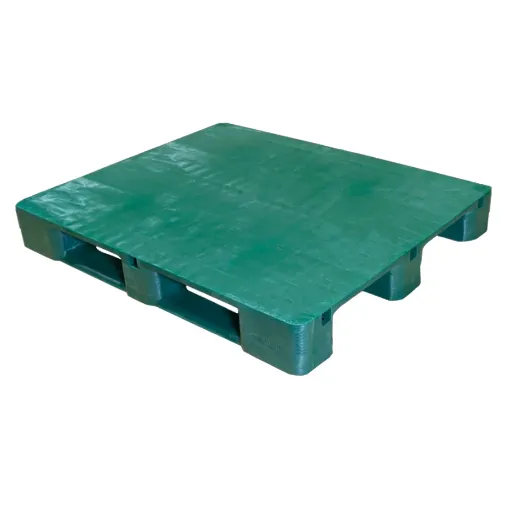
Sustainability is no longer a secondary concern. Many buyers now need pallets that support circular-economy goals without sacrificing durability.
Recycled HDPE/PP Performance
High-quality recycled resins can produce durable plastic pallets suitable for industrial use. The key is feedstock control. Pallets made from mixed or low-grade recycled material may have inconsistent strength. Pallets made from controlled post-industrial or post-consumer streams with proper sorting and testing can perform nearly as well as virgin resin.
Closed-Loop and Take-Back Programs
The most sustainable pallet is one that stays in use. Closed-loop systems, where pallets return to the same facility or supplier, maximize trip counts and minimize waste. Some manufacturers offer take-back programs to recycle end-of-life pallets into new products.
ESG and Carbon Reporting Benefits
Because durable plastic pallets last longer, they reduce the total number of pallets manufactured, shipped, and disposed of over time. Lifecycle assessments show that the environmental advantage of plastic over wood depends heavily on use intensity, recycling rates, and end-of-life processing. In high-utilization closed-loop systems, plastic often wins on a per-trip carbon basis.
The global plastic pallet market is projected to grow from 8.74billionin2025to8.74billionin2025to9.23 billion in 2026, according to Fortune Business Insights, driven in part by demand for reusable, recyclable transport packaging.
Maintenance Tips to Extend Pallet Life
Even the most durable plastic pallets last longer with proper handling.
Monthly Inspection Checklist
- Check for cracks, especially around corners and entry points.
- Look for deformation or sagging in the deck.
- Inspect steel reinforcement tubes for corrosion or movement.
- Verify that identification marks and RFID tags remain legible.
- Remove any pallet showing significant damage from active use.
Cleaning and Sanitization Best Practices
Plastic pallets can be cleaned with water, detergents, pressure washers, or steam. Avoid abrasive scrubbers that can scratch the surface and create bacteria traps in food applications. Allow pallets to dry before storage to prevent slip hazards.
Repair vs. Replace Decision Framework
Unlike wood, plastic pallets are rarely repaired in the field. Minor damage may be acceptable if it does not affect load capacity or handling safety. Significant cracks, deck deformation, or runner damage usually mean replacement. The good news is that damaged plastic pallets are recyclable, so material recovery is possible.
Storage and Handling Guidelines
- Do not drag pallets across rough floors.
- Avoid dropping loaded pallets from height.
- Store empty nestable pallets indoors when possible.
- Keep pallets out of direct sunlight unless UV-stabilized.
- Train operators to enter forks fully before lifting.
For more detail on lifespan, read our article on how long plastic pallets last.
How to Choose a Durable Plastic Pallet Supplier
The supplier matters as much as the product. A low-quality durable plastic pallet will fail just like a low-quality wooden one.
Manufacturing Scale and Quality Control
Look for suppliers with documented quality systems. ISO 9001 certification is a baseline. Ask about incoming resin inspection, in-process checks, and final load testing. Lile operates 18 large-scale production machines across 16 subsidiaries with multi-layer quality control at every stage.
Certifications and Test Documentation
Request test reports that match published load ratings. For regulated industries, verify food-contact compliance, such as FDA 21 CFR Part 177 or EC 1935/2004. Export buyers should confirm ISPM-15 exemption for plastic pallets.
Customization and Engineering Support
Durable does not mean one-size-fits-all. The best suppliers offer custom sizes, colors, logos, steel reinforcement placement, anti-slip inserts, and RFID pockets. Lile provides Pantone color matching, custom molding, and OEM programs for buyers with unique load or branding requirements.
Global Logistics and Export Experience
A supplier that understands export documentation, container optimization, and regional compliance reduces delays. Lile ships through Qingdao Port and has delivered pallets to 108+ countries, giving buyers confidence in cross-border logistics.
Need a durable plastic pallet engineered for your specific load and environment? Contact Lile for a tailored quote and technical review.
2026 Trends in Durable Plastic Pallets
The pallet industry is evolving quickly. Three trends are reshaping what buyers expect from durable plastic pallets.
Automation and AS/RS Compatibility
Automated warehouses need pallets with consistent dimensions, flat decks, and predictable weights. Dimensional variation as small as a few millimeters can cause jams in automated storage and retrieval systems (AS/RS). Plastic pallets maintain tighter tolerances than wood, which is why adoption is growing in automated facilities.
RFID and Digital Traceability
Embedding RFID tags or QR codes in pallets lets companies track location, trip counts, and maintenance history. This data helps optimize pool management, prove compliance, and extend service life through predictive replacement.
Advanced Recycled Materials and Modular Designs
Manufacturers are developing higher-performance recycled resins and modular pallet designs with replaceable components. These innovations aim to close material loops while maintaining the durability that industrial buyers require.
Frequently Asked Questions
How long do durable plastic pallets last?
In typical industrial use, durable plastic pallets last 7-10+ years and can complete 100-500+ trips. Lifespan depends on material quality, load conditions, handling practices, and environmental exposure.
What is the most durable plastic pallet material?
For most applications, HDPE offers the best combination of impact resistance, cold tolerance, and chemical resistance. For high-heat environments, polypropylene (PP) may be more durable.
Are plastic pallets stronger than wood?
Plastic pallets generally last 5-10 times longer than wood and handle repeated handling better. Wood can support heavy loads in single-use scenarios, but it degrades quickly under moisture, impact, and repeated cycling.
Can durable plastic pallets be used outdoors?
Yes, but specify UV-stabilized material. Even stabilized pallets will age faster outdoors than indoors, so covered storage is recommended for maximum lifespan.
Do recycled plastic pallets last as long as virgin pallets?
High-quality recycled pallets from controlled feedstocks can approach virgin performance. Low-grade recycled material may not. When it comes to use in food contact or heavy loads, virgin resin is highly favored.
How much weight can a durable plastic pallet hold?
Standard industrial models often rate 4,000-6,000 kg static, 1,000-2,000 kg dynamic, and 500-1,200 kg racking. Steel-reinforced models can exceed these ratings significantly.
What certifications should durable plastic pallets have?
Look for ISO 9001 (quality), FDA or EC 1935/2004 (food contact), and confirmation of ISPM-15 exemption for export. Some applications also require HACCP, GMP, or fire-safety ratings.
Conclusion
Durable plastic pallets are a strategic investment, not a commodity purchase. The right pallet reduces replacement frequency, improves handling safety, supports automation, and lowers total cost of ownership over a multi-year lifecycle.
The best results come from matching the material, design, and load rating to your actual operating environment. HDPE dominates cold and impact applications. Polypropylene handles heat. Steel reinforcement unlocks heavy racking. And a qualified supplier ensures that published ratings are backed by testing and quality control.
At Lile, we have spent more than a decade manufacturing durable plastic pallets for logistics, food, pharmaceutical, automotive, and export operations. With ISO 9001-certified production, custom engineering capabilities, and delivery experience across 108+ countries, we help buyers select pallets that perform under pressure year after year.
Ready to reduce replacement costs and improve operational reliability? Request a durable plastic pallet quote from Lile today.