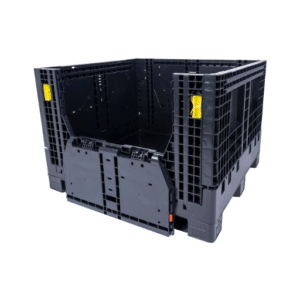
Plastic pallets are a complete game-changer for the logistics and materials handling industries, due to their long-lasting use and versatility, not to mention their amazing efficiency in many ways. Capturing the imagination with their versatility, stackable and nestable plastic pallets are nothing but long-running tools dedicated to specific applications. In this blog post, we’re going to take a closer look at their uniqueness, their corresponding advantages, and their uses. Such information will help in always knowing how to pick the best of this kind in as per the business operations. Depending on warehouse volume utilization, transport savings, or environmental benefits, this guide breaks down critical requirements in the selection of plastic pallets for modern supply chain management. Let’s embark on a journey to explore these pallets’ features, operations, advantages, and the industrial sectors that cannot run without their flawless performance services.
What are Plastic Pallets?
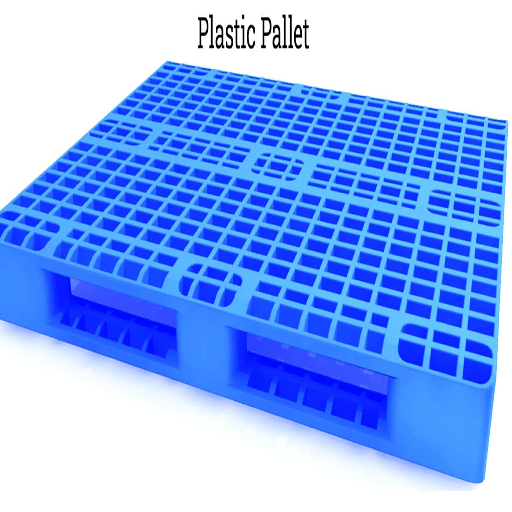
Plastic pallets are sturdy, light platforms made for repetitive turning over of goods within logistics and supply chain operations. They are mainly made from materials such as polyethylene (PE) or polypropylene (PP), and they are designed to be a heavy-duty, reusable proposition for the transportation and storage of goods. Unlike the traditional wooden pallets, plastic pallets do not degrade due to moisture, chemicals, or pests, which makes them a reliable candidate for the industries for either hygienic requirements or high-frequency handling. Their uniform design and longer useful life make them the best proposition to industrial applications, including those in the food and beverage sector, pharmaceuticals, and manufacturing.
Definition and Types of Plastic Pallets
Plastic pallets are tough platforms made mostly from synthetic materials such as PE (polyethylene) or PP (polypropylene) and built for promoting the safe transport, storage, and handling of goods that are found being shipped through various industries. These are designed to withstand environmental factors like water, chemicals, and pests, making the plastic pallet ideal for heavy-duty applications.
There are several types of plastic pallets, and these can mainly be divided into several categories according to their designs or use:
Nestable Pallets
Nestable pallets are lightweight and space-efficient designs that, when empty, can be made to stack within one another in order to allow space-saving in storage or transportation, as all pallets are. These are used in a number of applications where space is a key necessity.
Rackable Pallets
Rackable pallets are, by their design, placed into a rack, where storage takes place mostly in high-bay warehouses. They can hold heavy loads on stuff.
Stackable Pallets
The unique flat-base design of stackable pallets maximizes load-to-load heights with stacking, even without causing any damage to the material. The exceptional quality-one, on its own, is chalk-full of solidity, characterized equally as much for storage or transport.
Hygienic Pallets
Food, pharmaceutical, and medical industry applications- FDA-approved plastic pallets- these hygienic pallets also function as the other name around. The lack of friction-bearing surfaces gives a flat putting surface that can be cleaned effortlessly.
Custom Build Pallets
There are instances when a company could absolutely require a pallet of more fitting dimensions or finishing. In these situations, some special manufacturing technologies come to the rescue in the form of logistics or storage pallets.
Plastic pallets offer unmatched versatility, eco-sustainability, and efficiency that have made them the preferred choice for the modern-day industrial operation. This adaptability to multiple systems allows the recycling of the plastic pallet to take over the role of the traditional wooden pallet with the growth of technology.
Comparison with Wooden and Metal Pallets
Plastic pallets provide a strong advantage compared to timber and metal pallets when it comes to durability, cleanliness, and economy in a long-term perspective. Plastic pallets have inherent resistance against moisture, insects, and contamination, and hence are a perfect choice for industries requiring high cleanliness for their products, such as food and pharmaceuticals. They are light in weight and can reduce shipping and handling costs, and their uniform dimensions could streamline automation.
Plastic pallets are lighter and less costly than metal pallets, and they provide sufficient strength to carry most loads. Metal pallets are undoubtedly more robust for heavy loads, but they are susceptible to corrosion and are pricey due to the treatments required. On top of all that, plastic pallets do not rust, are easy to clean, and are a better choice for environments with highly demanding cleaning protocols.
While wooden and metal pallets can both be strong and reliable, plastic pallets are superior since they are recyclable, last longer, and are compatible with automation systems, making them a modern and multifunctional solution for various industries.
| Feature | Plastic Pallets | Wooden Pallets | Metal Pallets |
|---|---|---|---|
| Durability | Excellent – Long lifespan | Moderate – Degrades over time | Excellent – Very robust |
| Weight | Lightweight | Medium weight | Heavy |
| Moisture Resistance | Excellent | Poor | Susceptible to corrosion |
| Hygiene | Excellent – Easy to clean | Poor – Harbors bacteria | Good |
| Cost | Moderate – Long-term savings | Low initial cost | High |
| Recyclability | 100% recyclable | Limited | Recyclable but costly |
| Automation Compatibility | Excellent – Uniform dimensions | Poor – Inconsistent | Good |
Common Materials Used in Plastic Pallets
There are three primary materials used for plastic pallets, each with different properties to serve various industrial purposes:
High-Density Polyethylene (HDPE)
It is preferred for durability, flexibility, and resistance to impact, chemicals, and moisture. It is ideal for both indoor and outdoor applications; this versatility makes it suitable for industries needing reusable and strong pallets.
Polypropylene (PP)
Polypropylene is perfect for applications requiring long-term durability and thermal resistance. PP pallets find wider applications in industries where extreme loading capacities and strength are desired.
Plastic Recycling
For sustainability and waste reduction, several plastic pallets use reclaimed material. In a lot of cases, recycled HDPE or PP pallets circulate, maintaining performance standards while considering environmental friendliness, setting the trend for businesses poised on sustainable practices.
Every material has its own characteristic which helps companies determine the type, often in accordance with the operational requirements, and these could relate to a serious load or excellent resistance to the environment, or to alter the frequency of use.
Benefits of Using Stackable Plastic Pallets
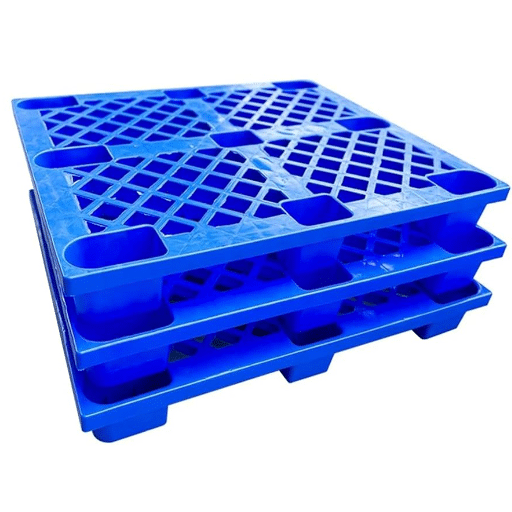
- Space Efficiency: Stackable plastic pallets allow very dense storage, allowing maximum use of storage capacity both in warehouses and transportation equipment.
- Durability: Their materials being of high-quality pawn, these pallets are durable, resistant to moisture, chemical effects, and impact, ensuring a long life with the item.
- Cost-Effective: The resistance of these pallets tends to reduce the phenomenon of premature wear and tear, thereby lowering replacement and maintenance costs in the long run.
- Lightweight Design: Transportation (handling) and shipment (freight) costs for handling these pallets are lower with the lightweight design of the pallets as compared with the most cumbersome wooden pallets.
- Hygiene and Maintenance: Maintaining consistency in hygiene, cleaning out the pallets from polythene is very manageable because of the absence of any contaminants; the plastic pallets are thus well-suited for industries including food and pharmaceuticals.
- Sustainability: Many stackable plastic pallets are manufactured from recyclable materials. Mostly, they give good help to nature.
Space Efficiency in Warehousing
When it comes to warehousing, space efficiency is vital to operational optimization, reducing costs, and enhancing storage capacity. One method to arrange for this kind of efficiency is to opt for stackable plastic pallets. Laying these on top of each other helps deal with the vertical tightness, allowing for better usage of space, and less floor space being absorbed into it. Their rigging is standard and affords precise alignment and stacking to create safer and stable storage. Furthermore, plastic pallets can promote automation-assisted storage and retrieval systems (AS/RS) by using several well-defined integration options, facilitating their seamless installation in modern warehouses, and exuding information on high storage density. Surpass inventory management for better output with defined adherence to the safety of what is set forth by regulations.
Cost-Effectiveness for Distribution
Plastic pallets score high in terms of cost-effectiveness in distribution because of their durability, reusability, and reduced weight. This ensures that they will suffer fewer damages compared to traditional wooden pallets, translating into fewer replacement costs as well as fewer disruptions in the supply chain. Their lightweight reduces the expense associated with freight movements, especially in the case of weight-related shipping charges. Of course, a long lifespan and resistance to moisture, pests, and chemical attacks should forever stand in the way of cost accrual. The consequent drop in requirements of waste and maintenance does wonders for alleviating the subsequent hikes in transport efficiency and makes use of plastic pallets an economically reasonable choice for concerned businesses while improving their distribution process from the onset.
Enhanced Hygiene and Durability
In contrast with conventional wooden pallets, plastic models have superior sanitation levels due to their non-reactive surfaces, repelling liquid, bacteria, and dirt. The suitability of plastic pallets is observed in sectors where regulations for hygiene are enforced, i.e., the food and pharmaceutical industries. What’s appreciated in plastic pallets relates to washability and the ability to sanitize with water, steam, or any other chemical cleaning agents, approved for the cleaning standards that support hygiene. When separated, these plastics crowd out woods in the virtues of being waterproof and withstanding the rigours of splintering, structural damage, and pest infestations from termites. In this hardiness, the potential service performance against dubious conditions offered by an array of variableised climates is what makes plastic palleting look like a very dependable, very sustainable, and high-demand logistics solution.
Nesting and Rackability of Plastic Pallets

Plastic pallets boast of two primary attributes- nesting and rackability-that improve the opportunity for their purpose in different logistical applications.
Nesting
Nesting refers to plastic pallets’ capability of coming neatly into one another, offering space saving of up to 75% when they are not in use. This design is beneficial for warehouses and transportation processes, significantly minimizing area requirements and lowering overall shipping expenditure.
Rackability
Rackable plastic pallets are designed to provide a stable and reliable foundation for heavy loads while on warehouse racks. The reinforced structure ensures that these pallets will withstand heavy weights without distending or failing, meaning that they are a good choice for applications involved with high-load storage in industries such as manufacturing, retail, and distribution.
Understanding Nestable Plastic Pallets
The nestable plastic pallets are envisioned with a very advanced space-saving format that makes them highly efficient in stacking within each other once not in use. Hence, if the pallet is appropriately nested with others, the storage footprint is notably reduced for highly effective use of warehousing space and low return shipping costs. These plastics are thus presented as a lightweight but strong source of useful material with a future full of applications.
Smaller or rather lighter than a lot of their counterparts, Nestable plastic pallets tend to recycle more, having weight-to-weight ways for more charitable and lifetime use with each trip. They are immune to moisture, chemicals, and pests. Besides, several nestable pallets spring from an excellent ergonomic design, which helps in harnessing safety for handling and efficiency in making enterprises better holistically through the entire supply chain.
Advantages of Rackable Plastic Pallets
Rackable plastic pallets boast an explicit design for superior performance in high pallet power rack systems. Their critical advantage is related to the increased weight-sustenance aspect, and they have the capacity to sustain substantial loads in both static and dynamic situations, while their shape is not compromised. This makes them have great utility in warehouses, production environments, and distribution centers.
But they last longer-the racks and pallets don’t get damaged that much or look worn out after handling them loads of times, crashes, and transport environment; they would have to replace wooden pallets a few times. For your information, one option to consider is the rackable plastic pallets with commonly designed dimensions and, in terms of a nonporous finish, the accepted hygienic standard for the pharmaceutical and food industries. The one additional feature is the compatibility with automated systems and, in doing so, cheapened their handling work.
Applications in Various Industries
Plastic pallets are flexible in their ability to be adjusted to various holding or commercial scales. They are also very durable, hygienic, and adaptable.
Food and Beverage Industry
These pallets are very hygienic and meet all standards. Because of the nonporous surface, addictive liquids never affect these surfaces and make them ideal for the storage and transport of perishable merchandise, plus food-safe compliance.
Pharmaceutical Industry
The Industry standard for cleanliness and precise optics in the pharmaceutical industry is set by these. They were designed keeping in mind the cleanroom environment, consulting with great concern over sanitary design and the ease of chemical cleaning as a whole operation.
Automotive Industry
High on load capacity and automation compliance, the most useful ones are for carrying materials, tools, and final products.
Retail and E-Commerce
These pallets are geared to warehouse functionalities with standardized dimensions and lightweight characteristics for smoother operations of warehousing systems and fast-paced order fulfillment processes, thus enhancing the efficiency of the supply chain.
Manufacturing and Industrial Uses
They should allow industrial handling and space-occupancy challenges with durable construction and their load capacities to be well predefined in high volumes, providing the best compactness and space efficiency in the industrial atmosphere, which makes it safe to work.
These industries have shaped the course of development of plastic pallets to galvanize present-day logistics and material handling practices by scything these industries deep by tending to their needs.
Heavy-Duty and Export Plastic Pallets

Robust and exporting plastic pallets are uniquely designed to carry heavy loads according to the stringent demands laid out in international shipping. Here are the major advantages:
- Strength: This guarantees the best performance under heavy loads without any damage under transit or storage, by making use of materials possessing high strength.
- Compliance: They are not required under ISPM-15 regulations; therefore, fumigation or heat treatment is eliminated for this particular kind of pallet used in packaging goods for export, making them ideal for transportation, to which a shipper of goods must comply.
- Lightweight: They are quite tough, yet they are lightweight. Since these pallets reduce the weight of a shipment, transportation costs are decreased.
- Reusability: Tour plastic pallets are engineered to be reused in multiple cycles, making a case for less material waste and more cost savings.
- Resistant to fluctuating weather conditions: These pallets are waterproof and resistant to moisture, and can thus retain their structure under almost all conditions.
These features may make heavy-duty and export plastic pallets a reliable, cost-effective, and sustainable solution for global logistics.
Features of Heavy-Duty Plastic Pallets
Made for hardwearing and efficient use, the plastic pallets serve well in demanding industrial applications. A bit more specifics:
- High Load-Bearing Capacity: These pallets are good, solid performers at static/dynamic loads and are suitable for the transportation of heavy or solid goods across various sectors of industry, like manufacturing, automotive, chemicals, and so on.
- Lightweight Construction: Though sturdy, these pallets are lighter compared to the traditional pallets of wood or metal. It makes big savings in expenses to ship them and, in turn, streamlines the process of transport.
- Long Life: With the very finest abilities of plastic pallet quality, including hardly any splintering, cracking, or breakage when exposed to harsh running conditions, the durability of plastic heavy-duty pallets is assured.
- Hygiene Standards: When a pallet of food has been plastic or stacked up against moisture as it is used for stacking, bacteria and related pathogens have become a problem, considering the pallet is now unhygienic and essential.
- Environmental Resistance: The pallet is herewith designed to withstand extreme surface pressure during chemical attacks, hence dragging on the long process of survival and climate during operations.
- Automation Compatibility: Plastic pallets on the heavy-duty side have started coming in line with automation systems. They are designed to act on conveyors and are now providing robots with a facility in terms of throughput and accuracy for operations.
Strength, efficiency, and adaptability…implementing these qualities makes those plastic pallets market survivors for their versatile consideration, thus automatically appealing to most stakeholders in the business market diaspora, established as an urgently utilized commercial concept today.
Export Pallets: Compliance and Standards
The role of export pallets is indispensable in the context of international trade, equivalent to crucial compliance and regulation. Probably the most important consideration is the implementation of International Standards for Phytosanitary Measures No. 15 (ISPM-15), which mandates that all wooden shipping pallets be treated strictly before export in an attempt to remove all pests from the wood and to prevent the larger spread of invasive species. Treatment can normally include some form of heat treatment or fumigation, and then they must bear some form of ISPM-15 hewing mark.
On the other hand, for exporting plastic pallets, the issue of compliance is different, with such exempt from ISPM-15 because of their non-organic materials. But all these pallets, in respect of strict dimensions and load capacity stipulated in international shipping norms, shall be required to pass the safety tests that regard compatibility and transport protection.
Authenticity and Integrity Citations are used for exports to be done well. These citations should be shown by a view to the law of that country or area and require citing some kind of laws being mentioned, mostly the pallet material and weight, recycling value, showing the source, and reusing or recycling the other parts. Extending to these international projects without any irrelevance can save cargo from being halted at the MPAs. The establishment network in exportation is expected to follow the reference order to hold all these in conjunction half the time.
Choosing the Right Size: 48×40 and More
| Pallet Size | Region/Standard | Common Applications | Key Benefits |
|---|---|---|---|
| 48×40 inches | North America (GMA Standard) | Distribution, retail, food handling | Compatible with standard racking and automation |
| 48×48 inches | North America | Chemical and heavy-duty applications | Enhanced stability for heavy loads |
| 42×42 inches | North America | Telecommunications and paint industries | Optimized for specific product dimensions |
| 1200×1000 mm | Europe (EUR Standard) | International shipping, general cargo | Global compatibility and widespread use |
| 1100×1100 mm | Asia | Asian market distribution | Optimized for Asian logistics networks |
The most popular estimation method used in North America was the General Merchandise Association standards, as the 48×40-inch measurement has profitable consideration for distribution, retail trade, food handling, and goods consumption due to the automatic bifurcation of commonly used racking sizes in warehouse infrastructure, handling equipment, and binding and automated warehouse systems. All data must be taken into account while discussing any of the typical sizes, such as 48×48 or 42×42: the sort of merchandise item being transported, gross weight, and mode of transport. In a worldwide situation that incorporates sea and air freight of these containers, the region could find it necessary to distinguish itself from an option preferred in its intended region, i.e., 1200mmx1000mm in Europe, and 1100mmx1100mm in Asia. To suit the given supply chain’s unique task of taking the most careful adherence to warehousing and transport constraints from sea to completion of actual drop-off, it is hoped that optimization of service carried out for any cargo type and cost efficiency can be gained.
Buying and Manufacturing Plastic Pallets
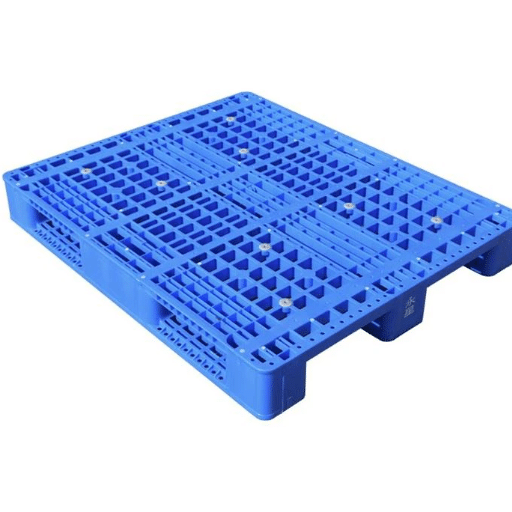
When buying or manufacturing plastic pallets, there are several items that highlight their competency with the supply chain and ensure performance. First, determine all required pallet dimensions concerning local and international standards in the market it faces. Work for assessing what load capacity and durability are needed for the particular application, whether for static loads, dynamic loads, racking capability, or some other specific consideration. Consider the nature of the material into which the pallet is to be made, i.e., high-density polyethylene (HDPE) or polypropylene (PP), since that defines the strength of the pallet and the resistance or conditioning of its worst-case scenario of environmental conditions. Put your optimization work in the last leg of your task for you to appropriately choose the production method/extrusion process-whether employing injection molding, thermoforming, or common compression molding bases, and for your design and required quantity. The selection or manufacturing of plastic pallets is a demanding balancing act between the costs and permissible and indeed effective functions that these pallets fulfill.
Finding a Reliable Plastic Pallet Manufacturer
When searching for a dependable plastic pallet manufacturer, consider essential factors such as expertise in the domain, quality of the product, and the extent of customization options. One should check the background of the company, looking more favorably on companies that have been operating effectively for several years and have gained ground within the marketplace. Look into their range of products to see if they have the right materials and the load capacity to suit your needs. Ensure that the factory meets industry standards and regulations and has suitable certification, such as ISO 9001, or ensure that pallets can comply with FDA requirements.
Additionally, customization capabilities must exist in the reputable manufacturer’s hands. Customized options must be provided for dimensions, branding, or special functionality by those producers. The challenge is to judge their production technologies for their efficiency and scalability, whether one or high-volume orders are on the agenda. Would-be users ought to actually read customer testimonials, case studies, and anything warranty and or post-sales support. Furthermore, to see the level of reliability, one can request samples asked, and transparency toward channels of communication around pricing, lead times, and the forwarder system is most welcome.
Factors to Consider When Purchasing Plastic Pallets
- Material Type and Design: Determine whether you need durable plastic for the weight you will be stacking, or stackable types for stack designs.
- Load Capacity: Scrutinize the pallet in accordance with the weight it needs to haul, considering both static and dynamic load requirements.
- Compliance and Regulations: Ensure compliance with laws and regulations of the industry and check for any sustainable benefits provided by the pallet.
- Quality Testing: Request samples to check the quality and efficacy of the pallets that meet your application requirements.
- Pricing and Support: Clarity regarding price, delivery time, and related warranty or support on the merchandise is essential.
Used Plastic Pallets: Pros and Cons
Pros
- Low Cost: Usually, used plastic pallets are a lot cheaper than new ones, cost-effectively cutting down on routine running overheads.
- Strength: Even those second-hand, they maintain their structure all through, making for a long-term and reliable entity.
- Use of Recycle: Going for the used version of pallets adds substance to environmental sustainability by increasing the life quality of them and thereby cutting down waste. The majority of these are recyclable at the end of life.
- Lightweight: Plastic pallets are lightweight as well: Compared to wooden pallets, plastic pallets are lighter and can be shipped together for safe and easy handling.
- Low Maintenance: Given the fact that they are resistant to moisture, pests, and rot, without regular staining or cleaning, there is very little maintenance that needs to be done with plastic pallets.
Cons
- Scarcity of Supply and Availability: Given the region and specifications, sometimes it may be difficult to find used plastic pallets that perfectly fit the operation requirements.
- Potential Wear and Tear: Though durable, used pallets could display low resilience-such as reduced load capacity or service longevity in harsh applications.
- Reduced Customization Options: Precedent size and configurations of second-hand pallets are bound to offer a structure not suitable for all logistics requirements.
- Higher Initial Outlay (Compared to Wood): Though being long-term cost-effective, plastics tend to be expensive to acquire compared to used hardwood pallets on a per-piece basis.
- Limited Quality Varying: Their condition can differ significantly, making the requirement for an exceptionally thorough inspection to confirm appropriateness for their intended purposes.
Important Consideration: Deciding between new and used plastic pallets becomes less heavy when envisioning and working through those considerations as they are tic-tac-toe with the operational target. Typically, a once-over for quality should suffice; then there lies the chance for a qualitative consideration of advantages toward less maintenance and recyclability.
Conclusion: The Future of Plastic Pallets in Supply Chain Management
Stackable and nestable plastic pallets represent a revolutionary advancement in modern logistics and supply chain management. Their unique combination of durability, versatility, and environmental sustainability makes them an indispensable tool for businesses across diverse industries. From the food and beverage sector to pharmaceuticals, automotive manufacturing, and e-commerce, these innovative platforms have proven their worth by delivering exceptional performance while addressing critical operational challenges.
The benefits of plastic pallets extend far beyond their immediate functional advantages. Their resistance to moisture, chemicals, and pests ensures product safety and reduces contamination risks, making them ideal for industries with stringent hygiene requirements. The lightweight yet robust construction translates to significant cost savings in transportation and handling, while their compatibility with automated systems streamlines warehouse operations and enhances overall efficiency. The space-saving capabilities of nestable designs and the load-bearing strength of stackable and rackable varieties provide businesses with flexible solutions tailored to their specific needs.
As global trade continues to expand and environmental consciousness becomes increasingly important, plastic pallets offer a sustainable alternative to traditional wooden pallets. Their recyclability, extended lifespan, and exemption from ISPM-15 regulations make them the preferred choice for international shipping. The ability to customize dimensions, materials, and features ensures that businesses can optimize their supply chain operations while maintaining compliance with industry standards and regulations.
When selecting plastic pallets, whether new or used, businesses must carefully consider factors such as load capacity, material type, size specifications, and manufacturer reputation. The investment in high-quality plastic pallets from reliable manufacturers pays dividends through reduced maintenance costs, improved operational efficiency, and enhanced sustainability. As manufacturing technologies continue to advance, the future of plastic pallets looks increasingly promising, with innovations in materials science and design engineering pushing the boundaries of what these essential logistics tools can achieve.
In conclusion, stackable and nestable plastic pallets are not merely transportation and storage solutions—they are strategic assets that enable businesses to compete effectively in today’s fast-paced, globalized marketplace. By embracing these advanced platforms and understanding their full potential, companies can optimize their supply chain operations, reduce environmental impact, and position themselves for long-term success in an ever-evolving industrial landscape.
Expert Recommendation: This comprehensive guide provides detailed information about stackable and nestable plastic pallets for educational and professional purposes. When selecting pallets for your business operations, always consult with industry experts, verify compliance with relevant safety and quality standards (ISO 9001, FDA, ISPM-15), and conduct thorough quality inspections. Proper selection and maintenance of plastic pallets will ensure optimal performance, safety, and return on investment for your supply chain operations.
Reference Sources
Operational Concept of an Innovative Packaging Management System
Behavior of Steel Storage Pallet Racking Connection: A Review
Pallet of Weighing Sensor Error Calibration Device: FEM Analysis and Optimization
Frequently Asked Questions (FAQs)
What advantages do plastics need to have over wood in their typology?
In contrast to wood pallets, plastic pallets have a longer shelf life; they are water-resistant and chemical-resistant. They are insect- and bacteria-resistant due to their impervious nature, making them suitable for industries with high sanitary standards. This has a way of conserving resources and reducing waste, as a plastic pallet can serve designated functions for a good length of time.
What are some common sizes for plastic pallets available in the market?
48″ x 40″ is the standard size for plastic pallets, which is the most widespread size out there; however, there also exists a wide array of plastic pallets at various sizes, including, but not limited to, half pallets and custom-designed plastic pallets to fit the customer’s specific requirements.
How could plastic pallets help reduce waste within the supply chain?
Plastic pallets are made of high-density polyethylene, which is highly durable and recyclable. Serving a greater service life reduces the flow of waste from wooden pallets, which are usually deemed as disposable.
How do I select plastic shipping pallets for my goods?
Bear in mind the needed pallet size, product weights, as well as the choice of whether the range of plastic pallets to choose from should include one with a solid top for more stability. Very important to choose the pallet that suits one’s exact shipping and storage requirements.
Which materials are used to make durable plastic pallets?
Durable plastic pallets are usually made from high-density polyethylene (HDPE), which adds durability and tear resistance. Many pallets may comprise a reuse of materials that is very beneficial when it comes to bettering sustainability.
Aren’t plastic pallets very hygienic and easy to sanitize?
Yes, much easier to sanitize. From this point, these pallets are quite suit special industries in cases of high hygiene levels. Smooth surfaces, solventless and extra resistant to moisture, will decrease the harboring of contaminants from wood pallets on their surfaces.