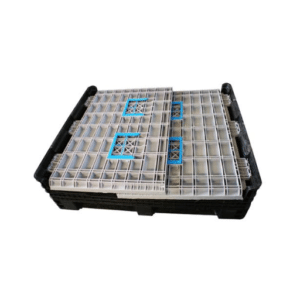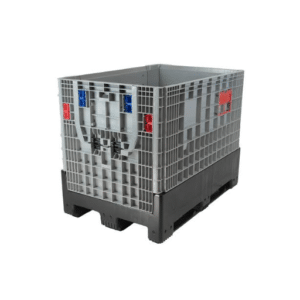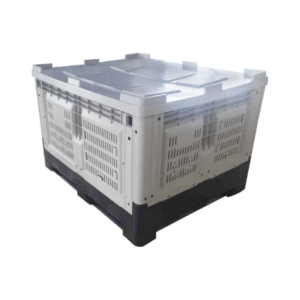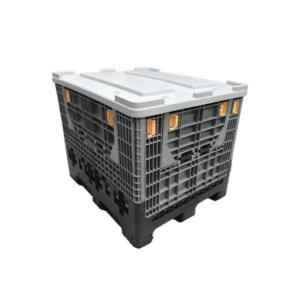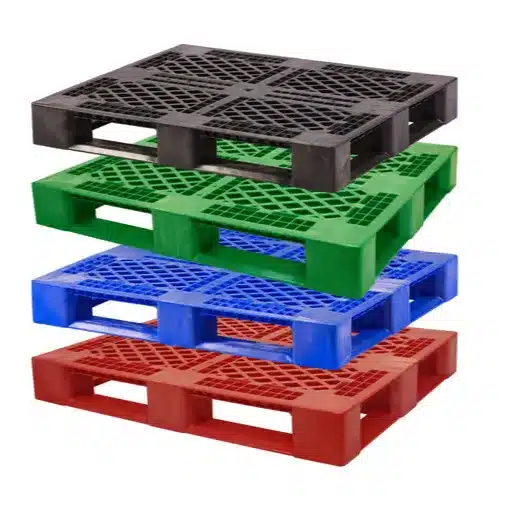

Color coded plastic pallets are plastic platforms manufactured in specific colors to visually identify product categories, hazard levels, compliance zones, or pallet ownership in warehouses and supply chains. They help operations teams reduce errors, prevent cross-contamination, and speed up visual identification without relying on labels or scanning devices.
Last March, Maria watched a loader at her food plant move a pallet of raw wheat flour into the finished-goods dispatch lane. The pallet looked identical to the one next to it. By the time the shift supervisor noticed, 400 bags had been staged for the wrong customer. The recall cost the plant three days and $18,000. Maria’s story is more common than most managers admit, and it is exactly why color coded plastic pallets are gaining traction in food, pharmaceutical, and logistics operations worldwide.
If you manage a warehouse or production floor, you already know that visual clutter kills efficiency. In this guide, you will learn what each pallet color means, how to design a color-coded system for your facility, and what to ask when sourcing custom color plastic pallets. We will cover industry-specific color standards, compliance connections, a step-by-step implementation plan, and how color coding compares with labels and RFID.
Key Takeaways
- Color coded plastic pallets turn ordinary platforms into visual management tools that cut picking errors and support HACCP/GMP compliance.
- Blue commonly signals food-grade/FDA-compliant pallets, red marks high-risk or hazardous zones, and white is preferred for hygiene-critical areas.
- A successful rollout limits the palette to 3-6 colors, documents the rules, and trains staff before pallets hit the floor.
- Combining color with barcodes or RFID gives the strongest traceability for recall-ready supply chains.
- Custom colors are widely available from manufacturers, but MOQs, lead times, and material certificates vary by supplier.
What Are Color Coded Plastic Pallets?
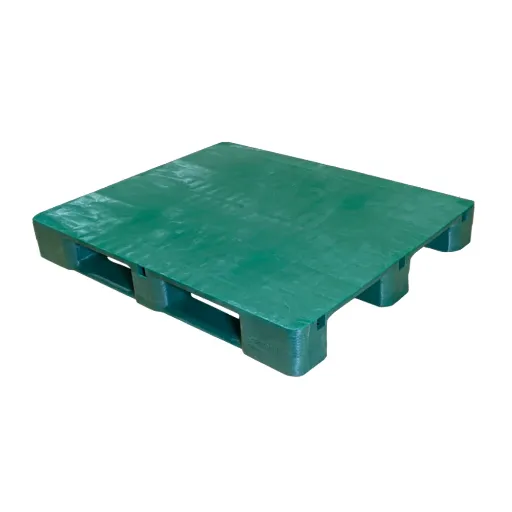
Color coded plastic pallets are exactly what the name suggests: pallets molded from colored resin so the entire unit, not just a sticker, communicates information. The embedded color is added during manufacturing, which means it will not peel, fade, or transfer onto products the way paint or labels can.
Unlike standard black or blue pallets, a plastic pallet color coding system assigns meaning to each hue. One color might identify raw materials, another might flag allergen-containing products, and a third might separate returnable assets from export shipments. The result is a warehouse floor that speaks visually. Workers can spot a misrouted load from across the dock instead of stopping to scan a tag.
Most color coded plastic pallets are produced from high-density polyethylene (HDPE) or polypropylene (PP). HDPE pallets are especially common for food, pharmaceutical, and cleanroom applications because the material is hygienic, impact-resistant, and meets strict regulatory requirements. Recycled resin is common for general industrial use, where compliance demands are lower and sustainability goals matter. For a broader overview of pallet materials and design choices, see our complete guide to plastic pallets.
Want to see how custom colors fit your workflow? Request a Lile pallet sample or quote and our team will match your color scheme to your operational zones.
Why Color Coded Plastic Pallets Matter: 6 Operational Benefits
The human brain processes color faster than text. That single fact explains why color coded plastic pallets can outperform barcodes or written signs in fast-moving environments. Here are six benefits that drive ROI for operations using color coded plastic pallets.
1. Faster Visual Identification
Workers do not need to walk up to a pallet and read a label. A red pallet from 30 feet away says “hazard” or “quarantine” instantly. In high-volume operations, that speed compounds across every shift.
2. Fewer Picking and Shipping Errors
Color creates a second layer of verification. If the outbound lane is only for blue pallets and a red one appears, the mismatch is obvious before the truck leaves the dock. Facilities that combine color coding with clear zone markings often report fewer misloads and returns.
3. Stronger Safety Culture
Red, orange, and yellow pallets can signal hazardous materials, high-priority shipments, or restricted zones. Bright colors also improve visibility in low-light warehouses and reduce forklift collision risks.
4. Simplified Compliance and Audits
HACCP, GMP, BRC, and FSMA all rely on clear separation between risk zones. A documented color system gives auditors immediate evidence that your facility controls cross-contamination and allergen exposure.
5. Better Asset Tracking
In pooling networks and multi-site operations, color can identify ownership or asset class. CHEP uses blue, LPR/Loscam uses red, and IPP uses brown. Internal fleets can adopt the same logic to stop pallets from walking out the door with the wrong carrier.
6. Leaner 5S Organization
Color coding supports the 5S principle of “Set in Order.” When every color has a defined home, maintaining discipline becomes easier and new employees learn the layout faster.
According to operational studies cited by warehouse efficiency specialists, color coding can reduce search time and routing errors significantly. One analysis estimates that a facility handling 500 pallets daily can save roughly 15 labor hours per day through faster visual verification. Those hours convert directly into labor savings and throughput capacity. Learn more about warehouse color coding efficiency from ASG Services.
Plastic Pallet Color Coding Meanings by Industry
There is no single global law that mandates plastic pallet color coding, but strong industry conventions have emerged for color coded plastic pallets. Below are the most widely accepted meanings.
Food & Beverage
| Color | Common Meaning |
|---|---|
| Blue | Raw ingredients / allergen-free / FDA-compliant food-contact zones |
| Red | Raw meat / high-risk / quarantine / non-conforming goods |
| White | Finished goods / dairy / bakery / highest-hygiene areas |
| Yellow | Allergen-containing products / caution |
| Green | Produce / organic / returned pallets approved for reuse |
| Black | Waste handling / non-food contact / maintenance |
Blue is the most recognized food-grade color for color coded plastic pallets because it is usually produced from virgin resin and is easy to spot against common product packaging. White is popular in dairy and bakery operations because contamination shows up quickly on a light surface. For more detail on food safety requirements, read our plastic pallets for food industry guide.
Pharmaceuticals & Healthcare
| Color | Common Meaning |
|---|---|
| White / Blue | Cleanroom / GMP-released materials |
| Yellow | Quarantine / hold pending release |
| Red | Rejected / non-conforming / recalled goods |
| Green | Approved for shipment |
Pharmaceutical operations favor smooth, closed-deck pallets in light colors. The surfaces are easier to inspect for residue, and color segregation aligns with GMP expectations for status control. Our pharmaceutical plastic pallets guide covers the full compliance picture.
Chemicals & Hazardous Materials
| Color | Common Meaning |
|---|---|
| Red / Orange / Yellow | Flammable, corrosive, or hazardous loads |
| Gray / Black | General industrial / non-hazardous materials |
In chemical handling, color coding often overlaps with ISO 3864 safety colors and OSHA hazard communication standards. The goal is to alert handlers and emergency responders before they touch the load.
Logistics & Pallet Pooling
| Color | Common Owner/Use |
|---|---|
| Blue | CHEP (Brambles) |
| Red | LPR / Loscam / PECO |
| Brown | IPP pooling network |
These colors are brand identifiers as much as operational signals. Receiving teams learn to separate pool pallets at a glance, which simplifies return logistics and reduces rental fees.
Color Coded Pallets and Regulatory Compliance
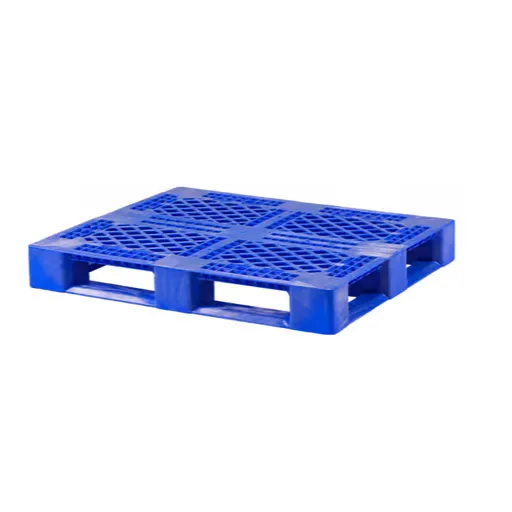
Color alone does not make color coded plastic pallets compliant, but it is a powerful visual control that supports several regulatory frameworks.
HACCP and Allergen Control
Hazard Analysis and Critical Control Points (HACCP) requires facilities to identify and control physical, chemical, and biological hazards. Color-coded zones and color coded plastic pallets support zone segregation by preventing cross-contact between raw and finished goods, and between allergen-containing and allergen-free products. The color system becomes a documented CCP when it is written into standard operating procedures and validated through training.
FDA and EU Food-Contact Rules
In the United States, food-contact plastic pallets should meet FDA 21 CFR §177.1520 for olefin polymers. In Europe, EU regulation including Regulation (EC) No 1935/2004 and 10/2011 set similar requirements. Color-coded food-grade pallets are typically molded from virgin HDPE or PP, and the pigment itself must be food-safe. Always verify material certificates rather than relying only on color.
ISO 3864 Safety Colors
ISO 3864 defines standard safety colors for hazard identification. Red means danger, yellow means caution, and green means safety or first aid. Facilities handling chemicals can align pallet colors with these standards to reinforce existing signage.
ISPM-15 Exemption
Unlike wood pallets, plastic pallets are exempt from ISPM-15 heat treatment or fumigation requirements. That makes color-coded plastic pallets particularly attractive for export operations that need both visual identification and simplified customs clearance.
BRC and FSMA Audit Readiness
BRC auditors look for documented allergen controls and zone segregation, while FSMA emphasizes preventive controls and traceability. A written color-coding policy, combined with photographs and training records, gives auditors clear evidence of your controls. Pairing color with RFID or barcodes adds the traceability layer that recall plans require. For temperature-sensitive supply chains, see our guide to cold storage plastic pallets.
How to Implement a Color-Coded Pallet System
James runs a 3PL warehouse that ships consumer electronics during the holiday rush. Two years ago, his team mixed up inbound returns with outbound new product because both loads sat on identical black pallets. After switching to green for returns, blue for new outbound, and yellow for high-value expedited orders, misloads during peak season dropped by nearly half. New temps learned the system in minutes instead of days.
If James’s experience resonates with you, use the following rollout plan.
Step 1: Map Your Workflow and Risk Zones
Walk the floor and identify where products change status. Typical zones for color coded plastic pallets include receiving, raw materials, work-in-process, quarantine, finished goods, outbound shipping, and returns. Each zone is a candidate for its own pallet color.
Step 2: Choose a Tight Color Scheme
Limit the system to 3-6 colors. Too many colors create confusion and slow decision-making. Choose high-contrast hues that remain distinguishable under your warehouse lighting, and test them with color-blind employees if possible.
Step 3: Document the Rules
Write a one-page standard operating procedure that defines each color, where it may be used, and how pallets are cleaned or retired. Post the chart at every dock and production entrance.
Step 4: Train Before Launch
Do not hand out colored pallets and hope for the best. Run a short training session with photos of correct and incorrect placements. Quiz employees on common scenarios, such as what to do if a red pallet appears in a finished-goods lane.
Step 5: Combine with Labels or RFID for Traceability
Color is excellent for visual management, but it is not a unique identifier. Add barcodes, QR codes, or RFID tags for lot tracking, recalls, and automated warehouse systems. The combination of color plus data gives you both speed and accuracy.
Step 6: Audit and Refine Quarterly
Check compliance during gemba walks. If one color keeps appearing in the wrong zone, the rule may be unclear or the color may be too similar to another. Adjust and retrain as needed.
Sourcing Custom Color Coded Plastic Pallets
Once you know your color scheme, the next step is finding a manufacturer that can deliver custom color plastic pallets consistently. Not every supplier offers the same color flexibility, so ask these questions before you order.
Standard Colors vs. Custom Colors
Many manufacturers stock common colors such as blue, black, gray, green, red, and white at no extra cost. Custom Pantone matching, logo embossing, or branded colors usually require a dedicated production run and may carry a tooling or setup charge.
Minimum Order Quantities
Standard colors often ship in small quantities. Custom colors typically require MOQs ranging from 200 pieces for simple tint changes to 3,000+ pieces for fully custom resin formulations. Match your order size to your rollout plan.
Material Certificates
For food, pharmaceutical, or export applications, request certificates of analysis, FDA or EU compliance statements, and load capacity test reports. The color should be embedded in the resin, not painted on, to avoid chipping or contamination.
Lead Times and Logistics
Standard colors may ship in days. Custom colors can take several weeks depending on mold availability and resin procurement. Plan your timeline around production peaks and audit schedules.
At Shandong Lile, we manufacture color coded plastic pallets in virgin HDPE and PP with Pantone color matching, custom dimensions, and steel reinforcement options. Our ISO 9001 quality system supports facilities in more than 108 countries. For a deeper look at the design process, read our custom plastic pallets guide.
Color Coded Pallets vs. Alternative Identification Methods
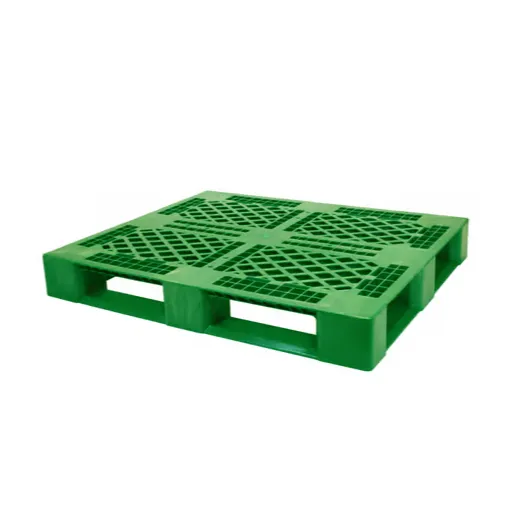
Color coding is not the only way to identify color coded plastic pallets. Here is how it compares with the two most common alternatives for managing color coded pallets.
Color Coding vs. Adhesive Labels
Labels are cheap and easy to change, but they can peel, fade, or fall off. They also require workers to stop and read. Color-coded pallets communicate status at a distance and survive pressure washing and rough handling better than most labels.
Color Coding vs. RFID or Barcodes
RFID and barcodes provide unique, scannable data for traceability and automation. However, they do not give instant visual cues. The best operations use color for human recognition and RFID for machine-level tracking.
When to Combine Systems
Use color coding for zone and status identification, and RFID or barcodes for lot numbers, serial numbers, and recall data. This layered approach gives you the speed of visual management plus the precision of digital traceability.
FAQ
What do blue plastic pallets mean?
Blue plastic pallets usually indicate food-grade or FDA-compliant pallets made from virgin resin. They are common in food and beverage operations where hygiene and allergen control matter.
Are color coded pallets required by law?
No universal law mandates pallet colors. HACCP, GMP, and ISO 3864 provide frameworks, but specific color schemes are usually set by individual companies or industries.
Can plastic pallets be custom colored?
Yes. Most manufacturers offer a range of standard colors, and many can match custom Pantone shades or add logos. Custom colors typically require higher MOQs and longer lead times.
What is the best color for food-grade plastic pallets?
Blue is the most widely recognized color for food-grade plastic pallets, followed by white for high-hygiene areas such as dairy and bakery.
How many colors should a warehouse color-coding system use?
Aim for 3-6 colors. Too many colors create confusion and make training harder. Each color should map clearly to a single status or zone.
What is plastic pallet color coding used for?
Plastic pallet color coding is used to visually separate product categories, hazard levels, and compliance zones. Common applications include food grade plastic pallets color standards for allergen control, pharmaceutical quarantine zones, and hazardous material handling.
Conclusion
Color coded plastic pallets are a small change that delivers outsized returns. They cut errors, strengthen safety, simplify audits, and make warehouses easier to run. The key is to treat color as part of a system, not a decoration. Choose meaningful colors, document the rules, train your team, and layer on barcodes or RFID when traceability matters.
At Shandong Lile, we help operations teams design color coded plastic pallets and color-coded pallet systems that match their exact workflow, compliance needs, and brand standards. Whether you need food-grade blue pallets, pharmaceutical white pallets, or a fully custom color scheme, our team can guide you from specification to delivery.
Ready to reduce misloads and simplify compliance? Contact Lile today for a free consultation and custom quote on color coded plastic pallets.