The choice of pallet can greatly impact the operational performance of your material handling and logistics, and among the available options, 2-way and 4-way pallets remain the most used. Each of these pallet types is designed according to the requirements of specific industries. However, if they are so similar, what exactly is the difference, and how do you pick one over the other for your application? This article will reveal all the structural differences, along with the functionality and the practical applications, of the two pallet types. By gaining an understanding of their distinctive qualities, you will be able to formulate better decisions regarding your supply chain processes that will lead to increased efficiency and reduced costs.
Pallet Basics
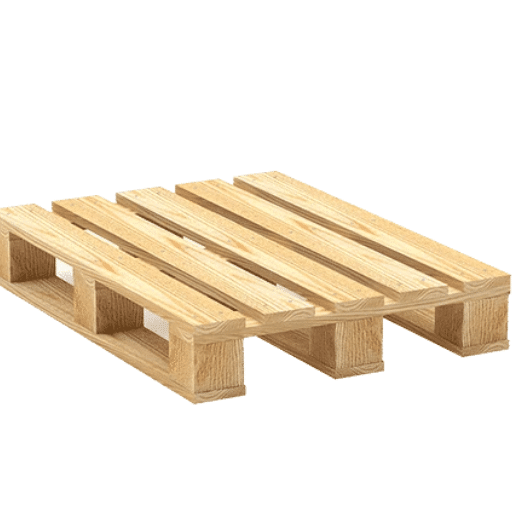
Pallets are flat structures made for holding goods and materials during the time they are stored or moved. The most popular categories are wood and plastic pallets. Wood pallets are generally used as they are affordable and durable, and can be used in heavy-duty applications. On the other hand, plastic pallets are chosen for their long life, moisture resistance, and hygienic compliance. The decision is made based on various factors, including price, weight limit, and the particular needs of one’s delivery system.
What is a Pallet?
A pallet is a flat and stable platform that is frequently used in supply chains and warehouses for the purposes of storing, transporting, and handling goods. Pallets are usually made from materials like wood, plastic, or metal, and they are built to give goods an additional layer of support, which allows for moving them around easily through the use of forklifts, pallet buggies, or conveyors. There are different standard pallet sizes for various regions, with 48″ x 40″ among the most popular dimensions in the United States. Their design makes for easy stacking and provides a barrier between goods and the ground, thus optimizing the use of space and the overall handling of goods. Pallets are a must-have in today’s shipping process as they not only ensure quick and inexpensive shipping but also comply with the required standards of the industry.
Types of Pallets
Pallets can be categorized in terms of materials used, design, and purpose. The trio of pallets that are most often seen worldwide is:
Wooden Pallets
Wooden pallets have gained great popularity because they are inexpensive, strong, and easy to repair. They can carry heavy loads and can either be designed for single use (disposable) or repeated use. On the other hand, the wooden pallets can be affected by moisture, splintering, and bug infestations, which may necessitate treatment to adhere to international shipping standards like ISPM-15.
Plastic Pallets
Plastic pallets are not only known for their durability but also for their moisture resistance. They are often used in industries that require a high level of cleanliness, such as pharmaceuticals and food processing. They do not splinter or absorb contaminants and are lightweight, which also makes them suitable for air freight. Their cost is higher than that of wooden pallets, but the combination of their long lifespan and recyclability makes them a cost-effective option in the long run.
Metal Pallets
Metal pallets that are usually made of either steel or aluminum are those that are preferred in heavy-duty applications, as they provide maximum load capacity and durability. They can withstand very high or very low temperatures, and their ability to resist corrosion (depending on the metal), plus the fact that they are not easily damaged even by heavy handling, makes them very attractive to industries. The high cost of metal pallets prevents a wide range of applications, but still, they play a crucial role in some industries, like military and chemical ones, where specialized applications require them.
All four types of pallets can accommodate various operational and regulatory requirements, making it imperative to choose the right type of pallet according to the application, load type, and environmental conditions.
Material Handling with Pallets
Material handling using pallets is a major part of logistics and supply chain management, which guarantees good storage, transportation, and distribution. Pallets are manufactured to help the load’s stability, to use the space in the best way possible, and to allow products to move quickly through the facilities. When choosing a pallet for material handling, one must take into account the type of goods being transported as well as their weight and fragility, and the environmental conditions like temperature or humidity.
The wooden pallets are the most widely used ones due to their cost-effectiveness and great availability, which makes them appropriate for almost all applications. On the other hand, plastic pallets are preferred in the food and pharmaceutical industries that demand a high level of hygiene and reusability because they can be cleaned easily and do not get mold or pests as easily as wood. Metal pallets, although they come at a higher price, are used in applications with great weights and special conditions requiring high durability and the ability to withstand extreme conditions.
In order to get the most out of the material handling procedures, one should implement the proper stacking techniques, apply load securing methods, and select equipment that is compatible with the pallet type, such as forklifts or pallet jacks. These techniques not only lead to a higher operational efficiency but also to an increase in the safety of the workers and support in regulatory compliance in tasks related to storage and transportation.
Understanding 2-Way and 4-Way Pallets

The main difference between the 2-way and 4-way pallets is how they are handled and their accessibility. The 2-way pallet allows for entry on two opposite sides only, which are usually the two shorter sides of the pallet, hence making it suitable for applications with specific directional handling. On the other hand, a 4-way pallet allows entry with a forklift or pallet jack on all four sides, hence providing greater flexibility in movement and positioning. The 4-way design is better for high-density storage systems or areas where loading and unloading processes must be efficient. The choice between these types will be based on the operational needs, handling equipment, and storage configurations.
Defining 2-Way Pallet
A 2-way pallet is made to allow the entry of forklift tines or pallet jack forks on only two opposite sides, which are traditionally the front and back. This is done by cutting notches on the sides that allow easy handling in straightforward, bi-directional operations. 2-way pallets are cost-effective and structurally strong, but they are best used in applications where little maneuverability is required. Mainly wood and plastic are the materials used for making these pallets, and they are usually employed in the industries where the space is tight, thus making them an inexpensive option for simple supply chain processes. Nevertheless, the somewhat limited access compared to 4-way pallets can reduce their effectiveness in intricate logistics networks or crowded warehouse areas.
Defining 4-Way Pallet
A four-way pallet enables the entry of a forklift from all four sides, which greatly increases the flexibility and effectiveness of the material handling operations. Usually made from wood, plastic, or metal, these pallets are the most popular option in industries that need storage and transportation solutions to be versatile. The four-way design does cut down the time for pallet orientation and does make it easy to connect with the high-density storage systems and automated warehouses. Even though they are pricey compared to the two-way pallets, their strength and operational versatility justify the expense, thus making them a must-have for the logistics networks with a complex nature and for places where space optimization is a critical issue.
Key Differences Between 2-Way and 4-Way
| Feature | 2-Way Pallets | 4-Way Pallets |
|---|---|---|
| Forklift Access | Can be accessed from two opposite sides only (usually front and back), limiting movement in cramped storage areas | Open for access from all four sides, providing much more freedom with orientation and material handling |
| Cost Efficiency | More economical due to less complicated design; best for single-use or less demanding applications where low cost is the main concern | More expensive but offer better long-term value in high-demand operations due to durability and versatility |
| Automated Systems | Limited compatibility with automated warehouse systems; few entry points may serve as bottlenecks | High compatibility with automated systems, conveyors, and high-density racking; perfect for modern logistics networks |
| Strength and Longevity | May become unusable more quickly with frequent handling and heavy loading, especially wooden variants | Designed to withstand heavy loads and have long life; usually made of strong materials like plastic or metal |
| Space Optimization | Limited access may result in less efficient use of warehouse storage space | Simplifies stacking and retrieval operations, significant factor in space optimization, especially in busy or small facilities |
All these differences signal the importance of selecting the right pallet type depending on the operational needs, budget limitations, and the level of integration of the supply chain’s system.
Pros and Cons of Each Pallet Type

2-Way Pallets
Pros:
- The primary expense of 4-way pallets is lower.
- They are good for transporting and storing the most basic items.
- They are usually lighter, so in some cases, handling will require less power.
Cons:
- Due to only 2 access points, they can not use the most modern warehouse equipment.
- They are not suitable for high-density storage or operations with constant change.
- They cannot be employed in automated or complex supply chain systems as much as 4-way pallets.
4-Way Pallets
Pros:
- Access on all sides makes it possible to use a forklift and a pallet jack more efficiently.
- Very good in the field of storage and handling, especially in tight or busy warehouses.
- They are the best fit for automated systems and global supply chains.
Cons:
- The upfront cost is higher than with 2-way pallets.
- The weight may be a bit more, which may affect the cost of transport.
- It may not be required at all for small operations that are using minimal equipment.
Advantages of 2-Way Pallet
- Cost-Effective Production: The construction of 2-way pallets is easier, which lowers their cost of production when compared to 4-way pallets. This makes them a financially easy option for companies with not much money to spare.
- Lightweight Design: 2-way pallets are usually lighter than 4-way pallets, so they can help to cut transportation costs, especially in the case of shipping over long distances.
- Adequate for Less Complex Operations: Perfect for companies that have simple needs for handling, like manual lifting or operations that are not heavily reliant on machines, like forklifts or automated systems.
- Durability and Strength: Even though 2-way pallets are designed simply, they still offer enough strength and stability for most standard applications.
This design perfectly balances the trade-off between price and usage, hence being a wise choice for the small to medium-scale operations.
Advantages of 4-Way Pallet
- Versatile Accessibility: One notable advantage of 4-way pallets is the fact that they can be lifted with a forklift or pallet jack from any of their four sides. This feature significantly improves the efficiency of operation, especially in places where the space for moving around is very limited.
- Improved Warehouse Optimization: The handling capability of 4-way pallets being versatile enables storage arrangements to become more flexible and therefore efficient, thus simplifying the overall process of running a warehouse and taking full advantage of the space available.
- High Durability Options: Generally made out of very strong materials like hardwood, plastic, or metal, the 4-way pallets can not only handle but also last longer and thus be the perfect choice for tough applications in different industries.
- Enhanced Compatibility with Automated Systems: These pallets perfectly suit automated material handling systems due to the universal access design, permitting smooth integration with conveyors and robots.
- Global Standardization: Often meeting or exceeding international shipping and warehouse standards, 4-way pallets are a good option for global trade companies since they will reduce logistics problems and handling issues by working more efficiently with them.
In summary, the combination of all these features makes 4-way pallets a strategically planned investment by businesses that look forward to improving their operation’s efficiency and even scaling up.
Disadvantages of Each Type
Stringer Pallets
Although stringer pallets are the most commonly used type of pallet due to their low price and simple construction, they are not the best choice for heavy loads or repeated use. They may also not be designed for four-way forklift access, and, therefore, flexibility in some operations may be limited.
Block Pallets
Block pallets are strong and adaptable to various applications, but their high price compared to stringer-type pallets may discourage some budget-limited companies from choosing them. Additionally, the extra weight carried by block pallets may lead to higher transportation costs and less efficient handling when done manually.
Plastic Pallets
The downsides of plastic pallets are their high purchase cost, as well as their being less suitable for really heavy stuff and possibly breaking when stressed a lot. Recycling and disposal are also issues that might need to be considered, especially in locations with limited options for proper disposal.
Metal Pallets
Usually fantastically durable and capable of taking a heavy-duty application, the price of metal pallets is the highest. Their weight can significantly block a company’s operations and support the need for specific handling equipment. Moreover, without an appropriate coating, metal pallets are prone to rusting, especially in damp conditions.
There is no general conclusion since every pallet type has not only its advantages but also distinct disadvantages that necessitate careful assessment depending on the company’s specific operational needs, financial limitations, and long-term aspirations.
Applications in the Supply Chain
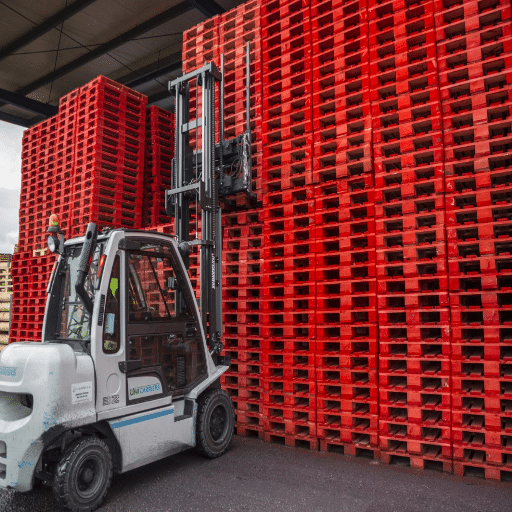
Pallets are crucial in the supply chain as they make it easier to move, store, and handle goods in a way that saves time and money. They are commonly used in warehouses to build and sort products, thus making the best use of the available space. The use of pallets during transport makes the goods more stable, thus lowering the chance of getting harmed while making the loading and unloading quicker. They also promote uniformity in logistics, and thus, the use of forklifts, pallet jacks, and automated systems becomes more compatible. In the end, the use of pallets throughout different stages of the supply chain leads to the cost and operational efficiency of companies.
When to Use 2-Way Pallets
2-way pallets, which are sometimes referred to as stringer pallets, are typically used in situations where the load has to be moved in just one direction. They are frequently seen in places with very little handling involved or where only two sides of the pallets are expected to be entered by forklifts. These pallets are excellent for certain types of storage facilities, like selective racking, where the issue of getting to the goods from more than one direction is not important. Since 2-way pallets are simpler in design, they tend to be more economical, thus suitable for one-way shipping, exporting, and low-budget operations, and the like. Furthermore, they are capable of providing enough support for even distribution of heavy weights that do not need to be moved frequently, namely, through the supply chain.
When to Use 4-Way Pallets
4-way pallets are the best choice for those operations where the utmost flexibility and efficiency in material handling are needed. Their very nature makes it possible for forklifts and pallet jacks to reach them from all four sides, which results in a considerable improvement of the maneuverability, especially in compact storage areas or busy facilities. This trait makes them perfect for industries with automated systems, like warehouses or factories, where precision and time optimization are very important. Moreover, 4-way pallets are perfect for international shipping, as their robustness and multiple access points help loading and unloading become faster and easier. Even though they may be more expensive at the beginning, the durability, compatibility with different handling systems, and the operational efficiency they offer very often make the investment worth it for companies with huge, ever-changing logistics needs.
Impact on Material Handling Efficiency
4-way pallets are the way to go when it comes to efficiency in material handling, as they not only allow the company to have better control over the workflow but also to save on labor costs. Their design that is specifically made for such equipment allows the forklift or pallet jack to access the pallet from any side, which eliminates the need for extra handling in small warehouse spaces. Besides, the fact that these pallets are of standard size makes them compatible with machines that automate the task of moving materials, like conveyor belts and robotic palletizers, which leads to their easy incorporation into contemporary supply chains. This flexibility helps to avoid situations where loading and unloading of materials takes too long, which in turn increases the overall productivity of the area where high volumes are processed. On top of that, the sturdy construction of these pallets means that the risk of losing goods when transporting them is very low, and this, in turn, results in more reliable handling and lower costs over time. Consequently, 4-way pallets are the source of the synergy between efficient and sustainable material handling operations.
Comparing Pallet Handling Techniques

The methods used for pallet handling are mainly classified according to the following criteria: efficiency, cost-effectiveness, and compatibility with warehouse operations. Manual pallet handling, although initially cost-effective, is labor-intensive and thus exposes workers to ergonomic strains, which can lead to safety hazards. On the other hand, the forklift-based method provides faster operations and less energy consumption, but the cost of equipment and maintenance is a drawback. Automated pallet handling systems, which consist of conveyor belts and robotic palletizers, offer the highest level of efficiency and scalability, especially in high-volume operations, thereby requiring substantial upfront investment. Choosing the right method is determined by the operation’s specific size, scale, and requirements, and it involves weighing the trade-offs between cost and productivity.
Using Forklifts with Different Pallet Types
For forklifts working with other types of pallets, compatibility is a must for purposefulness and safety. Different pallet designs, such as standard, Euro, or custom pallets, may vary in dimensions, load capacities, or port configurations. Forklifts should be fitted with adjustable fork arms to cater to these differences, thus properly engaging the pallet and securing the load. Operators have to take into consideration the distribution of weight on the pallet and its structural integrity to avoid any chances of damage when handling. Special attachments like clamps or rotators may be required for safe handling of peculiar-shaped or square pallets. Forklift and pallet inspections help maintain and reduce the chances of operational failures due to wear and tear. In the end, matching the forklift and attachments to the pallet specificities enables material handling safely and efficiently across different working conditions.
Best Practices for 4-Way and 2-Way Pallet Handling
At my worksites, I make sure the type of equipment and method of handling correspond to the pallet type in question, ensuring safety and efficiency. With 4-way pallets, I try to work with forklifts or pallet jacks that can enter from all four sides to allow better maneuverability in constrained areas. For 2-way pallets, the emphasis is on ensuring fork alignment with the two designated entry sides, so the pallet will not be damaged. Inspections can be done regularly on the items of my use, such as pallets and other equipment, to spot a problem before it arises, thus reducing risk during operations.
Choosing the Right Pallet for Your Needs
Key Considerations for Pallet Selection
Several factors should be considered when choosing appropriate pallets for a particular use to ensure compatibility and operational efficiency. Pallets are to be selected based on their material composition. Such pallets are normally considered for general purposes, as the wooden ones are strong and cheap. Plastic pallets have good moisture and chemical resistance, and are thus used in the pharmaceutical and food industries. Metal pallets, being expensive, are highly durable and bear the heaviest loads, and thus are suitable for special-load applications.
Then think about how much load it requires to be carried out. Consider the static or dynamic load-bearing capacities for whatever weight or kind of goods you want to transport or store. Overloading may cause the pallets to lose their balance, thus presenting a risk for operational possibilities. Besides, if your equipment is particular, choose between 2-way entry and 4-way entry pallets. While the 2-way pallet will be fine for just simple handling, a 4-way pallet can enhance your operational efficiency with omnidirectional forklift access.
Another consideration would be the size of the pallet and whether it respects industry standards, e.g., ISPM-15 for international shipments, and sustains environmental causes. A recyclable or reusable pallet means less waste, which aligns with many sustainability agendas. By evaluating these factors, one can locate the option tailor-made to operational needs and logistics constraints.
Decision-Making Summary
When selecting between 2-way and 4-way pallets, consider your operation’s complexity, budget constraints, handling equipment capabilities, storage density requirements, and future scalability needs. While 2-way pallets offer cost savings for simple operations, 4-way pallets provide the flexibility and efficiency required for modern, complex supply chain environments. The right choice will optimize your material handling processes while balancing initial investment with long-term operational benefits.
Reference Sources
The Open Mechanical Engineering
Design Optimization for Pallets in Material Handling
Comparison of the Different Hazards Experienced by Pallets During Material Handling
Frequently Asked Questions (FAQs)
What are the advantages of using a 4-way block pallet?
They come with the added strength of the blocks, making them more durable. These pallets can bear heavier loads and resist rough handling, which is excellent for shipping and storage needs. Moreover, the 4-way accessibility allows easier maneuvering inside warehouses.
How do stringer pallets compare to block pallets?
Stringer pallets are constructed with horizontal beams defined as stringers. These are placed between the deck boards. Block pallets, on the other hand, consist of blocks at the corners, giving them a more solid, sturdier frame. Generally, while block pallets are higher in durability and provide better load support for heavy-duty applications, stringer pallets tend to be lighter and cheaper.
Are there cases when 2-way pallets could lead to cost savings?
Yes, 2-way pallets do bring about some cost savings in using lighter loads or in areas with limited space. Generally, they are less expensive than the 4-way kind due to their simple configuration. On the other hand, you might want to consider the nature of handling required by the operation since a lack of accessibility may halt the process.
What are the common types of materials used in pallet making?
Common pallet materials include wood, plastic, and metal. Wooden pallets, be they block or stringer pallets, remain the traditional kind due to their availability and cost-effectiveness. Plastic pallets confer benefits such as durability and resistance to any kind of moisture. Metal pallets, being very strong, are used where special applications demand such strength.
What is a partial 4-way pallet?
A partial 4-way pallet allows forklift access from three sides, rather than all four. This could be beneficial in instances where there is constrained space or for handling considerations. It offers some alternatives more than a full 4-way pallet, but it may be cheaper in some situations.
How does the difference between two- and four-way pallets affect material handling?
The choice of whether a 2-way or 4-way pallet is used significantly affects the efficiency with which material is handled. A 4-way pallet is easier to handle in tighter spaces because forklifts can enter from any side. As a result, loading and unloading occur faster. A 2-way pallet, on the other hand, can limit access and result in slower handling, especially in distribution centers with high levels of activity.
What considerations must be considered when determining the correct pallet type?
Some of the considerations when selecting the right pallet type are load capacity, durability, efficiency through handling, and cost. When one has fewer operational requirements or has a more specific one, then the one- or two-way access should be considered. Also consider the materials involved in this scenario; it could alter the lifespan and maintenance cost of the pallet. It is also necessary to consider your supply chain logistics to enable the best performance.
What does a pallet supplier do in the overall logistics process?
A pallet supplier is an essential part of any logistics operation for delivering the right kind of pallets based on the customized requirements. A pallet supplier can allow the customers to choose from options such as wood, plastic, or block pallets, which in turn helps them to streamline their material handling process. More importantly, a good pallet supplier may even provide suggestions on how to go about saving money and improving operational efficiencies in the pallet setup.