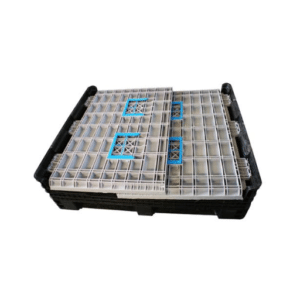
Effective space utilization is critical in today’s supply chain operations, where every square foot is important. Nestable pallets represent a creative and practical solution to one of industry’s age-old compromises—achieves optimal storage and transportation capability without forfeiting functionality. Nestable pallets, when no longer in use, are nested within each other; therefore, reducing storage space, streamlining logistics, and leading to a decrease in costs. The following will examine the specific advantages of nestable pallets, how they influence operational efficiency, and also how they compare to other kinds of pallets. To give you an example of the need to cut transportation charges or reach the maximum in space utilization, understanding the value of the nestable pallet is a very important initial step in contributing to the total effectiveness of the supply chain.
Understanding Nestable Pallets
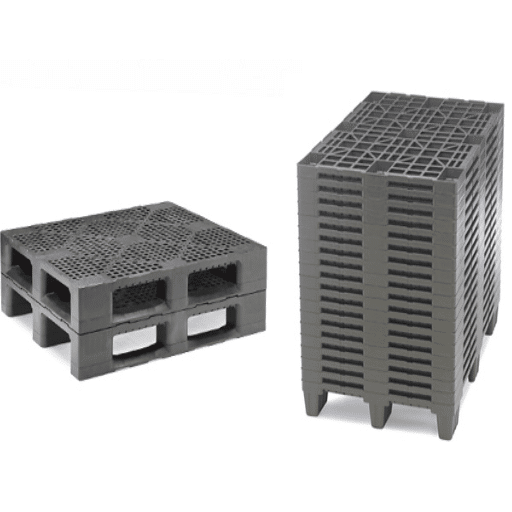
Nestable pallets are specifically designed to stack inside one another for storage when not in use, leading to vast savings in storage and transport space. Supposing such savings were as high as 75%, hypothetical accumulation could match or even exceed the space occupied by every single standing pallet. The material typically used in the manufacture of this type of pallet is polypropylene, making the pallets lightweight but durable. Their simplicity and tabularity have often encouraged their usage in industries renowned for the quest for cost-effectiveness and maximizing warehouse capacity at the same time. The simplicity of these products makes them almost irresistible in industries where easy transportation, handling, and storage imposition a common condition of service.
Definition of Nestable Pallets
Nestable pallets were made to reduce operational costs and maximize storage efficiency. Utilizing an innovative tapered design, the pallets will nest within each other almost perfectly empty, therefore decreasing the space required to store them by 75%. Built primarily from high-density polyethylene (HDPE) or polypropylene (PP), they are durable, lightweight, and fully suited for a wide range of settings due to their resistance to moisture, chemicals, and impacts. Additionally, a reduced weight facilitates an income-driven reduction in transport costs while upholding a considerable load capacity suitable for various applications. In retail, food and beverage industries, alongside logistic industries that require an ability to conserve space, wash easily, and are replenishable, nestable pallets can pay off quite handsomely.
Types of Nestable Pallets
Plastic Nestable Pallets
Such plastic pallets are available in populations made from HDPE (High-Density Polyethylene) or polypropylene, which are generally in use and are lightweight, strong, and resistant to water, chemicals, and shock waves. It is beneficial for such industries as food and beverages, pharmaceuticals, or any industry requiring sanitary protection as a cost-effective measure.
Recycled Pallets
These used-wood compound pallets can be tailored to the eco-friendly image without the direct use of virgin material. The benefits of standard plastic pallets, like durability and cleanliness, are preserved, while environmental protection is the ultimate good for recycled cut-up plastic pallets.
Wood-Hybrid Nestable Pallets
Washed-up wood fibers with resin compound offer an effective prospect at a cost, fulfilling various export requirements. Lightweight build and termites’ absence have also added to their use in logistics and international trading.
All the different types of nestable pallets would offer a unique set of advantages, usually designed for specific industries, bringing to the fore the function of cost-effectiveness, durability, and eco-friendliness.
Comparison with Wood Pallets
Most benefits of nestable pallets result from their higher cost-performance ratio compared to traditional wood pallets. Because they are lightweight, nestable pallets substantially reduce shipping costs by a factor of being lighter in handling and weight during shipping. Unlike wood pallets, nestable pallets made of pressed wood fibers comply with international export regulations—preserving the need for heat-treating them as is required. Moreover, because of the reduced presence of heat or chemical-free wood pallet treatments, they are devoid of infestation, and so do not aggravate pest-control problems associated with wood.
Durability-wise, nestable pallets offer much resistance to moisture and fungal attack compared to untreated wooden pallets and last long in different conditions. Besides being carefully engineered for easy stacking, less storage is required when the pallet is not in use, a feature that is often a bit of a problem for wooden pallet users. Nevertheless, for industries needing to deal with heavy material handling loads, wood pallets are probably more appropriate. Although both serve vital roles in logistics, the choice depends on the business’s specific needs, budget, and compliance requirements.
Key Benefits of Using Nestable Plastic Pallets

- Space Saving: Nestable plastic pallets are designed so that they can be queued within the other one when not in actual use, decreasing space occupancy by up to 75% when compared to the non-nestable ones.
- Durability: The durability of the respective plastic pallets can be viewed from the fact that they endure a high level of contact with watering (sic, pests, and many chemicals, resulting in a lower replacement rate than compared to any other conventional material.
- Substantial Weight Design: Their lightness facilitates easy handling and optimal shipping costs, notably for being cost-effective in air freight applications.
- Hygiene: Plastic pallets are known to have an extreme cleanliness aspect, which is the reason the food and pharmaceutical industries opt to keep them.
- Green: Many of the plastic pallets are recyclable, contradicting the fact that they were non-biodegradable, reducing the impact on the environment towards sustainable logistics.
Space-Saving Advantages
The space-saving advantages of plastic pallets lie in their design, which provides them with stackable features. Their uniform dimension, together with their lighter weight, makes them more conducive to better stacking than wood, resulting in space economy regarding the storage. Many plastic pallets can be nested; they fit neatly one into another when not being used. In addition, they will enable enhanced performance in storage through tight nesting capabilities. Consistency in support during stacking doesn’t mean that they received less space for vertical storage. The characteristics have been greatly beneficial for those businesses looking to make space with storage optimization, cost reduction, and, more importantly, damage prevention.
Cost Efficiency in Supply Chain Management
Cost efficiency in supply chain management is possible when tactics are arranged to minimize costs while maintaining operational quality, in which technology plays an imperative role. Inventory management software surely shoulders to handle variable stock needs and prevent wastage. In cases of minimizing logistic costs, cost-effective means of transportation could be installed, along with, for instance, using the LTL (less truckload) shipping method for smaller delivery processes. JIT inventory systems minimize carrying costs and align inventory purchases with the production schedule. Big buyers are heavily dependent on volume discounts, so they buy fewer items so as not to lower their bulk price. Synergies such as these ease the point where the sum cost savings from these least-cost options put forth by both parties elevate overall profit.
Durability and Longevity
In product design or manufacturing, durability and longevity are of prominent importance as they directly affect lifecycle costs and customer satisfaction. As such, a durable product indicates resistance to wear, pressure, or damage over an extended period of time, thus creating less demand for repairs or eventual replacements. Longevity is just another aspect of durability, about how long a product will run with some comfort under normal conditions. Key to that are materials specifying resilience and good quality, as it is mainly regarding composites, and also design factors that deal with potential stress in the form of environmental status, machinery, and thermal variation.
Ensuring consistency means strictly testing and conforming to industry standards, such as ISO standards, with respect to the reliability of certain structures over time. More advantageous can be other ways—like modularity and ease of maintenance—within the structure that can elongate product usability appreciably; for instance, to permit an easy update or component replacement. Such practices have the capacity not only to improve long-term operational performance but also contribute toward further sustainability by following a diminished waste and resource use factored by longer lifecycles. Hence, commitment to wear and tear will only go on to enhance the viability of economic value and environmental worth.
Specifications of Popular Sizes

The size guideline, going by popular acceptance, most likely considers adaptability, functionality, and sets immutable standards across all industrial applications.
Tech: Electronic devices go by sizes, selling between 5.5 inches to 6.7 inches on the short diagonal, weighing between some moderate transport versus screen use. Laptops would mostly come in these sizes: 13, 15, and 17 inches. That is because these equivalencies accompany distinctive productivity demands.
Paper Sizes: The A series is part of the International Standards Organization standard, ISO 216, with ISO A4 (210mm x 297mm) being most common for documents, whilst A3 (297mm x 420mm) would be commonly used for design and large format print.
Packaging: Containers are heavily dependent on what size they will carry inside them; boxes and bottles can come in any number of sizes. For example, boxes intended for general shippers belong to rough dimensions like 16 inches by 12 inches x 8 inches, while every brand in beverages will be marked with either 500 mL, 1 L, or 2 L in size.
Standardization and definite specifications play a pivotal role in ensuring compatibility and cost efficiency in the manufacturing, distribution, and end-user world.
Overview of 48 x 40 Nestable Pallets
Due to its flexibility, cost-effectiveness, and space-saving design, the 48 x 40 nestable pallet has blended adequately with various industries. Ideally crafted out of sturdy plastic and recycled materials, the pallets are meant to be interlocked together when stacked, thereby minimizing storage space by almost 50% when compared with ordinary, non-nestable pallets. With its measurement being 48 inches by 40 inches, this nestable pallet is compliant with the set industry standards, making it fully compatible with the majority of material-handling equipment, like forklifts and pallet jacks.
The pallets, on the one hand, are light in weight while, on the other hand, they are strong and can, generally, carry a load of 1,500-5,000 pounds depending on specific construction and materials. These are considered environment-friendly because they are able to resist moisture and corrosion, as well as tackle hygiene-related concerns, making them an ideal solution for food, pharma, and export applications. Moreover, the nestable variants of the pallets, which come in the 48 x 40 size, are highly significant in driving the economy in terms of enhancing the efficient movement through the logistics chain and reducing freight costs. In-kind supports reuse or recyclable options, hence making it eco-friendly, thereby promoting sustainability goals in modern logistics and storage practices.
Overview of 48 x 18 Nestable Pallets
The 48 x 18 nestable pallets are tailored specifically to heighten the benefits of storage and transportation. These compact-sized pallets are through-and-through rather nestable—such a design heightens space utilization, both during storage and during return freight haul unavailable with conventional wooden or metal pallets. Manufactured out of HDPE cooked with some sort of durable materials, this pallet encapsulates tough engineering, allowing a very high strength-to-weight ratio—pallets designed to confront the loads they are holding up notwithstanding their relative lightweight.
Resistance to fluids, chemicals, and harsh environments makes these pallets durable and reliable in harsh environments. They are popular with industries such as food and pharmaceuticals, and can be safely based on the everyday demands of hygiene and cleanliness. Their uniform structure also allows for automated operation and increases efficiency. Being environment-friendly and promoting reusability and recyclability aligns perfectly with the growing emphasis on green practices, which renders them a great addition to environmentally oriented supply chain operations.
Choosing the Right Size for Your Needs
When choosing the right size, it is about the specific requirements of its application: Consider the volume (or its usable capacity) you need to make room for your operational demands to hostile any negative prospects. These dimensions must match those of the space for storage and the logistics in your operation. The weight constraint has to be figured in while safety or operational strength is at stake.
Minimum “loadsize” dimensions allowing for an adequate fit of accurate products in a feed batch regulated by the concerned food and pharmaceutical manufacturers’ industry should be considered in making the choice. Comply with the standard procedures and guidelines. On the other hand, segments that can be moved fast from one location to another might have some modularity benefits and expand at a later time to accommodate the contemporary operation’s demands. Taking note and weighing the ramifications of those requirements could lead to an illuminated and definitive purchase action.
Applications and Uses of Nestable Plastic Pallets

Nestable plastic pallets are extensively employed across multiple sectors for their efficiency and space-saving nature. Ninety-nine percent of pallets are used for storage, logistics, and distribution, where the weight of the pallet reduces shipping costs while generating mobility. With their unique nesting property, they are considered perfect for export material storage, as they require less space and allow space to be saved during transit and on their return. These pallets are also commonly used in retail sectors as well as in general manufacturing processes where cleanness and durability are preferred. Their recycling factor also adheres to sustainable principles for the aid of environmental motivation.
Export and Shipping Solutions
In finding the best solutions for export and shipping, cost-effectiveness, longevity, and compliance with international standards stand as important points to consider. Plastic pallets, being lightweight, prove themselves as a smart choice for logistics solutions that address all the factors mentioned above. These pallets take weight off of the freight load; thus, they decrease shipping expenditures, while their stable, clean design preserves product integrity during transit. They are not required to undergo ISPM 15 treatment applications; thus, heat treatment and fumigation, usually associated with wooden pallets, are entirely unnecessary.
The preferred export pallet for international shipping must meet size and weight specifications as per market-specific requirements. These pallets, which typically align with Euro and ISO standards, are molded from pliable material for easy, global fitting and adaptation. The Euro and ISO standards are such that they allow the pallet to be stacked and nested, favorably affecting storage considerations and return logistics and, hence, reducing storage and handling costs.
In the end, environmental sustainability is now considered under any valid export strategy. Recyclable and reusable pallets of pliable synthetics offer an ecologically sound option consistent with the company’s sustainable imperatives and yet another logistical efficiency. Thus, the proper solution of pallet selection not only lends to smooth shipping processes but also, by all means, contributes to lowering costs and consideration of environmental responsibility.
Warehouse and Inventory Management
An effective warehouse management and inventory system is achieved by optimizing storage, flow, tracking as well as the use of RFID and/or barcode scanning techniques in support of stock control, because this increases accuracy and eliminates manual error while providing a basis for evaluating the stock level at any moment, while the layout of the warehouse through slotting plays a critical role, helping goods to be placed nearby for easy access and reducing the labor cost for picking processes. For a business to keep appropriate stock levels and thereby sidestep overstock warranties or stockouts, predictive analytics and demand forecasting tools remain a must. Warehouse management systems (WMS) link all these details together to make warehouse management seamless and the most deserved: an out-of-this-world workforce results not based on instinct but real-time information. Combining advanced technology with capacious strategic planning, an organization can cut costs, enhance throughput, bona fide service delivery, and maintain all the elements.
Food and Pharmaceutical Industries
Because their products are both perishable and sensitive, the food and pharmaceutical industries have come to rely quite heavily on meticulous inventory management and cross-network coordination. Advanced demand forecasting tools are highly necessary for such an albeit severe relationship where excess waste of materials is piled up. Thereafter, regulatory compliance must be met. Warehouse management systems (WMS) deal with the last variance over stock for effective tracking of inventory and expiration timelines, and batch traceability. Monitoring systems for cold chains have kept much of the product at an optimal temperature. Human mistakes will be reduced fundamentally, and throughout shall be automated. Ultimately, product safety, obligatory adherence, and high-speed operation can be incorporated by themselves from the tricks and techniques brought into the system.
Stackability and Rackability Features

Stackability and rackability are two vital design aspects of the storage and logistics field for increased space usage and to foster safe handling. Items in this classification are stackable so that they can be safely stacked on one another, organized vertically, and endowed with stability. In contrast, rackable items are meant to sit securely on racking systems, maximizing the horizontal use of space.
These have the benefit of further reducing the warehouse, improving load stability, and stopping spoilage during storage or transportation. Hence, makers more often than not use reinforced plastic or metal to ensure endurance, combined with weight capabilities. On top of that, these practices have been calculated to improve the operational structure, reduce necessary expenses, and achieve better organization.
Stackable Plastic Pallet Benefits
There is a large range of applications for pallets made from plastics. They are particularly used in storage and shipping compartments in an endeavor to maximize the efficiency of the operation where they are being used. The durability of plastic pallets, commonly molded of polyethylene materials or polypropylene materials, ensures that they can bear the weight of heavy loads as well as withstand environmental factors such as moisture, chemicals, or corrosion. This durability thus reduces the need to continually have changes or replacements, thereby lowering the overall operational costs. Their stackability also maximizes the available vertical space and saves space at the warehouse level with good stability during transport.
These pallets also align with sustainability goals by being made of materials that are recyclable and will not only lessen environmental impact, but also reduce shipping costs while increasing operational efficiency due to their lightweight. Stackable plastic pallets are compatible with automated systems due to a more uniform size and shape, which, in turn, aids operational productivity. In conclusion, stackable plastic pallets are highly cost-effective and reliable substances designed to meet the standards of real in modern warehousing and logistics operations.
Rackable Nestable Pallets for Efficient Storage
The rackable/downloadable nestable pallet is an out-and-out predecessor of both storage capacity maximization and permanency. To me, they register a unique sort of effectiveness in the fact that they are stackable when not in use tightly on a rack, yet see optimal potential when otherwise being tucked away in storage through nesting. The two modes of use not only maximize a warehouse’s storage, but it also minimize costs on transportation, thereby ensuring smooth and inexpensive operations.
Best Practices for Stacking and Racking
For sustainable use of rackable nestable pallets, safeguarding their safety, efficiency, and longevity requires adherence to the following best practices:
- Balanced Distribution of Weight: Always distribute weight evenly throughout the surface of the pallet to avoid tipping or damage to the structure. Loading of the pallets with heavy-weighted, unevenly piled items challenges both the pallets’ overall integrity and the racking system, and provides significant dangers.
- Abiding by the Load Capacity: Obey the designated weight capacity for both dynamic (when you are moving it) and static (when you have already erected it) conditions. Overloading beyond these levels may lead to pallet failure or accidents.
- Correct Nesting and Arrangement: Securely nest pallets for vertical space-saving when they are not being used by aligning them correctly. Designed currently for racking, the stability and structure of the pallet are key points essential to keep in consideration.
- Regular Inspection: Carry-on routine inspections for pallets showing within wear, cracks, or stress in pallets. A damaged rackable pallet should be fixed or taken out at once to ensure safe practices of its operation.
- Proper Sizing: Your pallets must measure up well to the racking system in place. Using properly sized pallets will reduce the slippage or imbalance risk in any case.
- Staff Training: The warehouse personnel should be trained to stack and place items in a safe manner based on OSHA regulations and industry-standard guidelines. Such training helps to cut errors of human form and implement safety practices within the business setting.
Implementing these best practices enhances operational efficiency, increases pallet life, and promotes safety within storage and transportation functions in warehouses.
| Feature | Nestable Pallets | Traditional Wood Pallets |
|---|---|---|
| Space Savings | Up to 75% reduction when nested | No nesting capability |
| Weight | Lightweight (easier handling) | Heavier |
| Durability | Resistant to moisture, chemicals, pests | Susceptible to moisture and pests |
| Hygiene | Easy to clean, sanitary | Difficult to sanitize |
| Export Compliance | No heat treatment required | Requires ISPM 15 treatment |
| Environmental Impact | Recyclable, reusable | Limited recyclability |
| Cost | Higher initial cost, lower long-term cost | Lower initial cost, higher replacement cost |
| Pallet Size | Dimensions | Load Capacity | Best Applications |
|---|---|---|---|
| 48 x 40 | 48 inches x 40 inches | 1,500 – 5,000 lbs | Food, pharmaceutical, export, general logistics |
| 48 x 18 | 48 inches x 18 inches | Varies by construction | Compact storage, specialized transport, automated systems |
Reference Sources
Life cycle analysis of nestable plastic and wood pallets
Management and logistics of returnable transport items: A review analysis on the pallet supply chain
Environmental analysis of pallets using life cycle analysis and multi-objective dynamic programming
Frequently Asked Questions (FAQs)
How can nestable pallets that save space help you maximize your storage area?
Nestable pallets, a form of storage-friendly pallets-are stacked with smaller ones, when empty, sliding into the bigger one on top; these nesting pallets create an advantage in using up the storage area for never-needed empty pallets. Because they nest rather than stack solidly, you can greatly multiply them in a single bay as opposed to conventional pallets, ensuring space on the floor for active inventory or operations. It’s a brilliant way to create a space economy in pallet racking that sustains.
Can nestable pallets be compared to wooden pallets and have flush pallets altogether?
Yes. Nestable pallets are a good replacement for the wooden pallets in many applications. Plastic nestable pallets, being lightweight, are easily and quickly cleaned without any risk of rotting, and they are totally free of insects or fungi. Rather, it conserves the best-of-two compact yet strong qualities that go together far too well to ignore, given both their lightness and bezness.
Can nestable pallets be designed and manufactured to accommodate conveyor systems or machines that are used in manufacturing lines that need them?
Nestable pallets can partner in the provision of conveyor lines, as many manufacturers offer nestable pallet options that can fit the width and deck style of the conveyor. It is recommended, when making a purchase, to ensure that the pallet you have selected will fit pretty comfortably within automated or conveyor systems. Confirm the weight limits and dimensions to make sure these types of torsos demonstrate the necessary painless transfer onto conveyors and compatibility with automated equipment.
How does nesting pallets save space with one inside the other when empty?
Nestable pallets are designed to nest inside each other when empty. As such, they scarcely occupy much space as compared with stackable or non-nestable pallets. This implies that warehouses can house more empty pallets per unit than with any other pallet, thereby minimizing the need for sites storing empty pallets and thus cutting down on costs in terms of land acquisition and pallet handling.
As far as weight and density issues are concerned, are nestable pallets heavier than wooden pallets or are they lighter?
Nestable pallets are made from lightweight plastic to heavy-duty types. While many nestable pallets are lighter in weight and density than traditional wooden pallets, heavy-duty plastic nestable pallets are available to meet higher load and durability requirements. Therefore, these are priced more in between to take on the corresponding aspects of duty and handling.
Would plastic pallets give you an upside to pallet storage and the handling of empty pallets?
Plastic pallets have numerous advantages for the storage and handling of empty pallets, such as ease of handling from no weight, resistance to pollution and weathering, and nestability for better storage. When cleanable surfaces and consistent dimensions are required, the use of plastic containers and pallets over wood can go a long way toward guaranteed hygiene and lower maintenance for the long term.
How can nestable pallets help you stack more pallets while keeping pallets at a safe height?
Nestable pallets allow for efficient stacking of loaded pallets on racks or floors by freeing up space presently occupied by empty pallets. Although they can further ensure stacking of more pallets in total storage operations, you can never neglect safe heights because pallets in rack storage refer to safe locations where there is a very low risk of the systems of racking failing; check for compliance with standard specifications and operational codes during the planning phase of higher-density storage.
What pallet options are there for you if you desire durable pallet storage solutions that are easy to handle and save space?
From the light nestable plastic pallets designed for the lower weight, high volume of storage to the heaviest duty of the toughest load, such as heavy-duty nestable pallets are available for hybrid-like products or some species with increased strength and feathering to make the best pallets available to enhance performance. Evaluate your options in terms of load capacity, compatibility with equipment, life, and price, and select pallets that suit your needs and enable you to drive maximum operational efficiency.