Rackable pallets are full of advantages, and yet they still constitute the heaviest part of modern logistics and warehousing operations. Not surprisingly, they are durably made, and so their life span is quite long. It is a must that these tools are used in the whole range of industries, from retail to manufacturing. This guide will walk you through the different kinds of rackable pallets and their characteristics, advantages, and by examining their applications. If your goal is to increase your warehouse’s capacity, make your supply chain faster, or even bring safety up to a new level in your workplace, the article will pass along convenient and practical information that can help you in decision-making. Do not go away, as we will be discussing all the significant factors that are responsible for making these pallets a perfect choice for different operational requirements.
Understanding Rackable Pallets.

Rackable pallets are a specific advantage in warehouse racking systems, which provide support and stability for large loads. They are often made of strong both HDPE (high-density polyethylene) and PP (polypropylene), that can bear the pressure of being put across beams without getting bent or broken. These pallets are best suited for vertical storage in a company’s warehouse, and they make sure goods are handled safely and efficiently. Their ability to work with different logistics systems makes them a suitable and practical option for sectors that seek reliable and space-saving pallet solutions.
What are Rackable Pallets?
Rackable pallets are tough and specially built pallets that are able to bear their weight and not cause racks to bend or break, even when loaded with heavy products. The material for the construction of these pallets is usually high-quality plastic, wood, or metal, and sometimes they have extra support so that they can manage both dynamic and static loads effectively. Moreover, they are utilized in warehouses, logistics operations, and supply chains to not only maximize vertical storage but also to ensure safety and stability. Besides that, their uniform dimensions and compatibility with automated systems mean that rackable pallets not only facilitate but also enhance the efficiency of the material handling process.
Benefits of Using Rackable Plastic Pallets
Durability and Longevity
The rackable plastic pallets are very strong and very durable. When subjected to heavy loads and even the most hostile environmental conditions, they wouldn’t go through the use of wood. The strong bulk and the assurance of a long life of the pallets, equals the saving of money in the future.
Enhanced Hygiene and Cleanliness
Plastic pallets are the choice of the above-mentioned industries because they resist moisture, chemicals, and contaminants. Besides that, they are easy to clean and maintain, which in turn keeps them up to the regulatory standards set in the food and pharmaceutical sectors.
Optimized Load Capacity
The pallets, designed to carry big weights in racking systems, provide very good stability and even load distribution. The ability to maintain their dimensions throughout prevents product damage and enhances safety in the areas of storage and transport.
Sustainability and Recyclability
The majority of pallet plastic rackable are produced from used material, and they can be recycled back after the end of their life cycle, thus being a part of the wider sustainable business practices and at the same time minimizing the ecological footprint.
Standardization and Compatibility
Uniform sizes allow a very smooth integration of the pallets with the automated storage and handling systems, so the efficiency of the whole industrial process is increased enormously. Their standardized design also makes logistics and inventory management easier.
Differences Between Rackable and Stackable Pallets
In the context of industrial and logistical applications, the use of rackable and stackable pallets is differentiated by their specific characteristics that are especially made for the particular needs of storage and transport.
Unpacking and Intent
To put it simply, rackable pallets are specifically indicated for installation into racking systems or unavoidably supporting heavy loads throughout beams. Their sturdiness is sometimes backed up with the addition of runners or perimeter frames, which are mainly meant for stability during racking. Stackable pallets, opposite, are primarily designed to be put one above the other without taking up any space during storage or when not in use, and are usually made with flat surfaces or interlocking bases to avoid slipping during stacking.
Capacities and Sturdiness
The main characteristic of rackable pallets is that they are able to bear more weight, thus making them suitable for the toughest applications, especially in places of storage that require fast-moving goods and high-density. Their strong design, which often makes use of high-grade plastics or reinforced materials, is the reason why they can endure not just static but also dynamic loads. In comparison, stackable pallets are limited to having a load capacity that is at least half that of rackable pallets; the idea is that they would be able to hold less for the sake of savable space through stacking, which would be efficient at the time of storage or transport.
Incorporation in Storage Systems
There is basically no distinctive space that rackable pallets cannot go to; they just need to be installed in the systems where the goods must be kept raised—either on pallet racks or shelves—and this would mean that the vertical storage space is being fully optimized. On the other hand, stackable pallets may be seen as a more practical option for not only floor stacking but also for places where vertical racking is not in place, thus giving easy handling and space savable without the use of racking.
Economic Aspect
Because of their sturdy structures and specific design requirements, rackable pallets normally cost more than stackable ones. Nevertheless, their long life and compatibility with racking systems often make the expense in operations that have a high turnover of goods and use racks regularly worth it. Stackable pallets, on the other hand, are less expensive options, and that is because their design is basic and they are meant for applications where racking is not needed.
By being aware of these differences, companies would select the right pallet type most suitable for their operational requirements, thus being able to increase efficiency and lower costs.
Types of Rackable Pallets

Rackable pallets are racking systems’ safe and correct use appliances and can usually be divided into three main categories:
Plastic Rackable Pallets
These pallets are made of high-strength plastic and thereby have the long-lasting property, light weight, and water and insect damage resistance. Edible products and pharmaceuticals are hygiene-demanding industries where these pallets are common.
Wooden Rackable Pallets
Pallets made from high-grade wood are a traditional and economical solution. They are heavy-duty and therefore can be loaded heavily, but there might be a need for treatment to make the application safe from contamination or wear-and-tear.
Metal Rackable Pallets
Metal rackable pallets are usually made of steel or aluminum and are the most durable ones that can bear heavy loads, plus they are very heavy. This type of pallet is suitable for industrial use and places where high strength is a must.
The right type to choose is conditioned by factors like load capacity, environmental situation, and price.
Options for Rackable Plastic Pallets
The rackable plastic pallets are used in a variety of ways for various operations in warehouses and in the supply chain due to their durability, reusability, and sophisticated design. When looking at the top-rated options, there are three major categories to choose from:
High-Density Polyethylene (HDPE) Pallets
These pallets are strong and durable, which are the reasons why they are the most preferred choice for rackable applications. They can withstand impact, moisture, and chemical exposure; hence, they are used in various environments as cold storage facilities and are suitable for heavy loads. HDPE pallets are also easy to recycle and, therefore, have a long lifecycle, which results in lower operational costs in the long run.
Injection-Molded Plastic Pallets
The injection-molded pallets are made with precision and strength. Apart from being durable and having smooth surfaces to prevent product damage, they are also cut to exact sizes. Moreover, these pallets are engineered for high racking systems and are usually found in industries where hygiene compliance is required, for instance, pharmaceuticals and food processing.
Reinforced Rackable Pallets
The reinforced rackable pallets consist of extra support that can be steel bars or rods put inside the pallet structure. The reinforcement increases the load-bearing capacity of the pallets, making them suitable for applications with very heavy or uneven loads. They are also very strong and can maintain their weight and shape even under tough conditions in a warehouse.
Selecting rackable plastic pallets is a difficult process since it involves weighing the critical factors, such as load requirements, compatibility with racking systems, temperature tolerance, and cost of production. The decision on the type of pallet that is to be used will depend on the balance that is struck between operational needs and long-term sustainability, as well as cost-effectiveness.
Solid Top Rackable Pallets
Solid top rackable pallets are created to support and distribute loads uniformly and stably, thus being the best choice for industries that need reliable and even surface support. Their closed deck design offers a smooth surface for goods and reduces the chances of product damage to a significant extent, which is especially advantageous in the case of items that are sensitive to indentation or pressure points and cannot withstand them.
These pallets can be stored in different kinds of racks like selective, drive-in, and push-back racks, providing operational flexibility. They are made from either high-density polyethylene (HDPE) or polypropylene, thus giving them a high degree of resistance to harsh conditions and impacts, making them suitable for both indoor and outdoor use. What is more, solid top rackable pallets are immune to rust, water absorption, and chemical attack, which is why they are preferred by industries like pharmaceuticals, food and beverage, and chemical manufacturing.
When picking a solid top rackable pallet, it is very important to take into account the static and dynamic load capacities, the kind of racking configuration, and the temperature requirements of the operation. Besides, these pallets are usually certified for hygiene and safety, thus making it possible for their use in the certified sectors. Sturdy and long-lasting, solid top rackable pallets not only provide a cost-efficient and sustainable alternative to conventional wooden pallets but also cut down liabilities due to contamination or structural failure.
Custom Solutions for Rackable Pallets
Custom-made rackable pallets are necessary for the operational requirements of different industries. Such solutions can be a combination of different sizes, reinforced designs, and different materials to improve the strength and durability of the pallets under the specific conditions. For instance, industries that have to adhere to very strict hygiene standards—like food processing or pharmaceuticals—might choose pallets made out of FDA-approved plastic materials having a smooth surface for easy cleaning and sanitation.
The imaginative customization possibilities also include the use of anti-slip surfaces, the embedding of RFID tags for quick and easy tracking, and the creation of goods that can be used with automated systems like conveyors and robotic handling. Furthermore, rackable pallets can be designed to be temperature resistant, which means that they can be used in cold storage or high-heat applications. Custom rackable pallet configurations bring to companies not only an upgrade in their operational efficiency but also an increase in compliance with safety standards and the lifespan of their material handling assets.
Choosing the Right Rackable Pallet

The right pallet that can be racked is determined by operational safety and efficiency factors with high importance. Among those factors are:
- Load Capacity – Determine the greatest weight that the pallet has to support and so it can meet the demands of both dynamic and static loads.
- Racking System Compatibility – Make sure the pallet can safely and securely fit into your specific racking system, whether that is beam racks, drive-in racks, or any other type.
- Material Type – Decide whether to use plastic, metal, or composite materials based on durability, hygiene, and environmental factors like moisture or extreme temperatures.
- Intended Use – Consider the pallet’s use, for example, will it be used in automated systems, cold storage, or export, to align with the needed specifications.
Once these factors are taken into consideration, it becomes easier for companies to pick the right type of pallets, which will not only help but also guarantee safety during the entire material handling operations.
Factors to Consider When Choosing Rackable Pallets
The choice of rackable pallets entails a thorough examination of their structural integrity, racking system compatibility, and operational demand considerations. The following are the primary issues for consideration:
| Factor | Description |
|---|---|
| Load Capacity and Strength | It is important to have a good grasp of the maximum static and dynamic load capacities that the pallet will have to undergo. The weight of the goods in a racking system must not cause any deformation or failure of the rackable pallets. Verifying the pallet’s stability for specific racking configurations under reliable weight-bearing tests is crucial. |
| Material Composition | Choose the material that is most suitable for your case. Plastic pallets are stable in size and shape, do not absorb moisture or chemicals, and tolerate metals and high temperatures, while metal pallets are the best choice for heavy-duty and high-temperature areas. The wood pallet is still very popular, but it has its downsides in terms of being moisture-friendly and reliant on gentle handling. |
| Rack Compatibility | It is essential to ensure that the pallet’s design is compatible with your racking system, whether it comprises beam racks, drive-in, or push-back systems. Support at the bottom, such as racking or cross-bar compatibility, guarantees secure stacking and stability. |
| Durability and Reusability | Determine the life expectancy of the pallet and how well it will resist wear and tear. A lot of industries like using reusable pallets that are built for durability, as they are less costly and serve environmental purposes by reducing waste in the production process over time. |
| Regulatory Compliance | Check if the pallets uphold the relevant standards, e.g., ISPM 15 for export-ready pallets or FDA-approved materials for food-grade storage. Going for compliant pallets lessens legal and operational risks. |
| Cost and ROI | The initial cost of the pallet should be measured against its expected life and maintenance costs. Quality racks are often regarded as the culprit behind increased warehouse efficiency and lower volatile costs through fewer replacements. |
Through a detailed evaluation of these factors, companies are empowered to take prudent steps that not only increase supply chain efficiency but also guarantee the safe storage and movement of their products.
How to Choose Our Rackable Pallets for Your Needs
When it comes to the choice of rackable pallets, three main factors have to be considered to match your operations exactly:
- Material Composition – Pallets made of materials like high-density polyethylene (HDPE) or polypropylene (PP) should be selected as they are, firstly and most importantly, providing high resistance not only to impacts but also to chemicals and extreme temperatures. Their strength ensures that they are not only compatible with but also minimize the wear of high-capacity racking systems over time.
- Weight Capacity and Load Requirements – Check the static and dynamic load ratings of the pallet to be absolutely sure it is going to be safe to support the expected weight of your goods. Also, check the compatibility with your warehouse racking systems to reduce the risks of overloading or structural failure.
- Design and Dimensions – Take into account the structural characteristics of the pallet, e.g., its bottom deck design (full-perimeter or three-runner). Also, check that the dimensions correspond not only to your racking systems but also to the needs of the automated material handling equipment.
With these criteria in view and accompanied by cost-effectiveness and regulatory compliance, you will be able to choose rackable pallets that bring safety, efficiency, and long-term value for your supply chain operations to the maximum.
Applications of Rackable Pallets in Various Industries
Due to their strength and stability, rackable pallets have become versatile solutions that are used in almost all industries.
Retail and Consumer Goods
The retail industry depends on rackable pallets for the storage and transport of goods, which include food and non-food retail. Their long life or durability guarantees uninterrupted operation in storage and distribution areas, even if these areas are automated.
Pharmaceutical and Healthcare
The plastic rackable pallets are selected in the healthcare industry because of their strict hygiene requirements. Thus, the non-porous surface of these pallets acting as a barrier against contamination is very important as it guarantees compliance with health and safety regulations regarding the storage of medical and pharmaceutical products.
Manufacturing and Automotive
The automotive industry and others like it have no choice but to use rackable pallets since they can handle heavy parts and bulk components. Their strength ensures they can be safely stacked and handled efficiently during the manufacturing process.
Food and Agriculture
Rackable pallets come into play when fresh produce, meat, and other perishables are processed and distributed. They are ideal for cold storage because of their high resistance to moisture and low-temperature conditions.
E-commerce and Warehousing
Rackable pallets are indispensable in order fulfillment centers as they help cope with the ever-increasing volume of goods moving speedily and reliably.
Thus, rackable pallets deliver specific advantages per industry, which are enhanced operational efficiency, compliance support, and better material handling processes overall.
Rack Systems and Storage Solutions
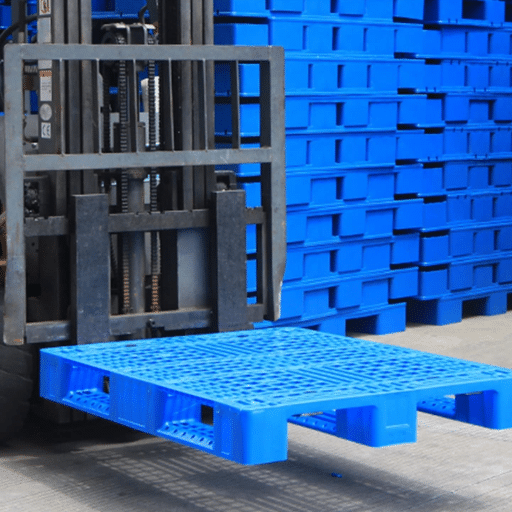
The use of rack systems and storage solutions is a must in order to get the most out of an area, to have the stock organized in the best way, and to improve the efficiency of operations in the industrial and commercial aspects. Selective racking, drive-in racking, and pallet flow systems are the most common types of rack systems, each one built to serve a particular storage purpose. Selective racking can be called multipurpose and permits easy access to all items; thus, it is good for mixed inventory. Drive-in racking storage is the best choice for the storage of products that are all the same and are of high density. Pallet flow systems simply promote FIFO (first-in, first-out) inventory management by employing sloped tracks for automatic stock rotation. A lot of factors do come into play while making the choice of system – storage capacity, rotation of the inventory, and floor space being some of them.
Introduction to Rack Systems
Choosing the right rack system for your storage operation involves the careful consideration of several essential factors. Among these are the kind of inventory to be stored, the preferred inventory management technique (FIFO or LIFO), the necessary storage density, and the space available in your warehouse. Selective racking is the best option when the accessibility of all pallets is a must, since it provides direct access and is suitable for different pallet sizes. Drive-in racking, in contrast, is the best choice for facilities with little floor space and a large amount of uniform inventory, as it enhances storage density by allowing the placement of several pallets in one lane. For the operations where inventory turnover and Manning are critical, pallet flow systems are the most suitable, providing a smooth FIFO stock movement powered by gravity-fed units. At last, the decision of the racking system must be made according to the operational priorities and efficiency of the workflow so that the space can be maximized and effective inventory management made easier.
Integrating Rackable Pallets into Your Storage System
Rackable pallets have become the solution to hardwood warehouse operation problems. Their ability to provide the highest load stability and, at the same time, be compatible with the different racking systems, such as selective, drive-in, and push-back racks, is the major plus point of the rackable pallets. Their very strong structure, mostly made from high-density polyethylene (HDPE) or reinforced wood, therefore proves to be the factor that is greatly durable to heavy loads, and thus stacking and storage are made dependable. The use of rackable pallets in warehouses improves safety in general by reducing the risk of collapse due to pallet deformation. Besides that, a warehouse that is automated is the one that utilizes rackable pallets because they are the support of the conveyor and AS/RS (Automated Storage and Retrieval Systems), which are the systems that would not be there without the automation of a warehouse.
To put the rackable pallets into your storage system, the first thing you have to do is assess the load requirements, weight capacities, and environmental conditions (especially temperature and humidity), which will lead you to the most suitable material and design for your needs. Make sure that your racking equipment is compatible with the dimensions and structural characteristics of the pallets. Besides, consider the need for additional features such as anti-slip surfaces or RFID-enabled tracking to be in line with your inventory management and traceability objectives. In the end, select a trustworthy supplier that will provide you with the same quality and standard across operations, thus making the transition smooth and long-lasting.
Advantages of Using Rackable Pallets in Rack Systems
Rackable pallets are the perfect solution for racking systems to guarantee maximum stability and efficiency; thus, they provide a wide range of benefits to warehouse operations:
Higher Capacity to Bear Loads
Heavy-duty rackable pallets are designed to carry high loads evenly to allow safety and reliability in storing thousands of products. Their reinforced structural design ensures no risk of pallet or racking failure even if pressure is very high.
Consistent Dimensions
Rackable pallets made to exact dimensions are compatible with the existing racking systems, leading to less misalignment and fewer operational disruptions. This is very important for the automated material handling systems.
Resistance and Lifespan
The pallets made from high-density polyethylene (HDPE) or metal are tough, so they will not only last long but will also be cheaper to maintain since they are resistant to wear and tear, moisture, and chemicals.
Safety
One of the great features of the rackable pallets is that they can be designed with anti-slip surfaces or additional locking features that will give more stability during the stacking and loading process, and at the same time, they will minimize the risk of accidents and product damage.
Environmentally Friendly and Savings
A lot of rackable pallets come with the feature of being reusable and recyclable, which is a plus as far as the environmental impact is concerned. Their long life also reduces the need for replacements and thus results in big savings in the long run.
Traceability and Tracking of Inventory
Pallets that are enabled with RFID or tagged with barcodes are among the advanced methods that simplify inventory and enable real-time monitoring, thus improving the efficiency of the whole supply chain.
The use of rackable pallets in the racking systems will not only give the businesses increased operational precision and safety but also long-term cost efficiency in line with the contemporary warehouse requirements.
Hygienic Considerations and Molding

Hygiene concerns rank highly when choosing rackable pallets, and they are especially important in the case of the food, pharmaceuticals, and healthcare sectors. Plastic pallets are the winners in the battle of the materials due to their surfaces, which are easy to clean, resistance to water absorption, and following the hygiene standards like FDA and HACCP. Being molded further promotes these features as it produces pallets with smooth, no pores surfaces that are less likely to become contaminated. Furthermore, the use of either injection molding or thermoforming allows for a consistent quality, durability, and sanitary performance, thus making these pallets suitable for use in cleanroom or sterile environments.
The Importance of Hygiene in Rackable Plastic Pallets
Hygiene is the most important factor in the creation and usage of rackable plastic pallets, especially in the areas of food processing, pharmaceuticals, and healthcare. The materials that are used to create these pallets are such that they can repel and resist moisture, bacteria, and fungal growth, thus maintaining compliance with very strict hygiene and safety standards that the FDA, USDA, and HACCP have set. The non-porous and smooth surfaces, along with the rounded corners of the pallets, help in making the dirt and contaminants less likely to gather, thereby reducing the possibility of cross-contamination during shipping or storage.
Moreover, advanced manufacturing methods like injection molding are eliminating bacteria and other dirt from around the reusable plastic pallets and are making sure that the pallets are smooth and of very high quality. There are different types and models of pallets in the market that can bear industrial cleaning, such as high-pressure washing and the use of chemical disinfectants; their sanitation ability will last longer. All those good features are what make rackable plastic pallets an ideal option for places that demand the highest level of cleanliness. They will contribute not only to operational efficiency but also to regulatory compliance in the most critical supply chain areas.
Molding Techniques for High-Quality Rackable Pallets
De forma geral, em questão de técnicas de moldagem para paletes empilháveis de alta qualidade, o que eu priorizo é a precisão e a durabilidade. The injeção é o mais usado process because of its production capability of making pallets which are Table-top, dimensionally accurate, and have uniform thickness. At the same time, I am considering structural foam molding, which gives more strength and less weight, thus suitable for heavy-duty applications. Every technique guarantees the conditioning of the pallets according to strict performance and hygiene standards, made for the most demanding industrial and supply chain environments.
Maintaining Hygiene Standards with Rackable Solutions
Hygiene control in rackable pallet applications is a crucial concern for the food, beverage, and pharmaceutical industries. The rackable pallets are made in a way that they have smooth surfaces, are made of non-porous materials, and have very few crevices, which do not allow for the retention of dirt, bacteria, and other impurities. The material HDPE (high-density polyethylene) is durable, chemically corrosion-resistant, and meets the hygiene standards laid down by the FDA and the USDA; thus, it is the most favored material. Moreover, the introduction of features that are friendly to sanitation, like open deck designs, allows the cleaning and drying processes to be quick and efficient, and thus, it is possible to always meet the needs of the regulatory bodies, which are very strict. Regular cleaning protocols, along with the use of hygienic pallets, reduce the possibility of contamination and allow for smooth operations in high-demand environments.
Reference Sources
“Behavior of Steel Storage Pallet Racking Connection – A Review”
“Seismic Performance of Dissipative Automated Rack Supported Warehouses”
“Numerical Study on Seismic Response of Steel Storage Racks with Roller Type Isolator”
Frequently Asked Questions (FAQs)
Are plastic rackable pallets appropriate for rack operations with forklifts and shuttles?
Plastic rackable pallets are good for use in operations with forklifts and shuttle systems. Their even surfaces and strong corners aid in controlling the load and will not create any problem when and where they are placed, and so, damage risk is lessened, and throughput in conveying systems and high-density storage is increased.
What is the comparison between plastic rackable and wood pallets or skids in terms of racking capacity?
Plastic rackable pallets generally provide uniform racking capacity, while materials like HDPE or PP have equal strength and consistency for predicting load-bearing characteristics. Defective or moisture-affected wooden pallets lose their strength, and therefore, wooden pallets sometimes provide unreliable support for rack loads. Still, plastic pallets are often rated with clear
Are rackable plastic pallets a cost-effective and efficient alternative to wood pallets?
Most companies see the reuse of plastic pallets as a cost-effective option over the long run due to their strength and lower maintenance. At the same time, plastic products reduce the number of times the products must be replaced, no fumigation or heat treatment is necessary, and around the same time, they can be an efficient alternative to wood pallets in closed-loop systems.
Do plastic rackable pallets meet food safety standards like FDA-approved requirements?
There are some rackable plastic pallets that have FDA approval and are meant for food-grade use; manufacturers state whether or not the pallets conform to FDA specifications. Easing of sanitizing and no fumigation or heat being needed are some of the advantages; also, the wooden pallets being porous do not cause any risk of contamination, making them more suitable for controlled racking in food and pharmaceuticals.
What materials are used in the best plastic rackable pallets—HDPE or PP—and how do they affect durability?
The best plastic pallets are usually made of HDPE or PP, both of which are robust and dependable materials for rack usage. HDPE is known for providing resistance to impact, while PP may also possess properties such as rigidity and resistance to chemicals. The choice of material, therefore, impacts the performance of racks and conveyor systems; hence, select according to your load profile and environmental requirements.
How do rackable plastic pallets minimize the risk of damage, and are they fire-retardant?
Rackable plastic pallets minimize the likelihood of harm by not being prone to breakage, humidity, and insect attacks—traits that wooden pallets lose over time. Some types of plastic pallets are made to be fire-resistant and can have additional fire-retardant additives or coatings to meet fire safety regulations; please read product specifications to verify that pallets meet the requirements of your racking application with regard to fire retardation and local laws.
Can plastic rackable pallets be utilized with conveyor systems, and are they fitted for operating with palletized products?
Plastic rackable pallets, yes, a lot of them, are made to work efficiently on conveyor systems and molded for easy transfer of the goods from racking to forklifts and conveyors. Their constant design of stringer or deck guarantees secure handling in case of automated operations with pallets and tram systems.
Do rackable plastic pallets need to be fumigated or subjected to heat treatment, and are they recyclable?
In general, rackable plastic pallets are not subjected to the fumigation or heat treatment that simplifies international shipping and reduces compliance costs, which is the case with wooden pallets that may require to undergo similar treatments. Besides, a lot of plastic pallets are recyclable, and depending on the material and local recycling facilities at the end of life, 100% of the pallets are recyclable.