Introduction to Dynamic Loading

Dynamic loading takes place when forces or stresses of varying degrees act on a structure or a component in motion. While the static load is characterized by a constant magnitude of force, dynamic loads are variable in their magnitudes and even directions, while the time of action can be either short or extended. These factors must be considered in the analysis to assess safety and performance. Equipment vibrations, traffic by vehicles or walkers, winds, or even seismic occurrences are all common sources of dynamic loading. Without understanding dynamic loading, we cannot design components that resist fatigue, minimize wear, and ensure safety in actual operation.
Definition of Dynamic Load Capacity
It could be defined as “a dynamic load capacity refers to the maximum loading a mechanical element, such as a bearing or some structural member, can allow to pass through it under dynamic or variable forces acting over its working life, without causing failure in it”. A static load capacity measures stationary forces, whereas a dynamic load capacity measures repeated or varying stresses that induce material fatigue. It is, therefore, a crucial factor in design because it governs the life and reliability of the subject components under non-static forces such as those induced through vibrations, oscillations, or impacts. Dynamic load capacity is evaluated taking into account the material property, duration of load, frequency, and external environmental conditions, so as to bring about the best performance and a balance in safety under real working conditions.
Importance of Load Ratings
Keep in mind that load ratings are fundamental in engineering because they dictate the maximum force or stress that a component, structure, or system can safely sustain under specified operating conditions. Accurate load ratings have to be established to prevent mechanical failure, create less risk, and ensure long-life reliability. By considering factors such as the strength of materials, safety factors, and anticipated forces in operation, engineers design systems means in which they work efficiently within defined loading parameters. By reducing risks of overloading and increasing the service life of the load-rated components it helps in lowering maintenance and repair costs. They are thus a key index in the modern construction, automobile, and aerospace engineering industries. Load ratings understanding and application ensure structural integrity and meet safety compliance requirements.
Applications of Dynamic Loading
Dynamic loading finds importance as it acts in far-reaching engineering and industrial applications, as the forces change with time. A major application lies in infrastructure design where bridges, roads, and railways have to resist dynamic effects from vehicles, earthquakes, and wind forces. In the realm of automotive and aerospace engineering, it finds another great application, as in the dynamic loading of components like engine parts and airframes subjected to alternate stresses during their operation. The governing dynamic loads play in the design optimization of manufacturing machines, such as presses and turbines, so that they achieve a satisfactory level of strength and efficiency under changing conditions. Due to dynamic load considerations, engineers in various industries can, thus, assure safety, optimize material usage, and increase the operational life of critical components.
Static Loads vs Dynamic Loads

For static loads, forces are applied rather slowly or show no quick changes in time-giving the impression that they usually do not vary much in magnitude or direction; for instance, the weight of a structure or that of an object kept still on the ground. Dynamic loads, on the other hand, are the loads exerted when the force changes rapidly with time and while in motion or while secondary impact is involved; i.e., forces generated by vehicles crossing a bridge or vibrations caused by machinery. Forces differ in the rates and modes of application; static ones are rather stable, predictable, and easy to analyze, while the dynamic ones are not: they come and go and require a more complex analysis for safety and performance.
Understanding Static Load
Static loads are those forces that are either constant or vary very slowly with time, applied on a structure in a steady and stationary state of operation. These loads consist of the dead weight of structural members, fixed machinery, and permanent fixtures. They are comparatively easier to analyze and predict than dynamic loads because of the absence of sudden changes or dynamic interactions. These loads are taken into account by engineers during the design of structural elements; this involves the laws of equilibrium and analysis of the stresses to finally arrive at a solution that ensures safety and proper functioning of the structure. Examples of static loads are the weight of materials used in the construction of a building, furniture, and equipment that do not get shifted during any normal activity.
Differences Between Static and Dynamic Loads
The chief difference between static and dynamic loads is their variability and changes with respect to time. Therefore, these loads are static when they are constant; sometimes, such forces change very slowly over time. These kinds of forces are predictable, and their behavior modeling is simple, with no significant accelerations and time-dependent factors. The weight of structural components, furniture, and electrical equipment is are example of static load.
Contrary to static loads, dynamic loads are those forces that change rapidly or fluctuate over time. They are associated with movement, acceleration, and impact, making analysis quite involved; velocity, frequency, and resonance are variables of importance in dynamic loading that do not greatly matter in static loading situations. Examples of dynamic loads include: non-static wind, live traffic on a bridge, seismic forces, or vibrations produced by machinery.
In the engineering sense, dynamic load analysis requires special techniques to take the inertia and damping effects into consideration. Examples of this are modal analysis or time-history analysis. On the other hand, static load analysis mostly deals with respect to equilibrium and with respect to a stress distribution under constant conditions. Both must really be considered for the safety, durability, and strength of the structure under different sets of operating conditions.
| Aspect | Static Loads | Dynamic Loads |
|---|---|---|
| Nature of Force | Constant or very slowly changing | Rapidly changing or fluctuating |
| Time Dependency | No significant time-dependent factors | Highly time-dependent with velocity and frequency considerations |
| Analysis Complexity | Simpler – uses equilibrium equations | Complex – requires modal analysis and time-history analysis |
| Examples | Building weight, furniture, stationery equipment | Bridge traffic, wind forces, machinery vibrations, seismic forces |
| Predictability | Highly predictable | Variable and less predictable |
| Key Factors | Material strength, stress distribution | Inertia, damping, resonance, and material fatigue |
Static Load Capacities and Their Relevance
In any engineering and structural application, static load carries special importance as it helps define the magnitude of force a structure and even a component can withstand without suffering deformation or complete failure at rest. Being the function of material properties, its value also incorporates geometric design and load distribution criteria on the system. For solid mechanics, static load essentially analyzes the stress-strain relationships and ensures that the design complies with safety factors under constant forces.
Static load capacities find application across several different domains. For example, in bearing design, a static load rating is made to ascertain that the bearing will safely undergo a given force without having any detrimental effects, such as brinelling or permanent deformation. In construction, on the other hand, static load capacities make sure that structural elements, like beams or supports, can bear the loads being placed on them, including dead loads and live loads, without any compromise in integrity. Proper static load analysis and observance of standards enhance the safety, durability, and reliability of such entities, which become very crucial during instances of life risk engineering.
Dynamic Load Ratings Explained
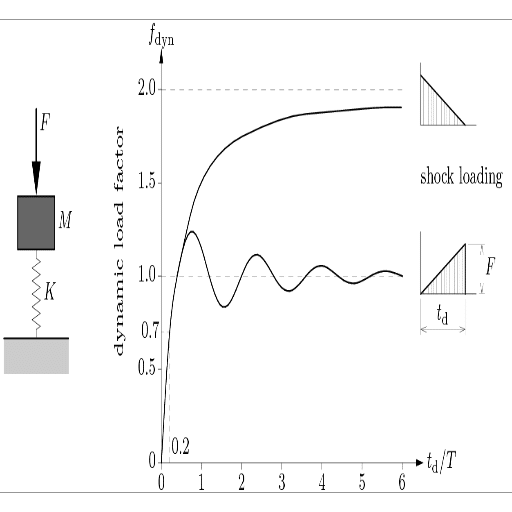
Dynamic load ratings tell us the maximum load a mechanical element, like the bearing, could suffer from for a specified time duration under dynamic conditions until its onset of failure. It is calculated after an elaborate process of testing, and standardized factors are taken into consideration, such as rotational speeds, load distribution, and operating conditions. An accurate knowledge and application of dynamic load ratings are of utmost importance from an engineering perspective to realize the full reliability of the component, with the objective depending on its application being carried out under any operating environment.
What is a Dynamic Load Rating?
A dynamic load rating signifies the maximum load that a bearing can withstand while moving under standardized conditions for a given number of revolutions, usually 1 million. This rating determines how well the bearing will reliably perform under the dynamic conditions and depends on such factors as quality of materials, type of load, lubrication, and temperature of operation. Knowing the dynamic load rating, engineers can choose the bearings more adequately for the given application and, thus, put forth a more efficient, long-lasting, and better-performing mechanical system.
How to Calculate Dynamic Load Capacity
Dynamic load capacity calculations for bearing use the standard formula given in ISO 281. It is expressed as follows:
C = (L10 × (P^p) × 10^6)^1/p
Where:
- C is the dynamic load capacity (Newtons or N),
- L10 is the bearing life in million revolutions, usually 1 million,
- P is the equivalent dynamic bearing load (in N), and
- p is the exponent dependent on the bearing type; 3 for ball bearings and 10/3 for roller bearings.
Firstly, find out what the actual load is on the bearing and find the bearing life needed for the situation. Then, write those loads into the formula to solve for the dynamic load capacity. Other important factors for consideration include lubrication, material, and heat dissipation, as these are all key factors that can affect load ratings and longevity.
Factors Influencing Dynamic Load Ratings
The above factors are thus the critical ones that affect the dynamic load rating and thus influence the performance and life span of the bearings.
-
Material Properties
The quality and composition of the bearing material essentially dictate its ability to bear loads. Materials with high strength and better fatigue resistance, such as steels that might be either through-hardened or case-hardened, further improve the dynamic load rating by being able to sustain loads over extended periods.
-
Lubrication
Proper and sufficient lubrication decreases friction and wear and increases bearing life. Judicious lubricant selection, with due regard to operating temperature, speed, and environmental conditions, would contribute to bearing performance optimization and maintaining good dynamic load ratings.
-
Surface Finish and Geometry
Proper manufacturing techniques achieve a smooth surface finish and ideal bearing geometry. These reduce stress concentrations and allow for even load distribution, which results in improved durability under dynamic loading conditions.
-
Handling Environmental Parameters
Greatly impact the bearing; load extremes, speed, and temperature drops. Reducing the dynamic load rating and bearing life are overforces, excessive vibrations, and thermal stresses.
-
Contamination and Cleanliness
Bearing contamination is a way to destroy its integrity and operational capacity with dust, debris, or moisture. Factors that support and maintain the integrity of the stated dynamic load rating are a clean environment, seals, or shields.
Hence, for maximum bearing performance and reliability for the application, maintenance strategy implementation must address all those factors.
Comparing Static and Dynamic Load Capacities

Static and dynamic load capacities differ mainly according to their application and the kind of stress exerted on the bearing.
Static Load Capacity is the maximum load a bearing can take while stationary and not being deformed permanently or damaged. It is very important for applications where the bearing is going to remain static or to take shock loads.
Sometimes known by its operational name, the Dynamic Load Capacity measures the ability of the bearing to withstand repeated loading whilst rotating and hence the capacity of the bearing to perform reliably through time in the operational conditions. This load directly affects the life of the bearing and hence the efficiency of the system in which it is used during extended operation.
Concomitantly, these contrasting terms, if grasped fully, render a person in a more grateful position to select the right bearing for a given application whose performance will be guaranteed under service and environmental demands.
Key Differences Between Static and Dynamic Load Capacities
Static load capacity is the maximum load that a bearing can take up while remaining deprived of permanent deformation, given that it remains static. It becomes essential for cases where shock loads are involved or heavy weights sit at rest, and when intermittent movements are involved, such as with construction machinery or structural supports. It indicates the bearing’s resistance to plastic deformation when confronted with high forces applied non-rotationally—a situation that might damage its structure.
Conversely, the dynamic load capacity is the maximum load that a bearing can support while in motion for a long time before it fails. This outcome is achieved under the condition that the bearing experiences a working lifespan of one million revolutions (L10 life). This measure evaluates the bearing’s ability to resist cyclical or rotational stresses under repeated instances, thus gearing it specifically toward high-speed environments like motors, pumps, or turbines.
The key differentiating feature is their respective contexts of application: static capacity relates to forces either stationary or shock, while dynamic load capacity applies in situations involving either continuous rotation or variable loading. An either-or choice must be made in consideration of actual operative requirements, really ensuring the longevity of the bearing with optimum performance within the given environment.
| Characteristic | Static Load Capacity | Dynamic Load Capacity |
|---|---|---|
| Operating State | Bearing at rest or stationary | Bearing in continuous rotation or motion |
| Load Type | Stationary forces and shock loads | Repeated or cyclical rotational stresses |
| Primary Concern | Permanent deformation (brinelling) | Material fatigue over time |
| Measurement Basis | Maximum load without deformation | Load for 1 million revolutions (L10 life) |
| Application Examples | Construction machinery, structural supports, intermittent movements | Motors, pumps, turbines, high-speed equipment |
| Failure Mode | Plastic deformation from excessive force | Fatigue from repeated stress cycles |
When to Use Static vs Dynamic Load Ratings
Depending on the operating conditions and the nature of the load involved in an application, one considers whether to apply either the static or the dynamic load rating. Static load ratings come first when the equipment is under a heavy load or stationary load, including loads due to shock forces or high wind circumstances, where, due to loads, a machine either stands still or converges on having a high-impact scenario. The rating would thus ensure that the component can bear the maximum load without any distortion or failure. On the contrary, dynamic load ratings would be required in scenarios of continuous rotation or varying forces; in this case, bearings would be employed in motors or conveyors. The ratings take into consideration the fatigue of the materials; thus, they have a direct bearing on the calculated life of the bearing. An appropriate reference to the load ratings secures the safe and efficient performance and especially in applications where durability and reliability are of utmost concern.
Importance of Understanding Both Load Types
The thorough understanding of static and dynamic load ratings ensures that the mechanical components, such as bearings, will offer the best performance and operate for the longest time under the given load. Static load ratings will be important in those applications where there are heavy, stationary loads exerted on the component, such that they prevent the permanent deformation of the rolling elements and raceway. On the other hand, dynamic load ratings apply to operational conditions while in motion, producing material fatigue and therefore participating in the direct prediction of the service life. Having both the different load types also aids engineers in decision-making while choosing components to adequately satisfy the requirements of particular applications with minimum incidents of premature failures or wear. With the application of trustworthy standards and references for technical specifications, such as those provided by ISO or manufacturers, professionals can seek to share the concept of safety, efficiency, and durability in their mechanical systems.
Real-World Applications of Load Capacities

Load considerations are critical across industries to ensure the reliability and safety of mechanical systems. In civil engineering, bridges and buildings are provided with load capabilities to account for the static and dynamic loads at both ends, such as vehicles of varying weight and forces like wind or earthquake. In simpler words, rating loads on trucks is a method employed in transport to ensure that the cargo weight is within permissible limits of the chassis and structure of the vehicle and that it will not give way to an accident or accelerate wear and tear. In manufacturing, also, load capacities are also specified basically for machinery in order to develop machines that perform without any failure in their operation. An engineer, therefore, can successfully apply the concept of load capacity in operations and system protection to increase life expectancy if standards or guidelines such as ISO or ASTM are followed in relevant applications.
Industry Examples of Dynamic Loading
Industries where systems are subjected to forces varying with time and load dynamics witness dynamic loading in numerous instances. A key example would be within civil engineering: bridges or high-rise buildings designed against fluctuating loads like wind pressure, vehicular traffic, braking, or seismic activities. Engineers carry out meticulous simulations and select materials accordingly to ensure safety when faced with dynamic stresses.
Another example can be given in the automotive world with vehicle suspension systems. The components must sustain repeated dynamic forces brought by irregularities on the road and braking, and acceleration maneuvers. Also, the systems must provide a good enough balance to deliver some performance with a little bit of durability, safety, and comfort.
The aerospace mechanism deals with dynamic loading during turbulence in the case of takeoffs and landings. Precision engineering and testing standards for materials must be followed to allow the aircraft to handle these variable forces without compromising safety. The dynamic load study establishes reliability, operational efficiency, and safety as the industry’s priorities in design.
This production highlights that the term industry pursuit is designed in relation to reliability, operational efficiency, and safety from the viewpoint of dynamic loads.
Civil Engineering
Bridges, high-rise buildings, and infrastructure designed to withstand wind pressure, vehicular traffic, braking forces, and seismic activities through meticulous simulations and material selection.
Automotive Industry
Vehicle suspension systems sustain repeated dynamic forces from road irregularities, braking, and acceleration while balancing performance, durability, safety, and comfort.
Aerospace Engineering
Aircraft components handle dynamic loading during turbulence, takeoffs, and landings through precision engineering and rigorous material testing standards.
Manufacturing
Industrial machinery, such as presses and turbines optimized for strength and efficiency under changing conditions with proper load capacity specifications.
Transportation
Truck chassis and structures are rated to ensure cargo weight remains within permissible limits, preventing accidents and accelerated wear and tear.
Construction Equipment
Heavy machinery designed to handle shock loads and stationary forces with proper static load capacity considerations for structural supports.
Case Studies on Load Ratings
In discussing load ratings in a technical context, I emphasize the consider-ever-work-magician applications to provide clarity to the growth and application. For instance, in an auto-mechanical industry, I considered the resistance of suspension components to loading applied under different circumstances, thereby highlighting material choice and stress considerations in preserving performance. Secondly, I also looked at the load ratings for aircraft components during high-stress events such as landings, with an understanding of how fatigue testing is applied to avoid material failures. These case studies highlighted the importance of accurate load calculations, leading to safe and efficient mechanical design.
Future Trends in Load Capacity Analysis
Load capacity analysis is a rapidly evolving field as new technologies become available in computational modeling, material science, and artificial intelligence. The merging of finite element analysis with machine learning-based predictive models has contributed largely to prediction, modeling complex load scenarios with unparalleled precision. The usage of smart materials that possess adaptive properties is another trend that especially gives systems the ability to respond dynamically to changes in stress or environmental conditions. Bridging these technologies are digital twins that simulate physical systems and, with them, monitor these systems in real-time to glean information that will optimize the performance and life of these physical systems. Together, these developments characterize a transformation in load capacity analysis from the perspective of more resilient, efficient, and intelligent design methodologies.
| Technology | Application | Benefits |
|---|---|---|
| Finite Element Analysis (FEA) with Machine Learning | Predictive modeling of complex load scenarios | Unparalleled precision in load prediction and analysis |
| Smart Materials | Adaptive response to stress and environmental changes | Dynamic system adjustment for optimal performance |
| Digital Twins | Real-time simulation and monitoring of physical systems | Performance optimization and extended system life |
| Artificial Intelligence | Pattern recognition and failure prediction | Proactive maintenance and improved safety |
| Advanced Computational Modeling | Complex stress analysis and load distribution | More resilient and efficient design methodologies |
Understanding the fundamental differences between static and dynamic load capacities is essential for engineers, designers, and professionals across multiple industries. Static load capacity addresses the ability of components to withstand constant or slowly varying forces while at rest, preventing permanent deformation and ensuring structural integrity under stationary conditions. Dynamic load capacity, on the other hand, measures a component’s ability to endure repeated or variable forces during motion, directly influencing operational lifespan and reliability.
The distinction between these two load types extends beyond simple definitions—it shapes critical decisions in material selection, component design, maintenance strategies, and safety protocols. In civil engineering, understanding both load types ensures that bridges and buildings can withstand not only their own weight but also the variable forces from traffic, wind, and seismic activity. In manufacturing and automotive industries, the proper application of dynamic load ratings guarantees that bearings, suspension systems, and rotating machinery operate efficiently without premature failure.
The calculation methods, particularly the ISO 281 standard for dynamic load capacity, provide engineers with reliable tools for predicting component performance. Factors such as material properties, lubrication, surface finish, environmental conditions, and contamination all play crucial roles in determining actual load capacities in real-world applications. By carefully considering these variables and adhering to established standards from organizations like ISO and ASTM, professionals can optimize designs for both safety and efficiency.
Looking toward the future, emerging technologies such as finite element analysis combined with machine learning, smart materials, and digital twins are revolutionizing load capacity analysis. These innovations enable more precise predictions, adaptive responses to changing conditions, and real-time monitoring that extends system life and enhances safety. As engineering continues to evolve, the fundamental principles of load capacity remain central to creating resilient, efficient, and intelligent systems.
Whether designing a high-rise building, selecting bearings for industrial machinery, or engineering aerospace components, the thorough understanding and proper application of both static and dynamic load capacities ensure that systems perform reliably, safely, and efficiently throughout their intended service life. This knowledge empowers engineers to make informed decisions that balance performance requirements with safety considerations, ultimately contributing to technological advancement and human safety across all engineering disciplines.
Reference Sources
Dynamic Load Balancing in Cloud Computing: A Review and a Novel Approach
Design for Reliability-Based Methodology for Automotive Gearbox Load Capacity Identification
Predictive Analysis of Laminated Glass Performance Under Static and Dynamic Loading Conditions
Frequently Asked Questions (FAQs)
What does it mean by dynamic load capacity, and why is it so important?
Dynamic load capacity stands for the maximum load that a bearing-or some other support member-can resist when it is in motion. Knowing about dynamic load capacity is essential, for instance, to ensure efficient and safe running of equipment under changing conditions.
How is static load capacity different from dynamic load capacity?
The differences between static and dynamic load capacities are considerable. A static load capacity refers to the maximum load a bearing can support when it is at rest. A dynamic load capacity, on the other hand, refers to these forces while in motion. Since stress is increased in motion, the dynamic load capacity is usually less than the static load capacity.
Key Differences between Static Load vs Dynamic Load?
Static loads are those forces applied slowly and sustained with constant magnitude throughout the entire time of consideration, while dynamic loads involve movement with forces varying in time. This difference must be recognized while choosing bearings or other components for a particular application, since dynamic loads induce fatigue and wear with the passage of time.
What aspects must be considered for dynamic loading?
In dynamic loading, the entire range of load capacity specifications needs to be considered, including conditions imposed by the environment and how the load is measured or generated (e.g., axial load). Following a proper understanding of dynamic load capacity would otherwise avoid failure.
How does the bearing load capacity affect its service life?
The load capacities influence different bearing performances and their longevity. Bearings with low dynamic load capacities may prematurely fail when they are subjected to loads exceeding the assigned ratings. Therefore, selecting a bearing capable of carrying the expected static and dynamic loads is of absolute importance.
Why do rolling-element linear bearings matter in load capacities?
Rolling element linear bearings are an important factor in load capacities due to the fact that they influence how evenly a load is distributed. These bearings may withstand static and dynamic loads adequately and are appropriate for applications in which smooth motion and precise positioning are required.
How are static and dynamic load ratings calculated?
Typically, static and dynamic load ratings are calculated as functions of the material properties, geometry of the bearing, and the nature of the intended application. The basic static load rating shows the maximum load the bearing can bear without having permanent deformation, while the dynamic load rating is connected with the life of the bearing when subjected to a specific load condition.
What should I know about balancing static and dynamic load?
Balancing static and dynamic loads is significant for those applications that involve both loads. An understanding of how static and dynamic load capacities relate should help in ensuring that a bearing can be depended upon to function under variable conditions without risk of failure.