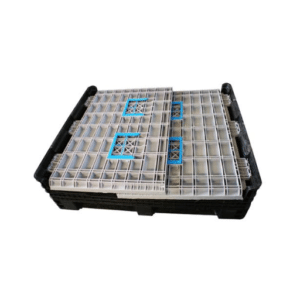
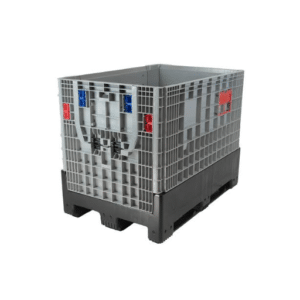
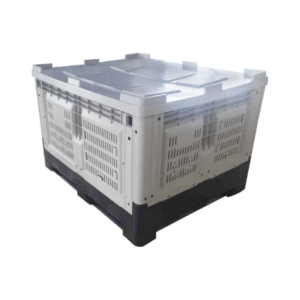
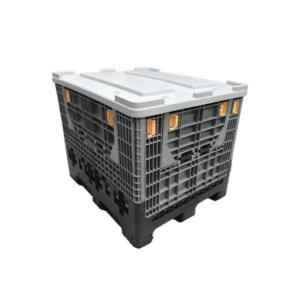
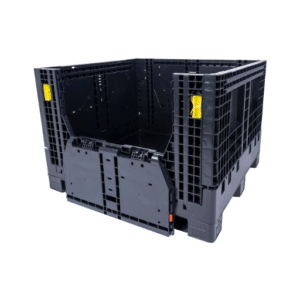
Overview of Plastic Pallets

Plying plastic pallets means the safe crossing of fragile load planks. Compared with a wooden pallet, it is resistant to moisture, pests, and rotting, and is hygienic for industries like food and pharmaceuticals. These pallets are reusable, recyclable, and have a longer life, thereby rarely needing to be replaced. Since plastic pallets are quite consistent in weight and size, they often ensure compatibility with automation systems and warehouse operations. Hence, these features make plastic pallets a firm choice between the sustainable options available to any business looking for efficiency and durability.
What are Plastic Pallets?
Plastic pallets are special types of platforms made to store goods and transport cargo. They come in various sizes and configurations depending on the diverse requirements of different businesses across myriad industries. Plastic pallets, in their various forms, are usually made using HDPE, PP, or other sturdy plastics. They are lightweight yet sturdy enough to handle heavy loads without compromising structural integrity.
Plastic pallets stand apart due to their excellent moisture resistance, chemical resistance, and pest resistance, making them an accepted choice for industries with stringent hygiene requirements for transport, such as food, beverage, and pharmaceuticals. Unlike their wooden cousins, plastic pallets do not splinter or absorb fluids, thus ensuring products’ safe transport and storage. Statistics indicate that, depending on their usage, a good plastic pallet can last for up to 10 years, which is far longer than the lifespan of wooden pallets.
Plastic pallets are also environmentally conscious. Many are made with recycled materials, and end-of-life plastics can often be recycled again, thereby reducing the impact on the environment. They are also fully embraced by the modern-day logistics setup, attaining uniform size and weight that perfectly work with automated handling, conveyor systems, and even stacking tackles.
Performance Metrics: Lightweight export plastic pallets serve as an example of plastic pallets in the 10- to 20-pound range with a dynamic load capacity of over 2,000 pounds, emphasizing their amazing strength-to-weight ratio. Some heavy-duty plastic pallet designs can hold static loads exceeding 5,000 pounds, hence adapting well to assorted industries.
Their operational consistency limits damage to goods, facilitates the supply chain processes, and reduces the expenses in the long run with respect to replacements. In light of such benefits, plastic pallets have thus stabilized the scene as a sensible alternative for any company committed to improving the levels of efficiency and sustainability in its operations.
Types of Plastic Pallets
There are many types of plastic pallets, each made for a different industrial purpose. The following are the major categorizations:
Stackable Pallets
Stackable pallets have a solid or an edge-supported base so that one can stack them securely when they are not in use. These pallets are suited for the best use of storage space and for maintaining stability during storage or transit.
Nestable Pallets
These pallets are designed such that their bottom allows them to nest into one another and cut down on storage space when not in use. Being very light and inexpensive, they find widespread use in high-volume shipping industries.
Rackable Pallets
Rackable pallets are designed to sit securely on racks, providing stability in the storage of very heavy loads. They are generally found in warehouses where goods are stored on racks or shelves.
Export Pallets
Relatively light and cheap to build, export pallets are mainly used for one-time shipment of goods across international borders. They comply with the legal requirements of many nations, making them suitable for cross-border transport.
Hygienic Pallets
With materials which have smooth surfaces and cavity-less construction, hygienic pallets are built such applications where utmost cleanliness is required, such as food, beverage, and pharmaceutical. They are easy to disinfect and reject contamination.
Such different types of plastic pallets ensure the utmost versatility for industry, offering specific solutions for the innumerable logistical, storage, and administrative constraints placed on similar sectors globally.
Benefits of Using Plastic Pallets
Durability and Longevity
Being highly resilient and resistant to breakage, plastic pallets have the potential to last longer compared to wooden pallets. Their strong build makes them preferred for repeated industrial and logistical usage.
Lightweight and Cheap Shipping
Plastic pallets are very light in weight, which would help in minimizing freight or handling charges, respectively, the same being undesirable for wooden pallets. Consistent weight and measures would also aid warehouse systems automation.
Sanitation and Easy Cleaning Necessary
Being non-porous plastics, they resist water, bacterial intrusion, and pest infestation, thus fit for sanitation industries, i.e., food, pharmaceutical, or healthcare.
Sustainable Options
Most of the plastic pallets are made from recycled materials and later recycled at the end of their life cycle, hence fostering sustainability and limiting environmental waste.
Compliance with International Standards
Plastic pallets waive fumigation or heat treatment demanded by international shipping standards in view of wooden pallets and ensure easy ingress and egress across borders.
By combining these benefits, plastic pallets provide a versatile, efficient, and sustainable solution for modern supply chains and storage needs.
Cost Factors for Plastic Pallets

Plastic pallet costs are generally determined as per several key factors:
- Material Type – Pallets made of recycled plastic are normally cheaper than those made of virgin plastic, simply because raw materials are cheaper.
- Manufacturing Process – Injection molding, due to the extra strength and accuracy that goes into an injection-molded plastic pallet, generally costs more than thermoforming and compression molding.
- Weight and Load Capacity – Heavy-duty pallets designed for high load capacities generally cost more than light-duty ones.
- Customization – Designing pallets for a specific application and for branding purposes would increase the overall cost.
- Quantity Ordered – The more pallets ordered, the lower the price per piece.
- Shipping and Transportation – Distance and mode of shipping of the pallets to the place of their sale might affect the overall price.
Being aware of these factors allows small businesses to pick a cost-benefit option for themselves according to their needs and budget.
Material Composition and Its Impact on Cost
The factors that determine the ultimate cost and possible uses of the pallet include the material used in making it. Wooden pallets, typically the cheapest for the buyers, vary in price depending on the kind of wood chosen (softwood is usually cheaper than hardwood). Considered strong and readily available, wood is the preferred option in industries that consider single-use or lightweight goods.
Plastic pallets, though higher in price initially, may prove beneficial in terms of durability, moisture resistance, and the ability to reuse them, all of which can balance the cost over time. Metal pallets may be applied in circumstances considering heavy-duty operations and, in turn, require a high price for giving robustness and resistance to extreme environmental conditions. The intermediate choice can go to Composite materials like presswood or plywood, offering lower weight and medium-level durability at a reasonable price.
The final decision should be tested against the trade-off between initial investment and long-term value according to specific requirements for an organization. Being among the priorities considered for pallet selection, the choice of material will impact costs, maintenance, lifespan, and reusability, among a plethora of others.
Comparing Different Pallet Options
Comparing Stackable vs. Nestable Plastic Pallets
Depending on the needs of a particular business, stackable and nestable plastic pallets offer merits of their own. Stackable pallets are designed keeping in mind their strength and stability so that they can be stacked safely when loaded, and as such, are more suitable for applications where the load must be distributed evenly and stacked securely in storage or transit. They are made for heavy-duty activities but require more space for storage when empty.
However, nestable ones allow their counterparts to nest within one another when empty, drastically cutting down on the storage space required. They are thus seen as very lightweight and economical since any business wanting to cut down on transportation or warehouse costs might consider these. These pallets would be less sturdy when subject to extreme weight loads beyond those of mere stackable pallets, but are suitable for one-way shipments or industries with high turnover.
Choosing between stackable and nestable pallets will also depend on considerations such as availability of space, weight capacity, and usage. Stackable pallets are generally preferred in operations where durability and heavy loads are a concern; otherwise, nestable ones could be more advantageous to minimize costs and save storage.
Heavy Duty vs. Standard Plastic Pallets
Discussing the pros and cons of heavy-duty versus standard plastic pallets from an operating perspective depends on the requirements of the operation. As the name implies, heavy-duty plastic pallets bear extreme weights and are used repeatedly in harsh environments in manufacturing, warehousing, and logistics settings. They generally offer a degree of durability in resisting impact and would last much longer, thus justifying the upfront investment.
Standard plastic pallets, by contrast, are cheaper alternatives whose use is recommended for lighter applications involving less intensity. These could include retail shipment or storage in a mild environment. While their strength and longevity might not match that of their heavier counterparts, they’re easy to carry and hold good value for fewer needs.
Of course, the difference boils down to what’s in the balance of cost, durability, and weight capacity in operation. Heavy-duty serves best when extreme utilization cradles operations, for standard, less-expensive use and less stress.
Buying and Sourcing Plastic Pallets
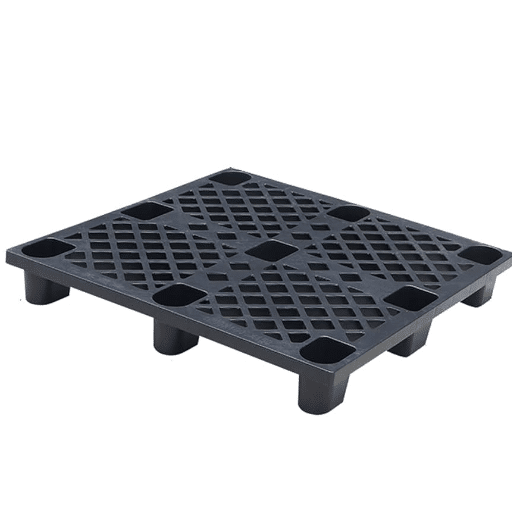
The following aspects should be kept in mind when buying and sourcing plastic pallets to ensure that they conform to your operational requirements:
- Application Needs – Ascertain whether your operations call for heavy-duty or standard-use activities. This will determine if you need heavier pallets that are more durable or lighter ones that are less costly.
- Material and Design – The materials used and pallet design will affect key aspects like weight, durability, or handling equipment compatibility.
- Weight Capacity – Look at the load-bearing capacity needed for your application to determine if the pallets can carry the weight of the goods being moved or stored.
- Budget – Always consider costs against durability and lifespan of the pallets in order to get the best value for your investment.
- Supplier Reputation – Always source pallets from reputable suppliers whose quality and reliability are unquestioned to guarantee operations do not face potential downfalls.
By considering the above factors, one will be able to make decisions consistent with his or her operational objectives as he or she tries to maximize performance and cost.
Where to Buy Plastic Pallets
Several reliable establishments are available for you to consider in your search for plastic pallets. Among the better choices, the commonly known providers are:
CHEP
Being the world’s number-one pallet and container pooling services provider, CHEP is well known for providing plastic pallets that are highly efficient yet environmentally sustainable. It offers a vast range of choices suitable for multiple industries with high sturdiness and environmental characteristics.
One Way Solutions Plastic Pallets
One Way Solutions is a manufacturer and supplier of rugged and light plastic pallets. Their extensive range includes rackable pallets, stackable pallets, and nestable pallets, so you will surely find what you need.
Rehrig Pacific Company
Rehrig Pacific, being reputable for innovation and quality, provides custom-made plastic pallets for an ever-expanding number of industries, including food and beverage, agriculture, and pharmaceutical. They are laser-focused on designing pallets engineered for maximizing supply chain efficiency.
Exploring these options serves as a gateway to high-quality plastic pallets that will surely meet your operational demands and assure quality, put right beside affordability.
Cost Analysis of New vs. Used Plastic Pallets
When trying to analyze the costs behind a new plastic pallet versus one that has been used, some key factors should be considered so as to make an informed decision:
| Factor | New Plastic Pallets | Used Plastic Pallets |
|---|---|---|
| Initial Cost | $20 – $120 per unit | Starting at $10 per unit |
| Durability | Maximum structural integrity and lifespan | May have slight wear and tear |
| Customization | Available for specific designs and requirements | Limited customization options |
| Environmental Impact | May use recycled materials | Reuses materials, reduces waste |
| Maintenance | Minimal maintenance required | May need repairs over time |
Initial Cost
New plastic pallets have higher upfront costs than one that has been used. For new plastic pallets, prices, depending upon quality, brand, and design, can vary between $20 and $120 each. Used plastic pallets, in contrast, may be purchased at irreconcilably lower prices, sometimes starting at $10 per unit.
Durability and Lifespan
Used pallets may have slight wear and tear, so new ones are more durable and hence an option of longevity and structural integrity. New pallets might indeed be a better long-term investment for an industry that operates at heavy levels or requires high-hygiene standards.
Functionality
New pallets would more suitably serve a more highly precise, customized, and hygienic pallet design required by certain industries. Used pallets are not usually intended for any such customization and may be incapable of meeting the strict compliance standards of those industries that require them, such as the food or pharmaceutical industries.
Environmental Impact
Used pallets are part of sustainability as they reuse materials and reduce waste. If your operation espouses eco-friendly practices, then used pallets can further those goals while saving bucks. Some new pallets are of, or can be recycled from, recycled materials (though they may cost more).
Availability
New pallets are just available in certain designs, sizes, or materials. Depending on the supplier, it may be challenging to acquire used pallets in the exact number or design needed.
Maintenance Costs
Used pallets might need repairs over time due to past damage, which might add to maintenance costs, whereas new pallets require minimal maintenance.
Assessing these factors carefully will help businesses opt for a product/service suited to their operational needs, budgetary capacity, and sustainability goals. If new pallets offer better value for industries with high standards or hard use on a repetitive basis, then used pallets may be an inexpensive yet green option for the budget-oriented or for secondary use.
Finding a Reliable Plastic Pallet Manufacturer
There are several key factors to be considered in the process of selecting a reputable manufacturer for plastic pallets. First, consider the manufacturer’s experience and reputation within the industry. Positive customer reviews, a reliable track record, and certifications that comply with industry standards are elements worthy of consideration. Second, examine the variety and quality of their product offerings. An excellent manufacturer should be able to supply different types of pallets, including custom varieties for specific purposes such as food, pharmaceutical, or heavy-duty loads that ensure durability and compliance with safety regulations. Third, examine whether the manufacturer permits customization of products to suit your special operational requirements in terms of size, material composition, or approved load capacities.
Modern conscious manufacturers would keep their sustainability principles, using recycled materials or eco-friendly manufacturing processes at heart. While on the list, note delivery lead times, customer service, and warranties to guarantee a smooth interface between them and your supply chain. After doing due diligence and comparing several top manufacturers, businesses will be ready and make the appropriate choice based on their operational needs and values.
Applications of Plastic Pallets

Plastic pallets find application in different fields because of their steep versatility. Among these usages is a crucial warehousing and logistics aspect for the storage and movement of goods. Using these pallets in transporting goods by being durable yet light decreases freight costs. In Indian industries, such parcels are often plasticized and used in food and medicine; their surface is easily cleaned and hygienic, thereby maintaining product safety and quality standards.
Warehouse Storage Solutions
It is wise to explore warehouse storage solutions, keeping in mind maximizing space, accessibility, and operational efficiency. Common types comprise pallet racking systems, which might be selective, drive-in, or push-back racks to suit particular inventory types. Shelving units are more suitable for smaller inventory, quick access, and organized storage. Wire deckings for bulk and irregular-shaped products, combined with mezzanine floors, increase usable space while retaining safety. With AS/RS being the order of the day for bringing in accuracy and cutting down labor costs, the measure of integrating these systems simultaneously is what will ensure quick operations, high utilization of storage size, and flexibility in regard to changing demand.
Export and Shipping Considerations
Complying with international trade regulations, customs requirements, tariffs, documentation, commercial invoices, and packing lists is important in managing export and shipping logistics. Shipping by air, ocean, or ground will depend on the costs involved, the time duration for delivery, and the type of goods to be transported. Labeling or packaging equals protection while products are in transport, and it’s also important to avoid delays at customs checkpoints. An additional secure shipment-tracking system, along with a reliable freight forwarder, will protect shipments to ensure smooth delivery with minimum disruptions, thereby increasing customer satisfaction.
Load Capacity and Durability Assessments
For evaluation, load capacity and durability should be measured to ensure the efficiency and safety of the transportation process. Load capacity means the maximum weight or volume of a load that a vehicle or container can carry without compromising performance or safety. Issues that must be taken into consideration are axle load limits, vehicle design, and road laws. Durability testing usually relates to ensuring that transport equipment and packaging materials are well able to stand up to physical stresses, treatment conditions, and the rigors of prolonged travel. All tests conforming to agency standards and assessments of maintenance practices will integrate to give the best performance and maximum life to a transport asset. These provide against damages that make a vehicle a financial burden and against poor customer satisfaction records.
Evaluating Your Plastic Pallet Needs

The very big factors in evaluating your plastic pallet needs include:
- Load Capacity: It is important to know how heavy the pallets have to be during static storage or in time of transport. This will guarantee the safety of the pallets for your specifications.
- Material Type: Do you want recycled or virgin plastics? The decision should consider durability, cost, and other environmental objectives.
- Industry Standards: Make sure that whatever industry standards are accepted are followed, particularly for use in food, pharmaceuticals, or export applications.
- Usage Environment: Consider if the pallets will be exposed to moisture, extremes of temperature, or chemical exposure, so that you can choose the right design and set of materials.
- Handling and Compatibility: Think of the handling environment of your equipment, like forklift trucks, racks, or conveyors, and operations will run smoothly.
Determining the Right Type of Pallet for Your Business
When determining the right choice of pallets for your company, a few issues will need to be considered to be sure that efficiency and cost-effectiveness are maintained:
Material Options
Pallets can be made of wood, plastic, or metal. Wood pallets and economical and sustainable, good for general shipping. Plastic pallets, on the other hand, are durable and quite resistant to moisture, while industries like the food and pharmaceutical industries require high hygiene considerations, making plastic a good choice. Metal pallets are stronger and good for heavy loads, but are usually costlier.
Weight Capacity
The Weight of the usual loads must be considered. Lighter goods can go for economy-grade pallets, but they require heavy and strong pallets that would sustain the increased load without breaking.
The Usage Environment
Consider the environmental conditions where the pallets will be utilized. For instance, plastic or metal pallets will hold up well in a humid or temperature-sensitive atmosphere, while wood may break down over time.
Compliance Requirements
In the cases where the business involves the export of goods, make sure to use pallets that meet international standards, such as ISPM 15 certified treated wood pallets, and also certified under your specific industry requirements.
Handling Equipment
Since you’ll be assessing forklifts and conveyor systems, among others, make sure the pallet supports its operational workflow to foster maximum compatibility and efficiency.
If handled on each point, prioritizing your specific requirements for business, and selecting thereafter, you could have pallets that work best towards running your operations, reducing logistical challenges, and maintaining cross-industry compliance.
Long-term Cost Savings with Reusable Plastic Pallets
Reusable plastic pallets bring considerable long-term cost savings, as buying more of these pallets, which are single-use alternatives, requires a lot of money. They can compromise the very premise of being a pallet by being less durable, susceptible to damage, or easy to contaminate, all in the name of maintenance and repair costs. On the other hand, being lightweight can slash shipping costs, yet be durable enough not to compromise on those specs all the while. From my experience, purchasing these plastic pallets has allowed for the enhancement of efficiencies along with substantial savings, rendering them a sensible and sustainable alternative.
Final Thoughts on Plastic Pallet Choices
Selecting plastic pallets for your operations should take into account an assortment of factors such as their endurance, weight, and price feasibility. Plastic pallets give you the advantage of not contaminating the freight with various substances; hence, plastic has an extended life compared to wood, with practically no maintenance charges. They are suited for industries concerned with hygiene and easy cleaning, such as those in the food and pharmaceutical sectors. Also, the light-weight construction helps in the optimization of freight expenditures in supply chains that are reusable. Weigh your own requirements based on the working styles and compare them with the upfront investment, as these usually stretch over a timeframe wherein cost-saving and environment-friendly options will be preferred. Go for good-quality plastic pallets as a decision today to ensure efficiency, sustainability, and reliability in your operations.
Reference Sources
Carbon Footprint of an EUR-Sized Wooden and Plastic Pallet
Wooden and Plastic Pallets: A Review of Life Cycle
Selection of Pallet Management Strategies from the Perspective of Cost
Frequently Asked Questions (FAQs)
What factors influence the costing of plastic pallets?
Several factors influence the pricing of plastic pallets; these include materials used, dimensions, and appearance. For instance, stackable plastic pallets measuring 48×40 might have different pricing by virtue of their standardization against custom plastic pallets. It depends on the manufacturing process and also on whether recycled materials are used in the manufacture.
Where can plastic pallets be bought?
Plastic pallets can be purchased from several suppliers, online and offline. Most manufacturers have options for a wide range of plastic pallets, both new and used. Industrial supplies websites usually list stackable plastic pallets and other kinds you may be looking for.
Are blue plastic pallets more expensive than other colors?
Variously colored plastic pallets are rarely priced factory-style since the blue ones are to the colors in high demand or availability. It is worth comparing to get a winning deal.
Stackable plastic pallets: What are their advantages?
Stackable plastic pallets provide optimized solutions for store space when being stored. They are the best to handle since they’re made durable: a true bargain when it comes to warehousing and transport.
How do reusable plastic pallets save me money?
Those reusable plastic pallets will have major cost savings over time, thus a better return on investment (ROI,) especially for any business that requires such performance on a constant basis in shipping and for storage.
What load capacity is in the standard-grade plastic shipping pallet?
The first is that it varies according to the design of the plastic shipping pallet and the materials used in its construction. Most heavy-duty plastic pallets can bear massive weights to transport heavy objects. It is, therefore, very important to check out its specification, whether it meets your requirements or not.
Are plastic pallets exempt from ISPM-15 regulations?
Yes, these regulations apply only to wooden pallets for international shipment, thus excluding plastic pallets. The exemption helps to ease operational procedures involving logistics and saves costs, thus rendering plastic pallets a rather good buy for any company involved in international trade.
How do I select the right plastic pallet for my needs?
Looking for the right plastic pallet, consider the following: size, weight capacity, usage within your particular application, storage, etc. For example, if you want a pallet that is compatible with a specific rack system, seek out rackable plastic pallets. Also, consider stackable versus nestable options depending on your storage space or transportation needs.