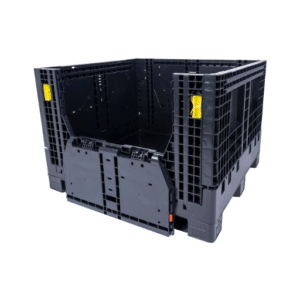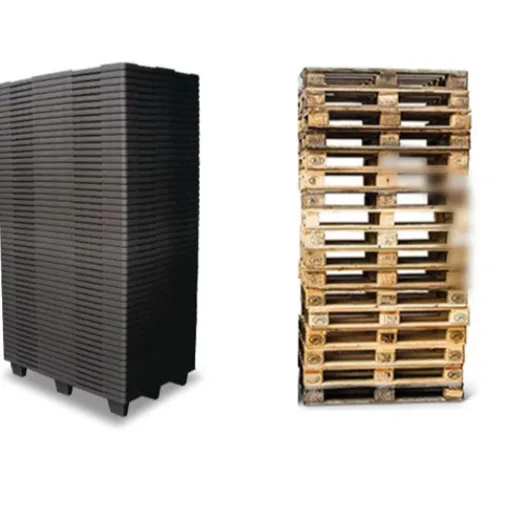

Plastic pallets outperform wood pallets in durability, hygiene, and long-term cost efficiency for most industrial and logistics applications. However, wood remains a practical option for light, single-use domestic shipping when upfront purchase price is the only factor that matters.
The sticker price on a wood pallet looks attractive at first glance. But that number hides a stack of secondary costs that show up months later in repair invoices, contamination events, compliance delays, and premature replacements. In our 14 years manufacturing pallet solutions for companies shipping to 108 countries, we’ve seen one pattern repeat: operations that evaluate total cost of ownership almost always shift toward plastic within 18 to 24 months.
In this guide, we’ll break down the plastic pallets vs wood pallets debate with specific data on cost, durability, compliance, and sustainability. You’ll get a clear decision framework you can apply to your own operation, plus honest insight into the few scenarios where wood still makes sense.
Key Takeaways
- Plastic pallets deliver 50 to 100 trips versus 10 to 20 for wood, creating a break-even point at 18 to 24 months for most operations.
- Wood pallets require ISPM 15 heat treatment for international shipping; plastic pallets are exempt, saving exporters time and customs delays.
- Food and pharmaceutical operations benefit from plastic’s non-porous, washable surfaces that resist bacteria and mold contamination.
- Total cost of ownership favors plastic within two years when you factor in repairs, replacements, and compliance expenses.
- Steel-reinforced plastic pallets match or exceed wood capacity while maintaining the dimensional consistency automated warehouses demand.
The Core Differences at a Glance

Before we dive into the details, let’s look at how plastic and wood stack up across the categories that matter most to logistics managers.
| Feature | Plastic Pallets | Wood Pallets |
|---|---|---|
| Average lifespan | 50-100 trips | 10-20 trips |
| Upfront cost | Higher | Lower |
| Total cost of ownership | Lower over 2+ years | Higher over time |
| Moisture resistance | Impervious | Absorbs up to 30% weight |
| Hygiene | Non-porous, washable | Porous, harbors bacteria |
| ISPM 15 compliance | Exempt | Requires heat treatment |
| Dimensional consistency | Exact, automated-friendly | Varies with humidity |
| Repairability | Limited | Can be nailed or patched |
| Recyclability | 100% recyclable HDPE/PP | Biodegradable but often landfilled |
| Weight consistency | Stable | Fluctuates with moisture |
This table tells most of the story, but the numbers only matter when you apply them to your specific use case. A distribution center running automated retrieval systems cares about dimensional consistency. ISPM 15 matters to an exporter shipping goods to Europe. A dairy processor cares about FDA compliance. The rest of this article examines each category in depth so you can weigh the factors that matter to your operation.
If you’re ready to explore how industrial plastic pallets could streamline your workflow, browse our complete range of plastic pallets engineered for 108-country compliance.
Cost Analysis: Initial Investment vs. Total Cost of Ownership
The plastic pallets vs wood pallets cost question trips up more buyers than any other factor. Wood wins on day one. By year two, plastic is the winner. The gap depends on how you use them.
Upfront Purchase Price
A standard wood pallet typically costs 8to8to15, while a comparable plastic pallet runs 25to25to60. That 2x to 4x difference feels significant when you’re ordering thousands of units. For a small business moving light domestic freight on a tight budget, wood looks like the obvious choice.
But upfront price is a trap if you stop there.
Maintenance and Repair Costs
Wood pallets break. Nails pull out. Boards crack. Deck boards splinter. Each repair costs 3to3to5 per pallet, and most wood pallets need repair after 5 to 10 trips. Over a 50-trip lifecycle, a wood pallet might see 4 to 8 repair cycles. That adds 12to12to40 in maintenance alone.
There is little maintenance required for plastic pallets.When a plastic pallet fails, it usually fails completely and gets recycled. There are no nails to replace, no boards to reattach, and no splinters to sand down. The maintenance budget drops to near zero.
Lifespan and Replacement Frequency
Industry data shows wood pallets average 10 to 20 trips before retirement. High-quality plastic pallets routinely deliver 50 to 100 trips. Some operations report 200+ trips from premium models.
Let’s run the numbers. Assume a wood pallet costs 12andlasts15trips.That′s12andlasts15trips.That′s0.80 per trip. A plastic pallet costs 40andlasts80trips.That′s40andlasts80trips.That′s0.50 per trip. The plastic pallet becomes cheaper on a per-trip basis before you’ve finished your first year of normal use.
Hidden Costs: Contamination, Compliance, and Downtime
Marcus, a logistics manager at a mid-sized food distributor in Chicago, learned this the hard way. He switched to wood pallets to cut procurement costs by 35%. Six months later, a batch of splinter-contaminated product triggered a customer complaint that cost his company a $12,000 contract. The savings from cheap pallets evaporated in a single afternoon.
Hidden costs pile up in ways that don’t show on the pallet invoice. Contamination events from wood splinters, nails, and mold can damage products or trigger rejections. ISPM 15 compliance for wood pallets adds 2to2to4 per unit and delays shipments. Wood absorbs moisture and increases freight costs for air cargo. Automated systems jam when warped wood pallets deviate from spec.
When you add these factors, total cost of ownership for plastic pallets vs wood pallets tips decisively toward plastic for any operation running more than 20 trips per pallet per year.
Durability and Performance Under Pressure
Durability isn’t just about lifespan. It’s about how the material performs under load, in bad weather, and in environments where consistency matters.
Weight Capacity Comparison
Standard wood pallets typically handle 2,000 to 2,500 pounds in dynamic load. Plastic pallets range from 1,500 to 5,000 pounds depending on design. Entry-level plastic models match light-duty wood. Heavy-duty models with steel reinforcement exceed wood capacity while maintaining lighter base weight.
For industries moving engine blocks, bulk chemicals, or dense agricultural products, steel-reinforced plastic pallets offer load ratings that rival or surpass wood. And they do it without the splintering or nail failure risks.
Resistance to Moisture, Chemicals, and Temperature
Wood absorbs water. In humid conditions, a wood pallet can gain 20% to 30% of its dry weight. That moisture breeds mold and weakens the structure. In freezers, absorbed water expands and cracks the boards. In chemical environments, spills soak into the grain and create contamination hazards.
Plastic pallets cannot be damaged by water.They don’t rot, warp, or absorb spills. You can pressure-wash them, freeze them, or expose them to most industrial chemicals without degradation. For cold storage, pharmaceuticals, and chemical processing, this resistance isn’t a nice-to-have. It’s a requirement.
Consistency in Dimensions
Here’s a factor many buyers overlook until it becomes a $50,000 problem. Dimensions of wood pallets differ. Humidity changes their size. Wear changes their shape. A wood pallet that measures 48×40 inches on Monday might measure 48.25×40.125 inches by Friday.
Automated warehouses, AS/RS systems, and robotic palletizers depend on exact dimensions. A quarter-inch deviation can jam a conveyor, shut down a line, or damage equipment. Plastic pallets maintain dimensional stability within millimeters across their entire lifecycle.
If your operation runs automation, plastic isn’t just better. It’s the only rational choice.
Hygiene, Safety, and Regulatory Compliance
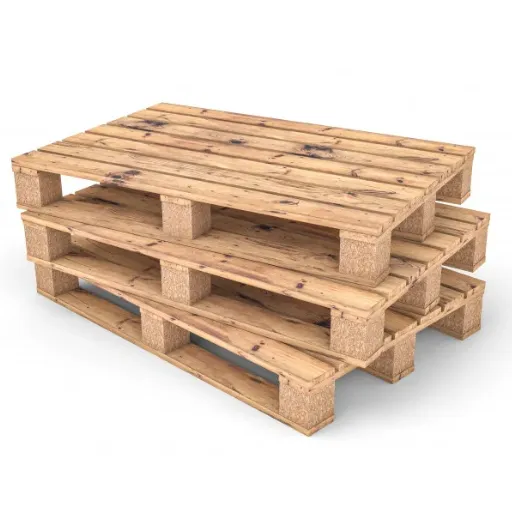
Regulatory compliance can make or break a pallet decision. The material you choose determines which standards you meet and which headaches you inherit.
FDA and Food Industry Standards
The FDA mandates that food-contact surfaces be smooth, cleanable, and non-absorbent. Wood fails on all three counts. Its porous grain absorbs liquids, harbors bacteria, and cannot be sanitized to the standards required in food processing.
Plastic pallets are compliant with FDA standards. Their non-porous surfaces resist bacterial growth. You can wash them with standard cleaning protocols and verify cleanliness with swab testing. That’s why major dairy, meat, and beverage processors have shifted almost entirely to plastic.
Pharmaceutical Cleanroom Requirements
Pharmaceutical operations face even stricter hygiene demands. Contamination risks in drug manufacturing carry consequences far beyond product loss. Wood pallets shed particles, fibers, and biological contaminants that compromise cleanroom environments.
Elena, a supply chain director at a pharmaceutical facility in New Jersey, made the switch after a third-party audit flagged wood particle contamination in her warehouse. She replaced 2,000 wood pallets with washable plastic units. Her contamination incidents dropped to zero, and her audit scores improved across every hygiene metric. The investment paid for itself in avoided regulatory risk.
ISPM 15 and International Shipping
This is where the plastic pallets vs wood pallets debate ends for exporters.
ISPM 15 is an international standard that requires wood packaging materials to be heat-treated or fumigated to prevent pest spread. Every wood pallet crossing an international border needs the HT stamp and documentation.The process incurs additional expenses. There is increased paperwork. Customs officials may refuse entry to non-compliant shipments.
Plastic pallets are not covered under ISPM 15. They require no treatment, no stamp, and no extra paperwork. For companies shipping to multiple countries, that exemption eliminates a major logistics headache.
At Shandong Lile, we manufacture plastic pallets that have cleared customs in 108 countries without a single ISPM 15 delay. For global enterprises, that reliability translates directly to on-time delivery metrics and customer satisfaction.
Sustainability: Which Material Is Truly Greener?
The environmental question surprises many buyers. Wood is natural, so it must be greener, right? Not necessarily.
Recyclability of Plastic Pallets
High-quality plastic pallets are manufactured from HDPE or PP, both of which are 100% recyclable. When a plastic pallet reaches end-of-life, it gets ground into resin and remolded into new products. Many of our plastic pallets contain recycled material from retired units, creating a closed-loop system.
The recycling infrastructure for industrial plastics is mature and scalable. A plastic pallet doesn’t end up in a landfill if the owner participates in a take-back or recycling program.
Wood Pallet Biodegradability Reality
Wood is biodegradable in theory. In practice, most used wood pallets don’t biodegrade gracefully. They sit in landfills, where anaerobic conditions slow decomposition. Treated wood releases chemicals. Nails and staples remain as metal contaminants.
The wood pallet industry does operate extensive repair and reuse networks, which helps. But damaged units beyond repair often become waste. The biodegradability argument holds up better for untreated, nail-free wood than for the industrial pallets used in logistics.
Lifecycle Carbon Footprint
Studies comparing lifecycle emissions show that plastic pallets can deliver a lower carbon footprint per trip than wood, provided the plastic pallet achieves sufficient trips before recycling. A wood pallet used 5 times and discarded generates more emissions per trip than a plastic pallet used 80 times and recycled.
The key variable is utilization. If you’re using pallets intensively, plastic’s extended lifespan compensates for the higher manufacturing emissions. If you’re using pallets once and discarding them, wood’s lower production footprint may win on a per-trip basis.
For operations seeking sustainable plastic pallets with proven lifecycle benefits, closed-loop recyclable systems offer the strongest environmental case.
Industry-Specific Recommendations
Different industries prioritize different factors. Here’s how the plastic vs wood decision breaks down by sector.
Food and Beverage
Plastic wins decisively. Hygiene regulations, washdown requirements, and contamination risks make wood a liability. Dairy processors, meat packers, and beverage distributors have almost universally adopted plastic for internal operations and inbound raw material handling.
Pharmaceuticals and Healthcare
Plastic is the standard. Cleanroom compatibility, traceability, and regulatory compliance requirements leave little room for wood. Many pharmaceutical facilities ban wood pallets entirely from their warehouses.
Agriculture and Cold Storage
This category requires nuance. For field use where pallets get muddy, wet, and abused, cheap wood is often disposable. But for cold storage, processing facilities, and export packaging, plastic’s moisture resistance and ISPM 15 exemption deliver clear advantages.
E-commerce and Retail
High-velocity e-commerce operations benefit from plastic’s consistent dimensions and light weight. Automated sortation systems work better with uniform pallets. And in retail backrooms, washable plastic reduces pest and sanitation issues.
International Export and Global Logistics
Plastic dominates. The ISPM 15 exemption alone saves exporters time, money, and customs risk. Companies shipping to multiple countries need packaging that clears borders without question. Plastic pallets for export remove a major variable from international logistics.
Would you like your pallets to be custom-built for your industry? Explore custom plastic pallets tailored to your exact dimensions, load requirements, and compliance needs.
When Wood Might Still Make Sense
We’ll be straight with you. Plastic isn’t the right answer for every situation. Wood pallets still make sense in three specific scenarios.
First, light, single-use domestic shipping. If you’re sending a one-way shipment within your own country and the pallet won’t return, a cheap wood pallet is the economical choice.
Second, on-site modification needs. Wood can be cut, nailed, and patched in the field. If your operation modifies pallets on the warehouse floor to fit odd-sized loads, wood offers flexibility that molded plastic doesn’t.
Third, extreme budget constraints with short-term use. For startups or temporary projects where upfront cash is limited and pallet lifespan doesn’t matter, wood’s lower entry price is hard to beat.
Even in these cases, the economics are shifting. Recycled plastic pallets are closing the price gap. And as automation spreads across more warehouses, dimensional consistency is becoming a baseline requirement regardless of industry.
Making the Right Choice for Your Operation
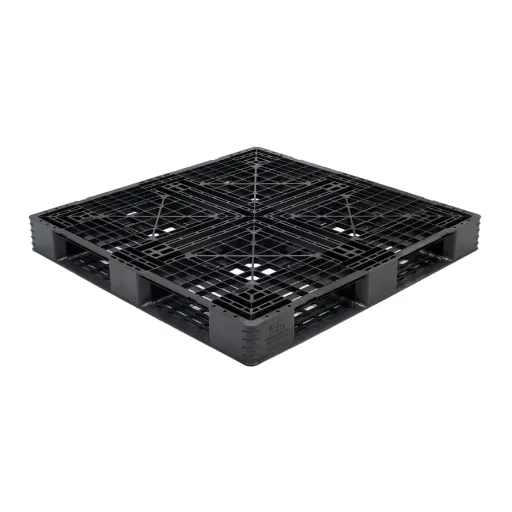
Choosing between plastic and wood comes down to five questions.
How many trips can each pallet take? If the answer is more than 20, plastic’s total cost of ownership advantage kicks in.
Does your industry require hygiene compliance? Food, pharma, and healthcare operations should default to plastic.
Is your shipment international? ISPM 15 compliance costs make wood expensive for exports.
Do you run automated equipment? Dimensional consistency demands plastic.
What’s your actual budget horizon? If you can evaluate costs over 24 months instead of 24 days, plastic almost always wins.
David, an operations director at an automotive parts exporter in Detroit, ran this exact analysis in 2024. He was buying 3,000 wood pallets annually at 11each,plusISPM15treatmentat11each,plusISPM15treatmentat3 per pallet for his European shipments. He switched to plastic at 38perpallet,eliminatedthetreatmentcost,andcuthisreplacementrateby8038perpallet,eliminatedthetreatmentcost,andcuthisreplacementrateby8014,000 per year on pallet costs alone.
If standard sizes don’t fit your operation, custom plastic pallets can be engineered to your exact specifications without sacrificing the benefits of plastic.
Frequently Asked Questions
Are plastic pallets superior to wooden ones?
For most industrial, food, pharmaceutical, and export applications, yes. Plastic pallets last longer, resist contamination, require no ISPM 15 treatment for international shipping, and deliver lower total cost of ownership within 18 to 24 months. Wood remains practical for light, single-use domestic shipping when upfront cost is the only priority.
Why are plastic pallets initially more costly?
Plastic pallets require injection molding using virgin or recycled HDPE or PP resin, which costs more than raw lumber. However, that higher initial investment pays back through extended lifespan (50 to 100 trips versus 10 to 20), near-zero maintenance, and eliminated compliance costs.
Can plastic pallets carry loads as heavy as wooden ones?
Standard plastic pallets match light-duty and medium-duty wood capacity. Steel-reinforced plastic pallets exceed standard wood load ratings while remaining lighter and more dimensionally stable.
Do plastic pallets have a longer lifespan than wooden ones?
Yes. Quality plastic pallets typically last 50 to 100 trips. Wood pallets average 10 to 20 trips before requiring repair or replacement. In high-use environments, plastic can deliver 5x to 10x the lifespan.
Are plastic pallets environmentally friendly?
High-quality plastic pallets made from recyclable HDPE or PP can deliver a lower carbon footprint per trip than wood, provided they achieve high utilization before recycling. Closed-loop recycling programs ensure retired pallets become raw material for new products rather than landfill waste.
Conclusion
The plastic pallets vs wood pallets decision isn’t about which material is perfect. It’s about which material solves your specific problems at the lowest total cost.
Wood pallets offer a low upfront price and field repairability that works for light, short-term, domestic use. But for operations that value durability, hygiene, automation compatibility, and international compliance, plastic pallets deliver measurable advantages that compound over time.
At Shandong Lile, we engineer plastic pallet solutions for companies operating in 108 countries. Our ISO-certified production, custom molding capabilities, and global logistics network ensure you get pallets that match your exact requirements, not an approximate standard.
Ready to see the difference plastic can make in your operation? Contact our team for a free consultation and quote tailored to your load requirements, industry standards, and shipping destinations.