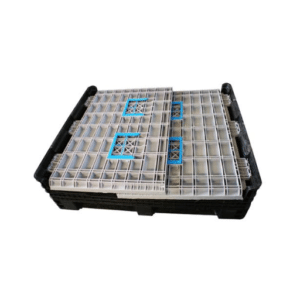
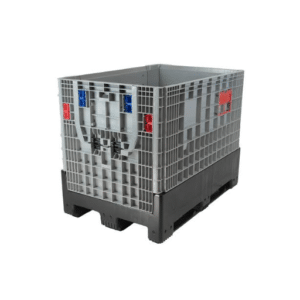
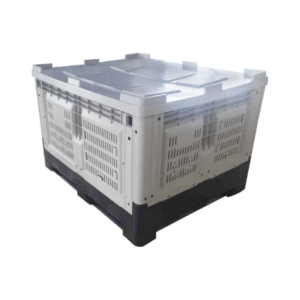
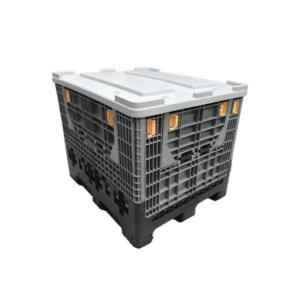
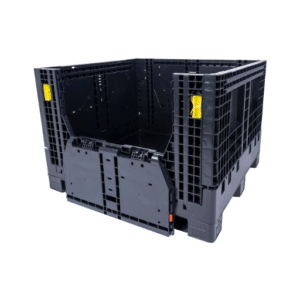
Optimising warehouse operations in terms of material handling can primarily be achieved by ensuring the proper design of pallets. In particular, the top deck or bottom deck of a pallet can be standardized, or enhanced for better stability of the loads, efficient weight distribution, and even for efficient storage of the materials. The variants of the pallets may appear insignificant, but they have an effect on everything from the safety of the products in transit to the cost of storage solutions. In this article, we will examine top deck and bottom deck pallets from the perspective of how they behave when loaded or stored; the differences will be highlighted. Whether you are a logistician, supply chain analyst, or just looking for better operational systems, this easy-to-consume information pack contains detailed analysis for the decision making with respect to the purpose of the system.
Understanding Top Deck and Bottom Deck Pallets

The most noticeable difference between the top deck and bottom deck of a pallet is their structure and function within the overall plan. Being the area where goods are placed, the construction of the top deck is vivid in the approach towards distributing the weight-bearing loads and providing stability to the products. Either solid or slatted, the top deck should be able to support different types of cargo and minimize the damage associated with their movement or storage.
Conversely, the lower deck, which, as its name suggests, supports the existing pallet from below, aids in the functionality of the other work, and strives to relieve stress such that accidents related to usage by forklifts, pallet jacks, and other kinds of equipment can be mitigated. It adds cushioning and reassurance to the pallet, especially for transport and stacking. Material types, number, construction method of pallets, and expected performance requirements determine whether one or two bottom decks may be used. The Costumes particularly influence the decision of designing the type of pallets necessary for work. In the open deck pallets, timber planks are attached to the top, bottom, and sides of the frames.
Top Deck
Load-Bearing Surface
- Directly supports placed goods
- Solid or slatted configuration
- Distributes weight across surface
- Minimises product movement damage
Bottom Deck
Structural Foundation
- Supports the entire pallet structure
- Compatible with forklifts & jacks
- Provides cushioning during transport
- Enables safe stacking
Introduction to Pallet Construction and Design
The structure of a pallet is made up of various essential parts aimed at increasing its specific purpose and enhancing its durability and handling capacity during logistics. These basic parts that pallets comprise include the deck and bottom boards, stringers, and blocks. Deck boards are the ones that make up the top and bottom of the pallet, which serves as a base for the goods to be supported. Stringers are beams that are installed lengthwise between the deck boards for the purpose of enhancing their structural load-bearing attribute. Block pallets have cubic blocks placed at the corners and towards the center that facilitate open deck pallets. Hence, a stringer pallet normally allows two-way operations instead of four unless properly notched.
Pallets can be made from a range of materials – wood, plastic, and metal being the most prominent. All these problems can be solved by using the right type of pallet, the right design of the pallet, and the right material of the pallet, so that goods can be handled, stored, and transported safely.
Pallet Materials at a Glance
| Material | Key Advantages | Best For |
|---|---|---|
| Wood | Economical, convenient for repairs, suitable for different applications | General logistics, manufacturing, and construction |
| Plastic | Durable, moisture-resistant, hygienic | Food & pharmaceutical industries |
| Metal | Greater resilience, withstands adverse conditions | Heavy-lifting, non-typical environments |
Table: Comparison of pallet materials, their key advantages, and recommended use cases.
Key Differences Between Top Deck and Bottom Deck Pallets
The upper part of the pallets, which is the top deck, and the lower part of the bottom deck, known as the bottom deck, have different functionalities as they possess significant variations in terms of their structure, function, and the way they are constructed. The top deck, which covers the load directly, will usually consist of boards or slats closely spaced together, providing optimal support and load distribution to ensure the load is kept stable. This is very important to maintain the load in one piece during storage or transit. On the other hand, the bottom deck is a structure that also serves a different function, which is to support the entire structure and such things as forklifts or pallet jacks by means of a certain interaction. The design of the bottom deck will depend on the function that will be performed, and such decks may be comprised of improved perimeter boards for better support or open deck pallets, which are light and easy to stack.
For purposes of material selection, the functionality of components may differ, such as the requirement of top decks, whose surface is to protect the goods, should be impervious, while bottom decks, in contrast, need robustness for wear and tear. The alignment of the boards found on the undersides can moreover facilitate or restrict the degree of automation and integration of roller conveyors, prompting the need for factoring that into the supply chain strategies. An understanding of these variations enables the selection of pallets that fit organisational operational needs.
Key Differentiators Summary
- Structure: Top deck uses closely spaced boards or slats; bottom deck uses perimeter boards or open configurations.
- Function: The top deck bears and stabilises the load; the bottom deck interfaces with handling equipment.
- Material Requirements: Top deck demands impervious surfaces for goods protection; bottom deck requires robust materials for wear resistance.
- Automation Impact: Bottom deck board alignment directly influences roller conveyor integration and supply chain automation.
Importance of Pallet Choice in Various Industries
The significance of the right pallet selection cannot be overstated, as it affects the operational performance and security of different streams. On the contrary, in the food and beverage field, people pay extra attention to hygiene-respecting regulations, thus a pallet can only be made from long-lasting and easy-to-clean materials such as plastic or metal. For pharmaceutical companies, the primary consideration is pallets with good sterility features to avoid contamination. Industrial companies, such as the manufacturing and building industries, would mainly use wooden pallets for lifting heavy loads because they are cheap and strong. The concept of easy and universal use of the pallets is used in the e-commerce and retail sectors to facilitate the flow of goods in automated systems and retail centers. The right type of pallet that’s individual to a given sector increases efficiency and has an impact on the cost, reducing incidences of damage in delivery, handling, or spoilage of the products.
🍔 Food & Beverage
Long-lasting and easy-to-clean materials, such as plastic or metal, should adhere to hygiene-respecting regulations.
💊 Pharmaceutical
Pallets with good sterility features to avoid contamination are the primary consideration.
🏗️ Manufacturing & Construction
Wooden pallets are mainly used for lifting heavy loads because they are cheap and strong.
🛒 E-Commerce & Retail
Easy and universally applicable pallets that facilitate the flow of goods in automated systems and retail centers.
Open Deck Pallets vs Closed Deck Pallets

Open-deck pallets have slats rather than open surfaces because they have a number of uses, and slats are beneficial when ventilation and weight minimization are needed. This usually happens in food or pharmaceutical industries where goods have to be perishable, as well, and require ventilation. Apart from this, since they weigh less, they help reduce transportation costs and handling efforts.
Closed-decks cover pallets by giving full continuous decks, and these are suitable for applications where product safety and hygiene play a better role. Pallets of this kind are used in industries where there is no room for dirt, dust, or contamination, like electronics or chemicals, for instance. Furthermore, such pallets concentrate on even load distribution with regard to design, making the structure strong enough to carry out heavy tasks.
Open or closed deck pallets are suitable for specific applications based on various factors such as load type, hygiene requirements, and workplaces. In general, to achieve maximum benefit, consideration of the above aspects is necessary for industry-specific pallets.
Definition and Structure
Open Deck Pallets
Lattice-like surfaces characterize the open deck pallets, leaving some spaces and gaps in between the deck boards to provide ventilation and easy cleaning. Such models are very light in weight and cheap to manufacture; it aids better drainage and are best used in areas such as food or agriculture industries where there’s a need for moisture control. The design involves a number of horizontal boards with perpendicular beams swiped underneath forming the entire structure, and it is strong enough to withstand most applications.
- Ventilation & drainage friendly
- Lightweight and cost-effective
- Easy to clean
- Best for food, agriculture, pharma
Closed Deck Pallets
Smooth solid surfaces constitute the top of the closed deck pallets, and there also is where there are no gaps. This comes with the advantage of increased hygiene and is mostly utilized in practices where higher standards of hygiene are required, such as pharmaceutical and electronics manufacturing. This type of flat surface provides more protection to the cargo, thereby minimizing the chances of getting torn, pricked, or otherwise damaged. Structurally, these pallets are meant to distribute weight evenly over the top of the pallet to provide stability when weighty goods or fragile items are placed upon them.
- Highest hygiene standards
- Even weight distribution
- Protects fragile or sensitive cargo
- Best for electronics, chemicals
Best Use Cases for Open Deck Pallets
Applications that require ventilation and drainage should consider using open deck pallets, as they are adequately open. Their shape allows proper circulation of air and liquids, making open planks usable in agriculture, food, or pharmaceutical industries, where the freshening of products and sanitation measures are very crucial. Moreover, open deck pallets are preferred in places where cleaning is done regularly, as their design does not allow dirt to layer in one spot but rather can be washed and dried effectively. Such pallets can also be used for various lightweight as well as medium-weight applications, including commercial and storage purposes, as they provide packaging solutions keeping in view the weight-cut-down cost aspects. Since they can easily be integrated into automation handling capabilities, it would be wise to use those pallets intended for operations inclined toward the enhancement of logistics.
Load Capacity in Top Deck vs Bottom Deck Pallets
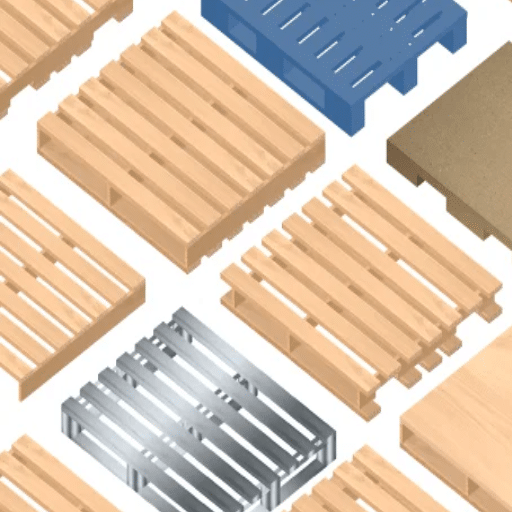
When comparing the load capacity of the upper deck and the lower deck pallets, it becomes apparent that their structural designs as well as applications primarily differ. Upper deck pallets are almost always manufactured in a way to distribute any weight across the entire surface area and are therefore suitable for use with loads that require uniform support. On the other hand, lower deck pallets are secured better and tend to allow a more focused load sharing, which is important in stacking or other heavy-duty uses. The load-bearing properties of the two types of structures vary greatly based on the material used, additional strengthened features, and the mechanism of operation, whether it will entail racking or using the floor for storage. Of course, the pallet that should be used should take into consideration the way the weight is going to be distributed, as well as how the items will be stored in this particular process.
Analysis of Load Distribution in Different Pallet Designs
When considering how loads are distributed in different designs of pallets, three variables have the greatest effect: the material from which the pallet is made, its structural design, and the purpose it serves. For instance, in the case of wooden pallets, which have a far more rigid frame, such pallets are excellent in terms of any dynamic load and cut out stress in all frames of reference while lifting or moving such pallets. The only problem with this is that it can be subject to point loads, which would concentrate the force in one area and thus reduce the pallet’s effective life.
As opposed to that, hard-molded plastic pallets often have a monolithic form factor that enables uniform load sharing and distribution. Such is the case with many plastic models that feature triangulation or latticework of ribs and wells to increase loading in the walls of open deck pallets, thereby being suitable for either stacking – up to reasonable thicknesses – or transporting even weight loads.
The more complex metal pallets, however, are the most optimal for bearing pallets. As their structure consists of welded elements, they have a high resistance to mechanical impact, both static and dynamic, when any structures become static after a rigid base is constructed.
In general, pallet assembly capability directly corresponds to the nature of operation: appropriate load type, weight distribution, and storage arrangement in their assembled storage. Operating conditions thus determine the design or configuration in which pallets are made for better load control.
How the Structure Affects Durability and Stability Under Heavy Loads
How a pallet is structured affects how much weight it can hold with stability. One of the design parameters that determines how much load a pallet can withstand and how long it will last is the type and composition of construction materials, as well as how they are arranged. For instance, using high-density polyethylene (HDPE) or hardwood for open deck pallets reduces the risk of deformation and wear that comes with softwood or standard plastic pallets.
In the case of ones, like cross-bracing and ribbing, there is more partitioning of the stress within the pallet, so that how efforts are concentrated does not cause warping or breaking. On top of this, the shape and location of the deck boards or slats also matter for the structural integrity – more contained reinforcing limits the deflection under heavier weights, while the use of stringer or block types increases the height of the structure. In circumstances such as these, therefore, the addition of reinforcing anti-slip layers and/or covered tipped edges would help in enhancing the efficiency of the structures since loads will not tend to move.
With a mechanical outlook in the design of the pallet, it is best to consider incorporating all the forces acting on the system, the working limits of such a system in static and dynamic situations, such as stacking when using racking or using automatic systems. Design aspects in this case address the relevant load and load environment to address service life and wasted resources in operations.
Industry-Specific Preferences for Top Deck vs Bottom Deck Designs
The choice between the top and bottom deck pallet designs is very subjective and differs extensively with the type of industry due to variations in the mode of operations. Retail and transportation/logistics tend to use maximum coverage on top decks’ designs, preferably to have even distribution of loads for the reduction of damages of products when transporting or storing. On the other hand, coming to the manufacturing industry or warehouse, there is the use of the open deck pallets that have strong supportive frames and pins for heavy-duty purposes, i.e., working in places where material handling is mechanized using either mechanical conveyors or even forklifts.
Notably, open deck pallets are also used for the specific lesson-aware crop ventilation facility (or type), saving preference sectors such as agriculture, which require better ventilation and a good quantity, structure, and air exposure of products. Low building spaces, such as for example construction industries that use racking novelty or food production sectors, use stringer or block bottom deck pallets, which are much more stable. In many instances, the choice of top deck and bottom deck mainly depends on the nature of the load being carried, among other relevant features of the working surroundings with respect to the industry in question.
| Industry | Preferred Deck | Primary Reason |
|---|---|---|
| Retail & Logistics | Top Deck | Even load distribution, product damage reduction |
| Manufacturing / Warehouse | Open Deck | Heavy-duty mechanical conveyor compatibility |
| Agriculture | Open Deck | Ventilation and air exposure of products |
| Food Production / Construction | Bottom Deck | Stringer/block pallets for racking stability |
Storage Efficiency and Material Handling

When designs strictly improve construction lines for the specific racking systems and other equipment requirements, the maximum benefit in using space for storage with an allowable passage of goods can be achieved. Because of the specific sizing and strength of the cubicles, the boxes are easier to stack and utilize the space without any voids, facilitating the transportation of bulky products. Interoperability of handling devices such as conveyors and automated guided vehicles, with respect to open deck pallets features high importance in material handling. Resistance to shocks, scratches, and any other damage should be made possible by containers that present soft and flat surfaces as well as seamless designs, and of course, strong fabrics. All of these considerations affect the effectiveness and profitability of distribution and warehousing operations where the factors come into play.
Impact of Pallet Designs on Warehouse Storage Optimization
Warehouse efficiency is greatly enhanced by how well the pallets are designed, as it determines the optimum use of space, distribution of weight, and rate of handling. The first thing that comes to mind is how big, small, or heavy the pallets are and what type of racking or flooring is adapted to suit the said characteristics of the pallets. It is much more economical to use standard pallets that can fit appropriately into the shelves and also containers that are handled by machine-operated equipment. Moreover, strong materials such as wood, plastic, or composite, if used, render the pallets more reliable than many other types of pallets that carry heavy weights, as they do not easily get deformed or destroyed.
Some designs, like pallets that nest into each other or can be inserted into one another, optimize vertical storage by enabling nesting when the pallets are unused. Designs that have perforation or reduced material can assist in reducing the weight to be transported, hence saving on costs. Such purposeful design changes focused on the pallet more often than not meant it was possible to achieve higher cube utilization, have less storage space usage, and better management of stock – all important aspects in today’s industrial/warehousing environment.
Compatibility with Rack Systems and Automated Equipment
Warehousing operations demand assurance of pallet compatibility with different rack styles and automatic equipment. These systems, with the standard size pallets for the ISO or GMA dimensions, do not pose any problem since, practically, such systems are always designed for optimal pallet storage. This prevents improper storage, which may otherwise lead to safety and efficiency failures. In addition, the edges of the pallets are reinforced, and open deck pallets are built with bottoming structures, all of which must be kept in mind when using the conveyor belts, sorters, or even robots for lifting the pallets. Newer generation materials, such as high-density polyethylene composites, are now being used to increase the life cycle of the machine co-designed for aggressive robotic applications. Effective use of pallets in these systems also saves the cost of operational breakdowns and repairs arising from the use of unavailable or broken pallets.
How Pallet Choice Influences Stacking and Movement Efficiency
The type of pallet chosen will influence the loading and stability of stackability and mobility of goods along the entire logistics chain. In general, the material of which the pallet is made, the maximum loading capacity, and the principles adopted in the construction of the pallet affect the ability of the pallet to support or disrupt the load during manual loading and automated loading processes. For example, dimensionally standardized pallets having strengthened decks evenly distribute the weight, hence the chances of any load sliding away during stacking do not arise. Where as, non slip surfaces and greater constructional rigidity guarantee the protection of the goods in transit against any hazards, looking for stability.
The design of plastic pallets allows style flexibility due to their being light and of consistent design, which is very useful in automated tasks as they help protect the machines from overworking and process faster. In contrast, wooden pallets, though being rather old-fashioned in their demand, have a strength capable of bearing high loads, yet have their own difficulties, such as variations in dimensions or usage issues. Mixing of pallet designs with the peculiarity of operations helps to make the operations of materials easier, optimizes the power of machines, curtails storage issues, and, in the end of it all, enhances the efficiency of the entire logistics chain.
Cost and Sustainability Factors
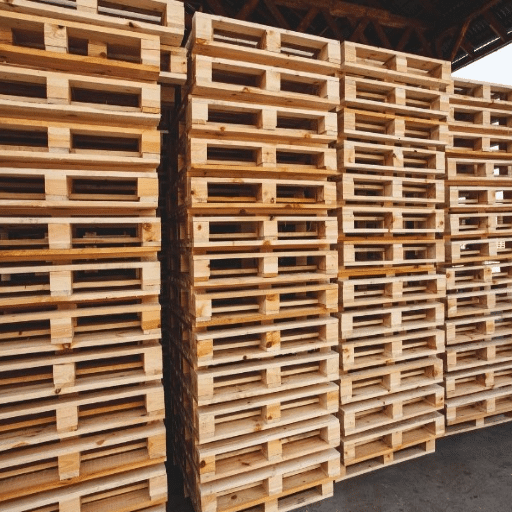
When determining the expense of a particular pallet, it is easy to see that plastic pallets are more expensive than wooden pallets. However, the robust nature and long-lasting quality of these pallets may outweigh the costs in particular sectors, where a closed-loop system operates. Wooden pallets, on the other hand, are cost-effective, but the replacement and maintenance management is costly since they become damaged after usage.
As far as sustainability goes, wooden open deck pallets are made of renewable material that can be decomposed into the soil, though with repeated use, there is degradation of resources. This is in contrast to plastic pallets, which do not decay but can be re-purposed into new items, minimizing waste. The choice of material involves the consideration of the costs at present and, last but not least, the eco considerations of how and why they will be utilized in the longer term.
Evaluation of Material Costs Between Top Deck and Bottom Deck Designs
Top deck and bottom deck configurations of pallet types differ as far as the costs of materials for building them are concerned. This is caused mainly by the type of material (wooden, plastic, or composite) and the complexity of the structure. Usually, more material is required for top deck designs, and they are more complicated since they bear and store loads directly during handling. This slightly raises the expenditure on materials associated with the designs. On the other hand, though their purpose is to ensure that there is stability and that the designs are compatible with various handling equipment, bottom deck designs have also increased the costs, particularly where there is a need to enhance strength by adding more materials.
In the case of wooden pallets, softwoods are cheaper but less durable, while on the other hand, hardwoods are more durable but also costlier. Plastic pallets also have this feature, where fully molded pallets are more expensive but perform better in terms of load bearing compared to open deck pallets or pallets with very few bottom deck supports. In the end, cost analysis will be dependent on the weight to be carried, the range of applications envisaged, and the time the equipment is expected to be subscribed to any particular function, vis-à-vis the investment made.
Contribution of Pallet Designs to Sustainability Efforts
I believe that in pallet designs, sustainability is achieved largely by their dimensional stability. Take, for example, wood, used in the forks and boards of a pallet. It can be fixed or replaced with new wood; its structure is preserved for a longer period. The advantage of such a construction is that it avoids waste. Besides, in the process of using such pallet ends, they happen to be not very useful, for the installation of soft surface is made of the lifted materials. In this case, the original product is plastic pallets. They are more unkind towards the environment while incorporating the usage and manufacturing of plastics. However, the emphasis is put on the usage because of its lifetime. These pallets are prone to handling any torture that is inflicted upon them and don’t break down easily after being used several times. In addition to this, they are sometimes built and incorporate recyclable plastics, which lowers the possible damage after their useful life has ended. In this manner, one can say that the role of open deck pallets strictly designed for freight opens the opportunity for effective materials handling.
Long-Term Cost Implications Based on Usage and Lifespan
Pallets required for a particular type of business in the long run largely depend on their material type, durability, or the cycle of how many times they are used. Although wooden pallets are cheap at the beginning, in most cases, they are replaced soon because of their short or damaged lifespan, which reduces the cost-effectiveness of running repeat business processes. On the other hand, plastic pallets have higher upfront costs since they can last longer and withstand many environmental conditions. In operations where durability and minimum repair are considered, these factors might actually help reduce expenses. Also, less popular because they are expensive to produce, metal pallets are highly sturdy and ideal for heavy-duty or specific purposes where replacement would prove costly for the consumer. Considering factors like these – number of cycles, freshness or oldness of the material, and recycling capabilities – allows companies to rationalize their decisions with the aim of maximizing their spending on open deck pallets over the years.
| Pallet Type | Upfront Cost | Durability | Sustainability | Long-Term Value |
|---|---|---|---|---|
| Wood | Low | Lower | Renewable, biodegradable | Moderate (frequent replacement) |
| Plastic | Higher | High | Recyclable at end-of-life | Strong (fewer replacements) |
| Metal | Highest | Highest | Highly recyclable metal | Best for heavy-duty, long-cycle ops |
Conclusion
Choosing the Right Pallet for Your Operation
Understanding the structural and functional differences between top deck and bottom deck pallets — and between open and closed deck configurations — is essential for any organisation seeking to optimise warehouse operations, reduce costs, and meet industry-specific compliance requirements.
The right pallet choice ultimately depends on the nature of the load, the industry context, the type of handling equipment in use, and the organisation’s sustainability goals. By factoring in both short-term costs and long-term lifecycle performance, decision-makers can ensure they select the most efficient, cost-effective, and appropriate pallet design for their operations.
🏗️
Structure
Design drives durability and load performance
🏭
Industry Fit
Match material and deck type to sector needs
♻️
Sustainability
Factor in lifecycle and recyclability
Reference Sources
Investigation into the Load Bridging Effect for Block Class Pallets (2021)
Frequently Asked Questions (FAQs)
What exactly is an open deck pallet made of plastic, and how does the description go?
Open deck pallet made of plastic is one of the types of returnable plastic pallets, which are often nested or racked, with an open deck surface to minimize the weight, allowing scrap materials and liquid to flow through. The usual descriptions concerning this pallet state that it is composed of nestable plastic pallets for tighter storage needs, stacking rigid plastic pallets for carrying or supporting weight, water-resistant and contamination-resistant, used as an alternative in industries and packaging, which increases cost-effectiveness.
Would the open deck plastic pallets be suitable for use in exports and International shipping?
Indeed, a large percentage of open deck pallets made of plastic are far better for export. This is because they eliminate the need for ISPM-15 wood fumigation or heat treatment processes. Once made from plastic, such pallets are not only sustainable, but they also come pest-free and often satisfy shipping regulations around the world. Whenever exporting, you may want to make use of rackable plastic more, especially in warehouses, and ensure that the suppliers are certified to avoid export problems regarding your item/product.
What components are open deck pallets constructed of, and can they be recycled?
Plastic open deck pallets, as previously mentioned, are made from either PE or HDPE components or PP for the PP components. In most of these cases, the materials are able to be pulped down and recycled, which means they are more environmentally friendly than the single use woods pallets like the familiar ones. Those are recyclability, reusing, and reductions in cost across supply chains, which are some of the advantages of choosing the plastic ones from a corporate perspective.
How do the special open deck pallets stack up in the industry as far as size and shape?
Open deck pallets are available in various standard and custom sizes to suit pallet racks, conveyor systems, and shipping containers. The types available include nestable, rackable, stackable, and heavy-duty industrial versions. Let it be a liquid container or boxed item, opt for a suitable size and surface pattern, whereas for specific applications, look for reinforced stringers or metal inserts to increase the load-carrying capacity.
Are open-deck pallets made to hold liquid or foodstuff, and how well do they contain leakages?
To store food and beverage packaging of this type, open-deck pallets should be used together with a spill containment or tray system. The weight is evenly distributed, but liquids can be poured through the design; so make sure that the liquids being put in open pallets are first sealed tightly, or use special pallets for containing liquids. Where food will be in direct contact, there are specific plastic pallets that are food safe, and these pallets should be checked for smoothness and cleanliness since they are prone to infection. It is important to put a part of the load in the appropriate transport package to solve the leakage problem. As a result, this transport will not bring any problems.
Is it possible to use open deck pallets as single-use, or is there a possibility of repeated usage for performing certain operations?
Open deck pallets do not fit either of the two options: they can serve as cheap disposal items aimed at unavoidable low-end dispatches, as well as reliable non-dissolvable project frameworks. In the case of one-time usages, nestable plastic pallets are compactly stackable, whereas for often-used heavy-duty requirements, rackable models can be useful. Think about the full costs and the possibilities of reusing it, as well as the post-assembly wooden crates to be used on the dock, to select the optimal supply method you are providing.
What are the necessary surface cleaning procedures for open deck pallets made of plastic?
Plastic open deck pallets do not require much care. The only process of maintaining them is washing with water or washing with a pressure cleaner. This removes all the dirt, debris, and residues that could be on the surface or within the open deck areas of the pallet. In industrial or food-processing environments, sanitized pallets should be used and examined for worn-out cracks or any fractures that will lead to pallets breaking while handling a load. Cleaning together with checking for damage prolongs the usability, ensures that hygiene is adhered to at all times, and prevents the pallets from causing the organization added costs in the packaging and transportation line.