One of the pivotal choices every business has to make regarding its supply chain operations, cost reductions, and sustainability initiatives is whether to use a plastic pallet or a wooden pallet. The two materials possess a deep variety of advantages and disadvantages for different applications and industry requirements. The two articles provide an in-depth comparison of both pallet types according to some criteria: durability, cost, their effects on the earth, and the functions in each industry. The guide is designed to give you the needful insights to justify an informed decision as you contemplate streamlining and optimizing your distribution network or working in conjunction with industry regulations on overall operational efficiencies. That’s just a teaser; yet read on to decide, based on your actual business objectives, as to which category of pallet is best between the two.
Introduction to Pallet Materials
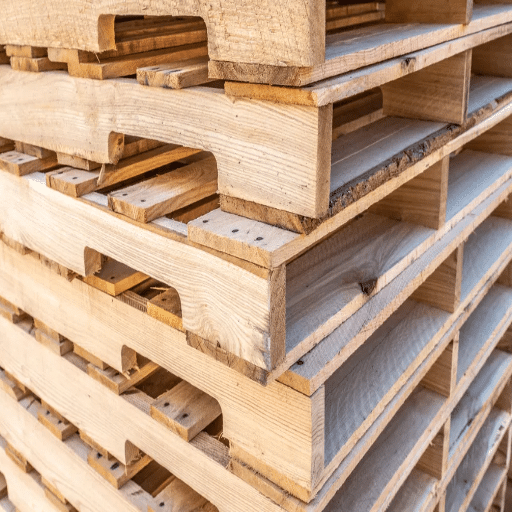
A pallet is a pivotal hardware in logistics and material handling as it provides an effective and steady structure for storing and moving products. The most popular building materials for pallets are wood and plastic. Wood pallets are famous for their almost global presence and affordability, making them great for a variety of applications at competitive prices. Plastic pallets, manufactured with ruggedness and durability, have higher standards of being reused and are impervious to high moisture and chemical attack-extras that allow them to be of long-term use within demanding hygienic or repeated usage scenarios. Therefore, each material is pertinent to particular respective advantages given specific operational exigencies and applications.
What are Plastic Pallets?
Plastic pallets are manufactured to cater to the efficient handling, storage, and transportation of various goods by using very rigid and high-density materials like polyethylene (HDPE) or polypropylene (PP). This kind of pallet is mostly appreciated for being durable, hygienic, moisture- and chemical-proof, and does not support bacterial or fungal growth, unlike its wooden counterpart. They come in various designs, from rackable to stackable and nestable, to work under various load requirements and operational workflows. These pallets are mostly used in industries such as pharmaceuticals, food and beverage, and warehousing, providing a lightweight, reusable, and sustainable solution. Cleaning is a breeze with this type of pallet, plus these businesses help to foster international markets because they adhere to stringent requirements and can fit into international ISPM standards.
What are Wood Pallets?
A wooden pallet is a horizontal platform made from hardwood or softwood timber that is usually used in the transportation and storage of goods. They are meant to make handling easier when using forklifts, pallet jacks, and conveyors, hence making the movement of goods substantial in modern logistics. Made completely to size, the wood pallet can also be made different from the prevailing standardized sizes to meet the exact supply chain needs. Almost all industries use wood pallets: manufacturing, agriculture, retail, logistics, name it. They are cost-effective; they can be reused or at least recycled for sustainable activities. Now being so substantial and thus easily enduring, many wood pallets may be subjected to certain treatment and adherence to international phytosanitary regulations such as ISPM 15, whose primary goal is to reduce the chances of pest infestation during an international shipping regimen.
Overview of Pallet Types
Pallets are classified on the basis of their material, design, and intended use. The main categories of wood, plastic, metal, and composite pallets have unique strengths, depending on the application parameters.
Wood Pallets
Admitonometers are the most popular because of their affordability, customized creation, and excellent load-bearing. They include such types as the stringer pallets and the block pallets, where the block pallets are commonly preferred because of greater durability and easier access due to their four-way forklift compatibility.
Plastic Pallets
Lightweight and moisture-resistant, plastic pallets are the best value in sanitation for the pharmaceutical and food industries. While increasing operating lives, they can be used many times. However, their initial cost is higher than that of their wood counterparts.
Metal Pallets
Metal pallets have been created for extremely high-intensity applications where heavy loads bear against harsh circumstances. The typical end users of such pallets thus include industrial and commercial sectors-steerage, aviation, and heavy transport.
Composite Pallets
Composite pallets generally consist of an engineered material, such as compressed wood or recycled plastic. The point of initiation of such heavy-duty assemblies is to provide the qualities of wood and plastic pallets all woven into one. Apart from being an ecological alternative, they are low in net cost and comply with international shipping standards.
Key Takeaway: Each type of pallet has specific logistics and operational requirements, mostly based on its applied utility, environmental conditions, and legislation compliance.
Durability of Plastic vs Wood Pallets

Typically, plastic pallets showed greater weather resistance in comparison with wooden pallets due to the fact that they resist moisture, pests, and decay. Plastic will not splinter or go weak over time, which allows it to be reused more and subjected to harsher environments compared to wood. Wooden pallets, while robust in nature, are, however, mostly likely to suffer from problems due to moist weather conditions; they tend to warp, and may easily break under heavy loading conditions, especially when situations become stretched over a period of time. Repair of wooden pallets tends to be easier when cracked, which in turn extends their usefulness in a few cases. At the end of the day, plastic pallets give better resilience in the longer term, whilst wood pallets could possibly provide a more cost-effective option for single-use/lower-duty workloads.
Strength and Longevity
When it comes to the strength and durability of pallets, it can be concluded that the advantages that plastic and wood carry are completely application dependent. Plastic pallets are mostly produced out of high-density polyethylene (HDPE) or polypropylene (PP), making them particularly resistant to moisture, chemicals, and temperature extremes. For high resistance to continuous use with high frequency, these pallets feature extreme hardiness and are therefore ideal for all applications in high-traffic situations. Most importantly, plastic pallets also maintain their other attributes by holding the static and dynamic distribution of loads; they do not warp or disintegrate quickly and earn an excellent reputation for a long-term working life.
Wood pallets, however, offer very good initial strength against static and dynamic loads. They can also get badly battered during environmental vulnerability, due to moisture, pests, and likely breakage from high stresses, especially in long-standing or high-frequency usage situations. Moreover, wood pallets would serve their best for less demanding applications by permitting easy repair, and are also much cheaper in this aspect. The durability of plastic pallets may be the answer for industries in need of this quality, and with low maintenance cost, wood pallets are mostly suitable for those operations requiring a cost-effective yet recyclable and lightweight choice, having not much one-time or heavy-duty use as transportation.
Resistance to Environmental Factors
Respecting its adaptability in the face of the environmental challenge, between the two contenders of wood and plastics, both show characteristically distinct features from each other. Plastics are naturally resistant to moisture, and moisture will rarely cause warping and rotting of pallets. The resistance-amplifying characteristics, amongst their vast limits of temperature variations, include survivals in other enervating latter categories, including freezer storage. On the flip side, wood bows to moisture absorption, making it a threat to structural integrity and an encouragement to fungal or bacterial growth, depending on the damp environment in which they are located. In many ways, protective coatings and chemical treatment can be applied to protect wood pallets from environmental disturbances.
In addition, plastic pallets are resistant to insect infestation and pests, something that continues to haunt the wood pallet, especially when they are kept for a while or transported to an entirely different continent and quarantined. Wood pallets are biodegradable and quite efficient as far as environmental friendliness and recyclability are concerned, but they need persistent maintenance as an inevitable requirement for their lively working conditions in an adverse climate. Generally, plastic pallets prevail over wooden ones in situations where resistance to moisture, extreme temperatures, and pest control is required.
Comparative Lifespan
Wood, compared to plastics, generally has fewer operational years in the short run. With careful management and steady attention, pallets can potentially survive between 2 to 5 years, depending on the quality of good pallets. However, they happen to burn away rather rapidly under the influence of the elements. Such factors include additional moisture, penetration from pests, or utilization. On the other hand, plastic pallets are built for abuse with a life on average of approximately 7 to 10 years, while, depending on how fast they are treated, the average could exceed. Lack of stress cracking, rotting, and weathering destruction makes plastic the true long-distance industrial candidate. Although the imposed cost of plastic is greater, this sacrifice must always be the real life in the management of more trivial operation costs, largely in a fast turnaround or closed-loop system. As a consequence, it remains plastic to be the first option to obtain a long service life and a strong class of belt.
Advantages and Disadvantages of Each Material
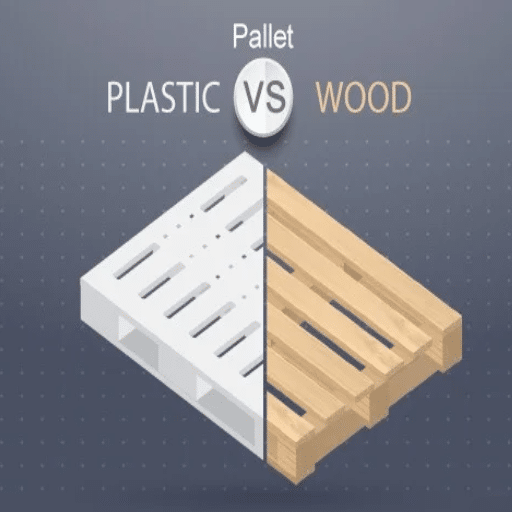
Advantages and Disadvantages of a Pallet Made of Wood
Advantages
- Considerable savings and lower costs make them quite good for short-term or expendable use if compared to plastic pallets.
- Wood pallets are always on the go, with a little repair, as broken or wasted parts can always be replaced easily and cheaply.
- The most environmentally friendly way to dispose of wooden pallets is through biodegradability, with the option to easily recycle them.
Disadvantages
- Wooden pallets break apart when exposed to moisture and rot fast; they also get quickly infected with pests or bugs, destroying their life span.
- Less likely to last long as cracks, splinters, and cross-graining are very much detrimental to their strength.
- Heavier versus plastic pallets translates to higher transport costs in certain circumstances.
Advantages and Disadvantages of a Plastic Pallet
Advantages
- Rugged and longer-lasting, as there is no cracking to contend with under harsh environmental conditions. Such a high-grade material is impervious to moisture and chemical attack.
- Dimensional uniformity and weight guarantee a better handling efficiency and implementation of automated systems.
- Easy to clean and sanitize, so they are apt for the industries that have strict standards of hygiene, such as food and pharmaceuticals.
Disadvantages
- Costs some more dollars upfront as opposed to wood pallets; however, the benefits may well pay off in the long run.
- Very expensive to repair once damaged; nearly always require the complete replacement.
- Not too biodegradable, although some of them, like those that are made of recyclable material to mask concern for the environment.
Benefits of Plastic Pallets
The plastic pallets offer a number of advantages that make them well-suited to modern supply chain and logistics operations. Firstly, tough and long-lasting compared to wood, the pallets are weather-resistant, chemical-resistant, and physically tough. Consequently, the high level of resistance they displayed meant that replacement needs were few, which in turn translated into cost savings over the long term. Secondly, the uniformity in their design ensures their compatibility with automated systems, such as conveyors, palletizers, and automated storage and retrieval systems (AS/RS). Thirdly, their impervious surfaces make plastic pallets simpler to clean and sanitize, making them more suitable for industries with high sanitation demand, such as foodstuffs, drugs, or medical supplies, since they do not allow moisture or contaminants to penetrate any further.
Additionally, plastic pallets that are lighter than their wooden counterparts improve overall efficiency across the supply chain, thus decreasing transportation costs and energy consumption. With some models being nestable or stackable, there’s a saving of storage space when they’re not in use. Stylistically, many plastic pellets now have at least one recycled content; moreover, the possibility of them being recycled at the end of their life can help mitigate concerns over biodegradability. Due to these advantages, the plastic pallets provide a vital mechanism for crossing industrial bridges between economic efficiency and sustainability.
Drawbacks of Plastic Pallets
Plastic pallets have many advantages, but they are not suitable for certain applications owing to their significant disadvantages. Apart from minor issues, like being heavier than wood pallets and costlier, plastic pallets are in danger of stripping under heavy loads or in extreme environmental circumstances. Then, repairing them can be quite involved. There are questions of coefficient of friction and stability during transport resulting from the ludicrously complex task of “Which pallet would be more likely to break while in use?” High temperatures further add insult to injury, making certain plastic pallets not suitable for the hot climate experience, because they would either undergo irrecoverable warping or degradation. Such circumstances, therefore, shed planks of light on the crucial necessity of evaluating the company’s unique needs.
Pros and Cons of Wood Pallets
Merits of Wood Pallets
Reasonable Price and High Operational Availability
Wooden pallets are generally compared to metallic and plastic pallets, which makes them an economical format for most businesses. This makes them widely accessible and cosset atambiance for business.
Heavy-duty pallets
Wooden pallets are adequate for managing heavy loads, with strenuous ground structures, that can amount to an industry.
Easy to Repair and Can Be Used
Damaged pallets, should they happen to be made out of wood, can usually be very affordably reconditioned through a repair or two, which would make them serve the environment more. They can also be put to use for other uses, plus recycled for that very reason.
Biodegradable and Supports the Environment
As wood pallets are pretty much natural and biodegradable, environmentally appropriate disposal of the wood would mean that they are completely eco-friendly. Furthermore, these are usually manufactured from renewable materials.
Demerits of Wood Pallets
Susceptibility to Damage/Wear
Wood pieces that make up pallets are usually found to be devoid of any kind of treatment. These are particularly prone to splintering, cracking, and just weakening over a few uses or exposure to moisture and pests.
Heavy Duty
Wood pallets are much heavier than the plastic ones, which might increase the expenses of transportation and handling.
Concern for Hygiene Standards
Wood has micro-pores which allow liquids to seep in and remain, if any. So, water-borne germs would become a real hazard unless cleaning is done meticulously. In the food and pharmaceutical sectors, where cleanliness is a matter of life and death, a great risk could emerge.
Standardization
Inconsistent measures of wood pallets caused by varying industrial manufacturing qualities or minor defects can result in problems and disruptions in automated systems or paraphernalia, tagged “universally stackable.”
Important Consideration: They are confronted by further decisions based on whether wood pallets would serve their supply chain logistics, necessitating a consideration of the commercial viability for the users.
Environmental Impact and Recyclability

Wooden pallets have a substantial environmental impact, yet they are also entirely recyclable. Wooden pallets, being manufactured with a renewable source, i.e., wood, can draw from forests managed in a sustainable way. By the end of their usability, wood pallets can be put to good use as mulch, wood chips, or biofuel, thus cutting down on landfill waste. Also, by enabling repair, wood pallets ensure a longer life and reduce the demand placed on new resources. Nonetheless, the energy consumption and the risk of deforestation are not to be ruled out while crafting. It is essential to incorporate adequate recycling processes and to maintain a responsible procedure for manufacturers to conserve resources.
Recycling Plastic Pallets
Recycling plastic pallets provides a more closed-loop and durable way of using pallets in comparison to wood alternatives. Comprised of high-density polyethylene (HDPE) or polypropylene (PP), plastic pallets can often be fully recycled upon the end of their short lifespan. The recycling process entails shredding the materials, plastic, and melting them to give raw plastic resins, which are then recycled for making pallets, of course, or other plastic products. Thus, the result will be little waste of material, besides satisfying the killing thirst for virgin plastics.
Plastic pallets, unlike wooden pallets, are naturally resistant to moisture, pests, and mold, which enhances the life span of the plastic pallet and lessens demand for repairs. But manufacturing plastic pallets requires a lot of energy at the beginning, and drives their carbon footprint, even if it is based on fossil-fuel consumption. For the sake of pure sustainability, sound recycling practices should ensure that plastic pallets are recycled post-use, largely under the Circularity Arms. Using recycled plastic for pallet production is an impressive option for energy conservation and the environment.
Wood Pallet Sustainability
Wood pallets are often denoted as being environmentally sustainable because they draw on a renewable source and hence are biodegradable. Wood pallets are typically made from fast-growing wood species, sourced in a sustainable manner, which reduces the pressure on old-growth forests. Furthermore, a damaged or broken pallet can be repaired or switched to other uses {mulch, energy from biomass, etc.}, thus setting up the base for a circular lifecycle. Nevertheless, the environmental impact of wood pallets is highly dependent on the sourcing of raw materials and how energy-intensive or not the production process is, including the distribution to the end-user. Wood pallets need to be heat-treated or fumigated with chemical treatments to meet international shipping standards. Again, these procedures bring about a two-fold chain of events in cutting down further on the environmental conditions. Despite being biodegradable, careful disposal of wood pallets is essential to avoid landfill overloading. The implementation of recycling and reuse programs is imperative for the improved sustainability of wood pallets.
Comparing Carbon Footprint
When comparing carbon emissions of wood pallets to plastic ones, a myriad of factors classify the assessment, viz, raw material extraction, production processes, transportation, and end-of-life management. Carbon emissions for the production of wood pallets are initially being traced back, having upheld wood as a renewable resource and used less controversial high-energy processes for manufacturing. However, the figures could be reversed if loss of forest cover and other practices deemed unsustainable were introduced. On the reverse road, plastic pallets are made from a petroleum base, which makes them environmentally cheaper. Plastic offers durability and can be reused for a longer duration, so it becomes environmentally friendlier once it has passed its end-of-life.
Transportation plays somewhat of a comparison role, in that wood pallets are generally much heavier than plastic, potentially increasing fuel use in transportation. Once they’ve lived through their lifecycles, wood pallets are biodegradable; they can often be repurposed or recycled into other wood products and biomass fuel. On the contrary, plastic pallets hardly degrade and symbolize one kind of endeavor to create postindustrial recycled plastic over virgin material, contributing well to spare the atmosphere in the long run.
Sustainability Insight: Precisely, carbon footprint impacts change somewhat depending on the exact application-supportive software. But again, sustainable exploitation exercise management of the lifecycle could decrease carbon intensity. Organizations may indeed reduce their environmental footprint by either reusing or recycling, placing an onus on a sustainable pallet system or loop at times.
Cost Analysis: Plastic vs Wood Pallets
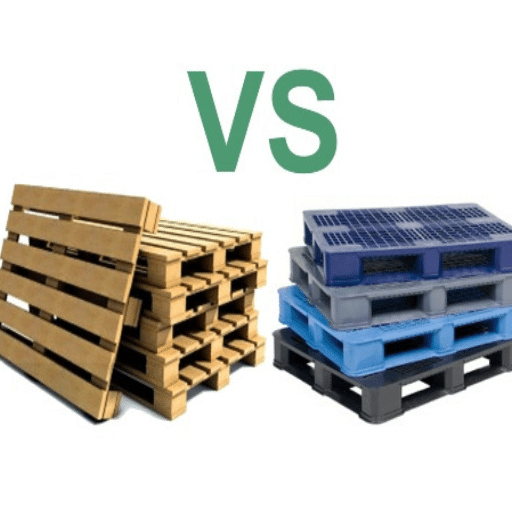
Cost-wise, wooden pallets can be had for less money up front. On average, wooden pallets can range from £12-£20 per pallet, depending on a variety of factors: size, regular dimensions, and quality of the wood or lumber. But plastics are definitely more expensive, usually ranging from £15-£48 in costs, depending on a number of factors. The differences in the higher prices are due to the higher costs of fabrication and plastic’s reputation for surviving.
However, the total cost-related attributes depend heavily on the type of pallet being used. The wooden pallets have shorter lifecycles, which tilt towards more frequent replacement and accompanying costs. Eventually, plastic or GRP pallets, despite the high starting costs, provide a good 10 times the lifecycle (as easily adaptable to some industrial applications) and thus cost less after a considerably long time, especially if a closed-loop system is in place.
Eventually, it becomes relative to the working frequency, handling environment, and life cycle to choose economically, keeping in view the ultimate need.
Initial Investment Costs
In comparison to initial charges, it is much more cost-effective to obtain wood pallets. Such equipment usually costs somewhere from $10 to $25 each, based on the style and size. It is cheaper for the industries that need a considerable number of disposable or one-way pallets. The plastic pallets, on the other hand, will sell for at least $25 each but probably more. However, being customarily designed with more qualities including higher durability, standardized sizing, moisture and chemical resistance, and non-distribution-to-pollution ability, the plastic pallets deserve to be preferred in those cases where a long trace of regular maintenance and hygiene is particularly to be addressed. Consequently, the selection will be rooted in the possibilities of its expected usage, its cost, and its functional needs.
Long-term Cost Efficiency
When I think about long-term cost efficiency, the elements I consider are durability, maintenance, and life-cycle costs. For instance, in connection with long-term issues, it is possibly the plastic pallets that cost more upfront, but their very long usable life and sturdiness keep replacement at a minimum! Both durability and protectiveness exist with these pallets to resist damage and environmental factors, maintaining their permanent or maintenance costs. It is based on how well my operation provides for those particular aspects to determine if long-term savings offset the upfront cost.
Return on Investment Factors
The return on investment (ROI) for material handling equipment, like pallets, depends on a lot of interrelated matters. The most important among these are the textile price, durability, and working efficiency. However, long-term savings are the main basic factors. Plastic pallets, for example, often have a higher purchase price compared to wooden pallets. However, their increased lifespan—caused by resistance to environmental stressors, resistant surface deterioration, and resistance to further wear and tear—results in less-frequent replacements. In addition to the above considerations, lighter pallets mean the reduced cost of freightage ionales de ocupación. Por esto, el uso de este producto también pondría bastante de ayuda en ayudar a disminuir aquellas presiones.
Operational effectiveness is another significant factor. Plastic pallets are uniform in size and shape, which increases compatibility with automated systems and minimizes task inefficiencies. Moreover, their nonporous surfaces make them easier to sanitize, which is especially important in the food and pharmaceutical industries. They have the added advantage of costing less over their lifetime, vis-à-vis many wood pallets that can result in additional charges for disposal costs.
By discerning between these choices, i.e., trading off these factors while maintaining a view of industry-specific requirements, firms can reach a strategic decision, among the advantages provided by this list.
Comparison Table: Plastic vs Wood Pallets
| Feature | Plastic Pallets | Wood Pallets |
|---|---|---|
| Initial Cost | £15-£48 / $25+ | £12-£20 / $10-$25 |
| Average Lifespan | 7-10 years | 2-5 years |
| Moisture Resistance | Excellent | Poor |
| Pest Resistance | Excellent | Vulnerable |
| Weight | Lighter | Heavier |
| Repairability | Difficult/Expensive | Easy/Affordable |
| Hygiene | Easy to clean and sanitize | Porous, difficult to sanitize |
| Biodegradability | Not biodegradable (recyclable) | Biodegradable |
| Best For | Food, pharmaceuticals, closed-loop systems | General shipping, one-time use, low-duty applications |
Reference Sources
“Destructive Testing of Wood Plastic Composite”
“Sensitivity Analysis of the Environmental Impact of Polymer Injection Molding Process”
Frequently Asked Questions (FAQs)
Wood pallets versus plastic pallets—this question sure does matter a lot to you!
You have valid claims to back up your argument in favor of plastic pallets or to make a disapproving argument thereof: cleanliness, longevity, savings, and supply chain requirements. Typically, plastic pallets are the sturdiest pallets and are ideal for any industry that must abide by hygiene regulations and certification for food safety, as they do not collect moisture and resist pests. Nonetheless, wood pallets are in use all over the place due to being inexpensive at the beginning and making room perfectly for the demands of many shipping pallet and other heavy industry users. You might as well focus on the full cost of ownership—plastic pallets have the advantage because they last longer and therefore minimize money spent on having these pallets wrapped and replaced, but their cost to start would be higher when compared with wooden ones.
SCM – What are the effects of logistics and shipment of plastic and wooden pallets on pallet pooling?
The choice of pallet affects weight, stackability, and compatibility with racks and pallet-holding machines. Plastic pallets often weigh less than a large number of wood pallets, and are also generally of a consistent size and strength, which enhances automated handling and lowers costs. Although wood pallets are still popular and are accepted universally, there can be issues surrounding variability and fumigation for chemical treatments for international shipments. You need to consider whether plastic pallets or wooden pallets are better suited to your supply chain needs. So are plastic pallets as durable with regard to repeated handling?
Hygiene — Are plastic pallets better for food and pharmaceutical applications?
Yes, plastic pallets have been favored again and again, and yet-to-be-used plastic pallets are often of food grade or, particularly, are preferred for pharmaceutical use because they are nonporous, easy to clean, and are less likely to be havens to bacteria or pests as brought to by wood pallets. Food-grade wood pallets do exist, though wood pallets are required to be treated and inspected with care before they are maintained in compliance with hygiene standards. When one is very particular about hygiene and traceability, it is better to opt for plastic pallets or to use some very hygienic ones within one’s pallet options.
Plastic pallets are more durable—shall we agree on that?
Plastic pallets happen to be stronger in most conditions: that is, they are moisture-resistant, insect-resistant, splinter-treated, are stiff over time of use, and are more robust to wear as compared to many plastic pallets that have lasted longer than wooden pallets. However, the life of plastic pallets depends on the design, load type, and handling. They have very good predictability in terms of performance and fewer frequent repairs. This results in cost savings and will shut down activities for a longer period of time.
Shrink film— Do plastic pallets have a bearing on the operation of pallet wrapping machines?
Their smoother, uniform faces and regimented cubic dimensions make pallet wrappings run faster and use less film. Some plastics have supreme attributes with regard to stability. This should not necessitate a great deal of tightening. This does need, however, that any procedure in regard to wrapping should be validated by both types of plastic and wood pallets.
Pallet type —Are refurbished pallets or new pallets a more preferable scheme to go for sustainability?
The recycling system of pallets does not function the same way as that of paper in many parts of the world. For example, they would have to go back to mills and be pulped. There are many approaches: plastic and aluminum can be recycled when broken; the waste can be incinerated in some countries where incinerating is popular; and some toxic or low-functionality products could be combined with wood or paper, or some may end up being sent to recycling.