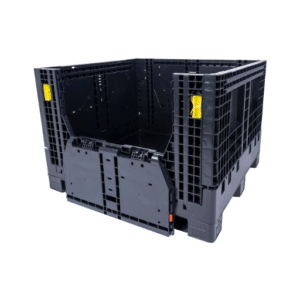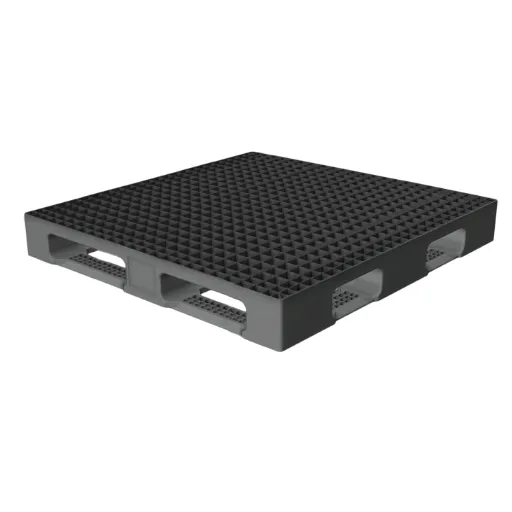

Choose standard plastic pallets when your operation fits common industry dimensions and you need quick, cost-effective availability. Choose custom plastic pallets when you have automated systems, non-standard loads, strict compliance rules, or high-cycle closed-loop flows where precision directly affects total cost of ownership.
That distinction sounds simple until you’re staring at a purchase order and wondering why your “cheaper” standard pallets are causing conveyor jams, wasted container space, or racking deflection. Last year, a logistics manager at a mid-sized automotive supplier told us his team had spent six months compensating for standard pallets that were just 15 millimeters too long for their racking beams. The fix cost more than a custom design would have from day one.
This guide will walk you through the real differences between custom and standard plastic pallets, when each option makes sense, and how to calculate the true cost of your decision. Whether you are evaluating custom plastic pallets vs standard options for the first time or refining an existing pallet strategy, this comparison will give you a clear framework.
Key Takeaways
- Standard plastic pallets work best for general warehousing, retail, export, and operations that match common industry sizes like 48″×40″ or 1200×1000mm.
- Custom plastic pallets pay off when automation, non-standard dimensions, strict hygiene rules, or high-cycle use cases demand precise engineering.
- Upfront price is only part of the equation; total cost of ownership includes downtime, damage, freight efficiency, and replacement frequency.
- Many operations benefit from a hybrid approach: standard pallets for open-loop shipping and custom pallets for internal automation or closed-loop systems.
- Partnering with a manufacturer that offers both standard catalog and custom engineering makes scaling your pallet strategy far easier.
Standard Plastic Pallets: The Standard Side of the Custom vs Standard Comparison
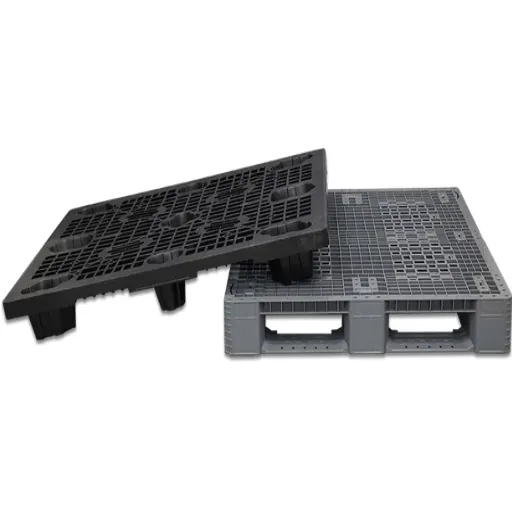
Standard plastic pallets are off-the-shelf, reusable plastic pallets built to common industry dimensions and load ratings. They come in fixed sizes, deck styles, and weight capacities. That makes them easy to source quickly. It also keeps them compatible with widely used racking, forklifts, and transport equipment. If you are new to the topic, our overview of plastic pallets explains the full range of sizes, materials, and designs.
Understanding standard plastic pallet sizes is the first step in any comparison. The most common dimensions include:
- 48″ × 40″ (1219 × 1016 mm), the GMA pallet standard widely used in North America
- 1200 × 1000 mm, common in Europe, Asia, and global shipping
- 1200 × 800 mm, the Euro pallet footprint
- 1100 × 1100 mm, popular in Asian markets
- 1165 × 1165 mm, Australian standard
These pallets also fall into standard design categories. Nestable pallets stack tightly when empty to save space. Rackable pallets can sit safely on warehouse racking. Stackable pallets support loads on top of one another. Solid-deck and ventilated-deck versions serve different hygiene and drainage needs.
Standard pallets make sense when your operation matches these footprints. If your racking, containers, forklifts, and customer requirements all align with common sizes, an off-the-shelf option keeps procurement simple. Costs stay predictable too. According to Coherent Market Insights, the global plastic pallet market is projected to reach approximately $9.4 billion in 2026, with steady growth driven by demand for durable, reusable alternatives to wood.
Custom Plastic Pallets: The Custom Side of the Custom vs Standard Comparison
Custom plastic pallets are engineered to your exact pallet specification rather than pulled from a catalog. Every pallet design starts with your operational requirements. That might mean a unique length or width, a specific load distribution, steel reinforcement for racking, a closed deck for hygiene, anti-slip surfaces, embedded RFID tags, or Pantone-matched color coding.
The customization process typically starts with your operational requirements. A manufacturer reviews your load profile, handling equipment, storage environment, and compliance needs. Engineers then design a pallet that fits those constraints, often using injection molding, thermoforming, or rotational molding depending on volume and complexity.
At Shandong Lile, we’ve produced custom plastic pallets for automated warehouses, pharmaceutical cleanrooms, automotive assembly lines, and cold-chain food operations. In each case, the pallet was not a commodity; it was an engineering control that protected product, equipment, and throughput. If you want a deeper look at the design and manufacturing process, our custom plastic pallets guide covers tooling economics, material options, and OEM partnerships in detail.
Custom vs Standard Plastic Pallets: Side-by-Side Comparison
| Factor | Standard Plastic Pallets | Custom Plastic Pallets |
|---|---|---|
| Upfront cost | Lower (40–40–200 typical) | Higher; may include mold/tooling investment |
| Lead time | Immediate to a few weeks | Weeks to months depending on design and tooling |
| Minimum order | Low; can often buy single units | Higher; custom molds typically need volume to justify cost |
| Dimensions | Fixed industry sizes | Any size tailored to your operation |
| Load capacity | Pre-set ratings | Optimized for your specific load distribution |
| Automation fit | Generally compatible with standard conveyors | Engineered for exact tolerances and handling systems |
| Hygiene/compliance | Standard food-grade options available | Built for FDA, pharma, FSMA, or cleanroom requirements |
| Branding/traceability | Limited | Colors, logos, RFID, barcodes embedded |
| Space efficiency | Generic fit | Optimized for racking, containers, and warehouse layout |
| Best for | General use, retail, export, pilot programs | Automation, high-cycle loops, non-standard loads |
This table is a useful starting point, but the right choice depends on more than a checklist. Let’s look at the decision from a practical angle.
Custom vs Standard Pallets: When Standard Plastic Pallets Make Sense
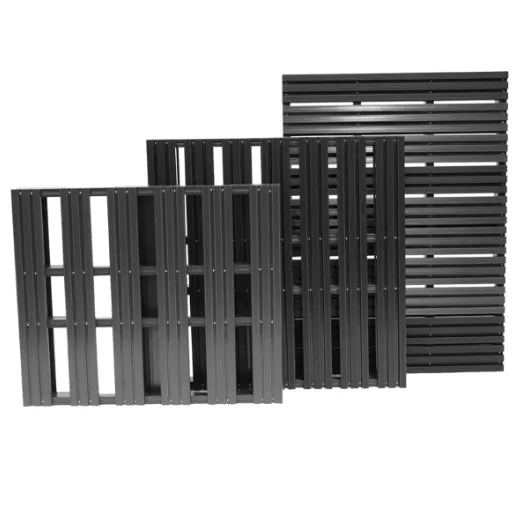
Standard plastic pallets are the right call when speed, cost, and interoperability matter more than precision. Here are the scenarios where they shine.
Your Operation Fits Common Industry Sizes
If your racking, trucks, and customer receiving docks all handle 48″×40″ or 1200×1000mm pallets, a standard size keeps everyone aligned. You avoid custom engineering costs and reduce the risk of incompatibility when pallets move between facilities or trading partners.
You Need Quick Availability
Custom designs require engineering review, prototyping, and possibly mold fabrication. Standard pallets ship from inventory. For a new warehouse launch, emergency replacement, or short-term project, that speed can be decisive.
You Ship One-Way or to Varied Partners
When pallets leave your facility and don’t come back, the lowest viable cost per unit usually wins. Plastic export pallets are exempt from ISPM-15 wood treatment requirements, making them a straightforward choice for international shipments. You get the customs benefit without the custom price tag. If you are still comparing materials, our plastic pallets vs wood pallets breakdown covers cost, durability, and sustainability in detail.
You’re Running a Pilot or Low-Volume Operation
If you’re testing plastic pallets for the first time or your volumes are small, starting with standard sizes lets you validate durability, hygiene, and handling before committing to a custom mold investment.
When to Choose Custom Plastic Pallets Over Standard Options
Custom plastic pallets become the smarter investment when operational fit directly affects cost, safety, or throughput. Here is where they deliver the clearest return.
You Run Automated Systems
Automated Storage and Retrieval Systems (AS/RS), Automated Guided Vehicles (AGVs), and robotic palletizers demand dimensional consistency. A warped bottom deck can stall a conveyor. Uneven runner spacing can misalign a shuttle. Both problems can cause a robotic arm to drop a load. Custom pallets can be engineered to tight flatness and tolerance specifications. That turns the pallet from a weak link into a reliable part of the automation chain. Research from iGPS notes that warehouse automation investments continue to accelerate, making pallet precision increasingly critical.
Your Loads Are Non-Standard
A standard pallet might handle your total weight on paper but fail in practice because the load is uneven, top-heavy, or shaped oddly. Custom designs distribute weight where it matters and reinforce stress points before cracks or deflection appear.
You Need Strict Hygiene or Compliance
Food, beverage, pharmaceutical, and medical-device operations often require smooth, non-porous, easy-to-sanitize surfaces. Food grade pallets and pharma pallets with custom closed-deck designs, rounded corners, and no cavities can meet FDA, FSMA, or HACCP requirements in ways a standard ventilated pallet cannot.
You Operate in Extreme Environments
Cold storage, high heat, chemical exposure, or outdoor UV can degrade the wrong material. Custom pallets let you select HDPE, PP, or specialty resins with additives matched to the environment, extending service life dramatically.
You Want Traceability or Branding
Custom color coding helps workers identify product lines at a glance. Embedded RFID or barcode carriers enable real-time tracking. A molded logo turns every pallet into a brand touchpoint. These features are difficult or impossible to add to off-the-shelf standard pallets.
Custom vs Standard Plastic Pallets: Cost Comparison and Total Cost of Ownership
The most common mistake buyers make is comparing only the pallet cost sticker price. Standard plastic pallets typically cost between 40and40and200 each depending on type and quantity. Custom plastic pallets have a higher per-unit price and may require a mold investment ranging from a few thousand to $50,000 or more.
But upfront cost is not the whole story. Consider what happens after the pallets arrive.
Standard pallets in the wrong application can cause racking deflection, conveyor downtime, product damage, and inefficient container loading. Each incident has a cost: labor, lost throughput, repairs, and replacements. Over hundreds or thousands of cycles, those hidden costs compound.
Custom pallets in the right application reduce damage rates, eliminate handling interruptions, improve cube utilization, and last longer because they are designed for the exact stress they will see. That pallet durability advantage compounds over thousands of cycles. When you divide the total investment by trips over a 5- to 10-year life, the cost per trip often beats standard alternatives.
Think of it like tooling in manufacturing. A custom fixture costs more than a generic clamp, but if it cuts cycle time and scrap, it pays for itself quickly. The same logic applies to custom plastic pallets.
Automation and Warehouse Compatibility
One of the fastest-growing reasons to choose custom over standard is automation. As more operations invest in automated systems, choosing the right pallet for warehouse compatibility becomes a competitive advantage. According to industry data, only about 6% of warehouses are highly automated today. However, a large majority of logistics leaders plan to increase automation investment in the coming years. As that shift continues, pallet precision will become a bigger competitive factor.
Standard plastic pallets work fine in many manual and semi-automated environments. But in fully automated systems, small variations become big problems. A pallet that is 2 millimeters out of spec can jam a conveyor. A bottom deck with inconsistent runner spacing can cause an AGV to lose traction. A deck that flexes under load can misalign a robotic gripper.
Custom pallets can be designed with:
- Tight dimensional tolerances
- Consistent weight and center of gravity
- Flat, stable bottom decks
- Reinforced edges and runners
- Integrated RFID or sensor mounting points
If you are investing in automation, the pallet should be treated as part of the system, not an afterthought.
Hybrid Approach: Using Standard and Custom Pallets Together
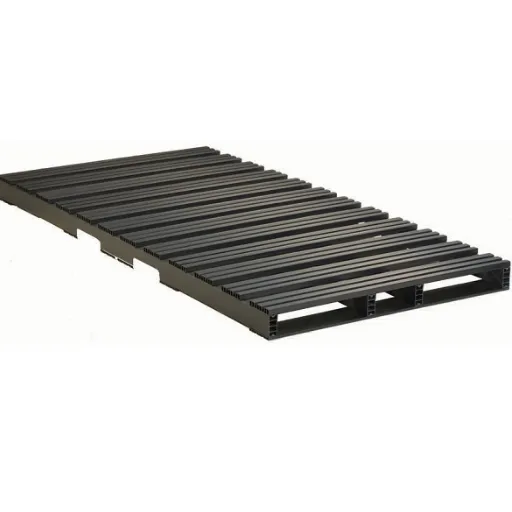
Many successful operations use both standard and custom plastic pallets. A hybrid approach to the custom vs standard plastic pallets decision lets you match the pallet to the job.
Use standard plastic pallets for:
- Inbound freight from varied suppliers
- One-way shipments to customers
- Low-cost, high-volume open-loop flows
- General warehousing that fits standard sizes
Use custom plastic pallets for:
- Internal closed-loop systems
- Automated handling lines
- High-value or sensitive products
- Operations with strict hygiene or compliance needs
- Bulk storage paired with plastic pallet boxes for large or fragile goods
This hybrid model gives you the cost benefits of standardization where it matters and the performance benefits of customization where it counts.
How to Decide: A Simple Decision Framework
Still unsure about the custom vs standard plastic pallets decision? Answer these five questions before you request a quote.
- Do your loads, racking, and containers match common standard sizes? If yes, start with standard. If no, explore custom.
- Do you use AGVs, AS/RS, robotic palletizers, or high-speed conveyors? If yes, custom engineering likely pays off.
- Is your operation a high-cycle closed loop? The more trips per year, the more a durable custom design can save.
- Are hygiene, compliance, or traceability critical? Custom features like closed decks, RFID, and color coding may be necessary.
- Is upfront cost or long-term TCO more important right now? Tight budgets favor standard; long-term efficiency favors custom.
If you answer “yes” to two or more of questions 2–5, custom plastic pallets deserve serious consideration.
Frequently Asked Questions About Custom vs Standard Plastic Pallets
What is the main difference between custom and standard plastic pallets?
Standard plastic pallets come in fixed industry sizes and load ratings. Custom plastic pallets are engineered to your exact dimensions, load distribution, material, and feature requirements.
Are custom plastic pallets more expensive than standard pallets?
Custom plastic pallets have a higher upfront cost and may require a mold investment. However, in high-cycle or automation-heavy operations, they often deliver a lower total cost of ownership than standard alternatives.
When should I choose custom plastic pallets over standard?
Choose custom plastic pallets when you run automated systems, handle non-standard loads, need strict hygiene compliance, operate in extreme environments, or require branding and traceability features.
Can I use both custom and standard plastic pallets in the same operation?
Yes. Many operations use standard plastic pallets for inbound freight and one-way shipments, while using custom plastic pallets for internal closed-loop systems and automated handling lines.
What industries use custom plastic pallets most often?
Automotive, pharmaceutical, food and beverage, cold chain, and e-commerce fulfillment are among the top industries that benefit from custom plastic pallet designs.
Choosing the Right Manufacturing Partner
Whether you choose standard or custom plastic pallets, your supplier matters. The right partner simplifies the custom vs standard plastic pallets evaluation and helps you scale without switching suppliers. Look for a partner that offers:
- Both standard catalog and custom engineering capabilities, so you can scale without switching suppliers
- Material expertise, including HDPE, PP, recycled content, and specialty resins
- Quality certifications, such as ISO 9001 for consistent manufacturing
- Testing and validation, including load testing, dimensional checks, and trial runs
- Global logistics experience, especially if you export or operate across regions
At Shandong Lile, we manufacture both standard and custom plastic pallets for clients in more than 108 countries. Our engineering team works with logistics managers, operations directors, and procurement leaders to match the right pallet design to the right application. You can learn more about our approach in our OEM custom plastic pallet guide.
Conclusion
The debate between custom vs standard plastic pallets is not about which one is better overall. It is about which one is better for your specific operation.
Standard plastic pallets deliver speed, compatibility, and low upfront cost for operations that fit common industry sizes. Custom plastic pallets deliver precision, durability, and operational efficiency for automation, compliance, and high-cycle environments.
The smartest buyers look past the price tag and model total cost of ownership. They also consider a hybrid strategy that uses standard pallets where they fit and custom pallets where they add real value. If you are ready to evaluate which path makes sense for your facility, contact our team for a consultation or a detailed quote.