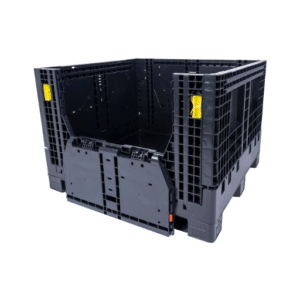
OEM plastic pallets are custom-designed pallets built to your exact specifications for a specific product, process, or supply chain. Unlike off-the-shelf pallets, they are engineered with precise dimensions, load ratings, materials, and features such as RFID tracking, steel reinforcement, or branded coloring.
When Marcus, a supply chain director at a Midwest automotive parts company, switched from standard wood pallets to OEM plastic pallets, the results were immediate. His conveyor jams dropped by 40%. Damage to painted body panels fell by nearly half. And his team stopped losing hours each week to splinter repairs and heat-treatment paperwork for export shipments. The pallet was no longer just a shipping platform. It became an engineered part of his production line.
If you are evaluating whether an OEM plastic pallet program makes sense for your operation, this guide will show you exactly what to expect. Specifically, you will learn how OEM pallets differ from ODM and standard options, when the investment is justified, the full design and manufacturing process, and how to choose a partner that can deliver both quality and scale.
Key Takeaways
- OEM plastic pallets are engineered to your exact load, dimension, automation, and compliance requirements, not bought from a catalog.
- OEM gives you full design ownership and control; ODM adapts an existing manufacturer design; standard pallets are generic and fastest to source.
- The OEM process moves from requirements and CAD/FEA to mold fabrication, prototyping, PPAP approval, and mass production.
- Automotive, food and beverage, pharmaceuticals, electronics, and chemical handling are the strongest OEM use cases.
- A reliable OEM partner should offer engineering support, transparent tooling terms, ISO-certified quality systems, and documented load testing.
What Are OEM Plastic Pallets?
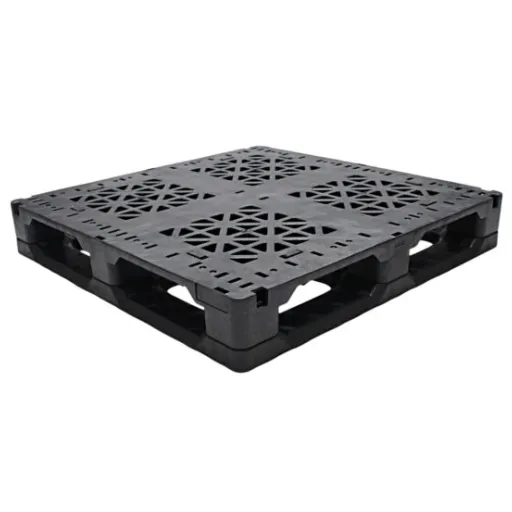
OEM plastic pallets are pallets that an original equipment manufacturer sources or co-designs to match a specific application. The buyer typically owns the design and may require custom sizes, special load distributions, embedded tracking, corporate branding, or industry-specific compliance features. Learn more about our custom plastic pallet designs.
These pallets are usually molded from high-density polyethylene (HDPE) or polypropylene (PP). At Shandong Lile, we also work with recycled content, food-grade compounds, and cold-chain formulations depending on the application. The result is a pallet that performs predictably across hundreds or thousands of cycles.
Common custom OEM plastic pallets specifications include:
- Non-standard footprints for irregular products
- Static, dynamic, and racking load ratings tailored to the application
- Closed or ventilated deck designs for hygiene or drainage
- Steel reinforcement for heavy loads
- Anti-slip surfaces, containment lips, or molded-in fixtures
- Color matching, logos, RFID chips, or barcode recesses
- Anti-static or conductive compounds for electronics
Because every detail is intentional, OEM plastic pallets tend to outperform generic alternatives. They work especially well in automated systems, regulated industries, and high-cycle supply chains.
OEM vs. ODM vs. Standard Pallets: What’s the Difference for Plastic Pallets?
Understanding the three sourcing models helps you choose the right level of customization and investment.
| Factor | Standard Pallets | ODM Plastic Pallets | OEM Plastic Pallets |
|---|---|---|---|
| Design ownership | Manufacturer’s catalog design | Manufacturer’s existing design, optionally branded | Buyer owns or co-owns the design |
| Design control | None | Limited | Full |
| Tooling investment | None | Low to none | Required (steel mold) |
| MOQ | Low | Moderate | Higher, often 200–500+ units |
| Lead time | Days | Weeks | Weeks to months including mold |
| Best for | General shipping, quick replacement | Branded or lightly customized programs | Unique products, automation, compliance, heavy loads |
Standard pallets work well when you move generic goods through simple supply chains. For a broader look at off-the-shelf options, see our standard plastic pallets overview. ODM pallets are a middle ground: the manufacturer offers an existing design and adds your logo or color. OEM pallets are the right choice when the pallet must integrate with your product, equipment, or regulatory environment.
At Lile, we support both OEM and ODM programs. Many clients start with an ODM adaptation and later move to full OEM once volumes justify a dedicated mold.
When Should You Choose OEM Plastic Pallets?
Not every operation needs a custom pallet. However, OEM plastic pallets deliver clear value when one or more of the following conditions apply.
Your Product Has Non-Standard Dimensions
Standard 1200 × 1000 mm or 48 × 40 inch pallets leave empty space around irregular loads. That empty space allows shifting, damage, and inefficient cube utilization. An OEM pallet can cradle the product exactly.
You Run Automated Handling Systems
Conveyors, automated storage and retrieval systems (AS/RS), robotic palletizers, and AGVs demand tight dimensional tolerances. Generic pallets can jam, misalign, or cause downtime. OEM pallets are molded to the precise runner spacing, deck height, and weight tolerance your automation requires.
Hygiene or Compliance Is Non-Negotiable
Food, beverage, pharmaceutical, and medical device operations often need FDA-compliant materials, closed decks, drainage channels, and washdown compatibility. OEM designs can be built around your sanitation protocol from day one.
You Need Branding, Traceability, or Color Coding
Large OEM programs often use color-coded pallets for different product lines, facilities, or customers. Embedded RFID or barcode recesses support track-and-trace requirements without separate labels.
Loads Exceed Standard Ratings
Automotive engines, battery packs, transmissions, and chemical containers can exceed the capacity of catalog pallets. Steel-reinforced OEM designs handle these loads safely.
Ready to see if an OEM pallet fits your operation? Request a free consultation with our engineering team and we will review your load, environment, and volume requirements.
The OEM Plastic Pallet Design Process
A successful OEM program follows a structured OEM pallet design workflow. However, skipping steps leads to tooling changes, delays, and pallets that do not perform as expected.
Step 1: Requirements Workshop
The process starts with data. Our engineers review your product dimensions, weight distribution, handling environment, racking setup, automation interfaces, regulatory requirements, and annual volume. This stage defines success before any design work begins.
Step 2: CAD Modeling and FEA
We translate requirements into a 3D model and run finite element analysis (FEA) to predict how the pallet behaves under static, dynamic, and racking loads. This simulation identifies stress concentrations and allows us to optimize wall thickness, rib placement, and reinforcement before cutting steel.
Step 3: Mold Design and Fabrication
Once the design is approved, we build a precision steel mold. Mold investment is typically the largest upfront cost in an OEM program, but a well-built mold produces consistent pallets for years. At Lile, our 18 large-scale production machines and experienced tooling team ensure molds are built to tight tolerances.
Step 4: Prototyping and Validation
The first shots from the mold, called T1 samples, are inspected for dimensions, surface finish, and weight. We then run load tests, drop tests, and field trials. Feedback from your floor is integrated before mass production begins.
Step 5: Production Approval (PPAP / FAI)
For regulated or automotive clients, we provide production part approval process (PPAP) or first article inspection (FAI) documentation. This package includes material certificates, dimensional reports, load-test data, and process capability studies.
Step 6: Mass Production and Ongoing Quality Assurance
After approval, production moves to full volume. Our ISO 9001 quality system includes raw material inspection, in-process checks, and final testing. Batch traceability ensures that every pallet can be linked to its production run.
Manufacturing Methods for OEM Plastic Pallets
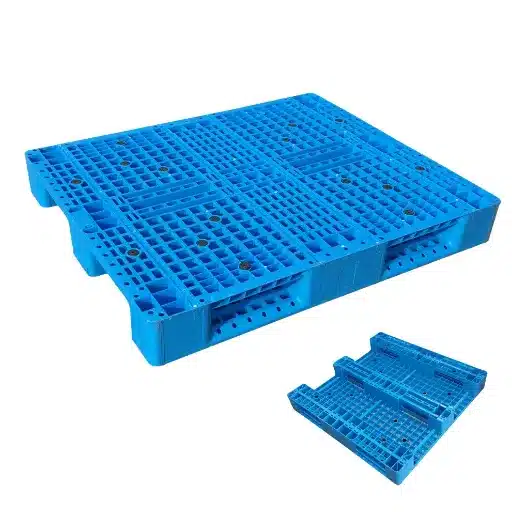
The right molding method depends on your design, volume, and performance requirements. For example:
Injection Molding
Injection molding is the most common method for OEM plastic pallets. Molten HDPE or PP is injected into a precision mold under high pressure. It delivers excellent dimensional consistency, smooth surfaces, and high structural integrity. It is ideal for high-volume automation, hygiene, and heavy-duty applications.
Structural Foam Molding
Structural foam uses a blowing agent to create a cellular core inside a rigid outer shell. The resulting pallets are 20–30% lighter than solid injection-molded versions and require lower clamping force. This can reduce tooling cost, but tolerances are slightly wider. It suits lighter-duty or cost-sensitive programs.
Rotational Molding
Rotomolding rotates a heated mold filled with plastic powder until the material coats the interior evenly. It produces seamless, durable one-piece pallets and is excellent for large custom designs, spill containment, and low-volume specialized applications.
Blow Molding
Blow molding inflates a heated plastic parison inside a mold to create hollow structures. It is often used for lightweight, nestable nine-leg pallets where low cost and space savings matter more than heavy load capacity.
Most Lile OEM programs use injection molding because it offers the best balance of precision, strength, and production efficiency for industrial buyers. Read about the HDPE pallet benefits that make this material ideal for injection-molded designs.
Customization Options That Matter for OEM Buyers
OEM plastic pallets can be tailored across dozens of dimensions. The most impactful options include:
- Dimensions and footprint — match the pallet to your product, container, or racking system
- Load ratings — specify static, dynamic, and racking capacities for real-world conditions
- Deck design — open, closed, ventilated, or drainage-optimized decks
- Steel reinforcement — add steel tubes for heavy loads or long rack spans
- Anti-slip surfaces — reduce load shift during transport and handling
- Color and branding — Pantone matching, logos, and facility color coding
- RFID and barcodes — embed tracking technology for traceability
- Anti-static / ESD compounds — protect electronics and sensitive components
- Material grade — virgin, recycled, food-grade, or cold-chain formulations
One of our clients, a pharmaceutical distributor, needed closed-deck pallets in a specific blue color with embedded RFID tags. The color helped operators identify temperature-controlled loads at a glance. The RFID tags tied into their warehouse management system, eliminating manual scanning at inbound and outbound gates.
Industries That Rely on OEM Plastic Pallets
OEM Plastic Pallets for Automotive and Aerospace
Automotive OEMs move engines, transmissions, battery packs, and body panels through just-in-time supply chains. Custom pallets protect high-value parts, support precise robotic handling, and often include ESD protection or steel reinforcement.
OEM Plastic Pallets for Food and Beverage
Processors and cold-chain distributors need FDA-compliant, washable pallets that resist moisture, bacteria, and odors. OEM designs can include drainage, color coding by allergen zone, and materials rated for hot washdown.
Pharmaceuticals and Healthcare
Pharma pallets must meet cGMP and cleanroom expectations. Closed decks, smooth surfaces, autoclavable materials, and traceability features make OEM plastic pallets a natural fit.
Electronics
Anti-static and conductive compounds prevent electrostatic discharge damage to circuit boards, semiconductors, and assembled devices. OEM pallets can be engineered with exact fixture placement for delicate products.
Chemical and Hazardous Materials
Chemical resistance and spill containment are critical. Rotomolded containment pallets and HDPE designs handle corrosive substances while supporting EPA and environmental compliance.
Retail, E-Commerce, and Fulfillment
Custom lightweight pallets reduce inbound freight cost and warehouse footprint. Branded colors and returnable designs support pooled packaging programs.
Quality Assurance and Certifications for OEM Plastic Pallets
A credible OEM plastic pallet manufacturer should be able to document quality at every stage. Therefore, look for the following standards and certifications:
- ISO 9001 — quality management system certification
- ISO 14001 — environmental management
- FDA compliance — for food and pharma contact materials
- HACCP and cGMP alignment — for food and pharmaceutical supply chains
- REACH and RoHS — for EU and electronics market compliance
- ISPM-15 exemption — plastic pallets do not require heat treatment or fumigation for international shipping
In addition to certifications, ask for material data sheets, load-test reports, dimensional tolerance reports, and batch traceability records. These documents protect your operation and simplify audits.
How to Choose an OEM Plastic Pallet Manufacturer or Supplier
Selecting the right partner is as important as selecting the right design. To simplify your evaluation, use this checklist:
- Engineering capability — Can they run CAD, FEA, and design for manufacturability (DFM) reviews?
- Tooling transparency — Who owns the mold? What are maintenance and replacement terms?
- Production scale — Can they handle your volume with consistent quality?
- Quality systems — Is the facility ISO 9001 certified? Do they provide PPAP, FAI, or load-test documentation?
- Export experience — Do they understand regional standards such as Euro, GMA, and Asian footprints?
- Communication and support — Will you have a dedicated contact from design through production?
- After-sales service — How do they handle warranty, replacement, and continuous improvement?
For a deeper evaluation framework, see our buyer’s checklist for choosing a plastic pallet manufacturer.
OEM Plastic Pallet Cost, MOQ, and ROI Considerations
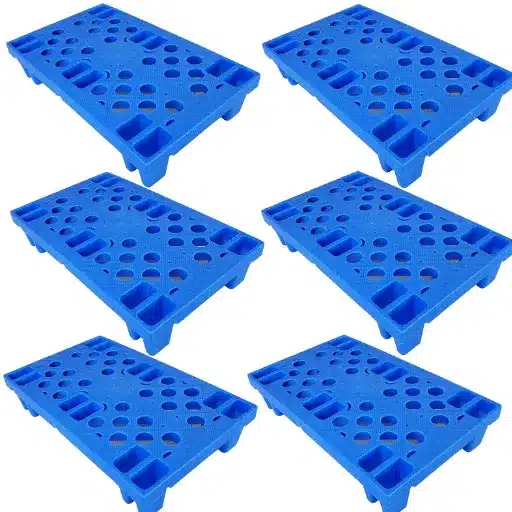
OEM plastic pallets require a higher upfront investment than standard pallets. However, the total cost of ownership often favors custom designs in high-cycle operations.
Typical Investment Ranges
- Mold tooling: varies widely based on size and complexity
- MOQ: usually 200–500 units for new custom molds; lower for simple modifications
- Per-unit cost: higher than standard pallets at low volumes, competitive at scale
Where Savings Come From
- Longer lifespan: plastic pallets commonly last 10–15 years or 250–500+ trips, compared with 3–5 years for wood. () For a full breakdown, see our plastic pallets vs. wood pallets cost comparison.
- Reduced product damage: no nails, splinters, or inconsistent dimensions
- Lower freight weight: plastic pallets can be significantly lighter than wood alternatives
- No ISPM-15 treatment: heat treatment or fumigation adds 2–2–8 per wood pallet per crossing; plastic is exempt. (
- Automation uptime: precise dimensions reduce jams and maintenance stops
When Elena, a logistics manager at a food exporter, ran the numbers, she found that her OEM plastic pallet program broke even in under three years. The biggest drivers were eliminated heat-treatment fees, fewer rejected loads at customs, and a 30% reduction in pallet-related product damage.
Conclusion
OEM plastic pallets are not a commodity purchase. They are an engineering decision that aligns your packaging with your product, automation, compliance, and brand requirements. The right design reduces damage, speeds handling, simplifies audits, and lowers total cost of ownership over time.
The global OEM plastic pallets market is part of a broader plastic pallet segment. That segment is projected to grow from 8.67billionin2025to8.67billionin2025to15.68 billion by 2031. Automation, sustainability, and demand for customized logistics solutions are the main drivers. () Companies that treat pallets as part of their operational system — not an afterthought — will capture the largest share of that value.
At Shandong Lile Holding Group, we bring 14+ years of OEM and ODM experience to every project. Our network includes 16 subsidiaries and 18 large-scale production machines. We also serve customers in 108+ countries. From concept and mold design to mass production and documentation, we work as an extension of your engineering team.
Ready to design an OEM plastic pallet that fits your operation perfectly? Contact our team for a free engineering consultation and custom quote.