Swap of plastic and wood-based pallets is a pivotal detail in most supply chains today, helping with the transportation and storage of goods across various sectors. On the other hand, in the era of sustainability, due to customers and corporations raising questions about their ecological efficiency, these materials have been challenged. Which one, between the plastic pallet and the wood pallet carbon footprint? The current paper is a rigorous case study that reflects on the environmental impact assessment of the two providing pallets across their life cycle in detail in terms of producing using and disposal, as well as recycling. Therefore, taking into consideration factors such as the emission of greenhouse gases, material efficiency, and durability, we expect to offer pragmatic ways for those organizations that are making efforts to implement such mindful and responsible changes. Welcome to the systematic analysis in order to determine who is the winner in this sustainable race.
Introduction to Carbon Footprint Analysis for Plastic and Wood Pallets

Global environmental pollution levels, in terms of greenhouse gases, consider a product’s entire lifecycle, including the manufacturing stages, shipment, usage, as well as the ultimate depreciation and disposal process in developing a product. For the case of plastic and wood pallets, this assessment highlights the differing nature of the impact of these on the environment. Wood pallets have lower initial carbon footprints. This is because they are made from natural or renewable sources. However, as the material wears out over time and requires more and more new replacements, emissions are bound to increase. In the case of plastic, these pallets are normally associated with even more emissions because the materials used are petroleum-based, rather than materials used in wood pallets, but these ‘green’ products have to be manufactured to promote their client-friendly drive and assurances for long usage and/or recycling capabilities certainly help in this first instance. Hence, reviewing these materials will allow businesses to choose a suitable type of pallet that will help them mitigate the overall negative impact while maximizing their green objectives.
Definition of Carbon Footprint in the Context of Material Handling
About material handling systems, carbon footprint means the sum of direct and indirect greenhouse gases released during the production, transportation, consumption, and disposal processes. In this respect, the extraction of raw materials, production or construction, the transportation of intended material, storage, usage, and recycling or disposal give rise to the emissions in question. For example, in material handling systems, energy, fuel consumption for vehicles, or the carbon or plastic pallet carbon footprint, which focuses on equipment material, are all very important. It is necessary to find ways of calculation and lowering this footprint as strategies are focused on the sustainability and environmental improvement of the organizations.
Importance of Assessing Environmental Impacts Across the Supply Chain
Evaluating the supply chain in terms of its environmental effects is critically important to ascertain areas that are highly responsible for carbon gases, waste, and the use of natural resources. In performing detailed evaluations, firms will be able to identify such deficiencies as energy excess production processes or unnecessary packaging and take the necessary steps to reduce their environmental impact. The aforementioned strategy also helps the enterprises to enforce the legislative regulations and the international sustainability requirements, as well as the stakeholder expectations of candor and duty. It also builds a sense of sustainability as it cuts down on the use of fast-dwindling resources, enhances productivity, and equips societies to face the new market and environmental problems. Evaluating the entire organization and the factors affecting the output offers many benefits to the environment and also helps the organization maintain its relevance in the market arena.
Overview of Plastic Pallets and Wood Pallets as Primary Contenders in Logistics
🌲
Wood Pallets
The wood pallets have historically been the preferred choice because they are cheaper, more available, and easier to maintain. They are also eco-friendly because they are rotting products that can be converted to other wood materials, as long as their source is not exhausted. So, the wood pallets have a problem in the fact that they can be easily destroyed by water, bugs, and even usage, and that consequently reduces the service life as opposed to plastic pallets.
🧴
Plastic Pallets
Plastic pallets offer numerous benefits such as durability, moisture and contamination resistance, and most importantly, dimensional stability. In addition, wood is usually heavier than plastic and, therefore, in certain circumstances compared to wood, they increase transport expenses. As for plastic pallets, their cost is relatively high, yet they are more advantageous in terms of lifecycle costing, which includes a longer lifespan and lower utility of care and repair. Nevertheless, since plastic is more resistant to decomposition than wood, a plastic pallet’s carbon footprint necessarily rests on responsible disposal of the pallets.
The common denominators of the two types are that they both perform critical functions in shipping and handling of goods, but are chosen mostly with specific factors such as the weight to be shipped, regulations, and cost, among others. Thus, the parameters stated above should be assessed in relation to the functional outcomes that are required in such operations or even in a more sustainable way.
Lifecycle Assessment (LCA) of Plastic Pallets
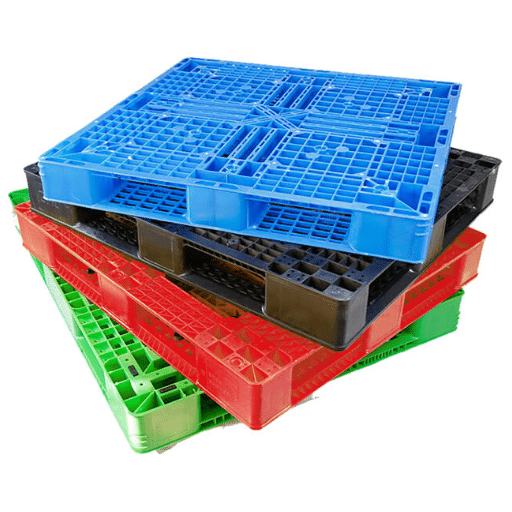
As such, when examining the acceptable levels of carbon to plastic to energy in plastic pallets, this is done primarily in order to analyze cradle-to-grave environmentally friendly practices in plastic pallets. Such processes need energy, especially when virgin plastic is concerned, which makes wood pallets more preferable with respect to oil emissions. In most cases, this is due to the fact that their longevity permits using them for quite a long time, and because they are less likely to need to be barged or repaired as often. Also, at the end of the Life Cycle, this is of the essence, as there is a need to engage essential recycling instead of disposing of plastic waste, which will eventually bring about. It is important for the decision-makers to consider the point of origin (Recycled or Virgin plastics), the post-consumer lifetime, as well as the efficiency of plastic pallets in order for the plastic pallet carbon footprint to be workable.
Manufacturing Processes for Plastic Pallets
The manufacturing processes for plastic pallets are based on three major techniques that are different in terms of cost and performance demands:
- 1
Injection Molding
This is the most widely practiced approach in which plastic in a molten state is forced into a mold by applying high pressure. This technique enables accurate designs and mass production to be accomplished with ease, making it suitable for lightweight yet strong pallets. The most common materials are HDPE (high-density polyethylene) and PP (polypropylene). High-volume production is possible since injection molding is economical, though the cost of the molds is an issue.
- 2
Blow Molding
This process involves expanding hot plastic within a mold by air pressure, thereby forming a hollow part. Blow-molded pallets are obtained especially when strength and impact performance are desirable. The use of hollow spaces also allows for the reduction of the weight of pallets under large load situations in dynamic applications.
- 3
Thermoforming Technique
Treats the sheets of plastic to heat and then forms the shapes with a vacuum. Thermoformed pallets are usually light in weight and cheap for those who use them for one-time and light uses. Most often, recycled materials are added to this process to minimize the environmental impact of the process.
Energy Consumption and Emissions During Production
The eco-friendliness of manufacturing, aside from landscaping, demands flourished energy efficiency and fewer emissions. This is particularly crucial for the plastic industry, as most of the energy consumption is attributed to electricity, with notable energy-intensive activities being injection moulding due to the high pressure required. On the other hand, active thermal, also known as extrusion and thermoforming, as opposed to a passive heating process, requires heavy amounts of fossil fuels or electricity for heating focused process and therefore, increases energy consumption.
Regarding emissions, carbon dioxide (CO₂) and other greenhouse gases (GHGs) are principally considered the predominant pollutants. Mostly, this is brought about by the consumption of fossil fuels in the form of energy, which is required for heating and powering machines. Furthermore, in blow and thermoformings, there is the use of volatile organic compounds (VOCs) that lead to secondary emissions. Cutting energy costs in production cycles is possible by increasing machine efficiency and resorting to clean energy resources, which have the potential of decreasing the levels of emissions and promote the sustainability of the system.
Longevity and Reuse Potential Affect Environmental Performance
Products designed to last long and be reused considerably improve the efficiency of resources, that translate into less extraction of raw materials, less production, and less waste. Long-lasting and wear-resistant components increase the lifespan of the products, therefore, reducing the demand for arrivals and raw materials as well as energy consumption. Moreover, making reuse a feature in a product, whether by incorporating standard modules or making it fully compatible with such, allows the product to be taken apart, restored, or used differently after its useful life. It is, however, synonymous with the principle of the green economy, where the use of disposable products is shared among fewer people, and fewer amounts of waste is created. As a result, development aimed at longer lifetimes of products and their reuse helps in improving the way consumption and production are managed.
Lifecycle Assessment (LCA) of Wood Pallets

The principal factors affecting the environmental effects of wood in the lifecycle assessment of wood pallets are the production, usage, and disposal phases. In comparison to other types of pallets, for instance, plastic ones, wood mostly has less environmental impact as it is a natural resource that is renewable and biodegradable. The main components subject to analysis are:
- 🌳 Raw Material Sourcing:
In many cases, wood is extracted from the forests that are managed in a sustainable manner; however, since complete removals are to be avoided, only suppliers with accreditations to this effect, such as FSC certificates, should be sought. - 🏭 Production:
The net energy consumption and total greenhouse gases released in the course of production are quite moderate, in particular when compared to materials like plastic, which are more demanding in terms of energy. Nevertheless, it is possible to enhance the performance of food-packaging by minimizing the waste generated during the cutting and assembly activity. - 🔄 Use Phase:
The inherent durability facilitates the use of the same pallets several times, which is a useful feature as it means fewer new pallets needs developing. As with non-durable ones, the need for routine overhaul, repair, and replacement in durable ones is low, thereby contributing to the increased life span and the enhanced performance of the system. - ♻️ End-of-life:
Wood pallets can be repaired, reused, or recycled into mulch and bioenergy, reducing waste going to landfills at the end of their life span.
Wood pallets, if done appropriately, provide an eco-friendly solution, more so with a focus on all elements of mass balance, such as sourcing, manufacturing, and circularity. It is these phases that largely reduce the plastic pallet carbon footprint.
Raw Material Sourcing and Its Environmental Implications
The repeated demand for fresh resources, such as wood for making pallets, undoubtedly impacts the environment based on how trees are harvested. Many activities and practices fall under sustainable timber harvesting. This involves obtaining timber from duly regenerated woodlands, which support local ecosystems and also strive for lower rates of deforestation. Most of these issues are addressed by certification systems such as FSC (Forest Stewardship Council) or PEFC (Program for the Endorsement of Forest Certification). These ensure that wood harvesting practices take place upon approved forest plantations while tips in forest agriculture are adhered to.
Deforestation, on the other hand, is the cause of multiple negative impacts, such as diminishing the variety of animal and plant species, degrading land through insufficiency of ground cover, and aggravating the greenhouse effect. Moreover, wood sourcing can be more eco-friendly by including utilized wood in the manufacture of pallets. With sustainable supply chains and storage and handling of resources initiatives, some certificates help businesses minimize contact with such raw materials whilst aiming to preserve the environment, particularly for the next few generations.
Energy Requirements for the Production and Assembly of Wood Pallets
The amount of energy and the time it takes to manufacture and put together such wooden pallets vary according to how the raw materials are processed or the techniques used. First, the trees are cut down, and logs are turned into lumber, with the help of energy-intensive machines like chainsaws, skidders, or sawmills. Finally, there is the drying of the lumber, which often takes place in kilns, and this part of the process is also energy-intensive to a great extent because some of the kilns are heated using natural gas or biomass in order to achieve the necessary high temperatures of these facilities.
The major consumption of energy takes place in the operation of equipment involved in the assembling process, such as gun nails, conveyors, and automatic pallet assembling machines. At present, technology has enabled more economical systems to be designed and built, resulting in low energy consumption. On the contrary, the scale of total energy expenditure may be different depending on the volume, level of automation, and extent of incorporation of other forms of energy. Efforts aimed at reducing the pallet manufacturing process carbon footprints involve the utilization of energy-efficient practices, effective stretching of kiln usage, use of solar or wind power, and reliance on energy management systems.
Decomposition, Recyclability, and Related Carbon Emissions
Considering that Wood is an organic material, pallets made of such material are naturally capable of decomposing under the right conditions. They can deteriorate after a period of time from being placed in a landfill or even compost, due to moisture, as well as the action of microbes. Although the decomposition process may differ in oxygen-present or non-oxygenated environments, eventually carbon compounds (in some form of CO₂ or methane) are released. A more eco-friendly solution is recycling, whereby discarded pallets may be put to use by turning them into different products, e.g., chips for wood use or even mulch and energy-related material. Very few end up in landfills, and those that do do not go to waste for long. The greenhouse gases produced when decomposing pallets are significantly less when their recycling is enhanced, as opposed to decomposing them, since the latter supports the production of fresh logs and the filling of landfills. It is important to note that, besides reducing the overall plastic pallet carbon footprint, greater use of circular supply chains in the production, occupation, and disposal of the pallets may have a positive impact on the use of material resources and the reduction of greenhouse gases.
Comparative Analysis of Material Durability and Usage

Cost effectiveness and the strength of wood pallets when used for certain applications make it the preferred option. But since it is porous, it also absorbs water, leading to gradual structural failure with time. Plastic pallets, on the other hand, are able to withstand adverse environments like moisture or chemical attack, and this makes them highly usable in industries dealing with high hygienic standards, such as pharmaceuticals or food transport. To diminish these disadvantages, even though the plastic pallet’s carbon footprint is higher from the onset, it scraps off easily after first use and therefore turns out to be quite economical compared to wood pallets. On the other hand, contrary to the former materials, metal pallets are the strongest and most resilient versions of pallets with excess weight bearing capacities, but they are not used so often as one can imagine. They are usually made of stainless steel, aluminum, or steel and are very heavy and expensive yet durable. Therefore, it is concluded that any organization needs to choose wisely based on its operational needs; weight of the pallet, its cost, its life span, ecofriendliness, among others.
Longevity and Repairability of Plastic Pallets vs Wood Alternatives
Plastic pallets are known to have a longer shelf life than wooden ones, as they do not crack or swell in water or crumble due to dryness or insects. They can withstand tough conditions and retain their shape even after numerous uses. On the downside, though, when a plastic pallet becomes damaged, it is a lot harder and costlier to fix it because sometimes it can only be done with special equipment, or worse, the whole unit must be replaced. On the other hand, wooden pallets are not as strong and wear out more easily or are affected by the climate, but when repaired, it is simpler and less costly. The strips of wood can still be used in the making of another pallet once they are split up or broken. In the end, it depends on how frequently the pallets are used or the purposes – some may give priority to richness as opposed to repairability or easier construction.
Frequency of Reuse and Implications for Carbon Footprint
The efficiency of pallet utilisation is imperative in reducing the overall plastic pallet carbon footprint within supply chain systems. Due to the nature of plastic pallets being robust and long-lasting, they undergo more cycles compared to wood, and this explains why there is less need to make or acquire new ones. It has been noted, however, that up to 100 cycles plus are possible in the case of plastic pallets, with the greater benefit for the environment, especially if some intensive reuse is done. Wood pallets, on the contrary, are not durable, though they are biodegradable and thus do not impose much on the environment since they come from a good resource. This notwithstanding, they tend to lead to excessive materials due to hoarding, necessitating repairs and new purchases very often. The decision on the use of these pallets is a trade-off between re-use cycles, renovation, and disposal cost, in which case the longer the life lens the greater the reduction in emissions and materials use.
Ideal Use Cases Where One Material Type Outperforms the Other
✅ Choose Plastic Pallets When:
- Operating in pharmaceuticals, chemicals, food & beverage
- Hygiene and contamination-resistance are critical
- Closed-loop or export logistics
- Dimensional stability is required
- Long-term cost efficiency is a priority
✅ Choose Wood Pallets When:
- In construction, manufacturing, or agriculture
- High-load abuse is expected
- On-field repairability is needed
- Domestic supply chains or one-way shipments
- Eco-disposal and biodegradability are preferred
For instance, in some cases, the lesser outweigh the higher upfront costs since plastic pallets are more durable, and they do not need replacement often, thus in the long run, the impact of utilization of the plastic pallet is of a much lower carbon footprint to a much larger extent.
Future Sustainability Trends in Pallets

Due to the novel environment policies and corporate social responsibilities, the pallet market is ready to consider biodegradable innovations. Many companies are now realizing the essence of minimizing their ecological footprint, for instance, DIN16097 wood pallet also, composite wood, and even biodegradable plastics, among others; hence, the use of existing materials for making new pallets is certain to grow. Resourcing from limited sources but most efficiently and effectively is also on the rise, with companies supporting intra-recycling initiatives such as closed-loop pallet pools. Technological improvements, such as RFID-tagged and Internet of things enabled pallets, help to a great extent in streamlining the operation. This cuts down expensive movements, which have carbon as well as temperature costs. Lightweight pallets are also improving nowadays, and innovation in pallet-making techniques is pretty much welcome as it enables energy-efficient transportation without compromising on the load capacities, and if load capacities are attained as promised, durability. All in all, developments in these areas are responses towards establishing a supply chain that is more efficient and environmentally friendly, i.e., greener.
Innovations in Biodegradable Plastic Pallets
Biodegradable plastic pallets are a step-change in the provision of environmentresses for materials and logistics, or in some terminology, material handling. Such pallets are manufactured mainly from bio-based polymers such as polylactic acid (PLA), polyhydroxyalkanoates (PHA), etc., which are extracted from readily available resources, technically known as corn starch, sugar cane, or agro waste. As opposed to the traditional plastic pallet, a biodegradable plastic pallet helps to reduce its carbon footprint since it can be composted, leaving no trace of its creation.
A particularly notable improvement concerns the application of innovative composite materials that strengthen the pallets, making them more durable, whilst in no measure affecting their ability to biodegrade. In addition, they support the manufacture of pallets with different shapes and production facilities, such as 3D-printing, that use the least materials used. There are also companies that employ chemical substances to help in the disintegration of the material within a shorter time and under certain specific conditions.
The use of such plastic pallets with biodegradable components proves to be the answer to several issues raised by plastic pallet carbon footprint and supply chains, where deadweight demands the use of non-biodegradable plastics. However, this is easier said than done, especially since it involves solving issues including high costs of manufacture and the acute lack of commercial composting plants, neither of which is executed easily.
Sustainable Forestry Practices in the Production of Wood Pallets
Balancing environmental protection and the economic use of resources is the core of all sustainable forest management. For the wood supply, I would apply the principles of forest certification, such as forest products of the Forest Stewardship Council (FSC). Moreover, I would put emphasis on the usage of sustainable harvesting techniques, for example, only harvesting certain trees in a sequence and re-planting the trees that have been felled. These strategies would not only minimize the environmental damage associated with pallet manufacturing but also help to build a more sustainable pallet production line.
Policy Recommendations Encouraging Low-Carbon Pallet Solutions
The promotion of the low-carbon pallet systems needs to be supported by certain specific policy actions, which include:
-
1
Advocate for Green Materials
Such policies should aim at installing mechanisms that promote the consumption of exhaustible factors or materials, such as renewable wood or recyclable paper, which is responsibly derived. A manufacturer’s tax credit or subsidy may be developed for those who meet laid-down standards of environmental sustainability, e.g., being a member of the Forest Stewardship Council or any other similar organization.
-
2
Encourage Practices of our Circular Economy
Governments can focus on promoting closed pallet production and usage cycles. Businesses should be required to make use of non-disposable pallets and create systems for their return for the purpose of waste minimization. Implementing recycling solutions whereby the manufacturers take in decommissioned pallets for treatment and later conversion to new items will lessen the waste and the need for disposal of such pallets, thereby cutting down on plastic pallet carbon footprint.
-
3
Regulate or Encourage Industry Performance for Carbon Reduction
The establishment of regulatory frameworks for carbon-neutral or low-emission processes used in pallet manufacturing is useful to instigate changes. Such frameworks would require, for instance, the reduction of energy consumption, or at least, the use of renewable energy wherever possible within their operations, so as to appeal to the entire supply chain.
-
4
Funding Research and Development Projects
The provision of finance towards R&D for innovative and low-carbon pallet technologies must be pushed forward. The programs will cover various strategies intended to reduce emissions caused by transportation while ensuring product performance, such as innovation on lightweight materials and modular construction, among other technologies.
-
5
Initiating Carbon Footprint Labeling
The introduction of carbon footprint labeling on pallets will enhance and provide procurement transparency within business entities. This strategy will help bring low-emission products into the market as well as encourage manufacturing firms to reduce their plastic pallet carbon footprint.
Conclusion
The proposed initiatives offer some suggested measures — these initiatives hope to advance a more profound change in the way pallets are produced so as to ensure that the process undergoes a green transformation, in keeping with the more general concerns of climate and sustainability. Whether choosing plastic or wood, organizations must weigh the full lifecycle impact, reuse frequency, and end-of-life strategies to make the most environmentally responsible and cost-effective decision for their supply chain operations.
Reference Sources
ScienceDirect: Carbon footprint of wood and plastic as packaging materials
A detailed study comparing the emissions of plastic and wooden pallets, focusing on injection molding and lifecycle impacts.
ResearchGate: Carbon footprint of wooden and plastic pallets
Provides quantification of carbon footprints for both wooden and plastic pallets using various software tools.
E3S Web of Conferences: Carbon footprint of an EUR-sized wooden and a plastic pallet
Examines the carbon footprint of EUR-sized pallets made of wood and plastic, with a focus on climate change indicators.
Frequently Asked Questions (FAQs)
What are the carbon emissions associated with the usage of wooden and plastic pallets in practice, and how do they relate to the plastic pallet carbon footprint?
Both plastics and wood have their merits and demerits when it comes to pallets. Production of a plastic pallet creates more emissions since fuel-related substances are present in plastic and the materials are processed into polymeric profiles. However, in the case of wooden pallets, carbon is stored for a long time in the production of the pallet and its supply chain, as wood is the primary material. Carbon emissions are comparatively low, especially at the beginning of its cycle; however, it has a shorter lifespan and heavier transport. Looking at the entire cycle of the product — raw materials, production, usage (i.e., in the case of pallets), maintenance, and disposal — one can assess if plastic or wooden pallets have less overall carbon emissions in the given pallet supply chain.
What does the total carbon footprint assessment study or the life cycle study recommend about the carbon emissions of the life span of the product and over the years of use?
Cálculos do carbono no ciclo de vida (de ciclo de vida) são o futuro de cálculo de carbono da paleta e da plástica porque foram obtidos por soma simples das operações de emissão em arrecadações: matéria-prima, produção, transporte, uso e lixo ou hierarquiatra. Work calculating the entire life span typically predicts vision of system boundaries, reuse and recycling rates – those three factors determine the answer: there will be wooden pallet, then there will be plastic pallet, and other times – composite pallet because high reuse ratio and unsusceptibility to any speck of rubbish will make one look better. This is often attributed to the diverse data and different suppositions from each carbon footprint software or application.
What is the biogenic carbon, and what impact does that have on the carbon footprint of the wooden pallet in question?
The source of biogenic carbon is important because timber stores the carbon sequestered by a growing tree; though the ctcs of wooden pallets does not often attribute most of the temporary storage of carbon in the wood within the supply chain, it does attribute such storage in the pallet calculations. In the National greenhouse gas inventories program guidelines and IPCC protocols for national (including 2006 IPCC protocols for national), since biogenic carbon is allowed a different treatment based on the perspective of the given time frame and on the existence of harvested wood products. Under Life Cycle Assessments, accounting for the storage of biogenic carbon reduces the apparent carbon footprint created by wooden pallets; however, the same rules need to be applied for a proper comparison of plastic pallets.
Would it be possible to get free software that measures the plastic pallet carbon footprint, or a review of such measures appropriate for pallets?
Absolutely. Anyone can use the multiple free applications and sources of information (like those found in the product environmental sustainability footprint database and other free carbon footprint calculators) that support a phantom evaluation of pallets in terms of LCA and CF. One analysis of carbon footprint quantification tools noted that the pallet resulting from every platform and the pallet gotten from each of the software analyzed has specific characteristics depending on the paradigms that the software adopts, reference emissions of the inventory employed, territorial data, or ties. Having recommended this, users should also use data from other tools and observe differences in outputs, datasets, assumptions (product boundaries, distances, end-of-life), and other details.
Under what climate change mitigation scenarios should gases in national inventories be reported, and why do such templates attempt to say anything about particular types of emissions generated by pallet materials?
Every nation is expected to present a detailed account of greenhouse gas emissions and removals by sector, which includes emissions from forestry and wood products to the extent applicable. This is in accordance with the limit on greenhouse gases, IPCC guidelines for country and the 2006 IPCC guidelines for countries. Inventories are required to account for emissions from wooden and plastic pallets, as well as for any other biogenic enhancements and leakages. The economic sector aspect is crucial because extrapolated company-level CF of wooden and plastic pallets based on national wood pallet consumption or Catalan or regional pallet production will at the end forms national level reports.
What is a wood-polymer locking in pallets and uses any of the many materials available?
Researching alternatives to wood-polymer composite pallet designs and foam (wood, plastic, or composite) based enclosures has shown to lower life-cycle impacts in the use of composites with recycled polymers and wood residues, though it is heavily contingent on energy in manufacture, performance, and recycling. The selected system of product – whether the composite material is sourced as recycled or not – directly affects the carbon footprint determination. As it occurs with research that has been conducted using this software and other LCA tools, it is no surprise that, in the consideration of a wood-polymer composite pallet, there are differences in the results across studies due to various datasets.
How credible are the CF outcomes of the contributions if, in practice, there is more than one tool used in the agroforestry industry or various carbon footprint instruments?
Reliability is supported by the adoption of the same assumptions: CF comparison is justified for the software only so far as novel definitions of the system boundary and allocation rules and their datasets do not create differences. As several papers evaluated the differences in the obtained results and if the synchronization of the systems and allocation or pausing rules is not normalized, the studies including the software will show a discrepancy due to the available emission factors, databases, and consideration of biogenic carbon. To draw strong conclusions, conduct sensitivity analysis, among other datasets, use bibliography and datasets in the environmental footprint and PEF (product Environmental footprint) methodologies, and explain how and what national or company-specific pallets WIA (working in application) settings and use cases were implemented.
Could, therefore, production of wood pallets and supply chain from wood for making pallets affect the total demand for wood pallets in the world and the ultimate carbon footprint?
Indeed! The supply chain regarding pallets and wood is very important in terms of carbon production because factors like working only on the best forest saves the distant transportation or deliver better efficiencies in production impacts emissions. A study determined that (wood pallets to be used for packing or incidents where 5.8 pallets shall be used, etc.) global wood pallet usage increases demand for the wood, and the timber pallet industry affects the demand for wood pallets. The scale of wooden pallets depends on the raw material sourcing and its lifecycle, stemming from the fact that, in the two situations, increased the footprint of pallet production or if there is a shift of material paradigm for vertical plates (cambio de materialidad en pallets) to composite plates/plates does or does not occur.