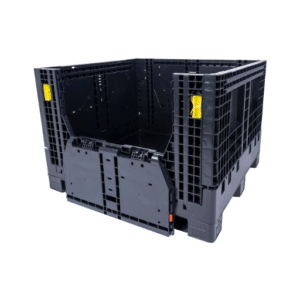
Steel reinforced plastic pallets are heavy-duty pallets made from HDPE or PP plastic with internal galvanized steel tubes. The steel tubes increase load capacity, reduce racking deflection, and extend service life in demanding warehouse environments. These pallets are the right choice when standard plastic pallets sag, crack, or fail under high static, dynamic, or rack loads.
What if the pallet you bought to save money quietly became the most expensive part of your operation? A single pallet collapse in high-bay racking can trigger product damage, facility downtime, and safety incidents. Those costs far exceed the price of the pallet itself. For logistics managers moving heavy automotive parts, bulk chemicals, or frozen goods, the wrong pallet is not just inefficient. It is a liability.
This guide explains what steel reinforced plastic pallets are. It shows how they differ from standard plastic and wood alternatives. It also explains how to specify the right model for your load, environment, and racking system. You will get practical selection criteria, real-world load ranges, and a clear framework for calculating total cost of ownership.
Key Takeaways
- Steel reinforced plastic pallets combine HDPE/PP shells with galvanized steel tubes to handle static loads of 4,000–6,000+ kg, dynamic loads of 1,000–3,000 kg, and racking loads of 1,000–1,750+ kg.
- They reduce racking deflection by 40–60% compared to non-reinforced plastic pallets, making them ideal for high-bay warehouses and automated storage systems.
- Choose steel reinforcement when rack loads exceed 1,000 kg, rack heights exceed 8 meters, or the operation involves rough handling, freezer storage, or automation.
- The upfront cost is higher than standard plastic or wood, but lower replacement rates and longer service life often deliver a lower cost-per-trip over 3–5 years.
- Shandong Lile manufactures custom steel reinforced plastic pallets in sizes such as 1200×1000 mm, 1200×800 mm, and 1100×1100 mm, with options for colors, logos, anti-slip inserts, and RFID tracking.
What Are Steel Reinforced Plastic Pallets?

A steel reinforced plastic pallet starts as a standard plastic pallet. It is usually injection-molded from high-density polyethylene (HDPE) or polypropylene (PP). During or after molding, the manufacturer inserts galvanized steel tubes or rods into channels built into the deck, runners, or both. The plastic shell provides moisture, chemical, and pest resistance. The steel core provides stiffness and load-bearing strength.
The result is a hybrid pallet. It bridges the gap between lightweight plastic pallets and all-steel pallets. It is lighter than steel, easier to clean than wood, and stronger than non-reinforced plastic for racking and heavy static loads.
For a broader overview of specifications and benefits, see our original steel reinforced plastic pallets guide. This article focuses on technical selection, load ratings, and ROI for buyers.
Most steel reinforced pallets use 3 to 8 steel tubes. The exact number depends on the required load rating. A typical 1200×1000 mm rackable model might include four tubes in the top deck and four in the bottom runners. Each tube is about 1.2 mm thick and hot-dip galvanized for corrosion protection. The tubes are usually inserted after molding. This lets manufacturers adjust the reinforcement layout without retooling the entire mold.
Common configurations include:
- Rackable 3-runner pallets for high-bay racking and forklifts
- Block pallets with full-perimeter bases for conveyor and automated systems
- Double-faced reversible pallets for stacking and heavy static loads
- Open-deck or closed-deck designs for hygiene or drainage needs
Maria, a warehouse operations manager in Detroit, learned this distinction the hard way. Her facility switched to non-reinforced plastic pallets to reduce weight and cost. Within eight months, the pallets showed visible sag in the rack beams, and two units cracked during forklift handling. After a safety audit, she specified steel reinforced rackable pallets with eight internal tubes. Rack deflection dropped, replacement orders fell by half, and her team stopped worrying about pallet failures during night shifts.
Steel Reinforced vs Non-Reinforced Plastic Pallets
The core difference is load capacity and dimensional stability. Standard plastic pallets work well for consumer goods, food products, and light manufacturing. Steel reinforced plastic pallets are engineered for loads and conditions that push standard plastic beyond its limits.
| Feature | Non-Reinforced Plastic Pallet | Steel Reinforced Plastic Pallet |
|---|---|---|
| Static load | 2,000–4,000 kg | 4,000–6,000+ kg |
| Dynamic load | 800–1,500 kg | 1,000–3,000 kg |
| Racking load | 400–1,000 kg | 1,000–1,750+ kg |
| Deflection under rack load | Higher | 40–60% lower |
| Unit weight | 10–15 kg | 14–24 kg |
| Typical lifespan | 5–7 years | 8–10+ years |
| Recyclability | Easier (single material) | More complex (steel + plastic) |
| Upfront cost | Lower | Higher |
This comparison is not about declaring one pallet universally better. It is about matching the pallet to the job. Non-reinforced plastic pallets are lighter, easier to recycle, and less expensive. They make sense for retail distribution, fresh produce, and operations where loads stay below 1,000 kg.
Steel reinforced plastic pallets make sense when the operational cost of failure is high. That includes high-bay racking, automated storage and retrieval systems (AS/RS), cold storage, automotive parts handling, and any application where loads exceed standard ratings.
Want to see how load ratings affect your specific operation? Explore our heavy-duty plastic pallet load capacity guide →
Load Capacity Explained: Static, Dynamic, and Racking
To specify the right pallet, you need to understand three load types. Manufacturers publish ratings for each, but real-world safety depends on applying the correct safety factor.
Static Load
Static load is the weight a pallet can hold when it sits flat on the floor with no lifting or racking. Steel reinforced plastic pallets commonly rate static loads from 4,000 kg to 6,000+ kg. This matters for bulk stacking and floor-loaded storage.
Dynamic Load
Dynamic load is the weight a pallet can carry while being moved by forklift or pallet truck. It is always lower than static load because movement creates shock and uneven stress. Steel reinforced models typically rate dynamic loads from 1,000 kg to 3,000 kg.
Racking Load
Racking load is the weight a pallet can support when stored on rack beams. The span between beams is unsupported. This is where steel reinforcement makes the biggest difference. Unsupported plastic decks sag under load. Steel tubes distribute the load across the span and resist bending.
Steel reinforced plastic pallets typically rate racking loads from 1,000 kg to 1,750+ kg. Some European safety regulations require rack-certified pallets for goods stored above 8 meters. Sweden is one example. Steel reinforced designs are often the only plastic option that meets these requirements.
Safety Factor
As a rule, operate at no more than two-thirds of the published racking load to account for uneven loading, wear, and minor damage. If a pallet is rated for 1,500 kg racking load, treat 1,000 kg as the working limit. For critical applications, apply a 1.5× safety factor below the rated load.
Always request test reports based on ISO 8611 or ASTM D1185 standards. These define how pallets are tested for bending, racking, and impact resistance. A manufacturer that cannot provide test reports for the exact model you are buying is a red flag.
Materials and Construction

HDPE vs PP
The plastic shell is usually HDPE or PP, and the choice affects performance.
HDPE is the most common material. It handles impacts well. It remains flexible at low temperatures. It also resists moisture and most chemicals. HDPE is often the better choice for cold storage, outdoor use, and rough handling.
PP is stiffer and handles higher temperatures. It is often preferred for hygienic applications, hot-fill operations, and racking scenarios where dimensional stability matters more than impact resistance.
Some manufacturers blend virgin and recycled material. For heavy-duty steel reinforced pallets, virgin or high-grade recycled HDPE/PP is typically used. This ensures consistent wall thickness and reliable steel tube fit.
Steel Reinforcement Details
The steel tubes are usually galvanized carbon steel to resist rust and corrosion. Placement matters:
- Deck tubes resist point loads from uneven product bases
- Runner tubes resist bending during racking and forklift entry
- Corner and edge reinforcement reduces impact damage during handling
Tube thickness, diameter, and spacing determine the final load rating. A pallet with eight 1.2 mm tubes will outperform one with four thinner tubes, but it will also weigh more and cost more.
Common Sizes and Custom Options
Standard footprints include:
- 1200×1000 mm — common in Europe and Asia
- 1200×800 mm — Euro pallet footprint
- 1100×1100 mm — popular in Asia-Pacific
- 48×40 inches — North American standard
Shandong Lile offers custom molding for non-standard sizes, steel layouts, colors, logos, anti-slip inserts, and RFID tracking. Custom options are especially useful for OEMs and automotive suppliers who need pallets matched to specific part geometries.
Need a pallet built to your exact specs? Contact our team for a custom steel reinforced pallet quote →
Key Industries and Applications
Automotive Manufacturing
Automotive suppliers use steel reinforced plastic pallets for engine blocks, transmissions, stamped body panels, and castings. These parts are heavy and valuable. They are often moved through automated conveyor systems. One Tier 1 supplier replaced wood and metal racks with steel reinforced HDPE pallets. The supplier reported a 34% reduction in load-related damage and a 20% increase in rack density. The pallets could safely support higher stacked loads.
Cold Storage and Food Processing
HDPE performs well in freezer environments. Some designs are rated to -40°C. Steel reinforcement prevents brittle fracture and sagging under frozen product loads. A poultry processor in the U.S. switched from wood to steel reinforced hygienic pallets. The processor achieved zero pallet-related contamination audit findings within two quarters. It also saw a 60% reduction in pallet replacement purchases over three years.
Pharmaceuticals and Healthcare
Pharmaceutical operations require cleanable, non-porous surfaces that meet GMP and HACCP standards. Closed-deck steel reinforced pallets provide stable racking for high-value drug shipments and medical equipment without the splintering or moisture absorption of wood.
Chemicals and Bulk Goods
Chemical drums and bulk bags need high static loads and resistance to spills. HDPE resists many industrial chemicals, and steel reinforcement prevents deformation under concentrated drum loads.
AS/RS and High-Bay Warehouses
Automated storage systems require precise dimensions and consistent performance over thousands of cycles. Steel reinforced pallets maintain their shape under repeated handling and long-term racking, reducing jams, sensor misreads, and downtime.
Cost, ROI, and Total Cost of Ownership
The upfront price of a steel reinforced plastic pallet is higher than wood or standard plastic. The business case depends on how many trips the pallet makes and what failures cost.
A three-year cost model for plastic pallets shows they can cost approximately $3.40 less per trip than wood. This is largely because wood pallets break at roughly 25% per trip. Plastic pallets break near 1%. Steel reinforced plastic pallets extend that advantage further in heavy-duty applications. They last longer and fail less often under rack load.
Factors that improve ROI:
- Longer service life — 8–10 years vs 1–2 years for wood in heavy use
- Lower damage rates — fewer product losses and safety incidents
- Higher rack density — more product stored per square meter
- Reduced maintenance — no nails, splinters, or rot
- Better automation compatibility — fewer jams and misfeeds
The break-even point varies by operation, but for high-cycle, heavy-load environments, steel reinforced plastic pallets often pay back within 12–24 months.
How to Choose the Right Steel Reinforced Plastic Pallet
Use this framework to match the pallet to your operation:
Step 1: Define the Load
Calculate the maximum static, dynamic, and racking loads the pallet will carry. Remember that racking load is usually the limiting factor.
Step 2: Map the Environment
Consider temperature, humidity, chemical exposure, and cleaning protocols. HDPE suits cold and impact. PP suits heat and stiffness. Galvanized steel is standard, but stainless steel may be needed for aggressive chemical or washdown environments.
Step 3: Match the Handling System
Conveyor systems, AS/RS, and forklifts impose different stresses. Block pallets work well on conveyors. Rackable 3-runner pallets work well in selective racking. Double-faced reversible pallets work well for stacking.
Step 4: Check Certifications
Request test reports to ISO 8611 or ASTM D1185. Confirm the ratings apply to the exact size, material, and steel layout you are ordering.
Step 5: Evaluate Custom vs Standard
If your loads, rack dimensions, or product geometry are unusual, custom tooling may deliver better ROI than forcing a standard pallet to fit. Shandong Lile provides custom molding for dimensions, steel tube placement, colors, and branding.
When the logistics team at a German automotive parts distributor went through this exercise, they found a problem. Their standard plastic pallets were rated for only 800 kg racking load. Their average rack storage load was 1,200 kg. They switched to a custom 1200×1000 mm steel reinforced model with eight internal tubes and a closed deck. Rack audits showed no measurable deflection after 18 months. Their pallet replacement budget dropped by 45%.
Environmental Considerations and Recycling

Steel reinforced plastic pallets are durable. However, their mixed-material construction creates end-of-life complexity. The steel must be separated from the plastic before recycling. Not all recycling facilities handle mixed pallets. Disposal costs can be higher than for all-plastic or wood alternatives.
That said, the longer service life of steel reinforced pallets can offset their higher embodied impact. A pallet that lasts 10 years replaces multiple wood or standard plastic pallets over its lifetime. Some manufacturers also offer take-back programs. In these programs, they recover the steel and regrind the plastic for new products.
For companies prioritizing circularity, the calculation is:
- Virgin plastic pallets often have the highest production impact per unit.
- Steel reinforced plastic pallets have higher production impact but lower impact per trip over a long life.
- Wood pallets have lower production impact but higher replacement and disposal impact in heavy-duty cycles.
The best environmental choice depends on your use cycle, recycling infrastructure, and load requirements.
Frequently Asked Questions
What are steel reinforced plastic pallets?
Steel reinforced plastic pallets are plastic pallets made from HDPE or PP with internal galvanized steel tubes that increase stiffness, load capacity, and racking performance.
How much weight can a steel reinforced plastic pallet hold?
Typical ratings range from 4,000–6,000+ kg static, 1,000–3,000 kg dynamic, and 1,000–1,750+ kg racking. Always confirm exact ratings with the manufacturer and apply a safety factor.
Are steel reinforced plastic pallets better than wood pallets?
For heavy-duty, racked, automated, or hygienic applications, yes. They last longer, resist moisture and pests, and eliminate splinters and nails. Wood may still be cheaper for single-trip or light-use cases.
Can steel reinforced plastic pallets be recycled?
Yes, but recycling is more complex than for all-plastic pallets because the steel must be separated from the plastic. Some manufacturers offer take-back or recovery programs.
When should I choose steel reinforcement over standard plastic?
Choose steel reinforcement when rack loads exceed 1,000 kg, rack heights exceed 8 meters, loads are heavy or uneven, or the pallet will face rough handling, automation, or freezer conditions.
Conclusion
Steel reinforced plastic pallets are not the right choice for every operation. But they are often the only safe choice for heavy loads, high-bay racking, and automated systems. Their combination of HDPE/PP durability and galvanized steel strength delivers load capacities that standard plastic and wood cannot match.
The key is to specify based on real load data, not just purchase price. Measure your static, dynamic, and racking requirements. Request ISO 8611 or ASTM D1185 test reports. Factor in service life, damage rates, and automation compatibility. When you do this, the higher upfront cost usually converts into a lower total cost of ownership.
At Shandong Lile, we engineer steel reinforced plastic pallets for logistics professionals who cannot afford pallet failure. We hold ISO 9001 certification. We offer custom molding capabilities. We deliver to over 108 countries. We build pallets that match your load, your environment, and your operational goals.
Ready to specify the right pallet for your operation? Request a custom steel reinforced plastic pallet quote today →