Plastic pallets have become a vital part of modern logistics, storage, and transportation with their vast versatility and durability. With industries opting for these environmentally friendly and economic solutions, various types of plastic pallets are available in the current market, each manufactured to meet specific operational requirements. From those that are stackable and nestable to those that are hygienic for use in the food and pharmaceutical industries, it is important that you select the right pallet to ensure the smooth operation and compliance with standards within the industry. The guide delves into the types of plastic pallets available, which will aid your decision depending on your needs. Therefore, knowing the intricacies of each type is paramount to meeting your operational objectives, which can be either for a more sustainable supply chain or for smoothing warehouse procedures.
Understanding Plastic Pallets

In general, plastic pallets are classified by design, material, or function. The main types of pallets are:
| Pallet Type | Key Feature | Primary Benefit | Best Use Case |
|---|---|---|---|
| Nestable Pallets | Nest together when empty | Save space during storage or transport | Distribution and retail operations |
| Rackable Pallets | Built for strength and durability | Safely handle heavy loads on racking systems | Warehouse storage environments |
| Stackable Pallets | Solid base for secure stacking | Prevent shifting during storage | Non-racked storage applications |
| Export Pallets | Lightweight and economical | Meet export requirements without treatment | Single-use international shipments |
Key Insight: Selecting the right type helps businesses increase efficiency, stay compliant, and cut costs.
What are Plastic Pallets?
An inevitable form of sturdiness for a lighter platform under goods, plastic pallets stand primarily for the transportation and storage of goods. In an attempt to replace wooden pallets, they offer maximum resistance to moisture, chemicals, and pests, so that hygiene and durability are assured. Different from materials like PE and PP, plastic pallets are manufactured for multiple uses, so they are thus suitable for industries where hygienic conditions are highly regarded, such as the pharmaceutical and food processing industries. They come in many configurations, such as nestable, stackable, and rackable, to meet different logistical requirements. To complement the sustainable path toward reducing environmental footprints, plastic pallets can be recycled. Having maintained standard sizes and weight, they are suitable for automated handling so as to increase the efficiency of the supply chain.
Advantages of Plastic Pallets
Durability and Longevity
Whereas wooden pallets can absorb moisture and become damaged in ways like splintering, plastic pallets resist these factors. Hence, plastic pallets are the most dependable option, provided that they are used repeatedly in all industries.
Hygiene and Cleanliness
Plastic pallets are smooth and non-porous, making them easy to clean and sanitize, and still useful for industries demanding strict hygiene standards, such as pharmaceuticals and food and beverage logistics. For instance, they also cannot harbor pests, which is a common problem with wooden pallets.
Lightweight and Easy Handling
Plastic pallets weigh less than wooden pallets, reducing shipping weights and associated transportation costs, and also manual handling strain.
Recyclability and Sustainability
Plastic pallets-made mostly from recyclable materials-can be recycled at the end of their life, lessening the environmental burden and fitting well with the philosophy of a green supply chain.
Automation Compatibility
Plastic pallets maintain accurate dimensions and an exact weight, so they are very much compatible with automated warehouse systems, including those with conveyor belts or robotic handling equipment. This aids in the enhancement of operational efficiency.
Customizable
They work in several configurations, like nestable, stackable, and rackable models on a job basis, thereby offering limitless options for custom adaptability.
Different Types of Plastic Pallets
Plastic pallets come in various types, each tailored to perform particular functions in logistics and operations. The main types of plastic pallets include:
Rackable Pallets
These pallets are able to take on heavy loads and fit the racking system. Their heavy construction prevents them from warping under pressure, thus providing adequate support for storage placed in a high-rack environment.
Stackable Pallets
These have a solid or reinforced base so that they may be stacked, principally in applications where stable stacking presents a problem. These pallets maximize vertical space, especially in non-racked storage.
Nestable Pallets
Considering that the storage efficiency is crucial for nestable pallets, the bottom deck configuration allows the unloaded pallets to interlock, thus greatly reducing the storage space required during transit or warehousing.
Export Pallets
Being lightweight and economical, export pallets are meant to be used once for shipping purposes. They are exempt from ISPM-15 regulations, providing the easiest way for international transport.
Hygienic Pallets
Manufactured with surfaces that allow for easy cleaning, these pallets find their best application in the food, pharmaceutical, and health industries, where sanitation is paramount.
Heavy-Duty Pallets
These pallets are utilized for carrying very heavy loads and are jacked up with heavy reinforcement to achieve maximum durability and reliability in an industrial setting.
Summary: The remaining plastic pallet types make sure that the business can select the most efficient and cost-effective alternative according to the specificity of its supply chain requirements.
Types of Plastic Pallets
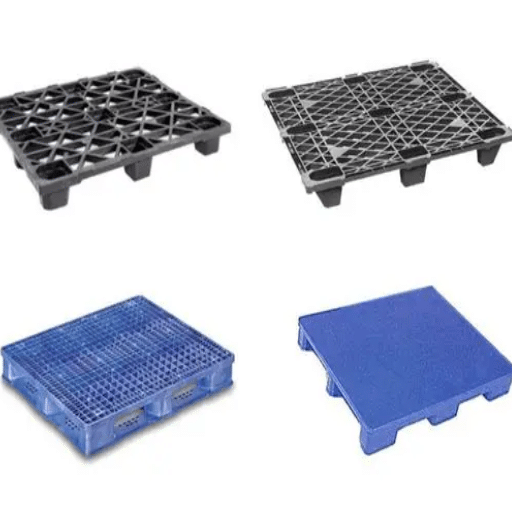
Plastic pallets have certain qualities that make them favored in modern-day logistics and supply chain operations:
- Durability: Plastic pallets last longer and provide uniform performance as compared to wooden pallets that deteriorate through moisture, insect attacks, or chemical exposure.
- Hygiene: Plastic pallets are easy to clean and sterilize; thus, they are very handy in food and pharmaceutical industries, which require self-standing cleanliness.
- Lightweight Design: Most of the plastic pallets are light in nature, which reduces shipping charges, thereby retaining adequate strength.
- Eco-Friendliness: Recycling plastic pallets prevents waste and aids in circular supply chain policies.
- Safety: Plastic pallets possess a smooth surface, which reduces risks concerning product damage and injuries from splinters or exposed nails on wooden pallets.
These benefits highlight why plastic pallets should be given very high importance in the gamut of support activities for businesses that require dependable and efficient material handling solutions.
Nestable Plastic Pallets
Nestable plastic pallets offer considerable advantages in material handling and storage operations due to their design and functionality. The pallets are made so that they stack within each other when not in use, thereby requiring little space for storage-75% less than the standard design. They are lightweight to allow for easy handling by users, yet the materials from which they are constructed should resist wear from use, thereby offering long-term savings.
Key Features of Nestable Pallets:
- Space Efficiency: Reduce storage requirements by 75% when nested
- Material Composition: Made from HDPE (high-density polyethylene) or PP (polypropylene)
- Protection: Resist moisture, chemicals, and impact damage
- Safety: No sharp edges or nails for safer working environment
- Automation Ready: Easy integration with automated systems
- Sustainability: Fully recyclable and environmentally friendly
These pallets find extensive use in retail, distribution, and manufacturing. HDPE (high-density polyethylene) or PP (polypropylene) is the most common resin for manufacturing the pallets. The enclosed plastic imparts a measure of protection against moisture, chemicals, and impact, thus giving the pallets consistent performance in a wide range of environments. Since these pallets are deprived of sharp edges or nails, they provide a safer working environment while still being easy to integrate with automated systems, making supply chain operations smoother.
The pallets promote green action as they are recyclable and could be considered sustainable logistics. Nestable plastic pallets combine durability and functionality with sustainability and construction, leaving out virtually nothing; therefore, they are best for contemporary material handling solutions.
Stackable Plastic Pallets
Stackable plastic pallets are designed to increase storage efficiency and ensure the safety of the cargo being transported. Their chief feature allows them to be safely stackable when not in use, thus minimizing the storage footprint while increasing space use in warehouses. These pallets are made using very durable yet light materials, such as high-density polyethylene or polypropylene, which are moisture, chemical, and emergency temperature-resistant, thereby allowing them to perform robustly in different industries. Being structurally uniform, these stackable pallets offer the exact weight capacity and safety during any form of transport, which prevents product damage.
Moreover, because stackable plastic pallets are compatible with racking systems and handling equipment, they hold great industrial flexibility for distribution and storage operations. These pallets offer a long life, increasing in cost efficiency at the end of time. Similar to nestable plastic pallets, they are recyclable and environmentally friendly, thus complementing sustainability goals within logistics and supply chain management. Stackable plastic pallets, in some ways, provide excellent versatility while ensuring reliability for businesses needing optimized storage and transport systems.
Hygienic Plastic Pallets
Hygienic plastic pallets are specially designed to fulfill the rigorous sanitation and safety standards in industries such as food, pharmaceutical, and health. Such pallets are made of high-quality virgin or food-grade plastics so that they remain impervious to moisture, molds, bacteria, and other contaminants. Their surface is smooth, non-porous, and easy to clean and disinfect in situations where hygiene is of paramount consideration. Besides, there are no nails or splinters, which might contaminate the product or pose injury hazards to workers in the workplace.
Industry Compliance Standards:
- HACCP: Hazard Analysis and Critical Control Points
- FDA Standards: Food and Drug Administration requirements
- Cleanroom Compatible: Suitable for controlled environments
- Temperature Resistant: Capable of storing temperature-sensitive products
Designed in accordance with international industry regulations such as HACCP (Hazard Analysis and Critical Control Points) and FDA standards, hygienic pallets are frequently used to optimize logistics for cleanrooms and controlled environments. In most cases, they remain resistant to temperature, rendering them capable of acting as storage for temperature-sensitive products. Lightweight yet heavy-duty, the pallets allow for efficient handling and can be nested or stacked for space-saving storage. The ease with which they may be recycled adds further to the sustainability goals of the industries, sanitizing the environment.
Choosing the Right Pallet for Your Needs

Selecting the right pallets can depend on three criteria: Material, size, and use. The likes of plastic pallets are suitable in high hygiene environments, such as the pharmaceutical or food industries. The size of the pallet needs to be compatible with your storage and transport equipment so that you and your goods can maximize their efficiency. Some other application requirements that need consideration might include resistance to temperature for cold storage and stackability to minimize space. Once these areas have been covered, selecting a pallet shall secure functionality, durability, and compliance with good standards.
Factors to Consider When Choosing
Material Composition
Depending upon the material, the pallet design can be more or less durable and suitably applied for a specific procedure. Wooden pallets, for instance, are cheap to make and can be repaired. They suit the bulk of industries, especially those with standard load requirements. Plastic pallets are required when further levels of hygiene are required, for instance, in the production of medicines or food processing. Keeping in mind their downside of high cost, metal pallets are extremely durable and are usually used in heavy-duty applications or where safety and hygiene standards are critical.
Load Capacity and Type
A static and dynamic load capacity analysis of a pallet is what is done to avoid structural failures during use. Static load capacity refers to the maximum weight a pallet can carry while stationary, and the dynamic load capacity refers to the magnitude of the weight imposed on it when moving in logistics operations. Type and packaging of goods should be considered in the selection of packaging of the pallets, for example, point loads or evenly distributed weights.
Equipment Compatibility
Pallets must be compatible with the forklift, hand truck, or automated handling systems used in your operations. Size and design play an important role, and standard dimensions (such as 48×40 inches in the United States) are usually preferred because of alignment with transport and storage systems. Special designs like four-way entries or nestable pallets could even increase operational efficiency in some way.
Environmental and Regulatory Compliance
Depending on the industry and region, pallets are subject to various regulations. For instance, ISO-approved pallets are recognized on an international level, while wooden pallets undergo heat treatment to meet phytosanitary requirements before export. Consider environmentally friendly or reusable options to further the sustainability agenda and cut costs in the long run.
Special Design Features
Ask if anything special is needed: temperature resistance for cold storage, slick surfaces to ensure things don’t slide, or stackability to minimize storage space. In some cases, special corner blocks or coatings may be required for pallets to operate under the conditions necessary to meet their unique needs.
Decision Framework: By considering the above factors in a systematic way, companies can work toward a pallet that fulfills both their operational requirements and cost-efficiency concerns, while ensuring industry standards are achieved.
Comparing Plastic Pallets to Wood Pallets
In making a comparison, it is important to consider durability, costs, environmental issues, and maintenance between plastic and wood pallets. Plastic pallets have higher durability and resistance to moisture and contamination, whereas industries requiring high hygiene standards give preference to these pallets-whether the food industry or pharmaceuticals. These pallets are also lighter and of a uniform size, which aids in automated handling systems. Plastic pallets also have a higher initial cost and may be considered unsuitable in situations where heavy loads are involved or when a custom size is required.
| Feature | Plastic Pallets | Wood Pallets |
|---|---|---|
| Initial Cost | Higher upfront investment | Lower initial cost |
| Durability | High resistance to moisture, pests, and chemicals | Vulnerable to moisture, insects, and abrasion |
| Weight | Lighter, reduces shipping costs | Heavier, increases transportation costs |
| Hygiene | Easy to clean and sanitize, non-porous | Difficult to clean, can harbor pests |
| Maintenance | Virtually maintenance-free | Higher maintenance costs, repairs needed |
| Lifespan | 10+ years with proper handling | Rarely exceeds 10 years |
| Automation | Uniform size, ideal for automated systems | Variable dimensions, less suitable |
| Customization | Limited to standard sizes | Easily customizable for various loads |
| Environmental Impact | Recyclable but energy-intensive manufacturing | Biodegradable and recyclable |
Wood pallets, on the contrary, are cheaper upfront and customizable to suit various load requirements. They provide good strength for heavy loads and are readily repairable. However, wood pallets are vulnerable when confronted with moisture, pesticides, or abrasion, which may lead to higher maintenance costs. They also have more weight, which can add to shipping costs and carbon emissions during transportation.
Environmentally speaking, wood pallets are biodegradable and usually recyclable, while plastic pallets are recyclable but with potentially higher energy consumption in their manufacture. The ultimate decision between plastic and wood pallets, therefore, rests with the businesses’ specific logistics, operational, and cost considerations.
Durability and Lifespan of Plastic Pallets
Plastic pallets are notorious for being more durable and longer-lasting than wooden ones. They resist cracking, razor splintering, and abrasion-related wear even through continuous heavy use because they are made from HDPE or PP. They possess a solid non-porous surface, thus preventing moisture ingestion, chemical reactions, and insect attacks. This makes the pallet virtually maintenance-free, allowing for greater longevity. With careful handling, one can expect plastic pallets to last up to 10 years or even more, while traditional wooden pallets rarely achieve this duration. Their strong structure allows for development in automated systems and constant performance under harsh environments like extreme temperatures. Though the initial cost of plastic pallets is much higher, the benefits of a longer lifespan, fewer replacements, and lower operational costs make them a very cost-effective option in many industries.
Applications of Plastic Pallets
Plastic pallets enjoy offerings characterized by versatility and durability, and the key applications include:
Food and Beverage Industry
These pallets are preferred for hygienic reasons. They resist moisture, pests, and contamination. They basically serve to handle the perishable goods and to ensure they are in compliance with food safety laws.
Pharmaceuticals
Since they are non-generically in surface, easy-to-clean plastic pallets prevent contamination from storage and transport.
Export and Shipping
Such a lightweight, recyclable design reduces shipment costs and abides by international standards such as ISPM 15-15, which describes treatment for wooden pallets.
Automobiles and Manufacturing
They withstand higher loads and thus remain more suitable for shipping heavy parts and materials within production surroundings.
Retail and Warehousing
The right size and compatible with automated systems will make handling efficient from the supply side.
Versatility Advantage: Such factors make plastic pallets the option of choice for those needing durability, hygiene, and operational efficiency.
Plastic Pallets in Warehousing
Some of the factors that have rendered plastic pallets indispensable in modern warehousing include their consistency, sturdiness, and accommodation of high-tech systems in logistics. Having standard sizes, they work well with automated storage and retrieval systems, thus improving efficiency in volume-intensive environments. On the contrary, from a standpoint of factor resistance toward environmental agents, wooden pallets fare less well, while their plastic counterparts practically keep moisture and pest contamination away from the palletization of warehousing products, in addition to considerably lessening maintenance needs. They also weigh less but can bear heavy loads, which is an advantageous feature for stacking, thereby optimizing space utilization. They are one of the few pallet types that fit well with sustainable warehousing, thereby reducing garbage and ensuring long-term cost savings. Therefore, plastic pallets are arguably one of the most relied on solutions to withstand warehousing demands.
Shipping Pallets: Best Options
Choosing the best shipping pallet depends on the materials, price, durability, and ultimate purpose. Plastic, wood, and metal pallets represent the most commonly utilized varieties.
Plastic Pallets
These are far and away the preferred shipping method for industries that value hygiene since they resist mould, insects, and bacteria. They are lightweight yet durable, considered excellent for export since they meet international standards such as ISPM-15. They are costly in the beginning; however, considering their long life and recyclability, the cost can be said to be much less over time.
Wood Pallets
They have been considered as a cheap and easily available alternative to many industries. They are sturdy and can carry heavy loads. On the downside, they are prone to moisture damage and wear, and to meet export regulations, they require some treatment and may need frequent repairs as time goes by.
Metal Pallets
Making a name for themselves with great strength and durability, these pallets are built for heavy-duty applications and temperatures. They are fire and corrosion-resistant but carry a higher initial price tag, making them a fit for highly specific applications rather than general use.
Decision Criteria: Coming to the best choice, the work will revolve around balancing operational priorities such as load, time, and shipping regulation requirements. The business should therefore check these factors with the projected cost implications before making any final decision.
Using Spill Pallets for Safety
In making for safety and compliance with hazardous materials or very leak-prone liquids, spill pallets constitute very important supportive equipment. These kinds of pallets are manufactured in such a manner as to contain and control spills, equipped with in-built sumps to collect any leakage so that it does not reach the surroundings or the drainage system. The industries with the handle of oil, chemicals, and other hazardous liquids predominantly use these small platforms for servicing, and these spill pallets are almost always required under environmental statutes such as the EPA’s SPCC guidelines.
Types and Considerations:
- PE Models: Resistant to corrosion and chemical decay
- Steel Variants: Best for heavier loads with additional strength
- Sump Capacity: Must be compliant with regulatory standards
- Material Compatibility: Ensure compatibility with stored materials
There are several types of spill pallets, including the PE models, which are resistant to corrosion and chemical decay, and steel variants, best for heavier loads due to their additional strength. Considerations in choosing a spill pallet are sump capacity, which must be compliant with standards, and compatibility with the materials being stored. Proper use involves inspecting the pallet, keeping any suspected leaks contained, and instructing employees on spill avoidance, clean-up, and pallet maintenance to ease the hazards and maintain workplace safety.
The use of spill pallets reduces potential environmental damage and saves businesses from expensive fines and liabilities. It is a display of respecting operational integrity and commitment to environmental stewardship.
Recycling and Sustainability

Recycling and sustainability are two practices that aid the environment by reducing waste and saving resources. In recycling, materials such as paper, plastic, glass, and metal are processed for reuse and thus minimize the need to harvest new raw materials. Sustainability stands for meeting present-day needs without constraining the ability of future generations to meet theirs, usually through the reduction of environmental impacts and a view toward efficient use of resources. When having these practices in place, pollution will be reduced, energy will be saved, and the earth will get healthier.
Recycled Plastic Pallets
Recycled plastic pallets offer an environmentally friendly method for human beings to substitute traditional wooden pallets that provide sufficient durability and allow of reuse. These pallets are prepared using either post-consumer or post-industrial plastic waste. This method reduces dependence on virgin materials, diminishing the environmental impacts thereof. These are moisture-proof, bug-proof, and chemical-proof owing to their lightweight yet sturdy construction, making recycled plastic pallets most suited for the food, pharma, and logistics industries. In addition, these pallets are of uniform size and standardized design, thus meeting the requirements for international shipping, thereby benefiting those supply chains in terms of operational efficiencies. Choosing recycled plastic pallets entails waste reduction can help organizations stand next to global sustainability goals and compliance issues. Plus, they save costs over time, reduce carbon footprints, and help to build the circular economy by reusing resources.
Environmental Benefits of Plastic Pallets
From my viewpoint, I look toward the lumber sustainability aspect of plastic pallets when trying to put forth their environmental benefits. Plastic pallets, being reusable, of high durability, and rarely breaking down, create too much waste and destroy too much environment in the long run. Being recyclable, these end-of-life plastic pallets can become part of new products, and this is enough sustenance for the life cycle of the circular economy. Moreover, their weight factor accounts for emission problems in transportation, thus lowering the carbon footprint. Hence, using plastic pallets is my way of conserving materials and supporting good environmental practices.
Key Environmental Advantages:
- Reusability: High durability allows for extended use cycles
- Recyclability: Can be processed into new products at end of life
- Waste Reduction: Minimizes environmental destruction and landfill burden
- Lower Carbon Footprint: Reduced weight decreases transportation emissions
- Circular Economy: Supports sustainable resource reuse practices
- Material Conservation: Reduces need for virgin raw materials
Future of Plastic Pallets in Industry
The future of plastic pallets holds great promise owing to advances in materials engineering and mounting environmental concerns. High-performance reinforced polymers are some of the innovations that are anticipated to improve the strength and durability of plastic pallets, allowing them to bear heavier loads and harsher conditions. Increased automation and smart logistics also gently favor the use of plastic pallets, as the uniform sizes and RFID compatibility of plastic pallets aid in expediting pallet handling in automated systems.
Future Trends and Innovations:
- Advanced Materials Engineering: High-performance reinforced polymers for improved strength and durability
- Smart Logistics Integration: RFID compatibility and IoT sensors for real-time tracking
- Sustainable Materials: Increased use of recyclable and biodegradable plastics
- Automation Optimization: Enhanced compatibility with automated warehouse systems
- Industry-Specific Solutions: Customized designs for pharmaceutical, food & beverage, and e-commerce sectors
Driven toward the adoption of recyclable and reusable plastic pallets by the call for sustainable supply chains, companies are preferring pallets of recycled plastic or, rather, ones that biodegrade, furthering the fight against plastic pollution. The development will mainly benefit the pharma, food & beverage, and e-commerce sectors, wherein sanitary, lightweight, and efficient logistic solutions will gain critical importance.
The intersection of sustainability, technology, and efficiency must, in the end, become more prominent in the development of plastic pallets, thereby effectively translating the steel foundry into contemporary industrial sectors.
Summary and Key Takeaways
Essential Points to Remember:
- Versatility: Multiple types available (nestable, stackable, rackable, export, hygienic, heavy-duty) to meet specific operational needs
- Durability: Plastic pallets last 10+ years with proper handling, far exceeding wooden pallet lifespans
- Hygiene Standards: Ideal for food, pharmaceutical, and healthcare industries due to easy cleaning and sanitization
- Space Efficiency: Nestable pallets reduce storage space by 75% when empty
- Automation Ready: Uniform dimensions make plastic pallets perfect for automated warehouse systems
- Environmental Benefits: Recyclable, reusable, and contribute to circular economy practices
- Cost-Effectiveness: Higher initial investment but lower long-term costs due to durability and minimal maintenance
- Regulatory Compliance: Meet international standards like ISPM-15 for export, HACCP, and FDA requirements
- Material Options: Commonly made from HDPE or PP for optimal performance
- Future Growth: Advances in materials engineering and smart logistics driving continued innovation
Conclusion
Making the Right Choice for Your Business: Plastic pallets represent a significant advancement in logistics and supply chain management, offering unparalleled benefits in durability, hygiene, efficiency, and sustainability. Whether your business operates in food and beverage, pharmaceuticals, manufacturing, retail, or international shipping, there is a plastic pallet solution designed to meet your specific needs.
The key to maximizing the benefits of plastic pallets lies in understanding your operational requirements and selecting the appropriate type—whether nestable for space efficiency, stackable for stable storage, rackable for heavy-duty warehouse applications, or hygienic for industries with strict sanitation standards. While the initial investment may be higher than traditional wooden pallets, the long-term advantages of reduced maintenance, extended lifespan, improved worker safety, and environmental sustainability make plastic pallets a smart investment for forward-thinking businesses.
As technology continues to advance and environmental consciousness grows, plastic pallets will play an increasingly vital role in creating efficient, sustainable, and compliant supply chains. By choosing the right plastic pallet solution today, your business positions itself for success in the evolving landscape of modern logistics while contributing to a more sustainable future for the industry and the planet.
Your Path to Sustainable Logistics
Selecting plastic pallets is more than just a purchasing decision—it’s a commitment to operational excellence, worker safety, and environmental responsibility. By carefully evaluating your specific needs against the various types and features available, you can implement a pallet solution that not only meets today’s demands but also adapts to tomorrow’s challenges. Embrace the durability, efficiency, and sustainability that plastic pallets offer, and join the growing number of businesses worldwide that are building smarter, greener, and more efficient supply chains for the future.
Reference Sources
“Operational Concept of an Innovative Packaging Management System”
Frequently Asked Questions (FAQs)
What are the various kinds of plastic pallets?
Some plastic pallet types are nestable plastic pallets, stackable plastic pallets, and block pallets. Each type has its peculiar working mode. For example, they are used either to save on storage or to increase load stability, so they may be used for diverse material handling purposes.
How do I select the right plastic pallet for my needs?
Some of the considerations in selecting such a pallet include the size of the pallet, load limits, and the particular circumstances. For packaging applications, stackable or nestable plastic pallets could especially work well due to their space-saving features. Or they may consider whether their application calls for hygienic pallets suitable for food or pharmaceuticals.
What are the advantages of plastic pallets as to wooden ones?
Plastic pallets are beneficial because they offer sturdiness, resist moisture and pests, and meet safety regulations. They are easy to clean and, therefore, more hygienic in industries that maintain high levels of sanitation.
How durable are high-quality plastic pallets?
Bringing a higher standard of durability beyond that provided by wood pallets, high-quality plastic pallets carry heavy loads and survive rough situations. They also stand impact, temperature variations, and chemical exposure, thereby opening up usage in various applications in numerous environments.
How are recycled plastic pallets useful?
Plastic pallets made of recycled materials are good for reducing plastic waste and promoting sustainability. By means of recycled plastic, these pallets fit perfectly into a circular economy while offering high performance and long durability. Also, they might be economically viable in the long run.
What are the sizes of standard plastic pallets?
Standard plastic pallets usually come in a variety of sizes, the most common of which is 48″ by 40″. However, there are lots of sizes for standard pallets to cater to various shipping and storage needs. Selecting the proper pallet size is important for the efficient handling and transportation of materials.
What are stackable plastic pallets, and their advantages?
Stackable plastic pallets are designed in such a way that placement onto one another maximizes storage space and increases efficiency in the warehouse. It is a design that allows easy handling of the pallets with pallet jacks and forklifts. This pallet is particularly useful to those manufacturing businesses aiming to make the best use of storage capacity.
How do spill pallets operate, and why are they important?
Spill pallets are intended to contain leaks or spills from hazardous materials, preventing these substances from being released into the environment. It is necessary in industries dealing with chemicals, as it helps with the compliance of safety regulations and protects workers and the environment from potential hazards.