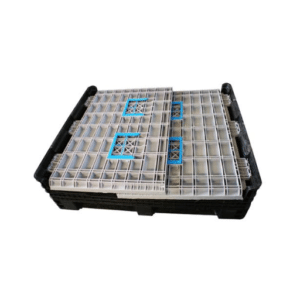
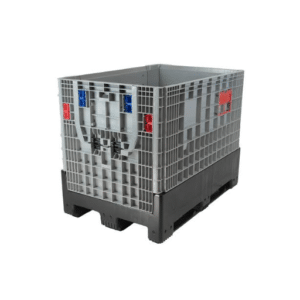
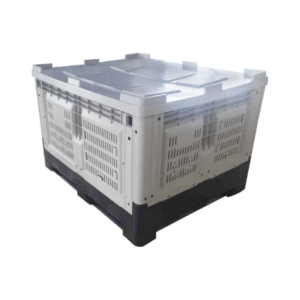
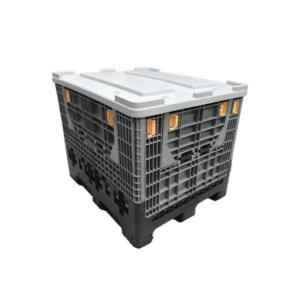
Originally made of wood, pallets are now experiencing a game-changing synergy — a new wave of paradigm shift utilizing technical potential, environmental pressures, and the global interest in risk management in the link comprising supply chain logistics. The past trends soon predict more developments and innovations in the coming years, up to 2026, which will be realized by new materials, advanced methods of production, and more ecological strategies. This paper examines pivotal components that forge such evolution, such as the cost-effectiveness aspect of plastic-made pallets against the conventional ones, their broader utilization in a large number of sectors, and how innovative industrial developments are changing the concepts of pallet strength and endurance. Let us look at the factors cohesing these patterns and their implications for organizations within the ever-dynamic supply chain space.
Global Plastic Pallet Market Overview 2026

It is anticipated that by the year 2026, the plastic pallet market will have developed to impressive levels, and this will be aided by the increase in demand for hard-wearing, easy-to-carry-around, and reusable pallets. The market is built on the increased uptake of food and beverage, pharmaceuticals, e-commerce, and other such industries because of the advantages of plastic pallets over the conventional ones, including hygiene, ecological, and economic issues. Moreover, the product has been made better and more environmentally friendly owing to the improvement in the manufacturing processes, including the incorporation of recycled substances and the creation of modern designs of pallets. North America, as well as the Asia-Pacific, are the main regions with high expectations of market growth, driven by a high level of industrial growth and development of logistics.
Definition and Scope of the Plastic Pallet Market
The plastic pallet market deals with the various activities that involve manufacturing, sale, and use of pallets made of different materials like HDPE, PP, and others. These types of pallets are often used as flat structures where different produce can be handled or transported, and stored within food and beverage production, pharmaceutical commerce, retail, and even manufacturing industries. Because they are stronger, less likely to get wet, and easier to take care of, plastic ones tend to outdo wooden pallets very easily.
The division of this market is segmented by type of material, use, design (whether it is racked, stackable, nested, or a combination of these), and the industries in which these products are employed. Major drivers fueling expansion include demand for a reasonable amount of eco-friendly solutions in trade, regulations to ensure hygiene in both the food and pharmaceutical industries, and the world’s working towards lowering industrial carbon emissions. In turn, the innovative structural development and use of recycled material pallet helps extend the range of applications for those products while reducing their adverse environmental effects.
Market Size and Forecast Growth Rates
Factors such as the rapid growth of health food frames as well as meal-replacing health drinks, and almost any other kind of goods within e-commerce make it no surprise that more companies are seeking to use more pallets for logistics needs. There are increasing requirements for lighter, robust, eco-friendly reusables, some of which are plastic pallets and composites. Moreover, an upswing in the global supply chain as well as warehouse facilities further increases the utilization of pallets in order to improve efficiency. More stringent policies and hygiene requirements, as in temperature-sensitive businesses, help to increase this trend.
Overview of Major Industries Using Plastic Pallets
Nowadays, plastic trays are being used in almost every sector because they can serve for a much longer time, they can be used many times, and they are also in line with many rules and regulations in various countries. In this regard, a summary of specific industries that make use of plastic pallets is provided.
Key Drivers of Growth in the Plastic Pallet Industry

Environmental Laws & Sustainability
There is a growing global trend towards more sustainable packaging solutions, and it has turned out that plastic pallets are the most viable solution in terms of environmental impact and product durability compared to wooden pallets.
Growing Demand for Hygienic Conditions
Certain industries, such as the pharmaceutical and also the food and hospitality industries, go for completely hygienic containers, and plastic pallets fit in well since they are airtight and easy to clean.
Research on Manufacturing Capabilities
The development of plastic molding technologies allows companies to minimize their production costs while increasing the variety in the designs of plastic pallets without limitations.
Accelerated Growth of Port Capacity
The expansion of cross-border commerce has created a requirement for strong, lightweight, and uniform pallets that function appropriately in different transport and storage conditions.
Compatible with Modern Automation
The use of mechanization in the warehousing and transport industry has contributed to the rising need for efficient and consistent pallets that are compatible with current technologies, such as automated conveyor belts and retrieval systems.
⚠️ Market Challenge: However, one of the main barriers to the continued growth in the plastic pallet market remains a deep-seated lack of awareness about the eco-friendliness of plastic pallets.
Increasing Demand for Sustainable and Recyclable Materials
Environmental rules, corporate responsibility policies, and customer demands for green practices are motivating the transformation of logistics and supply chains into sustainability. Recyclable pallets, which are made of recycled plastics, sustainably harvested timber, or new biodegradable composites, are a wise choice to lessen the impact of shipping on the environment. Applications for such pallet designs that are structured around circular economy principles are now being adopted among many companies instead of the conventional pallets. And the improvement in materials even makes it possible to manufacture pallets that are long-lasting and do not degrade in performance, generating limited waste, and supporting lower emissions in the plastic pallet market.
Advantages Over Traditional Wooden Pallets
| Advantage | Details |
|---|---|
| Durability | The contemporary plastic pallet market has produced shipping platforms that have surpassed wooden pallets in terms of durability, among them composite and plastic pallets. These do not break, splinter, or bend easily as wooden pallets do, which elongates their usage and prevents another purchase quite frequently. This has the effect of reducing operating costs and simultaneously improving the use of resources in the supply chain’s activities. |
| Hygienic | Non-wood-based pallets offer better hygiene benefits since they support neither the absorption of moisture nor the breeding of pests or moles easily. Some of these models have a sanitary design, which makes them suitable for sectors that are more concerned with contamination, such as food, pharmaceuticals, or saccharine factories. As opposed to those made of wood, these are also less troublesome to maintain and sterilize. |
| Homogeneous Quality | The quality or dimensions of manufactured pallets do not vary, as in the case of wooden ones, due to discrepancies from the natural component. These products are completely and dimensionally accurate. So they can use any automated warehousing system that allows for efficient operations. |
| Eco-friendliness | Enhanced pallets are now designed in a fashion whereby they are constructed from recyclable materials and applied with a more modular type of design, thus supporting a circular economy. Their life extension and the ability to recycle them at the end of the life cycle add to less waste generation, leading to an environmentally sustainable supply chain. |
| Ease in Weight & Transportation | In most cases, plastic pallets weigh much less than the traditional wooden pallets and to the extent that oil will be saved in transportation, the total weight is reduced such that it is to that extent. These result in savings on expenses and reduce the environmental damage caused. |
| Durability Under Stress | Contemporary pallets are designed in such a way that they can be used in different adverse environmental conditions, such as very cold and hot temperatures, as well as high moisture, where wood pallets decompose in a short time period. |
Technological Advancements in Pallet Manufacturing
Several breakthroughs seen in the production of pallets can be referred to as what can be called the revolution within the pallet manufacturing industry, where the pursuit of optimizing the manufacturing processes, durability, and sustainability comes first. Primarily, automation and industrial robots are now being reliably employed instead of human labor, reducing man-dependent errors, improving the quality of the production, and raising the output levels. The other development is focused on the use of a combi-pallet made out of such modern materials as durable plastics, waste materials, and hybrids, very light and durable, which do not decay or auto decompose when exposed to moisture or chemicals.
Among other significant changes in the methods employed in this field is a shift towards adopting Internet of Things smart pallets. This implies the use of pallets that have different sensors and trackers for locating them, measuring the temperature, and detecting impact whenever it occurs in motion. Through technology of this nature, supply chain visibility is enhanced, and loss or damage is contained. There is also an increase in utilization of durable molding and thermoforming processes to make aesthetically appealing pallets, and when made to fit a specific industry or mode of transport, are cost-effective in the long run. In doing so, the industry of pallets is undergoing a change where the performance is increased, the costs are contained, and green logistics is enhanced.
Innovations Transforming Plastic Pallets

1 Innovative Materials in Manufacturing
There are several innovations that are contributing to the changes in the plastic pallet industry, one of which is the creation of innovative materials. Strengthened structures are built from extant materials such as high-density polyethylene (HDPE) and polypropylene (PP) by adding special agents used for stabilizing, chemically protecting, and strengthening them. This means that not only do all these types not wear out as fast, but they are also lighter, reducing the transportation costs.
2 IoT and RFID Tracking Technologies
The advent of Internet of Things (IoT) and Radio-Frequency Identification (RFID) technologies has completely changed the way pallets are tracked and managed. They enable the monitoring of the exact position of the pallets, facilitate inventory management, and depict clear information in the supply chain. Besides, sensors that record humidity and temperature, amongst others, make sure that the level of the product does not violate industry specifications.
Innovative practices around the plastic pallet market stand out with their advancements in the field, which include smart pallets and increasing capture of IoT information by RFID readers. These pallets contain integrated IoT sensors as well as RFIDs, thereby allowing tracking of goods in real-time, hence monitoring the location, temperature, humidity, and shock levels throughout the transportation of goods. Consequently, measures are taken to curb shipment damage, loss, and theft because the collected information aids in nipping them in the bud.
With the incorporation of radio frequency identification, pallets are swiftly scanned through various checkpoints without physical contact, facilitating a faster inventory management process and a reduction in erroneous action. Enhanced by the connection to the internet of things technology as well, data is easily sent to the cloud storage for analytical purposes, and transformations and evaluations of said data are carried out so as to improve logistic supplies chain processes. Similarly, another advantage of smart pallets is that they show wastage areas, optimize the path, and thus lower costs of fuel usage, which leads to savings both in money as well as eco-friendly practices.
In the plastic pallet market, where appropriate advancements have fused, supply chain management through the use of smart pallets is unparalleled, offering such enhanced manufacturing capabilities in a contextual environment of heightened demand for accountability and engagement in the global logistics sector.
3 Recycling and Circular Economy Practices
Reducing the use of pallets made of virgin raw materials has led to the eco-friendly alternative being promoted – plastic pallets, which have gained dominance in the plastic pallet market currently.
Most of the pallet appliances are precisely fitted to the recycling and reuse of the raw materials. This benefit is available because of the capability of Closed Loop recycling system that most of the companies are adopting these days, which cuts down on the material wastage levels, which means less pollution.
4 Modular and Customizable Pallet Designs
Introduction of new sectional pallets and those that allow for adjustments has advanced modern supply chains with many benefits, including increased operational efficiency. Such designs provide room for expansion of the improved pallet or enhancement. Common examples include adjustable cells; the choice of wood, composite material, or plastic for manufacturing; and special instructions for the design of carpets with loops or pallets with RFID.
Adopting a modular design allows the business to cut down on cost as the pallets can stand for decades with part replacement rather than throwing away the entire pallet. In addition, the manufacturing of plastic pallets allows adherence to a variety of requirements defined by various industries and regulatory bodies, hence serving industries such as food, pharmaceutical, and manufacturing. In an industry that is demanding a leap in logistics, enhanced durability, increased compatibility with automation, and eco-friendly materials or products are the attributes that create a new dimension in the use of modular pallets.
5 Advanced Materials: Lightweight & High-Strength Polymers
Plastic pallet designers using highly advanced materials such as ultra-thin and super-strong polymers benefit from durability, reductions in product weight, and increased load-bearing capacities. These polymers, such as High-Density PolyEthylene (HDPE) or PolyPropylene (PP), are designed to withstand weight, impact, conditions, or degradation from chemicals, among others, aimed at industrial products that require long periods of useful life. Furthermore, plastic injection molding using these materials can be accurately controlled to manufacture figures that improve the strength-to-weight ratio without overusing the material. Advanced additives enhancing these polymers have also been introduced, providing other functionalities, including, but not limited to, UV, anti-static, and fire-retardant properties. As a result, the performance of the plastic pallet market is optimized with benefits such as reduced transportation costs and longer life cycle, thereby increasing the sustainability of supply chain processes.
Trends in Energy-Efficient Production Methods
There is a notable emphasis on energy-efficient methods of production across different industries, which is driven by the need for cost-effectiveness in the betterment of the environment. Among the most notable trends is that these technologies incorporate automated systems and Industry 4.0 technologies that enable saving energy in the process by monitoring the activities and adjusting where necessary using their IoT capability. Further, we have manufacturers within the firms who have incorporated solar power and wind to supplement the dependency on diesel fuel in the factory. Another important trend is the focus on energy recuperation techniques, such as the energy recovery ventilators, which absorb energy losses or extract waste energy and deliver it where it is needed. Also, there is a growing appeal of using processes like 3D printing, which are energy and material-efficient when compared to methods like CNC machining. All these changes are bringing about new, cost-effective ways of manufacturing that can be sustained in the future.
Sustainability in Plastic Pallets Manufacturing

Environmentally sustainable processes for the production of plastic pallets prioritizes reduction of environmental damage without compromise on the functionality or durability of the products. The main activities consist of recycled plastics usage instead of virgin polymers, whereas the end-of-life pallets are put back into a closed loop, where they are completely recycled and produced again towards a new product. To add on, more advanced methods are available to improve the designs of pallets through material-downgrading without weakening loads, which reduces the energy consumed in manufacturing and conveying. These methods are not only aimed at emission reduction, but also at conserving resources by extending material use to its healthiest capacity within a circular economy context.
Use of Recycled and Biodegradable Plastics
The application of environmentally friendly plastics, such as biodegradable and recycled plastics, represents a revolutionary step for the industry due to aspirational levels of clean earth plastics. This type of plastic can be defined as those that are in use today but have already gone through consumer consumption, be it PET bottles or any other HDPE containers. These are considered scrap, recycled, and transformed into something useful. These modifications eliminate the need to produce these materials in their initial structures, which consumes more energy and resources gathered through fossil fuels and therefore also reduces the amount of CO2 produced. On the other hand, biodegradable plastics are designed to maintain their structural plastic integrity in appropriate environments for microorganisms, where they degrade within a certain period, like scrap plastics found in oceans and landfills, among others.
Recent developments involve the enhancement of the material’s mechanical properties and manufacturability to widen their application scope, with specific reference to packaging, agriculture, and construction. Moreover, new materials are being made available that use traditional polymers mixed with biodegradable polymers in adequate proportions to achieve the desired strength, performance, and ecological balance. Such interventions are crucial to the success of the global fight against plastic waste, facilitating the use of green materials in the circular economy.
Lifecycle of Plastic Pallets vs. Wood Alternatives
| Factor | 🟢 Plastic Pallets | 🪵 Wooden Pallets |
|---|---|---|
| Lifespan | Up to 10 years with proper handling; resistant to water, chemicals, and insecticides. | Limited life expectancy; may need fixing or discarding due to splintering, moisture, and pest attack. |
| End-of-Life | Can be recycled into new pallets or other articles within circular economy principles. | Transformed into compost, fuel, or miscellaneous wood products, leading to some wastage. |
| Maintenance | Lower maintenance expenditure; not easily degraded by water, chemicals, or insecticides. | Easily repaired even in small parts; relatively cheaper as raw materials are readily available. |
| Cost | Higher upfront cost but greater long-term savings due to durability and reusability. | Cheaper initial raw materials; more cost-effective for short-term or low-volume use. |
By the end of the day, a selection of either plastic or wooden pallets is informed by the particular use, ecological parameters, and cost efficiency purpose. Plastic pallets are great because they last longer and can be reused; however, wood pallets can be repaired, decomposed reasonably, and are cheaper. The operational and sustainable factors of these aspects should be considered for justification of the use of pallets.
Corporate Strategies for Reducing Carbon Footprints
Among other things, overcoming the challenges of implementing carbon reduction targets is the main purpose of enterprise sustainability programs. Here are some of the effective concrete ways to reduce carbon emissions in practice:
-
1
Energy Efficiency and Renewables
Use of efficient equipment and appliances, implementing buildings ex-fueled, combined with using sources of energy in the form of, say, energies socially differentiated, such as solar and wind, all help in reducing emissions. Also, optimum energy conservation is secured through the application of advanced energy management systems, which prevent wastage.
-
2
Green Sourcing
Firms can work hand in hand with their suppliers to apply green values, adopt green logistics activities to reduce transport-related emissions, and base purchases on their geographical areas so that the shipping costs associated with high-carbon-intensive goods can be avoided.
-
3
Carbon Offsetting
Credible carbon offsetting schemes, such as tree planting and alternative energy projects, provide the capability of balancing unavoidable emissions in enterprises. It is a common practice for corporates to buy carbon credits supervised by third parties in order to meet the carbon neutrality quest.
-
4
The Concepts of a Circular Economy
It is imperative to know that with reduced waste, and also with materials being reused and resources being recycled, the emissions that arise from production processes are lessened. When there is a shift to circular, the need for virgin resources is cut down even further, and there is an increase in the life of products.
-
5
Involvement of the Workforce and Non-Office-Based Activities
Reduction of emissions related to commuting is achieved by providing remote working flexibility to employees and encouraging them to work from home. Moreover, it is essential to instill sustainability in the regulators of reusable energy through learning and motivation, and this influences the organisation positively.
By consistently executing the above-mentioned activities, organizations shall be two times safer, in a condition that can minimize the adverse effects on the environment, plastic pallet market, thus aligning the organization to global strategies on sustainability.
Regional Analysis of the Plastic Pallet Market

⭐
Asia-Pacific: The Largest Growing Market Segment
Asia-Pacific has traditionally been the largest and most dynamic market for plastic pallets in the world. This market has been powered by the increase in industrialization and the development of infrastructure. Areas such as manufacturing, retail, and e-commerce, on the other hand, have shown significant demand because of trade expansion activities, thus the need for efficient logistical processes. For instance, this market is dominated by countries such as China, India, and Japan, and this is attributed to the fact that more and more industry players in these countries have started adopting better pallet solutions that are not only durable but also environmentally friendly and that can handle a lot of traffic at a time.
Additionally, the region’s orientation towards better supply chain systems and additional hygiene and low-cost practices generally motivates the use of plastic pallets. Low price of products, presence of natural resources, and policies encouraging the development of industries all add up to the growth of the plastic pallet market in the region.
Trends in North America, Europe, and Emerging Markets
As far as I can tell, it is fair to say that the plastic pallet market in the US is growing because of trends for more sustainability and an efficient operations model. Europe has other priorities; however, emphasis on compliance with strict environmental codes raises the need for returnable and environmentally safe pallets. The economy in these developing countries witnesses steady growth as there exists a substantial slice of enterprises that move their business processes arising out of enhanced logistics management, in which cheap, sturdy plastic pallets become an integral component.
| Region | Primary Market Driver | Key Industries |
|---|---|---|
| North America | Sustainability trends & efficient operations model | Pharmaceutical, Food & Beverage, Logistics |
| Europe | Strict environmental codes & returnable pallets | Food, Pharmaceutical, Manufacturing |
| Asia-Pacific | Rapid industrialization & e-commerce expansion | Manufacturing, Retail, E-Commerce |
| Latin America | Enhanced logistics management | Consumer Goods, Agriculture |
| Middle East & Africa | Chemical resistance in harsh climates | Oil & Gas, Chemicals, Food |
Import/Export Dynamics and Trade Developments
The aspects of import and/or export of plastic pallets are majorly determined by where production takes place, how much raw materials are available, and the trade relations between countries. The leading producers in this regard are, for example, the US and China, whose design capabilities and factory production are highly advanced, leading to cutthroat prices. Whereas in import-dependent regions such as some parts of Southeast Asia or Africa, the problem is not in production but rather in the rising need for strong, cheap pallets.
Changes in economic conditions are often linked to further advances in trade, such as the introduction of barriers to trade and the renegotiation of existing international treaties. For instance, trade agreements that provide for preferential treatment of some regions may facilitate the movement of plastic pallets to developing regions, whereas trade barriers may hinder the movement of supplies. In addition, changes in the global trading environment, which have accentuated reliance on sustainable processes, have also led to the development of new pallets designed for the purposes of eco regulation and shipping with reduced costs.
The Future of Plastic Pallets is Green, Smart, and Global
From IoT-enabled smart tracking to circular economy recycling programs, the plastic pallet market is being shaped by forces of sustainability, innovation, and global supply chain demands. Organizations that embrace these trends stand to gain in efficiency, compliance, and long-term cost savings.
Reference Sources
Grand View Research – Plastic Pallets Market Analysis
A comprehensive analysis of the plastic pallets market, covering market share, growth trends, and projections up to 2030.
Mordor Intelligence – Plastic Pallets Market Growth Report
This report offers in-depth market analysis, including growth rates, market drivers, and future projections.
Frequently Asked Questions (FAQs)
How large is the plastic pallet market today, and what is its future potential in terms of market size?
With the advent of more durable pallets, wooden pallet alternatives such as reusable and recycled ones, the global market for plastic pallets is on the rise. While market research forecasts some level of market growth even beyond 2025, market reports are showing significant growth in market value as industries switch from wooden palletization to plastics. The pallet pooling, supply chains improvements, and needs for sustainable hygienic and long-lasting medical purpose pallets, such as HDPE or nestable pallets, also contribute to the growth of the market.
What manufacturers of plastic pallets are the leaders in terms of market share?
The players that are well-known in the plastic pallet market include both global and regional industry leaders in several sections. The major players in the market for pallets usually provide types of pallet solutions, such as rackable, nestable, and reusable pallets that can be made as per client specifications. It is evident from the market report and the global plastic pallets market report that the level of penetration is different in different parts of the world, with, in particular, Europe as the plastic pallets market is more competitive than other regions because of the high levels of hygiene encouraged by the end user industries like food and pharmaceuticals.
What are the criteria on which the assessment of the plastic pallets market is based, in terms of materials and consumer industries?
The plastic pallets market is divided based on material type, such as hdpe pallets, recycled plastic pallets, and other polymers. In addition, the market is divided further based on the end-user industries: these include food and beverage, pharmaceuticals, retail, automotive, and logistics. Market analysis reveals that as companies adopt cost-effective pallet pooling solutions and circular economy principles, the market is seeing a tilt towards recycled plastic and green expandable pallets.
What market trends are fueling plastic pallet market consumption?
Over the current market contexts, valid explanations continue to emerge, such as increasing preference for hermetic and durable pallets, expansion of pallet pooling, growing use of plastic as an alternative to wooden pallets, and the replacement of wooden pallets for pallet reutilization. The market expansion is mostly due to reasons such as supply chain digitalization, compliance with sustainability standards, and the need for lightweight but rack-supporting pallets, which will help to cut down on handling costs as well as aid in optimization of storage space.
What are the factors affecting the price and the cost of plastic pallets?
For example, market dynamics incorporate raw material costs, the availability of salvaged plastics, the capacity of a company to produce pallets, and the attraction of the market for a pallet in a certain region, as any of these may affect the cost of manufacturing a plastic pallet. Equally, market research data also demonstrates that despite having a higher accrued cost initially than wooden pallets, the final costs of using plastic pallets are much cheaper as a result of reuse, rehabilitation, and the costs incurred in such activities do not compare with the savings gained from such activities.
How do the European and Asian markets compare in 2026 in terms of market size?
According to the market survey, by 2026, the market for the Asia Pacific is expected to show an expansion in the manufacturing and also the logistics sectors, leading to an increase in market share, although in Europe, the plastic pallets’ market is expected to maintain its position due to strict regulatory requirements of hygiene and usage of recycled plastics. The report on the Plastic Pallet Market globally confirms that the changes in the market share will be brought about by the increasing use of recyclable and nestable pallets in different industries of the final users.
What are the reasons behind the increasing requirement and expansion of the plastic pallet market?
The reasons behind the growing requirement of plastic pallets are the management agenda of sustainable development in this field, pallet pooling, and the need for stronger and more sturdy pallets, such as HDPE, and a desire for easy-to-clean and disinfectant products. The demand for reusable pallets will be determined by the supply chain management since it will affect the practices in inventory management as a result of reuse and savings, as well as legal issues in the medical and food sectors, and technical advances associated with pallets.
Do you think supply chains are adopting plastic pallets more than wooden pallets?
I think yes, more people are adopting plastic pallets because they are considered better than wooden pallets in most supply chain operations. Advances in plastic pallets over wooden ones are seen in hygiene, constant size for automation, and durability. There is a move from traditional to plastic plywood carrier molds in the market, especially where strict contamination measures are applied and in high fluidity sectors.