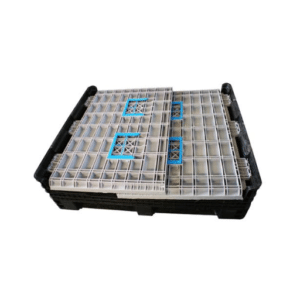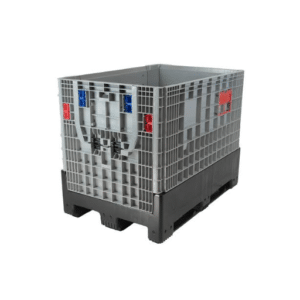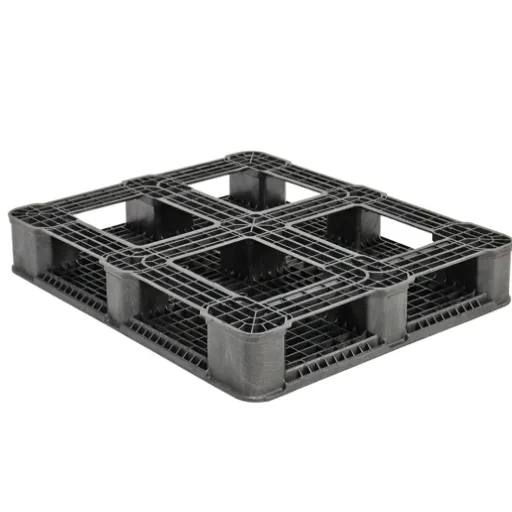

Steel reinforced plastic pallets are HDPE or PP pallets with internal galvanized steel tubes that dramatically increase load capacity, reduce racking deflection, and extend service life in heavy-duty operations. For warehouses handling rack loads above 1,000 kg, high-bay storage, automated systems, or extreme temperatures, they are often the safest long-term investment. For light floor-stacking or short-term use, standard plastic or wood pallets may be the smarter choice.
Marcus, a logistics manager for a Midwest automotive parts distributor, learned this the hard way. Last year, his team installed a new high-bay racking system to free up warehouse floor space. They reused their existing all-plastic pallets to save money. Within three months, Marcus noticed visible sagging on the middle racks. One pallet cracked under a 1,200 kg engine-block load, damaging inventory and forcing a partial aisle shutdown. After switching to steel reinforced plastic pallets with a 1,750 kg racking capacity, the sagging disappeared and rack incidents dropped to zero.
His story is not unusual. Many buyers assume all plastic pallets perform the same way. They do not. Steel reinforcement changes the engineering entirely. By the end of this guide, you will know exactly when steel reinforcement is necessary, how to read load ratings, what specifications to request, and how to calculate the true return on investment.
Key Takeaways
- Steel reinforced plastic pallets typically support static loads of 4,000–6,000+ kg, dynamic loads of 1,000–3,000 kg, and racking loads of 1,000–1,750+ kg.
- Reinforcement reduces long-term racking deflection by 40–60% compared with non-reinforced plastic pallets.
- You need steel reinforcement when rack loads exceed 1,000 kg, rack height exceeds 8 meters, or you operate AS/RS, cold storage, or heavy industrial cycles.
- HDPE suits impact resistance and cold storage; PP offers stiffness and hygienic performance for food and pharma.
- The upfront cost is higher than wood or standard plastic, but the cost-per-trip often drops sharply over a 5–10 year lifespan.
- Always apply a 1.5× safety factor below the published racking load and verify the rating for your exact beam span.
What Are Steel Reinforced Plastic Pallets?
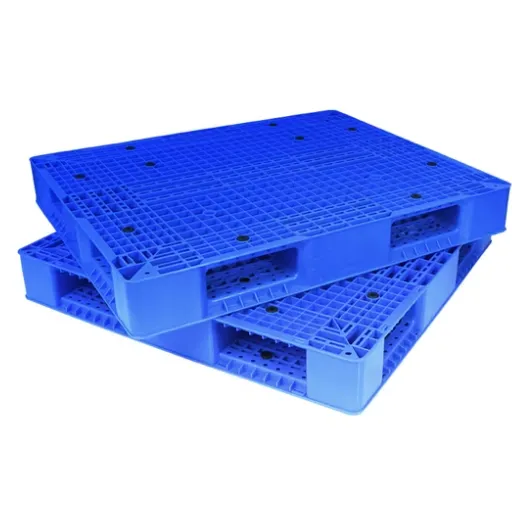
Steel reinforced plastic pallets are industrial pallets made from high-density polyethylene (HDPE) or polypropylene (PP), with galvanized steel tubes or rods embedded inside the deck, runners, or both during the injection molding process. The steel acts as a structural spine, carrying tension and bending forces that plastic alone would struggle to manage over long rack spans or heavy loads.
Most designs use 4 to 8 steel tubes, although heavy-duty custom models may contain up to 12. Tube placement matters as much as tube count. Longitudinal tubes along the runners improve racking performance. Cross-bar layouts distribute weight more evenly across the deck. Full-frame reinforcement, combining both orientations, delivers the highest load ratings and is common in automotive, chemical, and automated warehouse applications.
The steel is typically hot-dip galvanized to resist corrosion and moisture. This matters for outdoor storage, washdown environments, and cold rooms where condensation is common. Because the steel is molded into the pallet rather than bolted on afterward, it stays locked in place through thousands of handling cycles.
Steel reinforced plastic pallets bridge the gap between standard plastic pallets and all-steel pallets. They offer the cleanliness and light weight of plastic with much of the load capacity of steel, making them a practical middle ground for demanding logistics operations.
Steel Reinforced vs. Non-Reinforced Plastic Pallets: Do You Need the Steel?
Not every operation needs steel reinforcement. Adding steel increases unit weight and purchase price. The question is whether your application justifies the investment.
Consider steel reinforcement when you face one or more of these conditions:
- Rack loads regularly exceed 1,000 kg.
- Storage height exceeds 8 meters.
- You use AS/RS, conveyors, or robotic handling with tight deflection tolerances.
- Loads sit in racks for weeks or months, creating long-term creep stress.
- Your operation runs in cold storage below -20°C.
- You handle heavy, high-value, or hazardous materials where pallet failure has serious consequences.
Standard plastic pallets are usually sufficient for floor stacking, light export shipments, retail display, and short-loop distribution where loads stay below 800 kg and racking is shallow.
Performance Comparison
| Factor | Non-Reinforced Plastic Pallet | Steel Reinforced Plastic Pallet |
|---|---|---|
| Static load | 2,000–4,000 kg | 4,000–6,000+ kg |
| Dynamic load | 800–1,500 kg | 1,000–3,000 kg |
| Racking load | 400–1,000 kg | 1,000–1,750+ kg |
| Deflection under load | Higher | 40–60% lower |
| Unit weight | Lighter | 14–24 kg typical |
| Upfront cost | Lower | Higher |
| Best for | Light cycles, floor stacking | Heavy racking, automation, cold storage |
The decision often comes down to racking load. Racking is the most demanding condition because the pallet spans open space between two rack beams. It behaves like a bridge. Plastic alone can sag over time, especially under sustained load and elevated temperature. Steel reinforcement stiffens that bridge and limits creep.
Want to see how reinforcement changes real-world performance? Explore our steel reinforced plastic pallet specifications to compare load ratings, sizes, and customization options.
Load Capacity Explained: Static, Dynamic, and Racking Loads
There are three load rating types that manufacturers provide. Understanding the difference prevents dangerous overloading.
Static load measures the weight a pallet can hold when it sits flat and evenly supported on the ground. This is the highest number because the entire pallet surface shares the load. For steel reinforced models, static loads commonly reach 4,000–6,000 kg.
Dynamic load measures capacity during forklift or pallet jack movement. The lifting and vibration concentrate stress at the fork entry points. The dynamic rating is less than the static rating. Steel reinforced plastic pallets typically handle 1,000–3,000 kg dynamically, depending on design.
Racking load is the critical rating for warehouse safety. It measures the load the pallet can support when it spans two rack beams. This is always the lowest number. Lile’s steel reinforced pallet, for example, is rated up to 1,750 kg in racking.
Why Racking Load Matters Most
A pallet rated for 6,000 kg static may only handle 1,000–1,750 kg in racking. Many warehouse accidents happen because buyers look at the static number and assume it applies everywhere. It does not.
Racking performance depends on:
- Beam span width
- Load distribution
- Duration of storage
- Temperature
- Handling frequency
Always apply a safety factor of at least 1.5× below the published racking load. If a pallet is rated for 1,500 kg racking, treat 1,000 kg as your practical working limit. This buffer absorbs real-world variability such as uneven loads, impact damage, and slight rack misalignment.
For a deeper dive into racking safety, read our guide on plastic pallets for racking.
Materials and Construction: HDPE, PP, and Galvanized Steel
The base plastic determines impact resistance, stiffness, and temperature tolerance. The steel reinforcement determines load capacity and deflection behavior.
HDPE (High-Density Polyethylene)
HDPE is the most common material for steel reinforced pallets. It offers excellent impact resistance, chemical tolerance, and performance in cold environments. It remains tough at sub-zero temperatures, which makes it a popular choice for frozen food, cold chain logistics, and outdoor storage.
PP (Polypropylene)
PP is stiffer than HDPE and offers better creep resistance under sustained load. It is often preferred in food processing, pharmaceuticals, and hygienic applications where washdown and sterilization are routine. PP can handle higher operating temperatures than HDPE, although both materials perform well within normal warehouse ranges.
Galvanized Steel Tubes
The steel tubes are typically hot-dip galvanized to prevent rust. They are placed in the mold before plastic injection so they become one bonded unit. Retrofitted steel bars added after molding do not perform the same way and can loosen over time.
Tube count and wall thickness vary by model:
- 4 tubes: light reinforcement for moderate rack loads
- 6 tubes: standard heavy-duty reinforcement
- 8 tubes: high-capacity racking and automation
- 10–12 tubes: specialized heavy machinery, automotive, or custom OEM designs
Steel vs. Fiberglass Reinforcement
Some manufacturers offer fiberglass reinforcement as a lighter, non-corrosive alternative. Fiberglass works well in electrical applications or where metal detection is a concern. Nevertheless, it usually cannot compete with steel in terms of raw load capacity and rigidity. For maximum racking performance, steel remains the industry standard.
Key Industries and Applications
Steel reinforced plastic pallets serve any operation where failure is expensive. The following industries represent the strongest use cases.
Automotive and Heavy Machinery
Automotive supply chains move engine blocks, transmissions, body panels, and castings that easily exceed 1,000 kg. Just-in-time production leaves no room for pallet failure. Steel reinforcement provides the stiffness and repeatability needed for automated conveyor systems and robotic palletizing.
Acme Components, a tier-one supplier in Ontario, switched from wood to steel reinforced HDPE pallets for transmission assemblies. The move eliminated splinter contamination, reduced load-related damage by 34%, and allowed them to raise rack density by 20% because the pallets could safely handle heavier stacked loads.
Pharmaceuticals and Healthcare
Pharmaceutical warehouses require cleanable, non-porous surfaces and stable racking performance. Closed-deck steel reinforced pallets resist moisture, chemicals, and pests. They also support GMP and HACCP environments where wood is often prohibited.
Food and Beverage
Meat, dairy, beverage, and frozen food processors need pallets that survive washdown, cold storage, and repeated sanitation. Steel reinforced plastic pallets do not absorb water, harbor bacteria, or shed splinters. Their smooth surfaces make cleaning faster and audit compliance easier.
Riverview Meats, a poultry processor in the southeastern United States, replaced wood pallets with steel reinforced hygienic pallets in its cold storage warehouse. Audit findings related to pallet contamination dropped to zero within two quarters, and the company reduced pallet replacement purchases by 60% over three years.
Chemicals and Petrochemicals
Chemical drums and bulk containers place high point loads on pallets. Steel reinforcement distributes these loads across the deck and runners, reducing the risk of cracked pallets and spilled hazardous materials. HDPE’s chemical resistance is an added advantage in this sector.
Cold Storage and Frozen Goods
At temperatures below -20°C, standard plastics can become brittle. HDPE retains toughness at low temperatures, and steel reinforcement prevents brittle fracture under rack load. Some steel reinforced designs operate reliably down to -40°C.
Automated Warehouses and AS/RS
Automated storage and retrieval systems demand dimensional consistency and minimal deflection. A sagging pallet can jam conveyors, misalign in lifts, or trigger safety stops. Steel reinforced pallets maintain tight tolerances through thousands of cycles.
Export and International Shipping
Unlike wood, plastic pallets are exempt from ISPM-15 fumigation or heat treatment requirements. Steel reinforced plastic pallets combine that customs advantage with the strength needed for heavy international shipments. According to KC Pallets, ISPM-15 treatment can add 2–2–8 per wood pallet per crossing. Over thousands of annual shipments, that cost accumulates quickly.
To learn more about choosing the right material, read our industrial plastic pallets guide.
Steel Reinforced Plastic Pallets vs. Wood and Metal Pallets
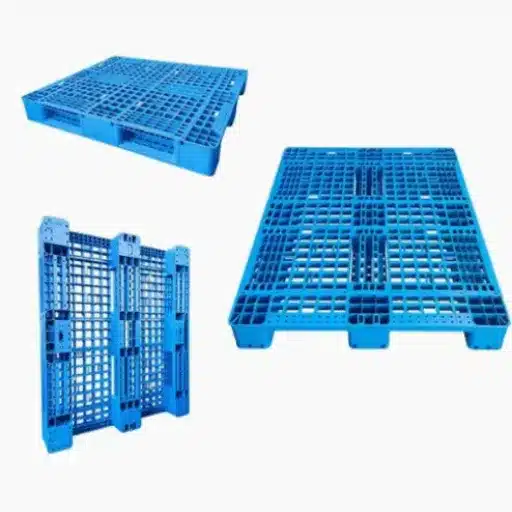
Each pallet material has strengths. The right choice depends on load, environment, lifespan, and total cost.
| Factor | Wood Pallets | Standard Plastic Pallets | Steel Reinforced Plastic Pallets | Steel Pallets |
|---|---|---|---|---|
| Upfront cost | Low | Medium | Medium-high | High |
| Static load capacity | 1,500–2,500 kg | 2,000–4,000 kg | 4,000–6,000+ kg | 5,000–10,000+ kg |
| Racking load | Low without reinforcement | 400–1,000 kg | 1,000–1,750+ kg | Very high |
| Lifespan | 1–5 years | 5–10+ years | 10–15+ years | 15–20+ years |
| Weight | Heavy and variable | Light | Moderate | Heavy |
| Hygiene | Porous, can harbor bacteria | Non-porous, washable | Non-porous, washable | Washable but may rust |
| ISPM-15 for export | Required | Exempt | Exempt | Exempt |
| Repairability | Easy | Limited | Limited | Weldable |
| Recyclability | Limited | Yes | Yes | Yes |
Wood remains the cheapest option for low-cycle, one-way shipping. Steel pallets dominate extreme loads and harsh environments. Steel reinforced plastic pallets occupy the middle ground: stronger and cleaner than wood, lighter and more hygienic than steel, and far more durable than standard plastic.
For a broader material comparison, see our plastic pallets vs alternatives comparison.
Cost, ROI, and Total Cost of Ownership
The purchase price of a steel reinforced plastic pallet is higher than wood or standard plastic. The total cost of ownership often tells a different story.
Consider the following cost drivers:
- Replacement frequency: A wood pallet may last 1–3 years in heavy use. A steel reinforced plastic pallet can last 10–15 years. Fewer replacements mean lower procurement labor and fewer supply disruptions.
- Product damage: Wood pallets cause damage through nails, splinters, and failed boards. One avoided product-loss incident can offset the cost difference for hundreds of pallets.
- Freight and handling: Steel reinforced plastic pallets are lighter than steel pallets and often lighter than hardwood pallets. Lower weight reduces fuel consumption and manual handling strain.
- ISPM-15 savings: Eliminating fumigation or heat treatment for exports saves 2–2–8 per pallet crossing.
- Automation uptime: Reduced deflection means fewer jams, stops, and maintenance calls in automated systems.
Sample Cost-Per-Trip Calculation
| Pallet Type | Purchase Price | Expected Trips | Cost Per Trip |
|---|---|---|---|
| Wood pallet | $12 | 20 trips | $0.60 |
| Standard plastic pallet | $35 | 100 trips | $0.35 |
| Steel reinforced plastic pallet | $65 | 250 trips | $0.26 |
These figures are illustrative, but they show why high-cycle operations favor reinforced plastic. The break-even point usually arrives within 12–24 months for facilities running daily cycles.
Ready to calculate the ROI for your operation? Contact our team for a custom steel reinforced pallet quote tailored to your load, rack, and throughput requirements.
How to Choose a Steel Reinforced Plastic Pallet Supplier
Not every supplier can deliver consistent, tested steel reinforced pallets. Use this checklist during your evaluation:
- Load-test certificates: Request independent test reports for static, dynamic, and racking loads, not just marketing numbers.
- Steel specifications: Ask about tube count, diameter, wall thickness, placement, and galvanization standard.
- Material traceability: Confirm whether the plastic is virgin HDPE, recycled HDPE, PP, or a blend.
- Customization capability: Can the supplier adjust dimensions, colors, logos, RFID slots, or steel configurations for your application?
- Quality control process: Look for ISO 9001 certification and documented in-process inspections.
- Export experience: If you ship internationally, confirm ISPM-15 exemption documentation and regional size standards.
- References: Ask for case studies or customer references in your industry.
Shandong Lile Holding Group manufactures steel reinforced plastic pallets with static loads up to 6,000 kg, dynamic loads up to 3,000 kg, and racking loads up to 1,750 kg. With 14+ years of experience, 16 subsidiaries, and customers in 108+ countries, we support custom OEM designs and high-volume production from our ISO 9001-certified facilities.
For custom-engineered solutions, visit our custom plastic pallets guide.
Racking Safety Checklist for Steel Reinforced Pallets
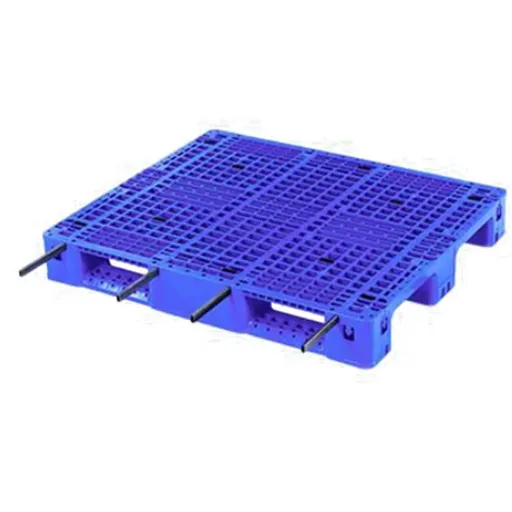
Even the strongest pallet can fail if it is misapplied. Before installing steel reinforced plastic pallets in your rack system, confirm the following:
- The published racking load applies to your exact beam span.
- You are applying a 1.5× safety factor below the rated load.
- The load is distributed evenly across the deck.
- The pallet base design matches your rack frame and fork entry requirements.
- For AS/RS, deflection stays within the system’s specified tolerance.
- The operating temperature falls within the pallet’s rated range.
- You have a visual inspection schedule for cracks, deformation, or steel exposure.
- Operators understand that static and dynamic ratings do not apply in racking.
To learn about rack compatibility, see our comprehensive guide to rackable plastic pallets.
Frequently Asked Questions
How much weight can a steel reinforced plastic pallet hold?
Typical ranges are 4,000–6,000+ kg static, 1,000–3,000 kg dynamic, and 1,000–1,750+ kg in racking. Always confirm the racking load for your specific beam span.
What are steel reinforced plastic pallets made of?
They are made from HDPE or PP plastic with hot-dip galvanized steel tubes embedded during injection molding.
Do steel reinforced plastic pallets rust?
The galvanized steel tubes resist rust under normal conditions. Inspect pallets regularly if they are exposed to saltwater, strong acids, or severe mechanical damage that could breach the coating.
Are steel reinforced plastic pallets recyclable?
Yes. Both HDPE/PP and steel are recyclable. At end of life, the materials can be separated and recovered.
When is steel reinforcement overkill?
For light floor stacking, short-term shipping, or loads well below 800 kg in non-racking applications, standard plastic or wood pallets are usually more economical.
Conclusion
Steel reinforced plastic pallets are not an upgrade for every operation. They are an engineered solution for specific, demanding conditions: heavy rack loads, high-bay storage, automation, cold storage, and high-cycle industrial handling. When those conditions exist, the combination of plastic hygiene and steel strength delivers a lower total cost of ownership than most alternatives.
The key is matching the pallet to the application. Read the ratings carefully, especially the racking load. Apply a safety factor. Verify your beam span. And choose a supplier with tested products and the engineering capability to customize when standard sizes do not fit.
At Shandong Lile, we help buyers make that match every day. Whether you need a standard steel reinforced pallet or a custom OEM design, our engineering team can recommend the right material, reinforcement layout, and load rating for your operation.
Request a steel reinforced pallet quote and get expert guidance on specifications, load ratings, and custom options for your warehouse or supply chain.