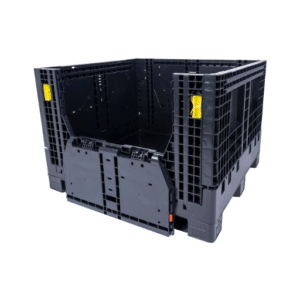
Material handling and logistics often present a dilemma on whether to use plastic or wood pallets. This decision has enormous potential to affect the effectiveness of the supply chain, costs, and sustainability objectives. In view of the specific benefits and difficulties associated with the two types, consideration of which one is more suitable for business applications is extremely important. This work thus compares the efficiency of plastic pallets vs alternatives in the form of wood pallets on such grounds as their resistance, cost of acquisition, upkeep, effect on the environment, and ultimate value. Whether it is enhancing shipping processes, cutting costs, or enhancing environmental responsibility within an infrastructure, this guide assists in approaching the dilemma.
Introduction to Pallet Types
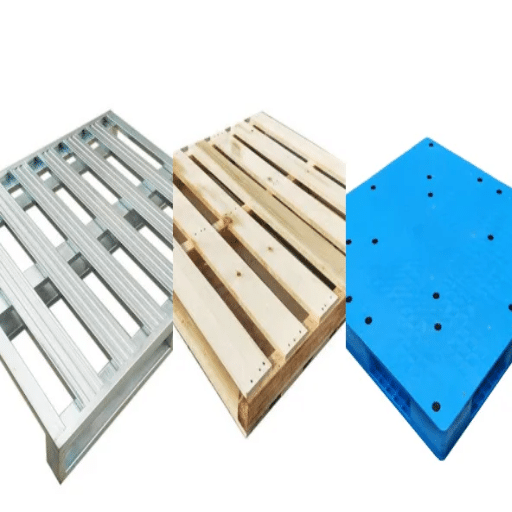
Logistic solutions transport goods on a flat unit called a pallet that allows their storage and transport. Pallets are mainly made of wood and plastic. When considering plastic pallets vs alternatives, mainly these pallets offer longer life, resistance to moisture, and, as the name suggests, are made to a certain size that makes use of space. These industries are in sectors where hygiene is of importance or require long-term usage, and may opt for plastic pallets, which are much more durable than wooden pallets. With regards to wood pallets, these have the most use as they are also more affordable than other options, for example, easy to maintain and break down in nature, hence preferred by enterprises that are either cash-strapped or eco-conscious. Both formats have their benefits and can be selected based on a particular need or, more precisely, the priorities.
🌍 Current Landscape of Shipping Materials
A key emerging trend in the global container shipping industry is towards the use and performance of materials for strength, efficiency, environmental, and economic factors. Most of its applications are focused on wood pallet and in fact, more than 90% of the market is represented by them, which is based on two main aspects: low price and repairable condition. Yet, plastic pallets vs alternatives are also enhancing their niches of usage, as being cleaning-proof and of the same shape as other units, especially when these commodities are used in the pharmaceutical and food industries, where hygiene takes priority. Effectively, the necessity of heavy and normally strong protective solutions has intensified with the expansion of e-commerce, which encourages the use of materials such as corrugated board and bio-based materials in order to decrease payload and minimize environmental costs. Specifically within the context of many policymakers putting pressure on reducing carbon footprints and being more responsible, companies realize that adaptability is much more about addressing traditional solutions, finding suitable reuse versions, and eco-developing appropriate new palletings, if not innovations.
📦 Importance of Choosing the Right Pallet
Choosing an appropriate pallet is indispensable for the smooth execution of the supply chain operations, as well as keeping the cost of the operations reasonable and safeguarding the handled products. Primary aspects that must be taken into account include material – wood, plastic, or metal. This means strength, weight, and capacity for reuse. Wooden pallets are the most common thanks to the ease of availability, but they also have some limitations in terms of ensuring proper hygiene and long-term usage. In contrast, the use of plastic pallets vs alternatives is relatively (initially) more expensive, but the comparison of resistance to water resides in favor of plastics as well as the provision of uniform standards in realms with high hygiene levels, including food and medicine. In the case of metal pallets, they are the best for transporting heavy-weight or expensive goods, but the costs are high in the beginning.
These dimensions and configurations of the packaged goods are important, and this is not about the regulations, rather alignment with world shipping containers and systems that help restrict to appropriate sizes and configurations. There are differences in the shipping solutions and in their dimensions, such as 48 x 40 inches, which is the American normal pallet, and this is different from the Euro pallet. Therefore, informed choices need to be made. Also, it is important that the allowable weight corresponds to the goods’ weight and classification to avoid bending failure and consequent damage during transportation. This is why pallet selection played a major role — it is user-friendly, reduces any form of waste applications, meets standards on international regulations for wood, such as ISPM-15 among others, and finally, after looking into all the cost elements of damage, returns, and change necessary expenses, one can see that the costs are very low.
📈 Why Now: Trends in Logistics and Warehousing
The logistics and storeroom sectors are growing ever more quickly with the development of technology, changing customer expectations, and the need for more efficiency in this area. Another significant trend is warehouse automation and the utilization of robots within the supply chain to enhance efficiency, accuracy, and reduce the cost of human resources. Many warehouses are introducing advanced technology such as autonomous mobile robots (AMRs) and artificial intelligence (AI) systems to improve stock taking and satisfy customer orders.
The rise of e-commerce has intensified with the Covid-19 epidemic, and so has tackled the need for expeditious delivery and last-mile logistics. Many companies are using micro fulfillment centers (MFCs), which are located very close to the cities, hence the deliveries are within reach, and customers’ location is satisfied. In addition to this, organizations have even reconfigured their supply chain with respect to green initiatives, whereby transportation systems have been made more efficient, packaging has been made less wasteful or minimized, and renewable energy has been embraced in operating warehouses.
Digitization is driving the push into modern solutions as well, including the use of Internet of Things (IoT) based tracking devices and data analytics. The adoption of this technology infuses visibility in supply chains at every level, allowing for better forecasting and possible predictions. Firms that embrace such projections sooner rather than later benefit as the big shifts in the market do not distort their core business activities, positioning them to tackle modern logistics and warehousing solutions as expected of plastic pallets vs alternatives.
Cost Comparison: Plastic Pallets vs. Wood Pallets
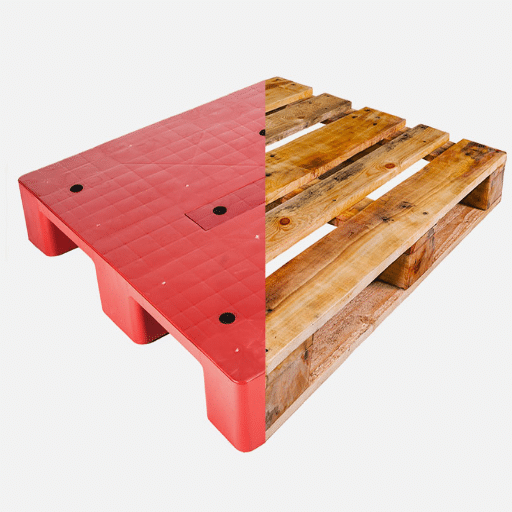
Plastic pallets vs alternatives, both plastic and wood, present different cost structures with several factors, with some being durability, initial costs, and long-term usability.
First Costs
Wooden pallets are cheaper in the initial cost, with lower production cost being a favourable option when short-term gains are pursued. On the other side, plastic pallets require greater capital investment in producing them since their production is complex and material costs are drawn higher.
Life Span & Toughness
Plastic pallets are usually hardy, able to withstand moist conditions, chemical attack, and mechanical impact over time. This advantage leads to less frequent replacement when compared to wood pallets, which are durable for a short span owing to the tendency of splintering, warping, and cost decay with time.
Cost of Repairs
Due to this aspect, wood pallets often need attention and services, resulting in increased operational costs. Unlike the case with plastic pallets, which are virtually maintenance-free, leading to further savings in the future.
Lifecycle Efficiency
Plastic pallets bring more benefits in lifecycle costs as they can be turned over more than wood planks. Wood planks are more suited for businesses inclined towards environmental issues or green culture due to the recyclability and decomposition of wood after use.
Summary: Wood pallets are appropriate for temporary, cheap, and usable alternatives, while plastic pallets are usually cheaper to use over the long term due to the resistance of the material and the low cost of maintenance. In selecting the ideal solution, one must take into account the need for the operation and the available budget.
🏷️ Upfront Costs of Plastic and Wooden Pallets
When exploring plastics against wooden pallets, it is also critical to explore their basic differences, such as cores and production methods, in the case of the two options. The customer is expected to buy the wooden option less as they will range between $10 to $25, depending on the standard, shape, and grade of wood. The prices are within a reasonable range of companies, especially in the case of those with small funds that need to dispose of their goods for a short time.
Nevertheless, production of plastic pallets involves modern techniques and quality materials such as polyethylene or polypropylene, and this increases the minimum price. The price of plastic pallets ranges from $25 for an ordinary and at times $100 and more for more complex types of plastic pallets, including the relieving sleeves.
While buying wooden pallets is beneficial since it costs less, nevertheless, factors such as shorter life expectancy, more damage, and the replacement rate, all of these factors must also be considered. On the other hand, plastic pallets vs alternatives — it is indeed expensive at the beginning, yet more durable, requires less cost to maintain, and since it can be used for longer periods, it becomes cheaper, thus utilizing this type of material in repetitive loading and unloading services or with strict hygiene requirements is more pragmatic.
💲 Pallet Price & Cost Factor Comparison
| Factor | 🌲 Wood Pallets | 🔵 Plastic Pallets |
|---|---|---|
| Upfront Cost | $10 – $25 per pallet | $25 – $100+ per pallet |
| Average Lifespan | 2–3 years | 10+ years |
| Maintenance Cost | High (repairs are frequent) | Low (virtually maintenance-free) |
| Long-Term TCO | Higher due to replacements | Lower due to reusability |
| Best For | Short-term, budget-constrained | Repetitive, hygiene-critical uses |
📊 Total Cost of Ownership (TCO) Analysis
Considering a TCO (Total Cost of Ownership) of wooden pallets and plastic pallets vs alternatives, it is important to take into consideration the two sets of costs, i.e., indirect and direct costs, both over the period of the products’ life. Wooden pallets also tend to be less expensive in terms of initial purchase costs, therefore making them more appealing to businesses that have budget restraints which have to be followed up. However, the durability of wood pallets is far less than that of plastic ones; therefore, many repairs or replacements are reduced by means of trade-in value in the long term. Besides, wood is very stable on its own, although when customers use pallets to transport and pack stock, this is potentially more time-consuming and expensive to carry out.
Plastic pallets are expensive initially, but eventually last longer period of time than other pallets. This is because such pallets are highly durable, devoid of moisture, and do not attract pests that weaken or damage them. Even better, inasmuch as they are weightless, hence saving on freight charges, they are suitable for food and drugs processing companies because they are sanitary. Also, from a long-term perspective, the cost of maintaining and purchasing new plastic pallets can be eliminated, as they are reusable.
In conclusion, wooden pallets enable a firm to cut down the expenditure, and plastic pallets bring ideal solutions for enterprises that aim for durability, cleanliness, and cost efficiency within supply chains.
Durability and Lifespan Considerations
🌲 Wood Pallet Durability
Traditional wooden pallets are susceptible to environmental changes — moisture, insects, wear and tear — and hence tend to live shorter shelf lives than in earlier years or range, of 2–3 years before needing to be repaired or replaced.
🔵 Plastic Pallet Durability
Plastic pallets are built sturdy and impervious to moisture, chemicals, and heavy objects. They do not chip or decompose and are best suited for rough terrains. Provided they are reasonably treated, plastic pallets will last for more than ten years without needing replacement. More so, these boards do not age easily nor do they weaken with time, thus ensuring that all procedures are carried out without breakage or delays.
Takeaway: This broad perspective shows that the choice of wooden or plastic pallets is determined by the constraints of the respective circumstances, namely the durability of the pallet that is required, the conditions of use, as well as the cost structure in terms of the initial acquisition costs and the maintenance costs.
Environmental Impact and Sustainability

Plastic pallets, despite their strength and durability, have limitations from an environmental perspective as they are made from finite resources like oil, and take a longer time to rot away. Presently, a substantial portion of plastic pallets produced today are made from recyclable components, and at the end of their useful life, a majority can undergo recycling, which mitigates the ecological footprint. On the other side, renewable materials are employed in the manufacture of wooden pallets, which makes them less impactful as they can decompose, though owing to their short lifespan could be replaced more frequently, which, over time, translates into more resources used. Therefore, how sustainable one option is compared to another is determined by the elements prevalent in the production and use of the materials such as the sourcing of the material, the possibility of recycling the material, and managing the material from the cradle to the grave; thus, it is important to bear the said factors in mind when trying to reconcile the choice of pallets with environmentally sustainable practice.
♻️ Sustainability of Plastic Pallets
When people talk about plastic pallets vs alternatives, the former are always praised for being highly durable and sturdy, hence more environmentally friendly in terms of use over the longevity of many years. Wasteful acts such as replacing wooden pallets are bound to happen because they get worn out fast, such that it becomes an everyday thing, as opposed to plastic pallets. Microorganisms cannot break down plastic pallets as easily as wood because of the synthetic nature of the material, and if moisture enters the plastic, unlike wood, it does not swell or promote fungus and molds, hence very ideal for use in certain specific industries such as food and drug manufacturing.
In addition, plastic pallets possess many aspects of recycling ability, from being produced using recycled raw materials to being recycled after being used. Nevertheless, the process of production remains efficient as well as beneficial to the economy but incorporates the use of large amounts of energy and tapping into fossil raw materials. Nevertheless, it is also possible for these limitations to be overcome by ensuring that recycled plastics or biocomposites are used in the manufacturing process and recycling of the pallets after use.
⚠️ Environmental Concerns with Wooden Pallets
Environmental reconstruction is becoming more and more of a priority for manufacturers. Wood pallets, for instance, are responsible for several of these issues because of their wide use. First, wood pallets require significant amounts of timber, thus contributing to the cutting down of trees, and this harms the environment, especially in the face of global warming. This is because the trees will have to be cut down; however, trees are part of carbon compensation and restoration efforts.
Secondly, the use of wooden pallets is restricted mostly to a certain period, as they can easily get damaged and require a lot of maintenance. Failing to manage the disposal or encroaching on pallets at the end of their useful life may lead to excessive generation of landfill waste, as the majority is not efficiently reused or recycled. Also, there is destruction to the environment that is associated with wood pallet treatment, as chemicals, such as fungicides and pesticides used in the pallets, might end up in soil or underground water. Such problems can be lightened by efforts to increase the use of sustainable harvesting approaches, as well as advocating for reusable pallet systems and improving recycling infrastructures.
🔄 Comparing Reusability and Recycling
Pallets positively contribute to sustainability due to their reusability and recycling potential. Compared to wooden pallets, plastic ones are much more durable and last for many years because they can be used several times. Over the long run, these factors help in reducing the amount of waste made and other resources used. Another aspect is the possibility of breaking down plastic pallets vs alternatives and creating other pallets from the waste, or metals, for instance. However, there is a specific type of infrastructure that can facilitate this process, and some energy that has to be put in.
Whereas wooden pallets, on the contrary, are more likely to be more economical, given that they are easy to repair, and the life of the module can be easily enhanced by replacing broken wooden planks. When used out of its tenure, the wooden crates, unlike plastics, are often easier to discard as one can easily chop or chip the wood into consistency for mulch, fuel, or any other use. Of course, this is unfortunately ignorant of bin ramifications and disregards proper waste management.
In conclusion, although plastic pallets do well when it comes to durability and the ability to recycle, the materials used in wooden pallets can be recycled quite easily, and the structure itself can be fixed if there are damages. Which of the two is preferable depends on what the business aims at engaging, the aftermath of the product, and the existing recycling capacity.
Hygiene and Standards

Observing hygiene contributes greatly to the selection of pallet materials, as does compliance with industry criteria. Sanitation is enhanced in plastic pallets because of the fact that they are non-porous and therefore moisture resistant, and in addition, they are easy to clean. They have therefore been recommended in industries such as pharmaceuticals and food manufacturing, especially when the risk of contamination should be greatly reduced. In addition, customers may order plastic pallets that meet the standards of FDA, USDA, or ISPM-15 assays, meaning that the pallets may incorporate regulatory issues in their design if needed.
Wooden pallets, despite their popularity, are disadvantaged when it comes to absorbing dirt, moisture, and bacteria due to their porous nature. There may be a need to treat the pallets by heat treatment or fumigation so as to implement the ISPM-15 regulations for international transportation. If there are specific standards for hygiene in the industry they are applied in, then that becomes a determining factor when choosing between the plastic pallets vs alternatives. If the tools used to do these things are kept in good shape and used according to the instructions, it will be easier to follow the rules and keep the situation clean.
🧹 Hygiene Requirements for Pallet Use
It is vital to uphold appropriate hygiene for pallets in all sectors of the industry; however, this aspect becomes crucial in sectors such as food and drug manufacturing, among others, that desire zero contamination. The choice of materials should be appropriate to the use of the pallet, with plastic pallets being used often, but more on hygiene sensitive situations as compared to the wooden ones, which are more porous, not easy to clean, and tend to attract moisture and pests. Since wooden pallets are used more widely, they must also be checked often for any damage, mold, or any contaminants, and most importantly, they must adhere to the ISPM-15 guidelines during the process of export.
In order to sustain cleanliness, the pallets have to be cleaned and sanitized as per the conditions of use. High-pressure washing and steam cleaning are often used for that purpose, as well as chemical sanitisers. Storage is similarly important, as pallets can be stored only in dry and well-ventilated locations to prevent the development of mould or bacteria. It is possible to reduce contamination risks while ensuring safe transport and storage of products by the use of regular inspection plans and compliance with the relevant hygiene rules of the industry.
🌐 ISPM-15 Compliance Considerations
The standards for International Phytosanitary Measure No. 15 (ISPM 15) outline methods for controlling wood-based packaging material used in global trade to curb the movement of pests and diseases. Therefore, all wood packaging materials, such as pallets and crates, must be treated when shipped internationally using applicable techniques: heat treatment (HT) or methyl bromide fumigation (MB).
- Heat Treatment (HT): A process in which wood is heated to an internal temperature of not less than 56°C for not less than 30 minutes.
- Methyl Bromide Fumigation (MB): Involves the use of the pesticide gas in a given controlled environment.
When wood packaging materials comply with the standards, they have to be branded with the ISPM-15 mark, which indicates, among other things, the treatment used, the country of origin, the manufacturer, and a risk warning sign. Noncompliance has such consequences as goods being detained at borders, consignment being refused, and even destruction of the goods.
To ensure that any violations are minimized, companies should purchase wooden packaging materials from accredited manufacturers, perform random checks, and take records of the treatments carried out on the WPM. Proper comprehension of the pertinent rules and policies as prescribed in ISPM-15 helps promote international freight transport as well as curtail the transfer of alien organisms, which pose biosecurity risks. Less energy is required to move plastic pallets vs alternatives.
🛡️ Cleanliness and Safety in Supply Chain
The supply chain must be managed well in order to avoid contamination of products, safeguard consumers, and ensure conformity with the existing safety standards. Clean supply chains help control contamination levels, which can be very beneficial in food, Pharma, electronics, and any other industries where sanitation is uncompromising. Most important safety practices include facilitating the appropriate sanitation practices, where equipment is cleaned, maintained, and the labor force is made aware of the need for hygiene.
Safety refers not only to cleanliness but also to all the measures taken to enforce the security of goods, workers, or facilities to avoid accidents. Use of technology, such as automation and real-time tracking, helps enhance safety and cleanliness as it enables one to spot danger or operational inefficiencies in advance. In addition, standards such as ISO 22000 (the one on food safety) or OSHA regulations compel businesses to adhere to the global and domestic standards of safety, which is assuring and builds credibility in the entire supply chain.
When Each Pallet Type Excels

✅ When Plastic Pallets Excel
In circumstances where rugged, hygienic, and reusable solutions are required, plastic pallets are highly effective, which is the main advantage over alternative materials. Mold and insects are not an issue with plastic pallets, as moisture and chemical contaminants are, to put it plainly, absent; therefore, there is no risk of such contagion in wooden pallets and food and pharmaceutical sectors, among others.
Furthermore, these pallets do not vary in appearance, and they fit comfortably in any automated setting, such as robotics in warehousing and applications involving moving parts and roller conveyors. And for long term use, such as walled cycle or any other application for which recycling is applicable, plastic pallets are the best choice since they are well-built and are extremely durable, hence life cycle costs are less.
They are also convenient since they do not weigh a lot and, as such, reduce the cost of freight on the layout of transport costs, and being that they are paper-friendly, most of the plastic pallets vs alternatives mentioned can be recycled.
🌲 When Wood Pallets Excel
Elements wood pallets generally work better when low-cost, high-load carriers and mass production items are appreciated. It makes them more feasible for firms with high-turnover of pallets or one-time transport engagements. Even more, this is because wooden pallets, unlike the plastic ones, have a lot more strength for stuffing heavy things; this cargo can include construction materials or even some other tool parts.
They are universally accepted, thus providing convenience in the utilization and acceptance of customers’ products of different market segments. And these are considered wooden distortions because the alteration gives manufacturers the ability to make pallets according to dimensions or even the needs of the particular package. Thus, they can be sustained or recycled, which provides a more effective use of resources for businesses that intend to promote waste management.
📋 Key Differences in Performance and Application
| Performance Factor | 🌲 Wood Pallets | 🔵 Plastic Pallets |
|---|---|---|
| Moisture Resistance | Low — absorbs moisture | High — fully resistant |
| Hygiene | Porous; harder to clean | Non-porous; easy to sanitize |
| Load Capacity | High — suits heavy goods | Moderate to High |
| Customization | Easy — cut to any size | Limited — fixed mold sizes |
| Automation Compatibility | Variable dimensions can cause issues | Uniform — ideal for robotics & conveyors |
| ISPM-15 Compliance | Required for international shipping | Not required |
| Best Industry Fit | Construction, heavy goods, one-time use | Food, pharma, automated warehousing |
We appreciate the significant variations in performance and applications. Hence, I would like to stress that wood pallets offer flexibility and are more affordable, particularly when it comes to handling average warehousing and transport cases. This kind of pallet can be used in cases where there is a great need to use very lightweight pallets, while at the same time looking at how easy it can be repaired. Wooden pallets, however, are not the best choice for applications that will expose the unit load for a long period of time. For example, pallets made of plastic pallets vs alternatives may be preferred due to their advantages such as good strength, sanitation, and exposure to weather conditions. Hence, an appraisal of pallet type should be based on the purpose of use consideration, including its targeted load, and the circles in its exertion and segmental objectives.
✦ Key Takeaways
- ◆
Cost: Wood pallets win on upfront cost ($10–$25 vs $25–$100+), but plastic pallets offer lower Total Cost of Ownership over time due to their durability and near-zero maintenance requirements.
- ◆
Durability: Plastic pallets last 10+ years vs 2–3 years for wood, making them the clear choice for long-term, high-cycle operations.
- ◆
Hygiene: Plastic’s non-porous surface is far easier to clean and sanitize — essential for pharmaceutical, food, and medical logistics.
- ◆
Sustainability: Both types have trade-offs — plastic requires fossil resources but is highly recyclable; wood is renewable but can contribute to deforestation and chemical contamination if poorly managed.
- ◆
The Right Choice: Wood pallets suit one-time or budget-sensitive short-term transport; plastic pallets are the superior investment for automated warehousing, regulated industries, and high-frequency reuse scenarios.
Reference Sources
Comparisons of Environmental Impacts Between Wood and Plastic Pallets
Summary: This study uses a life cycle assessment (LCA) to compare the environmental impacts of wood and plastic pallets, focusing on their sustainability and ecological footprint.
Wooden and Plastic Pallets Life Cycle Assessment
Summary: A detailed cradle-to-grave LCA comparing treated wooden and plastic pallets, focusing on their environmental performance and sustainability.
Frequently Asked Questions (FAQs)
How do wooden and non-wooden pallets stack up against each other?
Comparisons between the two give reasons why plastic pallets are better, as they are more durable and can be used over and over again. Unlike their counterparts made of wood, plastic ones are most commonly made from high-density polyethylene (HDPE) and other thermoplastics that tend not to absorb water wear or tear easily, do not allow any organisms to come in contact with the surface, do not breal the supply lines, and this is why they are preferred in sensitive sectors such as food and drink or pharmaceutical wholesale. Wooden pallets may seem cheaper in the short term, but compared to their plastic counterparts, performance benefits can be better in the long run, as there is an opportunity for re-use, and less upkeep will be required.
Are there specific advantages of the other types over plastic pallets vs alternatives?
Plastic pallets’ advantages are that all moisture is removed, they have a non-porous surface, which minimizes the contamination risk, they are faster to clean and sanitize, their dimensions are standard, which is easy for automated material handling, and finally, they have a high durability, which increases the plastic pallet lifetime. The importance of these properties to the smooth operations makes the plastic pallets reusable, and they take the first position for use in logistics and supply chain management because of the standards for cleanliness, as well as the efficiency, which is emphasized.
Are the superior food and pharmaceutical companies using plastic pallets?
Yes, of course. Chemicals and food sectors prefer plastic pallets to any other pallets because plastic pallets can be easily cleaned, and they do not absorb moisture, which helps maintain hygiene and helps to reduce infections. Also, they do not attract pests, which is an added advantage because there will be no need to heat treat the wooden pallets, plus they can be made from recycled plastics, improving environmental management in warehouses and factories.
Frozen keywords and phrases list:
As compared to wooden-style pallets, plastic and composite options may indeed be longer with relatively higher initial monetary outlay. For much shorter intervals, as such, it may make sense in some cases to use wood pallets. In contrast, the use of plastic pallets has glasses magnifier ready to watch the price for a long time because they have a better shelf life, comparatively, minimize the need for repairs, and newer cost savings – decrease losses due to contamination and damage of other products; these are only some of the most important considerations where costs must be evaluated to avoid substantive spending.
How does the use of pallets made out of plastic fare in terms of environmental and sustainability issues?
Plastic pallets’ advantage in terms of sustainability is due to the extended length of their lifecycle and the benefit that most of these plastic pallets can be revived by converting them to fresh pallets or even usable items. While wooden pallets are most of the time specifically designed from materials that can be replaced after exhaustion, plastic ones that are subject to use multiple times have the advantage of less materials being used in the long run and thus preventing waste, which aligns with organizational goals regarding sustainability and efficiency in the logistics and supply chain aspects.
Considering the maintenance and handling of these two types of pallets, how are they different?
As compared to plastic pallets, wooden pallets require frequent maintenance as they easily get splattered, break, and also get moisture, infested with insects, pests, and rodents, hence increasing costs due to the frequent repairs and replacements. On the other hand, the plastic pallets have performance standards that remain unchanged, are generally smaller or even have weights that are consistent, meaning there are reduced splintering wooden safety issues, lifting the standards of safety in the work environment and operation process, and reducing costs.
How can a business decide the most appropriate pallet to use?
While selecting pallets, one should think about the different kinds, which are appropriate for the industry at hand, hygiene levels, for instance, and the weight to be supported and the costs involved. For cost, plastic pallets are very much desirable because of their highest longevity of use, non-plastic absorbing contamination, where the use of these pallets do not allow contamination within or out, in particular when it concerns the chore of cleaning, and applications which are intended for a long period or longer to be utilized; for single use or lower costs wars apple wood is normally used for two peace ‘boxes.’ Consider all reasons, which include but are not limited to the costs, water, attitude angles of demand fulfillment opportunities, and environmental aspirations, and you will find out the plastic pallets vs alternatives applicability.