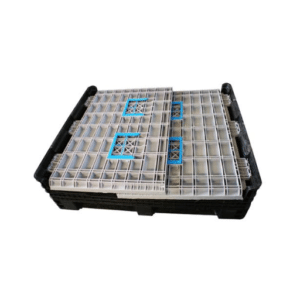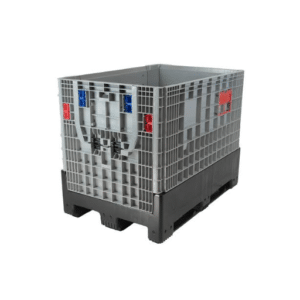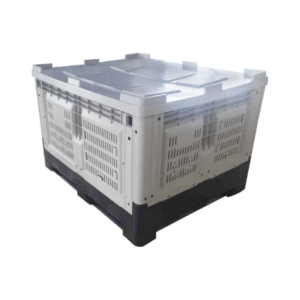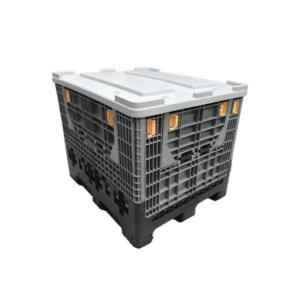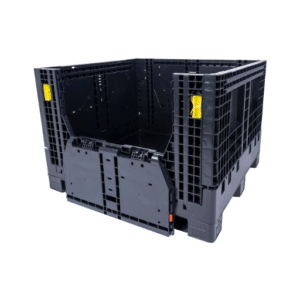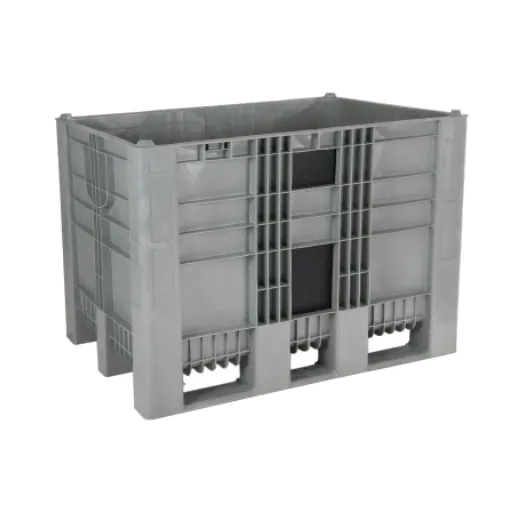

Custom plastic pallet boxes are reusable bulk containers engineered to your exact dimensions, load requirements, and operational specifications rather than forcing your products to fit a standard catalog design. They solve the hidden costs of misfit packaging: product damage, freight inefficiency, compliance gaps, and slow warehouse handling. If you are evaluating whether customization is worth the investment, the short answer is yes — when your product dimensions, automation systems, or regulatory requirements deviate even slightly from standard sizes, custom plastic pallet boxes typically pay for themselves within 200 to 500 trips through reduced damage and freight savings alone.
The German pharmaceutical distributor discovered this lesson through their actual experience. For three years, they shipped temperature-sensitive vials in standard rigid pallet boxes. The boxes functioned properly for most situations. However, the products moved during transportation. The lids failed to provide humidity protection because they did not create a proper seal. The temperature loggers lacked a reliable surface for secure attachment. The company faced annual financial losses of $85,000 because of temperature problems and contamination incidents and product rejections. The organization experienced immediate financial success when it adopted custom-sealed pallet boxes with built-in sensor pockets and humidity-proof gaskets during the first three months.
A container designed specifically for your product creates superior performance compared to using a product which needs to fit inside a standard container.
The guide will explain all available options for customizing a plastic pallet box while showing the complete design process from its initial design stage until final delivery and showing its total expenses and explaining the method for selecting a production partner who will help you realize your business objectives through large-scale production capacity.
Key Takeaways
- Custom plastic pallet boxes can be tailored across eight dimensions: dimensions, walls, lids, internal configuration, access features, color/branding, tracking integration, and structural reinforcement.
- The design process moves through five stages: requirement definition, CAD design, prototype validation, mold development, and production scaling.
- Break-even typically occurs at 200-500 units for simple modifications (color, branding) and 1,000+ units for new dimensional or structural designs.
- Agriculture, automotive, pharmaceuticals, food, e-commerce, and cold chain each demand distinct customization patterns that standard boxes rarely satisfy.
- The right manufacturing partner combines CAD capability, ISO-certified quality systems, and global logistics experience.
What Are Custom Plastic Pallet Boxes?
Definition and Scope of Customization
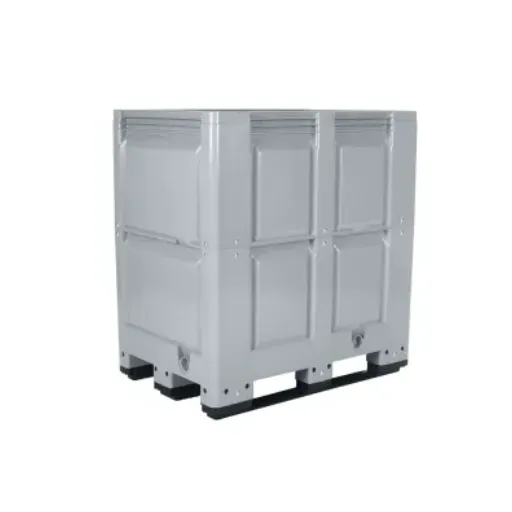
Custom plastic pallet boxes create bulk containers which contain a pallet base together with custom designs that meet specific product needs and operational requirements and regulatory standards. The products require custom specifications which customers must validate through a prototyping process before production starts.
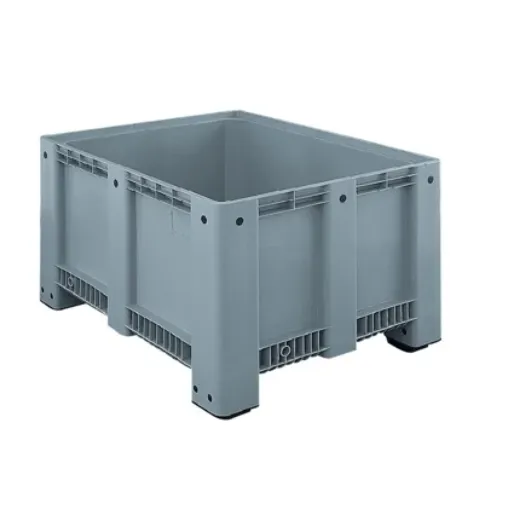
Standard pallet boxes come in fixed footprints — typically 1,200 x 1,000 mm, 1,200 x 800 mm, or 48 x 40 inches — with preset heights, wall types, and load ratings. Custom plastic pallet boxes break those constraints. The system allows users to change height and create ventilation and use dividers and choose lid systems and add tracking technology and strengthen the structure with steel. The scope ranges from simple color and logo changes to fully bespoke designs with new mold tooling.
Why Standard Sizes Fail
The standard pallet boxes exhibit four distinct ways in which they fail to function properly. First, product dimension mismatch: a box that is 50 mm too tall wastes freight capacity on every trip. The product will overflow and the stack will become unstable when the box height falls below the required dimensions. Second, automation incompatibility: automated storage and retrieval systems (AS/RS) and automated guided vehicles (AGVs) demand operational space which must stay within a range of two millimeters of its designated value. Standard boxes, especially from inconsistent suppliers, often miss that mark. Third, branding and traceability requirements: operations running color-coded SKU systems or requiring RFID traceability need features that catalog boxes do not offer. The fourth point describes regulatory gaps which arise from FDA food-contact compliance and EU 10/2011 certification and pharmaceutical GMP alignment requirements that demand specific material grades and surface finishes along with required documentation which standard products fail to provide.
The Shift from Custom Wood Crates to Custom Plastic Boxes
For decades, non-standard packaging meant custom-built wooden crates. They were cheap to design but expensive to maintain: splintering, moisture absorption, ISPM-15 fumigation requirements, and limited reuse cycles. Custom plastic pallet boxes eliminate those drawbacks. They are reusable for 8-15 years, exempt from ISPM-15 heat treatment, resistant to moisture and chemicals, and fully recyclable at end of life. According to Future Market Insights, the global pallet box market is projected to reach $21.1 billion by 2036, and plastic is the fastest-growing material segment precisely because it combines customization flexibility with operational durability.
What Can You Customize? The Complete Customization Taxonomy
Most buyers are surprised by how many dimensions of a pallet box can be modified. Here is the complete taxonomy.
External Dimensions and Footprint
The base footprint typically follows ISO or GMA standards: 1,200 x 1,000 mm, 1,200 x 800 mm, 1,140 x 1,140 mm, or 48 x 40 inches. Custom plastic pallet boxes can adopt any of these or deviate entirely for specialized applications. The more impactful variable is usually height. A custom height can optimize nesting ratios, match conveyor clearances, or fit dimensional weight breakpoints for parcel carriers. For example, an e-commerce fulfillment center we worked with specified collapsible boxes at exactly 760 mm high — 40 mm shorter than the standard — to fit within a major carrier’s dimensional pricing tier and save $1.20 per parcel across 50,000 weekly shipments.
Wall Configuration and Thickness
The construction of walls enables three distinct types of barriers: solid walls, vented walls, and hybrid walls. The agricultural industry requires vented walls because they enable fresh produce storage by providing airflow which stops condensation from developing and causing product spoilage. Solid walls create a protective barrier which prevents dust and contaminants from entering spaces that handle pharmaceutical products and electronic components. Wall thickness affects durability, weight, and cost: thicker walls handle higher impact but increase tare weight and material cost. A standard rigid box might use 4-5 mm walls; heavy-duty versions can go to 7-8 mm.
Lid Systems
The customization opportunity of lids remains unexplored by most people. Options include hinged lids (attached and foldable), removable lids (for full top access), locking lids (for security and tamper evidence), transparent lids (for visual inventory checks), and insulated lids (for cold chain applications). Some designs combine a hinged lid with a drop-down front door, giving workers both top and front access without removing the cover entirely.
Internal Configuration and Dividers
This is where standard boxes fail most often. The use of custom internal dividers with compartments and dunnage elements enables product organization which prevents collision damage while speeding up picking operations. An automotive tier-1 supplier we partnered with needed to ship brake caliper kits containing twelve different components. The use of standard boxes resulted in loose loading which led to product mixing and line-stop incidents. We designed rigid pallet boxes with twelve molded-in compartments, each sized to a specific component. The system achieved a 90% reduction in line-stop incidents, while assembly-line replenishment time decreased from 8 minutes to 2 minutes per container.
Access Features
Drop-down doors, side hatches, and front access panels transform a storage container into a picking station. These features are especially valuable in manufacturing line-side delivery and retail backroom operations where workers need frequent partial access without unstacking or unlidding the entire box.
Color, Branding, and Identification
Mold-in colors eliminate the need for paint or labels. Color coding by SKU, department, or safety zone speeds visual identification. Logo embossing, hot stamping, and screen printing add branding or ownership marks. Serial numbering and barcode or QR code integration support inventory tracking without additional label application.
Tracking and Smart Features
RFID tag pockets, NFC mounting points, and IoT sensor brackets turn a passive container into an active data node. According to supply chain technology reports, RFID-enabled reusable packaging is growing at 12.3% CAGR as companies seek real-time location and condition monitoring. Custom plastic pallet boxes can be designed with recessed pockets that protect tags from impact while ensuring consistent read ranges.
Structural Reinforcement
For loads exceeding 1,500 kg or applications involving harsh racking environments, steel tube reinforcement can be integrated into the base and corner posts. This transforms a standard plastic box into a hybrid structure that matches metal durability while retaining plastic’s weight and corrosion advantages.
Want to see how these customizations come together in practice? Explore our plastic pallet box range to view standard and customizable configurations.
| Customization Dimension | Common Options | Typical MOQ Impact |
|---|---|---|
| External dimensions | Standard footprints or fully custom | 500+ units for new mold |
| Height | 400 mm to 1,200+ mm | Low if using existing base mold |
| Wall type | Solid, vented, hybrid | 200+ units |
| Lid system | Hinged, removable, locking, transparent | 100+ units |
| Internal dividers | Molded compartments, removable slots | 500+ units |
| Access features | Drop doors, side hatches | 300+ units |
| Color/branding | Mold-in color, logo embossing, QR codes | 50-200 units |
| Tracking | RFID pockets, NFC mounts | 200+ units |
| Reinforcement | Steel tubes in base/corners | 1,000+ units |
The Custom Design Process: From Concept to Delivery
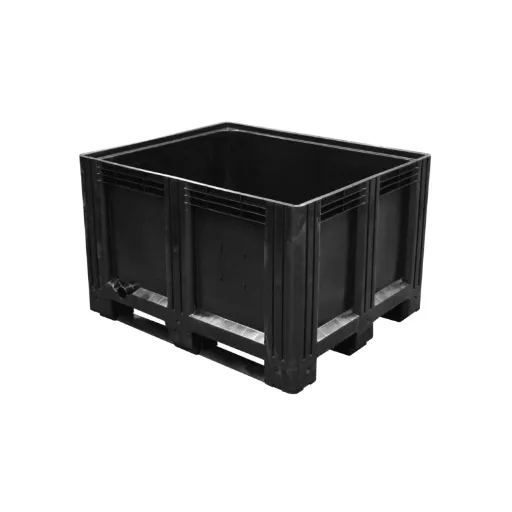
Understanding the customization taxonomy is step one. Step two is knowing how your requirements become a physical product. At Shandong Lile, we follow a five-stage process that ensures every custom plastic pallet box performs as specified before mass production begins.
Step 1: Requirement Definition
The initial step requires the creation of a complete requirements document which contains all necessary information for our work. Our team collects information about product dimensions together with weight measurements and details about its fragile nature. We record the environmental conditions which include temperature range and humidity levels along with chemical and UV exposure. We determine which regulations must be followed through FDA and EU 10/2011 and HACCP and ISO standards. The operational limits specify which areas can be accessed by forklifts and which dimensions of conveyors and AGVs and stacking heights need to be followed. The stage requires high accuracy because it will lead to fewer unexpected events during the process.
Step 2: CAD Design and Mold Flow Analysis
The engineering group develops 3D CAD models which represent their established requirements. We conduct structural tests to determine how materials will respond to static and dynamic and racking loads. Mold flow analysis makes sure that injection material will fill the mold cavity evenly which stops the formation of weak areas and warping and sink marks. The material selection process occurs at this point because HDPE provides cold storage and chemical resistance whereas PP offers rigid materials at lower costs and specialty formulations protect against ESD and flame hazards and UV degradation.
Step 3: Prototype Production and Validation
We begin the production process for sample units after we receive digital design approval. The prototypes undergo load testing together with dimensional verification and real-world trial runs. A pharmaceutical client recently tested custom-sealed boxes through a 30-day cold chain simulation. The prototype showed a problem with gasket compression which we solved before the client spent money on mold development resulting in savings from production mistakes.
Step 4: Mold Development and Production Scaling
For modifications to existing designs, we adapt current molds — a faster, lower-cost route. For fully custom dimensions or structural features, new mold tooling is required. Mold development typically takes 8-16 weeks depending on complexity. Production scaling follows validation: we establish quality control protocols, schedule machine time across our 18 large-scale production lines, and confirm delivery timelines.
Step 5: Delivery and Ongoing Support
Custom plastic pallet boxes ship from our 178,000 square meter facility via Qingdao Port to destinations across 108+ countries. We provide full documentation: material certifications, load test reports, and customs paperwork. Post-delivery, we support design iterations for evolving product lines or operational changes.
Custom Plastic Pallet Boxes by Industry
Different industries demand different customization patterns. Here is how leading sectors apply bespoke designs.
Agriculture and Fresh Produce
Agricultural exporters need ventilation and drainage. Standard solid-wall boxes trap ethylene gas and moisture, accelerating spoilage. Custom vented pallet boxes with 30-50% side ventilation and sloped drainage floors solve this. One European grape exporter we worked with specified boxes with 40% ventilation, drainage channels, and a 1,000 mm height optimized for their harvest bins. Spoilage during 21-day sea freight to Asia dropped by 18%.
Automotive and Manufacturing
Automotive suppliers rely on line-side delivery of component kits. Custom rigid pallet boxes with steel-reinforced frames handle heavy castings, while internal divider systems organize mixed-SKU kits for just-in-time assembly. Kanban labeling and color-coded lids help workers identify the right container at a glance. According to Future Market Insights, automotive represents 23.7% of U.S. foldable plastic pallet box demand — and most of that demand involves some degree of customization.
Pharmaceuticals and Healthcare
Pharmaceutical distribution demands traceability, contamination control, and temperature monitoring. Custom plastic pallet boxes for this sector feature sealed designs with gasketed lids, smooth non-porous surfaces for washdown, and integrated pockets for RFID tags or temperature loggers. One distributor achieved full DSCSA traceability compliance by embedding RFID into the box structure itself, eliminating the need for secondary packaging or adhesive labels that can fail in cold storage.
Food and Beverage
Food-grade custom boxes use FDA-compliant HDPE or PP resins with smooth, seamless interiors that prevent bacterial harborage. Custom colors support allergen segregation programs: red boxes for nuts, blue for dairy, green for produce. Some designs incorporate drainage patterns for wet products or vented sections for baked goods that need airflow.
E-Commerce and Retail
E-commerce operations need collapsible custom plastic pallet boxes sized to parcel carrier dimensional weight breakpoints. Retailers need branded exteriors for retail-ready floor displays. One omnichannel retailer specified custom collapsible boxes with embossed logos, 800 mm height for parcel optimization, and front access doors for backroom picking. The result: 22% reduction in per-ship packaging costs and faster restocking.
Cold Chain and Export
Cold chain applications demand freezing-grade material formulations that maintain impact resistance at -30°C. Export shippers benefit from plastic’s ISPM-15 exemption, which eliminates heat treatment or fumigation requirements and cuts export preparation time by 24-48 hours. Custom insulated lids can extend passive cooling duration for temperature-sensitive shipments.
Customization Economics: Costs, MOQs, and ROI
The most common question we hear is not “Can you customize this?” but “What will it cost, and is it worth it?” Here is the framework we use to answer both.
Understanding Tooling and Mold Investment
There are two types of expenses which arise from customizing products. Existing mold modifications — color changes, logo additions, minor height adjustments using insert tooling — typically range from 2,000to2,000to8,000. New mold development for fully custom dimensions, wall structures, or internal configurations ranges from 15,000to15,000to60,000 based on cavity count and complexity and surface finish needs.
Minimum Order Quantities by Customization Type
Simple modifications carry low MOQs. Color and branding changes often start at 50-200 units. Dimensional modifications requiring mold inserts typically need 500+ units. Fully custom structural designs with new molds generally require 1,000+ units to justify tooling investment. These thresholds ensure the per-unit cost remains competitive after amortizing mold expenses.
Break-Even Analysis: Custom vs. Standard
The break-even point depends on three variables which include product volume and product protection value and operational efficiency improvements. The simple color-coded custom box requires 2500moldcost and 2500moldcost plus 0.50 extra cost per unit to reach break-even point when compared to standard boxes which use applied labels at 200 to 300 unit sales. The fully custom design requires 30000mold investment and 30000mold investment plus 2.00 extra cost per unit to reach break-even point between standard boxes and dunnage damage and freight waste at 1000 to 2000 unit sales.
An e-commerce fulfillment center illustrates this well. The company processed 60000 shipments every month using standard boxes which exceeded required height by 40 millimeters. The additional height caused 18 percent of packages to enter a higher dimensional weight category which resulted in an additional charge of 1.20 for each package. The cost for a custom height modification amounts to 1.20 for each parcel. The total cost for custom height modification amounts to 4500. The company saves 12960 dollars each month. The company needs 11 days to reach break-even point.
Total Cost of Ownership for Custom Boxes
The real measure is not unit price but total cost of ownership. Our packaging ROI analysis shows that custom reusable plastic containers reduce product damage by 25-40% compared to loose loading in standard boxes. They eliminate secondary packaging like bubble wrap or foam. They reduce freight costs through optimized dimensions. And they last 8-15 years versus 3-5 years for wood or single-use corrugated alternatives.
Ready to calculate the ROI for your operation? Contact our design team for a custom specification consultation and break-even analysis tailored to your volumes.
Choosing a Custom Plastic Pallet Box Manufacturer
Not every manufacturer that claims “custom capabilities” can deliver. Here is what to evaluate.
Design and Engineering Capability
Can the manufacturer convert your requirements into CAD models? Do they run structural simulation and mold flow analysis before cutting steel? Can they produce functional prototypes for validation? A manufacturer without in-house engineering will outsource design, adding cost, time, and communication risk.
Manufacturing Scale and Flexibility
Custom orders require machine time. A small operation may struggle to fit your job between standard production runs. Look for manufacturers with multiple large-scale machines, shift flexibility, and the capacity to scale from prototype to high volume without switching facilities. Our 18 production machines across a 178,000 square meter facility allow us to dedicate lines to custom orders without disrupting standard production.
Certification and Compliance Support
If you operate in food, pharmaceutical, or export markets, certification is non-negotiable. Verify ISO 9001 quality management, FDA or EU 10/2011 material compliance, and HACCP alignment. The manufacturer should provide material certifications, test reports, and regulatory documentation as standard deliverables, not add-on services.
Global Logistics and Documentation
Custom plastic pallet boxes are bulky. Shipping them efficiently requires export experience, proper container loading, and accurate customs documentation. A manufacturer with a proven global logistics network — and ideally port access — can deliver on time and on budget. Our location near Qingdao Port, one of China’s busiest export hubs, ensures efficient global distribution to the 108+ countries we serve.
Conclusion
Custom plastic pallet boxes are not a luxury for operations with unusual products. They are a procurement optimization tool for any organization where standard sizes create hidden costs: freight inefficiency, product damage, compliance gaps, or slow handling.
The five decisions that matter most are:
- Dimensions: Match your product and freight constraints, not a catalog table.
- Internal configuration: Use dividers and compartments to eliminate damage and speed handling.
- Material and compliance: Specify resins and certifications that match your regulatory environment.
- Tracking integration: Build RFID or sensor mounts into the structure, not as afterthoughts.
- Manufacturer capability: Choose a partner with engineering, scale, certification, and logistics strength.
At Shandong Lile, we have spent over 14 years engineering custom plastic solutions for logistics professionals across 108 countries. From mold modification to full bespoke design, we guide clients through every stage of the process with transparent costs, rapid prototyping, and quality systems backed by ISO 9001 certification.
Your product deserves a container built for it. Request a custom prototype or specification quote today, and let’s solve your packaging challenge together.