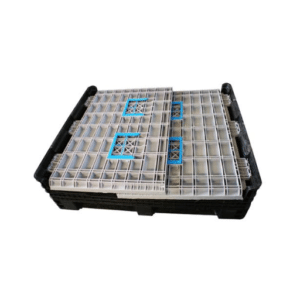
There is an increased interest in green technology and materials due to the awareness of the environmental and social costs associated with traditional materials such as timber. The use of wood as a material in pallets is steeped in tradition-the material is not only plentiful but also possesses several benefits, hence the reason for its wide acceptance in the industry. The industry is, however, offering alternative solutions to wood under the throes of environmental consciousness. Thus, for developers of these materials, the age-old wood pallet is now in sharp focus, with many current research and development pathways being exploited. This article critically evaluates three such-aluminium, plastic, and plastic pallets.
Understanding Pallet Types

Plastic Pallets
Plastic pallets are best known for their durability and reusability. Since they resist moisture, chemicals, and fungal growth, they are ideal for adaptations to industries like pharmaceuticals, food processing, etc. Furthermore, plastic pallets are also lightweight, which means they reduce transportation costs. Nevertheless, the more expensive initial cost and the menace they pose to the environment from producing non-renewable materials are sustainability issues.
Cardboard Pallets
Cardboard pallets, under different shades, are light, cheap, and very adjustable. They tend to be eco-friendly because they are made from recycled materials and are therefore great for single-use shipments, light loads, et cetera. They are nowhere nearly as resistant as the plastic kind, and therefore are not quite the big kiddies when it comes to water, or too much heavy pressure, like heavy impacts, to which they cry off, might stop their relentless march into the technical market.
What is a Plastic Pallet?
Plastic pallets are flat trays made from materials like high-density polyethylene (HDPE) or polypropylene (PP) and are designed for the storage and transportation of goods. Plastic pallets offer many benefits over traditional wooden pallets, as they are resistant to moisture, cannot develop splinters, and are not likely to be occupied by pests. The plastic pallet, considering the numerous positive attributes it bears, is cost-effective in the long run. For instance, the pallet remains lightweight while being sturdily built. Their combination of lightness and durability makes them best suited for application in clean environments like the pharmaceutical and food industries. Further good color plastic pallets could be recycled and reused, ensuring more cost savings, as they have a longer life when compared to wooden pallets, which, in essence, are generally discarded. Environmental impact is ultimately determined by proper recycling or disposal actions.
What is a Cardboard Pallet?
Cardboard or paper pallets are transport platforms that are made mainly from corrugated cardboard or a similar type of paper. They are light, yet durable, and able to hold heavy loads when used in the right manner. Being the eco-friendly option, these pallets are frequently reclaimed and can be further recycled post-use. This makes them a good fit for businesses prioritizing sustainability. Although not as strong as wood or plastic pallets, cardboard pallets are resistant to splinters, contaminants, and pests. They are best for shipping lighter loads or single-use shipments, especially within industries that demand high control on hygiene, like food and pharmaceuticals. The aforementioned savings in cost and low level of environmental damage are making cardboard pallets extremely popular amongst modern-day logistics practitioners.
Comparative Overview of Pallet Materials
Pallet materials vary in properties at widely noticeable durability, cost, ecological considerations, and specific attributes for specific applications. Here is a quick comparison of the most commonly used materials for pallets:
| Pallet Type | Key Characteristics | Best Use Cases | Considerations |
|---|---|---|---|
| Wood Pallets | Higher strength, load capacity, recyclable, and repairable | Heavy loads in harsh environments | Tendency to split, moisture absorption, insect invasions, requires heat-treatment for international shipping (ISPM-15) |
| Plastic Pallets | Lightweight, weather-resistant, hygienic, durable | Pharmaceuticals, food processing, and clean environments | Higher initial cost, but long-term savings due to longevity |
| Cardboard Pallets | Lightweight, inexpensive, sustainable, pest and splinter-proof | Single-use, light shipping, and industries with cleanliness requirements | Limited strength and durability compared to other materials |
The choice of material for pallets is linked with the need to balance their respective strengths and weaknesses between operational requirements, legislative oversight, and the preferences for environmental sustainability.
Advantages of Plastic Pallets

- Durability: Polymer pallets are highly resistant to impact, humidity, and chemicals, making them ideal for heavy-duty and long-term usage.
- Hygiene: Being non-porous, plastic pallets tend to minimize the risk of contamination vis-à-vis wood, making it easy to clean for industries requiring stringent hygienic standards.
- Consistency: Plastic pallets are molded/drained in exact measures, ensuring that they fit and are operated together for automated operations, avoiding handling errors.
- Lightweight: Plastic pallets are comparably lightweight to wooden pallets, making their transportation cheaper and improving manual handling efficiency.
- Recycling: Several of the plastic pallets available in the market are recyclable at the end of their lifecycle, in compliance with sustainability requirements and a reduction in the environmental burden.
Durability and Longevity
Given their strong build, plastic pallets surpass traditional wooden pallets in that they offer substantial benefits. With strong material composition—be it high-density polyethylene (HDPE) or polypropylene (PP)—they are known to endure moisture, chemicals, weather conditions, among many other factors, preventing any warping, rotting, or splintering. Additionally, their nonporous characteristic makes them suitable for reuse under very demanding conditions, contributing as well to the much longer useful life in comparison to wooden pallets. Any that dispose of wooden pallets? Normally, a plastic pallet would be able to undergo several hundred cycles under normal conditions before it goes off, significantly decreasing replacement costs. Moreover, this resistance to impact, joined together with a constantly high structure on each pallet, makes it possible for optimal operation of automatic material handling systems that require uninterrupted operation throughout and from one pallet to the next. It justifies half of the labor costs.
Resistance to Moisture and Chemicals
Resistant to water and numerous chemicals, plastic pallets are an ideal choice for the hygienic industries susceptible to contamination. Unlike others made of wood, such pallets do not absorb moisture at all and thus save from the danger of warping, mold development, or any weakening of their integrated structures due to moisture association in humid or wet environments. The chemical-resistant feature, therefore, protects the plastic pallets from use under harsh chemical conditions. The resultant toughness of the structure makes it strong in difficult conditions, thus prolonging its life in addition to standing as a guarantee for product safety in the supply chain.
Reusability and Recycling Options
Strengths lie in inherent null resources of having reusability and recycling potential for a considerable existence, particularly for designed plastic materials. In a virtue, they can reprocess and remold many engineered plastics, prolonging their service life and subsequently reducing the amount of waste produced. Materials, specifically high-density polyethylene (HDPE) and polypropylene (PP), are reusable mainly through shredding, melting, and reforming in the making of new products without deviating much from quality.
Usually, the recycling processes for these plastics include collection, sorting, cleaning, demonstrations, and mechanical recycling methods (using regranulation to reuse the material). Advanced chemical recycling appears to be involved, along with recycling that brings the plastics down to their monomers for post-polymerization, hence the circular application could even be implemented with non-recyclables. Recycling itself does not only alters the environmental consequences of production from environmental considerations, but it also saves resources that otherwise would have been spent relying on virgin raw materials. Furthermore, revolutionary developments in biodegradable and compostable plastics are making the issue of how to manage plastic waste much more sustainable, who are still exist.
Benefits of Cardboard Pallets
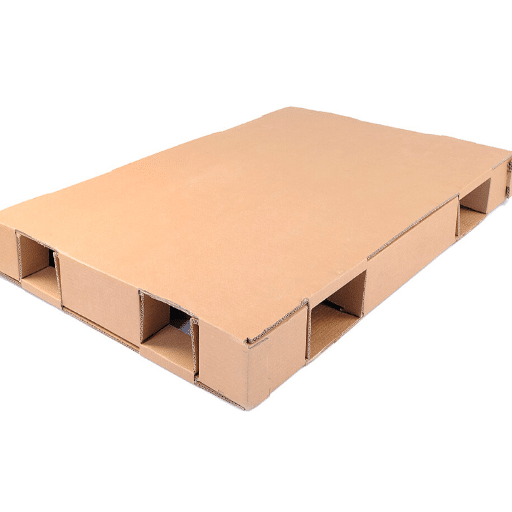
Cardboard pallets deliver a handful of benefits, making them a sustainable and practical replacement of conventional materials, wood or plastic: the pallets are engineered to a lighter weight as compared to wooden or plastic pallets, which saves shipping and handling costs.
- Eco-Friendly: Made out of recyclable materials, cardboard pallets are a responsible environmental option that upholds the sustainable use of resources.
- Cost-Effective: Costing less than their wooden counterparts, they also offer significant reductions in bulk production and carriage.
- Custom: They are highly customizable and can be designed to fit different shapes and sizes to fit varying terms.
- Safety: With no jagged edges or nails, cardboard pallets also reduce the potential for injury in handling and transport.
The list of advantages underscores why present exigencies among industries are leading to this rapid expansion of the demand for practical and sustainable pallet solutions.
Cost-Effectiveness
Compared to conventional materials, cardboard is a highly cost-effective solution. Especially for air freight, cardboard’s low weight helps to bring down logistics costs as a result. In contrast, the cost of materials and manufacturing is minimized; hence, cardboard pallets are low on cost, reducing the capital expenditure of the business. If one thinks about the fact that wooden pallets need repair and maintenance, then there are probably huge savings associated with disposing of cardboard pallets rather than wood ones. That is probably cheap enough to attract companies operating with an eye on the ability to run economically while adhering to sustainable principles.
Lightweight Nature for Shipping
Having a weight edge over standard wood pallets, cardboard pallets decrease the overall weight of shipping loads. Heavier cardboard pallets typically weigh between 9-15 pounds. Much lighter than wood pallets, which are seen at 30-70 pounds. This reduced weight helps to lower transportation costs, especially by air and for weight-sensitive cargo. They are happy to avoid any kind of on-the-job injury as a result of the lightness of their design, hence improving workplace safety. Even though it is light, cardboard pallets are made super-durable to take up hefty loads by employing a reinforced design and deploying strong corrugated material in order to assure the reliability of performance across a particular industry or industries.
Environmental Impact and Sustainability
Environmentally speaking, paper pallets stand out amongst all traditional wooden pallets. They are made out of either reusable or sustainable materials in the form of post-consumer recycled materials, hence materials that are typically of a lesser demand for virgin resources. Paper also requires much less energy use and emissions generated in production to make, a distinctly considerable reduction compared to wooden pallet production. In recycling, a cardboard pallet stands out as a tool that provides minimal waste, which social capital treats well. With a view to creating an environmental design, a cardboard pallet also aids in supporting lightweight transport that reduces fuel consumption and has a limited carbon footprint. Companies using cardboard pallets can present a viable green option. Simultaneously, they can respond to the needs of the moment for sustainability-based supply chain solutions, with no compromise whatsoever upon their functionality or durability.
Comparative Analysis: Plastic vs Cardboard Pallets

As we have witnessed earlier, every pallet (plastic and cardboard) type is advantageous owing to certain use cases.
Durability
Plastic pallets prove truly worth having a long shelf-life while being resistant to moisture, chemicals, and heavy loads. Thus, in the food and pharmaceutical industry, where hygiene is of utmost importance, they are more suitable. Cardboard pallets, by comparison, are less durable but quite convenient for light shipments that are single-use. Again, it is valid to add that cardboard pallets go to extremes in this category; they are lightweight, recyclable, eco-friendly, and hence, suitable for biodegradability, in line with most planet-friendly applications.
Sustainability
Cardboard pallets are more environmentally friendly because they are made with recyclable raw materials and are biodegradable. Actually, the pallets would come full circle for sustainability once they have deteriorated. Plastic pallets, although good ones, are still not biodegradable, but on the bright side, they can often be recycled at the end of their life.
Performance in Different Industries
The performance of plastic and cardboard pallets differs from one industry segment to another because of well-documented operational requirements.
| Industry | Plastic Pallets | Cardboard Pallets |
|---|---|---|
| Food and Beverages | Preferred for their ruggedness, moisture resistance, and compliance with FDA and HACCP regulations for hygienic handling of perishables | Can only be used for dry goods in controlled environments, as they are light in weight and not meant for any environment requiring sanitation or exposure to moisture |
| Pharmaceutical and Healthcare | Preferred for cleanliness, impermeability, and resistance to contamination; maintaining sterility is essential for ensuring the safety of products within industry norms | A more sustainable alternative for the shifting of gravity |
| Retail | Good for closed-loop systems where reliability over repeated use is the key | Easy solution for most one-way applications where cost-effective transportation of light products is managed in a sustainable way |
| Industrial/Manufacturing | Consider for their capacity to hold heavy loads, even against abuse and harsh usage | Not feasible for applications involving high load capacity due to durability limitations |
However, the economically and environmentally correct choice is highly determined by specific industry requirements, including cleanliness concerns, loading limits, and sustainability objectives. For this, companies need to ensure that their pool equipment is chosen based on priority operations with isolating effectiveness and cost-efficiency.
Weight Capacity and Load Stability
To select an appropriate pallet material, weight capacity, and load stability are among the key considerations. In a range from 3,500 to 5,000 pounds, plastic pallets usually have high static load capacities for their considerable dynamic load capacities, which may well exceed 2,800 pounds. These pallets provide impact strength and stable loads during transportation to handle the smallest product-wrapping stance. Wooden pallets, on the other hand, comprise wooden structures; they are heavier but usually support the same weight range, the load-bearing capacity of which is compromised upon extended utilization, exposure to moisture, and damage. With these shortcomings, cardboard pallets, being ultralight-weight and perhaps the most environmentally friendly, lag for heavy-loading purposes, less than 1,000 pounds, leading to their suitability for lightweight or one-off or occasional shipping needs.
The pallet to be selected shall take into consideration the unique weight of the goods to be transported, the type of handling equipment, and the distribution conditions so that the stability of the pallet would ensure full safety at all other serving stages of the supply chain.
Space Efficiency and Storage Solutions
The key to maximizing warehouse operations and curbing expenses is the utilization of storage space. One clever choice is to utilize pallets that align with the storage rack and handling widths. For instance, jobs that could enhance efficiency include the adoption of a single pallet size, widespread 48 inches by 40 inches in the United States, which diminishes wastage of storage space and streamlines stacking and portability.
Vertical storage structures like multi-tier racks allow for the exploitation of cubic space capacity to its extreme, particularly in these high-ceiling facilities. Pallets, designed to be nestable or collapsible, serve to enhance storage efficiency via decreased footprint while not in use. Adapting such an automated storage and retrieval system (AS/RS) further heightens space utilization when combined with customized pallet dimensions and imparts order accuracy and throughput.
Operating with flexible location-wall allocation strategies allows companies to optimize the assignment of stored goods. By positioning more important goods at nearer material handling (MH) floor positions, the chances of stock-to-picker and pick-to-stock operation smoothing are considerably improved when using these well-developed solutions in combination with a careful understanding of the principal factors. Such warehousing space optimization and improved carrying-through are, hence, to be achieved with reliance on this sophisticated approach.
Alternative Pallet Solutions

Alternative pallet solutions are aimed at enhancing durability, sustainability, and cost efficiency. Among others, plastic pallets have emerged as one of the most popular alternatives. They are more durable than their traditional wooden counterparts and resistant to moisture, pests, and chemicals. These types are mainly useful in industries, such as food and pharmaceuticals, where hygiene regulations need to be observed strictly. While metal pallets are also known for their strength and ability to handle heavy and high-value goods, they tend to come with higher costs. Composite pallets, made from different recycled materials, are environmentally friendly and fit in nicely with an aggressive and environmentally friendly operation without sacrificing performance. Ultimately, selecting a pallet will depend on the specific requirements of a given application, balancing factors such as cost, durability, and industry standards.
Exploring Wooden Pallets
Wooden pallets are easily the most desirable type in logistics, at least because of their versatile use, cost-effectiveness, and easy availability. Hardwood and softwood are two main materials generally used to construct these pallets, making them highly effective across a wide array of industries. They are strong, repairable, and capable of bearing significant weights, thus making wooden pallets superb for transport and storage. They are ecology-friendly since they can be recycled and biodegraded when well-managed. Yet these traits are slightly overshadowed, mainly because perfect handling is hard to manage in the slightest case. This includes any attack from moisture, pests, mildew, etc. To render wooden pallets proof against aforementioned troubles, treatments either natural, like heat treatment or chemical fumigation, are given to abide by shipping to global standards such as ISPM-15. Generally, the lifecycle of wooden pallets is further extended by refitting and reuse, thereby adding to both economic and environmental value.
Innovative Corrugated Paper Pallets
From any perspective, corrugated paper pallets mark a striking innovation against traditional wood pallets, courtesy of their benefits in weight, recyclability, and customization. From my perspective, I value above all their token lightness, which paves the way for cheap shipping and friendlier material handling. With recyclable materials, these pallets unconditionally align with environmental sustainability. They can be engineered according to specified load constraints, thereby making them versatile across a range of industries. Understand, however, that they are not as strong as wooden pallets when used for heavy or repetitive activities, indicating that their suitability should be evaluated in compliance with actual work requirements.
Future Trends in Pallet Materials
The pallet industry is undergoing a fast transformation lately, moving towards new and inventive materials while keeping sustainability in mind. A significant focus in the industry is on those composite pallets, employing innovative polymers and fiber-reinforced material, which provide remarkably high strength-to-weight ratios, excellent durability, superior resistance to moisture, and even temperature changes. This can make the concept very useful in more demanding applications. A more or less new feature would be the prospect of smart technology, whereby RFID technology and IoT sensors allow for the monitoring and tracking of the pallets in real time, throughout the entire supply chain, enhancing operational efficiency and minimizing losses.
Adoption of biodegradable raw materials and the recycling of raw material in the framework of policy to prioritize green manufacturing is the new tease for pallet production; for example, these materials allow for extremely eco-friendly pallets from waste products of agriculture and multiple other streams, like bamboo and hemp means. These are not only particularly light-i.e., easy to carry by humans, on purpose-but also completely spoiling at the end of their lifecycle. All are growling, trying to shade 3D-modeling pallets’ little offspring, sucker-hopefully setting as the greening yard in our more pallet waste, not to mention production costs. Both of these trends show very clearly that they represent a significant step in the direction of fostering successful, technologically powered pallet solutions upon which to build with the modern supply chain.
Key Takeaways
- The pallet industry is evolving toward sustainable and innovative solutions
- Plastic pallets offer superior durability and hygiene for demanding industries
- Cardboard pallets provide eco-friendly, cost-effective options for light-duty applications
- Material selection should balance operational requirements, cost, and environmental impact
- Future trends focus on smart technology integration and biodegradable materials
Reference Sources
Journal of Industrial Engineering Management
Product Quality Planning and Control Analysis on CV. Ananda Water Bandar Baru
Frequently Asked Questions (FAQs)
How do lifecycle analysis (LCA), cost calculation, design, and other issues reveal the durability of polymer pallets compared to traditional pallets?
Plastic (polymer) pallets are built tough to deliver damage resistance, moisture resistance, immunity to pests, and cleanliness; they also allow a top deck and bottom deck design, and are made with four-way forklift access. The traditional (wood) pallets are considered sturdy and are still much recognized by many producers and distributors suffering from degradation, splintering, and contamination that drastically harms the load. Selection in this case depends on the specific product requirement, expected life, and how prime it may be considered, reducing exposure to contamination.
What are the weigh to environmental pros and cons of a manufacturer pitting plastic vs traditional pallets?
Although plastic pallets may have a greater carbon footprint at the time of production, they are ultimately reusable far more times than any kind of disposable pallet, thus yielding significant cost savings and saving the long-term pollution and deforestation patterns associated with wooden pallets. While it is possible that the responsible recycling of cardboard-based types of pallets, i.e., corrugated and honeycomb, may end up causing higher waste in the case of single use, and contribute to global warming via heavier loads in transport or repeated replacement, manufacturers involved in environmental responsibility and stewardship are required to take due consideration of system life; reuse; and, local recycling infrastructure.
Can corrugated pallets or polymer pallets contaminate products or reduce contamination risk?
Polymer pallets have a lower chance of getting contaminated; they can fight off moisture, pests, and biological contamination, and they separate well for cleaning and sanitation, reducing the chances of risk in critical supply chains as regards food and pharma. Corrugated pallets and cardboard will, however, absorb moisture and become contaminated if exposed to water or chemicals. Identification of potential contamination risks needs to be done by the supplier and distributor, and preferably, pallets must be in accordance with sanitation regulations.
Are there any distinctive disadvantages of cardboard pallets when compared to plastic pallets during forklift and stacking operations?
Yes. These orthogonal stiff fibers touch the stacked items, along with a partner fiber-like adhesion effect like those in the Star Trek program; so, under pressure, stacked items on the fiberboard panel surface seem like they are sticking to one another. It is possible to bond items, too, enhancing the force required to destroy a pallet stack. The same physical adhering interaction also takes place on the honeycomb open-face fiberboard cassette pallets, but on one shorter face contact point.
Which pallet type is greener: one made of honeycomb or reusable plastic?
“Greener” comes from a context. Paper-based honeycomb pallets are bio-degradable and, thanks to much lower embodied energy during production, may be considered for one-way use or lightweight distribution. Reusable plastic pallets help reduce deforestation and pollution—and even promote environmental stewardship while reducing one’s global warming impact per shipment—by recovering and recycling them over many cycles. A distributor should assess reuse ratios, recycling options, and local waste management to determine which option is sustainable for his/her goals.
How is the applicability for a particular type of product packaging in the case of pallet designs (top deck, bottom deck, four sides)?
By choosing a special top deck texture, heavy bottom deck, or full four-way entry, pallets are guaranteed for specific-purpose requirements. Hypothetically, plastic pallets do provide either a moisture-impervious surface on their top decks or even a completely solid bottom surface to protect the goods against moisture and contamination, if appropriate for fragile or hygiene-sensitive products. Corrugated pallets can be lightweight to optimize production size, but are rarely as strong to deal with heavy or awkward load centers. Consult your manufacturer or supplier about the pallet that best suits your product, forklift handling, and storage demands.