La capacité efficace de planification est le pilier d’une chaîne d’approvisionnement résiliente et efficace. It is the art and science of aligning resources, production capabilities, and demand forecasts to achieve optimal supply chain performance. Without a robust capacity plan, businesses risk operational bottlenecks, inflated costs, and dissatisfied customers due to unmet demand or overstocked inventory.
This guide will uncover the pivotal role of capacity in supply chain management by taking you through the most important strategies, methodologies, and tools manufacturers can use to recognize challenges and take advantage of them. No matter if you are trying to improve scalability, develop flexibility for market changes, or achieve total operational efficiency, this article will give you the necessary insights to make the right decisions. Get ready to discover the secrets of capacity planning mastery and to transform your whole supply chain operations to keep you ahead in the race of an ever-increasing competitive market.
Understanding Supply Chain Capacity
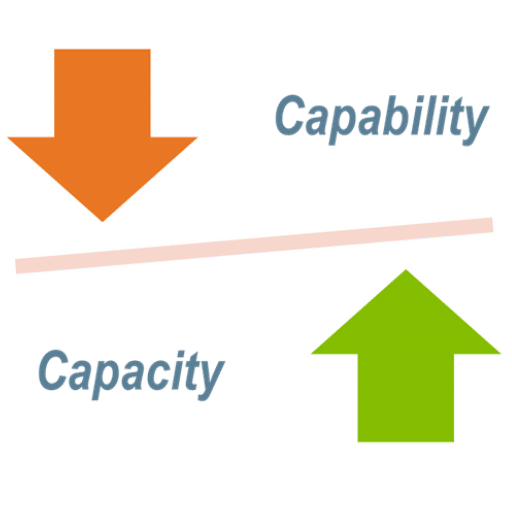
Supply chain capacity is the largest output or throughput that a whole supply chain can get during a specific time, depending on the resources it has. Among the resources are the production capabilities, the storage limitations, and the transportation networks. Proper capacity management will allow the supply chain to satisfy the present demand and, at the same time, have the flexibility to adapt to the future. Main factors being looked at are resource distribution, lead times, and cost efficiency to supply and demand very well.
Definition of Supply Chain Capacity
Supply chain capacity is an all-encompassing measure that brings together different facets of the supply chain. At its simplest, it indicates the highest amount of value-adding activities that a supply chain can bear under certain conditions. This requires the combination of production capacity, inventory levels, transportation facilities, and workforce productivity. The efficiency of a supply chain’s capacity relies on factors such as the accuracy of demand forecasting, the rates of equipment utilization, and the ease of disruption recovery. Moreover, capacity is affected by outside factors like market fluctuations, supplier dependability, and technology that can increase system throughput. To ensure the supply chain is strong and in sync with the company’s objectives, these elements should be balanced.
Importance of Capacity in Supply Chain Management
Capacity in supply chain management has a significant impact on the entire process by making operations flow smoothly and satisfying the customers on time. Good capacity management brings together production that is possible with the forecasted demand, thus avoiding scenarios of not utilizing or overusing the resources. It increases cost efficiency by perfecting the use of the three main components that are labor, equipment, and material flow while eliminating wastages to a minimal level.
Moreover, capacity management is a major part of the flexibility that businesses can have, and at the same time good to respond to market changes or disruptions in the supply chain easily. With the help of advanced technologies like predictive analytics and scalable systems, organizations are able to correlate demand fluctuations and make the necessary adjustments to their processes more effectively. In addition, strong capacity planning makes it possible to have good supplier relationships and dependability, thus keeping a good flow of goods and services. All in all, having an optimal chain capacity in the supply chain is the very foundation on which operational excellence and competitive advantage in the market are built.
Factors Influencing Supply Chain Capacity
Some important aspects affect the capacity of the supply chain and its overall efficacy:
Key Influencing Factors:
- Demand Variability: Consumer demand is often unstable, and this has a big impact on the supply chain capacity. The unpredictable changes, seasonal demand, and market forces require the production, storage, and transportation departments to be very flexible to prevent overstocking or running out of goods.
- Supplier Performance: Supplier’s reliability, their delivery times, and production capacities are some of the factors that directly affect how much the supply chain can meet demand. Managing supplier relationships and their locations becomes very important in terms of reducing waiting times and providing a steady supply.
- Infrastructure and Technology: Availability of high technology, like real-time tracking and data management systems, determines supply chain efficiency to a greater extent. The companies that have invested in modern infrastructure are reaping rewards in terms of both production and logistics.
- Regulatory and Environmental Factors: The need to adhere to regulatory requirements, trading policies, and environmental issues can cause supply chains to re-evaluate their strategies and to rethink the capacity planning. Tariffs, legal constraints, and sustainability targets are the main factors that determine how resources are distributed and what operational changes are made.
- Labor Availability: The availability of the workforce and the skill level of the workforce are factors that will have a direct impact on the efficiency of operations across the entire supply chain. Unavailability of labor, work stoppages, or lack of skilled workers may restrict the capacity.
- Economic Conditions: Economic trends, inflation rates, and currency changes may indirectly determine the cost of buying and thus consumer spending, making it necessary for firms to modify their capacity according to the changing market conditions.
A very deep analysis of these factors will allow the companies to deal with the weaknesses promptly and to adjust their supply chain capacity in a way that serves both operational and strategic goals.
Capacity Planning Strategies
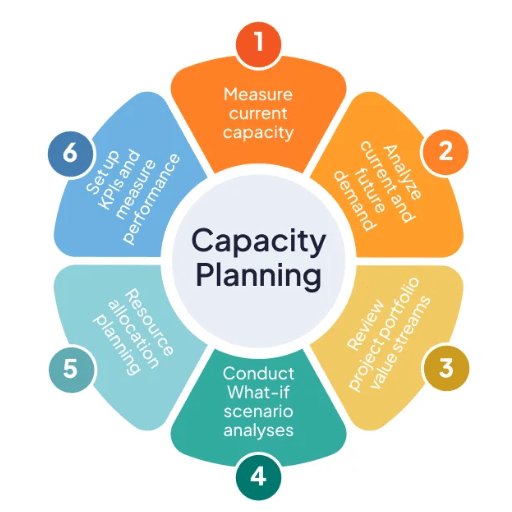
These strategies are what allow businesses to be flexible, to reduce their risks, and to achieve good operational performance over the long run.
Forecasting Demand
The combination of historical data, market trends, and predictive analytics to come up with very accurate estimations of future demand. This, in turn, helps in aligning resources with the expected needs.
Scalability in Operations
The creation of systems and processes that can be easily scaled up or down based on changes in capacity requirements is very efficient.
Resource Optimization
The effective identification and allocation of resources in such a way that waste is eliminated and operational efficiency is maximized.
Buffer Management
The holding of strategic inventory or workforce buffers to cope with the variability in demand or supply disruptions.
Collaboration Across Teams
Building up communication between the departments (like, for instance, production, procurement, and marketing) so that they all can do their capacity planning in a coherent and agile manner.
Overview of Capacity Planning
Capacity planning is, in essence, the methodical approach to finding out the resources needed to satisfy the present and future demand. It allows companies to efficiently harmonize the production capacity and the market requirements, thus cutting down the inefficiencies to a great extent and increasing the productivity to the utmost. Resource limits are usually the focal point of this process, along with demand forecasting and capacity alignment with company objectives.
Three main types of capacity planning exist, which are lead strategy, which adds capacity expecting higher demand; lag strategy, which is going to increase capacity till the demand is realized; and match strategy, which is to set a middle-ground and gradually scale up or down capacities to match demand. Effective Capacity planning relies on precise data analysis, strong demand forecasting, and the collaboration of several departments to recognize and solve the bottlenecks and thus use the resources effectively.
Besides, the modern-day capacity planning also relies on advanced technologies such as Enterprise Resource Planning (ERP) systems and predictive analytics. The mentioned technology enables the business to monitor in real-time, predict accurately, and model scenarios, thus saving the business from being reactive to the market shifting. By bringing together strategic thinking with operational agility, the organizations can not only keep on making profits but also have their great competitiveness during times of change.
Types of Capacity Planning Strategies
| Strategy Type | Approach | Advantages | Disadvantages |
|---|---|---|---|
| Lead Strategy | Add capacity beforehand | Ready for demand increases, prevents bottlenecks | Risk of overcapacity if demand doesn’t materialize |
| Lag Strategy | Increase capacity after demand rises | Limits on overinvestment costs | May disappoint customers due to shortages |
| Match Strategy | Gradual capacity adjustments | Balanced, flexible, cost-effective | Requires constant monitoring |
| Dynamic/Adjustment Strategy | Continuous monitoring and small adjustments | Maximum efficiency and flexibility | Heavy reliance on data analytics |
Lead Strategy
The lead capacity strategy is all about adding capacity beforehand to be ready for demand increases. This method makes sure that enough resources are there before the demand goes up, which in turn lowers the risks of bottlenecks, delays, or disruptions. But, there is always a possibility of having too much capacity if the demand does not come as expected, which will lead to higher operational costs.
Lag Strategy
The lag strategy is all about increasing capacity only after the demand has gone up for a certain period. This approach does not take the risk of overinvestment and thus limits the costs associated with it, since the adjustments are made in a reactive way rather than in a proactive manner. However, it can also lead to the situation where customers are disappointed because of product shortages or delays.
Match Strategy
The match strategy is the one that tries to maintain a balanced situation by gradually increasing or decreasing the capacity depending on the demand changes. It closely ties the capacity increase or decrease to the market situations, which results in a more lively and cost-effective response. This strategy not only balances the risks of having too much or too little capacity but also becomes a flexible solution for unpredictable environments.
Dynamic or Adjustment Strategy
This strategy presumes that the demand and the capacity will be monitored continuously, and the resources will be adjusted very often and only in small amounts so as to align them with the evolving business needs. It is heavy on the use of data analytics and quick decision-making in order to keep maximum efficiency and flexibility.
When organizations use these strategies, they can select their capacity planning according to operational priorities, market conditions, and risk tolerance, which in turn guarantees efficient resource allocation and better performance.
Implementing Effective Capacity Plans
Organizations that want to implement effective capacity plans should follow a process consisting of structured steps that will not only maximize their efficiency but also help them to adapt to changing business needs. The following are the main steps:
- Assess Current Capacity and Demand: Conduct a thorough analysis of current resource utilization and projected demand. The analysis should identify available infrastructure, staff, and technology while also looking at historical data and market trends to make predictions about future requirements.
- Set Clear Objectives: To realize this, establish measurable goals that will be in line with the overall business priorities. The objectives should mention the desired outcomes, like cost reduction, less downtime, or improved service delivery.
- Utilize Accurate Forecasting Models: Use data analytics, machine learning, and predictive models to get the most accurate demand forecasts. This means that the capacity plan will be able to deal with the changes in demand and react to them with accuracy.
- Develop Scalable Solutions: Create systems and processes that will be able to scale up or down according to the workloads. Among the proactive solutions are cloud-based technologies, elastic infrastructure, and modular team structures, which can efficiently support both growth and shrinkage.
- Monitor and Adjust Continuously: Install real-time monitoring tools that will be able to keep track of the performance metrics and resource utilization. The plan should be reviewed frequently and modifications made whenever necessary to maximize efficiency and resolve the new problems that have arisen.
- Engage Cross-functional Teams: To align the entire organization, it is necessary that there is cooperation between the different departments, for instance, operations, finance, and IT. Good communication and sharing of responsibilities will contribute positively to the success of the capacity planning process.
By taking these steps, organizations will have capacity plans that are not only dynamic, data-driven, and resilient but also perfectly aligned with their business objectives and hence, no risks of over- or under-utilization.
Capacity Management in Supply Chain

Capacity management in supply chains is basically about aligning production capacities, storage capacities, and logistics with expected demand. This allows the company to keep the resources used to a minimum level without sacrificing the customers’ wants. The main practices of this management include precise demand forecasting, real-time tracking of capacity usage, and timely changes of production or inventory amounts. Companies that do capacious management well to the extent of operating very good demand/cost balance, which in return gives them the privilege of making customers happy, having to handle less, and being flexible enough to respond to current market conditions at the same time.
Role of Capacity Management
Capacity management is an essential factor in making sure that an organization’s resources are used in a way that meets the present and future business demands. It allows companies to produce according to market demand, which in turn, facilitates optimal resource allocation and less waste. Capacity management is responsible for ensuring that there is no over-production and thus, it contributes to operational efficiency, lowers downtime, and helps in maintaining the delivery performance to the customers. In addition, it utilizes predictive analytics and data-driven insights for signaling shifts in customer behavior and market trends, which then lead to proactive changes in production or service capabilities. This approach not only leads to better cost efficiency but also increases scalability, which means that the organizations are able to cope with the changing market conditions very well and thus, remain competitive.
Tools and Techniques for Capacity Management
Incorporating a mix of tested tools and techniques that are capable of tracking, examining, and improving resources underlie effective capacity management. Among the main tools is capacity planning software, which forecasts future resource requirements through data-driven modeling, and the resource management platforms that give an up-to-the-minute look at the loads and the performance metrics. Methods like load balancing make sure that there is an even distribution of the tasks across various systems, thus avoiding bottlenecks, while just-in-time (JIT) resource allocation helps to cut down on waste by aligning supply with demand. Moreover, scenario analysis is an important technique for the consideration of various “what-if” situations, allowing the organization to be ready for possible disturbances or increases in demand. These tools and techniques not only help but also work together in a way that they can improve and get the most out of the operations, lower the costs, and bring the capacity into line with the strategic goals.
Essential Tools and Techniques:
- Capacity Planning Software: Forecasts future resource requirements through data-driven modeling
- Resource Management Platforms: Provides real-time visibility of loads and performance metrics
- Load Balancing: Ensures even distribution of tasks across systems
- Just-In-Time (JIT) Resource Allocation: Reduces waste by aligning supply with demand
- Scenario Analysis: Prepares organizations for potential disruptions or demand increases
Challenges in Capacity Management
Capacity management is full of issues that organizations must deal with to keep the flow of operations smooth and, at the same time, respond to varying demands. One of the main issues is the demand forecasting, which, if not done accurately, can result in over-provisioning or under-utilization of resources, both leading to cost increases. On top of it, there is the challenge of choosing between short-term flexibility and long-term resource planning in a context where demand is quite unpredictable, especially in the case of such industries.
The integration of capacity planning with dynamic supply chains is another challenge that is no less significant. In these supply chains, disruptions like material shortages or delays in logistics may affect operations to varying degrees. Furthermore, companies often face the problem of bottlenecks that stem from poor resource allocation or misaligned processes in production systems. The balancing act between human resources on one side and the technology and infrastructure capabilities on the other side is already very complex, especially in the context where digital transformation is speeding up the adoption of new systems.
To sum up, it is still a challenge to ensure that the organization is scalable while keeping cost efficiency and operational resilience. Companies have to really think through their capacity strategies so they can be ready to adapt and react quickly during times of sudden demand increases or in cases of unprecedented disruptions, like those caused by global events. One of the prerequisites for overcoming these challenges is the use of predictive analytics, advanced tools, and cross-functional coordination to ensure that all levels of capacity planning are aligned.
Resource Planning and Inventory Management

Strategically projecting potential future demand and efficient handling of processes are the key factors in resource allocation and stock management to control the amount of stock and the availability of resources efficiently. The use of JIT inventory systems reduces waste since it coordinates the ordering of materials with production timelines. On top of that, the use of the software for inventory management can yield highly accurate and efficient data by providing live information. It will be hard to adapt to changes in demand if the various departments are not working together and have different objectives. Combining these practices allows businesses to cut expenses, avoid stockouts, and enhance their entire operational efficiency.
Integrating Resource Planning with Capacity Management
Successfully tying resource planning to capacity management means coordinating the allocation of resources to their production capabilities so that the whole process runs smoothly and efficiently. Resource planning takes care of providing the right materials, workers, and machines, and on the other hand, capacity management keeps tabs on the firm’s capability to satisfy production requirements. With the help of Enterprise Resource Planning (ERP) systems, companies get to link forecasting with current resource data, thus allowing for easy planning and the prevention of bottlenecks. Among these strategies are demand forecasting to prepare for the workload, capacity scheduling to align resources with demand, and performance metrics analysis to spot the areas that need improvement. The combined power of these disciplines not only leads to less time lost but also, as a side effect, increases the customers’ contentment because of the deliveries being on time and the production flow being constant.
Inventory Management Techniques for Better Capacity Utilization
Efficient inventory management is immensely significant for maximizing capacity utilization and keeping up with operational effectiveness. Among the key methods are putting into practice Just-In-Time (JIT) inventory systems to get rid of excess stock and to lower holding costs, applying ABC analysis to focus on inventory depending on its value and usage, and using demand forecasting tools to ascertain inventory needs with precision. The introduction of real-time inventory tracking systems not only increases visibility but also enables prompt decision-making to tackle any discrepancies. Furthermore, companies can gain by introducing safety stock tactics to alleviate the risks of stockouts and to maintain a constant supply of products even in the case of demand variations. These measures are the main drivers of improved resource allocation, waste reduction, and efficient operations.
Impact of Warehouse Management on Capacity
Effective warehouse management considerably enhances the output of the whole system and storage capacity. Using sophisticated inventory control software, the companies can put their storage space to the kiting by means of proper slotting and layout strategies. Methods like ABC analysis that give priority to the items in demand reduce their picking time and thus increase the throughput. Besides, the installation of vertical storage systems and modular shelving units gives the warehouses the flexibility to adjust their capacity according to the varying inventory levels, without needing to construct extra space. The deployment of technologies such as robotics and automated storage and retrieval systems (AS/RS) not only leads to further enhancement of space but also makes the processes faster and minimizes human errors that consume space are minimized. All these techniques together empower companies to satisfy the rising demand wisely by not increasing their expenses and also ensuring the accuracy of the operations.
Procurement and Operations Management

Procurement assists significantly at the operational front through the acquisition of necessary products and services at optimum cost and quality. This includes activities like picking suppliers, haggling over prices, and managing contracts that are supportive of the company’s aims. Efficient procurement shortens lead times, avoids interruptions in the supply chain, and guarantees a regular supply of resources, thus allowing production and service delivery to take place without a hitch. By establishing close ties with suppliers and tapping into market knowledge, procurement becomes a partner in maintaining cost control and operational efficiency.
Linking Procurement to Capacity Planning
Procurement and capacity planning are closely connected processes that together guarantee the realization of demand for the organization in an efficient manner and at a lower cost. The capacity planning function determines the future requirements of the company’s production in terms of quantity and time, and procurement secures the necessary resources to meet those targets on time. Moreover, if the companies’ procurement strategies were made to follow the capacity forecasts, they would be able to forewarn the bottlenecks, prevent the shortage of resources, and thus maintain operational continuity.
The frequent interaction between procurement and capacity planning has usually been supported by the use of data-driven tools and demand forecasting techniques. The procurement department can make changes in their supply strategies according to the capacity requirements so that there is neither too much nor too little stock – in this way, they will have direct influence on inventory management and cost control. Besides, long-term supplier contracts and predictive analytics ensure that the procurement department is always in sync with the production needs, thus making it easier to adapt to the changes in the market. The procurement and capacity alignment bring about resilience in the supply chain that enables companies to operate at their highest efficiency and provide the best possible service even under adverse conditions.
| Integration Aspect | Procurement Role | Capacity Planning Role | Combined Benefit |
|---|---|---|---|
| Resource Forecasting | Secure necessary materials and services | Determine future production requirements | Prevents resource shortages and bottlenecks |
| Inventory Management | Adjust supply strategies | Align with capacity requirements | Optimal stock levels, cost control |
| Supplier Relationships | Long-term contracts, analytics | Production needs synchronization | Supply chain resilience and flexibility |
| Market Adaptation | Flexible supply strategies | Dynamic capacity adjustments | Operational efficiency in changing conditions |
Operations Management Practices to Enhance Capacity
My enhancement of capacity in operations management is primarily through the adoption of lean methodologies, which allow for waste elimination and process streamlining. My reliance on advanced forecasting tools enables the accuracy of demand prediction, which in turn supports resource allocation in an efficient manner. I also give precedence to the flexibility of the workforce through cross-training and optimization of the assignment of work hours, which in turn quickens the adjustment to demand fluctuations. The cooperation with suppliers and using scalable technologies will also help the process in terms of achieving capacity increase, whilst being economical at the same time.
Key Operations Management Practices:
- Lean Methodologies: Eliminate waste and streamline processes
- Advanced Forecasting Tools: Enable accurate demand prediction and resource allocation
- Workforce Flexibility: Cross-training and optimized work hour assignments
- Supplier Cooperation: Build strong partnerships for capacity enhancement
- Scalable Technologies: Implement systems that can grow with demand
Case Studies on Successful Capacity Management
These are examples from different companies that can supply different ways for aligning operational capacity with demand, and thus showing the role of data analytics, flexibility, and technology in the realization of optimal efficiency and cost-effectiveness.
Amazon’s Dynamic Supply Chain Management
Amazon is a good example of effective capacity management through its excellent forecasting and cloud-based systems. The customer data is a huge bunch that Amazon is able to analyze and, accordingly, set up inventory levels at the distribution centers. It includes the deployment of scalable warehouse automation, which comprises robotic picking systems that can cope with the varied demands around peak times like holidays. This method shortens the timeframes for deliveries and maximizes the use of resources worldwide.
Toyota’s Lean Production System
The decisive factor of Toyota’s capacity management success was its adoption of the Just-In-Time (JIT) production methodology. Waste is reduced and efficiency is enhanced by solely utilising the production schedules that are very closely matched with the demand, and by the very low inventory levels that are kept. Also, the company uses flexible manufacturing systems (FMS) that allow it to quickly change assembly lines and that can accommodate changes in production volume or model type without long downtime.
Delta Airlines’ Workforce Optimization Strategy
Delta Airlines is on the cutting edge of the industry with its data-driven scheduling and cross-training programs that keep its workforce flexible. With the help of advanced analytics, the airline is able to pick the exact time when passenger trends will change, and thus it can allocate the appropriate staff. The training of staff, for instance, of the flight attendants and ground staff, in such a way that they can easily switch places or transfer positions, would mean that the areas where the company’s resources are needed most would get quick attention and consequently, there would be no delays or the quality of service would not be affected during volatile periods.
| Company | Industry | Key Strategy | Technology/Method Used | Results |
|---|---|---|---|---|
| Amazon | E-commerce/Logistics | Dynamic Supply Chain | Cloud-based systems, robotic automation | Shorter delivery times, optimized resources |
| Toyota | Automotive Manufacturing | Lean Production/JIT | Flexible Manufacturing Systems (FMS) | Reduced waste, enhanced efficiency |
| Delta Airlines | Aviation | Workforce Optimization | Advanced analytics, cross-training | Flexible staffing, maintained service quality |
Summary and Conclusion
Effective capacity planning stands as the cornerstone of resilient and efficient supply chain management in today’s dynamic business environment. Throughout this comprehensive guide, we’ve explored the multifaceted nature of capacity planning, from understanding the fundamental concepts of supply chain capacity to implementing sophisticated strategies that align resources with demand forecasts.
The importance of capacity management cannot be overstated—it directly impacts operational efficiency, cost control, customer satisfaction, and competitive advantage. Organizations that master capacity planning are better positioned to navigate market fluctuations, respond to disruptions, and capitalize on growth opportunities while maintaining optimal resource utilization.
We’ve examined the critical factors influencing supply chain capacity, including demand variability, supplier performance, infrastructure and technology, regulatory requirements, labor availability, and economic conditions. Understanding these elements enables businesses to proactively address weaknesses and adjust their capacity strategies to serve both operational and strategic objectives.
The various capacity planning strategies—lead, lag, match, and dynamic adjustment—offer different approaches to managing resources based on organizational priorities, market conditions, and risk tolerance. The implementation framework outlined in this guide provides a structured pathway for organizations to assess current capacity, set clear objectives, utilize accurate forecasting models, develop scalable solutions, and continuously monitor and adjust their plans.
Integration across functions is paramount for success. The seamless connection between capacity management, resource planning, inventory management, procurement, and operations management creates a cohesive system that maximizes efficiency and minimizes waste. Modern technologies, including ERP systems, predictive analytics, cloud-based platforms, and automation, serve as enablers that transform capacity planning from a reactive process to a proactive strategic advantage.
The case studies of Amazon, Toyota, and Delta Airlines demonstrate that successful capacity management transcends industry boundaries. Whether through dynamic supply chain management, lean production methodologies, or workforce optimization strategies, these organizations showcase the transformative power of aligning capacity with demand through data-driven decision-making and technological innovation.
However, capacity management is not without its challenges. Organizations must navigate the complexities of demand forecasting accuracy, balance short-term flexibility with long-term planning, integrate capacity planning with dynamic supply chains, eliminate bottlenecks, and maintain scalability while ensuring cost efficiency and operational resilience. Overcoming these challenges requires a commitment to predictive analytics, advanced tools, and cross-functional coordination.
As markets continue to evolve and business environments become increasingly complex, the role of capacity planning in supply chain management will only grow in importance. Organizations that invest in developing robust capacity planning capabilities, leverage emerging technologies, foster collaboration across teams, and maintain flexibility in their approaches will be best positioned to thrive in competitive markets.
The journey to capacity planning mastery is continuous, requiring ongoing refinement, adaptation, and improvement. By applying the strategies, methodologies, and insights presented in this guide, organizations can transform their supply chain operations, achieve operational excellence, and maintain a competitive edge in an ever-changing marketplace. The future belongs to those who can effectively balance resources, production capabilities, and demand forecasts to create resilient, efficient, and responsive supply chains that deliver value to customers while driving sustainable business growth.
Key Takeaway: Capacity planning is not just a technical exercise—it’s a strategic imperative that requires the integration of data analytics, cross-functional collaboration, and technological innovation. Organizations that master capacity planning position themselves for long-term success by creating supply chains that are both resilient and agile, capable of meeting current demands while adapting to future challenges and opportunities.
Reference Sources
Improving Supply Chain Performance of a Start-Up Company: A Case Study of Avakino Limited
Theoretical Approaches to AI in Supply Chain Optimization: Pathways to Efficiency and Resilience
Frequently Asked Questions (FAQs)
What does capacity management mean in the context of supply chain management?
The concept of capacity management in supply chain management is the planning and controlling of production capability to ensure that a company is always ready to meet customer needs, but without incurring excess costs. It is a cycle of analyzing capacity and optimizing it so that the resources can be effectively aligned with the production schedule.
In what ways can companies enhance their supply chain capacity?
By adopting advanced management software that will enable the company to forecast demand more accurately, anticipate the needs of the customers, and devise alternative plans, companies can enhance the capacity of their supply chains. After capacity analysis and adjustment of production processes accordingly, companies can ensure that they are producing the amount of goods that the market requires while at the same time lowering their costs and increasing the quality of service delivered.
What are the key methods of effective capacity planning?
Effective capacity planning methods require the assessment of both present and future demand, and the use of historical data to support decisions. Companies should concentrate on capacity in small increments, thus allowing flexibility in production management. Furthermore, businesses should adopt both lead and lag strategies to allocate resources in line with the varying demand levels.
What are the implications of demand planning for the overall capabilities of the supply chain?
Demand planning complements the overall abilities of the supply chain in a significant way by giving the company a view of the customer’s needs and forecasting future sales. If the company can accurately predict demand, then it can not only adjust the output of its production line but also improve its inventory management practices to the extent that it gets to keep the maximum output without facing the problem of either stockouts or overproduction.
Why are contingency plans vital in capacity management?
Contingency plans are of utmost importance in capacity management since they are the business’s preparedness for the unexpected changes in demand or supply. Not only do the plans help in keeping supply chains strong and flexible, but they also help in coping with quick changes in the market, which eventually lead to stronger operational frameworks.
How does production management affect the overall capacity?
Improved production management will lead to higher overall capacity as a result of the implementation of the changes in production processes that will drive inefficiencies out of the production line. It is by engaging in the cycle of continuous improvement and capacity-building that companies can boost their service levels and thus the amount of customer demand met, while at the same time reducing operational costs.
What are the different types of capacities in the supply chain management?
Theoretical capacity, actual capacity, and maximal output are some of the measurements of capacity in supply chain management. To gauge their production potential, companies rely on these indicators, but these also help in determining how effectively the companies will be able to satisfy the demand of their customers. It is necessary to have a clear idea of the measures to make proper resource allocation and sync the operations with the demand.
In what ways do companies ensure they will satisfy customer demand?
Robust demand and capacity planning strategies are among the most important measures companies take in order to be sure that they will satisfy customer demand. This involves, among other things, analyzing the historical demand patterns, adjusting the levels of inventory, and using resource management techniques to create a balanced production schedule. The consequent elasticity of the business and responsiveness to the changes in the market will be assured.