Introduction to Plastic Pallet Stacking
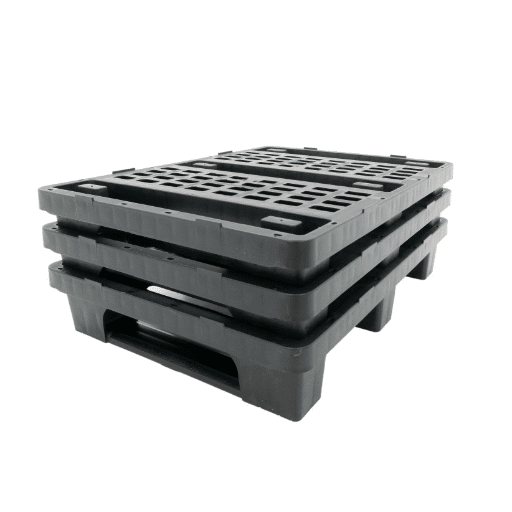
Plastic pallet stacking refers to an arrangement of goods made with the help of plastic pallets in a manner that is stable, safe, and allows the most effective use of storage space. Application of proper stacking methods is essential in order to avoid spoilage of materials, minimize accidents at work areas, and facilitate handling operations. It is important to ensure no overload on one part of the load, no overestimation in height of stacking over the authorized one, and pallets that are new for storage and transportation are engaged. The observance of the consequences of such guidance developed by a manufacturer and other relevant safety regulations ensures not only effective operations but also the safety of employees.
⚠️
Importance of Proper Stacking for Warehouse Safety
Products inside a warehouse must be properly stacked in order for the warehouse to remain in good working condition as well as safe. The option of wrongly stacking items may cause their fall, which may result in injury, loss of product, or time. Therefore, it is very necessary to apply properly in line with OSHA and other specifications, the stacking methods to the practice.
The other key actions include:
- The usage of stable pallets
- Ensuring weight is stacked more on the lower shelves, where the center of gravity will be low
- Respecting the stacking height to avert the risk of rotted wood in extended stacking
- Ensuring aisles and tracks are never blocked so that proper handling of goods and quick reaching is easy
There should be periodic checks and training of the workers to prevent accidents, avoid breaches, and foster a working environment that is safe for everyone in the warehouse.
Operational Efficiency and Cost Savings
Attaining operational effectiveness and cutting down the costs associated with storage and retrieval functions requires streamlining activities, saving on resources, and making use of available technology. A major way of enhancing performance is through the deployment of WMS, which assists in the filling of shelves, helps in streamlining order processing, as well as offer a clear picture of the system at any time. With the help of such systems, work-related errors become minimal, labor costs incurred are low in comparison, and the extent of work done is better.
Lean Techniques
Incorporation of lean techniques, one of which is the just-in-case inventory management, lessens the carrying of excesses and the costs that come with those excesses.
Energy Savings
Use of LED bulbs, energy-saving devices, and clean energy sources reduces the costs of services provided by utilities.
Maintenance
Maintenance of equipment and infrastructures helps lengthen life expectancy and avoids expensive repairs, while consistent workforce training saves expenses economically over a long period of time.
Types of Plastic Pallets and Their Impact on Stacking

When it comes to plastic pallet stacking, the categories of plastics constitute strategic criteria regarding the ability to stack and carry the load.
The type of pallet chosen impacts the height of the pallet stack, how sturdy the stack will be, and how the load will be secured. Weight tolerance and other factors, like material strength evaluation, depending on its usage, should be taken into consideration in order to efficiently utilize storage systems.
✅ Best Practices for Safe Stacking Methods
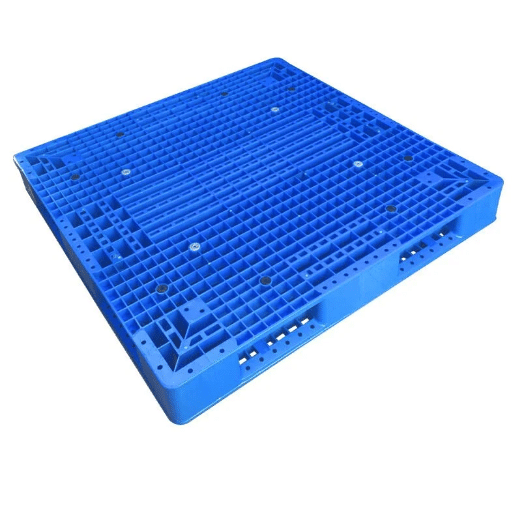
While storing the items using safety plastic pallet stacking strategies, several things like the placement of weights, the stage of the pallets, and the firmness of the load must be prioritized in order to minimize any possible risks to harm or damage. Several factors have to be considered:
- Payloads with higher loads at the base ensure a low center of gravity, besides being less likely to damage sharp objects
- Pallets have to be checked first to make sure they are in good condition
- Pallet spacing should also be observed to prevent the weight from being concentrated in one spot and toppling or destroying the other
- Counting the numbers on particular storage shelving units or areas, one has to follow weight bridging and height restrictions
- One also needs to comprehend the finer details of stacking operations so as to make sure that things go as per the laid-down way, and also for purposes of reducing risks
Step-by-Step Guide to Column Stacking
Most industries where materials have to be maintained make use of particular methods and packaging for proper arrangement and structure. Appropriate column stacking minimizes hazards, damage to the materials, and the suitable usage of space. There are a few strategies to get column stacking going, which are as follows:
Look for Sturdy Ground
Ensure that all the stacked goods are at their lowest level possible — a flat and firm ground which can withstand the weight of all the materials added together. They affect the stability of the stacks of materials, enhancing the chances of the stacks falling.
Employ the Use of Pallets or Bases
Always prepare the stacks on strong pallets or any relevant bases. Therefore, this approach also helps to remove any damage from the materials that are right at the bottom of the stack, as it redistributes the material weight evenly and eliminates any pressure points.
The Layers Should Be Configured and Fitted Together
Perform plastic pallet stacking in straight and clear-cut rows and columns, assuring that each level matches the level below it. To enhance stability further, such layers can be interlocked or overlapped to avoid items from shifting within the stack or during its transportation.
Control the Height of the Stack and Its Weight Loads
Observe the pertinent height and weight limits applicable to the materials and the storage system in use. Do not overload the stack to the extent that it will tip over and collapse.
Ensure the Stability of the Stack If It Requires It
Wrap the items or otherwise hold them together, especially if the stack is intended to be transported. This is especially the case for those objects that are not regular in shape or light.
Do Pre-Checks
Ensure that the stacks do not tilt or fall, for that matter, for a while, keeping checks. Take corrective action whenever there is a sign of movement, leaning, or deterioration of the structure.
Facilities can enhance material stacking systems in the following way, ensuring safer ways of operation, minimizing damage to merchandise, and making better use of available narrow spaces.
Interlocking Stacking Techniques Explained
Additionally, it involves the arranging of materials to form alternating or overlapping layers, thereby ensuring the arrangement is stable and firm. This technique makes the loads stable by aiding in the even distribution of weight, thereby decreasing the number of stress points. Most commonly, the rectangular, box-shaped, or brick-like items are arranged in such a way that the alternate layers of the item fit in the layers that have been placed firmly in place below, thus discouraging the possibility of these layers sliding out of place.
In summary, plastic pallet stacking has advantages such as increased structural integrity of the stack, decreased chance of the stack falling over while being transported, and efficient use of storage bodies. An application of this technique entails, quite naturally, orientation of every stratum in the same direction together with the use of stacking aids such as pallets to hold the load in a way that there is no greater concentration of weight at points throughout the stack. Finally, interlocking serves a positive purpose in compact storage situations and transport challenges, including operational mobility consolidated with safety measures.
Plastic pallet stacking involves following these principles and conducting regular inspections or making modifications, which guarantee safety, operation, and minimal damage to the material in its various applications, particularly concerning either industry or logistics.
Comparing Stacking Methods for Different Pallet Types
Choosing a stacking method involves several factors, including the design and material of the pallet, which are directly related to the stability and loading capacity.
- Wooden pallets are best suited for the block stacking method because of the structural strength and rigidity of the pallet construction. This method is most appropriate in warehouses where the load to be stored is heavy and even, requiring firm stacking.
- Column stacking, however, is one of the most beneficial techniques for plastic pallets. The smooth surface and even size of these pallets help to stack them up perfectly without undesirable lateral movement. Moreover, plastic pallets do not get affected by environmental conditions like moisture, thereby making them perfect for areas that require cleanliness and stability.
- Interlocking stacking is most common when dealing with lightweight and fragile pallets such as those used for food handling or pharmaceuticals. This helps in maintaining weight balance and improving support, especially in situations where the pallets are in motion.
No matter the design of the plastic pallet stacking ones, wise attention to the arrangement of the pallet will minimize the accident rates, facilitate the movement of goods, and optimize the use of the space.
Understanding Load Capacities and Height Considerations

Cargo limitations, as well as risks of carrying oversize, help determine the amount and location of loads. Manufacturers and any existing industry standards triage the number of layers in the paper orientations. Know the weight capacity of all the other materials and how they need to be used. High temperatures can also limit the height of load towers and stacks due to conditions (e.g., overhead ceilings and breaches) that cannot be accommodated. It is not a good practice to use plastic pallet stacking for inclined loads in excess of the manufacturer’s recommendations for the shelf height. OSHA regulations and any other applicable safety regulations must be followed in all instances in order to ensure smooth operations without any injuries.
Maximum Load Capacities for Various Plastic Pallets
The weight that plastic pallets can withstand is a function of several variables, such as the composition of the material, the design, and the intended purpose. There are three major weights of the plastic pallet:
This refers to the maximum weight that a plastic pallet can carry while it is not moving. Normally, this tends to vary from 3,000 to 30,000 pounds, depending on the design of the pallet and its size.
Expressed as the maximum weight a plastic stacking pallet can carry in motion or being lifted, for example, by a forklift. This ranges from around 1,250 to 5,000 pounds based on the material and the design of the plastic pallets.
This is the ability that a plastic pallet can bear in a rack without any other support. Consistent racking strength lies between 1,000 and 4,000 pounds.
Relevant factors have to do with the resin (e.g., HDPE or PP), production method (e.g., injection molding or thermoforming), and strengthening mechanisms like steel rods. Usage of any material should follow the related recommendations from the manufacturers and existing regulations for the relevant purpose. This includes balancing out the weights used and not surpassing the limits pointed out within the structure.
Height Considerations: Safety and Stability
There are several things that need to be taken into account, a few examples being the center of gravity, the type of base, and even the weight and how it sits in the machinery when evaluating the height factor and safety enhancements, because they promote stability. The higher the center of gravity, the easier it is for the object or any equipment to be tipped over, especially due to external forces such as wind, vibrations, or even uneven ground. It helps to even widen the base of the system or design, as well as use anchoring systems or even counterweights to increase stability. Further, industry regulations like the ones enforced by OSHA for equipment used at the workplace or engineering principles must also be observed to keep it safe. Frequent inspections and repairs are necessary to avoid degradation of stability that always occurs due to use and or damage. Make it a habit to read the relevant safety provisions available in technical data sheets that accompany the case at hand.
⚖️ Impact of Weight Distribution on Stacking Safety
To maintain the stability of the plastic pallet stacking and prevent any collapse, the weight must be evenly distributed. It will create an imbalance in the weight, causing it to tilt or topple over the sides or cause it to blow away.
- Heavier materials need to be at the lower level so that the center of gravity is closer to the floor, and the lighter ones are placed at the top.
- Use load diagrams and stacking instructions from the manufacturers.
- Stack designs must take into consideration measures to avoid destabilization caused by factors such as wind, vibrations, and impact forces.
Best practices that include symmetrical stacking and organized loading, and scrupulously create other practices that may constitute a hazard within the system.
Benefits of Using Plastic Pallets for Stacking Stability

Stacking plastic pallets, along with all other types, is much easier to secure additionally due to their even form, mechanical strength, and immunity to the elements.
- This is not the case with wood pallets since the size of these plastic pallets does not vary under any circumstances, as opposed to wood, which can twist and split to facilitate the processes of uneven stacking.
- The nature of plastic allows for the use of higher stresses even with frequent usage, noise, and subjecting to impact, which makes them very appropriate for heavy-duty industries.
- Plastic pallet stacking is not disturbed by either moisture or decay, hence most of all it is mostly helpful in carrying out loads under such changing climatic conditions.
- This further ensures and enhances protection against the possibility of displacement of load, as well as facilitates stacking in different activities.
Comparative Analysis: Plastic vs. Wooden Pallets
| Parameter | 🔵 Plastic Pallets | 🟫 Wooden Pallets |
|---|---|---|
| Block Stack | Stable, moisture-proof | Stable, rot-prone |
| Rack Stack | Strong, durable | Moderate risk of warp |
| Pinwheeling | Effective, lightweight | Effective, heavier |
| Load Capacity | High | Moderate |
| Durability | Long-lasting | Prone to damage |
| Moisture Impact | Impervious | Susceptible |
| Reusability | High | Moderate |
| Environmental | Recyclable | Biodegradable |
Durability, Longevity & Environmental Considerations
🏭 Durability and Longevity
In any scenario, plastic pallets are in great demand due to their resilience to water, chemical elements, and bruises. Unlike wooden pallets that wear and tear with the passage of time, plastic ones last longer as they don’t splinter or break down, making them appropriate for use time after time within harsh conditions. In my view, their longevity and low cost-maintenance do offer a practical components solution which is highly dependable for those who have durability as the most important aspect.
♻️ Recycling Plastic Pallets
In today’s world, recycling is one of the most effective means of protecting what is left of our environment. It helps in curbing the wastage of plastic pallets. At least two materials that are recycled more than others include High-Density Polyethylene (PE) and Polypropylene (PP), which constitute most plastic pallets. When these pallets reach the end of their useful life, they can be crushed again and remade as brand new pallets or other useful plastic products.
This contributes to managing the waste and also abating the demand for the materials. More so, using recycled plastic decreases the necessity of obtaining new ultra-pure plastic, which insulates the saving of energy through the reduction of emissions. A large number of industries and recyclers have included take-back and retrieval services in their operations to make recycling easier and ensure that appropriate recycling and reuse occur. Recycling helps sustain a company’s operations and ensures they are as efficient as possible without damaging the environment, in particular where the supply chain involves plastic pallet stacking.
Reference Sources
“Investigation of pallet stacking pattern on unit load bridging”
This study analyzed five different pallet stacking patterns, ranging from column stacking to fully interlocked stacking. It focused on how these patterns affect unit load stability and bridging.
“Design and Analysis of Manual Pallet Stacker by Using FEM Method”
This study explored the design and functionality of a manual pallet stacker, emphasizing its lightweight and versatile nature. It also discussed the stacker’s ability to operate in tight spaces.
“Design, optimization, and manufacturing of wood–plastic composite pallet.”
The research highlighted the advantages of wood-plastic composite pallets over traditional wooden pallets, including durability and cost-effectiveness despite higher initial costs.