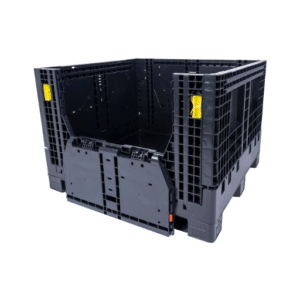
Understanding Pallet Durability

Pallet durability is influenced by several key factors: composition of material, load capacity, and environmental conditions. Materials like wood, plastic, and metal each have their unique sets of pros and cons. For instance, wooden pallets are cost-efficient, yet they rapidly lose strength in humid climes, while plastic pallets resist moisture but crack when subjected to very large loads.
Load capacity means the maximum weight that a pallet can withstand safely; underload, therefore, will result in damage, thereby reducing the life of the pallet. And, if the pallet is subjected to harsh environments such as moisture, fluctuating temperatures, or aggressive chemical agents, it will wear out faster and thus have a reduced life.
Choosing the right pallet accordingly to application and environmental conditions will provide buyers more life for their pallets and thus improve their operational efficiency.
What is Pallet Durability?
A pallet needs to be durable enough to retain its structural configuration and functionality under all operational and environmental conditions over time, thus affecting the longevity of the pallet. Other durability factors include material composition, design, maximum load, and environmental exposure. Wood, plastic, and metal are typical materials, but from a durability standpoint, each has peculiar qualities to consider.
A wooden pallet, which constitutes about 90% of the entire global pallet market, is usually said to have a life span of 4 to 5 years in general use, but is prone to moisture and pest damage. Plastic pallets are rated to withstand environmental stressors better-things like moisture or chemicals-and can last as long as 10 years, and for that reason, they are favored in industries where hygiene standards must be strictly maintained. Due to their increased cost, metal pallets rank as the most expensive; however, they stand supreme in durability and are usually the choice for special applications under heavy loads or harsh environments.
The key ingredient to sustaining a pallet’s long service life rests in such factors as the load position. Uneven load distribution may lead to stress points resulting in warping or cracking. In addition, pallets may deteriorate quickly if exposed to frying temperatures or corrosive chemicals. Optimum durability calls for an inspection routine, proper handling, and prior selection of pallet material and design to suit the intended operational requirements.
Much emphasis is placed on research and development to bring about enhanced durability in pallet manufacturing. By way of example, innovations in composite materials and reinforced plastics now offer better strength-to-weight ratios and wear resistance. These developments help the business reduce the cost associated with replacing pallets, while guaranteeing that logistics operations are conducted sustainably.
Factors Affecting Durability
Pallets’ durability undergoes the effects of material composition, environmental conditions, usage patterns, and maintenance practices. Material being on the higher echelon of consideration, hardwood pallets, such as oak and maple variants, resist impacts and wear more so than their softer counterparts, like pine. Yet in regard to ultimate durability, plastic pallets – especially those made of HDPE or polypropylene – stand above the rest through their resistance to moisture, chemicals, and extreme temperatures.
Environmental conditions also contribute largely. It has been observed by some studies that high humidity or large temperature variations can accelerate the degenerative process of a material, more so in untreated wooden pallets. Plastic pallets have a certain amount of resilience to this, whereas under very prolonged freezing temperatures, they tend to become brittle. Reinforced composites, on the other hand, have shown better results in resisting the loss of structural integrity under severe conditions.
Another major factor affecting their lifespan is how the pallets are utilized. Overloading, continuous impact from forklifts, and wrongly stacked pallets all contribute to an increase in wear and a decrease in operating efficiency. For example, the statistics show that warehouse forklift operations mishandling is responsible for approximately 30% of damage to pallets.
Finally, regular maintenance practices such as loading the pallets, inspecting them for any damage, and replacing broken segments can increase a pallet’s useful life by up to 40%. Repair-friendly pallet designs, such as modular plastic pallets, allow maintenance to be carried out at the least cost. Along with this, the above factors point to the importance of matching material selection, operating parameters, and maintenance practices to application-specific requirements in order to maximize their durability.
Importance of Durability in Logistics
Durability comes in very handy in logistics. It affects operational efficiency, costs, and being environmentally friendly. Solid and long-lasting materials tend to prevent equipment from breaking down, thus avoiding a break in the chain. According to recent statistics in logistics, more durable pallets may save about 25% of the cost of replacement over five years. Following this, greater advances in material sciences, such as HDPE and reinforced composite pallets, have further increased resilience to allow survival against heavy loads and extreme environmental conditions.
Durability is something strongly linked to sustainability goals because longer-living equipment leads to less waste generation of wastes and decreased demand for virgin material production. According to research, opting for more durable crates that can be reused in food logistics decreases packaging waste by up to 60%. These results serve to cut operational costs and show alignment with the industry trends toward greener methods. Therefore, durability from the choice of materials, engineering, testing, and quality assurance must be considered for any modern system in logistics aiming to balance performance with sustainability.
Testing Methods for Pallet Durability

To examine the endurance of a given pallet, several tests are undertaken to confirm structural integrity and performance under a variety of conditions:
Compression Test
Tests the ability of the pallet to support vertical loads and resist deformation or structural failure.
Drop or Impact Test
Measures resistance when subject to sudden impacts or drops during handling and transportation.
Bending Test
Checks the flexibility and strength of pallets subjected to a central load or loads evenly distributed.
Environmental Testing
Exposure to varied temperatures, humidities, and other environmental factors simulates a setup for measuring long-term material durability and stability.
Loader Testing
Drop test using both static and dynamic conditions to determine maximum capacity, to confirm safety, and to see if it meets set industry standards.
Each test offers important information about the performance and life span of the pallet, allowing for proper decisions on material selection and design improvements.
Overview of Durability Testing Standards
Hence, it becomes necessary to conduct durability testing on pallets, assuring their guaranteed performance when used under operational instances of stress. Some important standards include the ASTM D1185, which sets forth test methods for determining pallet strength and stiffness in situations where the load may be distributed or concentrated. The international series ISO 8611 is yet another vital reference, outlining performance requirements and test procedures of flat pallets, which include static, dynamic, and racking load tests. Furthermore, the ANSI MH1 standard describes all dimensions and all material handling and durability criteria for wooden and plastic pallets. All these standards present a systematic framework for evaluating load-bearing capacity, material integrity, or suitability of a pallet for compliance and safety within particular industrial operations.
| Standard | Description | Key Testing Areas |
|---|---|---|
| ASTM D1185 | Test methods for determining pallet strength and stiffness | Distributed and concentrated load situations |
| ISO 8611 | International performance requirements and test procedures | Static, dynamic, and racking load tests |
| ANSI MH1 | Dimensions and material handling durability criteria | Wooden and plastic pallet specifications |
Incline Impact Testing
Incline Impact Testing assesses pallet durability and structural integrity upon application of various forces that govern pallet handling and transportation. In such testing, a pallet would be set on an inclined plane and impacted with a controlled force, thus simulating those forces of inadvertent collisions or drops in industrial settings. Parameters would have been edge deformation, structural damage, and whether the pallet can still maintain load stability following such an impact. According to the report, manufacturers can use this test feedback to optimize their pallet design to withstand impact stresses, thus offering reliability and life expectancy during actual use. Strict adherence to test protocols as stipulated in industry standards further guarantees uniformity and comparison of results between different materials and designs.
Other Testing Techniques
Apart from impact testing, other methods are used to ascertain the behavior of materials under varying operational conditions. One such test is a compression test that subjects materials to forces attempting to reduce their size, thereby giving crucial information on load-bearing capacities. Another widely used method is cyclic fatigue testing, where stress is repeatedly applied to materials to check if they can endure long-term usage without failure. Some NDT methods, such as ultrasonic testing or X-ray inspection, are used to look into the internal structure without causing any damage, making sure that the material is intact, yet highlighting any weak spots. All of these methods will present a collective analysis that will allow the manufacturer to fine-tune the design and material for even better performance and durability.
Advantages of Standardized Pallet Testing

Standardized testing of pallets ensures the very basis of uniformity, reliability, and safety throughout the processes of material handling. By subjecting the pallets to routine and uniform tests, manufacturers ensure that the pallets hold up to durability and load-bearing criteria, minimizing the occurrence of their structural failure during transportation or storage. What is more, standardized testing strengthens quality control by enabling the identification of weaknesses or defects before they cause further trouble downstream in the logistical chain. This multiplication of benefits may lead to making the pallets compliant with industry regulations and interoperable with other supply chain systems, thereby reducing costs and increasing operational efficiency.
Ensuring Quality Control
Advanced technological implementations have always been regarded as fundamental to the assurance of dependable quality checks in industries. Methods of automation employ AI and ML to ensure a greater degree of precision and consistency in quality checks. For example, an AI-powered vision system can detect defects in a thousand-plus units per minute with 99% accuracy and higher-than-manual inspection levels.
Data analytics in real time ensures continuous monitoring of production processes. Given the processing of huge data from the IoT sensors, companies can detect anomalies early, anticipate failures, and enhance manufacturing performance. According to the report in 2023 related to the industry, those companies with the adoption of IoT-based quality control systems have witnessed a 30% decrease in defect rates and a 20% increase in overall operational efficiency.
Robotic integration in quality control also allows for unimpeded performance of multiple repetitive activities such as sorting, assembly analysis, and stress testing. Automated systems are designed to reduce human-based errors and, alternatively, guarantee a consistent standard of quality, especially when working with large-scale production environments.
With such implementations, organizations endorse greater implementation of safety and quality regulations and, simultaneously, take less interest in production downtime, operating costs, and waste of materials to add immense value down the line of supply.
Reducing Costs in Distribution
It is essential to facilitate a reduction in the distribution costs for setting competitive prices while ensuring the realization of profit in supply chain management. Technologies based on modern developments in logistics to warehouse management have immensely contributed toward minimizing costs by ensuring fast, efficient distribution. This may include automated inventory control that reduces labor expenses by 30-50%, enhancing demand forecasting periods, as well as real-time tracking-goods leads to reduced inventory carrying costs.
Fleet management and route optimization technologies help in the reduction of transportation-related costs. Delivery route optimization by employing AI-based technologies and GPS tracking is considered to be a good means of saving fuel costs and minimizing mileage. Studies have shown that using route optimization software may trim down fuel costs by up to 20%, hence contributing significantly to the overall distribution costs.
The transition of the fleet to energy-efficient or electric vehicles leads, therefore, to the saving of expenses on fuel and engineering reductions in carbon emissions, which are sustainable business paradigms. The adoption of these technologies and methods shall allow organizations to increase operating efficiency while diminishing distribution overhead, thereby offering a win-win business scenario in the long term: financial gains and environmental benefits.
Enhancing Product Safety
Hence, product safety is a critical area requiring attention from businesses, particularly in the pharmaceutical, food production, and consumer electronics sectors. About providing safety, it is paramount that advanced monitoring and quality control systems are deployed that can offset risks and provide regulatory compliance. It is a good example when modern supply chain tracking technologies, such as blockchain, offer superior traceability, enabling companies to respond to safety concerns virtually in real time.
Information about the same further states that, since IoT integration on production lines came about, safety incidents have been reduced by up to 35%; that is because IoT devices can enable maintenance on a predictive basis and allow early detection of equipment failure of relevance. On the other hand, the use of automated inspection systems together with AI-based image recognition further improves defect detection to a level exceeding human capacity in both speed and accuracy.
Similarly, employee training programs and adherence to international standards, e.g., ISO 9001 and ISO 22000, are essential to avert any inconsistencies in safety practices at operational levels. In general, through the enforcement of innovation and technological integration accompanied by procedural diligence, an organization robustly protects its buyers while concurrently uplifting its brand equity and infusing long-lasting trust.
Designing Durable Pallets

Material Selection
Materials depend on the application and load requirements. Hardwood, plastic, or metal, whichever best suits the durability requirement, weight, and environmental resistance necessary.
Load Capacity and Distribution
The pallet should be designed for the maximum weight it can actually receive while distributing it evenly over the structure to prevent undue stress or dislocation during use.
Environmental Resistance
Pallets should be resistant to or considered one with affecting conditions, such as adverse moisture, extreme temperature, or chemical exposure, depending on the environment it faces in storage and transport.
Standardization and Uniformity
Follow industry practices as laid down by ISO or ANSI to ensure compatibility with the system, maximize operational efficiency, and world use.
Reinforcements
Reinforce for greater durability where required, such as by thicker deckboards or additional supports in heavy-duty applications.
If these are met, pallets can be made for lasting performance and reduce replacement costs while enhancing overall supply chain operations.
Key Design Elements for Strength
Several essential things must be taken into account to ensure strength and durability and to provide for good functionality under varying conditions.
Selection of Materials
Once the pallet has been chosen to be either wood, plastic, metal, or composite, the strength characteristics vary accordingly. For heavy-duty applications, hardwood or HDPE is considered as they resist deformation and maintain load capacity over time.
Load Distribution
To maintain even distribution of load, it is very important to properly design deck boards and stringers. Wider boards, thicker boards, or any notches or runners might be incorporated on purpose to ensure that the structure does not fail at a specific point under a concentrated load.
Connection Methods
Fasteners should be chosen and located in such a way as to yield the greatest strength to the joint(s). The design criteria must take into consideration vibration and torque during transport and handling.
Dynamic-Static Load Capacity
A pallet’s actual structural design under consideration should incorporate the elements of dynamic load (during movement) and static load (loads that are at rest), such that under either condition, it should not deform.
Environmental Resistance
The design should factor in resistance to environmental effects like moisture, temperature variation, and chemical exposure to increase the lifespan. Plastic pallets possess high moisture resistance but probably require UV stabilizers if kept outdoors.
Practice/Standard for Testing
Following practices or standards of testing laid down by ASTM D1185 or ISO 8611 will ensure that the pallet meets the strength requirements, thereby making it effective in actual situations.
If a pallet designer creates pallets by keeping these factors in mind during design, then the pallets will have greater strength and durability, which are qualities required by the modern supply chain.
Materials Used in Durable Pallets
Durable pallets are prepared from various materials, each chosen to provide specific properties demanded by the industry. Among the common materials are:
| Material | Characteristics | Typical Lifespan | Best Use Cases |
|---|---|---|---|
| Wood | Available, low cost, strong; requires treatment for pest and moisture resistance | 4-5 years | General-purpose applications; constitutes 90% of global market |
| Plastic (HDPE/PP) | Water and chemical resistant, durable, lightweight, hygienic | Up to 10 years | Food, pharmaceutical, and industries requiring strict hygiene |
| Metal (Steel/Aluminum) | Highest strength and load-bearing capacity; withstands extreme temperatures | 15+ years | Heavy-duty applications, harsh environments, specialized logistics |
| Composite Materials | Combines benefits of plastic and wood; enhanced load capacity and environmental resistance | 8-12 years | Specialized logistics processes requiring optimal strength-to-weight ratio |
Wood
Because of its availability and low cost, wood has always been a favorite in pallet construction. Pallets can be made either out of hardwoods like oak or softwoods like pine. They are very strong but are often treated by heat or chemical methods to confer resistance to pest attacks and moisture absorption.
Plastic
These pallets resist water and chemicals and remain durable; hence, they are manufactured from High-Density Polyethylene (HDPE) or Polypropylene (PP). Occasionally, the plastic pallet is a light material-makes it very good for industries that require hygienic conditions, such as food and pharmaceuticals.
Metal
Metals like steel and aluminum are used when the utmost strength and load-bearing capacity are required by the pallets. These pallets are highly durable in nature and can withstand extreme temperature conditions for heavy-duty applications, but the price is higher.
Composite Materials
Engineered composites offer the best of plastic and wood with increased load capacity, resistance to environmental factors, and longer life expectancy. These hybrids are often used in specialized logistics processes.
The choice of appropriate material rests on use, environmental conditions, and regulatory requirements. Each provides a cost-counter durability solution, with the operational efficiency needed for particular supply chain requirements.
Innovations in Pallet Design
Pallet engineering in recent times has considered all sorts of modern nuances that govern present-day supply chains; hence, materials and technologies used for pallet construction represent some of the most cutting-edge advances. This consideration includes designing composite materials that would achieve light payload capacity while saving on transportation cost. The smart pallet consists of embedded RFID chips and IoT sensors to allow real-time tracking and monitoring of temperature, humidity, and impact during transit. The modular pallet designs help businesses either customize sizes to suit their specific needs or even replace a section if it gets damaged, hence pursuing the concept of sustainability and reducing pollution. Also, automation-friendly pallet systems, including robotic handling designs and AS/RS, became new developments for improving operational efficiency and supply chain integration. Together, these innovations have added to making logistics operations more cost-effective, environmentally friendly, and adaptable.
Key Innovations in Modern Pallet Design:
- Composite Materials: Lightweight yet high payload capacity for reduced transportation costs
- Smart Pallets: Embedded RFID chips and IoT sensors for real-time tracking of location, temperature, humidity, and impact
- Modular Designs: Customizable sizes with replaceable sections for enhanced sustainability
- Automation-Friendly Systems: Designs optimized for robotic handling and automated storage/retrieval systems (AS/RS)
Impact of Pallet Durability on Supply Chain

Pallet life cycle affects supply chain efficiency and reliability. Durable pallets need fewer replacement cycles, thereby lessening downtime and allied costs. They ensure the goods are transported and stored safely with the least risk of product damage and loss. Besides, long-lasting pallets are a befitting environment-friendly feature by way of reducing material waste to manufacture newer units. Through procurement of higher-grade and durable pallets, the business can optimize logistics and underscore sustainability with better overall operational efficiency.
The Role of Durable Pallets in Distribution
Durable pallets sit at the heart of modern distribution systems, insisting on proper and timely moving, storage, and protection of goods throughout the supply chain. Good quality pallets bring down replacement rates, hence bringing down operating costs and minimizing downtime. The good quality will lessen hazards in handling and the damage to products while in transit or in storage. This is of utmost importance if the product is fragile or high-value. This product also saves a lot of environment-related wastage since it does not need frequent manufacturing, which is in line with green practices. These pallets free up a firm’s logistics framework, thereby improving efficiency and creating a higher demand for green supply chain solutions. By reverting to durable pallets, businesses stand to win in terms of reliability, cost-cutting, and environmental upliftment.
Logistics Efficiency and Pallet Integrity
In my view, logistics efficiency and pallet integrity are interlinked. I try to use durable and quality pallets; this way, my operations run smoothly with fewer delays from damage and less cost. Sustainable pallet solutions also allow me to stay green and meet the increased market demand for responsible supply chain management.
Case Studies on Pallet Durability
Very-Hard-Impact Shipping Environments
A study of plastic pallets in very-hard-impact shipping environments showed increased durability over wooden pallets. The ability of plastic pallets to resist damage, moisture, and chemical exposure meant less downtime and loss of products during transit. This resulted in fewer replacements and better operational reliability. Although the initial investment was high, companies reported a drop in total cost of ownership.
Also, case studies demonstrated that companies transitioning to reusable pallets measured improvements in both the useful duration and environmental life impact of relocatable packaging systems. For example, substituting composite or metal-reinforced pallets for wooden ones in manufacturing drastically reduced freights being repaired or replaced. The transition consequently streamlined the logistics operations and kept sustainability goals in sight by reducing waste.
Temperature-Controlled Operations
According to a pallet manufacturer, AG New Cold Storage was able to save a lot of money after implementing special pallets in their cold and temperature-controlled environment. Materials of advanced technology, created to withstand low-temperature applications, prevented the pallets from becoming fragile and cracking in extreme situations, effectively averting such incidents. This allowed them to benefit in the long term financially while keeping the supply chain active.
Key Takeaway: These examples show that the choice of a suitable durable pallet model for a specific operational need would optimize efficiencies, decrease life-cycle costs, and contribute to good practice.
Reference Sources
1. Durability Performance of SCC and SCGC Containing Recycled Concrete Aggregates
2. Snap-Fit Joinery System Using Pinewood Material Elasticity Properties
3. Capacity Measurements of Li-Ion Batteries Using AC Impedance Spectroscopy
Frequently Asked Questions (FAQs)
What is Pallet Durability Testing?
Pallet durability testing is the whole set of measures involved in assessing the strength and capacity of a pallet under specified conditions. Such tests reproduce the shocks and stresses that a pallet sustains while under transportation and storage, thus verifying safety and reliability as per industry standards.
Why Is Rigorous Testing Important for Pallet Performance?
Rigorous testing is essential for the performance of a pallet because these tests will reveal weaknesses that might cause a pallet to support poorly or fail under particular conditions of load. By rigorously testing their pallets, manufacturers can improve their strength and durability, saving their clients the unforeseen costs that may arise within logistics and distribution.
How May I Test Pallet Impact Resistance?
The test of pallet impact resistance must have various scenarios where it simulates impacts from inclines and other mechanical stresses. The evaluation should assess how well the pallet can absorb shocks without breaking, enabling it to be safely and securely handled during transportation.
What Are the Factors That Affect the Cost of Pallet Durability Testing?
Pallet durability testing can either be inexpensive or exceedingly costly, depending on factors such as materials used, complexity of testing done, and state-of-the-art equipment in the laboratory. Testing may be costly, but a thorough evaluation will make money in the long run when damages are prevented in the supply chain.
What Are Key Performance Indicators for Pallet Durability?
The performance parameters of pallet durability include such indicators as load weight capacity, impact resistance, and shear strength. These parameters allow manufacturers to assess if their pallets can survive the rigors of transportation and storage, thus performing well throughout the entire supply chain.
How Do Different Pallet Designs Affect Durability Testing Results?
Pallet design does tremendously influence durability testing results. Choice of materials, how the pallet is constructed, and the general design all affect the extent to which the pallet can contend with stresses. There is thus considerable need to study the different pallet designs in detail to unveil their reliability as well as their suitability for SR.n Applications.
What Is The Function Of A Laboratory In Pallet Durability Testing Processes?
A laboratory carries out pallet durability testing by conferring a controlled environment for a rigorous test to be performed. Mechanical testing can be performed in a laboratory that simulates real-life conditions so that pallets are ensured of being considered safe and performing under different scenarios.
How Does Load Weight Influence Pallet Durability?
Load weight is an important deciding factor for pallet durability, as these must be designed to carry certain loads without failure. Tests with different load weights varying the pallet’s structural integrity and performance should be put under examination so a satisfactory performance can be deemed in storage and transportation.”