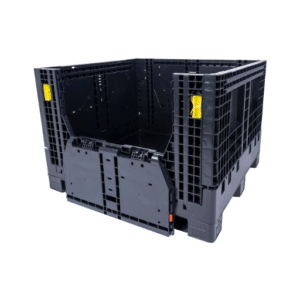
Efficiency and sustainability are at the epicenter of contemporary supply chain management. Lightweight pallets are becoming a game-changer for the way goods are transported, stored, or handled in almost all sectors. Since the pallets are fabricated only of unique materials and designs, they offer a myriad of benefits over the past, right from cost savings to minimal environmental pollution, up to beefing up an entity’s performance standards. This article is focused on appraising the merits of using lightweight pallets, the sophisticated technologies propelling them forward, and why they are gaining rapid acceptance with ease. Whether you are simply aiming at improving operations or proposing greener alternatives, the guide will confer valuable insights into the essential role lightweight pallets play in the new dynamics of global logistics.
Understanding Lightweight Pallets

One of the most state-of-the-art solutions to make these storage and transport systems less expensive is lightweight pallets. These pallets’ construction should carry out the functions of durability, practicality, and designer use efficiently while ensuring low-weight cargo on them. It will be a promising technique to transport luggage at a substantially low cost, with less human effort, in existing fuel to run the trucks in shipping, with lasting chances for the use of resistant materials against moisture, pests, and decay. Moreover, a considerable number of lightweight pallets not recycled will be better in logistics. Light pallets’ well-designed characteristics make them a decent option to cater to transportation needs in different industrial environments.
Definition and Features of Lightweight Pallets
Lightweight, slimline pallets have proven to be an extremely efficient mode of transport. With respect to their lesser densities, which are lower than all types of ‘normal’ wooden or weighty plastic pallets, keeping intact their load-bearing potential while the preliminary funds expenditure is sustained. Normally made from durable, pliable polyethylene, polypropylene, or pressed wood fiber, these pallets are immune to whatever is in the environment-moisture, chemicals, and pests. With the construction being very tough and easy to move around in, dependability is almost guaranteed, which is eminently suitable for one-way and two-way shipping, depending on the material and application.
Key Features of Lightweight Pallets
- Light tare weight, which in turn reduces fuel consumption during transit
- Dimensions that assuredly provide easy storage and stacking
- Ease of cleaning and maintaining due to the smoothness of their surface
- ISPM 15 compliance for universal shipping readiness
- Recyclable or made from recycled material for sustainability
Some notable features that come with lightweight pallets are their light tare weight, which in turn reduces fuel consumption during transit; dimensions that assuredly provide easy storage and stacking; and ease of cleaning and maintaining due to the smoothness of their surface. A very good number of lightweight pallets track swathe ISPM 15 through their lines, even though this is not written here. Those that are ISPM 15-compliant exhibit universal shipping readiness by eliminating all-country heat treatment or cold fumigation. These pallets are usually recyclable or made from recycled material, indicating their alignment with the sustainability program while conserving the optimal efficiency and functionality of the transport tasks.
Benefits of Using Lightweight Plastic Pallets
The lightweight pallets are giving the best options for modern supply chains. They have less weight than standard wooden pallets, thereby reducing shipping costs. It also reduces manual labour, enhancing effectiveness, and secure workers from potential injuries. The plastic pallets are highly durable, resistant to physical injury, moisture, and microbial pollution, and ensure much longer working life with much reduced replacement frequency. Their dimensionally stable persona also makes them suitable in automation processes and more stacking surfaces, effectively optimizing space utilization in warehouses and transport. Also, they conform to the international shipment norms, such as ISPM 15, which eliminates the need for fumigation, which further eases exports. Most do so while giving back to the environment through the reuse of plastics and equally echoing eco-friendly business practices in the absence of service and reliability.
Comparison with Traditional Wooden Pallets
Durability, cleanliness, and cost-effectiveness are benefits standard to plastic pallets, relative to traditional wooden pallets, which make the latter appear as unsustainable and unviable. Plastic pallets are invincible when it comes to breaking, splintering, cracking, and wear and tear over the years from excessive and continuous use. There exists a limited need for their replacement, thus lowering the cost of long-term operations.
Sanitation is another distinct benefit: the plastic pallets are non-porous and resistant to moisture, pests, and mold; they perform best with respect to the commercial cleanliness standards in, for instance, the food and pharma sectors. The wooden pallet absorbs water from the environment quite easily, making them susceptible to contamination and necessitating the much-needed treatment for them to be used in pristine environments.
Wooden pallets generally cost less upfront and are usually more widely available. These pallets are also repairable and biodegradable, which fits the criterion for certain environmental needs. Still, advances in manufacturing have gradually made plastic pallets more cost-competitive, with many also using recycled materials or even being completely recyclable when their industrial life ends. Decisions between using plastic pallets or wooden pallets boil down to the specific operation’s needs to accommodate load requirements, clean standards, and long-term costs.
Types of Lightweight Pallets

Light pallets are conducive to minimal transportation costs and enhance handling efficiency. The major classes are the following:
| Pallet Type | Key Characteristics | Best Use Cases |
|---|---|---|
| Nestable Pallets | Foldable inside one another when not in use | Minimal storage space requirements, low transportation costs |
| Single-Use Export Pallets | Designed for one-way shipment usage | Cost-effective international shipping, made of plastic or compressed wood |
| Plastic Injection-Molded Pallets | Uniform weight, moisture-resistant, long-lasting | Industrial applications requiring consistency and durability |
| Corrugated Cardboard Pallets | Made from cardboard layers, very lightweight | Air freight applications, shipping lightweight goods |
All of these different options have specific benefits depending on the needs of the supply chain and industry.
Overview of Nestable Plastic Pallets
Plastic pallets that are nestable are space-saving and cost-effective, thus they are extensively used in a diverse range of industries. Such superior design allows the pallets to nest within each other when not in use, which translates to huge reductions in storage and transportation costs. Being built of HDPE (high-density polyethylene) or PP (polypropylene), these nestable pallets offer hard-wearing characteristics with respect to chemical resistance and cleanability, which are cornerstones to their usage in the food, pharmaceutical, and retail industries.
Nestable designs, stackability, and lightweight features have certain benefits because these limit the weight of everything that needs to be shipped. In addition, a large number of models come with a creep-resistant treatment, frequently to meet exacting limits and hygienic needs. Moreover, these pallets are inert to water, rust, and changes in temperature, which adds significantly to reliability in highly demanding environments. Compatibility with various material-handling equipment assures highly flexible supply chain applications.
In considering nestable pallets composed of fibre-resistant phenol or hard plastic, the criteria for good choice should include load capacity, design, and operational requirements, albeit in cascade, as the point is to deliver optimal performance and efficacy for specific operations being conducted.
One-Way Lightweight Pallets for Export
One way Michelin pallets are designed to suit overseas shipping is to deliver cost-effective answers as well as benefit-loaded solutions. They are usually designed using strong but lightweight plastics, recycled plastics, or even wood composites to help save on freight charges by way of shipping lightweight pallets. They follow an established scheme to fit in plenty of existing international transport systems, and many of them are also ISPM-15 compliant, hence no fumigation or heat treating is required for wooden types.
Better choices to consider while selecting export pallets are items like loading capacity, dimensional consistency, environmental impact, and so on. Light in weight, they accommodate different weights, while being weight-bearing, and are kept in proper shape up till final transit. With these capabilities, stackable or nestable pallets assure maximum use of cube space from any given shipping container while reducing logistics costs. Many one-way pallet choices are recyclable, reflecting a green predilection in your pallets while also serving to reduce unsuitable contributions to the mountains of waste. So it is all bills for gall while balance coming with one-way lightweight pallets, thus emerges as a practical remedial solution to any of a business’s psychological disturbance over functional, compliant, or profitable concerns while shipping export.
Snap-On Lightweight Plastic Pallets
Industries adored by practicality, high levels of density, strength, and cost are particularly well suited to Snap-On plastic/ lightweight pallets. These pallets are ideal for damp and chemical environments. Meanwhile, their robust and lightweight structure reduces strain during handling and improves the safety aspects of any operation, while offering enough strength to carry heavy loads. However, they often hold up to 1.4 metric tons of static weight.
These pallets can easily be stacked or unstacked, thereby considerably enhancing time-saving in supply chain operations. The Snap-On pallets can thus also be used in cultures with conveyor arrangements, thus providing an amazingly smooth business conveyance over time without wasting time. With the advancement of materials engineering, the present Snap-On designs entail anti-slip stepping areas as well as the reinforcing of bottom runners to assure stability during transit.
On the grounds of sustainability, the lots in series posed by Snap-On lightweight plastic pallets are 100% recyclable-paginating environmental goals by reducing waste from landfills. In view of this setting, some varieties even demand and are made with recycled materials, practically implementing a closed-loop economy scenario. When considering their longevity, Snap-On lightweight plastic pallets simultaneously support reduced overall pallet cost at low environmental cost. These features make Snap-On lightweight plastic pallets a better choice for current logistics operations to sustain reliability and eco-friendly practices.
Applications of Lightweight Plastic Pallets

The highly practical plastic pallets are widely used in various activities, given their versatility and cost-efficient features. They are used in the following industries:
- Storage and Warehousing: Great stacking and storage options in controlled environments because of their good height, and they are evenly formed.
- Export Shipments: All light goods shipments that sail the international markets are mainly made of these plastic pallets; they conform to ISPM-15 standards, so they do not need to be fumigated into compliance.
- Food and Beverage: These pallets are in heavy use due to their beautiful and water-resistant finish (which is easy to clean and will meet all the safety regulations in place).
- Retail and Distribution: They are designed for fast transfer of most stocks in the retail supply chain within one store to the other, thus enhancing smooth operation and fast processing for fast and efficient operations.
From the above, it is evident that versatility exists with pallets, thus corroborating the versatility for different business necessities.
Use in Warehousing and Storage Solutions
Storage processes are widely benefited by pallets, which are not limited to but are a means to an end, helping to maintain the balance of inventory as well as the effective utilization of space. This unique capability among warehouse tools of stowing items is particularly designed to keep pace with clean stacks or other forms of good keeping acceptable to vertical storage. Also, pallets are supportive of the standardization of pallet dimensions packaged for compatibility with other systems like pallet racking, forklift trucks, and pallet jacks. Being skilled in handling so well that they convert logistics needs into business requirements, pallets are also well-suited for being able to operate well during repositioning, loading, or unloading times, leading to marked operational performance. Pallets find a position crucial to inventory keeping or tracking since they can work under WMS management essentially, considering a part of the WMS system circuit, which lets one count correspondence immediately by design with the connected inventory management system for real-time inventory, the mainspring used to bring about supply chain efficiency.
Logistics and Shipping Advantages
Pallets in the logistics and shipping sectors have a great significance, as they enable standardization of the transportation process and, thereby, product safety. Their standardized nature ensures adaptability with forklifts, pallet jacks, or any sort of automated system, which reduces time-to-handling and moderates transit damages significantly. Besides, pallets provide for maximum utilization of container space, enable orderly stacking, increase loading space, and reduce shipping costs. Pallets are crafted in accordance with global shipping standards for harmonized transport across different transport modes-trucks, ships, and planes. Accordingly, they allow faster loading and unloading, enhance overall supply chain efficiency by decreasing wait time, and alleviate bottlenecks in the transport and delivery paradigms. Due to these outcomes, the wood pallet occupies a significant role within modern logistics systems.
Industry-Specific Applications
Pallets are a more prolific and durable booster representation in many industries, ensuring that goods can be well handled with more accuracy of pallets and favor customized packaging systems. The vital link between raw material manufacturers and end users is readily extended, taken to a further location by pallets in the food and agricultural sector. Additionally, they are used in the pharmaceutical and chemical sectors. Pharma and chemicals are surely industrial sectors that have pallets just for securing loaded trays and preventing spoilage of various types of the most dangerous materials produced by nature. Along with these two industries and the food and agribusinesses, pallets are the foundation stones upon which good loading happens during fresh goods transportation, especially regarding cold chain logistics against spoilage. By which pallets are allied across all industries in considerably enhancing operational efficiency, cutting downtime significantly, and supporting worldwide synchronization of the supply chain.
Choosing the Right Lightweight Pallet

When it comes to finding the best lightweight pallet suitable for your needs, one has to consider the three main factors: the grade of material, rated load, and compatibility. Lightweight pallets are generally made of plastic, wood, or composites. Plastic pallets are perfect as they are very tough, reusable, and many times moisture-resistant to cater to stringent industry environments. Don’t forget about the load rating for the stacks, as it is a big deal, both for static and dynamic loads. Evaluate the existing equipment mounted in your warehouse, like forklifts and rackings, and then choose a compatible pallet for it to integrate perfectly with the operations. With such considerations in mind, you can be sure to achieve a great deal when it comes to timeliness and cost-effectiveness.
Factors to Consider: Weight and Size
Consideration must also be given to the specifics of a particular operation or of the supply chain when determining the weight and size. The question of how much the pallet will weigh tends to blow off the debate when shipping costs gain momentum; hence, light freight-handling pallets are chosen as a sure way of reducing transportation expenses without compromising durability. The carrying range of the pallet should also be regarded as it relates to the combined weight of goods under transportation or storage, usually expressed in static, dynamic, or racking loads. The collection and choice of size should take into account the industry standards, such as ensuring that the chosen size has to fits with the packing, shipment, and storage industry. An anomaly in those sizes could lead to an inefficiency or, at worst, give room to handling adjustments that are not necessary. The rightest selection is that choice exactly balanced between the economic and functional orientation toward storage and shipment.
Evaluating Nestable vs. Non-Nestable Options
The distinguishing factors between a nestable and a non-nestable design chiefly concern space for storage, transportation efficiencies, and the levels of durability requirements. The nestable pallets are an invention of measures for locking together (stacking) when emptied: these innovations convince space-efficiency-conscious people and investors that, once restricted to interchange abuse, this solution pleads for heavyweight concern. Usually made out of plastic, nestable pallets are feather light, proofed against moisture or chemical damage. Anyone seeking a cost-effective storage mode would go with these attributes that are bound to resist any age-old objective of damage through repetitive use.
On the other side, the non-nestable pallets serve the purpose of providing stabilization at the mast while increasing load performance and resistance to the highest point conceivable, which would prove equally relevant while manufacturing heavier goods of any size. Being created from a plethora of materials, wood and metal, these may indeed use slightly more space in their store, but they eat up other pallets in static and dynamic load treatments.
Choose the one based on the operational priorities. If the business has more restricted storage capacity and requires huge levels of volume redistribution, then nestable designs should be helpful; otherwise, non-nestable designs. The right kind of pallet would most likely increase logistics capacity.
Cost-Effectiveness and Durability
When contrasted in cost-effectiveness and durability, materials, weight capacity, and fewer life cycles are crucial for consideration. Wooden pallets are most desirable, thanks to the lower initial cost, and thus welcomed for operations that grow in square quantities. However, their high probability of wear and damage creates a high replacement rate over time. Plastic pallets are pricier and are not cost-effective alternatives for the short term, but ensure an extended longevity guaranteed within the comparative exposure. Being one gives it greater resistance to moisture, chemicals, and environmental factors; thus, this is beneficial for resin pallets against wood.
Another critical aspect is the application. To illustrate, industries that require cleanliness and those that operate on the closed-loop system, such as pharmaceuticals or food production, generally benefit from the longer service life and re-usability that plastic pallets offer. On the contrary, for use once or poorly funded, wooden pallets would generally be the more cost-effective option on account of their limited use.
Indeed, it is a tradeoff between short-term savings and long-term sustainability to determine the most cost-effective medium. With the objective of data-driven evaluation of the lifecycle costs in varied operational environments, a clear answer will emerge as to which type of pallet provides maximum value for your supply chain.
Future Trends in Lightweight Pallets

The future of lightweight pallets is greatly impacted by advancements in sustainable materials and manufacturing techniques. As the industries work towards being environmentally responsible, there has been a big swing towards recycled plastic and biodegradable composites, which help sustain the environment. But at the same time, they do not follow in compromising standards of durability. As an up-and-coming trend, the incorporation of smart technology with the likes of RFID tracking and IoT-enabled sensors has taken the scene on center stage. Such advancements further the reach into the supply chain by ensuring total visibility in real time, tracking, and analytics. Additionally, modular engineered and stackable lightweight pallets serve to provide an ultimate storage optimization viable against critical logistic challenges. Implementing such trends would benefit companies by cutting across both end goals of operational efficiencies and environmental friendliness.
Innovations in Plastic Pallet Design
As plastic pallet design is ever evolving to meet contemporary supply chain management challenges, it ensures durability, sustainability, and adaptability. Recent advancements have left pallets designed with recycled material or material that allows still being recycled, which conforms to the overarching principles of sustainability. These pallets have maintained their structural integrity and have driven home the essential argument in favor of the circular economy.
What makes the innovations in plastic pallets even more remarkable is that they are seen as smart pallets. Embedding RFID tags and GPS sensors in the plastic materials ensures that real-time tracking is facilitated, thereby bolstering supply chain visibility and inventory control. This could lead to reductions in these charges and maximization of logistics. This, therefore, constitutes the efficient management of assets and fewer countable losses.
This way, designs are being emphasized concerning modularity and lightweight construction, which can be preferably stackable and offer better storage density, hence promoting more efficient transport at reduced transportation costs, at the same time maintaining strength and load capacity. By embracing these innovative ideas at the industry level, potential operational excellence can be achieved alongside the highly stringent environmental and economic challenges.
The Role of Sustainability in Pallet Manufacturing
To emphasize the need to minimize negative environmental impacts while retaining operational efficiency, pallet production sustainability is significantly. This is implemented by going for the utilization of recyclable materials, reducing process waste, and investing in more energy-efficient manufacturing technologies in order to stimulate the circular economy. Longer-lasting pallet design or the use of biodegradable components might serve as a more formidable twin sister to sustainability as regards fulfilling ecological and economic demands effectively.
Market Growth and Demand for Lightweight Solutions
The demand for light-weight solutions is on the rise as it becomes oriented toward sustainability, cost efficiency, and environmental protection; the strict environmental regulations are pushing the need for lighter solutions. The use of lightweight materials, including advanced composites, aluminum, and high-strength plastics, is becoming popular across a vast array of specializations. Examples are automotive, aviation, and packaging, where increased weight decreases fuel efficiency and increases emissions. The market for lightweight materials stands to expand dramatically because of technological advancements in lightweight materials and the widened application thereof in emerging markets. Companies are pouring more resources into research and development to create new lightweight products capable of standing up to everyday physical forces while maintaining performance. This popular trend is also linked to consumer awareness about eco-friendly options and the pressure of carbon footprint reduction on governments.
Conclusion
Lightweight pallets represent a transformative solution in modern supply chain management, offering unparalleled benefits in terms of cost savings, operational efficiency, and environmental sustainability. From nestable designs that maximize storage space to innovative smart pallets equipped with tracking technology, the evolution of lightweight pallets continues to reshape logistics across industries. As businesses increasingly prioritize sustainability and efficiency, the adoption of lightweight pallets—whether plastic, composite, or biodegradable—will play a crucial role in meeting these objectives. By carefully considering factors such as material type, load capacity, and specific operational needs, organizations can select the optimal pallet solution to enhance their supply chain performance while contributing to a more sustainable future. The continued innovation in pallet design and materials promises even greater advancements, ensuring that lightweight pallets remain at the forefront of global logistics solutions.
Reference Sources
“Behavior of Steel Storage Pallet Racking Connection – A Review”
“Pallet of Weighing Sensor Error Calibration Device FEM Analysis and Optimization”
Frequently Asked Questions (FAQs)
Could you tell me what lightweight pallets are and tell me their exact weight?
Lightweight pallets are essentially designed to fulfill the purpose of lightening loads while maintaining the strength and durability one expects from a pallet. Usually, they weigh much less when compared to the traditional wooden varieties, sometimes being 30 to 50 lbs, depending on the class and size of the pallet. The lesser load can be taken advantage of in a variety of applications, such as one-way shipping and air freight.
How does one figure out pallet weight and dynamic capacity?
Pallet weight determines load weight, given the material and pallet size. Pallet dynamic capacity, on the other hand, is the maximum load capable of being carried around the facility. Distribution of weight would happen as evenly as possible on the deck, and as you consider materials and their properties, including a strong plastic, these will be beneficial for the wood material of pallets.
Can one utilize lightweight plastic pallet types in wet warehouse situations?
Yes, light plastic pallets address foreign circumstances as they do not absorb water, which is something that all wooden pallets have to deal with. This makes them an ideal case for any timely delivery in shipment servicing, like food and pharmaceuticals, where cleanliness and water resistance are at stake.
What are some advantages of landing pallets on a single-use basis?
On a one-way basis, attrition of lightweight pallets is quite inexpensive and easy. Such pallets can mostly be designed to last for only one voyage or operation, thus reducing some reverse logistical steps by a greater choice of settings. The very small weight also reduces transport costs and helps in conserving fuel during haulage.
Air transportation is a place where lightweight pallets can be used.
And there are also ideal. Lightweight pallets are excellent for air cargo shipments, mainly because they are lighter and can still handle more load without exceeding weight limits. Available also for information, lightweight supports ensure cargo’s security from the time it is picked up till it gets to the receiving country.
What setup do light pallets have available?
Various designs, for one thing, nestable or snaps, are possible for lightweight pallets. By means of nesting, pallets can be stacked one on top of the other for the purpose of saving space when they are not being used. Snap-on configurations allow the pallets to be easily disassembled and assembled, so they are very versatile for different types of logistical needs.
Are the lightweight pallets environmentally sound?
Yes, many of the lightweight pallets are wholly or partially made from recycled materials and can be recycled at the end of their functional life. As such, compared to wooden pallets that contribute to deforestation and waste, they are environmentally friendly.
For what type of applications should lightweight pallets be used?
Lightweight pallets have several application areas, including storage, export, and logistics. Their superior construction allows them to withstand a wide array of floor loads while making them portable using pallet jacks.
How does the total cost compare to that of the standard pallet for lightweight pallets?
Zero waste is perhaps not an apolitical concept, but it does serve under the pole of aligning soil fertility with future profit by intermingling the human, biotic, and geographical.