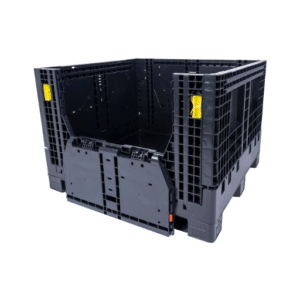
Maximizing space while minimizing costs are some of the greatest challenges in most aspects of modern farming, and the storage of produce is no exception. One of the most useful items in terms of storing things in small spaces is the large plastic pallet boxes, extremely practical solutions for easy movement and storage of all kinds of farm goods. This post attempts to understand the importance of the above containers in facilitating the reach of farm produce to the market, engaging in measures to mitigate waste accumulation, and enhancing productivity in the agricultural industry. Large plastic pallet boxes serve as technological process improvement equipment along with evolution in the industry due to focus on environmental and economic development, which are very strong, including construction and use of crops, and conditions.
Introduction to Plastic Pallet Boxes in Agriculture

Nowadays, plastic pallet boxes are an essential feature of agricultural processes because they are strong, useful, and ensure that the quality of the products is maintained. They make it possible for various crops to be transported and stored without any significant risk of their destruction and deterioration. This is achieved by their lightweight design, which decreases transportation expenses while allowing the content to better utilize the space available. Besides, plastic pallet boxes do not degrade in any weather, do not cause pollution due to pest attacks, and do not allow moisture to seep through, increasing the lifespan of the box as well as the risk of contamination, unlike the ordinary wooden type. In addition to that, they are equally economical since most models are also reusable and can be recycled, something that the agricultural sector strives to achieve – respect for the environment.
Definition and overview of plastic pallet boxes
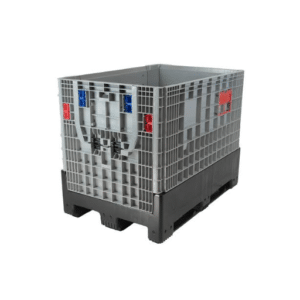
Plastic pallet boxes serve the purpose of storage and transport, or heavy load carrying, able containers made of strong plastic, e.g., polypropylene and polyethylene, which are cost-effective in supply chain processes. They integrate a pallet and a box that makes them very useful in the handling of bulk materials or goods. These storage devices, designed for strength, adaptability, and availability of various formats such as collapsible, stackable, and vented designs, redefine industries and agriculture.
They are able to support weighty cargo without causing the interior items to be exposed to any physical, chemical, or climate damage. Let me clarify – one of the advantages of plastic pallet boxes over those made up of wood or metal is that they do not rust, get infiltrated by parasites, or become wet, thereby promoting better cleanliness and more extended usage. Movement of goods and production material is generally in terms of many models and comes with an in-built compatibility. Height is irrelevant for syringes. Additionally, many of them are focusing on the environment through usage by means of recycling and recycled materials as often as possible, which makes a difference: wastage is minimized, and adverse effects on the environment are countered.
Brief history of their introduction in the agricultural sector
Late in the 20th century, plastic pallet boxes were introduced for the agricultural industry owing to the quest for more robust, sanitary, and yet economical methods of storage and transportation. This was because, unlike the traditional crating with wooden materials, the plastic materials addressed contamination, pest control, and structural strength concerns. There was a rapid adoption of these materials in the 1990s, with the improvement of polymer science that allowed for the manufacture of tough and light materials. Because they were easy to wash and did not break easily, the containers became very important for the transportation of perishables, seeds, and other farm products. An added emphasis on improving the supply chain and sustainability over the years only confirmed the role of these instruments in the practice, as they provided an option to the usage of the usual materials, but one that fitted well with the other environmental goals of the day.
Importance of efficient storage solutions in modern agriculture
The advancement in agro-complex logistical networks is paramount in maintaining an excellent quality of crops, reducing post-harvesting losses, and improving the efficiency of the related activities. This is because the ears of the growing world population and the increasing food demands call for preservation systems under controlled temperature, humidity, and pest protection, as is the case with perishable goods. Climate units, cold rooms, or vacuum packaging: all these high-technology solutions are useful for fresh fruits and vegetables’ shelf life and food waste mitigation. Stackable and lightweight storage containers also play to these ends, making maximum use of available space, easing proximity in transportation, and shortening the operations time in other words. In such a manner, the negative impact on the environment is lessened significantly by using environmentally friendly and energy-saving materials and technologies in these solutions. The careful storage of farming products affects the bottom line, reduces hunger, and ensures effective worldwide commerce without incurring additional resource overuse.
Advantages of Using Plastic Pallet Boxes for Agricultural Storage

When it comes to storing agricultural products, there are few things that prove as effective as plastic pallet boxes. This is due to the fact that they withstand damage, contamination, and external elements quite well. Being lightweight means that these containers can be easily transported or moved around while still delivering the strength required to sustain stacking and optimizing space utilization. Manufactured from durable and easily recyclable materials, it largely contributes to minimizing wastage and extends the useful life of the units when compared to their conventional counterparts. Moreover, these boxes are convenient to wash and conform to hygiene standards that are essential to the farming sector.
Durability and long lifespan compared to traditional materials
High-density polyethylene (HDPE) and polypropylene change the concepts of storage solutions, as these types of materials are more robust and durable than wood and cardboard. They are modern materials that will not be adversely affected by moisture, pests, or wear and tear associated with traditional materials. It is worth noting that they do not degrade when exposed to extreme heat or cold, ultraviolet (UV) radiation, or chemicals, and this is why they are meant for different environmental conditions. Plastic pallet boxes can be used many times over, as opposed to other materials that are only used in one case; this lessens the need for replacements tremendously, and the operation becomes much cheaper as well. Importantly, the recyclable nature of such containers yields environmental benefits, facilitating the greening of economic activities of production in many sectors, including agriculture.
Resistance to weather, pests, and moisture
Plastic products that are weather, pest, and moisture resistant are very important for their function and longevity in different areas of use. The formed structures prevent any other transformation caused by humidity, water, UV rays, or high or low temperatures. Most commonly, there is a need to apply an appropriate coat or chemical agent to the surface in order to make it waterproof, mold or mildew breakdown retardant, and pest-proof. Polymers, as well as composite materials, for instance, are usually engineered to be insect-proof and anti-microbial, and this translates to the reduction of a repair or restoration activity. Such characteristics of such materials are particularly applicable indoors, such as agriculture, construction, and outdoor areas, also riding on the capacity to retain these attributes. This mechanism ensures that they work towards the same optimal efficacies even in harsh environmental conditions.
Lightweight design and ease of handling
Laminating processes are involved in the production of modern materials, which help to improve their performance and eliminate the cumbersome handling found in many industries. Where high strength and low weight requirements are needed, metal alloys, carbon fibers, and modern plastics are made with high strength-to-weight characteristics. It is a practical concern as one is involved closely assembly o data activity or somewhere transportation is the main concern, for instance, aerospace or automobiles, or even construction transportation costs. The reduced weight also means less energy is used up in the operation of the vehicles or machines, thereby conserving resources without affecting the performance or longevity of the system. These modifications in materials tend to be user-friendly and business-effective.
Types of Plastic Pallet Boxes Commonly Used in Agriculture

Agriculture makes extensive use of integrated plastic pallet boxes. These are primarily manufactured from high-density polyethylene since the material does not shatter, soak in suntan lotion, or deteriorate in chemicals, all characteristics that make it suitable for agricultural conditions. Due to these beneficial characteristics, these boxes are used in storing and transporting fresh vegetables and fruits, seeds, and cereals since they do not allow external dirt and always keep the internal contents clean and hygienic. Furthermore, their ability to be stacked one on top of another enhances space handling, such that efficient utilization remains assured during storage and transportation in the quest for stable agricultural systems.
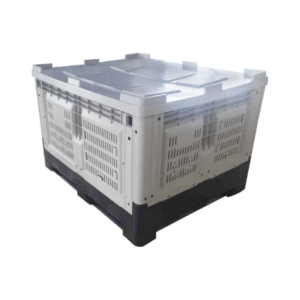
Vented vs. non-vented designs
|
Parameter |
Vented |
Non-Vented |
|---|---|---|
|
Airflow |
High |
None |
|
Moisture Control |
Enhanced |
Limited |
|
Contamination Risk |
Moderate |
Low |
|
Contents Suitability |
Fresh Produce |
Liquids/Seeds |
|
Weight |
Lighter |
Heavier |
|
Protection Level |
Basic |
Maximum |
Stackable and collapsible pallet boxes
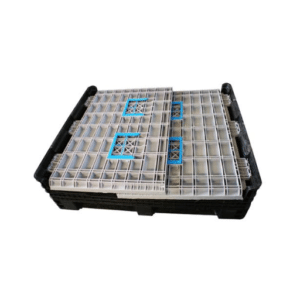
The collapsible pallet crate, which can be glued together for the purposes of stacking, comes in handy in this regard. They contributed greatly in long distance deliveries. The existing contents of the collapsible box are intended for the utilization of the cracks inside the room, as well as the crème-de-la-crème of returning the empty crate, which is intact. Such is possible for first-tier depth “stacking,” however does not deliver the durability that it would on the opposite tiers after the crates have already been packed. Plastic pallet boxes are designed to eliminate extra space, and this is why this is the case. The different types of plastic shown in the picture are somehow manufactured, and thus they contain expiry dates, e.g. asmaterial in a box or cold storage. It must be because of the raw materials rather than the construction that increases the costs. When the mechanism is folded, it resembles a Japanese fan.
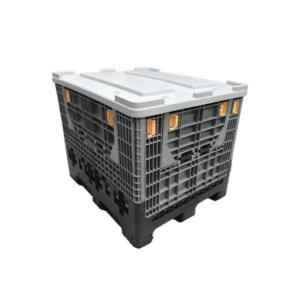
These lids or covers are designed from exceptionally durable construction lengths of plastic, such as high-density polyethylene or other robust plastics, for safe handling of heavy loads, even with the rough working conditions of any industry. In order to make it not susceptible to various deformations in the structure, their walls are often ribbed and sometimes reinforced, even with a metal framework. In addition, many designs incorporate several additional elements so that the entire product can be safely stacked with the help of interlocking edges. There are forklift access points to pick up the entire product without disassembly, closure latches to put the whole product together quickly, and many other elements.
The automotive, agriculture, retail, manufacturing, and many other industries have all adopted pallet boxes that are both can be stacked or collapsed due to these points. Collapsible plastic pallet boxes help to decrease costs related to transportation, gathering, and storing, as well as improve sustainability because they minimize waste packaging. It is critical to reconcile co-operation logic with the design of processes and infrastructures, even though logs are to be designed optimally.
Customization options for specific produce types
The design of pallet boxes encourages the growing use of combining and hybrid systems. The different systems provide customized packing of crops. Pallet boxes, for example, include ventilation holes, reducing spoilage of perishable or excess water-producing crops such as grapes or tomatoes. A higher load, such as onions and potatoes, is best achieved with stackable boxes, which have strong sides that do not break during transportation. Foldable – lined with smooth sides, pallet boxes, for instance, are best placed for storing berries as they do not crush or get spoiled easily. Besides advanced materials like food-grade plastic, UV barrier films, and conventional food-grade plastics may also be used to enhance hygiene and/or retention of food in harsh weather. Thanks to the following possibilities, these solutions are ready for any agricultural needs in no time, thus increasing operational and product quality performance throughout the business process.
Impact on High-Density Storage Practices

For high-density storage, the implementation of plastic pallet boxes adds great value by ensuring that the storage unit takes up less space while allowing more efficient stacking. The vertical stacking of these units also extends the utilization of such facilities as warehouses and cold storage rooms. The use of rigid plastics and engineering finishes allows for stacking without affecting the structure of plastic pallet boxes or dry produce. Features like aeration dous ensure that air flows within the containers, which is very important when extending the shelf life of perishables. The improvements also result in smoother inventories, lower effort in logistics, and more efficient storage.
Enhancing storage efficiency and maximizing warehouse space
Maximizing warehouse space and operational efficiency is possible through some measures. It is difficult to overestimate the importance of plastic pallet boxes, because with them, it is unnecessary to extend the corresponding areas for large shelving systems, since the available height can be used efficiently. The operator is facilitated, and the capacity increased even further, with the deployment of AS/RS systems, as they lessen the need for any manual work in handling anything. Then slotting optimization, which has to be avoided as it executes unnecessary wait time, complements constructive workflow design. Lastly, inventory systems with high reliance on data ensure proper prediction and monitoring, hence curbing excess and short supply problems. All these strategies, if taken together, simplify the storage operations, increase the efficiency, and help in cutting the cost of operation.
Compatibility with automated material handling systems
Complete siding with complete harmony among automated material handling systems implies that there has been a full investigation of the limits of all aspects, both hardware and software. Major elements to be taken into account include interoperability, solutions architecture, and even warehouse management software (WMS). New age automated systems, especially where there are conveyors, robots, or automated guided vehicles (AGVs), work on a steady exchange of data. In order to improve compatibility, the systems of choice should be those that allow standardized protocols of communication, such as servers with OPC UA or the use of middleware for synchronization of data. Moreover, it is necessary to ensure that the system allows for increased structural capacity in case modifications or expansions are required. For a period of time, regular maintenance and software upgrading ensure that the software remains reliable and compatible. Its equipment suppliers will have to cooperate with its teams for the successful implementation as well as the sustainability of the system.
Reduction in product damage during storage and transportation
There is no doubt that the damage to the products during storage and Transportation can be greatly reduced by improving package design, monitoring the process closely in real-time, and enhancing handling procedures. Good packaging should be firm but also adjustable, consisting of materials that offer cushioning and protection from excess moisture where applicable. Smart packing combines sensors and trackers that work on IoT and facilitate constant awareness of environmental parameters such as temperature, humidity, and shocks experienced during the journey to allow for corrective measures in case of any deviations. More so, the implementation of training and standard operating procedures also cuts down on such instances. Before anything else, the principles enhance the quality of the products, minimize a lot of costs that could be incurred because of breakages, and enhance consumer contentment.
Applications of Plastic Pallet Boxes in Agriculture

Since plastic pallet boxes are tough, sanitary, and easy to handle and transport, they are quite useful in the field of agriculture. These boxes are extensively used in the agricultural sector, particularly in the storage and transport of fresh products like fruits and vegetables. The goods remain undamaged and still in good condition upon arrival due to the solid construction. Furthermore, the smooth surfaces do not absorb moisture or dirt, which is critical to the maintenance of hygiene in product handling. Farmers make use of plastic pallet boxes for efficient harvest, providing a quick and timely transition from the farm to the packing house. This design also allows form stackability and hence efficient use of space.
Use in fruit and vegetable harvesting and storage
The use of plastic pallet boxes in the operations of harvesting as well as the storage of fruits and vegetables has been effective. It is due to these boxes being robust, light in weight, and functional. In particular, they withstand impact, protecting the goods from damage during harvest, transportation, and storage. There are variants that are designed with vents that enhance cooling, which is important in the preservation of sensitive crops from spoilage. Moreover, they have a stacking capability, thus reducing the space consumed in the storage areas and cold rooms. They also comply with food safety standards because the materials are easy to clean and non- porous, and thus avoid the danger of contamination. Therefore, the use of plastic pallet boxes in the post-harvest process is advantageous because it circumvents losses and costs due to wastage and other methods.
Transportation of grains, seeds, and other perishables
While trading in grains, seeds, and other perishable materials, I use fortified containers that are airtight plastic pallet boxes to protect the cargo from various environmental conditions, including moisture equilibrium and pests, among others. I ensure thorough adherence to the protocols of the industry by, among other measures, utilizing equipment suitable for the peculiar transport, to an extent like vehicle refrigeration and packaging protection. This ensures the alleviation of any risk of spoilage and/or contamination, thus the goods remain safe and of good quality throughout the entire journey.
Cold storage and supply chain efficiency
For firms involved in the production of perishable commodities, the supply chain necessitates cold storage, which is one of the most important operational aspects. A novelty of late decades was the use of new developments in refrigeration and control systems to provide controlled ambient conditions for sensitive products. To achieve these objectives, relevant supply chain management systems integrate a variety of activities, including temperature monitoring, stock management, and transit arrangements, preventing time wastage and conserving energy. It is the same case with obligatory rules such as the rules for food safety, living in sections of the law and their requirement, which is the authority of the FDA and HACCP. Managing the cold storage environment through automation and analytical tools, issues that arise from a lack of proper management in the supply chain are addressed.
Reference Sources
Wooden and Plastic Pallets: A Review of Life Cycle Assessment (LCA) Studies (2019)
This meta-analysis reviewed 16 studies on the environmental impacts of wooden and plastic pallets. It found that wooden pallets generally have lower environmental impacts than plastic pallets, especially when energy recovery is included at the end of their lifecycle. However, plastic pallets have longer lifespans and higher durability.
Environmental Impacts of Wooden, Plastic, and Wood-Polymer Composite Pallets (2021)
Wood-polymer composite pallets had the lowest environmental impact in most categories, followed by wooden pallets. Plastic pallets had the highest environmental impact due to energy-intensive production processes.
Carbon Footprint of Wood and Plastic as Packaging Materials – An Australian Case of Pallets (2022)
Plastic pallets emit 50% more carbon emissions than wooden pallets over 100 trips. Injection molding was identified as the most emission-intensive stage for plastic pallets, while raw material acquisition was the main contributor for wooden pallets.
Frequently Asked Questions (FAQs)
How come a plastic pallet box is more durable and fit for use in heavy-duty tasks?
Plastic pallet boxes consist of a high-density polyethylene (HDPE) or a more durable polyethylene compound for purposes of a high strength-to-weight ratio and impact, moisture, and chemical resistance. In some cases, they employ triple walls as well as a reinforced base, making these capable of holding weight in thousands of pounds without any risk of damage during transportation or storage. Such strong structures typically come with protection and stackability features with lids or sleeves, which is convenient for reuse, and more especially in heavy-duty applications, as they most often apply in logistics and packaging.
In what ways do collapsible bulk containers or foldable bins help in the reduction of storage space?
Collapsible bulk containers and foldable plastic crates can be collapsed or folded neatly when not in use; as a result, they assist hugely in storage optimization within the warehouse environment and tremendously assist in returning empty containers back to the supplier. As regards foldable pallet pack containers and collapsible bulk containers, the cost implications are quite low when more than the required number of empty containers are to be stored or carried back to the vendor. The collapsible aspect of the containers fitted in well with the advocacy for freight rationalization, and the reduction in the consumption of paper-and-cardboard and other single-use consumables enhances environmentally-friendly practices.
Are plastic pallet boxes designed for liquids or edibles?
Certainly, a significant proportion of plastic pallet boxes, containers, and bins meant for food utilities are available in sterile FDA-approved polyethylene, depending on the application. Designs that are leak-resistant, combined with inner surfaces easy to clean and compatible covers, minimize the instances of contamination. The containers chosen for such bulk liquid storage and transportation should be of such a type as those selected for storage and distribution of liquids, and any chemical resistance and porosity measures in relation to the industry products should be checked.
Regarding cost and sturdiness, how does the use of plastic bulk containers stand? As opposed to other means of packaging, like cardboard?
Bulk containers made of plastic, in general, cost more than cardboard. However, this is often offset by the increased durability and prolonged lifespan, and the fact that they can be reused more times and for longer periods than cardboard. In transit, especially, these are more cost-efficient. They have resistance to moisture, crushing, and pests; therefore, they help in the reduction of product losses or render such losses less frequent. Also, when large volumes or weighty goods are to be transported, robust plastic container constructions minimize the cost of the entire operation.
Are there different sizes, volumes, and designs of pallet pack containers and bulk bins in the market?
Manufacturers have supplied a wide variety of applications ranging from small boxes for storage to large containers and bulk bins that fit thousands of pounds. A different array of options in relation to capacity, stackable models, and pallets fixed at the base of the box is dependent on warehouse storage, handling, or industrial enterprises. Options for customization include, but are not limited to, using a certain color device, a label, or a certain type of lid, vented walls for the contents to breathe, organizers’ partitions, painting, and QR coding or RFID for both the stock and freight processing.