It is imperative to understand pallet measurements when it comes to logistics, shipping, and warehousing, which can help maximize efficiency and reduce costs to decline. Pallets are essentially the backbone of the modern supply chains, serving as a level and standard base for transporting goods throughout different industries. However, with different types, sizes, and regional standards in use, the exploration of suitable pallets can be complex. In this guide, we explore pallet dimensions relative to some of the most widely accepted sizes that become standard, and the common dimensions, and perhaps other varying standards that exist in terms of the materials and types available. If your warehouse storage limitations are for consideration or you want to facilitate economical freight shipments, this article will introduce you to what you need to know about pallets when thinking about what you could or should do in your logistics operations.
Introduction to Pallet Dimensions

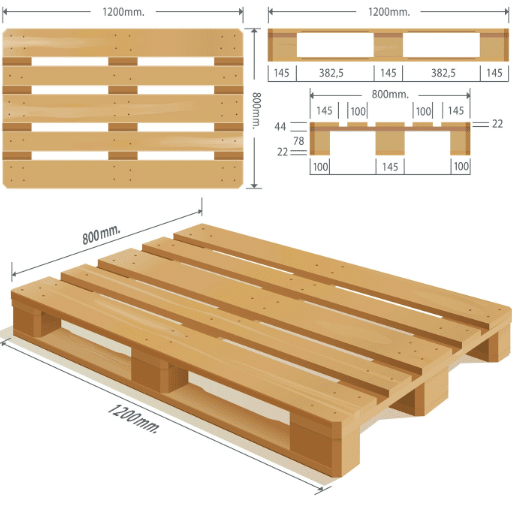
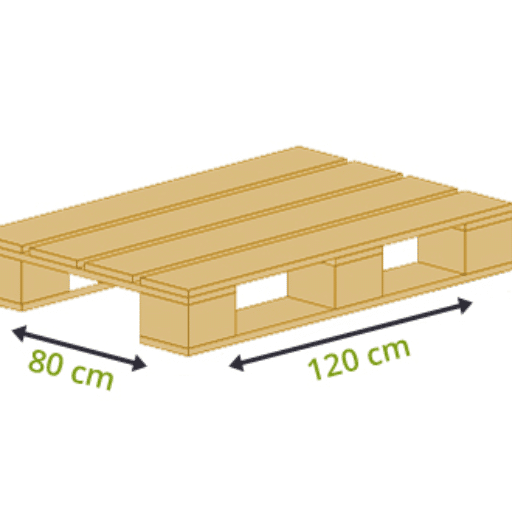
Pallet dimensions are standardized measurements that determine the size and general features of pallets used in various applications in the industries. In North America, the most popular pallet size is 48″×40″, which is referred to as the standard GMA (Grocery Manufacturers Association) pallet. Other commonly used pallet dimensions include 42″×42″ or 48″×48″, which are ideal for specific applications like beverages and chemical storage. Globally, the most widespread dimensions for ISO-approved pallets are 1200mm×800mm and 1200mm×1000mm, used in different regions depending on local logistics requirements. Recognizing these sizes will ensure compatibility with storage systems, transportation equipment, and international shipping standards.
What are Pallet Dimensions?
The pallet dimension defines the standard size suitable for palleting, shipping, storing, or being processed. These distinctions are critical as they guarantee those pallets can work with machines, such as forklifts, mitres, or rack systems, and can comply with international shipping standards. Some commonly used pallet sizes around the world are 48 inches x 40 inches, mostly for the US retail and grocery industries, and the European 1200 x 800 mm “Euro pallet.” The dimensions of other pallets, like 42 inches x 42 inches, could cater to beverage sectors, and 1200 x 1000 pallets became more common for international shipping applications. Standardised sizes of pallets tighten the logistical loopholes and improve space utilization, thus facilitating the removal of inefficiencies from global supply chains.
Importance of Standard Pallet Sizes
The sizes of standard pallets are so immensely impactful in enhancing the efficiency of today’s supply chains. Standard dimensions for these literally made logistics more similar across different means of transport like trucks, ships, and planes, and they help avoid repacking and consequent handling costs and damage to goods. Thus, standard levels must necessarily be maintained everywhere: warehouse storage would enjoy full space right up to the rafters, while the well-packaged pallets would still be able to score big in space-saving and assisting with quick loading. On the other end, with the sizes of pallets being globally recognized, international trade eyes logistics with a more standard, practical approach to smooth crossing of borders with fewer delays. Clearly, palletizing is no simple operation; it ensures that costs are reduced.
Overview of Different Pallet Types
Pallets can be classified by means of material, design, and usefulness so as to adapt to various logistical needs. The principal three classes of pallets comprise wooden ones, plastic, and metal units.
Wooden Pallets
Wooden pallets are the most extensively used due to their affordability, longevity, and repairability. These can predominantly be classified as either stringer or block in nature. Stringer pallets use various parallel boards for support, while the block pallets make use of additional vertical support systems. One downside of wooden pallets is their susceptibility to moisture, pests, and prolonged wear and tear, all of which would, of course, negatively affect their long-term utility in logistics.
Plastic Pallets
Plastic pallets are the lightweight, tough, pest-resistant ideal requirement of industries with high hygiene standards, such as the food and pharmaceutical sectors. These pallets require greater amounts of money upfront compared to the wooden pallets. But due to their longevity and recycling, the ultimate cost formula tilts in their favor. Furthermore, the smooth finish on plastic pallets minimizes the risk of product damage during storage or transportation.
Metal Pallets
Metal pallets may be either of steel or aluminum, both of which assure a superior grade of durability and loading capacity. They offer great resistance to damaging factors such as moisture and heat, which is useful for extreme or outdoor applications. The cost is prohibitive; however, metals are highly preferred in an industry where strength and life are major concerns in the automotive, military, and industrial sectors.
Key Takeaway: Each kind of pallet serves different purposes, depending on key factors like budget, handling requirements, and environmental conditions. Understand these in order to allow businesses to optimize their logistics capabilities more effectively.
Standard Pallet Sizes and Dimensions
The global 48 x 40-inch pallet size is the most common and meets the Grocery Manufacturers Association (GMA) specifications in the United States. This standard-size pallet is versatile and compatible with many types of transport and storage.
The European pallet (EUR-pallet), measuring 1200 x 800 mm, is mostly found in Europe, and also serves as a standard size while meeting the ISO pallet, having a measurement of 1200 x 1000 mm, for practical global shipping. These dimensions are testimony to the ubiquitous applications of these pallets in the transportation, forklift, container, and racking industries by finding easy compatibility with various sizes and logistics.
Common Pallet Size Chart
| Region | Pallet Type | Dimensions (mm) | Dimensions (inches) | Primary Usage |
|---|---|---|---|---|
| North America | Standard Pallet | 1219 x 1016 | 48 x 40 | General industries, warehousing, shipping |
| Europe | EUR-Pallet (EPAL) | 1200 x 800 | 47.2 x 31.5 | Widespread across European distribution |
| Global | ISO Pallet | 1200 x 1000 | 47.2 x 39.4 | International shipping, container loading |
| Asia | Asian Pallet | 1100 x 1100 | 43.3 x 43.3 | Primarily used in Japan and Southeast Asia |
| Australia | Australian Pallet | 1165 x 1165 | 45.9 x 45.9 | Heavy-duty applications in Australian supply chains |
The dimensions listed above reflect the most commonly used types of pallets across various regions and are essential for optimizing logistics and supply chain efficiency. Compatibility with handling equipment, such as forklifts and racking systems, ensures seamless operations in global trade and warehousing.
Standard Pallet Dimensions by Region
Pallets, in size and dimension, along with industry standards and logistical needs, can phenomenally differ from one region to another. The following is a brief overview in detail.
North America
Standard Size: 48 x 40 inches (1219 x 1016 mm)
Key Applications: This is extensively used in warehousing and retail, especially after the development of GMA standards.
Key: The industry-standard pallet was demonstrated in early 1999, according to which it was determined that 48 x 40-inch pallets are used in over 30% of pallets in the US.
Europe
Standard Size: 1200 x 800 mm (47.2 x 31.5 inches), better known as the EURO pallet.
Key Applications: Its main application is within European supply chains and is backed by the European Pallet Association (EPAL).
Key: To fit appropriately into Europe’s racking and transportation systems, ultimate load efficiency is the sole purpose for this EURO pallet.
Asia
Standard Size: 1100 x 1100 mm (43.3 x 43.3 inches)
Key Notes: To facilitate intercontinental trading, the dimensions of the pallet should comply with the international container standard.
Australia
Standard Size: 1165 x 1165 mm; 45.9 x 45.9 inches
Key Applications: When manufactured using high-quality wood (Pine wood) and properly treated for industrial use, the pallet works well in Australian supply chain operations.
Key Notes: These pallets comply with Australian standards, making them suitable for local racking and handling equipment.
The Need for Standards
In the contemporary business arena characterized by global supply chains, knowledge of such regional differences as the standardization of pallets can support smooth business operations. This would mean compatibility of the pallet dimensions with the various gadgets in use, namely, handling machines like forklifts and racking amid global trade activities, thereby minimizing the likelihood of delays or inefficiencies arising during the transportation of goods. Abiding by the standards is the surest way to further beneficial and cost-effective dealings.
ISO Standard Pallet Sizes
The International Organization of Standardization (ISO) created six important pallet sizes to establish global standards for shipping and logistics purposes. These are outlined by the ISO Standard 6780 and are to be used for various regions and industries worldwide:
- 1219 mm × 1016 mm (48 in × 40 in) – Often referred to as the North American Pallet or the GMA Pallet, this size is common across the United States and North America and can be used in retail and warehousing operations.
- 1200 mm × 1000 mm – This is the most common size in Europe and Asia and is suitable as a default for many international shipments on account of its versatile design.
- 1165 mm × 1165 mm – An Australian pallet that fits well with local loading equipment and storage systems for operational efficiency.
- 1200 mm × 800 mm – The Euro Pallet is the standard across European nations for those trucking and rail transportations within the EU.
- 1100 mm × 1100 mm – This standard is widely used in Asia, particularly in Japan and Korea, and is tailored for specific industrial and storage spatialities.
- 1067 mm × 1067 mm (42 in × 42 in) – This size is common in North America, and it is often found in the UK. This size is optimized for the efficient transportation of bulk goods and for the handling of chemicals and other heavy items.
These universal sizes ensure easy handling, maximum storage, and quick transfer along different international-scaled supply chain systems. With ISO pallet sizes based on the right setting, uniformity is therefore guaranteed, thus completing a direct link to eradicate friction that goes against global trade.
Types of Pallets
Wood&Plywood Pallets
The foremost choice for such as these because they stand more for attracting it through the strength, durability, and affordability. Basically, they are fine for bearing heavy loads, and thus, you would not lose an occasion to see them in operations throughout all the industries.
Plastic Pallets
Food and pharmaceutical sectors demand the need for cleanliness, for which no pallet type is left that is a more conventional (canonical) choice than a rather indestructible, non-splintering, and hygienic plastic pallet type.
Steel Pallets
The steel pallets can be built to handle heavy duties to the maximum and for all–extremely heavy loads and for the most corrosive materials used by a particular industry.
Composite Pallets
From materials like pressed wood or resin, these new pallets take on the weight-demanding criteria afforded by each company and in the most affordable kind of results compared to the use of the original wooden pallets.
Paper/Cardboard Pallets
These are very lightweight and can be immediately disposed of as recyclable materials, so they are good for all lightweight shipments and frequently used for export and disposable logistics down the line for operations.
Wooden Pallets vs. Plastic Pallets
Several factors have to be considered when comparing wooden pallets with plastic pallets:
Wooden Pallets
- Lower upfront cost
- Easily repairable
- Biodegradable material
- Susceptible to moisture and pests
- Less stable against wear and tear
- May host bacteria without treatment
Plastic Pallets
- Higher initial investment
- Longer lifespan
- Weather and chemical resistant
- Easy to clean and sanitize
- Lightweight for shipping
- Recyclable at end of life
Sturdiness
Against wear and tear, wooden pallets are less stable and are especially subject to being ruined during contact with moisture or severe shock. Conversely, plastic pallets stood the weather, the chemicals, as well as physical stress, so as to be safely reused through some tough environments.
Cost
Wooden pallets do well in a lower-cost upfront configuration in single-use and cost-conscious systems. However, plastic pallets being expensive at the initial stage guarantee a longer life, benefiting, therefore, from cost reductions for each use across the course and when going to reusable logistic pathways.
Weight
Plastic pallets being genuinely lighter than wooden pallets, the economy is optimized for shipping often heavy freight by air or weight-based transit. The weight advantage of plastic pallets makes them, at times, less capable of bearing heavy loads against some heavy-duty wooden alternatives.
Sanitation
Plastic pallets are impermeable, hence they are much more convenient for cleaning processes, rendering them ideal for high hygiene standards required for industries such as food, pharmaceuticals, and chemicals. Unless treated properly, wooden pallets may host bacteria, pests, or moisture.
Environmental Considerations
Wooden ones are biodegradable and can be repaired; however, they consume a certain amount of wood and contribute to deforestation if these resources are scarce. Plastic pallets are not biodegradable; nevertheless, they can offer recycling opportunities that will enable many uses, thus curbing waste at the end of their life cycle.
Applications
Wooden pallets are predominant in general cargo and one-way shipments, such as for industries where price can come high on the ladder. For safety and sanitation, plastic pallets are much better suited in a closed-loop system, and exceptionally high hygiene standards are required within moist and chemical-laden environments.
Decision Point: The choice between the two depends on the specific requirements of the operation, including the budget, durability, hygiene standards, and environmental priorities.
European Pallet vs. American Pallet
One of the most conspicuous differences from other American pallets is in dimensions and standardization. With regard to dimensions and strict recognition of 1200×800 mm specified by the European Pallet Association (EPAL), European pallets tend to follow this standard as stated. This standard of size serves them well in the corresponding logistics infrastructure that they operate in, which is seamlessly designed to relate to trucks and shelving. As a contrast, American pallets, to some extent, waver, more particularly at 48in×40in (1219mm×1016mm) size, which is commonly used in the GMA (Grocery Manufacturers Association) technology widely recognizable in retail circles and the shipping industry.
Nonetheless, another big one is the standard of material and quality. Euro ensures EPAL is strict with pallet regulations, not only those concerning size, but the quality standards, too, to assure consistency in durability and quality, and thereby tends to use minimal timber. Some validated stamps are used for them. American pallets, since materials can vary, are more traditionally washer-clustered, with a trend towards cheaper material throughout, and, in consequence, they are less likely to be standardized, thus offering great adaptability to various uses.
For business suitability requirements, regional compatibility of pallet dimensions with supply chain systems ought to be given its due regard, while also taking into account loading equipment, industry-specific peculiarities, and regulations of foreign trade, especially when crossing international waters. The choice for either should ultimately depend on operational priorities, favoring either the standard Western European pallet or the pallet that adapts to regional standards.
ISO Pallets and Their Specifications
The International Organization for Standardization (ISO) is the body responsible for the internationally accredited specifications regarding pallets that guarantee compatibility among global supply chain systems. Popularly used among these are the 1200mm x 1000mm and 1200mm x 800mm dimensions, which define two of the ISO pallet types, in this order. One would assume this size is skillfully weighted against the standards of international containers, warehouses, and equipment for its design.
The standards address elements such as weight ability, structural durability, and material composition (mainly wood, plastic, or steel) to support effectiveness, consistency, and sustainability across various fields. With ISO-compliant pallets in place, these can also reduce logistical inefficiencies and ultimately create space for vendors’ containers for industrial activities worldwide. Furthermore, it is credible to check for the material standards of ISO pallets according to the Four A’S in the different trade agreements, as in some regions, very tight phytosanitary regulations are in place demanding that at any time the wooden pallets used adhere to ISPM-15 requirements.
Applications of ISO-compliant pallets bring the sense of widespread convenience for businesses across global boundaries, accentuating, moreover, universal standards working to engender cost-effectiveness and operational dependability. Thus, marrying such an approach with local peculiarities allows organizations to optimize their logistical operations and regulatory compliance.
Pallets in the Supply Chain

The pallets are crucial as they contribute by acting as a groundwork for efficient storage and movement of goods in the supply chain. They standardize the handling process and assist a lot in terms of movement through forklifts or pallet jacks. The biggest advantage of pallets is reducing the time taken for all transfers and helping to avoid perils resulting from manual transfer: pallets save handling time and goods from damage. Their standardized design also ensures that they can smoothly curve to fit into different means of transportation, such as trucks, ships, and airplanes, which improves general supply chain efficiency and lowers overall cost.
Role of Pallets in Freight and Shipping
Pallets, though standardized, assist logistical coordination worldwide, more than the ingenuity behind the lifting, taking on, and moving of items; some standard dimensions of pallet units are very small. This ensures compatibility for various means of transportation-storage modes (truck, ship container, and air). Pallets are mapping cargo for the shared ODTC-7subscenarios in oceanic containers (20 ft and 40 ft), railway equipment (Boxcar, gondola, etc.), and motor carriers (20-ft, 40-ft containers, double-stack rail cars, trailers). This helps to assess the required equipment and the warehouse operation to select accommodation for handling pallet goods.
Pallets render transport so efficient; they achieve maximum space utility within warehouses and transporters. They back the consolidation-merging of goods from various source points upon a single deck. Minimizing individual-unit-handling is bound to minimize product-damage possibilities to the minimum while simultaneously promoting product safety. So pallets are a shield for goods in transit with vibration or movement going on.
Economically, pallet use tends to save labor costs by automating material handling operations and reducing the labor time for loading and unloading freight. This compatibility with high-volume operations in retail, manufacturing, and logistics is due largely to their strength and capability to be reused, hence making them environmentally sustainable. Pallets remain, therefore, critical and unyielding players against the ensuing operational excellence and supply chain permutations in modern-day freight mechanisms.
Choosing the Right Pallet for Your Shipment
Selecting the appropriate pallets for your shipment enormously contributes to the safety of your logistics operations.
You will need to first take into consideration the element below:
Material:
Pallets are generally available in wood, plastic, or metal; all these materials have their benefits. The wooden pallets are considered economical and are used widely, but they get damaged and contaminated easily. Plastic pallets are durable, resistant to moisture, and are perfect for hygienic conditions, as in the food and pharmaceutical industries, while metal pallets have the highest build for heavy-duty applications, with the highest load capacity, and can withstand harsh climatic conditions.
Loading Requirement:
The other aspect to consider when looking for the right pallet is the weight and dimensions of the materials to be carried. Overloading may be risky because it causes damage to the goods; besides, it compromises the safety of the load to be compromised.
Trucking and warehousing:
Shipping methods and the storage environment must be considered. In some export cargo shipments, the cargoes must conform to various international standards like ISPM-15 for wooden pallets, which requires fumigation or heat treatment to prevent the spread of pests and diseases. For efficient storage, the pallet should be selected according to the racking system used and the warehouse configuration.
Cost vs. Life Cycle:
The price/construction of a pallet relies on many things, with material being only one. A total life-cycle costing approach needs to be applied. For instance, reusable plastic pallets may be expensive in the front end but may perhaps be the cheaper option in the long run, given a longer lifespan and attendant renewability.
Industry Regulations:
Some industries like food and health care have very strict pallet requirements. Hence, always make sure your pallet is compliant with any regulatory requirements that could later be contravened, causing a short delay.
Summary: By a keen observation of these factors, the performance of pallets can be optimized, and at the same time, risks and expenses associated with logistics for your consignment are minimized.
Average Pallet Weight and Its Impact on Handling
The average weight of pallets dangles in-between different perspectives of material, size, and design. A regular wooden pallet shall weigh between 30 and 40 kg. 50 pounds, while plastic pallets shall weigh lighter at 15 to 30 pounds, due to their materials. Metal pallets are the choice for heavy-duty applications and often weigh significantly more, typically between 50 and 70 pounds or more. The weight of the pallets directly affects the productivity of material handling since heavier pallets consume more fuel and open up the possibility of forklift damage. Products from fuel consumption and wear on equipment.
Considering pallet weights is significant for loading-capacity calculations in freight due to their increasing effect on gross vehicle weight (GVW) passing through roads. Exceeding the GVW limits will bring drivers to experience the damage, which will mostly come in a disciplinary form, whereby harsher penalties might be inflicted. Higher shipping costs would obviously be on the plus side for those driving without risk of danger. Refraining from selecting heavier pallets may mean higher efficiency. The purpose of selecting any one of the pallets is to shift them as quickly as possible. So, weight-to-strength ratios must be considered as a deciding factor. Our product will make the transportation of materials easier, and if there is a situation in which pallet weight limits must not be exceeded, it will ensure that this prospective solution is available at no added cost.
Material Handling and Pallet Use

For efficient use of materials and pallets, it is essential to have proper training and follow safety instructions. That is, use a forklift in designated ways that can pose minimal risk of damage and ensure the workforce’s well-being. Always see to it that pallets are structurally sound before loading material to avoid errors during transit. Ensure that the goods are loaded evenly so they will stabilize the pallet, and they can use the correct strapping or wrapping means to make sure the commodities are really secure. If supervised strictly, safe operations will give the workforce a level of protection from damage, which in any case is very minimal.
Using a Pallet Jack Effectively
An efficient use of a pallet jack begins with maintenance; a thorough and proper check-up is mandatory: wheels, forks, and hydraulic movements must not have any visible damage or defect. Slide the forks of the pallet jack under the pallet equally and get the load balanced so as not to exceed the maximum weight allowed by the manufacturer, or it might damage goods that have to be delivered. Raise the load by pushing the handle or control into forward motion; make sure as well that the weight is balanced and the load is secure. While steered in, keep a stable, steady pace. Ensure you never halt too swiftly or turn abruptly, hence preventing instability and flipping. Electric ones could have stipulated operational dos and don’ts declared by the manufacturer; it’s highly expected that procedures for air operations finish neatly. All this will increase safety measures within the job areas; provide protection to the valued goods. By this, in the long run, operational patterns will develop.
Common Applications for Many Pallets
In numerous industries, pallets are used widely for ease of shipment and storage solutions. Its most common application is in freight transportation for palletizing shipments under a uniform platform so that the loading and unloading tasks can be efficiently completed. Pallets become a part of warehouses where clean and dense stacking is critical. It can even be used to transport raw materials or fully manufactured items in a factory line situation. With its flexibility, pallets can be easily accommodated by material handling equipment, such as forklifts, pallet jacks, etc., thereby playing a vital role in contemporary supply chain management.
Factors to Consider When Selecting Pallet Sizes
For pallet-sizing matters, there is a host of variables that are crucial in assessing relative efficiencies and levels of compatibility in actual operational ecosystems:
Standard Pallet Dimensions
Ensuring compatibility among most materials-handling systems, racking schemes, and transit alternatives, a selection of standard sizes such as the USA 48×40 inch (the GMA pallet is commonly known as the industry standard). Also, to consider the pallet’s length to the interplay with regional differences, consider, for example, the 1200×1000 mm pallet used in Europe.
Intended Use and Load Requirements
Sizes should be in sync with the type, amount, and weight of products being transported. An overloaded pallet or a section with poor weight distribution might very directly lead to structural failure; therefore, you must also take into consideration the pallet material (wood, plastic, metal) and configuration to foresee maximum load tolerance and resistance to wear and stress.
Warehouse and Storage Compatibility
Make an analysis of the size of your storage system and vehicles. An optimum pallet size consists of the space-fill ratio equation that concerns the maximum space usable while the pallets can be safely accommodated in the racking, containers, or warehouse that may be robot-operated.
Standards and regulatory measures in the industry
Consider which regulations and criteria are compliant with your line of work. For instance, some industries, such as pharmaceuticals or food, can require the use of specific pallet materials or dimensions for issues of hygiene and safety.
Impact on the environment
When selecting the size and materials of pallets, think green. For example, such pallets as are reusable plastic or certified wood help minimize their impact on the environment, but at the same time, meet the needed requirements.
Conclusion: Considering these factors, suitable pallets can thus be selected to meet operational requirements while saving resources by increasing supply chain efficiency.
Reference Sources
Behavior of Steel Storage Pallet Racking Connection – A Review
Pallet of Weighing Sensor Error Calibration Device FEM Analysis and Optimization
Generating Pallet Loading Patterns: A Special Case of the Two-Dimensional Cutting Stock Problem
Frequently Asked Questions (FAQs)
What specifically identifies the euro pallet size if it contrasts with any such pallets?
To answer this question well, it is necessary to distinguish between a euro pallet and a europhorm pallet. At the present time, the Euro pallet and the Europanorm pallet have specifications that are slightly different for block manufacturing in North America. For example, in Europe, the Euro pallet is standard 1200mm x 800mm, while other options vary. In North American terminology, pallet sizes are defined by visionary shipping history and warehouse distribution needs rather than any finished goods shipping.
Why choose a wood pallet versus a solid deck pallet in pallet design?
There are plenty of reasons wood pallets are used; they are usually inexpensive, reusable, and available from pallet suppliers across the board. A solid pallet structure provides a continuous top deck—this element is more suitable for smaller objects that can slip through the top to bottom deck boards and withstand heavier loads efficiently. However, pallet designs with gaps between the deck boards save the stock pallet weight and material in the long run. This is the main reason why double-faced pallets involve deck boards with gaps and reversible and non-reversible pallet designs.
How does four-way entry help with respect to handling a pallet during forklift and hand-jack transport?
A four-way pallet can be entered from four sides, thus providing easy access to transport the load on forklifts and pallet jacks in any direction. It remains as a desirable design feature because four-way pallets provide for fast shipment times in the sense that they speed up shipping and warehouse operations; two-way pallets limit pallet access to the two opposing sides, thereby hindering the general process of handling and shipping.
What would be the most suitable pallet for fragile or small items: 2-way pallets and 4-way pallets for top and bottom deck feed-throughs?
The ideal pallet for tiny and fragile items falls under one of the following categories: pallets with a solid top deck or those with top deck boards spaced very closely to one another. This gives you the constant support you will get from each other, so that your delicate items do not fall through and break during bespoke handling procedures. Quite the contrary, they are typically set up on the depicted pallet with additional packaging; hard strapping ensures that the pallet top and bottom are fully select packed.
What determines how pallet manufacturers opt amongst 2-way pallets, 4-way pallets, and other pallet sizes?
In founding the pallet concept, consideration is given to the shipping of goods, warehouse equipment, and handling, an evaluation of major factors in relation to the design of the pallet, and its compatibility with forklifts and pallet jacks, and proper loading from four sides, and load types are relevant to designing four- and two-way pallets and all factors keep into consideration standard iso sizes and customer desires to produce pallets that would fit well within common dimensions and industry standards.