The modern logistics’ cornerstone is effective supply chain management, and the core of this system is a simple yet essential tool – the pallet. Grade B pallets among the different pallet classifications have a reputation for being a sustainable and cost-effective option that is also widely used in different sectors. This paper thoroughly investigates the Grade B pallets realm, and their properties, multiple uses, and advantages for businesses that need to find a good compromise between price and function. If you are a professional in logistics and these techniques are your goal, or an eco-conscious entrepreneur, knowing the basic role of Grade B pallets has a lot to offer in terms of material handling and distribution strategy improvement.
What are Grade B Pallets?
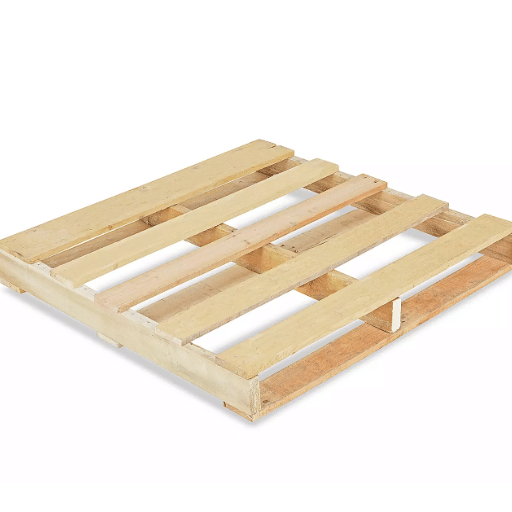
Grade B pallets refer to wooden pallets that have gone through the process of refurbishing or repairing and that have already been used, and over time, they might have developed minor wear, like, for example, replaced deck boards or stringer repairs. They do not have the same level of elegance as Grade A pallets, but they are sound and functional, thus suitable for different economic applications. Usually, the industries that care less about the look of the product and are mainly interested in the performance are the ones that use them the most.
Definition and Characteristics
Grade B wooden pallets are considered pallets that have been repaired or refurbished with the intention of using them again while still being cost-effective. These pallets generally show signs of usage and have characteristics like broken sections in deck boards, many nail holes, or the presence of stringers, usually in the form of extra accompanying stringers or plugs. Although their appearance is not uniform, they are still strong enough for various operational uses.
The main distinction between Grade B and Grade A pallets is in their cosmetic condition and the kind of repairs done. While Grade A pallets are visually uniform and subjected to very few repairs, Grade B pallets are not only good for use but also show their age and have patches. Pallet B grade is very common in sectors where cost is the major deciding factor over aesthetics, such as production, storage, and logistics. Their lower price and the ability to work reliably make them quite suitable for secondary markets, in-house storage, or shipping one way.
Comparison with Grade A and Grade C Pallets
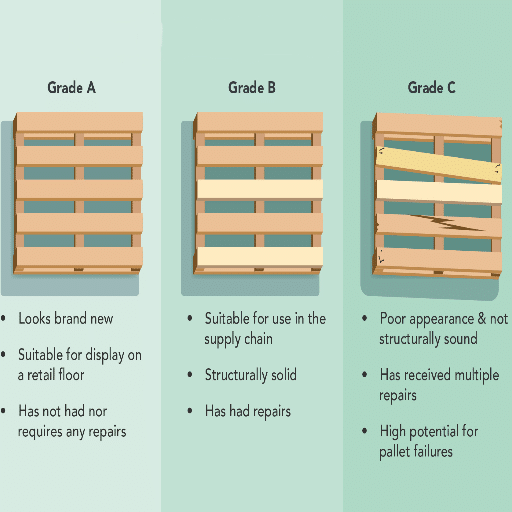
Grade A PalletsGrade A pallets, commonly known as premium or #1 pallets, are usually the ones in perfect condition. They are structurally intact with a few to no repairs and thus, have a clean and uniform appearance. Apart from those mentioned above, these pallets are opted for by the retail business and the customer-facing distribution areas where aesthetics and product presentation are critical.
Grade B PalletsHowever, Grade B pallets are a cost-effective option and, at the same time, they exhibit visible signs of use such as heavier repairs and discoloration. Moreover, they are still structurally sound and dependable, but would be most appropriate for situations where the aesthetics do not matter, like internal logistics or shipping for one-time use.
Grade C PalletsGrade C pallets, which are often considered the lowest tier, suffer from significant wear and tear and thus are characterized by broken or missing boards and unsightly or careless repairs. These pallets have very little strength left and are therefore mostly sold for non-critical applications, recycling, or disposal. In contrast to Grades A and B, Grade C would not be advisable to use repeatedly or for the duration of applications requiring durability.
The choice of grades should take into account the cost, application-specific needs, and the level of pallet performance required.
Common Uses of Grade B Pallets
Pallets of grade B are very much in demand in places where the price and the utility are chosen over the appearance. The pallets are found in the warehouse, manufacturing, and retail industry, among others, where one-way shipping is the main feature because of the pallets’ good structural integrity at a lower cost than the Grade A ones. The export market also accepts them as they are low-cost and, at the same time, meet international shipping conditions. Besides, these pallets help reduce costs in stacking and storing in non-critical areas, where heating and wear do not greatly affect the performance of the pallets.
Types of Pallet Grades
Grade A Pallets
The top-notch or A-grade pallets are the ones that have gone through little or no wear, and they are of the highest quality half the time. These pallets are usually the ones used in the sectors where the platform has to be clean, strong, and structurally reliable, for instance, the food and the pharma industries. They get repaired almost to the same level as new, and get rid of significant damage or any infestations.
Grade B Pallets
Grade B pallets are those that have been used and have already been repaired, so now the signs of wear are more evident, but they still serve well for a range of applications. Industries that do not have high demands, such as storage or non-critical shipping, would still be okay to work with these pallets and even make use of their minor aesthetic damage. The fact that they are cheap and available everywhere is the main reason why grade B pallets are so commonly used.
Grade C Pallets
Grade C pallets are the most worn-out and used ones that may have significant wear or even several repairs. It is typical for these pallets to be found at the bottom of the aisle, in low-priority areas, like scrap transport or single shipments, where the characteristics of durability and consistency are not important. Their low cost allows them to be used in short-term or even one-time applications.
Overview of Different Pallet Grades
To compare pallet grades, one must understand their specific applications and structural features, which are the main factors affecting their performance and cost efficiency.
| Grade | Condition | Best Applications | Key Features |
|---|---|---|---|
| Grade A | New or like-new condition with minimal repairs | Pharmaceuticals, food industry, retail, repeated use | Same kind of deck boards, excellent structural integrity, neat appearance |
| Grade B | Used with minor repairs and slight cosmetic issues | Storage, general manufacturing, distribution networks | Minor structural repairs, discoloration, functionality over aesthetics |
| Grade C | Significant wear with extensive repairs | One-time shipping, scrap material handling, non-critical loads | Missing components, patched deck boards, low price |
Appropriate pallet grade selection based on operational needs can lead to cost optimization, efficiency, and safety. One needs to know the differences to manage supply chains and allocate resources effectively.
Grade A vs Grade B Pallets
Grade A pallets, also known as premium or first-use pallets, are usually in the most excellent condition and show very little sign of usage and repairs. They are characterized by thick deck boards, sound stringers and are completely free from serious damage like fractures or splits. These pallets have more or less been exclusively used in high-standard hygiene industries, such as food and pharma, and in situations where repeated usage is necessary.
In contrast, grade B pallets are the second-hand ones that have been through the process of repair and display the wear of the previous use. The most common kind of replacement might be the deck boards or the stringers, which are also reinforced with more hardware, like plates or screws. These pallets may have some minor defects, but their structural quality is good; thus, they are usually used in less critical areas like warehousing, manufacturing, or one-way shipping.
The decision about whether to use Grade A or Grade B pallets is greatly impacted by the operational needs, budget limits, and industry standards. The advantage of Grade A pallets is that they are long-lasting and reliable for high-demand use, whereas the use of Grade B pallets is the low-cost alternative for less critical or single-use purposes.
Understanding Grade C Pallets
Grade C pallets are the last ones among reusable pallets, which means they are mainly used for applications where long life and good appearance are not the main concerns. Repaired mostly with old and mixed parts, these pallets get the look of major wear and tear, e.g., multiple stringer repairs, different weathering, or roughness of the surface. They are low-cost, but their structural strength is not as good as that of Grade A or B pallets, so they are left only for light-duty or one-way shipping tasks instead of rigorous reuse cycles. Industries with very little handling of pallets often choose C-grade pallets or use them for temporary storage, where low-cost options are better than high-performance ones.
Specifications of Grade B Pallets
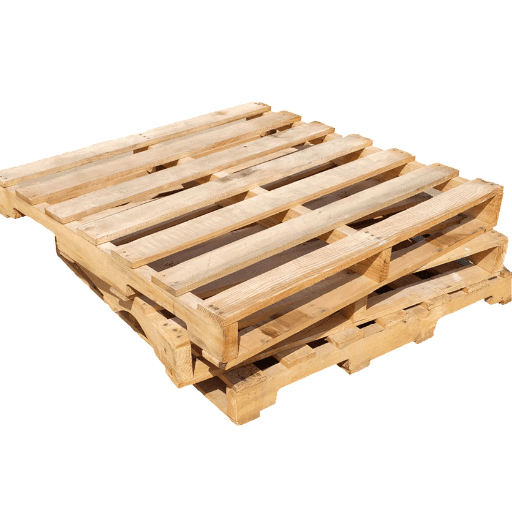
Grade B pallets are the kind of pallets that are refurbished and repaired in a moderate way to become usable again. They are the kind of pallets that normally show the signs of former utilization, such as the stringers and deck boards being replaced or repaired. In addition, the palleting standards may not have some bottom deck boards due to wear and tear or the removal of the boards during repair processes. Grade B pallets are usually considered as belonging to the medium-duty category, which gives the user cost-saving and durability at the same time. The industries that use Grade B pallets the most take care of their shipping, warehousing, and storage, where the aesthetics or quality are less important, but the strength of the material is still needed. They are the option that can be counted on to meet the needs of reuse, but without pushing the demand to the extreme.
Dimensions and Standards (48×40, GMA Pallet)
The GMA pallet of 48×40 was the most recognized as the leading pallet standard in North America. This pallet is a good companion for both shipping and storage systems because it was built with maximizing efficiency in mind. The initials “GMA” denote the Grocery Manufacturers Association, which set down guidelines and communicated between industries by making a single standardized size for pallets.
The weight of each empty pallet is usually in the range of 37-50 lbs and varies according to the wood used and the specific construction. The GMA pallets can bear a static load of up to 2,800 pounds and a dynamic load of 1,500 pounds thus are very versatile for storage and shipping purposes.
In terms of construction, a standard GMA pallet is manufactured with three stringers and five to seven top deck boards so that material is not wasted while strength is provided. This type of pallet can effectively work with forklifts and pallet jacks, avoiding any handling problems during transportation and storage. In addition, GMA pallets are made to slip into ISO-standard container dimensions, which is a great advantage when international shipping operations are concerned.
The design and 48×40 GMA pallet functionality were the reasons for the rapid adoption in different areas of the economy, e.g., retail, manufacturing, etc. Their lightweight design, durability, and cooperability with automated machinery, including conveyor belts and automated storage/retrieval systems (AS/RS), still make them the supply chain operation’s favorites.
Material Composition of Wooden and Recycled Pallets
Wooden Pallets
The typical material makeup of wooden pallets is a mix of various hardwoods, like oak or maple, and softwoods like pine or spruce. Hardwood pallets are appreciated for their strength and longevity, which makes them applicable for heavy-duty use, while softwood pallets are lighter and cheaper, thus fit for light loads. A wooden pallet averages approximately 95% wood fiber and 5% metal fasteners that are essential for the connection of the structural components, such as nails or staples.
Recycled Pallets
Recycled pallets, however, mostly use a combination of reused and repurposed wood or composite wood products. Their construction might include parts of disassembled pallets, sawmill waste, or processed wood chips glued together with industrial adhesives. The recycled options help to lessen the demand for virgin timber and prolong the life cycle of existing materials, which results in less environmental impact. Research has shown that around 70% to 75% of pallets in supply chains are repaired and reused, which facilitates the trends toward sustainability and circular economy concepts.
Moreover, breakthroughs in the materials field have led to the creation of hybrid pallet designs wherein wood is combined with plastic or metal reinforcements. Such alternatives are suitable for the pallets to perform excellently in tough situations like high humidity areas, international shipping, where longevity and weathering resistance are key factors. The constant change in the composition of pallet materials is one of the ways to satisfy the demand for operational efficiency and environmentally friendly practices in the industry.
Quality Assessment of B Grade Pallets
Structural Integrity and Load Capacity Grade pallets, which are often made of a mix of recycled and partially repaired materials, still have sufficient structural integrity for many applications, even though they are less perfect than A Grade pallets. The pallets in this category usually can handle a load between 1,000 to 1,200 pounds, thus being suitable for medium-weight distribution and storage in less critical places. However, their lifespan is highly dependent on the previous usage and the condition of the new deck boards or stringers.
Material Composition and Maintenance Grade pallets will often show signs of repair and may contain parts that have been replaced, which might include the parts of the stringers (most times these come with a board that is the same length as the stringer), and some minor cosmetic damage. The material used, either hardwood or softwood, mainly, could mainly determine how long they fight against the weight and moisture. Regularly scheduled inspections and maintenance, such as replacing and reinforcing boards with damaged areas, are very important in extending the life of these pallets.
Cost Efficiency and Industry Applications manufacturing, retail, and distribution sectors are among the industries that most heavily rely on B Grade pallets, owing to their economical nature. Generally, these pallets cost 20-30% less than A Grade alternatives while being good enough for one-way shipping or warehousing. And even though they lack the original look and precision, the companies that use them are always the ones that need to cut costs and do not mind the aesthetics or performance much.
Environmental Considerations Grade pallets are one of the ways to achieve sustainability in the supply chain by avoiding the use of new and already existing materials. Second-life materials take less virgin wood and hence are environmentally friendly as per the principles of a circular economy. It has been estimated that the use of repaired and reused pallets emits much less carbon than single-use ones, which is another reason for the industry to go eco-friendly.
Suitability in Specific Environments Grade pallets have many advantages in terms of cost and sustainability, but at the same time, their limitations need to be noted when they are used in high-stress or precision-required environments. The pharmaceutical and food production industries are examples of the sectors with high hygiene standards that need pallets with higher structural reliability or newer material compositions; thus, B Grade pallets would not be so good for them. On the other hand, they are still very good in places where storage is short-term or where the handling rules are not that strict.
Benefits of Using Grade B Pallets

Cost-Effectiveness price of Grade B pallets is really low, about only half the price of new or A-class pallets, thus they become an economically smart choice for operations that are sensitive to the cost factor.
Sustainable use of Grade B pallets is a way of mitigating the environmental impact of waste, especially the proper disposal of raw materials, as well as the promotion of eco-friendly business practices.
Availability Grade B pallets are widely available because they are commonly used and refurbished, so there will be negligible disruptions in the supply chain operations.
Adequate Functionality is dependable for applications with light to moderate loads or where the storage is very short.
Cost-Effectiveness and Availability of Used Pallets
Businesses that are looking to save money in their operations without sacrificing functionality can take advantage of used pallets, which are a cost-saving solution. Usually, prices of used pallets are very much lower than those of new ones, which makes it a very economical choice, particularly for those operations where the appearance or the highest structural integrity is not the main concern. Besides, the market has a high supply of used pallets as a result of regular refurbishment and recycling programs, which makes it easy for businesses to get them without any delay for their supply chain that requires them.
The standardization of pallet sizes across industries has led to an increase in the compatibility and availability of the pallets. The suppliers of the pallets keep large stocks of the used pallets to serve both the needs that are in large volume and those that are urgent, thus they support the operations that are smooth. Recycled used pallets not only bring about sustainable benefits but also support cost-effective logistics strategies while being part of the eco-friendly practices.
Environmental Impact of Recycled Pallets
Pallets that are recycled are becoming very important when it comes to cutting down waste that hurts the environment, as well as delivering sustainability across the board. The whole process denotes that the demand for virgin wood is significantly lowered, thereby saving the forests. Also, the volume of wooden waste going to landfills is decreased by the recycling process; hence, the emission of methane that comes from rotten materials is lessened. At the same time, the carbon footprint, which is a result of producing new pallets, is lessened due to the use of wood that is already recycled, as it requires less energy and raw materials. These advantages are in accordance with circular economy concepts, where the materials are kept in use for a long time and the impact on the environment is minimized. Through the use of recycled pallets, companies can easily bring in practices that are both economically and environmentally friendly in their supply chains.
Role in Supply Chain and Warehouse Management
Recycled pallets may not only favor the environment but also efficiency in the supply chain. Their lifetime and low price are the main factors that lead to a cut in logistics costs and better resource management. The usage of recycled pallets in a warehouse would highly influence its operations if not entirely, as the standard sizes and designs of the pallets will be very compatible with automated systems and material handling equipment, which will, in turn, speed up the process of storing and handling goods.
Moreover, the usage of recycled pallets is part and parcel of being able to claim that sustainability has been practiced in the supply chain since they are the ones that prevent landfill from increasing thus, they are the ones that save the nature, and they are the ones who are in the closed-loop system where pallets are exchanged among users and repaired to lengthen their lives. This means that the materials used in the warehouse will be such that they are easy on the environment and do not compromise their efficiency and effectiveness. Apart from that, they are so available that even in the most fluctuating market conditions, supply will be constant, and hence better inventory management with great logistic advantages.
Pallet Management and Maintenance

Efficient pallet management and maintenance are very important for both operational reliability and cost-effectiveness. Regular inspections should be done to find and repair problems like cracks, splinters, or loose nails that may weaken the structure. Cleaning the pallets after every cycle is necessary to avoid contamination, especially in the food and pharmaceutical industries. Additionally, a repair and recycle program can be set up to prolong the life of pallets and save money. Proper storage in dry, ventilated areas reduces the risk of warping or other damage due to environmental factors. High-quality materials and strict adherence to industry standards make it possible for pallets to be durable and acceptable for reuse over time.
Best Practices for Managing Pallet Grades
Pallet grades expertly managed is a very important practice, which can help in both operating efficiently and maintaining safety standards. To start with, a proper grading system should be set up, which would depict the quality of pallets being used in the operations. The grading system usually consists of three grades, i.e., A (new condition), B (used but with minor repairs done), and C (defective or low-grade). Pallet inspection is done consistently to find out wear, damage, and repair needs, thus making sure only good-quality pallets are used in the operations.
Routine Maintenance and The second step is giving routine maintenance and repairs high priority to keep the pallets viable and save on overhead. This covers checking the pallets for damaged slats, lost nails, and assessing if the structure is still intact or just weak, and fixing these problems with the quickest repair method. Once a repair technique – like the one provided by the National Wooden Pallet and Container Association (NWPCA) – is chosen, it results in uniformity.
Application-Specific SelectionMoreover, matching pallet selection with the application exactly is of utmost importance. For instance, grade A pallets are highly recommended in the pharmaceutical and food industries, where hygiene is one of the strictest regulations. On the contrary, in logistics and warehousing, it would usually be enough to use grade B pallets.
Tracking SystemsLast but not least, having a pallet tracking system can boost the inventory management process. Through the use of barcodes or RFID tags, it is possible to monitor the pallets being utilized, discover the weak areas, and also make sure that there is always a stock of each grade present. It is by applying preventive maintenance methods along with grading and tracking systems that the longest life and most reliable pallet management are achieved.
Repair and Reuse of Grade B Pallets
My method for handling Grade B pallets entails first and foremost determining the state of the mainframe to conclude if the unit can be reused. Badly broken pieces (boards or stringers) are taken out and replaced, or the whole thing is just strengthened, thus the pallet is able to carry the specified weight without putting safety at risk. Besides, I always try to make the least expensive repairs that will allow the pallets to live longer and, at the same time, be functional. By constantly examining and rejuvenating Grade B pallets, I facilitate their fast reuse in markets where the perfect quality is not required. The method used not only limits waste but also gradually reaps the benefit of resource optimization.
Tracking Pallet Grades in the Supply Chain
The checkup of the pallet grades in the whole supply chain has to be done not only with efficiency but also with the help of proper resource allocation. Standardized barcode or RFID tracking systems are then the solution for this. These technologies allow monitoring pallet movements in real-time, which means that detailed data about the grade, condition, and utilization of the pallets is available at all times. If the tracking data is incorporated in the WMS, the stakeholders can easily know when the Grade A pallets are needed for the sensitive goods or when the Grade B pallets that are less expensive can be used for the secondary applications. Besides, having clear labeling and active communication among the supply chain partners contributes to reducing mistakes and ensuring the right pallets are assigned to the right purposes. Through the use of the most sophisticated tracking solutions and the cooperation of the partners, firms can enjoy better control of their inventory, less waste, and more efficiency throughout the supply chain.
Grade B pallets represent an intelligent balance between cost-effectiveness, functionality, and sustainability in modern supply chain operations. By understanding their characteristics, applications, and proper management practices, businesses can optimize their logistics operations while contributing to environmental conservation. Whether you’re managing a warehouse, planning distribution networks, or seeking cost-effective shipping solutions, Grade B pallets offer a practical and economically sound choice that supports both operational efficiency and sustainable business practices.
Reference Sources
Frequently Asked Questions (FAQs)
What are Grade B Pallets?
Grade B pallets are those that have already been used and are suffering from a certain degree of wearout. Most of the time, they are in a somewhat good condition; however, the scrapes, scratches, and dented corners, among others, may disqualify them as A-grade ones, thus making them less expensive. Hence, these are plastic pallets, most used by companies that still care about quality but need a cheaper solution for their requirements.
What are the Differences between Grade A and Grade B Pallets?
Grade A pallets are perfect for companies that need top condition pallets all the time, whereas Grade B pallets are less pricey pallets that are still useful for the same purpose but with some minor flaws. Both types are different and vary according to the requirements and allowances of the company.
What are the Pros of Using Grade B Pallets?
There is a huge price difference between grade B and new pallets. Grade B pallets are the practical choice for businesses that want to have an optimized supply chain but still work with the right and functional pallets. These pallets are often suitable for shipping and storage in various industries such as food and beverage.
Are plastic pallets a viable alternative to wooden ones?
Certainly, plastic pallets can be a very good substitute for wooden ones. They are commonly found in manufacturing plants and are trusted for their long life and resistance to moisture. Plastic pallets, on the other hand, which are normally more expensive than wood ones, are still a functional and safe option, particularly in the sectors that have very strict sanitary regulations.
What are heat-treated pallets?
Heat-treated pallets are wood pallets that have been through a treatment process, which eliminates any pests or pathogens. Wood pallets’ heat treatment process makes them accepted by the international shipping standards, and therefore they are allowed for transport across borders. Both grade A and grade B pallets can be heat-treated depending on the manufacturer’s demand.
How Are Pallets Graded?
The quality of the pallets and their visual appearance will form the basis for the grading decision. Generally, the grading system comprises three grades: A, B, and C. This classification enables the companies they have the perfect pallet solution that fits in their operation and at the same time does not exceed their budget.
What are 4-way entry pallets?
4-way entry pallets are created to be accessible from all four sides, thereby making them versatile for both handling and storage. This characteristic is particularly valuable in a warehouse where space is limited and efficiency is of the utmost importance. The 4-way entry feature can be designed in both grade A and grade B pallets.
How Do I Choose the Right Pallets for My Business Needs?
Choosing the pallets that are perfect for you is a very systematic operation that entails your very specific needs, such as the goods to be transported, the budget, and the type of operation you are going for. When it comes to pallets, there is a whole spectrum of options ranging from grade A to grade B and even recycled pallets. Being aware of the underlying differences will definitely empower you to make a well-informed choice.
What should I take into consideration while managing my pallet inventory?
When it comes to pallet management, it includes keeping track of the condition and working of your pallets. Think about the kind of pallets you need (wooden or plastic), the available grades, and your overall supply chain productivity. Proper pallet management can prove to be a source of both cost and performance benefits.