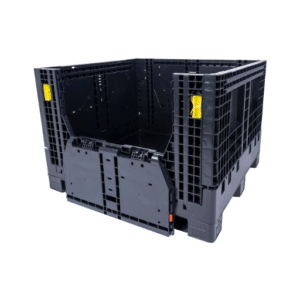
Yes, plastic pallet repair is possible when damage is limited to cracks, broken deck boards, or worn components and the pallet is made from a repairable thermoplastic such as HDPE or PP. The right repair method can extend service life and cut fleet costs by 30–40%. Severe structural damage usually means replacement is the safer choice.
Common plastic pallet repair methods include:
- Plastic welding for cracks and holes
- Adhesive bonding for small, non-load-bearing cracks
- Component replacement for modular pallets
- Splicing for localized deck or runner damage
When Marcus, a warehouse supervisor in Ohio, noticed hairline cracks spreading across a fleet of rackable HDPE pallets, he faced a familiar dilemma. His team wanted to weld the cracks and keep the units in circulation. His safety manager wanted them scrapped. Neither had a clear decision framework, so the pallets sat in a quarantine corner for three weeks while outbound shipments stalled.
That scene plays out in warehouses every day. Plastic pallet repair sounds simple, but the wrong call can damage inventory, injure workers, or trigger food-safety audits. In this guide, you will learn how to inspect plastic pallets, choose the right repair method, calculate true cost, and decide when replacement is the better option. We will also cover industry-specific protocols for food, pharma, and automated systems so your fleet stays compliant and productive.
Key Takeaways
- Most plastic pallets made from HDPE or PP can be repaired if the damage is localized and non-structural.
- Common repair methods include plastic welding, adhesive bonding, and component replacement; each suits a different damage type.
- Repair costs typically range from 5–5–10 for field fixes and 25–25–45 for professional service, while new plastic pallets run 15–15–150+.
- Replace a pallet when repair costs exceed 30–50% of replacement cost, more than 30% of components are damaged, or structural integrity is compromised.
- Regular plastic pallet maintenance and inspection can reduce replacement rates by 35% or more.
Can Plastic Pallets Be Repaired?

The short answer is yes, but with important caveats. Plastic pallets are usually molded from high-density polyethylene (HDPE) or polypropylene (PP). Both are thermoplastics, which means they can be reheated and reformed. That property makes plastic pallet repair feasible for many common damage types.
Repairable damage includes small cracks in the deck, holes from fork impacts, worn feet, and broken non-load-bearing components. These issues can often be fixed with plastic welding, compatible adhesives, or modular part replacement. The result is a pallet that returns to service at a fraction of replacement cost.
However, not every pallet is worth saving. Damage to load-bearing stringers, core blocks, or the bottom runners can compromise the unit’s rated capacity. A repaired pallet used in racking or automated systems must still meet dimensional tolerances and safety standards. In those cases, replacement protects people, products, and equipment. The first step is always an honest answer to can plastic pallets be repaired safely for this specific load and environment.
Want to see which pallet designs are easiest to repair? Explore repair-compatible plastic pallets from Lile Group.
Common Causes of Plastic Pallet Damage
Understanding why pallets fail helps you prevent recurring damage and decide whether each unit still qualifies for plastic pallet repair.
Forklift Impacts and Improper Handling
Fork tines strike the leading edge of a pallet thousands of times per year. Misaligned entry, angled lifts, and rough handling create stress fractures in the deck and blocks — a common reason people ask how to repair plastic pallets instead of replacing them. Over time, those micro-cracks grow into splits that weaken the entire unit.
Overloading and Point Loading
Every pallet has a rated static, dynamic, and racking load. Exceeding those limits or placing a heavy point load in the center of the deck can cause deformation, cracking, or collapse. Point loading is especially damaging to nine-leg or nestable designs because the load concentrates on a small area.
Extreme Temperatures and UV Exposure
HDPE and PP perform well across a wide temperature range, but prolonged exposure to intense heat, freezing cycles, or direct sunlight degrades the material. UV exposure makes plastic brittle, while extreme heat can cause warping that throws off pallet dimensions.
Chemical Exposure and Environmental Stress
Acids, solvents, and aggressive cleaning chemicals can attack plastic surfaces. Even mild chemical exposure can accelerate cracking when combined with physical stress. For food and pharmaceutical operations, contamination also raises hygiene concerns that simple welding cannot address.
Wear in Automated Systems
Automated storage and retrieval systems (AS/RS), high-speed conveyors, and palletizers demand tight dimensional tolerances. Minor warping or repaired corners that would pass in a manual warehouse can cause jams, mis-picks, and downtime in automated facilities.
How to Inspect Plastic Pallets for Damage
A consistent inspection routine is the foundation of good plastic pallet maintenance. Catching damage early turns expensive replacements into low-cost repairs.
Visual Inspection Checklist
Start with a 360-degree visual scan. Look for cracks, chips, missing material, discoloration, and deformation. Pay special attention to the corners, fork entry points, and bottom runners where impacts are most common. Check for embedded nails, splinters, or foreign material that could damage downstream equipment.
Structural Integrity Tests
Press down on each corner and the center of the deck to detect soft spots or flexing that exceeds normal deflection. Inspect the blocks or legs for cracks that run completely through the wall. These checks are the first step in any safe plastic pallet repair decision. For rackable pallets, verify that the bottom runners are straight and free of cracks that could cause rack failure.
Hygiene and Contamination Checks
In food, beverage, and pharmaceutical operations, inspect for staining, odor, and residue that cannot be removed through standard cleaning. A pallet may be structurally repairable but unusable if it cannot be sanitized to the required standard.
Color-Coded Tagging System
Many warehouses use a simple green-yellow-red system. Green means the pallet is serviceable. Yellow means repairable damage has been identified and the unit should be routed to the repair queue. Red means the pallet is beyond repair and should be removed from service immediately.
Inspection Frequency Recommendations
High-turnover operations should inspect pallets daily or at each return cycle. Medium-use warehouses can inspect weekly. Any pallet involved in a visible impact, overload event, or contamination incident should be inspected before reuse.
For a broader inspection framework, see our general pallet maintenance checklist.
Plastic Pallet Repair Methods
Once you know what is broken, you can match the damage to the right repair technique.
Plastic Pallet Welding
Plastic welding is the most common method in plastic pallet repair work for fixing cracks and holes. A hot-air welder or extrusion welder heats the damaged area and a compatible welding rod until both melt together. After cooling, the weld restores strength and creates a watertight seal. See the plastic pallet designs that work best with welding.
For HDPE pallets, use an HDPE welding rod. For PP pallets, use a PP rod. Matching the rod to the base material is the single most important rule in plastic pallet welding. Mixing materials produces a weak bond that will fail under load. Professional repair centers also bevel cracks into a V-groove before welding to improve penetration and reduce stress concentration.
Adhesive Bonding
Two-part polymer adhesives can repair small, non-load-bearing cracks where welding equipment is not available. This method is faster and requires less skill, but the bond is generally weaker than a welded repair. Adhesive fixes are best treated as temporary solutions for light-duty applications.
Component Replacement
Modular pallets allow individual deck boards, blocks, feet, or runners to be swapped out. This is often the cleanest repair because it restores the pallet with factory-spec parts instead of field welds. If your operation experiences repeated damage to one component, switching to a modular design can reduce long-term repair costs.
Splicing and Section Replacement
Some pallet designs use spliced deck boards or reinforced sections. When a splice fails, the damaged section can be cut out and replaced with new material. This method requires more labor and tooling than simple welding but can rescue pallets with localized damage that would otherwise be scrapped.
When to Use Professional Repair Services
In-house welding works for minor cracks, but professional services are the safer choice for structural repairs, large fleets, or regulated industries. Certified repair centers can pressure-test welds, verify load ratings, and document repairs for audit trails. For pooled pallets or automated-system pallets, manufacturer-authorized repair is often required to maintain warranties and dimensional compliance.
Plastic Pallet Repair vs. Replace: How to Decide

The most important question in plastic pallet repair is not how to fix a pallet, but whether to fix it. The answer usually comes down to plastic pallet repair cost versus replacement cost and risk.
The 50% Cost Rule
A widely used rule of thumb is to repair when the repair cost is less than 50% of the cost of a new pallet. For example, if a new rackable pallet costs 60andaprofessionalrepaircosts60andaprofessionalrepaircosts20, repair is economically justified. If the repair quote reaches 35–35–40, replacement becomes the smarter investment.
The 30% Component-Damage Rule
If more than 30% of the pallet’s components are cracked, broken, or deformed, replacement is usually safer. A pallet with widespread damage has likely exceeded its fatigue limit, and additional repairs will only postpone failure.
Load-Bearing vs. Cosmetic Damage
Cosmetic damage such as surface scuffs or minor discoloration does not affect performance. Damage to load-bearing elements—stringers, blocks, runners, and reinforced corners—directly impacts safety. When in doubt, retire the pallet.
Application-Critical Factors
Pallets used in racking, automated systems, food contact, or pharmaceutical cleanrooms face stricter requirements than floor-storage pallets. A repair that is acceptable in a general warehouse may not meet tolerance or hygiene standards in these environments. Always follow the pallet manufacturer or owner’s authorized repair program.
Repair vs. Replace Decision Matrix
| Damage or Situation | Recommended Action | Why |
|---|---|---|
| Small crack in non-load-bearing deck | Repair (weld or adhesive) | Low risk, low cost, quick return to service |
| Broken deck board or worn foot on modular pallet | Replace component | Restores factory spec without full-unit disposal |
| Damage to stringers, runners, or core blocks | Replace pallet | Structural failure can cause rack collapse or injury |
| More than 30% of components damaged | Replace pallet | Fatigue limit likely exceeded |
| Repair cost exceeds 50% of new pallet cost | Replace pallet | Replacement becomes the better investment |
| Use in food/pharma/AS/RS critical system | Use OEM/certified repair or replace | Must preserve compliance and dimensional tolerance |
Total Cost of Ownership Comparison
A Midwest food distribution center tracked its pallet fleet for two years and found that a structured repair program cut replacement rates by 35%. The key was routing every returned pallet through inspection and making consistent repair-or-replace decisions. The center saved money not only on pallet purchases, but also on downtime, product damage, and emergency orders.
Not sure whether your fleet is worth repairing? Request a free fleet assessment and our team will evaluate your damage patterns, duty cycles, and replacement costs.
Industry-Specific Repair Considerations
Different industries impose different rules on plastic pallet repair.
Food and Beverage
Food-grade pallets must be cleanable and free of cracks that can harbor bacteria. Plastic pallet repair in food facilities therefore requires food-safe welding rods and adhesives. For operations that store ingredients or finished goods in bulk, our plastic pallet boxes offer a cleanable, repairable alternative designed for food-safe environments. Any pallet that cannot be fully sanitized after repair should be retired. Some facilities require documented repair logs to satisfy third-party audits.
Pharmaceuticals and Cleanrooms
Pharma operations demand higher cleanliness and traceability. Repairs should be performed in controlled conditions with materials that meet FDA or equivalent regulatory requirements. Even small repairs can create crevices or residues that violate cleanroom standards, so replacement is often preferred.
Cold Chain and Freezer Applications
Freezer storage makes some plastics more brittle. Repairs performed at room temperature may behave differently at -20°C or lower. Cold-chain operators should verify that repair materials maintain strength across the full service temperature range.
Automated Warehouses and AS/RS
Dimensional accuracy is critical in automated systems. A repaired corner or welded runner that protrudes even a few millimeters can jam conveyors or misalign racks. Automated operations should rely on manufacturer-authorized repair programs or replace damaged units outright.
Export and ISPM-15 Exempt Plastic Pallets
Plastic pallets are exempt from ISPM-15 heat-treatment requirements, making them popular for export. However, repairs must preserve the original design and material specifications. Unauthorized modifications can void compliance claims and cause customs issues.
Maintenance Tips to Prevent Damage and Extend Lifespan
The cheapest repair is the one you never have to make. Good plastic pallet maintenance and early inspection reduce the need for plastic pallet repair and extend service life well beyond the typical 7–10 year baseline.
Proper Handling and Forklift Training
Train operators to enter pallets squarely, lift smoothly, and avoid dragging or pushing loads across floors. Forklift impacts are the leading cause of pallet damage, and most are preventable.
Load Distribution and Weight Limits
Distribute loads evenly across the deck and respect the pallet’s rated capacity. Avoid point loading and off-center stacking. For information on load ratings, read our plastic pallet load capacity guide.
Storage Best Practices
Store pallets flat, out of direct sunlight, and away from heat sources. Avoid stacking more than four to six feet high to prevent deformation. Keep storage areas clean and free of chemicals that could degrade plastic surfaces.
Regular Cleaning and Inspection Schedules
Clean plastic pallets with mild detergent and water, then dry thoroughly before storage. Combine cleaning with inspection so minor damage is caught before it becomes a major failure.
Fleet Tracking and Asset Management
Modern operations use barcodes, RFID, or asset-management software to track individual pallets through their lifecycle. These systems identify recurring damage patterns, highlight high-cost SKUs, and schedule preventive repairs before failures occur.
Sustainability: Repair, Recycle, or Repurpose

Plastic pallet repair supports sustainability goals by keeping materials in use longer. The global pallet repair services market was valued at approximately 8.7 billion in 2025 , and plastic pallets account for about 26.38.7 billion in 2025 ,and plastic pallets account for about 26.32.3 billion, according to Dataintelo.
Repairing a pallet consumes fewer resources than manufacturing a new one. It also reduces landfill waste and lowers the embodied carbon of your logistics operation. When repair is no longer viable, HDPE and PP pallets are recyclable. Switching to sustainable plastic pallets made from recycled resin can extend your environmental commitment without sacrificing durability. Many end-of-life pallets can be ground into resin and remolded into new pallets or other products.
At a pharmaceutical 3PL in New Jersey, the operations team switched from welded repairs to modular Lile pallets designed for component replacement. The change cut end-of-life waste by nearly half because damaged parts could be removed and recycled separately while the rest of the pallet stayed in service.
Ready to design a more repairable pallet fleet? Get a quote for custom repairable pallet designs tailored to your application and duty cycle.
Frequently Asked Questions About Plastic Pallet Repair
Can plastic pallets be repaired?
Yes. Most plastic pallets made from HDPE or PP can be repaired if the damage is localized to cracks, holes, worn feet, or broken non-load-bearing components. Severe damage to stringers, runners, or core blocks usually requires replacement.
How much does plastic pallet repair cost?
Field repairs typically cost 5–5–10 per pallet for materials and labor. Professional repair services usually charge 25–25–45 per pallet, depending on damage severity and volume. New plastic pallets range from 15to15to150+ depending on specifications.
What is the best way to repair plastic pallets?
Plastic pallet welding is the strongest method for cracks and holes in load-bearing areas. Adhesive bonding works for small, non-load-bearing cracks. Component replacement is best for modular pallets with damaged deck boards, feet, or runners.
How do I know when a plastic pallet is beyond repair?
Replace the pallet when the damage affects structural elements, more than 30% of components are damaged, repair costs exceed 50% of replacement cost, or the pallet will be used in food, pharma, or automated systems where dimensional tolerance is critical.
Can I repair plastic pallets myself?
Yes, for minor cracks using a plastic welding kit or compatible adhesive. For structural repairs, large fleets, or regulated industries, use a certified repair center or the pallet manufacturer to ensure safety, compliance, and warranty protection.
Conclusion
Plastic pallet repair is a practical way to control costs, reduce waste, and extend fleet life, but only when the damage is localized and the repair method matches the material and application. Start with a consistent inspection routine. Route repairable units to the right technique, whether that is welding, adhesive bonding, or component replacement. Retire pallets that have structural damage, widespread component failure, or repair costs approaching half the price of a replacement.
The warehouse teams that get the best results treat pallets as assets, not disposable commodities. By tracking lifecycles and controlling plastic pallet repair cost, they keep fleets productive without sacrificing safety. With the framework in this guide, your team can do the same.
If you want to explore repairable pallet designs, compare plastic vs. wooden pallets, or learn more about how long plastic pallets last, the Lile Group team is here to help. Contact us today for a fleet assessment or custom pallet solution designed for your operation.