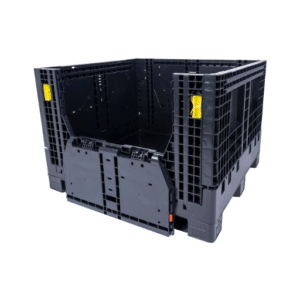
The appearance of plastic pallets indicates the presence of a state-of-the-art management system. Note that such surrender on technology takes place along with its promotion. Namely, these ingenious solutions do not simply substitute simple, less durable, and very common wooden pallets but they also carry with it new usage opportunities. Yet, there are doubts about whether plastic pallets are really long-lived and whether they are worth the trouble of replacing them every time. Clearly, estimating the lifespan of plastic pallets is a must for those companies which are in the business of logistics because it will help to cut down the cost, generate less waste, and finally enhance the performance. This sort of information is a must for businesses that wish to make decisions based on information coming from the supply chain.
Understanding Plastic Pallet Lifespan

Factors Affecting Plastic Pallet Longevity
Plastic pallets live long and worthy lives because they are made of well selected, mixtures of materials, have made, strong weight-bearing properties and are subjected to usage in diverse conditions, in varying proportions. HDPE and PP are among the top-performing materials because of their unmatched strength and that they are not likely to be broken or bent when under stress.
Key Factors to Consider:
- Material Composition: HDPE and PP offer different advantages based on operational needs
- Load Capacity: Exceeding weight limits accelerates breakdown and deterioration
- Environmental Conditions: Extreme temperatures, UV radiation, and chemical exposure cause degradation
- Usage Frequency: How often pallets are loaded, moved, and handled directly impacts wear and tear
Proper maintenance and strict adherence to handling guidelines are crucial for prolonging the lifespan of plastic pallets in demanding supply chain operations, ensuring durability and continued serviceability.
Typical Lifespan of Plastic Pallets
There is definitely a great deal of variation in the life expectancy of plastic pallets due to the quality of the material, the environment they are used in, and frequency of their use. In the case of chemical exposure, for example, a single spill with a strong chemical may ruin the pallet. High-end plastic pallets are, however, able to provide services for more than ten years in a well-regulated environment if they are duly maintained. On the contrary, the pallets which have been sold to the “extreme” clients—those who either face very hot or very cold temperatures, or are using hazardous chemicals, or even the UV radiation—will have their life reduced by 3 to 5 years.
⚠️ Important Note:
Having the plastic pallets used in the process of all industrial activities lead to the long and functional life of the pallete, proper maintenance and correct operational procedures are the most critical factors.
Comparative Lifespan: Plastic vs Wood Pallets
Plastic pallets generally outlast wooden pallets primarily due to their resistance to moisture, insects, and normal wear and tear. Understanding these differences is essential for making informed purchasing decisions.
While plastic pallets typically have higher setup costs, their extended lifespan and reduced maintenance requirements make them economically advantageous for long-term use in both rental and return systems.
Durability of Plastic Pallets

Material Composition and Its Impact on Durability
The durability of plastic pallets is mainly determined by what is used in the production process. The most commonly used materials are high-density polyethylene (HDPE) and polypropylene (PP), which have different qualities that can satisfy diverse needs.
HDPE (High-Density Polyethylene)
- Exceptional resistance to impact and shock
- Superior performance in low temperatures
- Ideal for operations with frequent handling
- Perfect for cold storage environments
PP (Polypropylene)
- Greater stiffness and rigidity
- Superior resistance to high temperatures
- Better suited for heavy loads
- Ideal for demanding industrial situations
It is feasible to include other features like UV stabilizers, anti-slip coatings and reinforcing materials during the pallet manufacturing process. By doing so, the pallet life cycle could be further extended and additionally the production costs kept at a good level. The working environment and the climatic conditions will be also considered while choosing the pallet material since the cost-performance longevity issue is one of the most significant factors.
Signs of Plastic Pallet Deterioration
Plastic pallets exhibit wear and tear through specific identifiable patterns. Recognizing these signs early can prevent reduced operational efficiency and safety hazards.
⚠️ Warning Signs Checklist:
Cracks or Fractures: These form due to the long-term action of intense loads or environment-related stresses like wide temperature swings.
Warping or Deformation: This happens when the material is constantly subjected to overloading or placed improperly.
Fading or Discoloration: It is a sign that the structural integrity may be weakened due to exposing the material to UV light irradiation.
Surface Damage: The causes of the damage are too scratching, gouging, or material brittleness foreshadowed by Hit the iceberg.
Regular inspections are essential for detecting issues early, enabling timely repairs or replacements that contribute to extended pallet life and operational reliability.
Maintenance Tips for Extending Pallet Life
Effective maintenance practices are crucial for maximizing the working lifespan of plastic pallets. Implementing these best practices can significantly extend operational life while maintaining safety standards.
🔧 Best Practices for Pallet Maintenance:
- 1. Proper Handling Techniques
Use correct lifting methods and avoid overloading to prevent structural damage
- 2. Regular Inspections
Check for cracks, warping, or loose parts routinely and address issues immediately
- 3. Proper Storage
Store in dry, covered spaces to prevent moisture damage and UV exposure
- 4. Load Management
Never exceed rated capacity and maintain organized stacking practices
- 5. Timely Repairs
Replace or repair damaged pallets promptly to prevent further deterioration
Following these guidelines not only enhances operational efficiency but also significantly extends pallet life, delivering substantial cost savings over time.
Cost-Effectiveness and Replacement Cycles

Evaluating Overall Costs of Plastic vs Wooden Pallets
One must consider various factors that impact costs in their span of existence: the initial buy, life span, maintenance demand, recyclability, and finally the long term usability.
It’s often the case that wood pallets have the lowest upfront bills, thus being the ones that catch the immediate reach mainly because the company has no budget slush fund. On the other hand, they usually do not last longer and are more affected by humidity, pests, and tear. All these could result in higher expenses on the repair and replacing side in the long run.
In spite of the fact that it takes a far greater amount of money to buy them, the fact remains that plastic pallets are more durable than any other goods and are able to protect against water, chemicals, and biological agents. They are irreplaceable in areas where hygiene is strictly monitored–like food and pharmaceutical industries, as they offer the required safety and compliance. The latter is further elaborated when the infinite use of the product is seen as an advantage in terms of a higher initial cost, also when recyclability almost reaches 100% and the weight of the material is less, which certainly increases the bulk transportation costs by a lot.
Replacement Cycles: How Often Should You Replace Plastic Pallets?
The life span of plastic pallets is mostly affected by how often they are used, the surrounding environment, and the condition in which they are used. Top of the line pallets will last more than ten and often significantly longer than wood pallets. However, constant monitoring should be the key component amongst maintenance tasks to be able to notice early the wearing and tearing process.
📋 Inspection & Replacement Guidelines:
Regularly monitor for cracks, shifts in structure, and wear and tear
Companies with rigorous regulations in the area of health and safety may ask for more frequent replacements
Carry out planned maintenance programs to reduce downtime
Keep a record of pallet condition and follow up on loss rates to save on costs
Replace immediately if integrity is compromised
Establishing a well-timed maintenance and inspection program from the outset ensures minimal impact on logistics while maintaining critical safety prerequisites.
Eco-Friendly Considerations in Pallet Replacement
Businesses should prioritize environmental sustainability when managing pallet replacement cycles. Selecting recyclable or reusable pallets minimizes ecological impact while supporting corporate environmental objectives.
🌱 Sustainability Best Practices:
Select Recyclable Pallets: The majority of plastic pallets are designed to be completely recyclable, thereby minimizing waste generation
Opt for Recycled Material: By using only recycled material, it is possible to get pallets that are highly suitable for sustainability programs
Go For Producers Who Act Sustainably: Link only with suppliers who are sustainable and provide you with leverage to be a recycling partner
Enforce The PMR System: The company will transport all of the broken pallets and the recycling of waste materials might not be a problem
Contribute To The Circulation Of The Economy: Develop systems that are not open to the public, maximize the use of limited resources, and reduce the impact on the environment.
Combining these methods enables businesses to align pallet management with environmental objectives while maintaining operational efficiency.
Choosing the Right Pallet for Your Supply Chain

Balancing Longevity and Cost
It is very important to conduct a thorough cost-benefit analysis when it comes to selecting pallets to balance durability and cost factors. Businesses need to take into account the initial acquisition cost and the maintenance and operational expenses that will be incurred over a certain period of time.
Although the wooden pallets are somewhat inexpensive at first, they usually involve higher costs related to maintenance and replacement due to the shorter lifespan and vulnerability to damage. In contrast, plastic pallets do require considerable upfront investments but they do not need constant repairs, are the longest-lasting solution, and can be a lot more durable.
💡 Key Decision Factors:
- Load Capacity Requirements: Assess typical weight loads and handling frequency
- Product Types: Consider sensitivity to contamination and hygiene needs
- Transportation Frequency: Evaluate how often pallets move through the supply chain
- Environmental Conditions: Factor in temperature extremes, moisture, and chemical exposure
- Regulatory Requirements: Ensure compliance with industry-specific standards
Firms that carefully analyze their supply chain requirements can identify significant advantages for specific pallet types, ultimately achieving eco-friendly and cost-effective pallet management.
Making Informed Choices: Wood vs. Plastic
The choice of plastic or wooden pallets is mainly dependent on the special needs and future goals of any company.
Despite the need for frequent repairs, wooden pallets remain the first choice of companies with tight budgets and hence, they prefer the use of disposable pallets as the less elabotrate making them most suitable for high-stocked products and requiring less hygienic conditions industries.
The collection and the reuse of pallets are hardly successful in the related industry among those where plastic pallets are being chosen.
📊 Decision Matrix Summary:
| Choose Wood If: | Choose Plastic If: |
| – Budget is primary concern – Simple repairability needed – High turnover applications – Lower hygiene requirements – Domestic shipping only |
– Strict sanitation standards required – Long-term cost savings prioritized – Moisture/chemical exposure likely – International shipping needs – Closed-loop systems utilized |
An in-depth evaluation of up-front costs, energy consumption over the lifetime, the ability of the system to be up and running continuously while meeting regulations gives companies the chance to choose the best pallet type that satisfies the sustainability requirements without sacrificing logistical effectiveness.
Future Trends in Pallet Durability
The future of pallet sustainability will center on durability improvements through advances in material science and sustainable manufacturing practices. Emerging technologies promise to revolutionize the industry through several key innovations:
🔬 Advanced Materials
Reinforcement composites and bio-based materials will create pallets that are lighter yet stronger while using more environmentally friendly manufacturing processes.
📡 Smart Technology
Sensors embedded in pallets will monitor wear and tear in real-time, enabling predictive maintenance that extends operational lifespan.
References
-
Comparison of the Different Hazards Experienced by Pallets During Material Handling
Read more here -
Ecobricks: Redirecting our Plastic Waste
Read more here -
Environmental analysis of pallets using life cycle analysis and multi-objective dynamic programming
Read more here
Frequently Asked Questions (FAQ)
How long do plastic pallets usually last? What is the plastic pallet’s lifespan?
Plastic pallets are said to last much longer than wood pallets in the customary conditions of a warehouse, experiencing a life ranging to a few years under high use. The service life of a plastic pallet of top quality will depend largely on what it is made to carry, how frequently it is used, how roughly it is handled, and whether it is (or is not) exposed to the harmful effects of ultraviolet light and chemicals; thus, the heavy-duty or reinforced designs that last the longest. Plastic pallets may exist either as one-way or as a part of a closed system that involves them being returned to the manufacturer which ultimately results in cost savings and sustainability compared to wood pallets. Plastic pallets do not have the greatest impact on the environment like wood, they do not cause any hazards as they do not break up, are resistant to scrapes and fungus (can be washed and disinfected), are best for product safety, and are suitable for hygienic environments. Unused suggested terms: emissions, pimples, truck transportation.
Is it really a cost-effective option to go for plastic pallets and to get best value for the cost?
if you will take a longer view of the usage of them, and compare the smaller service needs and the lower replacement needs to the ones of the wooden pallets, then buying plastic pallets would be a budget-friendly option. Most of the time, the cost of plastics is higher, but on the other hand, plastic pallets usually become the first hard-wood saver, and at the same time they are the tariff and the damages reducer, etc., while they also require less labor for repairs. The product safety, ease of cleaning, and shelf/carrying conditions are usually the main portion of the cost-saving measures which leads the initial investment pay off. In the case of shipping pallets and overseas transportation, plastic equivalents can lower the risk of contamination and meet the higher sanitary requirements. Words left out: “Storage of, responsible for one”, and “savings”.
Wood vs Plastic Pallets – What is the Right Choice for My Processing?
The selection between plastic and wooden pallets depends greatly on the priority of budget, cleanliness, and the reuse strategy; the wooden ones would be the cheapest most of the time, but plastic pallets might be better in terms of cleanliness, or the safety of the soil product need. The working life of the plastic pallets is to be spoken of as a safe one, they are splinter-free, and the cleaning of them naturally is not a burden, and consequently, they are in most cases a favorite problem-solver within food, drug, and clean room logistics operations at the same time. One should decide about using wood or plastic pallets considering the aspects of strength, the care for the environment, and whether the pallets will work in the closed-loop systems to eventually make reuse a more effective practice. Actually, much of the route, customer, and even the acceptance of wood pallets for certain shipments before deciding on the use of both wood and plastic pallets together has been observed among logistics managers. UNUSED: A suggested list of terms not included in the given text are: environmentally friendly and sustainable, wood and plastic pallets, their plastic counterparts.
How long can plastic pallets survive when they are heavily used?
Plastic pallets have a very long life span and, surprisingly, they can be expected to make several thousand trips even under the heavy loads. If the pallet has been manufactured in a heavy-duty way and placed properly in a stack, and the weight on it does not exceed the rated capacity, a very good general care of it and of the surroundings should be made so that the life will be longer; one of which is the effect of constant UV. The plastic pallets might get affected by the petroleum-based origin which led to them being very brittle in the long term due to poor formulation; thus, the usage of quality plastic is a must for the long material life. By the assistance of a retail program of visual checkups and with the presence of an asset-tracking system, logistics will still be able to determine the time and locations of the replacement areas. It is recommended to stay away from the terms: plastic over time, pallets offer, long plastic.
Will plastic pallets break or splinter like wood, ultimately, or not?
Plastic pallets differentiate from wooden pallets in the sense that they do not splinter and are less polluting to the environment. At the same time safety and hygiene would be enhanced. The negative side is that plastic can be less attractive, scratched, or even slightly yielding with the number of load cycles; still, it holds up, by and large, better than wood, especially in moisture or chemical conditions. The ease of disassembling or cleaning the plastic pallets makes their maintenance very easy and is one of the ways in which product safety is ensured, which is a great advantage in the case of regulated industries. The structural performance of a pallet made of plastic may deteriorate if the pallet is used beyond its normal life or is exposed to extreme heat and chemicals, and the preferable thing to do would be to replace it. Plastics are boundless when it comes to being a pallet material, and they are extremely durable at the same time. The emergence of the plastics supply chain has resulted in lower costs for manufacturing and increased investment in different types of pallets where pallet quality is being closely monitored with the use of plastics as a raw material and not all the properties of this material will be found to be the same throughout the consumption of one material.
Can plastic pallets be used for global shipments, and what aspects determine the length of service?
It is widely recognized that people tend to regard plastic pallets as the best solution when it comes to international shipping, thus making wooden pallets no longer necessary and also leading to more convenient pallets application in closed-loop supply chains. There are several factors that have an impact on the life of shipping pallets, such as handling during shipment, stacking during transportation, exposure to nature, and whether they are collected and re-used or left as received. The design of plastic pallets is the most advanced among the export cycles, therefore, longer life span is a positive as plastic is the ideal material that easily brings back perfect conditions required for the product over and over again, thus making the cost for its replacement very low. Furthermore, one has the option to decide between plastic or wooden pallets when the major concern is the effective product safety controls. The choice of plastic as the type of pallet demands a considerable amount of heavy washing and disinfection, hence the two are also essential points to be considered. Among the given terms for use, one can identify the situation where wood pallets are still the most commonly used, cost savings, environmentally friendly and non-expensive goods as the criteria.