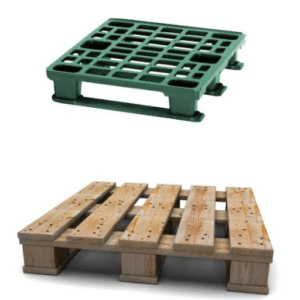
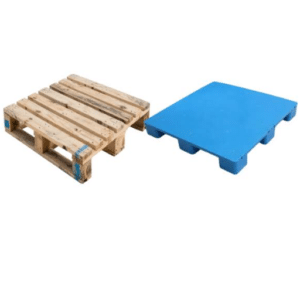
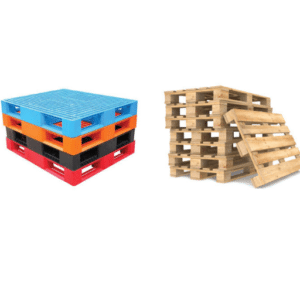
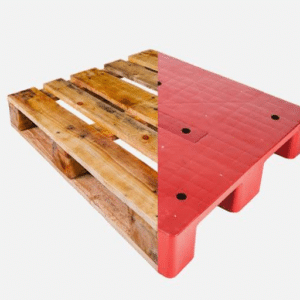
To choose reusable plastic pallets, match three load ratings (static, dynamic, and racking) to your heaviest real use case, then pick the material (HDPE or PP), design class (nestable, stackable, or rackable), and footprint that fit your environment, equipment, and return loop. Price is the last filter, not the first. Get the engineering right and the cost takes care of itself.
You already know the stakes. A pallet is cheap until the wrong one cracks on a rack at 2 a.m., warps in a freezer, or gets rejected by an automated system for being two millimeters out of tolerance. We see this pattern across the 108 countries we supply: buyers who spec on unit price end up paying twice, once for the pallet and again for the downtime.
This guide gives you a repeatable way to spec the right reusable plastic pallet the first time. You’ll get a 7-step framework, a printable selection scorecard, the exact questions to send any supplier, and an honest look at when reusable pallets aren’t the answer. By the end, you can hand a defensible spec to your team or your RFQ list and skip the expensive trial and error.
Key Takeaways
- Spec to the racking load, not the static or dynamic load. Racking is the lowest rating and the binding constraint whenever pallets sit on beams.
- Choose material by stress, temperature, and handling: HDPE for impact, cold, and automation; PP for stiffness, heat, and solvents; steel-reinforced HDPE for freezer plus heavy racking.
- Add safety margins of 25 to 50 percent on dynamic loads, 50 to 150 percent on static, and 1.5 to 2.0 times for AS/RS or critical racking.
- Judge suppliers on cost per trip, not unit price, and pilot 20 to 50 pallets for 60 to 90 days before any fleet rollout.
- Nestable and export pallets save space but don’t belong in racking. Mixing pallet types inside one automated system is a top cause of failure.
Want the short version before the deep dive? Jump to the selection scorecard or request a free spec review from our engineering team.
Step 1: Define Your Loads (Static, Dynamic, and Racking)

Every reusable plastic pallet carries three load ratings, and they aren’t interchangeable. Confusing them is the most common and most costly mistake in pallet selection.
- Static load is the weight a pallet holds while sitting still on the floor or block stacked. Typical reusable pallets range from 3,000 to 15,000 kg here.
- Dynamic load is the weight carried while moving by forklift, pallet jack, or conveyor. Typical range is 800 to 3,000 kg.
- Racking load is the weight supported across rack beams with an unsupported span. It is almost always the lowest number, typically 500 to 2,000 kg, with heavy duty rackable models around 800 to 1,500 kg and steel-reinforced designs higher.
The rule is simple: if your pallets ever sit on beams, spec to the racking load, then add a safety margin. Field practice calls for 25 to 50 percent headroom on dynamic loads, 50 to 150 percent on static or long term storage, and a 1.5 to 2.0 times factor for AS/RS or critical racking to absorb misplacement, impact, and deflection over time.
Take Priya, a composite example based on failures we see often. She manages a frozen foods warehouse and spec’d pallets by their 4,000 kg static rating. On the floor they performed beautifully.
Three weeks after moving inventory into selective racking, two pallets deflected past their limit and a third cracked a runner. The racking load on that model was 900 kg, well below her 1,300 kg beam load. A five minute check of the racking rating would have prevented the shutdown.
For a deeper breakdown of how these ratings are tested, see our guide to static, dynamic, and racking load ratings for plastic pallets. The short version: never let the biggest number on the datasheet distract you from the smallest one.
Step 2: Map the Operating Environment
Load ratings assume a controlled environment. Your warehouse is rarely controlled, so the next filter is where the pallet actually lives.
Temperature drives material choice. Freezer and cold chain applications (down to roughly minus 40 °C) favor HDPE because it stays impact resistant in deep cold. Hot wash or sterilization lines, where pallets see 90 °C and sometimes 100 to 120 °C, push you toward PP, which tolerates heat better. Ambient indoor warehouses give you the widest choice.
Moisture and chemicals matter too. HDPE resists acids, alkalis, and aqueous chemicals, which suits food, beverage, and washdown sites. PP handles oils, solvents, and organic chemicals better, which suits automotive and industrial fluids. Outdoor or yard storage calls for UV stabilizers. Regulated or specialized lines may need flame retardant, ESD or anti static, or metal detectable additives.
Hygiene and compliance narrow the field further. Food contact typically requires virgin, food grade resin with FDA or EU 10/2011 documentation. Pharmaceutical and cleanroom use adds GMP traceability and validation paperwork. If your pallets cross borders, remember that plastic pallets are exempt from ISPM-15, so you skip the heat treatment and fumigation that wood export pallets require.
Write down your environment before you look at a single product page. Temperature range, chemical exposure, hygiene standard, and outdoor exposure are four answers that eliminate half the wrong options instantly.
Step 3: Pick the Pallet Design Class
With loads and environment set, choose the structural class that matches how the pallet is stored and handled. This is where buyers most often overbuy or underbuy.
| Design class | Best for | Watch out for |
|---|---|---|
| Rackable (block, 3 runner, or perimeter base) | Racking, high bay, AS/RS | Higher weight and cost; verify beam span fit |
| Stackable (flat top and bottom decks) | Floor or block stacking, stable loads | Confirm static rating and safe stack height |
| Nestable (9 leg) | Return logistics, empty storage, one way export | Not for racking; lower racking capacity |
| Steel reinforced | Freezer plus heavy racking, maximum capacity | Added weight and price |
Deck style is the next choice. A closed or solid deck protects small or bagged goods and washes down easily for hygiene critical lines. An open or mesh deck saves weight and allows airflow and drainage, useful for produce, cold storage condensation, and lightweight export. Add anti slip grommets when loads can shift in transit.
Finally, confirm handling fit. A 4 way entry pallet accepts forks and pallet jacks from any side, which speeds busy docks. Check that the deck flatness and runner geometry suit your conveyors. If you are unsure which class fits, our full range of reusable plastic pallets is organized by exactly these use cases.
Step 4: Choose the Material (HDPE vs PP, and When to Reinforce)
Material selection is not a generic pros and cons exercise. Decide it by stress, temperature, and handling, using the environment map from Step 2.
| Factor | HDPE | PP |
|---|---|---|
| Impact and toughness | Better shock absorption, forgiving under drops | Stiffer but more brittle under impact |
| Cold storage and freezer | Strong choice, roughly minus 40 °C to plus 40 to 80 °C by grade | Can turn brittle in deep cold |
| Heat, hot wash, sterilization | Not ideal above about 80 °C | Better heat resistance, often to 90 °C or higher |
| Stiffness under static rack load | More flexible, may creep unless reinforced | Higher stiffness, better creep resistance |
| Weight | Slightly heavier | Lighter, useful for export and manual handling |
| Automation and AGV | Often preferred, lower friction (about 0.22 vs 0.32) | Can work, but rigidity may stress grippers |
| Chemical exposure | Strong for acids, alkalis, aqueous chemicals | Strong for oils, solvents, organic chemicals |
The quick rules hold up well in practice. Pick HDPE for cold chain, freezers, outdoor or low temperature sites, rough handling, fragile goods, and AGV or AMR automation. Pick PP for stable indoor ambient warehouses, heavy static racking where stiffness matters, high temperature wash, solvent or oil exposure, and lightweight export. Pick steel reinforced HDPE when you need freezer performance and heavy racking capacity at the same time.
Consider a beverage plant, a composite of several real projects, that ran HDPE pallets on a 90 °C hot wash line. The pallets survived the cold storage side perfectly, then softened and crept on the wash line within a month. Switching that single station to PP solved it without changing the rest of the fleet. Material is a station by station decision, not a blanket order.
Also decide virgin versus recycled resin. Use virgin for food, pharma, and hygiene critical grades where documentation matters. Use recycled HDPE for cost sensitive closed loops where traceability requirements are lighter. For the resin science behind these trade offs, our HDPE vs polypropylene pallet materials guide goes deeper.
Step 5: Confirm Size, Footprint, and Automation Fit

A perfectly rated pallet still fails if it doesn’t fit the rack, the conveyor, or the destination market. Size is a system question, not a product question.
Match the footprint to both your goods and your destination. The common standards are 48 by 40 inches (1219 by 1016 mm, the GMA footprint) in North America, 1200 by 800 mm (EUR or Euro pallet) in Europe, 1200 by 1000 mm as a widely used compromise, and 1100 by 1100 mm across much of Asia. ISO 6780 documents the principal flat pallet dimensions if you need the formal reference.
Then confirm the mechanical fit. Check beam span against the pallet’s racking design, conveyor roller pitch against deck flatness, and fork or pallet jack blade width against the entry openings. For AS/RS, shuttles, and AGVs, requirements tighten: you need consistent dimensional tolerance, a uniform deck, and a predictable unit weight so sensors and grippers behave the same on every cycle. Even small weight swings between batches can confuse automated storage.
Export buyers get one built in advantage. Because plastic pallets are ISPM-15 exempt, you avoid the heat treatment stamps, fumigation certificates, and occasional customs holds that follow wood pallets across borders. If you ship internationally, that exemption is worth factoring into both lead time and total cost.
Ready to turn this into a spec? Our engineers will map your load, environment, and equipment to a short list of models. Request a free spec review and get a recommendation, not a catalog dump.
Step 6: Run the Numbers (Total Cost of Ownership, Not Unit Price)
A reusable plastic pallet costs more upfront than wood or single use options. The question that matters is cost per trip, not cost per unit.
Reusable plastic pallets commonly deliver 3 to 7 or more years of service, often cited at 100 to 250 plus trips depending on duty cycle, against roughly 3 to 5 years for wood in lighter use. Spread the purchase price across those trips, then subtract the costs you stop paying: no fumigation, far less product damage from splinters and nails, lower disposal volume, and fewer emergency replacements. In closed loops with reliable return rates, some operations report lifecycle savings up to about 30 percent versus cheaper single use options.
The honest caveat matters just as much. Reusable pallets don’t always pay. If your flow is one way with no realistic return path, if turnover is very low, or if loss and theft rates are high, a durable reusable asset can strand capital instead of saving it.
In those cases a lightweight nestable or export pallet, or even a different material, is the rational choice. We compare the trade offs in detail in reusable plastic pallets vs wood and other alternatives.
One more decision: new versus used. New pallets bring a warranty, consistent dimensions, and documented ratings. Used pallets cost less but demand inspection: reject any with cracks, warped runners, or more than 10 percent permanent deflection under a known inspection load. For a first rollout or an automated system, new is almost always the safer bet.
Step 7: Vet the Supplier and Pilot Before You Scale
The right pallet from the wrong supplier is still the wrong outcome. Treat supplier vetting and a pilot as the final step, not an afterthought.
Ask every supplier for the same evidence so you can compare them apples to apples:
- Measured load data for static, dynamic, and racking, tested to a recognized method such as ISO 8611 or ASTM D1185.
- Material grade, virgin versus recycled percentage, and temperature range in writing.
- Dimensional tolerances and unit weight, critical for automation.
- Certifications: ISO 9001 for quality systems, plus SGS and RoHS where relevant, and FDA documentation for food contact.
- Warranty terms (often 1 to 2 years), customization options (color, logo, RFID, steel reinforcement), MOQ, lead times, and after sales or take back support.
Then pilot before you commit. Run 20 to 50 pallets for 60 to 90 days in real conditions, on your actual racks, conveyors, and wash lines. Track deflection, damage, handling issues, and any automation rejects.
The team at an auto parts supplier, a composite of several successful rollouts, ran a 75 day pilot of 40 pallets before ordering 12,000. The pilot caught a conveyor clearance issue on one model that would have idled a line; fixing it cost nothing in the pilot and would have cost a week at full scale.
For large buys, a third party audit such as SGS adds another layer of confidence.
Product selection and supplier selection are related but separate jobs. This guide covers the pallet. For the vendor side, use our plastic pallet manufacturer buyer’s checklist to score financial stability, capacity, and service.
Your Reusable Plastic Pallet Scorecard
Print this, fill it once per program, and score each supplier from 1 (poor) to 5 (excellent). The highest total wins, but any zero in the load or compliance rows is an automatic disqualifier.
| Selection factor | Your requirement | Supplier A (1 to 5) | Supplier B (1 to 5) |
|---|---|---|---|
| Max product weight and dimensions | |||
| Required static load (with margin) | |||
| Required dynamic load (with margin) | |||
| Required racking load (with margin) | |||
| Storage method: floor, stack, rack, AS/RS | |||
| Handling: fork size, 4 way entry, conveyor | |||
| Environment: temperature, moisture, chemicals | |||
| Compliance: food grade, ISPM-15, industry | |||
| Destination footprint standard | |||
| Material: HDPE, PP, reinforced | |||
| Cost per trip and lifecycle cost | |||
| Recyclability and take back program | |||
| Test data, certifications, warranty | |||
| Pilot result: pass or fail |
Six costly mistakes to avoid

- Putting nestable or export pallets into racking.
- Sizing to static or dynamic load while ignoring racking load and beam span.
- Applying concentrated point loads instead of evenly distributed loads.
- Mixing different pallet types inside one automated system.
- Overlooking temperature, wash chemicals, and long term deflection.
- Choosing on unit price instead of cost per trip.
Frequently Asked Questions
What is the difference between static, dynamic, and racking load?
Static load is the weight a pallet holds while stationary on the floor. Dynamic load is the weight it carries while moving. Racking load is the weight it supports across rack beams with an open span, and it is almost always the lowest of the three. When pallets go on beams, spec to the racking load.
HDPE or PP: which material is better for reusable pallets?
Neither is universally better. HDPE wins on impact resistance, cold performance, and automation friendliness. PP wins on stiffness, heat tolerance, and lighter weight. Match the resin to your temperature range, chemical exposure, and handling, and use steel reinforced HDPE when you need both freezer performance and heavy racking.
How much weight can a reusable plastic pallet hold?
It depends on the rating. Typical dynamic loads run 800 to 3,000 kg, static loads 3,000 to 15,000 kg, and racking loads 500 to 2,000 kg, with steel reinforced models higher. Always read the specific datasheet and add a safety margin.
Can nestable plastic pallets be used in racking systems?
Generally no. Nestable 9 leg pallets are designed to save space when empty and to ship one way. Their structure is not built for the unsupported span of a rack beam. Use a purpose built rackable pallet, ideally with a perimeter base or steel reinforcement, for any racking application.
Are reusable plastic pallets exempt from ISPM-15 for export?
Yes. Plastic pallets are not subject to ISPM-15, so they don’t need the heat treatment or fumigation that wood export pallets require. This removes a treatment step and a common source of customs delays.
How long do reusable plastic pallets last, and what is the cost per trip?
Service life is typically 3 to 7 or more years, often 100 to 250 plus trips depending on duty cycle. Cost per trip equals the purchase price divided by realistic trip count, minus avoided costs like fumigation, disposal, and product damage. In a reliable closed loop, that number usually beats single use options.
Should I buy new or used reusable plastic pallets?
Buy new when you need a warranty, consistent dimensions for automation, and documented ratings. Consider used for cost sensitive, non automated loops, but inspect every pallet and reject any with cracks, warped runners, or more than 10 percent permanent deflection under load.
Conclusion: Spec a Returnable Asset, Not a Commodity
Choosing reusable plastic pallets well is a sequence, not a guess. Define your three loads and spec to the racking load. Map the environment. Pick the design class and material by stress, temperature, and handling.
Confirm size and automation fit. Run cost per trip, not unit price. Then vet the supplier and pilot before you scale.
Follow those seven steps and the pallet disappears into the background, which is exactly where a good one belongs. Your team stops firefighting cracked runners and rejected totes, and your RFQ goes out with numbers a supplier can actually quote.
We built our 178,000 square meter facility and 18 large scale production lines around this philosophy: engineered for the loop, verified to ISO 9001, SGS, and RoHS, and shipped from Shandong to more than 108 countries. Ready to spec your next pallet with confidence? Request a free spec review and pilot quote, and send us your loads, environment, and equipment. We’ll come back with a recommendation you can defend.