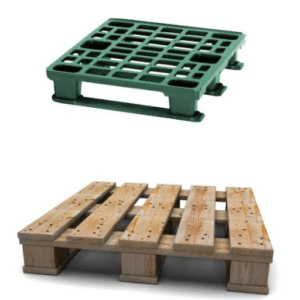
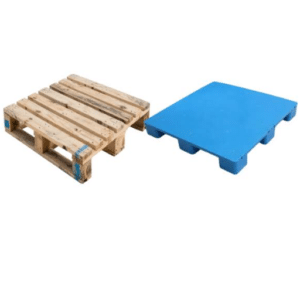
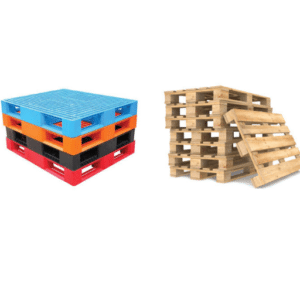
Plastic pallets vs wood pallets is not a one-size-fits-all decision: plastic wins on lifespan, hygiene, and long-term cost per trip, while wood still makes sense for low-budget, one-way, or heavy static-load shipping. The right choice depends on your operation volume, loop type, compliance needs, and total cost of ownership (TCO).
Here is the truth most procurement teams learn too late. A lower purchase price rarely means a lower total cost. When Marcus, a logistics manager at a Midwest beverage distributor, switched to the cheapest wood pallets he could find, he saved 12perunitonpaper.Within18months,splintering,moisturedamage,andfailedinspectionshadpushedhiseffectivecostabove12perunitonpaper.Within18months,splintering,moisturedamage,andfailedinspectionshadpushedhiseffectivecostabove40 per pallet. His competitor across town, running a closed-loop fleet on plastic, was spending less than $0.60 per trip.
In this guide, you will learn how to compare plastic and wood pallets across the metrics that actually matter: upfront cost, durability, hygiene, compliance, sustainability, and automation readiness. You will also get clear industry-specific recommendations and a decision framework you can use today. For a deeper dive into cost modeling, see our dedicated plastic pallets vs wood pallets comparison.
Key Takeaways
- Plastic pallets typically last 50 to 100+ trips versus 10 to 20 trips for wood, making them cheaper on a per-trip basis despite higher upfront cost.
- Wood pallets usually cost 8to8to30 each; plastic pallets range from 25to25to120+, but plastic often breaks even within 18 to 24 months in closed-loop systems.
- Plastic pallets are exempt from ISPM-15 heat treatment and fumigation, simplifying export logistics.
- Food, pharmaceutical, and automated operations favor plastic for hygiene, washability, and dimensional consistency.
- Wood remains competitive for one-way shipments, heavy static loads, and operations with tight capital budgets.
Plastic Pallets vs Wood Pallets: The Core Differences at a Glance

Before diving into cost and performance, it helps to see how the two materials stack up side by side.
| Factor | Wood Pallets | Plastic Pallets |
|---|---|---|
| Upfront cost | 8to8to30 each | 25to25to120+ each |
| Typical lifespan | 10 to 20 trips, 2 to 5 years | 50 to 100+ trips, 5 to 15 years |
| Weight | Heavier; absorbs moisture | 30 to 50% lighter; consistent weight |
| Hygiene | Porous; can harbor mold/bacteria | Non-porous; easy to wash and sanitize |
| Repairability | Easy to repair/replace boards | Difficult; usually recycled when damaged |
| Export compliance | Often requires ISPM-15 treatment | ISPM-15 exempt |
| Automation fit | Dimensional variation can cause jams | Consistent dimensions ideal for conveyors/AS/RS |
| Sustainability | Renewable, biodegradable, but shorter life | Recyclable, longer life, petroleum-based origin |
This table is a starting point. The next sections explain the numbers behind each row.
Cost Analysis: Upfront Price vs. Total Cost of Ownership
Initial Purchase Price
When procurement teams compare wood pallets vs plastic pallets cost, the first number they see is the purchase price. Wood pallets almost always win on sticker price. A standard 48×40 wood pallet typically costs between 8and8and30, depending on lumber quality, heat treatment, and regional supply. Plastic pallets of the same footprint usually start around 25andcanexceed25andcanexceed120 for reinforced, rackable, or custom designs.
That price gap is why wood still holds roughly 55% of total pallet material share in 2026, according to Future Market Insights.
But upfront cost is only one line item.
Cost Per Trip and Break-Even Timeline
In a closed-loop system where pallets return to the same facility, cost per trip becomes the metric that matters. A 12woodpalletthatlasts15tripscostsabout12woodpalletthatlasts15tripscostsabout0.80 per trip. A 50plasticpalletthatlasts100tripscosts50plasticpalletthatlasts100tripscosts0.50 per trip. Over hundreds of cycles, the math flips quickly.
Virginia Tech lifecycle testing cited by ORBIS Corporation found that wood pallets often fail after roughly 11 cycles, while some plastic pallet designs exceed 400 cycles. That durability advantage is why most buyers see a break-even point within 18 to 24 months after switching to plastic.
Want to see the exact math for your fleet? Use our plastic pallet ROI calculator to compare upfront cost, repair savings, and disposal costs over five years.
Repairs, Replacement, and Disposal
Wood pallets are easy to repair. A broken board or loose nail can be fixed for a few dollars. But those repairs add up, especially in high-cycle operations. Moisture damage, rot, and insect infestation can also make a wood pallet unusable without warning.
Plastic pallets rarely need repairs. When they do fail, they are usually recycled rather than fixed. That means less maintenance labor, fewer unplanned replacements, and more predictable budgeting.
Durability and Performance Under Pressure
Lifespan and Trip Cycles
The plastic pallet vs wood pallet durability gap is the single biggest operational difference between the two materials. A typical wood pallet survives 10 to 20 trips before splintering, cracking, or losing structural integrity. Premium plastic pallets routinely last 50 to 100 trips, and reinforced models can exceed 200 or even 400 cycles.
For a distribution center moving 10,000 pallets per year, that difference is not incremental. It changes staffing, inventory, procurement schedules, and landfill exposure.
Moisture, Pest, and Chemical Resistance
Wood absorbs water. In humid warehouses, outdoor storage, or cold-chain environments, that leads to warping, mold, and weight gain. Wood pallets can also harbor insects and fungi, which is exactly why international regulations like ISPM-15 exist.
Plastic pallets do not absorb moisture. They resist most chemicals, do not rot, and are impervious to pests. That makes them the default choice for food processing, pharmaceuticals, chemicals, and any operation where contamination is a risk.
Load Capacity and Racking Performance
High-quality hardwood pallets can carry very heavy static loads, which is why they remain popular in heavy manufacturing and some racking applications. However, plastic pallets can match or exceed wood capacity when reinforced with steel or engineered with robust deck designs.
The key is matching the pallet design to the load. A lightweight nestable plastic pallet is not the right choice for a 2,500-pound racked load. A steel-reinforced rackable plastic pallet is.
Consistency in Automated Systems
Automation is one of the biggest drivers of plastic pallet adoption in 2026. Automated storage and retrieval systems, conveyor lines, and robotic palletizers depend on consistent dimensions, uniform weight, and damage-free surfaces. Wood pallets vary in weight and can shed splinters or nails that jam equipment.
If your operation runs or plans to run automation, plastic pallets are usually the safer long-term investment.
Hygiene, Safety, and Regulatory Compliance

ISPM-15 and Export Requirements
Wood pallets used in international shipping must often meet ISPM-15 standards, which require heat treatment or fumigation to prevent pest transfer. That adds cost, paperwork, and potential customs delays.
ISPM 15 plastic pallets are exempt from heat treatment and fumigation because they do not harbor wood-borne pests. For exporters, that means faster customs clearance and one less compliance variable to manage.
FDA, GFSI, and Food-Grade Standards
Food and beverage companies face strict hygiene requirements. Wood’s porous surface can trap bacteria, allergens, and moisture. Even with cleaning, wood pallets are harder to sanitize to FDA and Global Food Safety Initiative (GFSI) standards.
Plastic pallets are non-porous and washable. Many are designed with smooth surfaces and drainage channels that make high-pressure washing and sanitizing straightforward.
Pharmaceutical and Cold-Chain Compliance
Pharmaceutical supply chains demand consistent performance under temperature-controlled conditions. Wood can warp or degrade in cold, damp environments. Plastic maintains its shape and integrity, making it the preferred choice for pharma, vaccines, and temperature-sensitive goods.
Fire Safety and Warehouse Insurance
One factor often missing from comparison articles is fire safety. Plastic pallets burn differently than wood, and some insurers or warehouse codes require specific fire suppression systems when plastic pallets are stored in bulk. Always check with your insurance provider and local fire codes before converting a large fleet.
Sustainability: Which Material Is Greener?
Lifecycle Assessment Basics
The plastic pallets vs wooden pallets sustainability question depends on how you measure it. Wood is renewable and biodegradable. Plastic is petroleum-based but recyclable and far longer-lasting. The most useful comparison is per-trip environmental impact.
A wood pallet that lasts 15 trips and then goes to landfill consumes raw material, energy, and transport capacity more frequently than a plastic pallet that lasts 100 trips and is recycled at end of life.
Recyclability and Circular Economy
At Shandong Lile, our plastic pallets are manufactured from high-density polyethylene (HDPE) and polypropylene (PP), both of which are 100% recyclable. Damaged pallets can be ground and remolded into new products, supporting a circular manufacturing model.
Wood pallets can be repaired, reused, and eventually chipped or composted. The challenge is that frequent replacement in high-volume operations generates more total waste than a longer-lasting plastic alternative.
When Wood Has the Edge
Wood wins on renewability. It is made from a naturally regenerating resource and biodegrades at end of life. For low-cycle, domestic, or one-way shipping, the environmental case for wood can be stronger.
Industry-Specific Recommendations
Food and Beverage
Plastic pallets dominate food and beverage processing because they are washable, non-porous, and compliant with food-safety programs. They also reduce contamination risk during transport from processor to retailer.
Pharmaceuticals and Healthcare
Pharma operations prioritize consistency, cleanliness, and compliance. Plastic pallets, especially rackable or steel-reinforced designs, are the standard for pharmaceutical warehouses and cold-chain distribution.
E-Commerce and Retail
Fast-turn retail and e-commerce fulfillment centers benefit from plastic pallets’ lighter weight, consistent dimensions, and nestability. Lower transport weight reduces fuel costs, and uniform sizing improves automation compatibility.
Export and International Shipping
Plastic pallets avoid ISPM-15 treatment requirements, making them ideal for export. They also resist moisture during long ocean or air transit, arriving in better condition than untreated wood.
Cold Storage and Cold Chain
Plastic does not absorb moisture or warp in cold, damp environments. For frozen goods, dairy, and temperature-sensitive products, plastic pallets maintain structural integrity where wood degrades.
Heavy Manufacturing
Wood or steel-reinforced plastic pallets can both work for heavy manufacturing. The decision comes down to load requirements, racking setup, and whether the pallets move in a closed loop or one-way network.
Need help matching a pallet design to your industry? Explore our complete guide to plastic pallets or compare plastic pallet alternatives for your specific use case.
When Wood Pallets Still Make Sense
It would be dishonest to say plastic is always better. Wood pallets remain the right choice when:
- You operate on a tight upfront budget.
- Pallets are used once or twice and not returned.
- You need custom sizes that are expensive to mold in plastic.
- Your loads are extremely heavy and static.
- You have repair capabilities in-house and low cycle counts.
The best procurement decisions are honest decisions. Sometimes wood is the smarter short-term move. The key is knowing when the long-term math favors plastic.
How to Make the Right Choice for Your Operation

Use this four-question framework:
- What is your loop type? Closed-loop operations favor plastic. One-way shipping often favors wood.
- What is your annual pallet volume? Higher volumes make plastic’s durability advantage more valuable.
- What are your hygiene and compliance requirements? Food, pharma, and export operations usually point to plastic.
- What is your automation level? Conveyors, AS/RS, and robotics generally perform better with plastic.
If plastic checks three or more boxes, it is likely the lower-total-cost option over a 3 to 5 year horizon.
Frequently Asked Questions
Are plastic pallets better than wood?
Plastic pallets are better for high-cycle, closed-loop, hygienic, or automated operations. Wood pallets are better for low-budget, one-way, or heavy static-load applications. The best choice depends on your specific use case, not the material alone.
How long do plastic pallets last compared to wood?
Wood pallets typically last 10 to 20 trips, or 2 to 5 years. Plastic pallets typically last 50 to 100+ trips, or 5 to 15 years, with premium models exceeding 400 cycles.
Are plastic pallets more expensive than wood?
Yes, plastic pallets have a higher upfront cost, usually 2 to 4 times the price of wood. However, their longer lifespan and lower maintenance often make them cheaper on a total-cost-of-ownership basis within 18 to 24 months.
Do plastic pallets need ISPM-15 treatment?
No. Plastic pallets are ISPM-15 exempt because they do not carry wood-borne pests. This simplifies export shipping and avoids heat treatment or fumigation costs.
Can plastic pallets be used in automated warehouses?
Yes. Plastic pallets are well-suited to automation because they offer consistent dimensions, uniform weight, and smooth surfaces that reduce jams in conveyors and automated storage systems.
What industries should use plastic pallets?
Food and beverage, pharmaceuticals, chemicals, cold chain, e-commerce, retail, and export shipping are all strong candidates for plastic pallets due to hygiene, durability, and compliance advantages.
Conclusion
The debate over plastic pallets vs wood pallets is really a debate about total cost, not purchase price. Wood pallets win on affordability and repairability. Plastic pallets win on lifespan, hygiene, compliance, automation compatibility, and long-term cost per trip.
For logistics managers running high-cycle, closed-loop, or regulated operations, plastic is usually the smarter investment. For teams with tight budgets or one-way shipping needs, wood remains a practical choice.
At Shandong Lile Holding Group, we have spent more than 14 years manufacturing plastic pallets and packaging solutions for clients in over 108 countries. Whether you are evaluating a full fleet conversion or a single product line, our team can help you choose the right pallet design for your load, industry, and budget.
Request a free quote today and get a custom recommendation backed by ISO-certified quality and global logistics expertise.