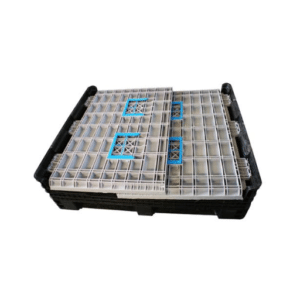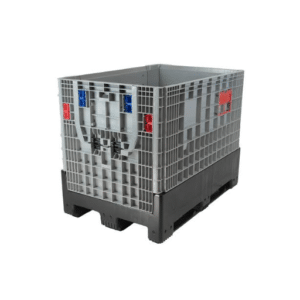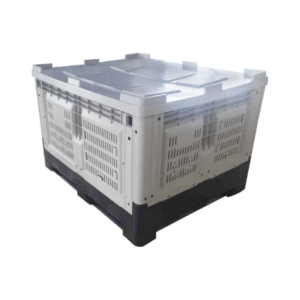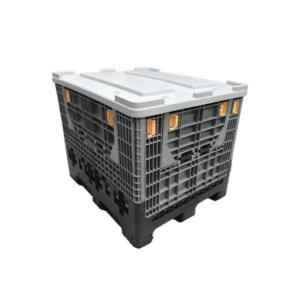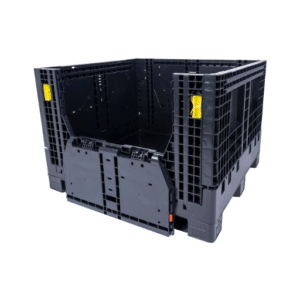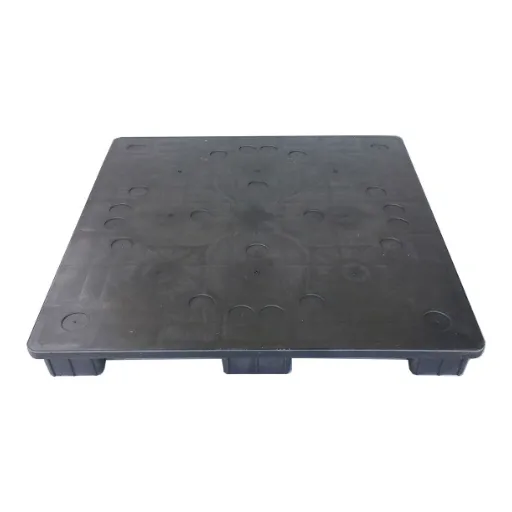

Industrial plastic pallets are reusable, high-density polyethylene (HDPE) or polypropylene (PP) platforms engineered for repeated medium- to heavy-duty logistics use. They typically last 10 years or 100–500 trips, resist moisture and chemicals, and outperform wood on total cost of ownership in closed-loop supply chains.
What if the cheapest pallet on your quote sheet is quietly draining your budget? Many logistics managers focus on the per-unit price. They miss the replacement cycles, treatment fees, contamination risks, and downtime that turn a “bargain” into a liability.
You already know that pallets are not just wooden boards anymore. You already suspect that automation, hygiene rules, and export regulations are changing the game. This guide will show you exactly how to choose industrial plastic pallets that match your load, industry, compliance needs, and long-term cost targets.
At Shandong Lile, we have spent more than 14 years manufacturing plastic pallets for companies in 108 countries. We do not believe in one-size-fits-all answers.
We believe in engineered solutions. By the end of this article, you will have a practical selection framework, a supplier scorecard, and real numbers you can take to your next procurement review.
Key Takeaways
- Industrial plastic pallets last up to 10 years and 100–500 trips, while wood pallets typically last 6 months to 2 years and 10–20 trips.
- The global plastic pallets market is projected to grow from USD 8.74 billion in 2025 to USD 9.23 billion in 2026, driven by automation, hygiene rules, and sustainability pressure (Fortune Business Insights).
- HDPE dominates ~47% of material demand because it performs well in cold, wet, and impact-heavy environments.
- Rackable pallets lead the type segment at 39–43% because they maximize warehouse cube utilization.
- Food and beverage processing is the largest end-use industry, accounting for roughly 28% of demand.
What Are Industrial Plastic Pallets?
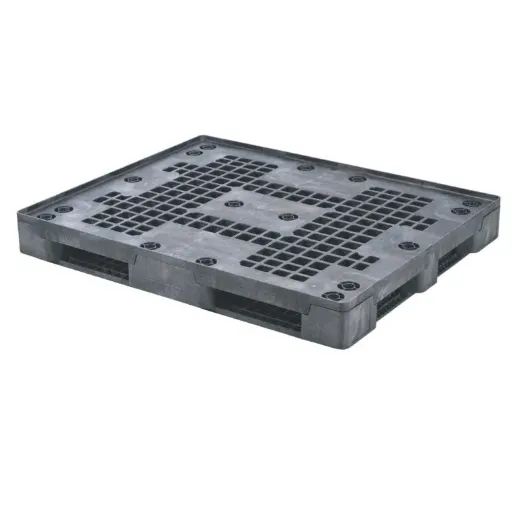
Industrial plastic pallets are load-bearing platforms molded from HDPE, PP, or specialty resins and designed for repeated use in manufacturing, warehousing, and distribution. They differ from consumer-grade or light-duty plastic pallets in wall thickness, rib structure, load rating, and resistance to industrial conditions such as chemicals, UV exposure, and temperature swings.
A consumer pallet might carry a few boxes of retail goods from a warehouse to a store shelf. An industrial pallet carries raw materials through production lines, withstands forklift impacts, sits in freezer storage, and travels through automated racking systems. The difference is not cosmetic. It is structural.
For a deeper technical explanation of pallet types and materials, see our complete industrial plastic pallets guide.
Key Characteristics
- Material strength. HDPE offers excellent impact resistance and low-temperature performance. PP provides stiffness and higher heat tolerance. Some operations need reinforced formulations for fire resistance, ESD protection, or UV stability.
- Consistent dimensions. Molded plastic pallets maintain tight tolerances. This matters enormously for conveyors, automated storage and retrieval systems (AS/RS), and robotic palletizers.
- Hygienic surface. Non-porous decks do not absorb moisture, bacteria, or chemicals. Washdown is fast and effective.
- Four-way entry. Most industrial designs allow forklifts and pallet jacks to enter from any side, improving handling efficiency.
- ISPM-15 exemption. Plastic pallets do not require heat treatment or fumigation for international shipping, unlike wood pallets (USDA APHIS).
How They Differ from Light-Duty Pallets
Light-duty pallets often use thinner walls, open decks with large gaps, and lower-grade recycled blends. They are fine for single-use or low-weight applications. Industrial pallets use thicker ribs, reinforced corners, and controlled resin formulations. They are built for loads measured in tons, not kilograms.
Want to see how the right pallet design protects your product? Explore our full range of plastic pallets.
5 Types of Industrial Plastic Pallets and When to Use Them
Not every industrial plastic pallet does the same job. Choosing the wrong type can damage inventory, slow automation, or waste warehouse space. Here are the five main categories and their best use cases.
| Pallet Type | Best For | Key Benefit | Watch Out For |
|---|---|---|---|
| Rackable | Warehouse racking, heavy loads | Supports loads on open beams without deflection | Heavier and more expensive than nestable options |
| Nestable | Empty return trips, space-saving | Stacks inside itself when empty; reduces return freight volume | Lower load capacity than rackable designs |
| Stackable | Loaded storage, stable stacking | Feet or lips lock pallets together for safe stacking | Requires flat, stable floor conditions |
| Solid-Deck (Hygienic) | Food, pharma, cleanrooms | Smooth, closed surface; easy to sanitize and inspect | Higher initial cost; worth it for compliance-critical operations |
| Steel-Reinforced Heavy-Duty | Automotive, machinery, mining | Static loads can exceed 6 tons | Heaviest option; usually reserved for extreme loads |
Rackable Pallets
Rackable plastic pallets are designed to bridge open racking beams. They are the dominant industrial type, accounting for an estimated 39–43% of the plastic pallet type segment. If your operation stores palletized goods on racks, this is usually your starting point.
Nestable Pallets
Nestable designs save space on return trips. A truck that carries 500 empty wood pallets might carry 1,500 empty nestable plastic pallets. That density slashes reverse-logistics costs in closed-loop systems.
Stackable Pallets
Stackable pallets work well when you store loaded pallets on top of one another. They often have feet or rims that interlock, reducing the risk of sliding or collapse.
Solid-Deck Pallets
Solid-deck, also called hygienic pallets, have no open gaps where debris or liquids can collect. They are the default choice for food processing, pharmaceuticals, and any operation subject to washdown or cleanroom standards.
Steel-Reinforced Heavy-Duty Pallets
When loads exceed standard ratings, steel bars or tubes embedded in the deck and runners add strength. These heavy duty plastic pallets are common in automotive, metalworking, and heavy manufacturing where a single pallet might hold several tons.
Load Capacity Explained: Static, Dynamic, and Racking

Load capacity is where buying mistakes become expensive. A pallet rated for 2,000 kg in a static stack may fail at a fraction of that weight when moved or racked. Industrial buyers need to understand three ratings. Our plastic pallet load capacity guide breaks down static, dynamic, and racking limits with real test data.
- Static load. The weight a pallet can hold when stationary and evenly distributed on a flat floor. Static ratings for industrial plastic pallets often start at 4 tons and can exceed 6 tons with steel reinforcement.
- Dynamic load. The weight a pallet can carry while being moved by a forklift or pallet jack. This is typically lower than the static rating because movement creates stress points.
- Racking load. The weight a pallet can support when placed on open warehouse racking beams. This is usually the lowest rating because only the outer edges are supported.
How Ratings Are Determined
Reputable manufacturers test pallets according to ISO 8611, the international standard for pallet testing. The standard defines test methods for bending, racking, and impact resistance (ISO 8611).
Always ask a supplier for ISO 8611 test data before specifying a pallet for critical loads. Learn what to look for in our pallet durability testing overview, including bending, impact, and racking verification methods.
Apply a Safety Factor
Real-world conditions are never perfect. Loads shift, forklift tines hit at angles, and temperatures fluctuate. Apply a safety factor of 1.5 to 2.0 times your maximum expected load. If your heaviest unit load is 1,000 kg, specify a pallet rated for at least 1,500–2,000 kg dynamic load.
Industrial Plastic Pallets vs. Wood Pallets: Total Cost of Ownership
The upfront price gap can feel significant. A basic wood pallet might cost 10–10–25. An industrial plastic pallet might run 25–25–100 or more depending on size, material, and reinforcement. But the real comparison happens over years, not at checkout. See our complete plastic pallets vs wood pallets comparison for side-by-side cost, durability, and compliance data.
| Cost Factor | Industrial Plastic Pallets | Wood Pallets |
|---|---|---|
| Upfront cost | 25–25–100+ | 10–10–25 |
| Typical lifespan | 10 years / 100–500 trips | 6 months–2 years / 10–20 trips |
| Maintenance | Minimal; wash and inspect | Frequent repairs, nail replacement, heat treatment |
| ISPM-15 export treatment | Exempt | Required; 2–2–4 per pallet |
| Contamination risk | Low; non-porous surface | High; absorbs moisture, harbors mold and pests |
| Automation compatibility | Excellent dimensional consistency | Variable; prone to splinters and nail heads |
| Weight | ~30% lighter than wood | Heavier; increases freight cost |
When Marcus, a logistics manager at an automotive parts exporter, switched from wood to plastic in 2023, his team tracked every cost. Each wood pallet cost 11plusa11plusa3 ISPM-15 treatment fee. Each plastic pallet cost $38.
Over the first year, the plastic pallets required 80% fewer replacements, eliminated treatment fees, and reduced customs delays. The break-even point arrived in month 19. By year three, his operation had saved approximately $14,000 on pallet-related costs alone.
When Wood Still Makes Sense
Wood is not dead. It still works for light, single-use domestic shipments, short-term projects, or operations that need on-site modification. If your pallets rarely return and your loads are modest, wood can be the pragmatic choice. For everything else, industrial plastic pallets usually win on total cost of ownership.
Ready to test the difference in your own operation? Request a tailored quote from Lile and we will model the TCO for your volume and application.
Industry Applications: Which Pallet for Which Operation?
The right pallet depends on what you move, where you move it, and what regulations govern your facility. Here is a decision matrix for common industrial applications.
| Industry | Recommended Pallet Type | Why It Works |
|---|---|---|
| Food and Beverage | Solid-deck hygienic, HDPE | Smooth surface resists contamination; withstands washdown and temperature cycling |
| Pharmaceuticals and Healthcare | Solid-deck hygienic, virgin HDPE/PP | Meets FDA, GMP, and cleanroom requirements; supports RFID traceability |
| Cold Storage and Cold Chain | HDPE rackable or nestable | HDPE retains strength at freezer temperatures; resists moisture absorption |
| Automotive and Heavy Manufacturing | Steel-reinforced heavy-duty | Handles engine blocks, transmissions, and metal components without flex |
| E-commerce and Retail Distribution | Nestable or rackable lightweight | Consistent dimensions support sortation systems; lightweight cuts freight cost |
| International Export | Nestable, ISPM-15 exempt | No treatment delays; lighter weight reduces shipping cost |
Food and Beverage
In 2024, a mid-sized dairy processor named Elena replaced wood pallets with solid-deck HDPE pallets in her cold storage area. Within six months, contamination incidents linked to splinters and absorbed moisture dropped to zero. Washdown time fell by 40%. The switch paid for itself through reduced product loss and faster sanitation cycles.
Pharmaceuticals and Healthcare
Pharmaceutical operations often ban wood outright because of contamination risk. Plastic pallets with closed decks, virgin resin options, and RFID compatibility support track-and-trace requirements. Cleanroom-compatible designs prevent particle shedding.
Cold Storage and Cold Chain
Wood absorbs moisture. When that moisture freezes, the pallet warps, cracks, and loses strength. HDPE industrial plastic pallets do not absorb water. They maintain dimensional stability from freezer temperatures through hot warehouses, making them ideal for cold chain logistics.
Automotive and Heavy Manufacturing
Steel-reinforced plastic pallets handle the weight and abuse of automotive supply chains. They resist oil, grease, and coolant better than wood. Their consistent dimensions keep automated lines running smoothly.
E-commerce and Retail Distribution
High-velocity distribution centers need pallets that work with conveyors, scanners, and robotic handlers. Lightweight nestable pallets reduce outbound freight cost and stack efficiently on return trips. Read more about how lightweight pallets are reshaping distribution networks.
International Export
Every wood pallet crossing borders needs ISPM-15 heat treatment or fumigation. Plastic pallets for export are exempt. That exemption saves time, paperwork, and treatment cost. It also eliminates the risk of rejection at ports of entry.
Compliance and Standards: What Industrial Buyers Must Verify

Industrial buyers operate under more rules than ever. The pallet you specify must satisfy your industry, your customers, and your regulators. Here are the key standards to verify.
FDA 21 CFR and Food-Contact Safety
For food and pharmaceutical applications, confirm that the resin and any additives meet FDA food-contact requirements. Virgin HDPE or PP is typically the safest choice when direct contact is possible.
GMP, HACCP, and ISO 22000
Good Manufacturing Practice (GMP), Hazard Analysis Critical Control Point (HACCP), and ISO 22000 all emphasize contamination control. Smooth, non-porous, one-piece plastic pallet designs align naturally with these requirements.
ISPM-15 Exemption for Export
The International Plant Protection Convention’s ISPM-15 standard applies to wood packaging material in international trade. Plastic pallets are exempt.
That exemption simplifies export documentation and eliminates treatment costs (USDA APHIS).
ISO 6780 Dimensions and ISO 8611 Testing
ISO 6780 defines common pallet dimensions such as 1200×1000 mm and 1200×800 mm. ISO 8611 provides the test methods used to verify load capacity. Ask your supplier for test reports tied to ISO 8611 before specifying pallets for critical applications.
How to Choose an Industrial Plastic Pallet Supplier: 10-Point Checklist
The pallet matters. The supplier matters just as much. A low price from an unqualified source can mean inconsistent quality, missed deliveries, and compliance gaps. Use this checklist to vet potential partners.
| # | Checkpoint | Why It Matters |
|---|---|---|
| 1 | Manufacturing scale and capacity | Can the supplier handle your volume without quality drift? |
| 2 | Resin traceability and certifications | Virgin vs. recycled blends should be documented and consistent. |
| 3 | ISO 9001 quality management | Demonstrates systematic process control. |
| 4 | ISO 8611 test reports | Proves load ratings are verified, not claimed. |
| 5 | Customization capability | Custom sizes, colors, logos, and RFID integration for specific workflows. |
| 6 | Custom plastic pallets experience | Track record producing tailored designs for unique load, color, and branding requirements. |
| 7 | Mold design and engineering support | Strong suppliers help optimize designs before production. |
| 8 | Quality control protocols | Incoming material inspection, in-process checks, and final testing. |
| 9 | Export and logistics experience | Knowledge of ISPM-15, customs documentation, and global shipping. |
| 10 | Warranty and after-sales support | Clear terms for defects, replacements, and technical assistance. |
| 11 | Sustainability credentials | Recycled content options, recyclability, and end-of-life take-back programs. |
As an experienced plastic pallets manufacturer, Shandong Lile offers custom plastic solutions that include in-house mold design, OEM/ODM capability, Pantone color matching, and steel reinforcement options. We run 18 large-scale injection molding machines and ship through Qingdao Port to buyers in more than 108 countries. That scale means we can prototype quickly, produce consistently, and deliver globally.
2026 Trends Shaping Industrial Plastic Pallets
The industrial plastic pallet market is not standing still. According to Fortune Business Insights, the market is expected to grow from USD 8.74 billion in 2025 to USD 9.23 billion in 2026.
Several forces are driving that growth. Automation, hygiene rules, sustainability pressure, and e-commerce expansion are all pushing buyers toward durable, reusable pallet systems.
Automation and AS/RS Compatibility
Warehouses are adding more automation every year. Pallets must maintain tight dimensional tolerances to work with robotic handlers, conveyors, and automated storage systems. Variability is the enemy of automation. Industrial plastic pallets deliver the consistency that automated facilities demand.
RFID and Digital Traceability
In 2022, a pharmaceutical warehouse in Germany began embedding RFID tags in its plastic pallets. Within six months, inventory accuracy exceeded 99.8%. The tags turned pallets from passive carriers into data points, supporting recalls, audits, and real-time visibility.
Recycled and Bio-Based Materials
Sustainability pressure is pushing manufacturers to increase recycled content without sacrificing strength. Many industrial plastic pallets now incorporate post-consumer or post-industrial recycled HDPE and PP. Some suppliers are also exploring bio-based additives.
Lightweighting Without Sacrificing Strength
Engineers are using structural foam molding and advanced rib designs to reduce pallet weight while maintaining load capacity. Lighter pallets cut freight cost and reduce worker strain without compromising performance.
Conclusion
Industrial plastic pallets are no longer a niche alternative to wood. They are a strategic supply chain asset that reduces long-term cost, improves hygiene, supports automation, and simplifies global shipping. The key is matching the right material, design, and supplier to your specific operation.
Here is what to remember:
- Start with your load: static, dynamic, and racking requirements.
- Match the pallet type to your environment: rackable for beams, nestable for returns, solid-deck for hygiene, steel-reinforced for extreme loads.
- Compare total cost of ownership, not just purchase price.
- Verify compliance: FDA, GMP, HACCP, ISO 8611, and ISPM-15 exemption where relevant.
- Vet your supplier for scale, quality control, customization, and global logistics capability.
At Shandong Lile, we engineer industrial plastic pallets for companies that refuse to compromise on quality. From 18 large-scale production machines to export operations through Qingdao Port, we deliver solutions that perform under pressure and travel across borders.
Ready to optimize your operation with industrial plastic pallets? Contact our team for a tailored quote, sample evaluation, or TCO analysis built around your exact load and workflow.
Frequently Asked Questions
What are industrial plastic pallets?
Industrial plastic pallets are heavy-duty load platforms molded from HDPE, PP, or specialty resins for repeated use in manufacturing, warehousing, and distribution. They are designed for loads measured in tons and resist moisture, chemicals, and temperature extremes.
How long do industrial plastic pallets last?
With proper use, industrial plastic pallets typically last up to 10 years or 100–500 trips. Lifespan depends on load, handling, environment, and material quality.
Are industrial plastic pallets better than wood?
For repeated use, hygiene-critical operations, automation, and export, industrial plastic pallets usually outperform wood on total cost of ownership, durability, and compliance. Wood can still make sense for light, single-use domestic shipments.
What industries use industrial plastic pallets?
Major users include food and beverage, pharmaceuticals, cold chain logistics, automotive, e-commerce and retail distribution, and international exporters.
How much weight can industrial plastic pallets hold?
Static loads often start at 4 tons and can exceed 6 tons with steel reinforcement. Dynamic and racking loads are lower and should be confirmed with ISO 8611 test reports.
Are plastic pallets recyclable?
Yes. HDPE and PP industrial plastic pallets are 100% recyclable. Many can also be produced with recycled content while maintaining industrial strength.
What is ISPM-15 and why does it matter?
ISPM-15 is an international standard that requires wood packaging material to be heat-treated or fumigated before export. Plastic pallets are exempt, which reduces cost and customs delays.